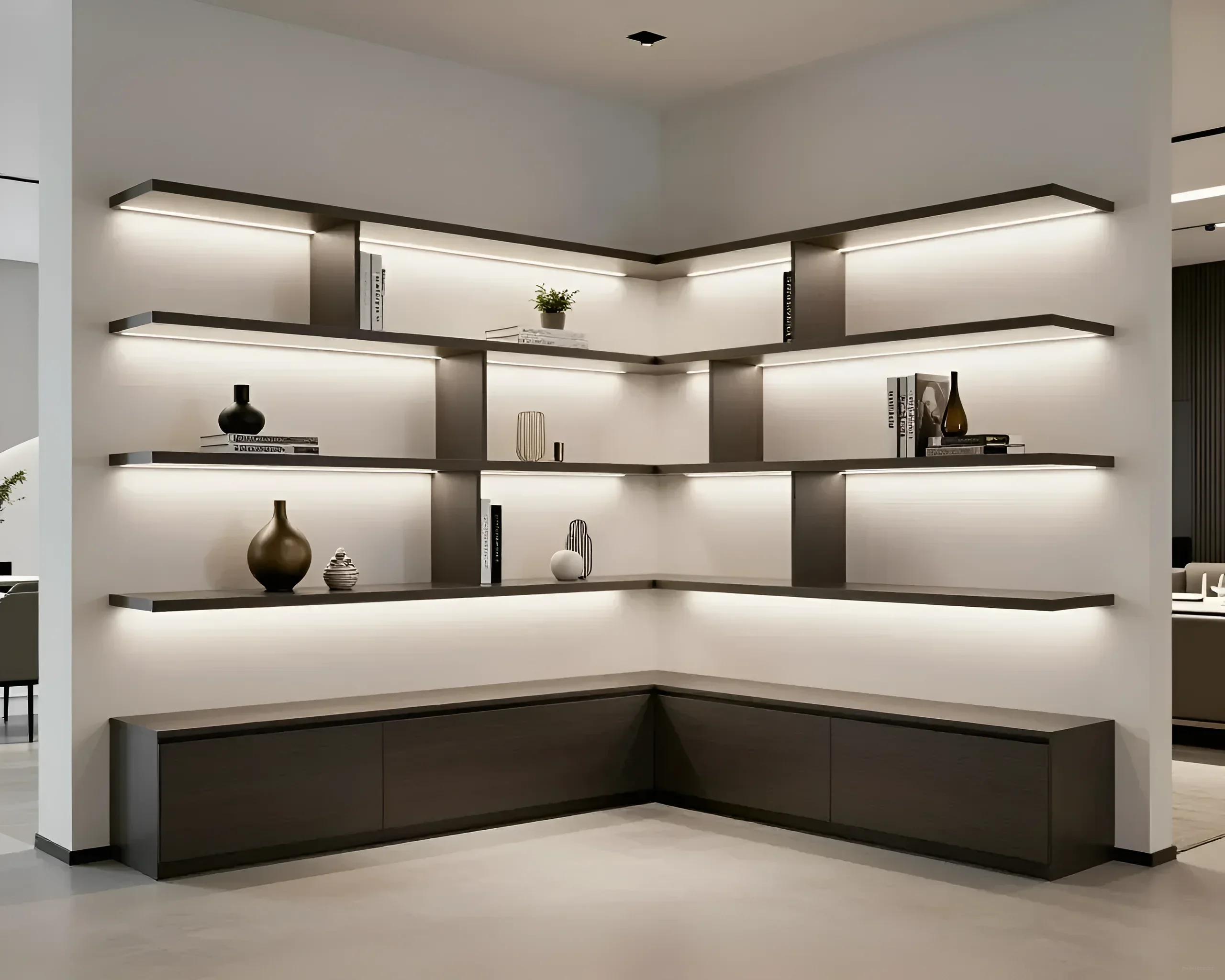
The layout of most modern apartments, especially in old buildings or new constructions with monolithic frames, often suffers from “awkward” zones. These can be acute or obtuse angles, narrow niches, protrusions of ventilation shafts, or simply empty corner spaces that seem absolutely useless. In the furniture industry, such areas are called “dead zones.” However, for a professional designer and experienced furniture maker, each such corner is a hidden potential for storing things, organizing a workspace, or creating a cozy relaxation area. Properly selected furniture allows not only to utilize every square centimeter but also to visually correct the geometry of the room, making it more harmonious and functional.
Мебель
Bedroom Homestaging: How to Choose Furniture to Rent Out Your Apartment for More
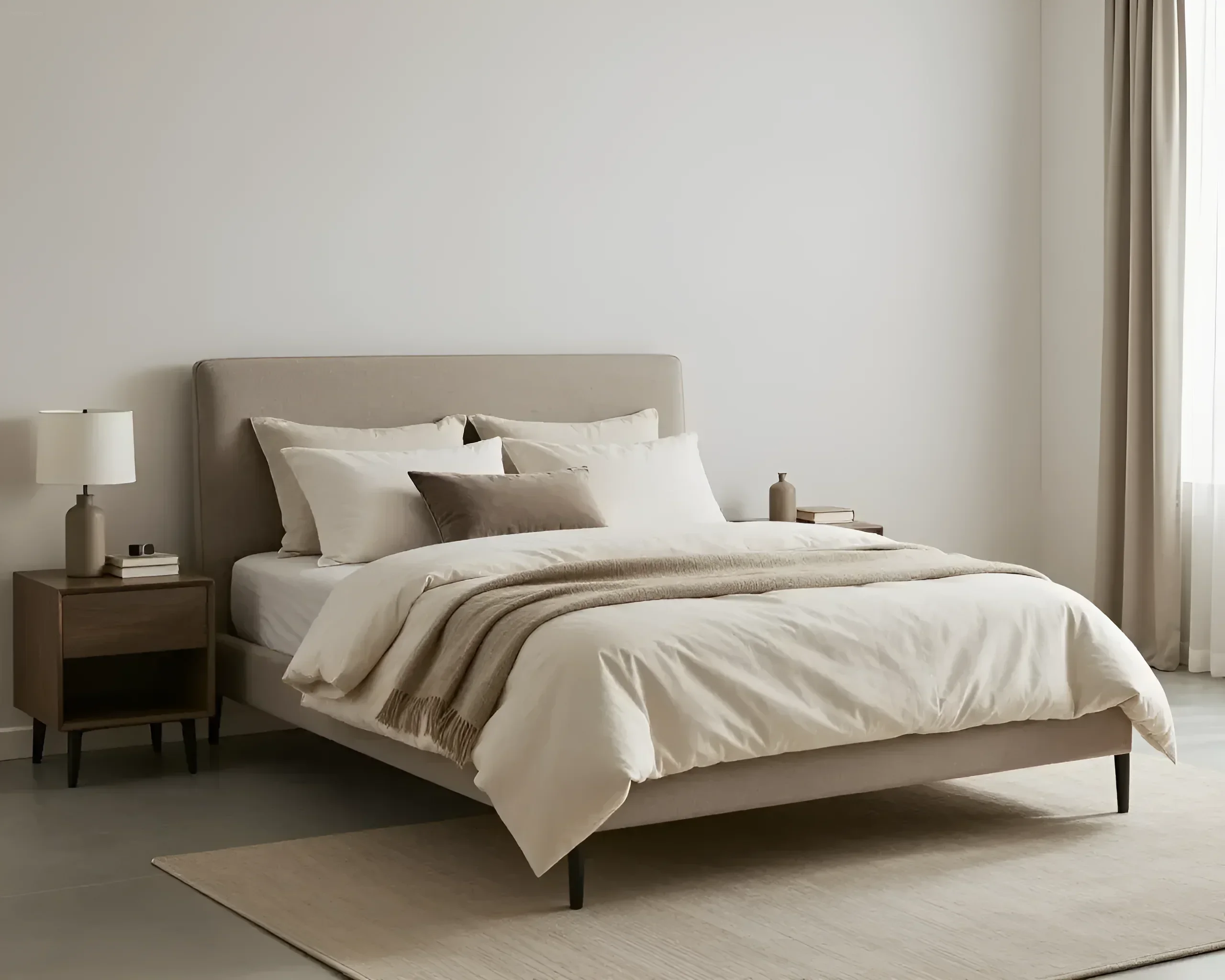
Preparing an apartment for rent is not just cosmetic repairs, but strategic investment. In a highly competitive real estate market, a potential tenant chooses not square meters, but a lifestyle and comfort. Homestaging (from English “home staging” – “home staging”) allows you to create an interior that looks more expensive than its real value, attracts a solvent audience, and reduces the exposure time of the property. The bedroom plays a central role in this process, as it is where a person spends a third of their time, and it is the quality of rest that often becomes the deciding factor when making a rental decision.
Neuroaesthetics of the Home: How Tactile Fabrics and Rounded Furniture Reduce Cortisol Levels
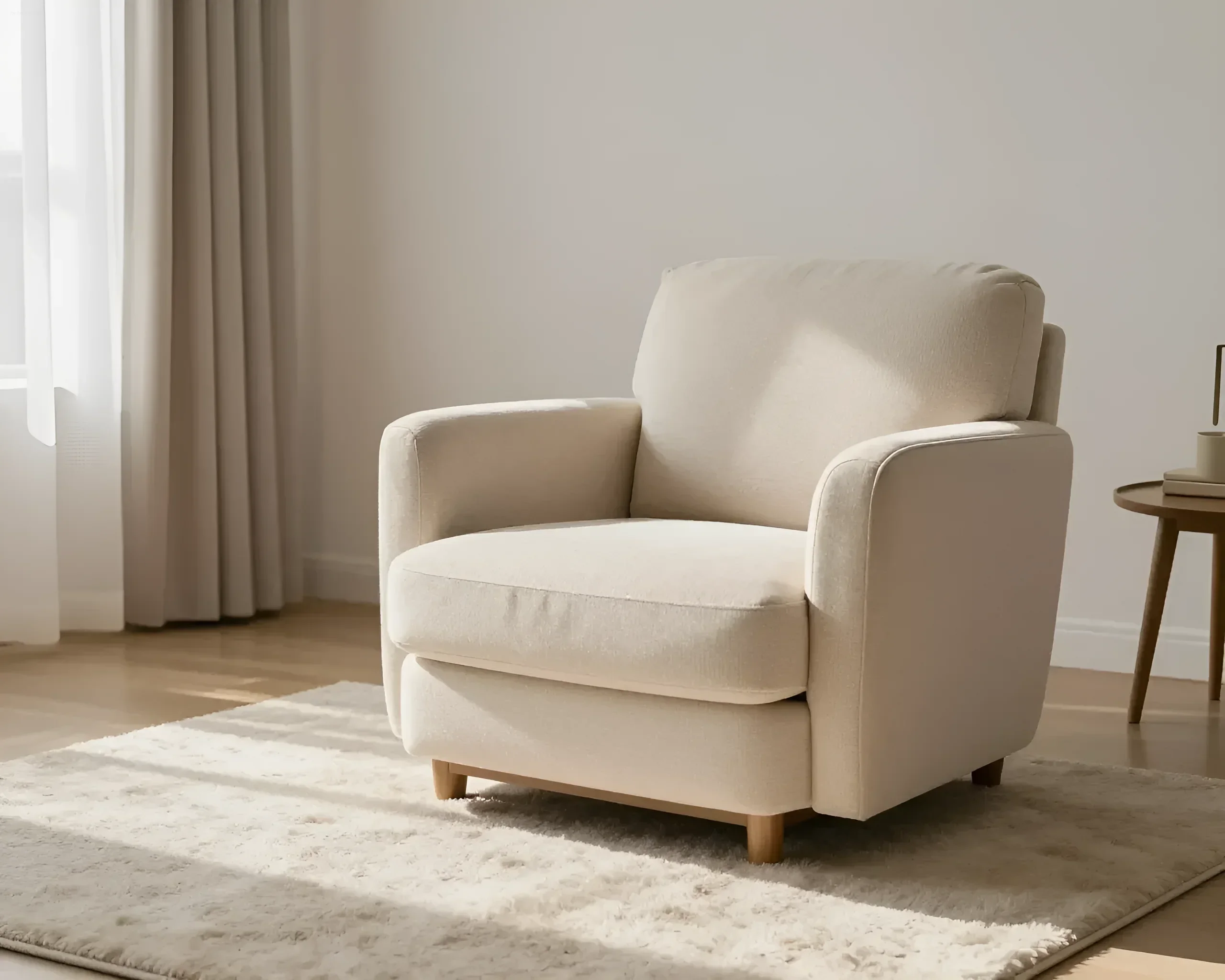
Modern humans spend up to 90% of their time indoors, and the objects we surround ourselves with directly dictate our brain’s operating mode: ‘fight or flight’ or ‘rest and recover.’ Neuroaesthetics is a relatively young discipline at the intersection of cognitive psychology, neurobiology, and design, studying how aesthetic experience affects our neural connections. In the context of home furnishing, this means shifting from a purely functional approach to creating an environment that physiologically reduces cortisol, the stress hormone. Research shows that certain shapes, textures, and even furniture arrangements can activate the parasympathetic nervous system, giving us a sense of security and deep psychological comfort.
Shoe Storage System for a Narrow Hallway: How to Fit 15 Pairs and More
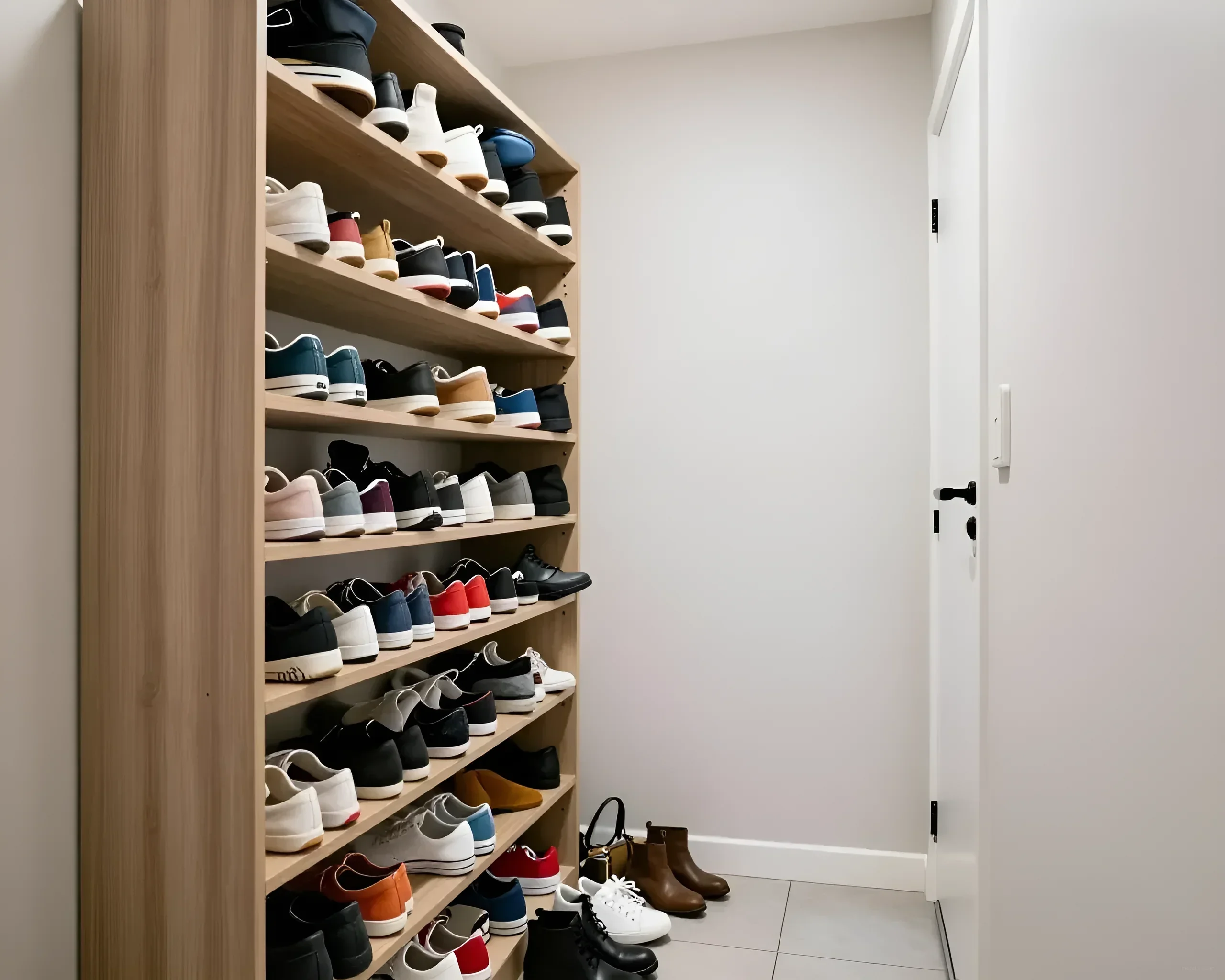
A narrow hallway is a common “pain point” for owners of standard apartments, where every centimeter counts, and the number of seasonal shoes for a family of three to four people easily exceeds 15-20 pairs. When a standard open shelf for 5 pairs turns into a chaotic mountain of sneakers and boots blocking the passage, it’s time to switch to systematic furniture solutions. The task seems impossible: how to accommodate a substantial wardrobe in a depth of 15-25 centimeters while maintaining aesthetics and free movement space? The answer lies in using vertical systems, specialized “slim” mechanisms, and smart zoning of the furniture’s internal space.
Furniture in tune with the walls: how to choose a wardrobe in the color of the walls to expand the space
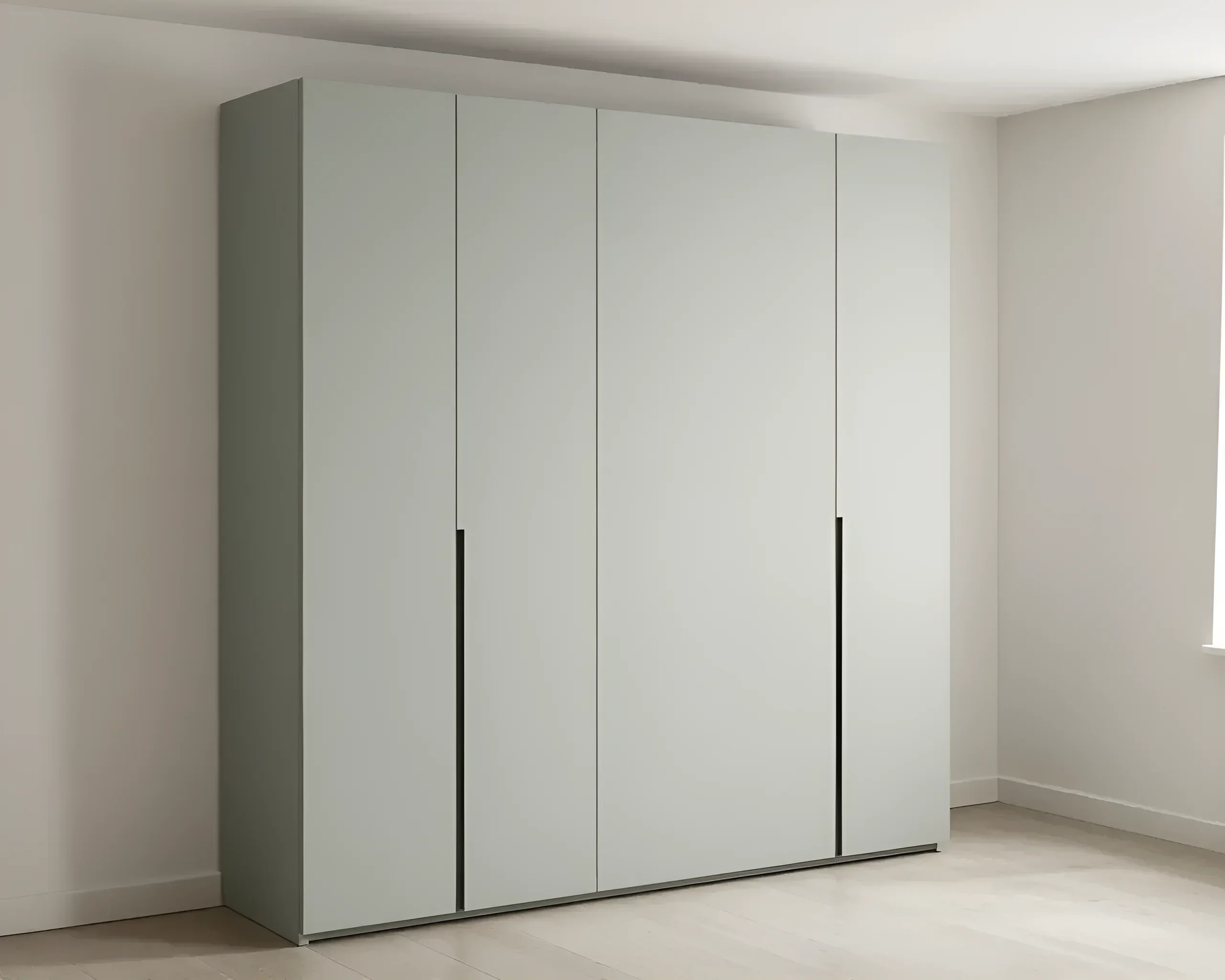
One of the main problems of small apartments, studios, and typical “Khrushchevkas” is the visual clutter of space with massive furniture. When a standard three-door wardrobe appears in a room with an area of 12-15 square meters, it instantly “eats up” volume, creating a feeling of tightness and pressure. However, there is a proven design technique that allows you to place even the most spacious storage system almost invisibly – this is the use of furniture in tune with the walls. The method of “dissolving” objects in space is based on the peculiarities of human vision: when the furniture facades and the wall surface have an identical shade and texture, the eye stops perceiving the wardrobe as a separate bulky item, reading it as a continuation of the wall plane.
Acoustic Comfort at Home: How to Choose Furniture for Soundproofing and Echo Control
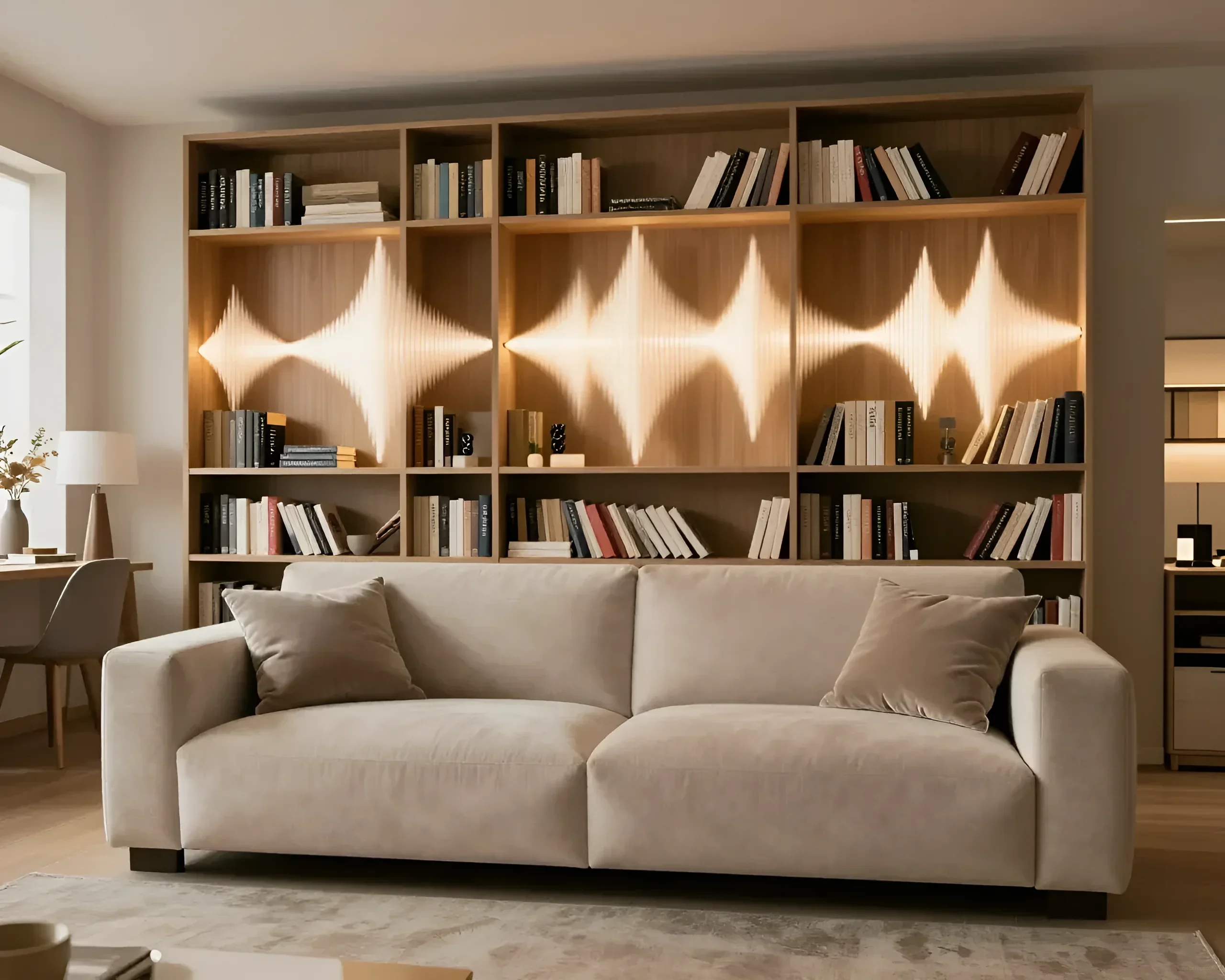
Acoustic comfort is a state of an environment where the level of background noise and reverberation time (echo) are within comfortable limits for the human ear. In modern apartments with open layouts, panoramic windows, and minimalist design, the problem of “boominess” is particularly acute. Sound waves repeatedly reflect off hard surfaces—concrete, glass, and porcelain stoneware—creating an unpleasant hum and reducing speech intelligibility. However, few people consider that professional wall soundproofing is not the only solution. Properly selected and arranged furniture can act as an effective acoustic filter, absorbing up to 30-50% of unwanted noise and transforming a “concrete box” into a cozy space with soft sound.
Emission Classes E1 and E0.5: How to Choose Safe Furniture Made from Particleboard and MDF
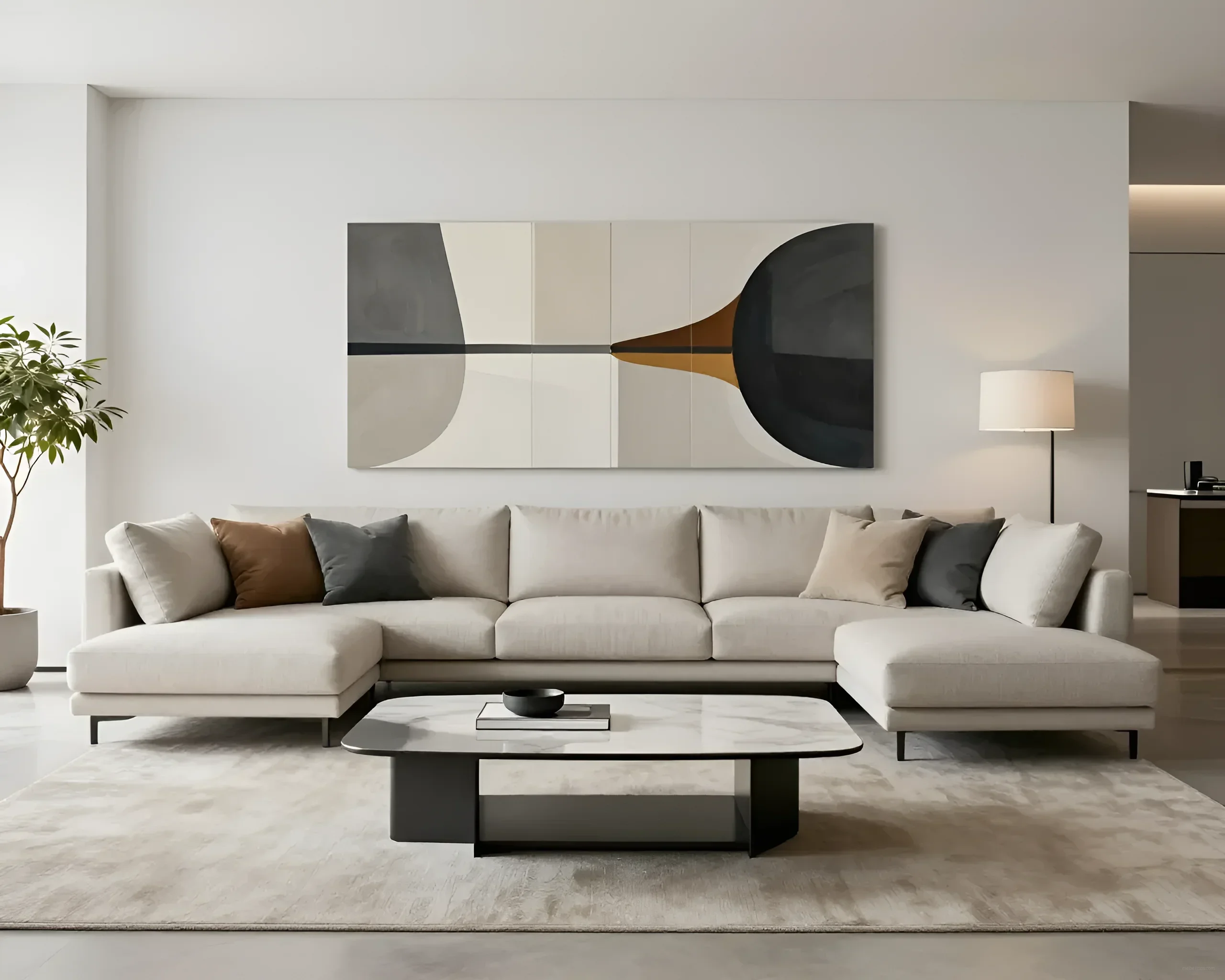
When furnishing an apartment, we often focus on design, facade colors, and the number of shelves, forgetting about the most important aspect – the chemical safety of the materials. Most modern furniture is made from particleboard (ЛДСП) and MDF, which use resins that release formaldehyde. This gas is toxic in high concentrations, so a strict classification of materials based on its evaporation level is adopted worldwide. Understanding the difference between emission classes E1 and E0.5 is not just theoretical knowledge; it’s a guarantee of your family’s health, especially when it comes to furniture for bedrooms or children’s rooms.
Ergonomic Workspace in 1 Square Meter: Furniture for Office in a Wardrobe and on a Balcony
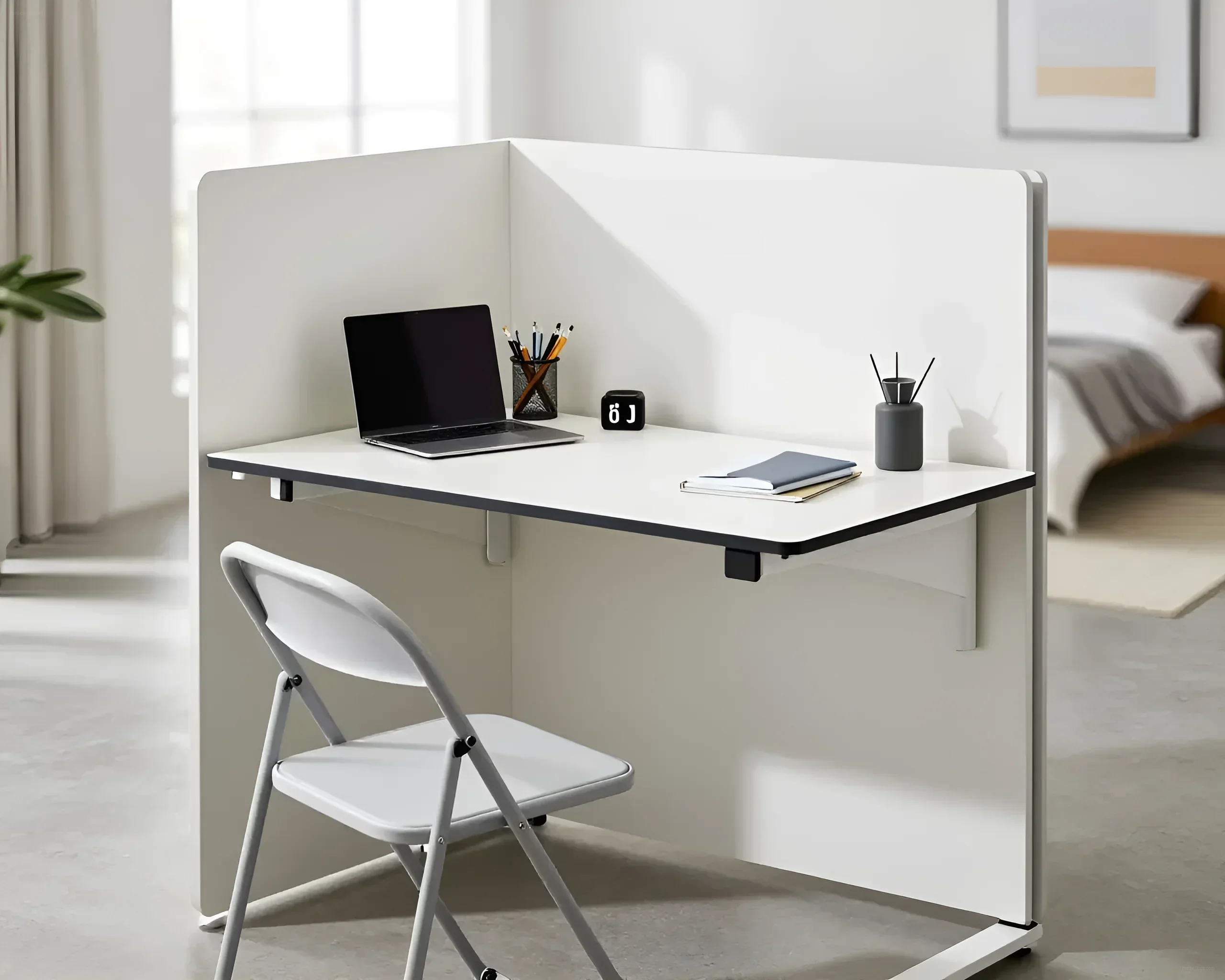
Organizing a full-fledged workspace with limited space is a challenge faced by every second resident of a modern metropolis. The shift to remote work dictates its own rules: the kitchen table is no longer sufficient as an office, and the sofa has a detrimental effect on posture. However, creating an effective work zone doesn’t necessarily require a separate room. Modern furniture solutions allow you to set up an ergonomic workspace in just 1 square meter, utilizing niches, wardrobes, or balcony space. The key is to correctly select dimensions, transformation mechanisms, and consider the user’s anthropometric data.
Vintage Furniture in a Modern Interior: How to Choose, Restore, and Combine Styles
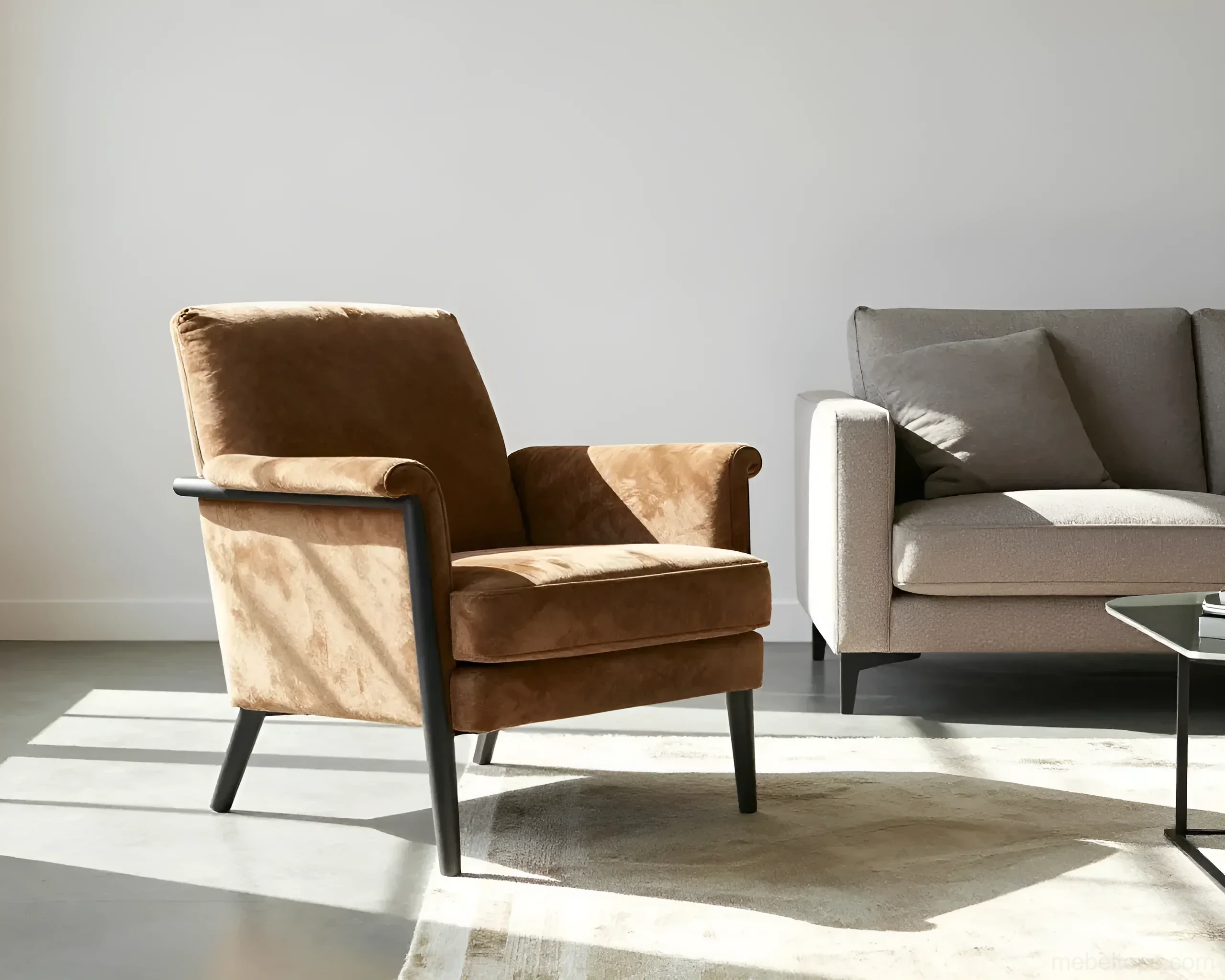
Vintage furniture today is not just a nod to the trend of eco-friendly consumption, but a powerful tool for self-expression in design. In an era of mass production from particleboard and MDF, unique items with a history become the very “anchor” that gives an interior individuality, depth, and tactile warmth. However, buying an old chest of drawers or armchair is always a risk of encountering hidden defects, unpleasant odors, or dimensions that don’t meet modern ergonomic standards. In this article, we will cover all the technical and aesthetic nuances of working with vintage items so that your choice is informed and the furniture serves for decades to come.
Modular Furniture in the Interior: How to Choose the Perfect System for Your Home
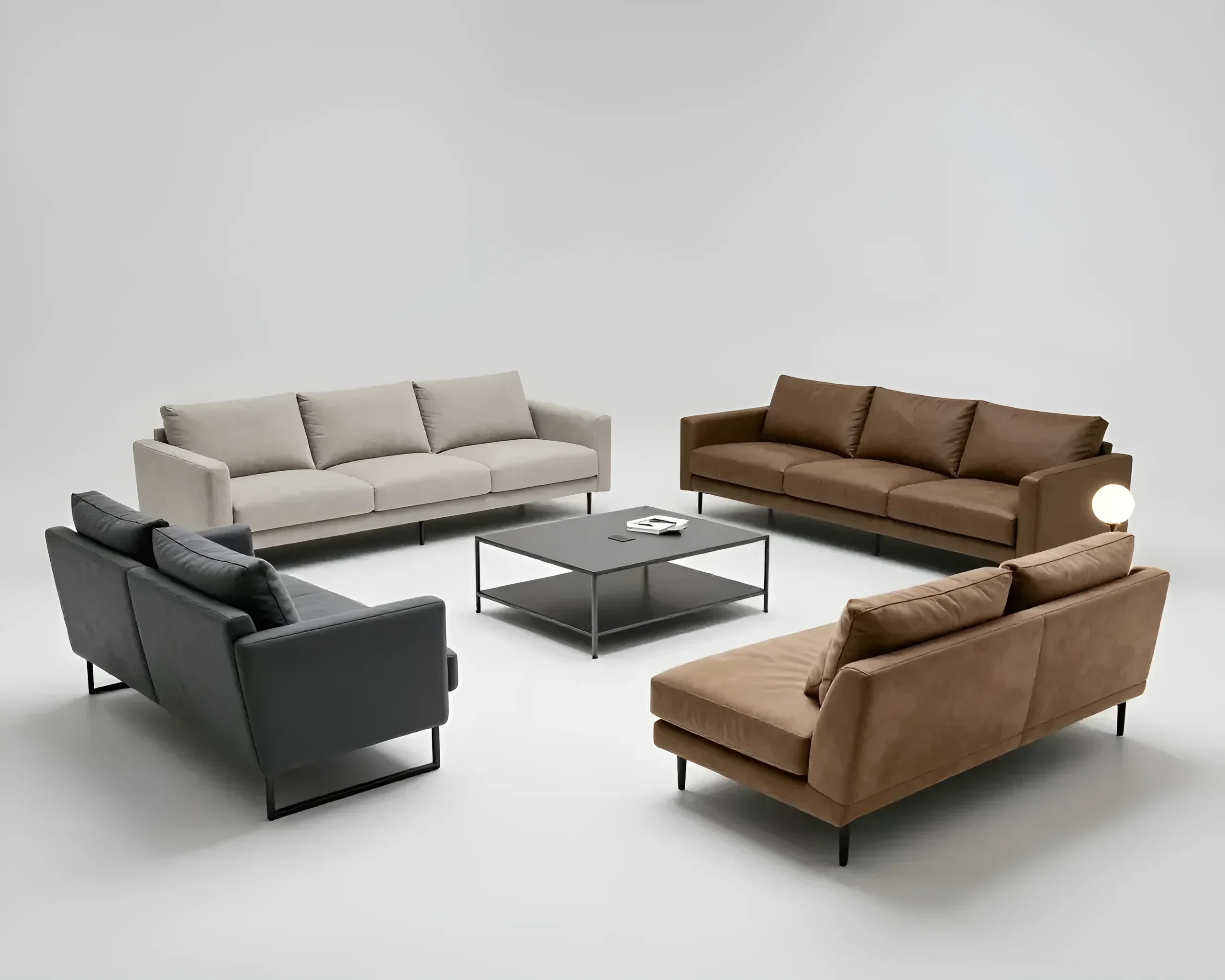
The modern pace of life dictates its own rules for decorating living spaces: the interior should be flexible, functional, and easily adaptable to the changing needs of the family. Modular furniture is a kind of “adult construction set” that allows you to move away from the bulky and static sets of the past in favor of lightness and individuality. Unlike cabinet furniture made according to a single template, modular systems consist of individual sections that can be combined in any order, purchased over time, or rearranged, completely changing the look of the room without unnecessary costs. In this article, we will analyze in detail how modular furniture is structured, what technical characteristics to pay attention to, and how to create a space that will work for you.