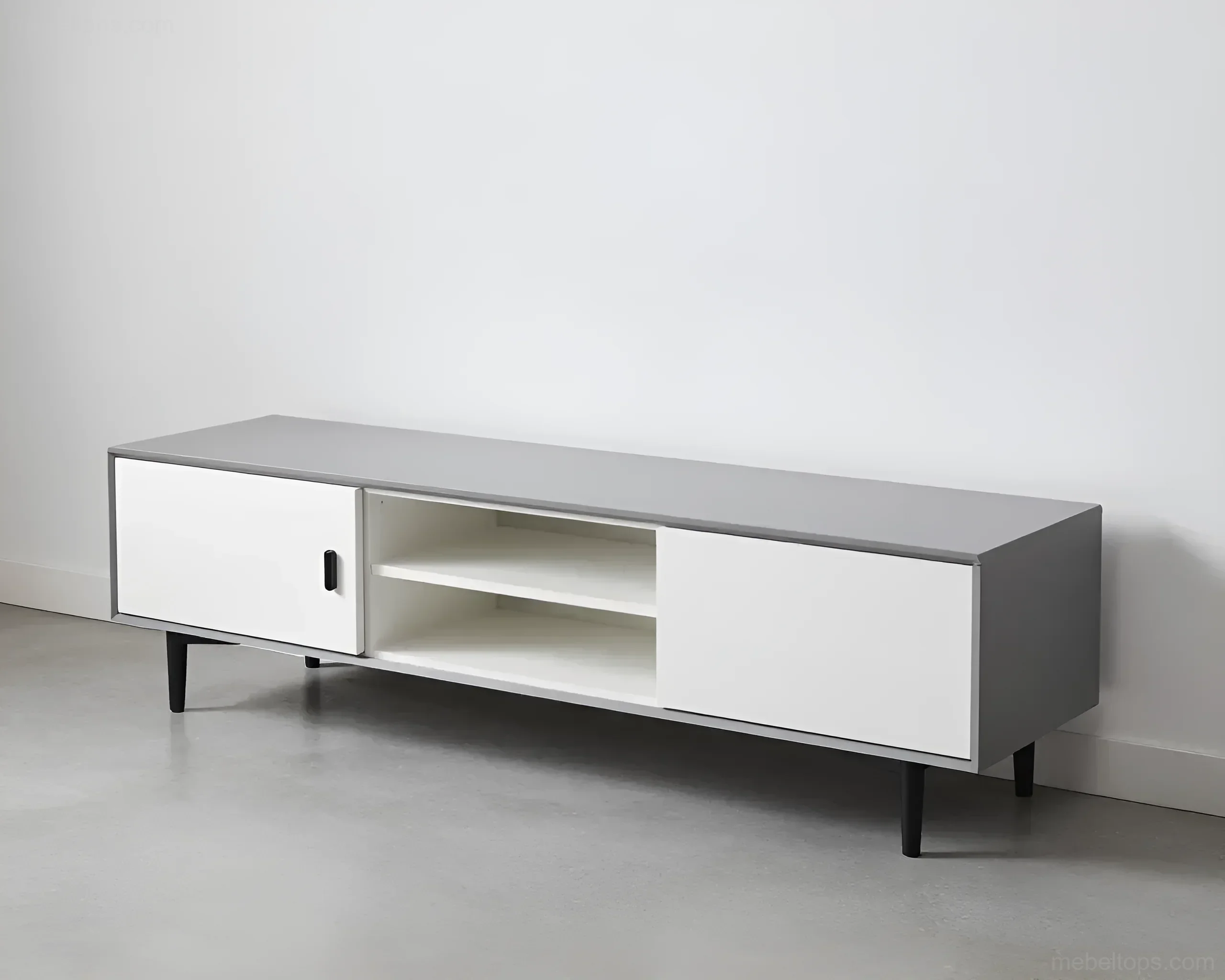
Furnishing a small apartment always involves a compromise between functionality and preserving free space. In such a situation, a compact TV stand becomes not just a piece of furniture for electronics, but a strategically important interior element that should combine storage, aesthetics, and ergonomics. With limited square footage, every centimeter counts, so choosing furniture requires a deep understanding of structural features and material characteristics. A correctly chosen model can visually enlarge the room, hide the chaos of wires, and ensure comfortable viewing of favorite shows without cluttering walkways.
Compact TV Stands for Small Apartments: Types and Solutions
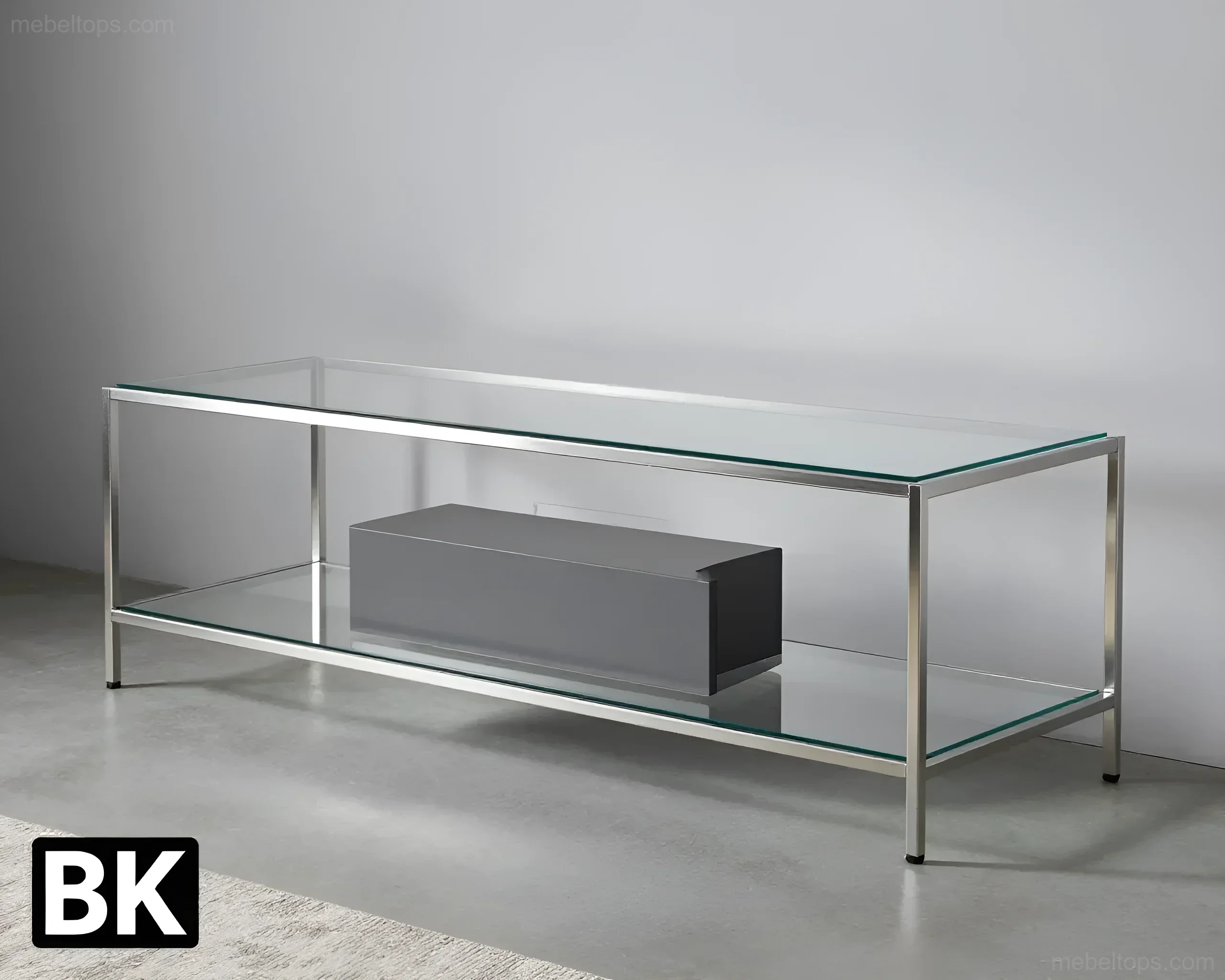
When looking for furniture for a limited space, it’s important to understand that “compactness” is not just about small dimensions, but also about efficient form. The market offers several key types of designs, each addressing specific layout challenges.
- Wall-mounted (hanging) stands. These are favorites in modern interiors and studios. The absence of legs creates an illusion of “floating” furniture, freeing up the floor. A visible floor area is the main trick for visually enlarging space. Such models typically have a depth of only 25–35 cm, which is crucial for narrow rooms.
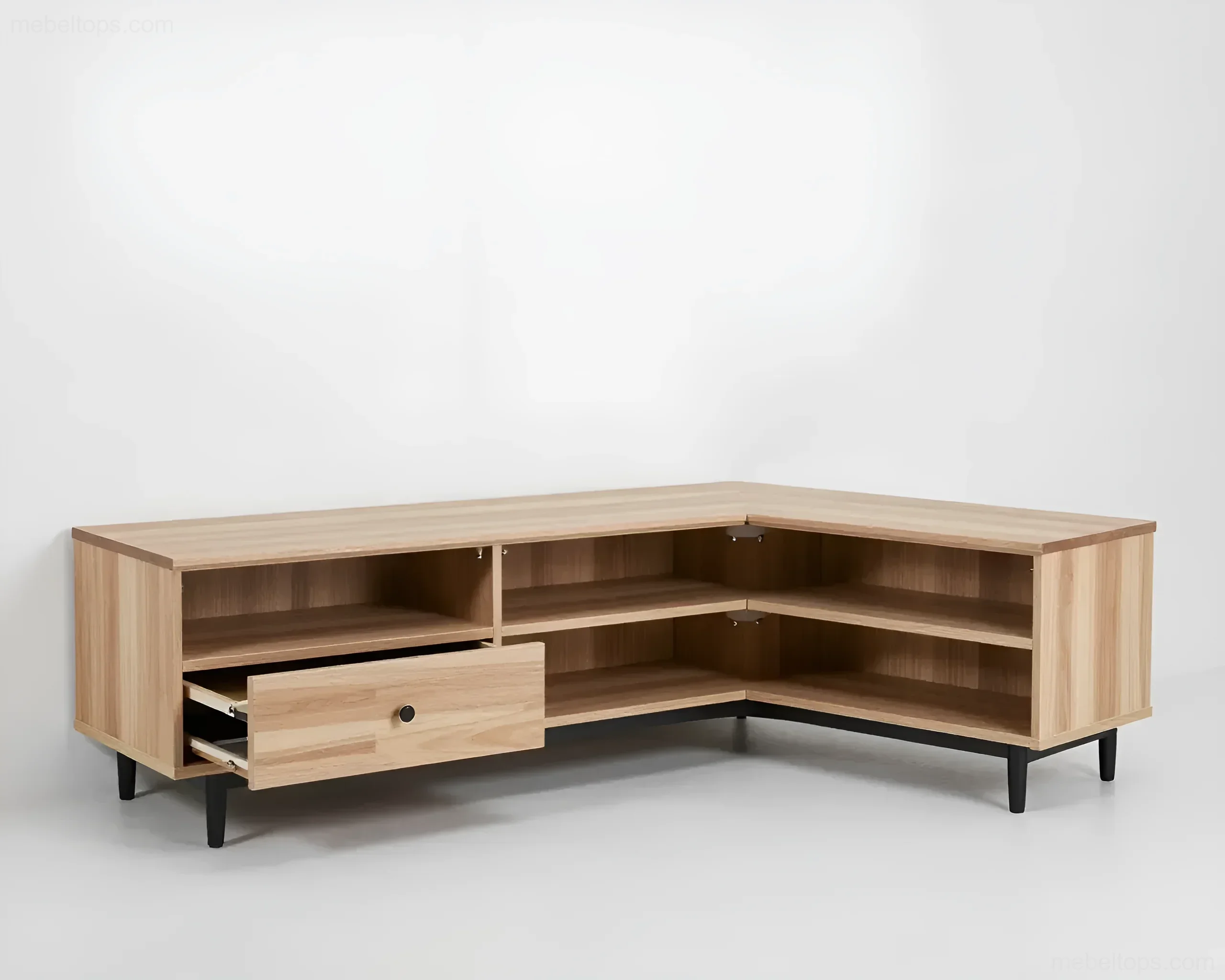
- Corner models. Often, corners in small apartments remain “dead zones.” A corner stand allows you to utilize this space, freeing up the central part of the wall for other needs. Modern corner solutions have moved away from bulky triangles to elegant trapezoidal shapes.
- Console stands. Extremely narrow and long models. Their depth may not exceed 20–30 cm. They are ideal for modern flat-screen TVs mounted on the wall, with the stand underneath serving as a decorative element and a place for remotes or TV boxes.
- Stands on high legs. If you don’t want to drill holes in the walls for a hanging model, choose one with thin, tall legs (from 15 cm). This lightens the construction and simplifies cleaning with a robot vacuum.
- Mobile stands on wheels. A solution for multifunctional rooms where the TV needs to be periodically turned towards the sofa or kitchen area. Modern wheel locks ensure secure fixation.
The choice of a specific type depends on the architectural features of your room. For example, in a long and narrow “car-carriage” room, a wall-mounted console along the long wall is best, while in a small square room, a compact corner option is suitable.
Materials for Compact TV Stands: Pros and Cons for Space Saving
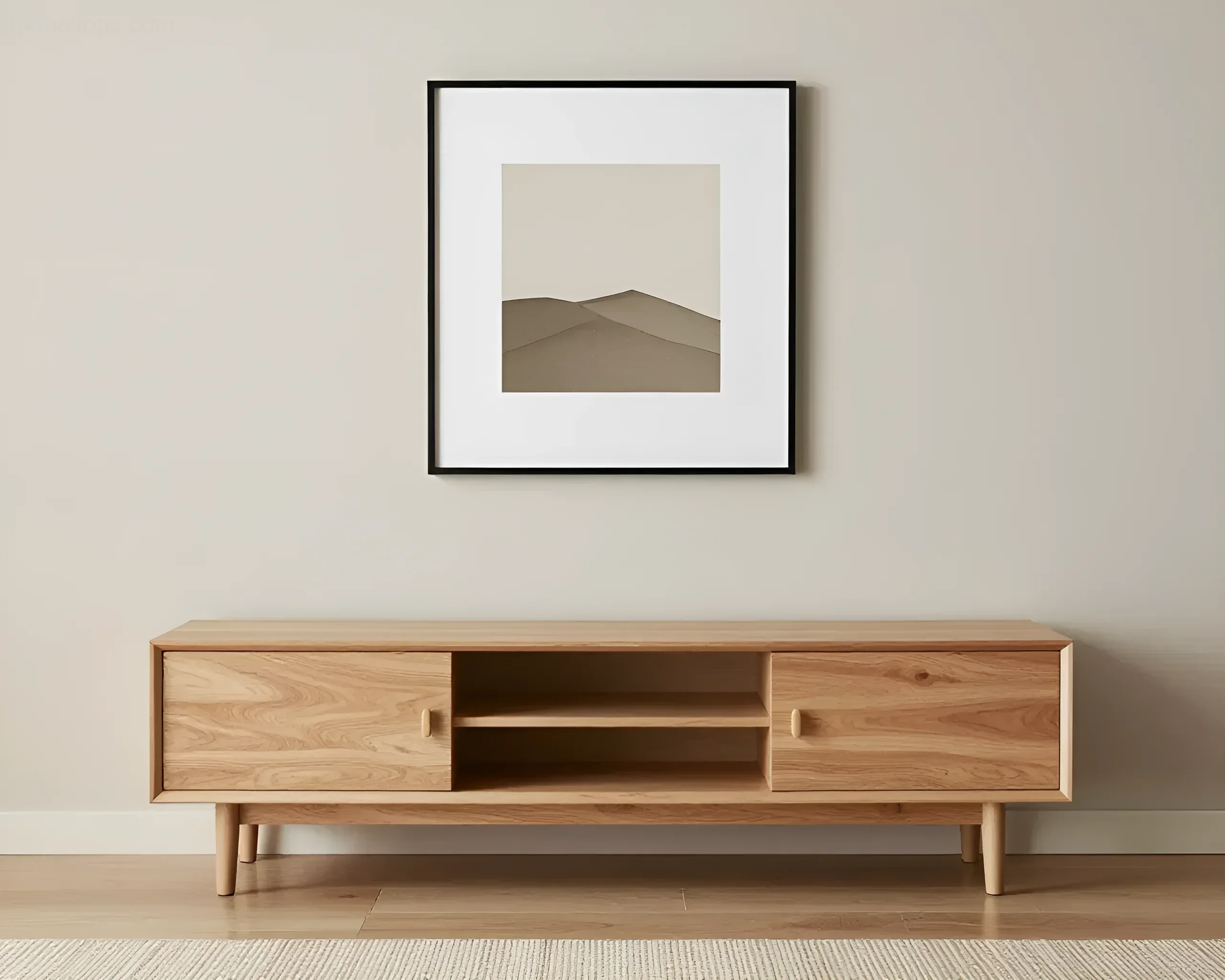
The material not only affects durability but also how “heavy” the furniture appears in the interior. For small apartments, experts recommend paying attention to the following options:
- MDF with a glossy finish or enamel. Gloss has reflective properties. Light hitting the stand’s surface diffuses, making the space brighter. MDF is a dense material that allows for thin yet durable parts, which is important for compact models.
- Laminate particleboard (emission class E1). The most budget-friendly option. A plus for small apartments is the huge selection of wood textures. Choose light shades (ash, pine, white oak) so the furniture doesn’t look like a dark spot in a cramped room.
- Tempered glass and metal. Glass stands are almost invisible in the interior. However, it’s worth remembering that clear glass exposes all the wires. The optimal choice is tinted or frosted glass combined with a thin metal frame.
- Solid light wood. If your budget allows, choose birch or beech. Solid wood is durable, and its natural texture adds coziness without overloading the space, especially if the design is minimalist or Scandinavian.
Comparative table of materials for compact stands:
| Material | Visual Weight | Durability | Maintenance |
|---|---|---|---|
| Glass | Minimal | Medium | Difficult (fingerprints visible) |
| MDF (glossy) | Medium | High | Medium |
| Laminate particleboard (matte) | Medium | Medium | Easy |
| Metal | Low (in thin designs) | Maximum | Easy |
How to Choose the Perfect Compact TV Stand: Practical Tips
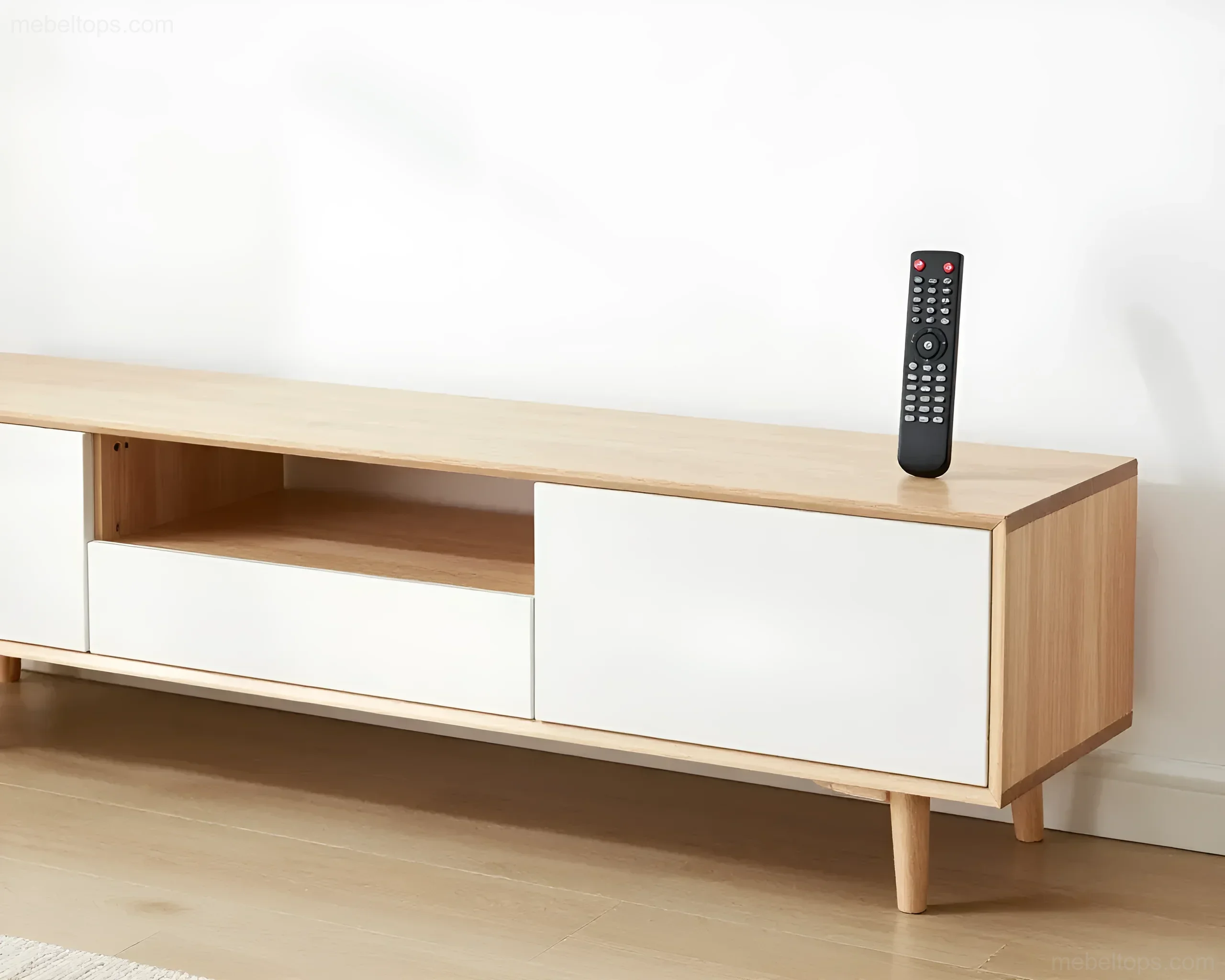
When buying a TV stand for a small apartment, it’s easy to make a mistake by focusing only on appearance. Here’s a step-by-step selection guide from professionals:
- Measure the TV dimensions. The stand should not be shorter than the screen. Ideally, it should extend 10–15 cm on each side. This creates visual balance and protects the equipment from accidental bumps when passing by.
- Determine the installation height. The center of the screen should be at eye level for a seated person. For a standard sofa, this is a height of 100–110 cm from the floor. Consequently, if the TV is placed on a stand, its height should be around 40–55 cm. If the TV is mounted on the wall, the stand can be very low (20–30 cm).
- Assess the load capacity. Even compact models have a weight limit. Modern LED TVs are lightweight, but if you plan to place an audio system or game console on the stand, sum their weights and add a 20% safety margin.
- Check cable management. In a small apartment, a tangle of wires creates a sense of clutter. Look for models with technical holes in the back panel or hidden channels.
- Style and color. For Khrushchev-era buildings and studios, it’s best to choose furniture that matches the wall color. A white stand against a white wall will “dissolve,” freeing up visual space.
Important tip: If you are choosing a wall-mounted model, make sure the wall can support the load. For drywall partitions, special inserts or reinforced anchors are required, or it’s better to choose a floor-standing model on thin legs.
Optimal Dimensions and Sizes of Compact TV Stands for Any Niche
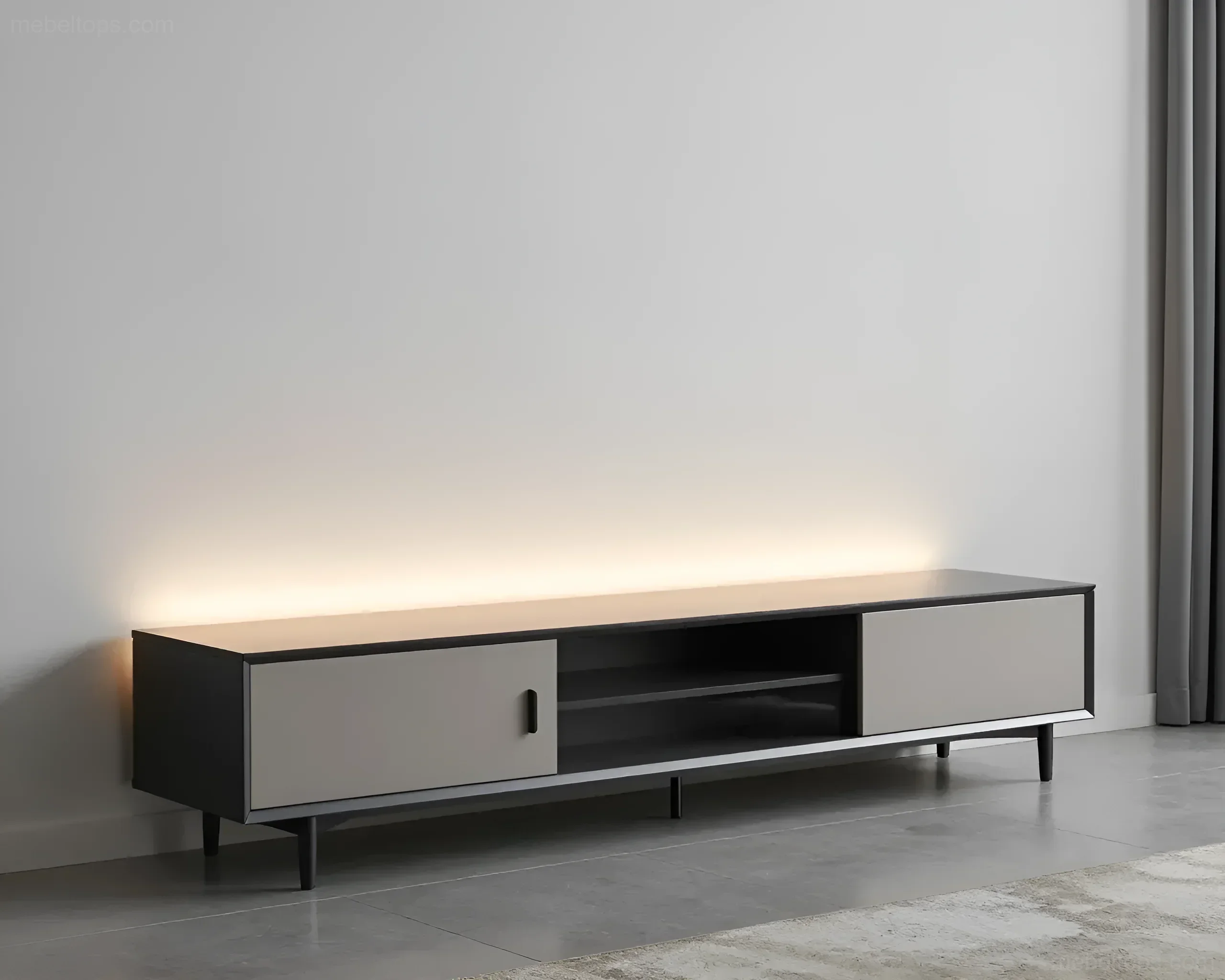
What is considered compact? In the furniture industry, there are certain standards for small-scale solutions. Knowing these figures will help you plan your space even before going to the store.
- Width: For small apartments, the optimal range is from 800 to 1200 mm. Stands less than 80 cm wide are only suitable for very small TVs (up to 32 inches).
- Depth: This is a critical parameter. Standard stands have a depth of 450–500 mm. To save space, look for models with a depth of 300–350 mm. This is sufficient for TV stability and accommodating most TV boxes.
- Height: Floor-standing models range from 350 to 500 mm. Tall TV chests of drawers (from 700 mm) should be avoided in small rooms, as they create a “hanging” effect and overload the interior.
When planning a niche for a stand, always leave a gap of 1–2 cm on each side. This is necessary for natural ventilation of the equipment and for easy removal of the furniture for cleaning or cable rearrangement if needed.
Functionality and Mechanisms of Compact TV Stands: Maximum Utility in Minimum Space
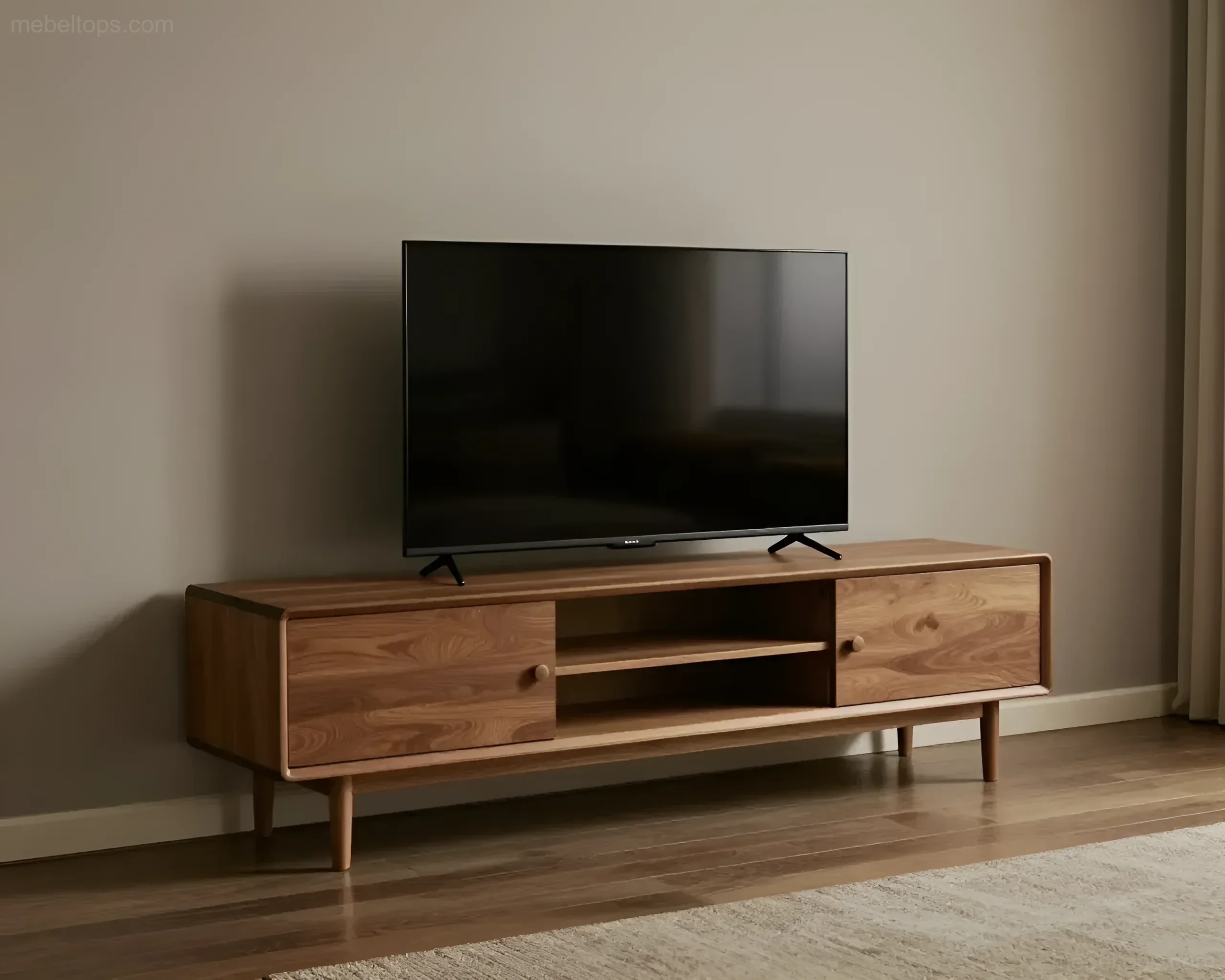
In a small apartment, a stand should “work” 100%. Modern hardware allows you to turn a small piece of furniture into a complete storage system.
Opening systems: In narrow passages, hinged doors are inconvenient. They block the path and require space to open. It’s better to choose:
- Flip-down fronts with gas lifts. The door opens downwards, providing access to the contents.
- Sliding doors (coupe). Ideal for very narrow spaces.
- Push-to-open systems. The absence of handles makes the facade smooth, which visually lightens the furniture and prevents accidental snagging of clothes in a tight room.
Internal organization: Even in a compact stand, you can organize storage. Use models with adjustable shelves. This will allow you to place both a low TV box and a tall collection of discs or books. The presence of full-extension drawers will help utilize the entire depth of the stand, preventing you from searching for items in dark corners.
Ventilation: Electronics generate heat. Ensure that closed sections of the stand have ventilation holes or that the back panel is installed with a gap. This will extend the life of your equipment.
Caring for a Compact TV Stand: How to Maintain its Newness and Functionality
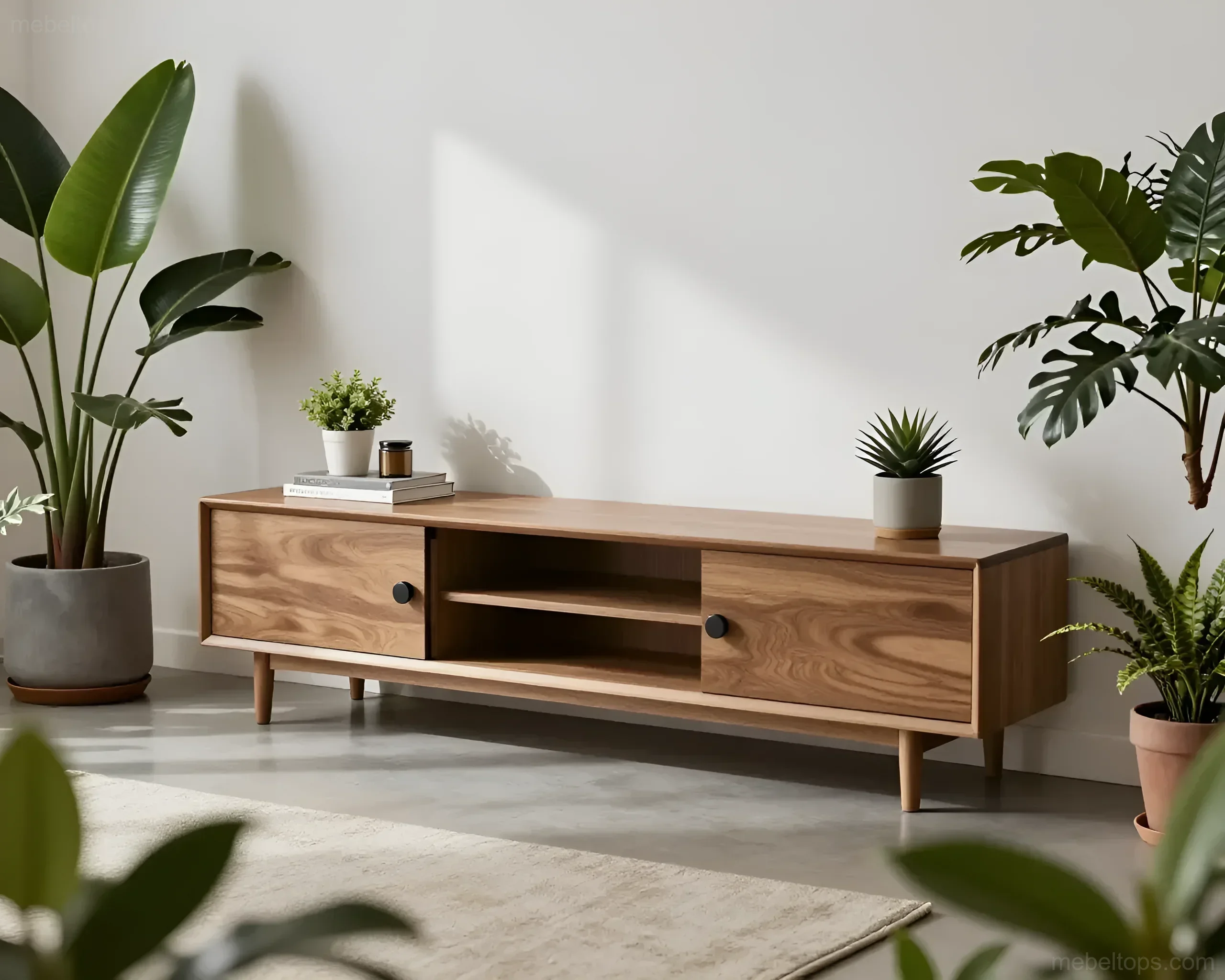
A small apartment implies a high operational load on furniture. To ensure the stand lasts a long time, follow simple care rules:
- Dust control. Dust is visible on black glossy surfaces just an hour after cleaning. Use anti-static sprays when wiping. For glass surfaces, use lint-free microfiber cloths.
- Moisture protection. During wet floor cleaning, ensure that water does not accumulate at the base of the legs (especially if the stand is made of laminate particleboard). The edge can swell, damaging the appearance.
- Hardware check. Every six months, tighten hinges and check drawer slides. In compact models, even a slight misalignment of a couple of millimeters becomes immediately noticeable.
- Temperature control. Do not place the stand close to heating radiators. Constant heating can lead to delamination of PVC film or cracking of solid wood.
To remove greasy stains (e.g., from fingerprints on handleless fronts), use a weak soapy solution. Avoid abrasive powders and products containing alcohol or chlorine if the surface is lacquered or acrylic.
Top 5 Compact TV Stands for Small Apartments: Our Choice
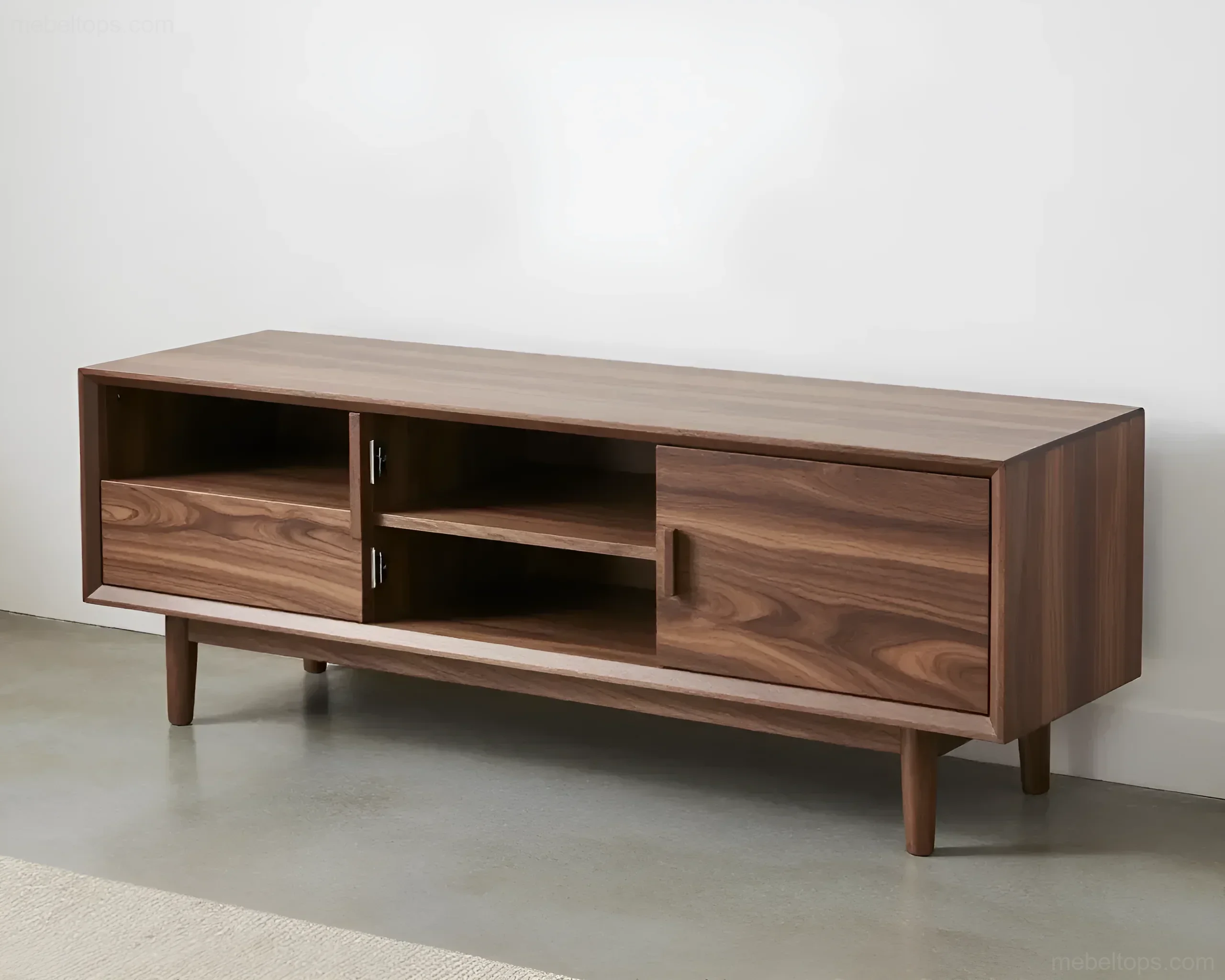
Based on customer reviews and technical specifications, we have compiled a list of optimal solutions for small spaces:
- Minimalist wall-mounted console (width 100 cm, depth 25 cm). Ideal for bedrooms and narrow living rooms. It completely frees up the floor and looks modern and high-tech.
- Retro-style stand on high conical legs. A combination of compactness and “mid-century” style. High legs (20 cm) make it visually weightless.
- Trapezoidal corner stand with open shelves. The best choice for those who need to accommodate many peripheral devices (set-top boxes, routers, speakers). The open design promotes equipment cooling.
- Glossy stand with Push-to-open system. White gloss visually expands boundaries. A smooth facade without hardware ensures safety in a tight space.
- Transformer stand with a sliding tabletop. Allows you to adjust the width depending on the available wall space. A unique solution for those planning to move or change their TV.
Frequently Asked Questions about Compact TV Stands for Small Spaces
1. Can I place a large TV on a very narrow stand?
Technically, yes, if the TV’s weight does not exceed the permissible load. However, aesthetically, it looks bad: the edges of the TV will hang over significantly, creating a risk of tipping. It’s optimal if the stand is at least 10 cm wider than the screen.
2. At what height should I hang a wall-mounted stand?
Usually, it’s hung so that the bottom edge is 20–30 cm from the floor. This leaves enough space for cleaning and maintains the “airiness” of the interior.
3. What’s better: open shelves or closed drawers?
For a small apartment, closed facades are better. A large number of small items on open shelves creates visual noise, which makes the room feel even smaller and messier.
4. How can I hide wires if the stand doesn’t have a cable channel?
You can use special flexible cable management solutions or decorative boxes that match the wall color. You can also drill a hole in the back panel yourself using a hole saw for wood.
5. Is white color practical?
Surprisingly, yes. On a white matte background, dust and fingerprints are much less visible than on dark wood or black gloss. For small apartments, white is the preferred color.
Choosing a compact TV stand is an investment in your daily comfort. A correctly chosen model will not only organize your relaxation area but also help maintain order without taking up precious meters. Remember the rule of “light and open floor,” prefer functional hardware, and always match the furniture dimensions with your equipment’s size. With this approach, even the smallest living room will become a cozy and modern place to live.