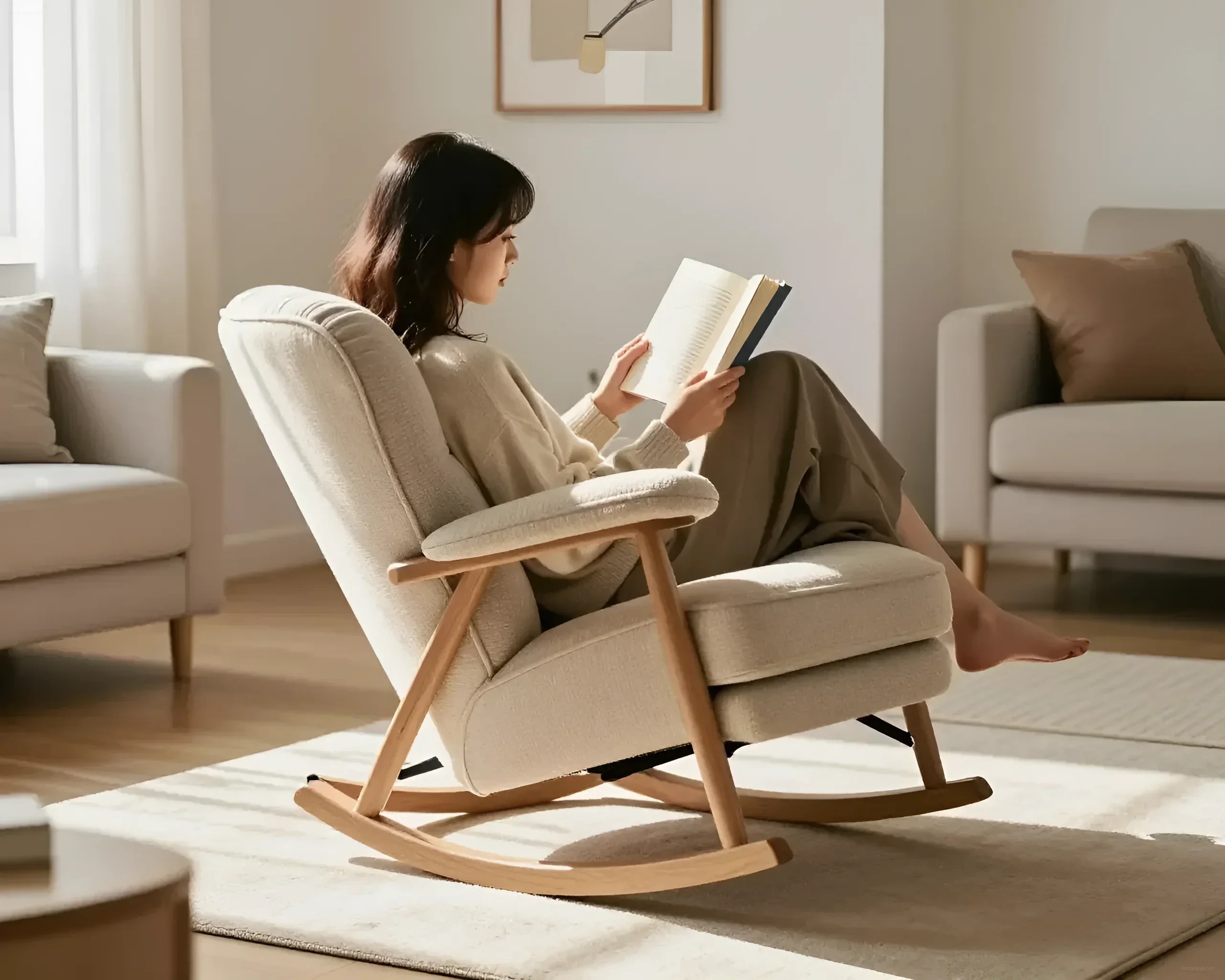
A rocking chair is not just a piece of furniture, but a true symbol of home comfort, tranquility, and leisurely relaxation. In today’s fast-paced life, the ability to immerse yourself in gentle rocking for a few minutes becomes invaluable therapy for the nervous system and spine. However, choosing the right model involves many technical nuances, from the type of rocking mechanism to the durability of the frame material. In this article, we will delve into how to avoid mistakes when buying and find that perfect chair that will serve you for decades.
Rocking Chair: Your Guide to Choosing the Perfect Relaxation
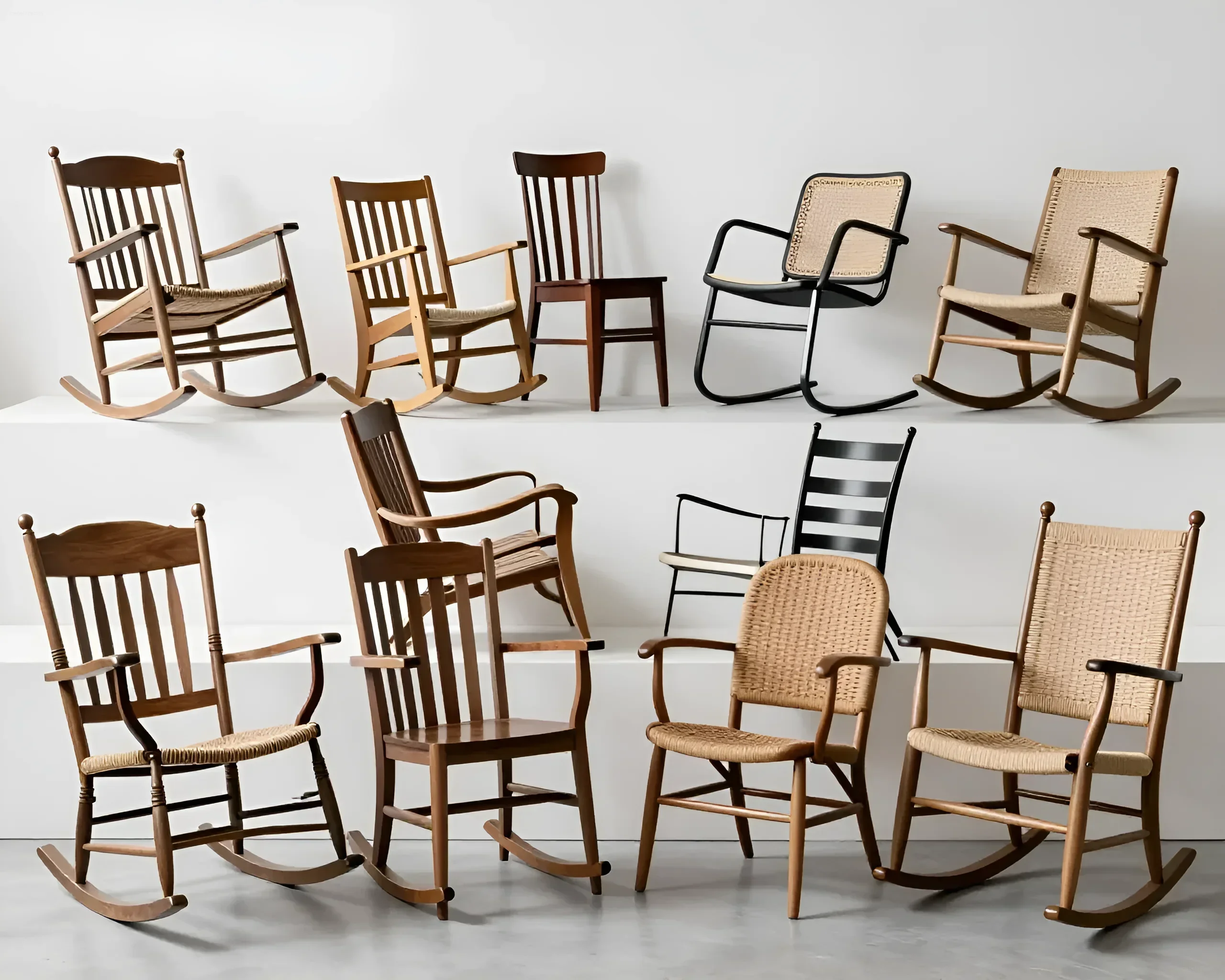
Before diving into technical specifications, it’s important to understand the role of a rocking chair in modern home ergonomics. It is specialized furniture designed for passive relaxation. Unlike a regular armchair, a rocking chair engages the vestibular system, promoting deeper relaxation of the back and neck muscles.
When choosing, you should focus on three key factors: seating comfort, mechanism safety, and room dimensions. A good rocking chair should not make extraneous noises (creaks, clicks) and must remain stable even at maximum rocking amplitude. Remember that a quality product is selected based on the anthropometric data of a specific person: height, weight, and even their usual posture when reading or watching TV.
Types and Styles of Rocking Chairs: From Classic to Modern
The modern market offers several structural solutions, each with its own operating features. The choice of mechanism type directly affects how smooth the motion will be and how much floor space the furniture will occupy.
- Classic chairs on runners (skis). The most recognizable type. The design is based on two curved arcs. Features: rocking amplitude depends on the radius of the runner’s curve. The larger the radius, the deeper and slower the rocking. Disadvantage: can leave marks on soft floor coverings (linoleum, carpet) and requires significant free space in front and behind.
- Gliders (pendulum chairs). In these models, the base remains stationary, and the seat rocks thanks to a hinged mechanism (pendulum). Advantages: absolutely silent, safe for pets (paws won’t get caught under the runners), do not damage the floor. Gliders are often equipped with a locking function in one position.
- Spring chairs (e.g., “Papasan”). The base is a massive leg, inside which a powerful spring is hidden. Rocking occurs in all directions, including circular rotation. This is an ideal option for lovers of soft, “enveloping” comfort.
- Folding models. Usually made on a metal frame with a textile seat. Suitable for dachas and terraces. The main advantage is mobility, but in terms of comfort, they are inferior to stationary options.
Rocking Chair Materials: Wood, Rattan, Metal – What to Choose?
The frame material determines not only the appearance but also the maximum load the product can withstand, as well as its service life in various conditions (apartment or open veranda).
- Natural wood. Leaders in durability are oak, beech, and ash. They have high density and beautiful texture. Coniferous species (pine) are cheaper, but they are softer and dents are more easily left on them. Wooden chairs can withstand weights up to 120–150 kg.
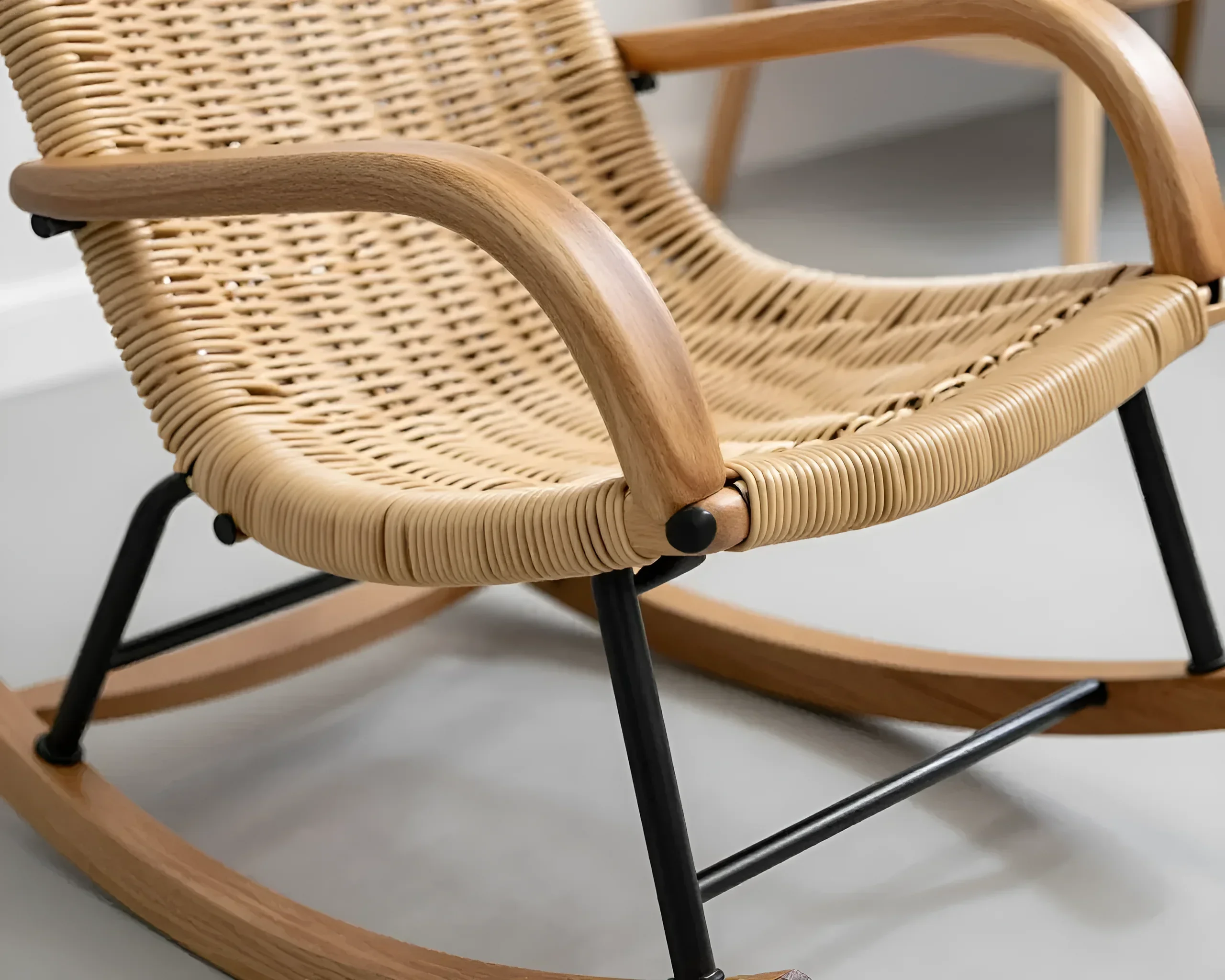
- Natural rattan. Made from the cleaned stems of the Calamus palm. It is an eco-friendly and incredibly lightweight material. Despite its visual fragility, a quality rattan chair can withstand up to 120 kg due to the natural cushioning of the fibers. Important: it is sensitive to sharp changes in humidity and direct sunlight.
- Artificial rattan (technorattan). Ideal for outdoor use. It does not fade, does not rot, and is easy to clean. Usually woven on an aluminum or steel frame.
- Metal. Often used in wrought iron models or modern designer chairs. Metal frames are practically eternal, but the seat itself must have soft padding, as metal is cold and hard.
- Willow. A budget-friendly analogue of rattan made from willow twigs. Less durable, it can start to creak over time due to drying out of the joints.
How to Choose a Rocking Chair: What to Look For
When buying in a store, be sure to take a “test drive.” Don’t hesitate to spend at least 5–10 minutes in the chair to assess its ergonomics. Here is a checklist of critically important parameters:
- Balance. Sit in the chair and rock gently. It should not tip backward or “throw” you forward when stopping. The center of gravity must be perfectly calibrated.
- Absence of noise. A quality rocking chair operates silently. Any knocking, creaking, or grinding indicates either low-quality assembly or dried-out wood/willow.
- Backrest resilience. The backrest should have an anatomical curve in the lumbar region. A too-soft backrest will make you slouch, negating the benefits of relaxation.
- Seat firmness. The optimal option is medium firmness. A too-hard seat will press on the ischial tuberosities, and in a too-soft one, you will “sink in,” making it difficult to get up.
- Quality of joints. In wooden models, check the glued joints and bolted connections. In woven ones, check the density of the weave and the absence of protruding sharp ends of the twigs.
Rocking Chair Dimensions and Size: The Ideal Place in Your Interior
A rocking chair requires more space than a standard chair. When planning your space, you must consider the “exclusion zone” for the free movement of the runners or pendulum.
Average dimensions of standard models:
- Seat width: from 50 to 60 cm. Models wider than 60 cm are considered extra comfortable.
- Seat depth: 50–55 cm. It is important that the edge of the seat does not press under the knees, disrupting blood circulation.
- Backrest height: 80–100 cm. For complete neck relaxation, the backrest should be higher than head level or have a special headrest.
- Overall length (runner span): 100–120 cm.
Placement tip: leave at least 50–70 cm of free space behind and in front of the chair. If you choose a pendulum glider, this distance can be smaller (about 20–30 cm) as the base is stationary.
Rocking Chair Functionality and Comfort: Cushions, Footrests, and Other Bonuses
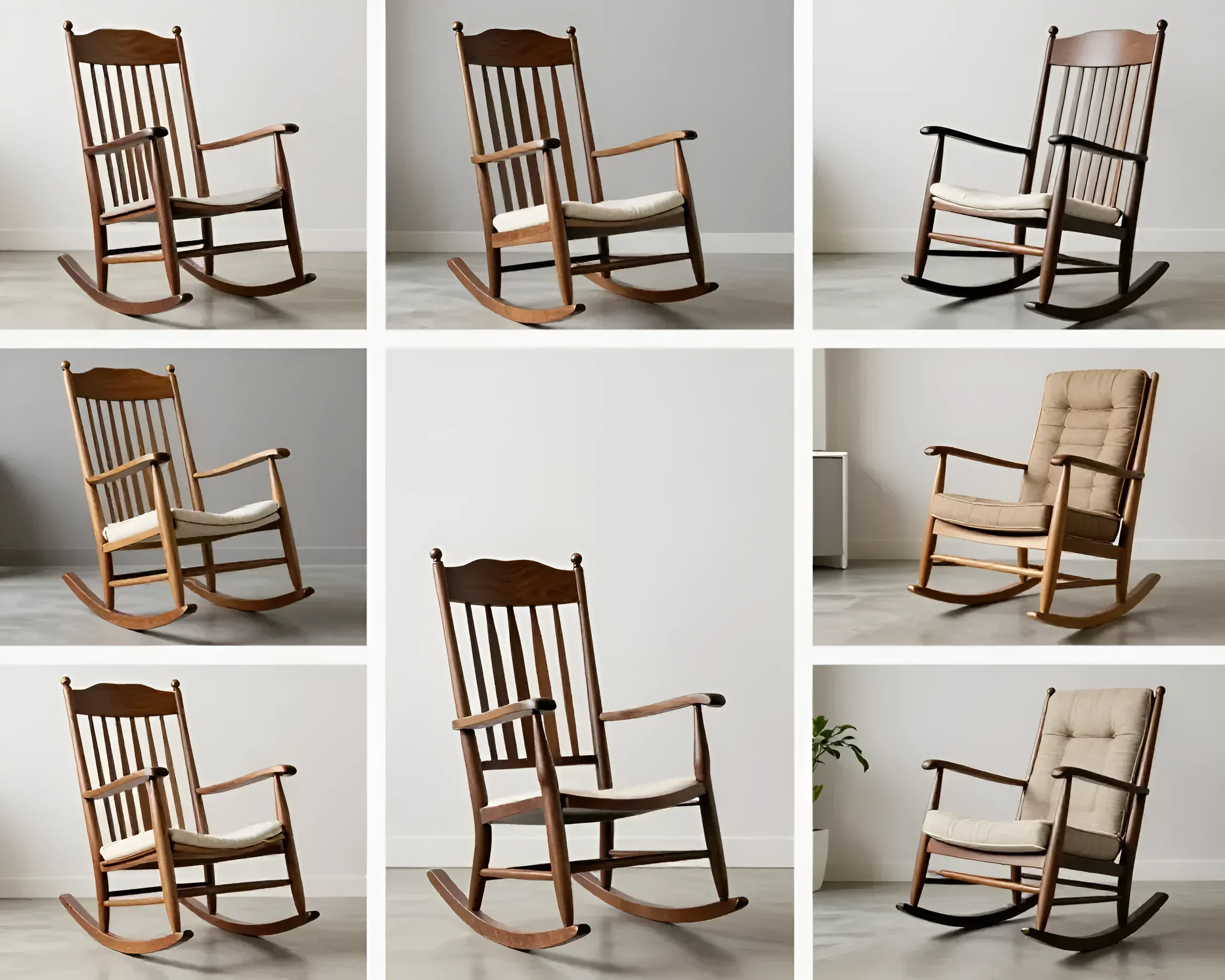
Additional elements can turn a good chair into an ideal place for sleeping or reading. Pay attention to the following options:
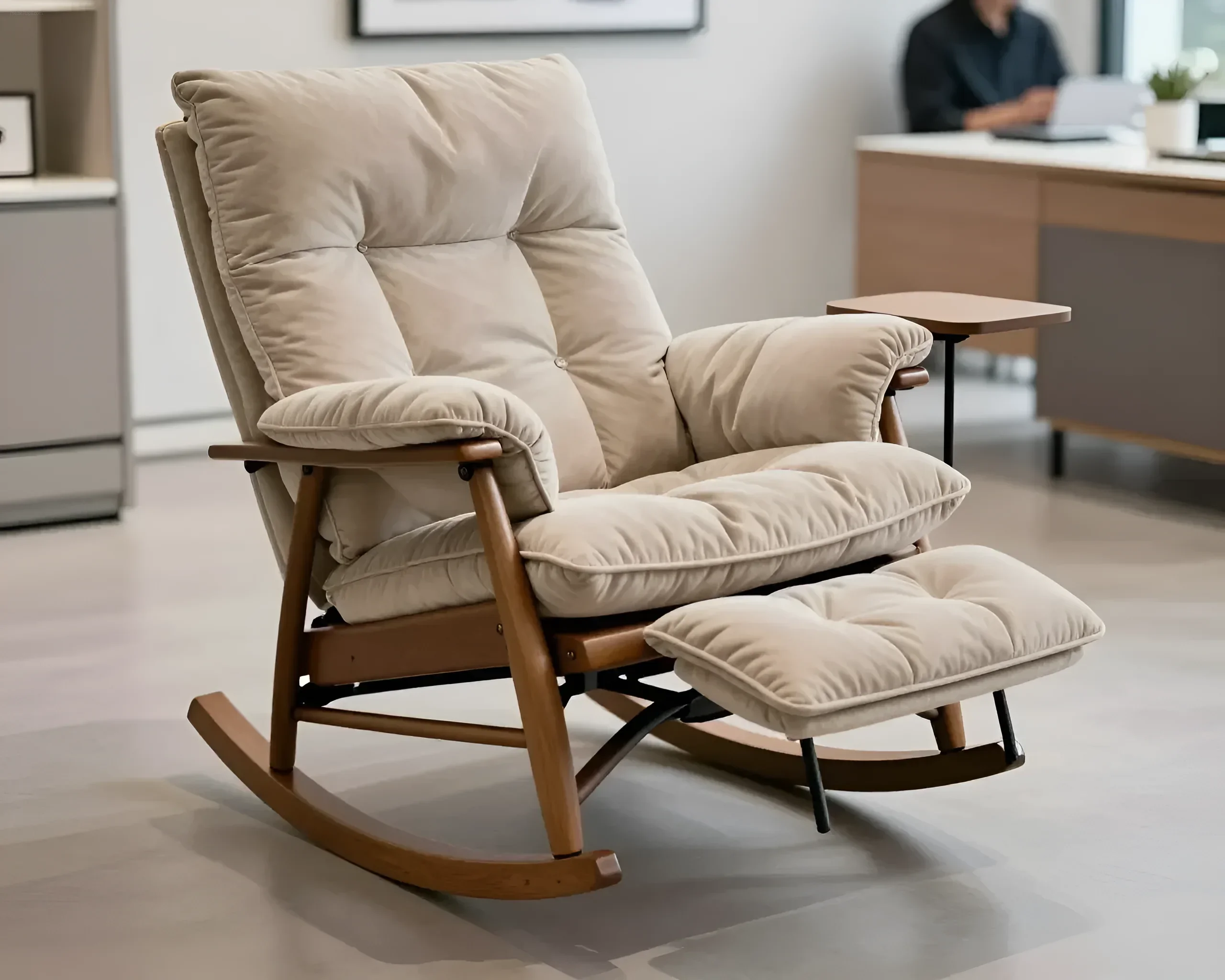
- Pull-out or attachable footrest. When the legs are elevated, the load on the lower back is reduced by 40-50%. Gliders often feature a synchronized footrest that extends when the backrest reclines.
- Armrests. They should be wide enough so that your arms do not slip off. It is ideal if wooden armrests have soft padding.
- Headrest. A removable neck pillow allows you to adjust the chair to your height. This is critical for preventing osteochondrosis.
- Pockets for small items. It’s convenient when there’s a compartment on the side for a TV remote, glasses, or a book.
- Upholstery. Choose wear-resistant fabrics (chenille, matting, jacquard) with a Martindale test rating of at least 20,000 cycles. If you have pets, flock (“anti-claw”) is an ideal choice.
Rocking Chair Care: Secrets of Durability and Beauty
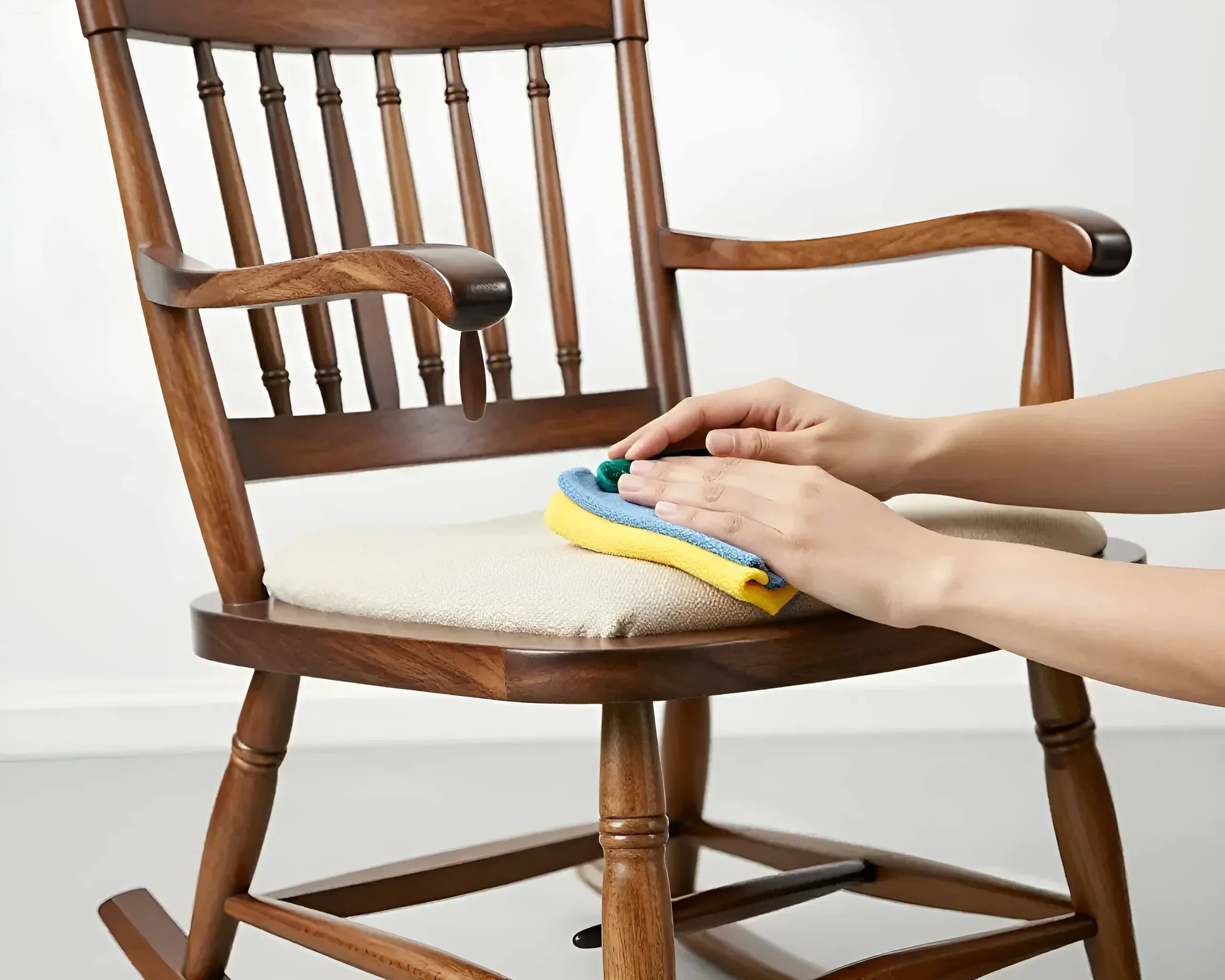
To ensure your furniture brings you joy for many years, it needs proper care, taking into account the specifics of the materials.
For wooden models: check the tightness of the bolts every six months. Wood has a tendency to “breathe” slightly, which can loosen connections. Wipe surfaces with a wax-based polish – this will prevent the varnish layer from drying out.
For rattan and willow: these materials love moisture, but in moderation. If the air in the apartment is too dry (during the heating season), wipe the weave with a damp cloth once a month or use a humidifier. This will maintain the elasticity of the fibers and prevent creaking.
For pendulum mechanisms: if a foreign sound appears in the hinges, use silicone spray lubricant. It penetrates deep into the bearings and has no strong odor.
Top 5 Rocking Chairs for Your Home: Best Models of 2024

Based on consumer demand and expert reviews, we have identified the 5 most successful configurations this year:
- Classic Viennese chair made of bent beech. Timeless design, lightness, and incredible durability. Suitable for classic interiors.
- Ergonomic glider with fabric upholstery. The best choice for new mothers (convenient for feeding a baby) and the elderly due to its smooth motion and stability.
- Papasan chair made of natural rattan. A huge round cushion and the ability to rock in any direction. A leader in the “cozy” category.
- Modern Scandinavian-style chair on metal runners. Thin lines, minimalism, and bright upholstery. Ideal for small modern apartments.
- Outdoor rocking chair made of artificial rattan with a high back. An all-weather option that is not afraid of rain and sun, providing comfort on the terrace.
Frequently Asked Questions About Choosing a Rocking Chair
Question: What is the maximum load that rocking chairs can withstand?
Answer: Most standard wooden and rattan models are designed for 100–120 kg. Reinforced models made of oak or with a metal frame can withstand up to 150–180 kg. Always check this parameter in the product passport.
Question: Is a rocking chair safe for parquet flooring?
Answer: Classic models on runners can leave micro-scratches. To avoid this, choose models with leather or felt pads on the runners. Or opt for a pendulum glider – it is absolutely safe for any floor.
Question: Does a rocking chair help with back pain?
Answer: Yes, rhythmic rocking relieves muscle spasms and improves blood circulation to the intervertebral discs. However, for serious spinal conditions, it is advisable to choose models with a firm orthopedic backrest.
Interesting Facts About Rocking Chairs: From History to Modern Trends
Did you know that the invention of the rocking chair is often attributed to Benjamin Franklin? Although historians debate this, it was in 18th-century America that this piece of furniture became widespread. Initially, rocking chairs were intended for outdoor use, and only decades later did they “move” into living rooms and bedrooms.
The medical aspect is also interesting: studies show that rocking in a chair stimulates the production of endorphins and helps with concentration. That is why many creative individuals, including famous writers and politicians (e.g., John F. Kennedy), preferred to work in rocking chairs. Today, the trend is shifting towards “smart” furniture: models with built-in audio systems and even heated seats are appearing, turning a classic interior item into a high-tech relaxation gadget.
When choosing a rocking chair, you are investing in your health and peace of mind. Consider our tips on materials and ergonomics, and you will definitely find a model that will become your favorite spot in the house.