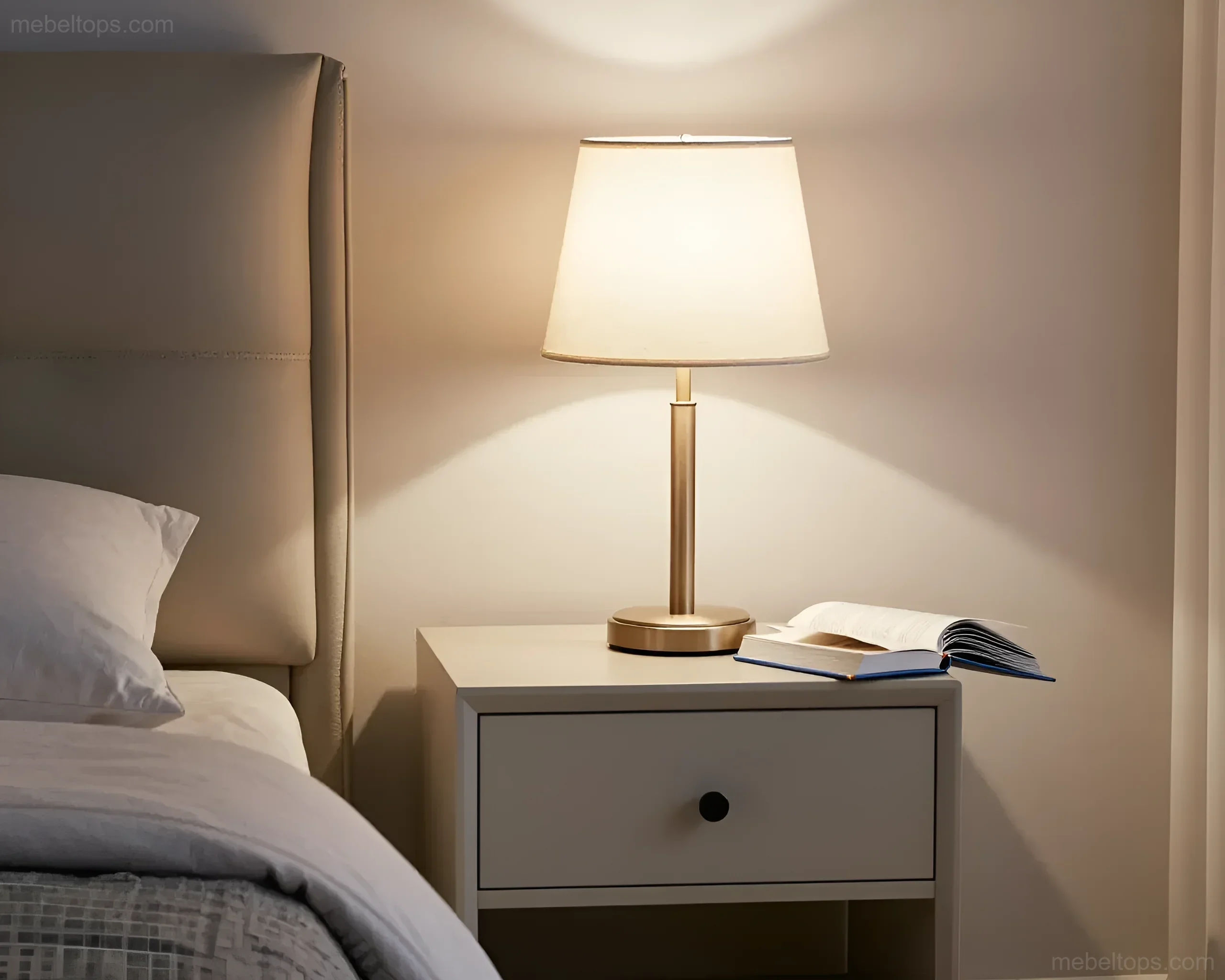
A bedside table might seem like a secondary interior element, often considered last. However, this piece of furniture is responsible for your comfort before sleep and immediately upon waking. An ill-chosen model can become a source of constant irritation: a surface that’s too high makes it difficult to reach for a glass of water, sharp corners can lead to bruises in the dark, and low-quality hardware can be annoying with its creaking in the quiet bedroom. In this article, we will break down the critical mistakes buyers make and provide practical recommendations on how to avoid them, making your bedroom a benchmark of ergonomics and style.
Why the Right Choice of Bedside Table is So Important

A bedroom is a space where every detail should promote relaxation. A bedside table acts as the ‘control station’ for your rest. It holds a reading lamp, smartphone, book, glasses, or alarm clock. If the table is chosen incorrectly, the entire logic of movement in the most intimate area of your home is disrupted.
mebeltops.com experts note that about 40% of buyers return or attempt to exchange bedside tables precisely because of dimensional mismatch or operational inconvenience, which is only discovered after the first night. The right choice is not just about the facade color, but about millimeters of height, drawer depth, and runner types. Understanding the functional tasks will help you transform a simple box on legs into an indispensable assistant.
Common Mistakes When Choosing Bedside Tables: What You Need to Know
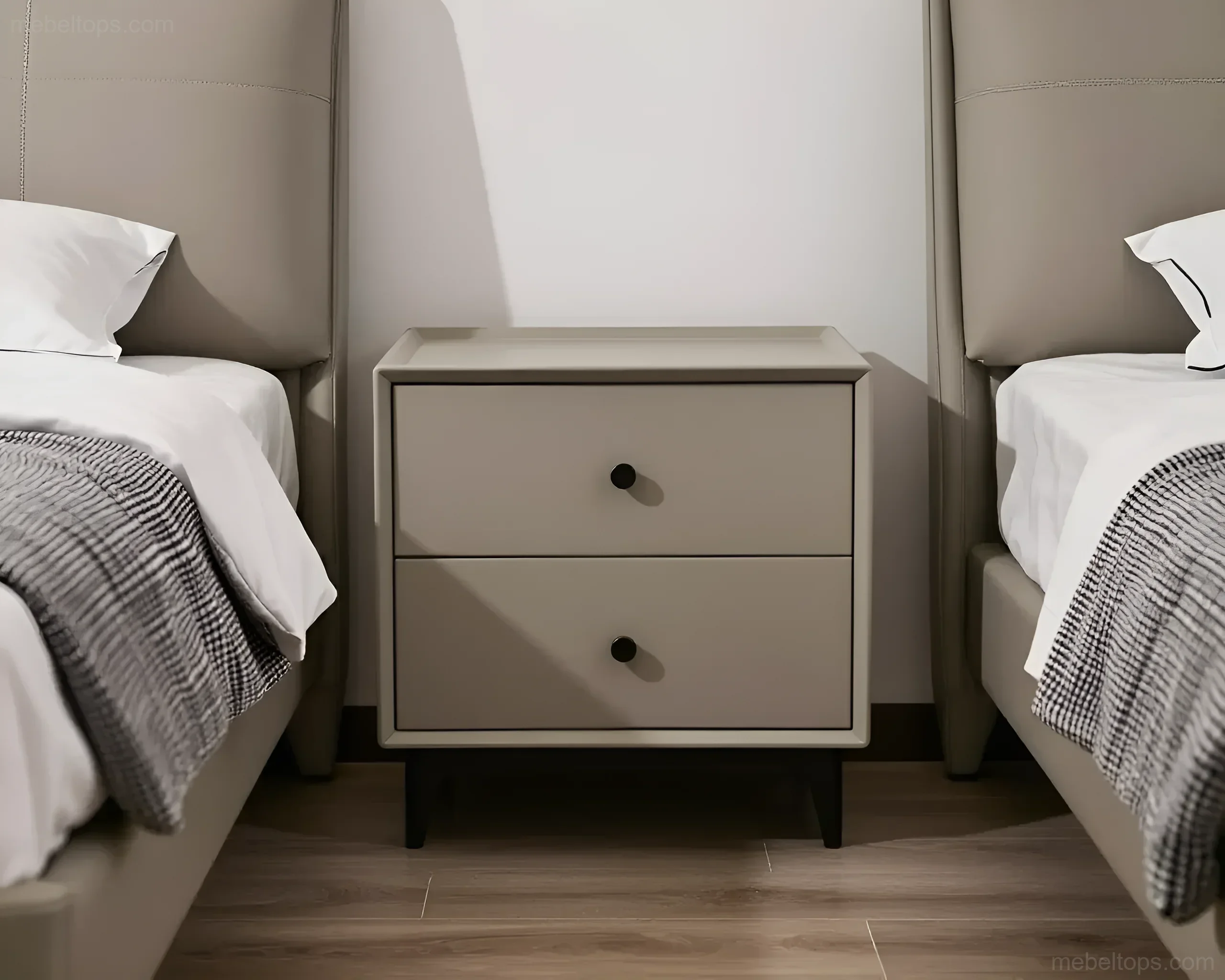
Before delving into details, it’s worth outlining the general picture. Most blunders stem from a lack of a comprehensive approach. A buyer either focuses solely on design or solely on price, forgetting that bedroom furniture is used daily and subjected to specific loads (e.g., moisture from a glass of water or mechanical impacts in the dark).
The main categories of mistakes include:
- Ergonomic: Mismatch in the dimensions of the table and the bed.
- Technical: Choosing non-durable materials and cheap hardware.
- Aesthetic: Visual dissonance with the overall room style.
- Functional: Insufficient storage space or inconvenient access to items.
We will further analyze each of these mistakes in detail, supported by specific figures and characteristics.
Mistake #1: Ignoring Bedroom and Space Size
Scaling is a key skill in interior planning. Often, a bedside table seems compact in a furniture store, but in a real bedroom, it ‘eats up’ the passageway or obstructs the opening of a wardrobe door. A critical mistake is not measuring the distance from the edge of the bed to the nearest obstacle (wall or door).
For comfortable use, observe the following parameters:
- Width: The standard width of a bedside table ranges from 40 to 60 cm. For small rooms, choose narrow models (30-35 cm), but remember that they will only fit a phone and a glass of water.
- Depth: The optimal depth is 35-45 cm. If the table is deeper than 50 cm, it can hinder access to the sleeping area, especially if the bed has protruding frame elements.
- Space for drawer extension: Ensure there is at least 50-60 cm of free space in front of the table so you can fully extend the drawer and stand in front of it.
Expert tip: If space is critically limited, consider wall-mounted models. They visually expand the floor space and facilitate cleaning with a robot vacuum.
Mistake #2: Choosing a Table That Doesn’t Match the Bed and Interior Style
A bedside table doesn’t have to be from the same set as the bed – modern design embraces eclecticism. But a complete mismatch creates a sense of disorder. It’s a mistake to combine a massive classic bed with button tufting and an ultra-thin high-tech metal table.
To avoid a stylistic failure, follow these rules:
- Companion Materials: If the bed’s headboard is wooden, the bedside table can be painted (MDF) but should have a similar texture or finishing elements.
- Color Temperature: Do not mix cool wood tones (e.g., bleached oak) with warm ones (walnut or cherry). This creates a visual conflict.
- Proportions: A tall and voluminous headboard requires a proportionally sized bedside table. A tiny nightstand next to a massive ‘king-size’ bed will look absurd.
Remember the rule of contrast: if the bed is bright and complex, the bedside table should be laconic, and vice versa.
Mistake #3: Insufficient Consideration of Functional Needs
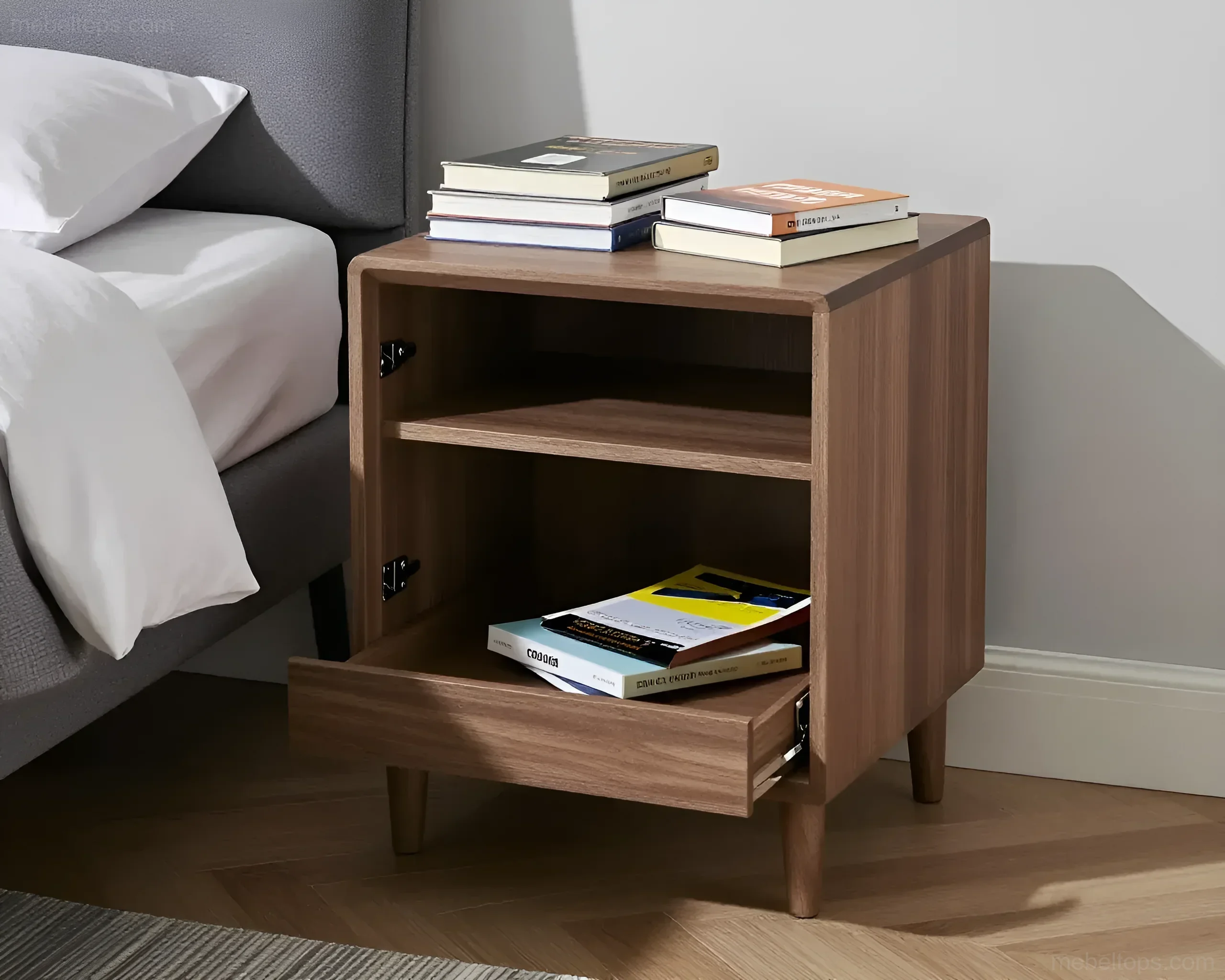
Many choose a bedside table as a decorative piece, forgetting what they will actually store on it. The mistake is buying a model without drawers (just a table) if you have many small items.
Analyze your habits:
- For book lovers: You need a wide surface for a table lamp and an open shelf underneath for the current book.
- For gadget enthusiasts: Choose models with cable management systems or built-in USB ports. This will rid you of the ‘beard’ of wires behind the bed.
- For storing medications and cosmetics: It’s essential to have at least one closed drawer to hide visual clutter and protect contents from dust.
Also, pay attention to the edges. Some modern models have a slight raised edge around the tabletop – this prevents glasses or pens from falling to the floor at night.
Mistake #4: Neglecting Material and Quality of Workmanship
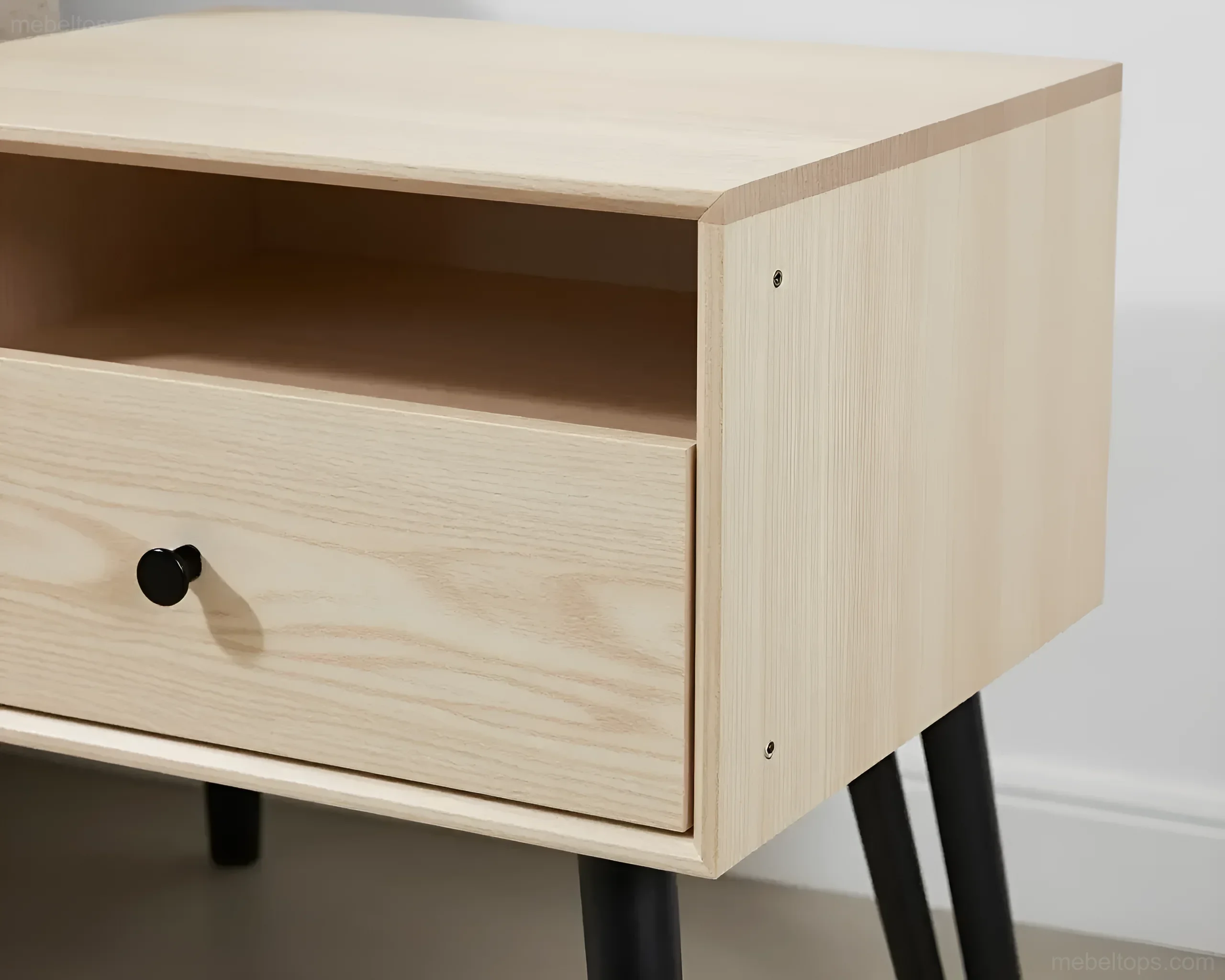
A bedside table is in close proximity to your face during sleep, so the eco-friendliness of materials comes first. The mistake is buying cheap furniture made from particleboard with an emission class higher than E1. Such boards can release formaldehyde, which is unacceptable for a bedroom.
Comparison of materials for bedside tables:
| Material | Pros | Cons |
|---|---|---|
| Solid wood | Durability, eco-friendliness, premium look. | High price, sensitivity to moisture. |
| MDF (enamel/veneer) | Huge color selection, smooth surface, durability. | Fingerprints may remain (on matte enamel). |
| Particleboard (E1 class) | Affordable price, imitation of any textures. | Water-sensitive (edges can swell), shorter lifespan. |
| Metal and glass | Stylish, easy to clean, moisture-resistant. | ‘Cold’ material, noisy (clinking when placing a glass). |
Pay special attention to the edging. It should be made of PVC or ABS plastic with a thickness of at least 1-2 mm. Melamine (paper) edging will quickly peel off at the corners you’ll brush against with your hands.
Mistake #5: Forgetting About the Table’s Height Relative to the Bed
This is the most common ergonomic mistake. The bedside table should not be significantly higher or lower than the mattress level.
Why this is important:
- Too high a table: You risk hitting its corner with your head or hand in your sleep. Moreover, to turn off the lamp or grab your phone, you’ll have to unnaturally bend your elbow upwards.
- Too low a table: It’s dangerous because you might accidentally sweep things off the tabletop with your blanket. It’s also uncomfortable for your eyes – the light from the lamp will fall at the wrong angle.
The golden standard: The top surface of the bedside table should be level with the top point of the mattress. A tolerance of +/- 5 cm is acceptable. Before buying, be sure to measure the height of your bed including the mattress! Usually, this value is 45-60 cm from the floor.
Mistake #6: Incorrect Choice of Number and Type of Drawers/Shelves
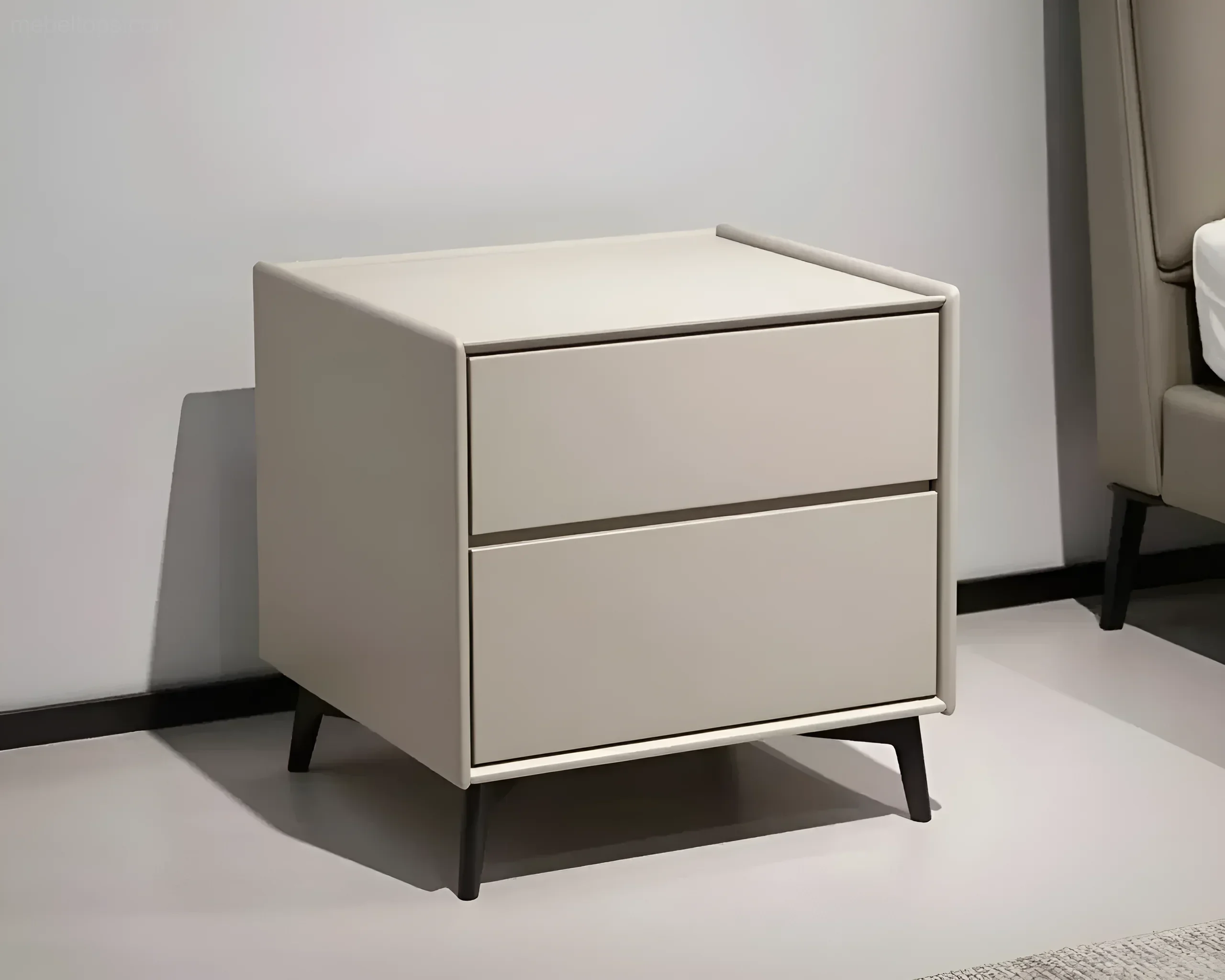
Often, buyers choose a table with one deep drawer, thinking it will fit everything. In reality, chaos forms in a deep drawer. The mistake is not matching the storage type to the actual items.
Practical tips for organization:
- Two shallow drawers are better than one deep one. The top one can hold small items (charger, cream, sleep mask), and the bottom one can hold books or a tablet.
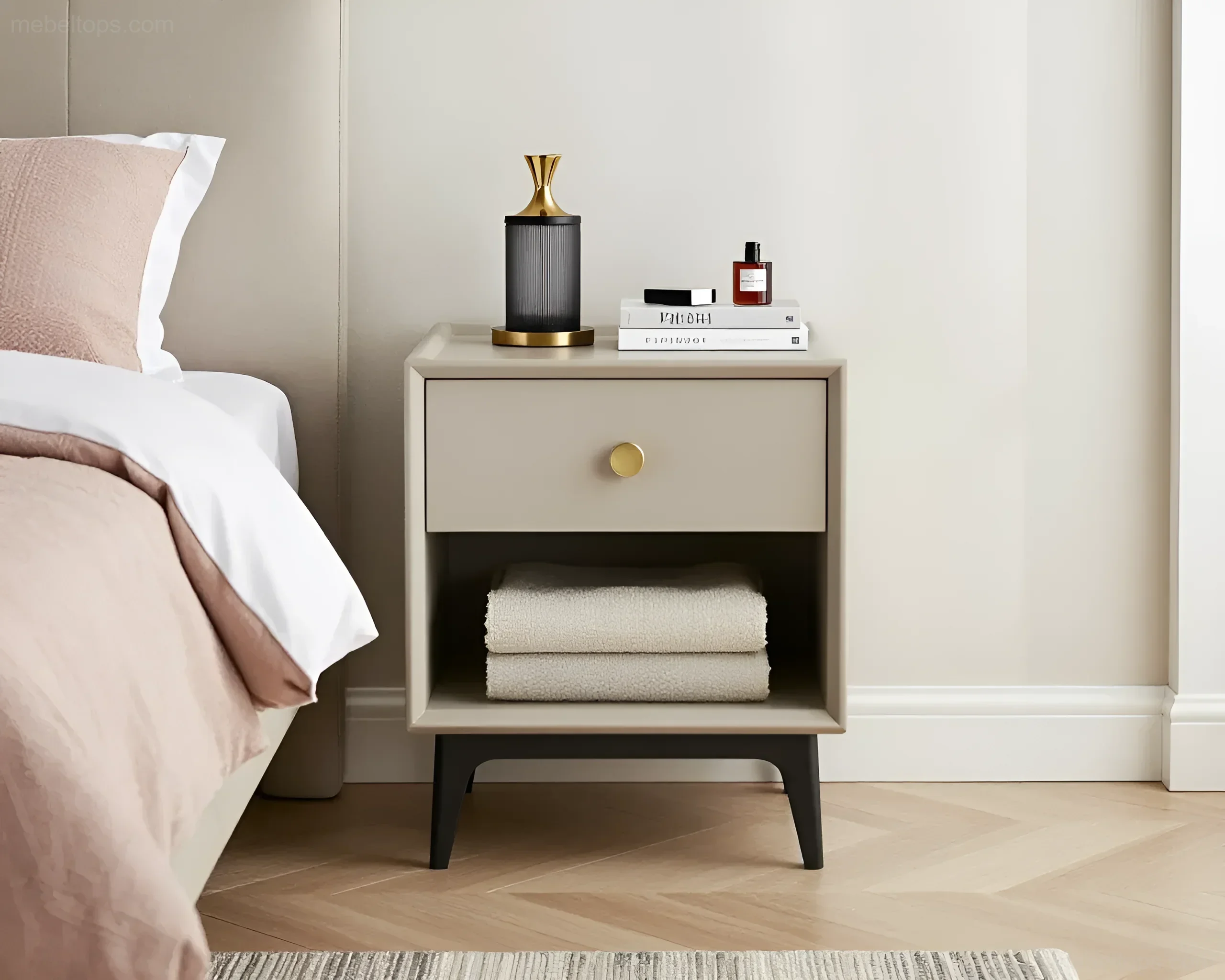
- An open niche + a drawer. This is an ideal combination. You can quickly place your phone in the niche, and hide things that shouldn’t be visible in the drawer.
- Runners. Choose drawers with full extension. In cheap models, the drawer only extends 3/4, and retrieving something from the back corner becomes a quest.
Also, check the drawer bottom. It should be made of HDF or dense fiberboard and securely fixed in the grooves, not just nailed, otherwise, it will sag over time under the weight of books.
Mistake #7: Skimping on Hardware and Fasteners
In the bedroom, we are particularly sensitive to sounds. The mistake is buying a table with cheap roller runners. They rattle when opened and don’t have a smooth glide. Imagine your partner is sleeping, and you need to get earplugs – the clatter of the drawer is guaranteed to wake them up.
What to look for when choosing hardware:
- Ball-bearing runners (telescopic): They operate quieter and can bear more load.
- Soft-close mechanisms: This is a must-have for the bedroom. The drawer closes smoothly and absolutely silently.
- Push-to-open system: Allows you to open the drawer by pressing the facade. Convenient if you don’t want to clutter the design with handles, but remember that fingerprints will remain on glossy surfaces.
- Legs: If you have uneven floors, choose models with adjustable feet so the table doesn’t wobble.
Quality hardware increases the product cost by 15-20%, but it’s an investment in your silence and the furniture’s durability.
TOP 5 Best Bedside Tables of 2024: Our Rating
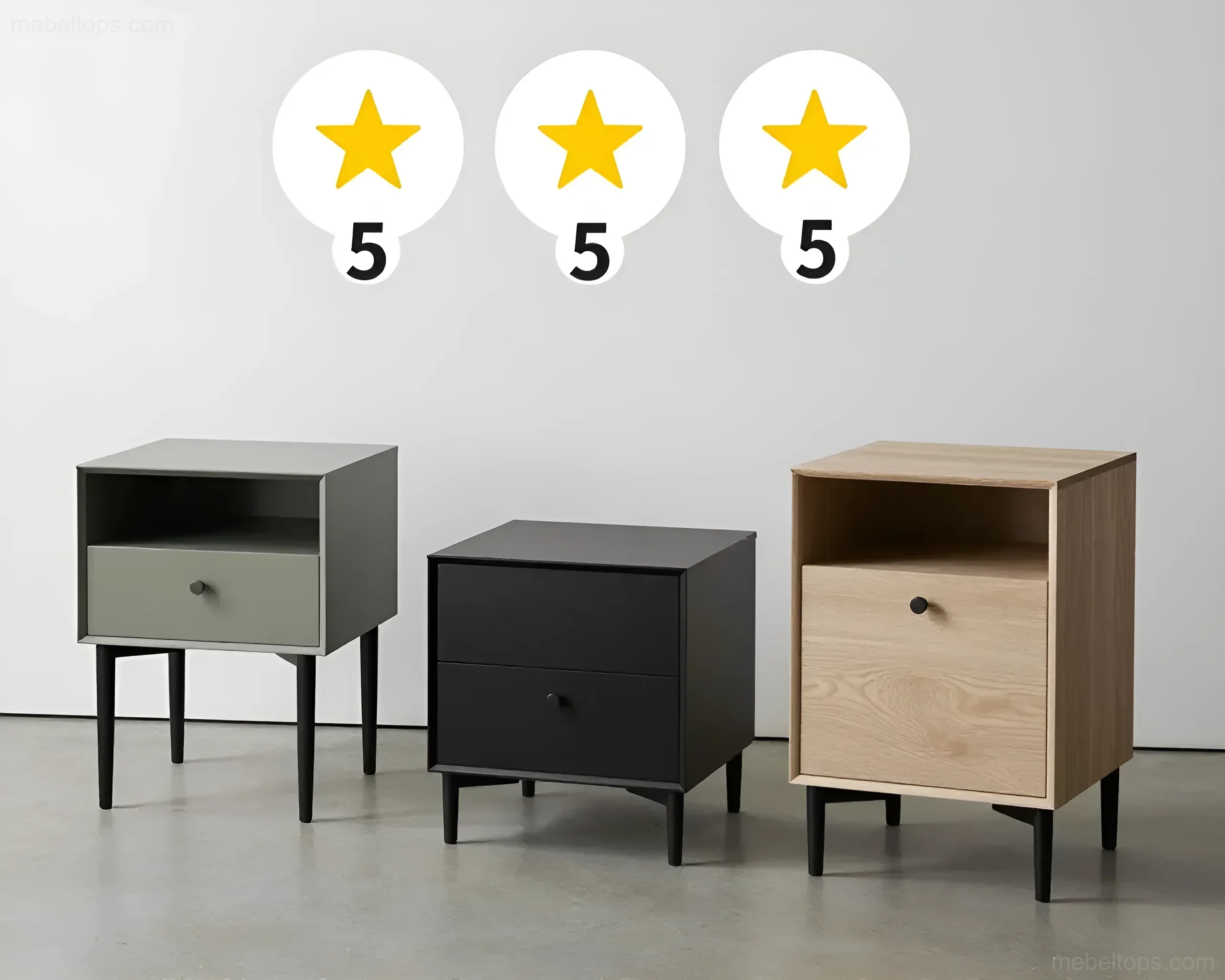
Based on customer reviews and technical specifications, we have compiled a rating of models that minimize the risk of the aforementioned mistakes.
- Scandinavian Classic (Solid Pine/Oak): Models on tall conical legs. Ideal for light interiors, facilitate cleaning. Estimated price: 8,000 – 15,000 RUB.
- Minimalist Cube (MDF in enamel): Wall-mounted model without visible handles. Solves the height problem (can be hung at any level) and saves space. Estimated price: 5,000 – 9,000 RUB.
- Loft Table (Metal + Wood): Sturdy frame and open shelf. Suitable for brutal interiors, extremely durable. Estimated price: 7,000 – 12,000 RUB.
- Soft Table (Velvet/Eco-leather upholstery): Ideal if you have small children at home – no sharp corners. Creates additional coziness. Estimated price: 10,000 – 18,000 RUB.
- Smart Table: Model with built-in wireless charging and Bluetooth speaker. A choice for those who value technology. Estimated price: 15,000 – 25,000 RUB.
Frequently Asked Questions About Choosing Bedside Tables
Do I need to buy two identical bedside tables?
Not necessarily. Modern interiors often use asymmetry: on one side – a classic bedside table, on the other – a light table or even a stack of beautiful magazines. The main thing is that they are united by a common element (color, material, or height).
Can I use a dresser instead of a bedside table?
Yes, if space allows. It’s an excellent solution for storing linens. The main thing is that the dresser’s height does not exceed 70-80 cm, otherwise, it will be inconvenient to use it from a lying position.
How to protect the table surface from stains?
If you have chosen a wooden or MDF model, use stylish coasters for mugs or order a protective soft glass (silicone overlay) cut precisely to the tabletop size.
Conclusion: Final Tips for the Perfect Choice
Choosing a bedside table is a balance between aesthetics and purely practical convenience. To avoid mistakes, follow our checklist:
- Measure the mattress height – this is the main guideline for the table’s height.
- Check for soft-close mechanisms – silence in the bedroom is priceless.
- Choose E1 class materials or solid wood.
- Leave enough space for free passage and drawer opening.
- Think about cable management in advance.
Remember that a bedside table is an item you will touch at least twice a day. Let these touches be pleasant, and the use – trouble-free. We hope our guide will help you make the right choice on mebeltops.com!