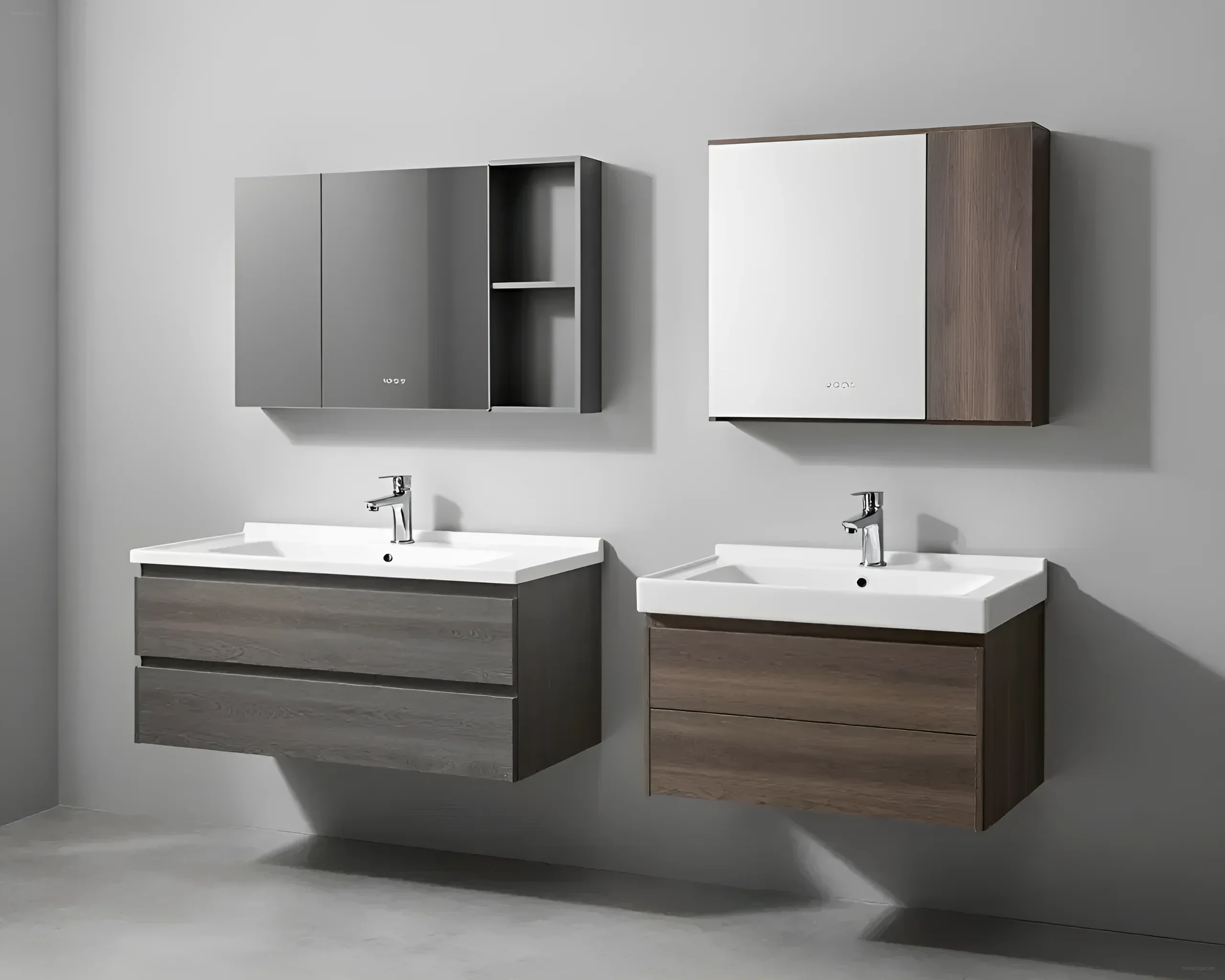
Choosing bathroom furniture is a task that requires a balance between aesthetics and purely technical calculations. Unlike the living room or bedroom, the bathroom is a zone with extreme operating conditions: constant temperature fluctuations, high humidity, and direct contact with water dictate their own rules. An error in material selection or incorrect measurements can lead to facades “swelling” and hardware corroding within a year. In this article, as experts from mebeltops.com, we will break down every nuance – from MDF density to door opening ergonomics – so that your purchase lasts for decades.
Bathroom: Types and Styles of Furniture for an Ideal Space
Before moving on to materials, it’s essential to decide on the structural types of furniture. In modern interiors, three main categories are distinguished by installation method, each with its pros and cons in terms of practicality.
- Wall-hung furniture: This is the most modern and hygienic option. Cabinets and shelves are mounted directly to the wall, leaving the floor free. The main advantage: ease of cleaning and visual expansion of space. Moisture does not accumulate under such furniture, which is critical for durability. However, installation requires a load-bearing wall (concrete, brick) or reinforced installation in drywall.
- Floor-standing furniture on legs: A classic solution that is easier to install. Legs allow for adjusting the furniture’s level on uneven floors. It’s important to choose models with leg heights of at least 10-12 cm so that the floor can be easily wiped under the cabinet and air circulation can be ensured.
- Floor-standing furniture with a plinth: The least recommended option for a bathroom. The plinth fits tightly to the floor, and if water gets under it (and it will), the material will start to rot due to lack of ventilation. If you choose such a model, make sure the plinth is protected by a silicone seal.
By functional purpose, a standard set usually includes a vanity unit, a mirrored cabinet or just a mirror, and a tall cabinet (a tall, narrow cupboard). For spacious rooms, chests of drawers and additional wall shelves are relevant. Remember the rule: the smaller the area, the more functions a single piece of furniture should combine (e.g., a mirror with a built-in cabinet and lighting).
Bathroom Materials: What to Choose for Durability and Beauty
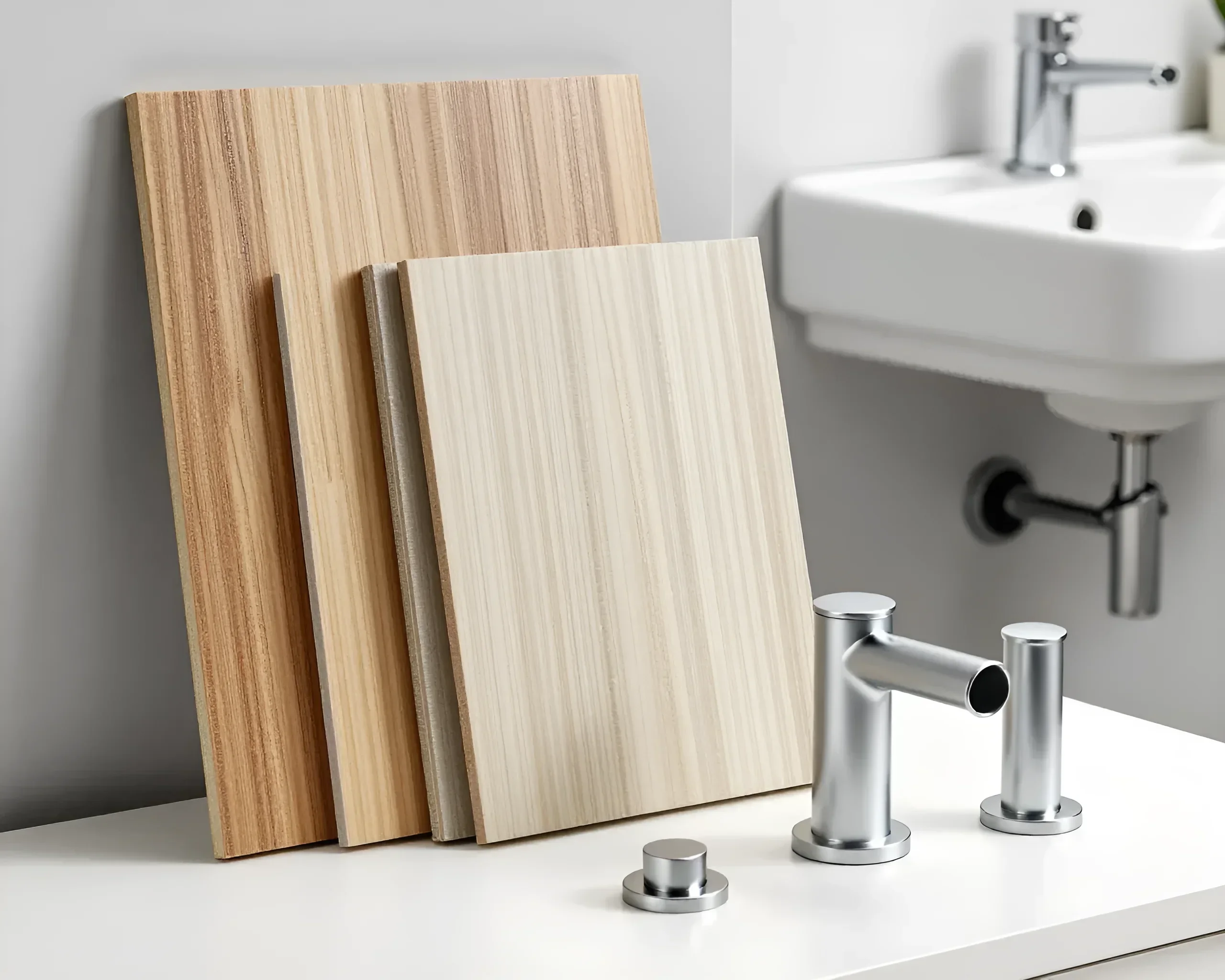
Material is the foundation of durability. In a bathroom, ordinary particleboard (chipboard) doesn’t last long, so professionals look at the marking and type of coating. Let’s consider the main options in order of increasing operational qualities.
1. Laminated Particleboard (LDP): The most budget-friendly option. For bathrooms, only particleboard marked “moisture-resistant” (often has a greenish tint at the cut) is suitable. However, even such particleboard is vulnerable at the joints and edges. If moisture gets under the edge, the board will inevitably swell.
2. MDF (Medium-Density Fiberboard): A denser and more moisture-resistant material compared to particleboard. MDF is excellent for milling, allowing for the creation of beautiful curved facades. But not only the MDF itself is important, but also its coating:
- PVC film: Cheap, many colors, but can peel off over time due to steam exposure.
- Enamel (paint): One of the best options. Several layers of primer and varnish create a sealed “shell” that completely protects the board from water.
- Plastic (HPL): A very wear-resistant material, not afraid of scratches and direct contact with water.
3. Solid wood: There is a common belief that wood in the bathroom is taboo. This is not true if we are talking about oak, ash, or teak that have undergone multi-stage treatment with oils and water-repellent varnish. Wooden furniture adds coziness but requires maintaining stable humidity (no more than 60-70%) and good ventilation.
4. Metal and glass: Ideal materials for high-tech and loft styles. Tempered glass and stainless steel or aluminum with powder coating are absolutely indifferent to water. The downside is that water spots and limescale are very noticeable on them.
How to Choose Bathroom Furniture: Practical Expert Advice
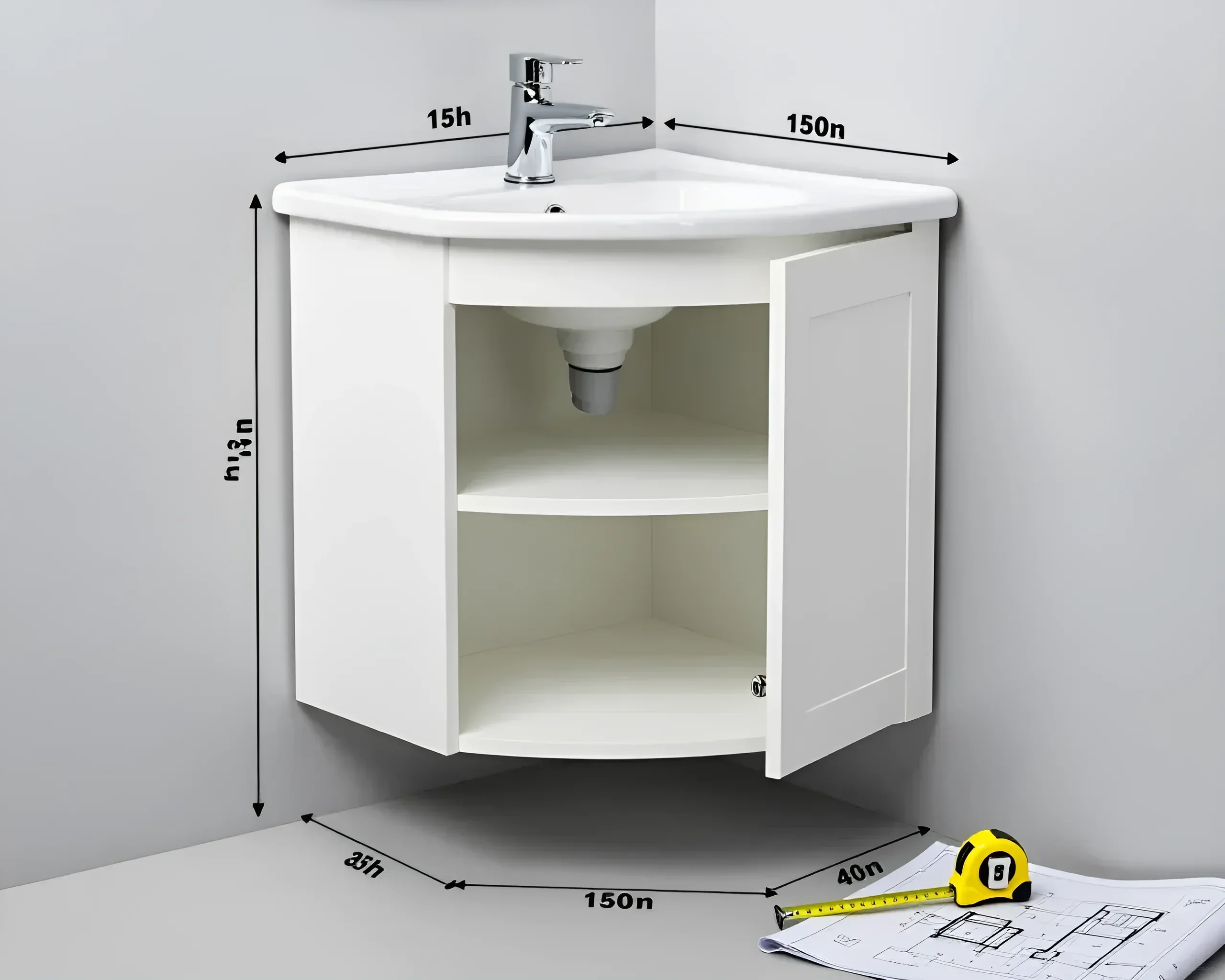
Once you’ve decided on the type and material, the devil is in the details. Here’s what I recommend paying attention to when inspecting furniture in a showroom or studying specifications in an online store:
- Hardware quality: Hinges and drawer slides should be made of stainless steel or have a high-quality anti-corrosion coating. Best brands are Blum, Hettich, Grass. Check for soft-close mechanisms: in a bathroom where hands are often wet or occupied, the smooth closing of doors prevents impacts and damage to facades.
- Edge banding: Carefully inspect the edges of the furniture. The most reliable edge banding is laser or PUR edge banding. It creates a virtually seamless joint through which moisture cannot penetrate the board.
- Back panel coating: Manufacturers often cut corners and make the back panel from ordinary hardboard (fiberboard). In the bathroom, it should be made of the same material as the body or reliably protected from direct contact with the wall (a gap of 1-2 cm).
- Handles: Chrome-plated metal is a classic, but cheap plating quickly peels off. Choose furniture with integrated handles (grooves in the facades) – this is not only stylish but also practical, as there’s nothing to rust.
Be sure to check how the drawers open. If the vanity unit is in a corner, make sure the handle won’t hit the wall or door trim when opened. Sometimes it’s wiser to choose a model with a push-to-open system.
Dimensions and Sizes: How to Calculate the Ideal Furniture for Your Bathroom
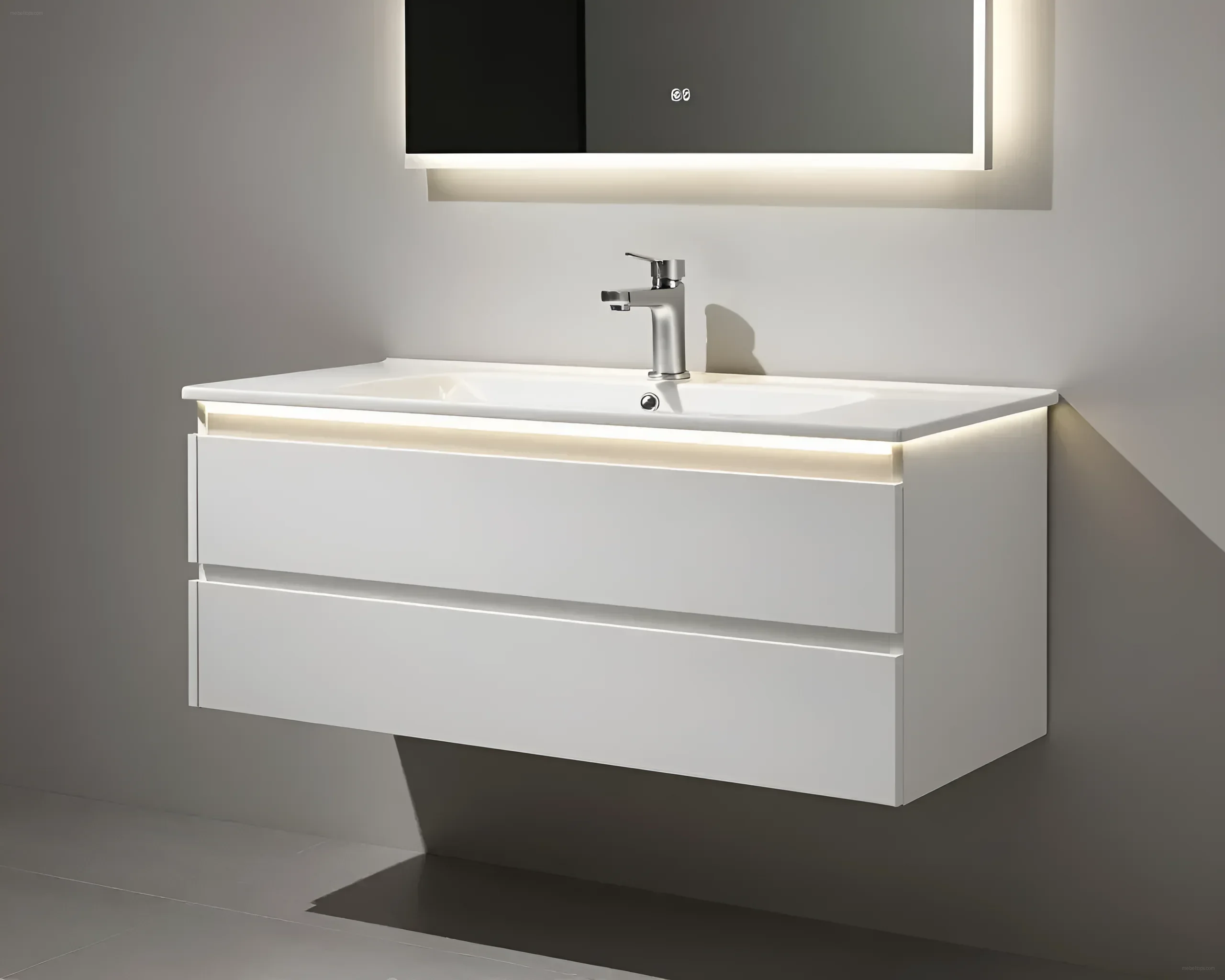
Ergonomics in the bathroom is about your morning comfort. Standard sizes exist, but they need to be adapted to the height of family members and the room’s area. Let’s consider the main parameters:
Sink installation height: The generally accepted standard is 85 cm from the floor to the top edge of the sink. However, if you are taller than 180 cm, a height of 90-95 cm will be more comfortable. For children, a pull-out step can be incorporated into the vanity’s plinth.
Furniture width:
- Compact (40-50 cm): For guest bathrooms.
- Standard (60-80 cm): The most popular size, suitable for most apartments.
- Comfort (90-120 cm): Allows for a wide countertop where all cosmetic products can fit.
- Double sinks (from 120 cm): Ideal for large families to avoid morning queues.
Depth: The standard depth of a vanity unit is 45-55 cm. If space is limited, look for narrow models (30-35 cm), but keep in mind that the faucet in such cases is often placed on the side.
Important tip: When planning space for a vanity unit, always leave a gap of at least 5-10 cm between the furniture and the bathtub or shower cabin. This is necessary so that water that gets on the sides does not stagnate and the furniture can “breathe.”