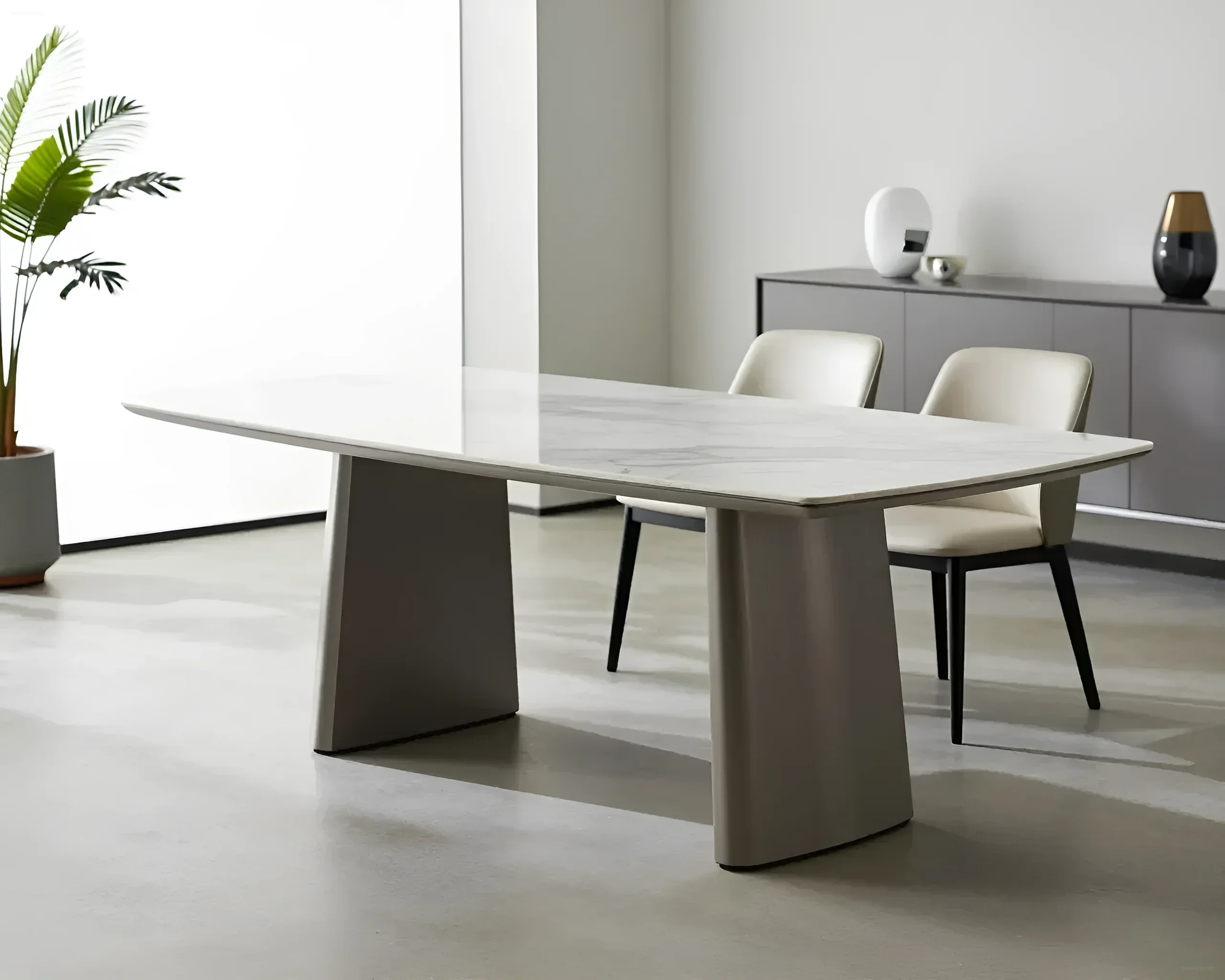
Designer tables are not just a piece of furniture, but a central element of the interior that sets the tone for the entire room. Unlike mass-market items, designer models combine unique aesthetics, premium materials, and thoughtful ergonomics. Choosing such an item requires a deep understanding of technical characteristics, as a table must be not only beautiful but also durable and comfortable for everyday use. In this article, we will break down all the nuances: from choosing wood and stone to calculating the ideal distance between legs, so that your purchase will delight you for decades.
Designer Tables: Why You Need Them and How to Choose the Perfect One
When you decide to purchase a designer table, you are investing in the atmosphere of your home. The main difference of such models lies in the individual approach to design. Designers pay attention to details that are often overlooked in mass production: the texture of joints, the angle of the base, the unique pattern of veneer or slab.
Why do you need a designer table specifically? Firstly, it’s a visual accent. In a minimalist interior, one table with an unusual base can replace a dozen decorative elements. Secondly, it’s the quality of execution. The use of solid precious woods, tempered glass, or natural marble guarantees that the furniture will not lose its appearance after a couple of years. To choose the perfect model, you need to clearly define the scenarios of use: will it be a place for family dinners, a workspace, or a decorative element in the hallway?
- Determine the role: a dominant table or a functional addition.
- Assess the space: designer furniture often requires “air” around it.
- Budget: keep in mind that the cost is formed from the rarity of materials and the complexity of manual labor.
Types of Designer Tables: From Dining to Console
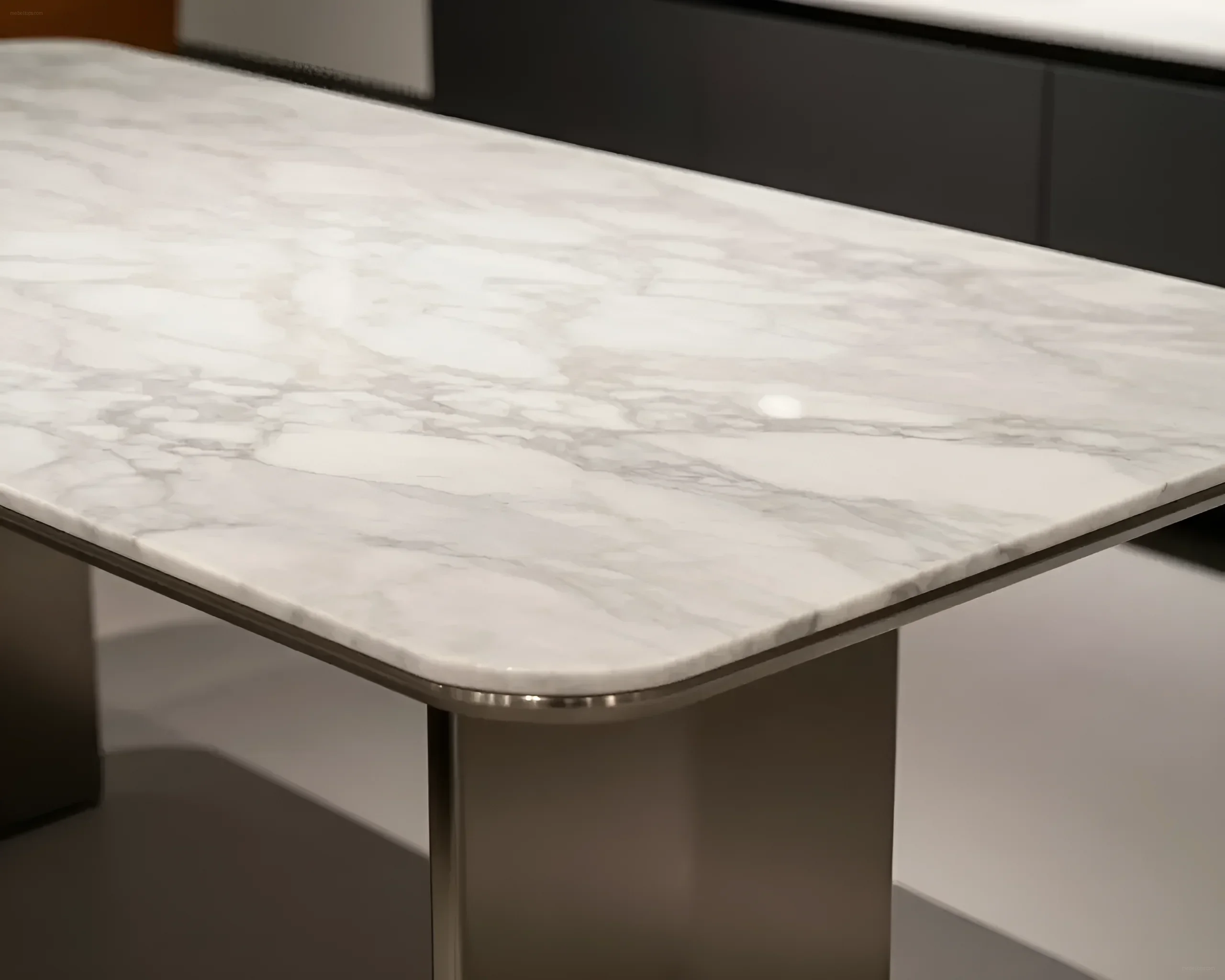
The designer furniture market offers a huge variety of shapes and purposes. Understanding the specifics of each type will help you effectively zone your space.
Dining Tables. This is the “heart” of the home. Designer dining sets often feature complex base geometries. Models on a single central support are popular, providing maximum leg comfort for those seated. Shapes vary from classic rectangular to organic live edges.
Coffee and Side Tables. Here, designers allow themselves maximum creativity. You can find models made of acrylic, concrete, metal, or a combination of wood and epoxy resin. They are often sold in sets of 2-3 items of different heights that can be nested under each other.
Desks (Writing Tables). In designer desks, the emphasis is on hidden functionality. Wireless chargers, cable management, and hidden drawers are integrated into the tabletops, while maintaining a light construction. Ergonomics is paramount here: the tabletop height should meet standards (72–76 cm).
Console Tables. Narrow and tall (usually 80–90 cm), they are placed along walls or behind sofas. In designer execution, a console is an elegant object that serves as a stand for lamps, vases, and art objects. This is an ideal solution for narrow hallways and entryways.
Materials for Designer Tables: Trends and Practicality
The choice of material directly affects the lifespan and ease of care for the furniture. Let’s look at the most sought-after options in modern design.
- Solid Wood (Oak, Walnut, Ash): Timeless classic. Designers value American walnut for its deep dark hue and expressive texture. Oak is chosen for its durability (Brinell hardness of about 3.7–3.9 units). It is important that the wood is properly dried to a moisture content of 8–10%, otherwise the table may crack.
- Natural Stone (Marble, Granite, Quartzite): A Carrara or Nero Marquina marble tabletop looks luxurious but requires caution. Marble is a porous material; it instantly absorbs wine or coffee. A more practical option is quartz agglomerate, which imitates stone but is stain-resistant.
- Tempered Glass and Triplex: Adds lightness to the interior. Designer tables use glass with a thickness of 8 to 12 mm. It can be tinted, frosted (satin), or have a “cracked ice” effect.
- Metal (Brass, Stainless Steel, Aluminum): Most often used for bases. Brass develops a noble patina over time, which is highly valued in Art Deco and modern classic styles.
- Ceramics: One of the most practical modern trends. Ceramic tabletops are resistant to scratches, high temperatures, and household chemicals.
How to Choose a Designer Table: Key Criteria for Your Interior
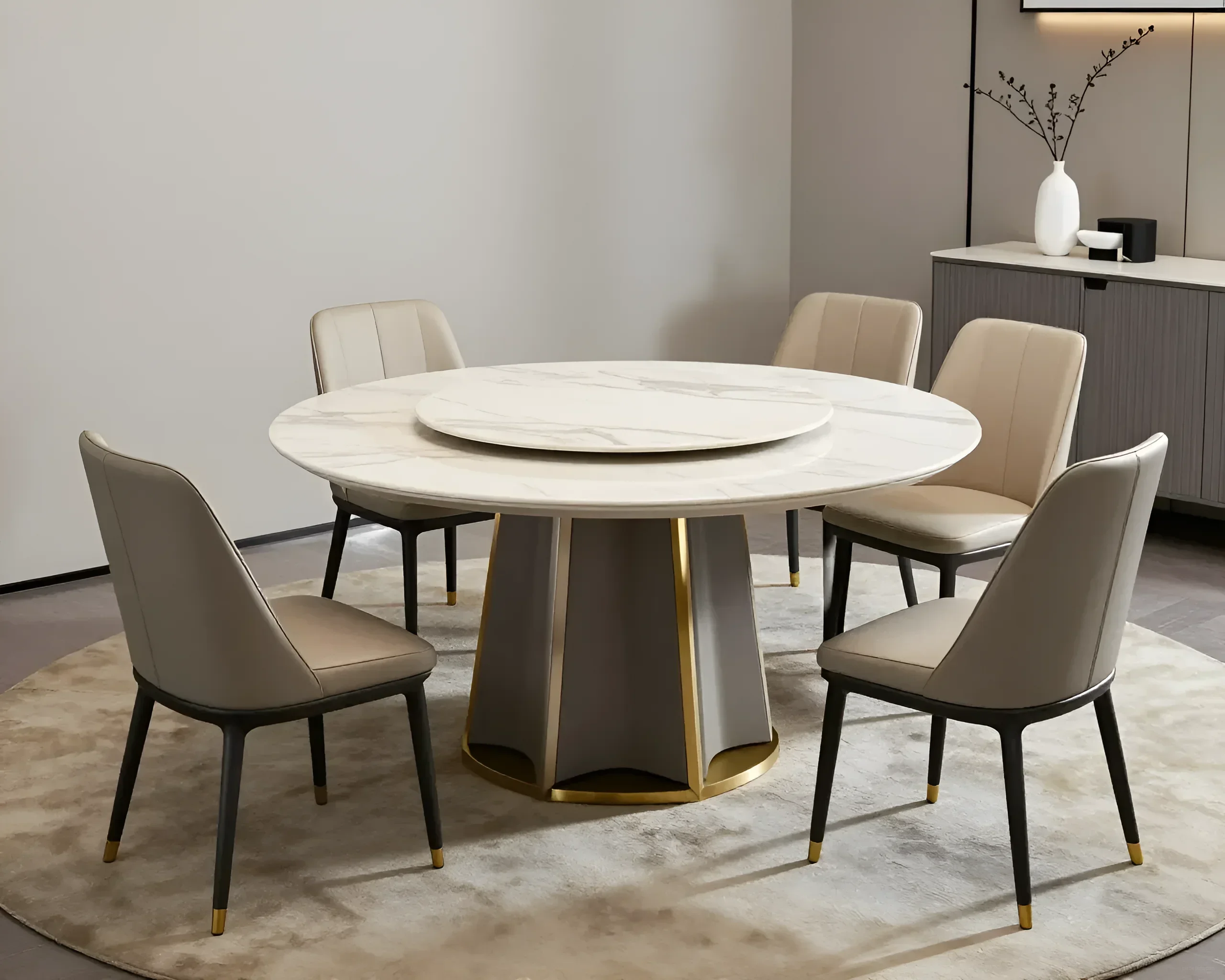
When choosing a designer table, it’s important not to be swayed solely by visual impulse. Experts recommend evaluating the purchase from three perspectives: style, proportions, and tactility.
Stylistic consistency is the foundation. If your interior is in a loft style, choose tables with rough metal legs and massive wooden tabletops. For Scandinavian style, light wood species (birch, pine) and tapered legs are suitable. For neo-classicism, opt for models with beveled edges and gilded metal details.
Tactility is extremely important for dining and work tables. Before purchasing, be sure to run your hand over the surface. Quality oil or wax preserves the warmth of the wood, while a thick layer of glossy varnish can feel like plastic. Also, pay attention to the edge treatment: a “Swiss edge” (an inwardly beveled edge) makes even a thick tabletop visually weightless.
Don’t forget about color balance. If the floor in the room is dark, the table should be either significantly lighter or have a contrasting base so as not to “blend in” with the floor surface.
Dimensions and Sizes of Designer Tables: Perfect Fit for Your Space
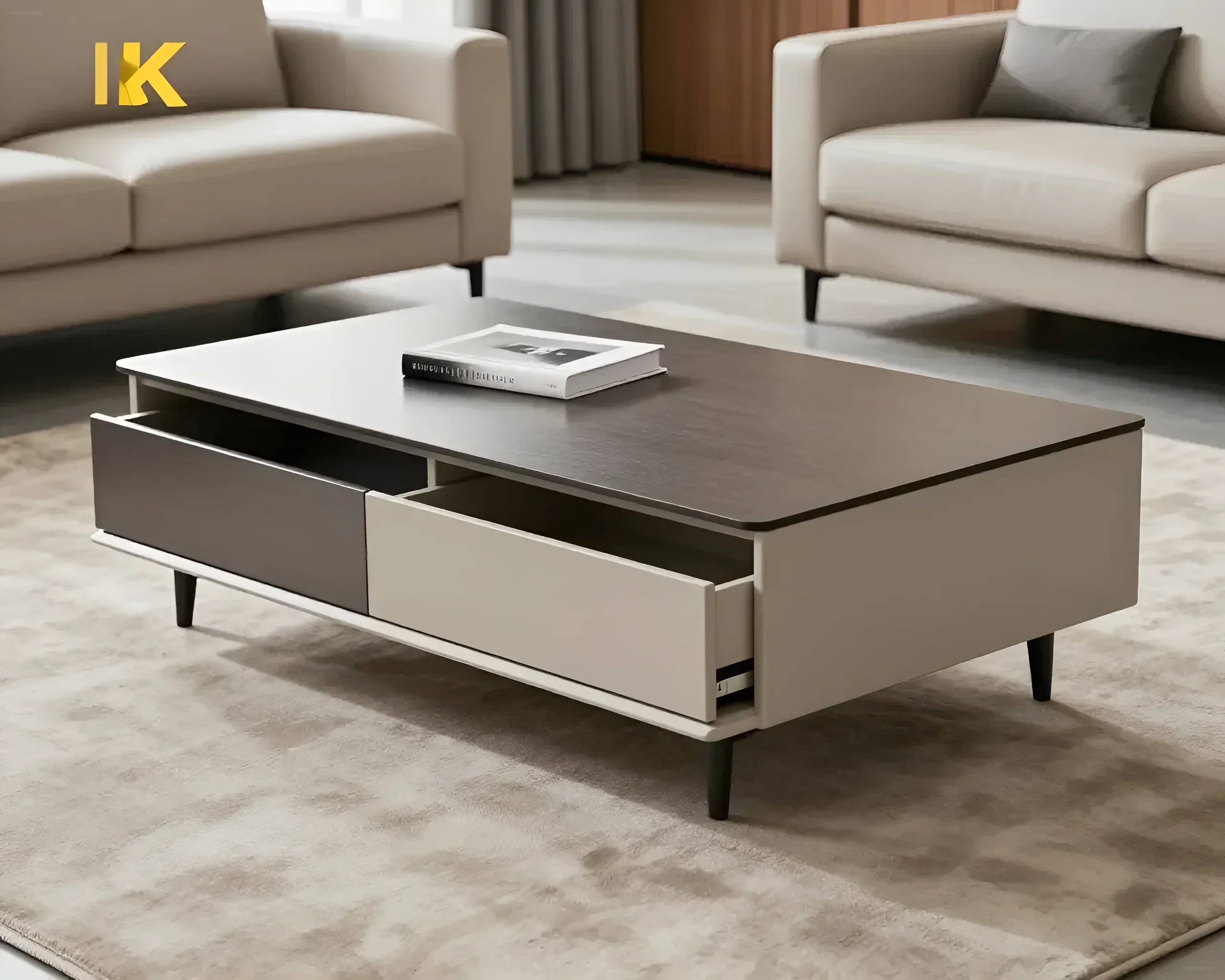
Size errors are the most common problem when buying furniture. A designer table should not only fit in the room but also provide comfort for each person.
Seating Calculation. Each person should have at least 60 cm of width and 40 cm of depth of the tabletop. For comfortable placement opposite each other, the table width should be at least 80–90 cm.
Approximate standards for rectangular tables:
- 4 people: 120×80 cm;
- 6 people: 160–180×90 cm;
- 8 people: 200–240×100 cm.
Round Tables. They are ideal for small spaces, as the absence of corners saves space. A diameter of 90–110 cm is suitable for 3–4 people, 120–140 cm for 5–6 people.
Distance to Walls. To allow a person to freely push back their chair and stand up, there should be at least 90 cm, preferably 110 cm, from the edge of the table to the nearest obstacle (wall, cabinet). If the table is in a high-traffic area, allow 120 cm for free movement of other family members.
Height. The standard for a dining table is 75–76 cm. If you are choosing designer semi-bar tables, their height is usually 90–92 cm, which requires special stools with a seat height of 60–65 cm.
Functionality and Style: Features of Designer Tables
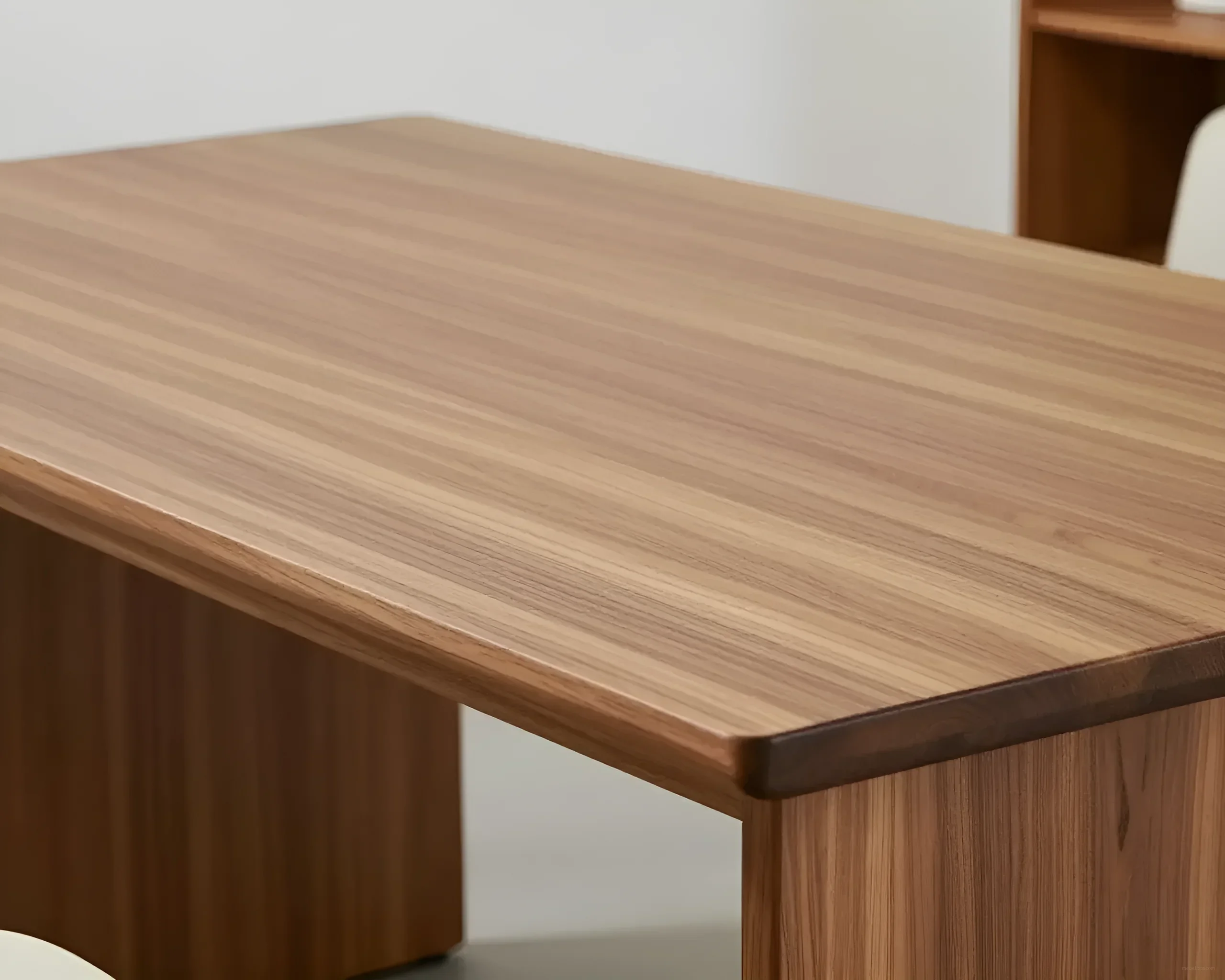
Modern designers strive to prove that beauty does not exclude convenience. One of the main features is transformation. While extendable tables used to look bulky, modern designer mechanisms (e.g., butterfly or pull-out consoles) are almost invisible when folded.
Another feature is modularity. Some designer coffee tables consist of several segments that can be used as individual stands or assembled into a single composition. This allows you to change the room’s usage scenario in minutes.
Special attention is paid to stability. In designer tables with asymmetrical legs, engineers perform complex center of gravity calculations to ensure the structure does not tip over, even if an adult leans on the edge. Often, hidden weights in the base or massive steel plates integrated into the base are used for this purpose.
Caring for Your Designer Table: Preserving Beauty for a Long Time
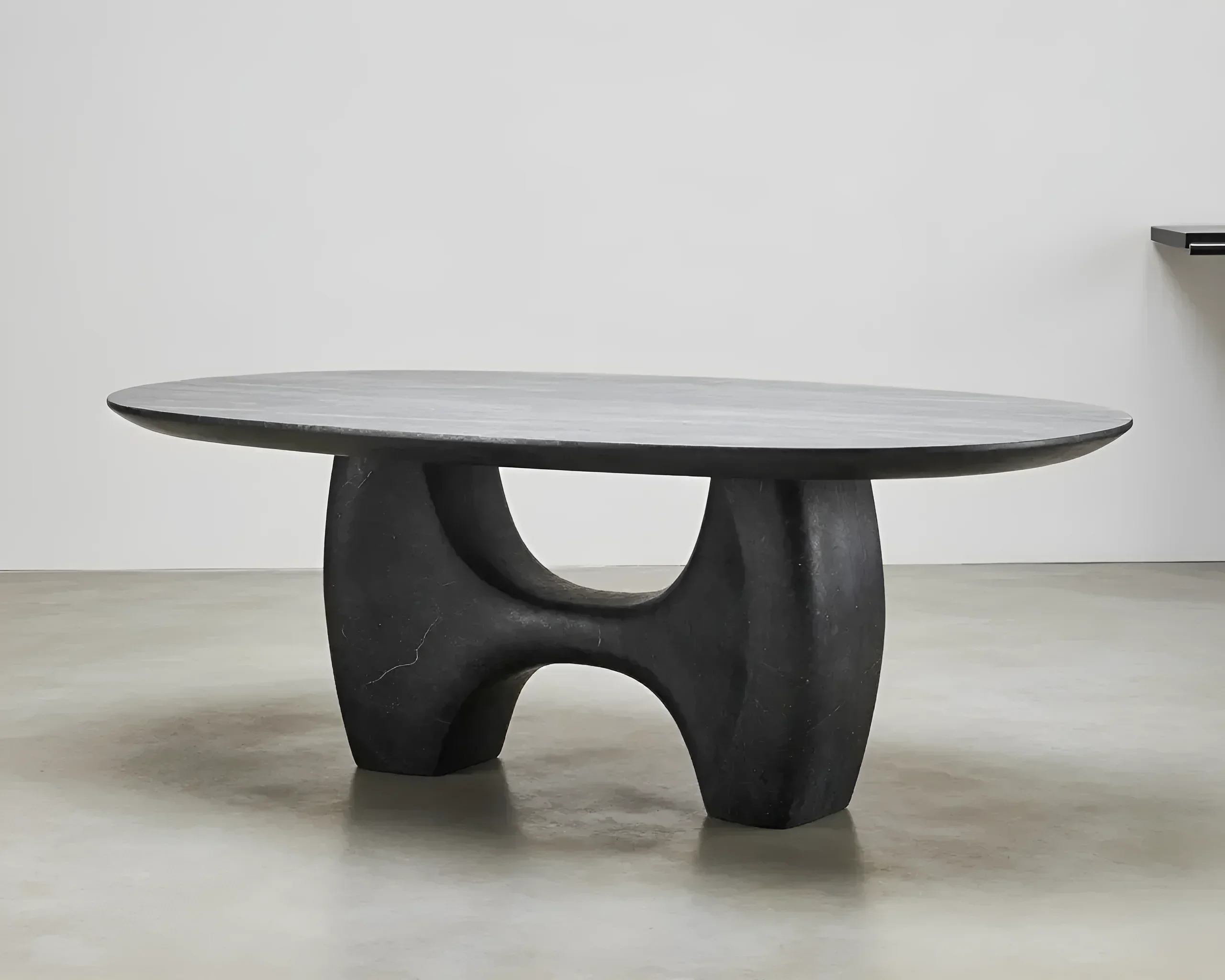
Expensive furniture requires proper care. To ensure your table lasts for decades, follow these rules:
For Wooden Surfaces:
- Maintain indoor humidity at 40–60%. Dry air from radiators is the main enemy of solid wood.
- Use hot pads and coasters for glasses. Whitish rings from cups are very difficult to remove from an oiled surface.
- Every six months, reapply a special furniture wax or oil (if recommended by the manufacturer).
For Stone Tabletops:
- Avoid contact with acids (lemon juice, vinegar). They can etch marble polish.
- Use only pH-neutral cleaning agents.
- Once a year, treat the stone with a water repellent – a special impregnation that seals pores and protects against liquid absorption.
For Glass and Glossy Surfaces:
- Wipe them with a soft microfiber cloth to avoid micro-scratches.
- Use ammonia-free cleaners to avoid damaging protective coatings or tinting.
Top 5 Designer Tables: Examples for Inspiration
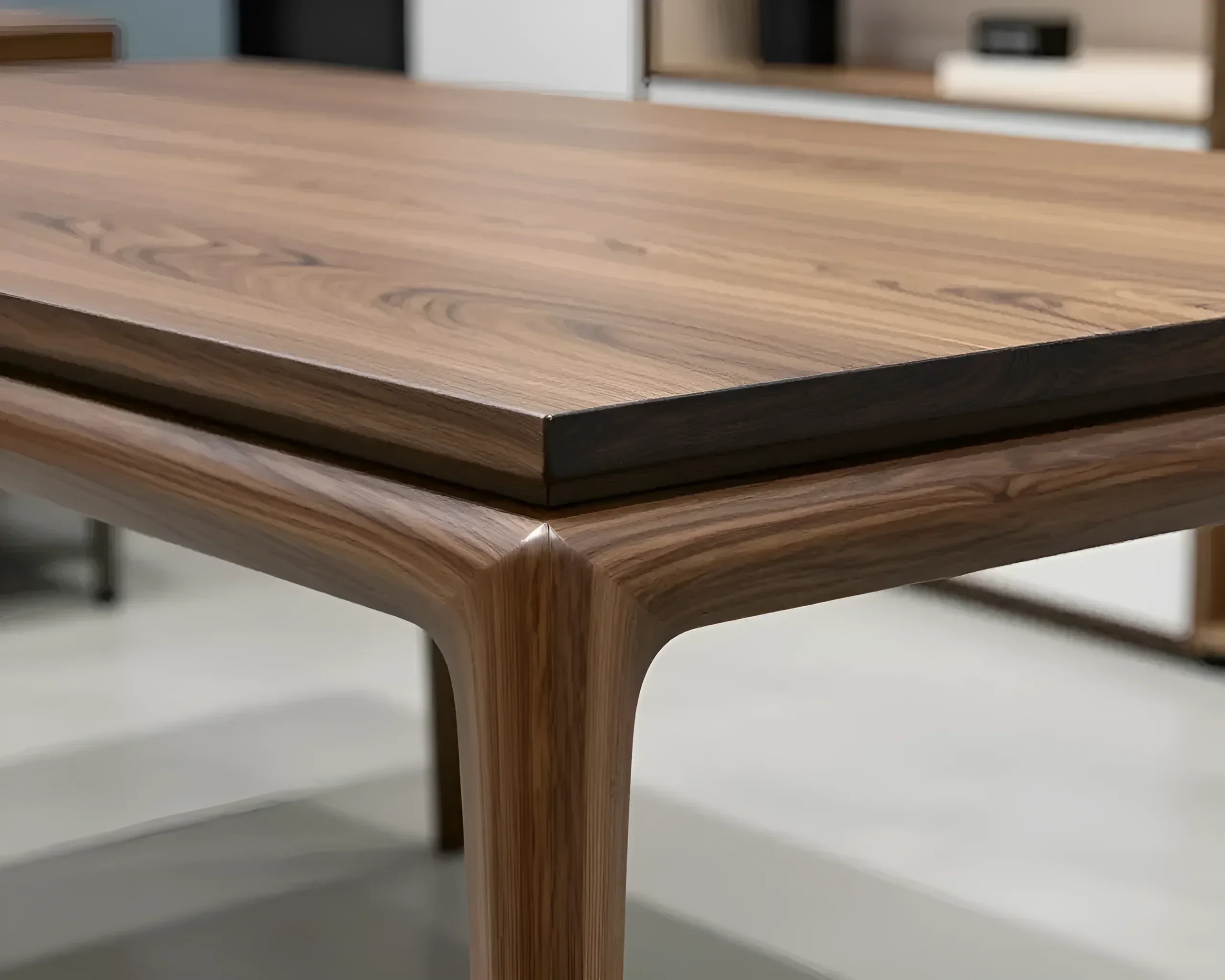
Let’s look at iconic concepts that have become benchmarks in the world of furniture design:
- Tulip Table. Created by Eero Saarinen, this table with a single elegant aluminum leg and a round or oval tabletop freed the world from the “leg clutter.” Ideal for small dining rooms.
- Noguchi Table. A masterpiece of biomorphic design. The glass tabletop rests on two identical wooden elements joined at an angle. It’s more of a sculpture than just a coffee table.
- Slab and “River” Tables. Models where two pieces of solid wood are joined by a strip of transparent or colored epoxy resin. Each such table is unique due to the natural wood pattern.
- Minimalist Console Tables. Thin metal frames with mirrored or stone tops. They create the illusion of objects floating in the air.
- Transformers with Ceramic Coating. Modern models that extend from 160 to 240 cm with a light movement, while maintaining a monolithic surface appearance.
Buyer’s Tips: What to Look for When Buying a Designer Table
To avoid disappointment with your purchase, conduct a small technical audit of the product before payment. Here is a checklist from a professional furniture expert:
- Quality of Joints: There should be no visible gaps or glue marks at the points where the legs connect to the tabletop. If the table is metal, the seams should be perfectly polished.
- Hardware: If the table is extendable, the mechanism should operate silently and smoothly. Any sticking is a sign of imminent failure.
- Stability: Try to gently rock the table. Even elegant consoles should not vibrate from a light touch.
- Material Certificates: Inquire about the origin of the wood and the formaldehyde emission class (should be E1 or E0). For natural stone, it’s important to know the country of origin and porosity.
- Warranty and Service: Reputable designer furniture brands offer warranties from 2 to 5 years and provide restoration services.
Frequently Asked Questions (FAQ)
Is it worth buying a designer table if there are small children at home?
Yes, but choose practical materials. A ceramic or tempered glass tabletop with rounded corners is an excellent choice. Avoid soft woods (pine) and porous marble.
How to distinguish an original from a cheap replica?
Originals always have designer or factory markings, a product passport, and a unique serial number. The quality of finishing on hidden surfaces (underside of the tabletop) is usually significantly lower on replicas.
Can a designer dining table be used outdoors?
Only if it is specifically designed for outdoor use (Outdoor collection). A regular indoor table made of solid wood or metal will quickly deteriorate under the influence of UV rays and moisture.
Interesting Facts About Designer Tables
Did you know that the most expensive designer table in the world was sold at auction for several million dollars? It was a model created by architect Zaha Hadid, distinguished by its incredible fluidity of form. And the first “designer” table in the modern sense is considered to be the model developed for Larkin company offices in 1904 by Frank Lloyd Wright – he was the first to integrate a storage system directly into the table’s construction.
Choosing a designer table is a balance between your personal taste and technical feasibility. Remember that this furniture will accompany you for many years, so don’t be afraid to ask sellers complex questions about the lacquer composition or the method of attaching the legs. A quality table is not only a status symbol but also daily comfort for your home.