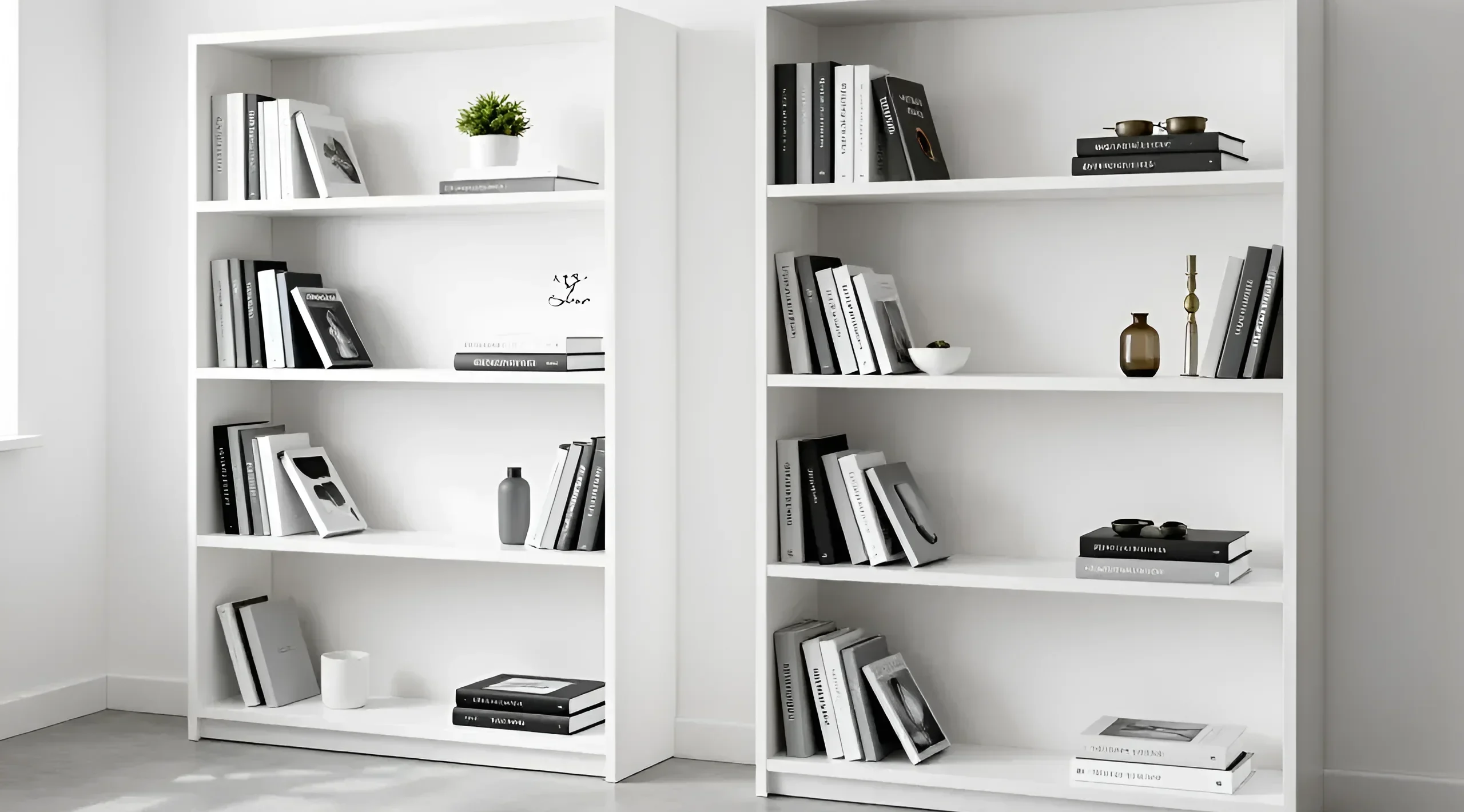
White shelves are one of the most versatile and sought-after elements of modern furniture design. They can visually declutter a space, add light to even the darkest room, and serve as an ideal backdrop for a collection of books, art objects, or houseplants. However, behind their apparent simplicity lie many nuances: from choosing the right shade of white (from “arctic” to “ivory”) to selecting a material that won’t yellow after a year of use. In this material, we will delve into how to integrate white shelves into your interior so that they bring aesthetic pleasure and last for decades.
White Shelves in Interior Design: An Overview of Advantages and Disadvantages
Before heading to the store or ordering custom-made furniture, it’s essential to weigh all the pros and cons. White color in furniture is not just about beauty but also about the functional psychology of space.
Advantages of White Shelves:
- Visual Space Expansion. White has the highest light reflectivity (albedo). By installing white shelves against a white wall, you achieve the effect of furniture “dissolving,” which is critical for small apartments and narrow hallways.
- Style Versatility. White structures look equally harmonious in Scandinavian, minimalist, classic, Provence, and even industrial loft styles (when combined with a metal frame).
- Emphasis on Contents. Against a white background, any objects – book spines, colorful dishes, green plant leaves – appear more contrasting and expressive.
- Psychological Comfort. Light shades reduce visual noise, creating a sense of cleanliness and order.
Disadvantages of White Shelves:
- Susceptibility to Stains. Fingerprints, mug marks, and dark dust are clearly visible on white surfaces, especially glossy ones.
- Risk of Yellowing. Low-quality materials (cheap PVC film or certain types of varnish) can develop an unpleasant yellowish tint over time due to UV exposure.
- “Hospital Effect.” An excess of white and a lack of texture can make an interior feel unwelcoming and sterile.
- Difficulty in Matching Shades. There are over 50 shades of white (RAL 9003, RAL 9010, RAL 9016, etc.). If the shelves differ in tone from other furniture facades or walls, it will create the impression of a “dirty” color.
Types and Styles of White Shelves: From Classic to Modern
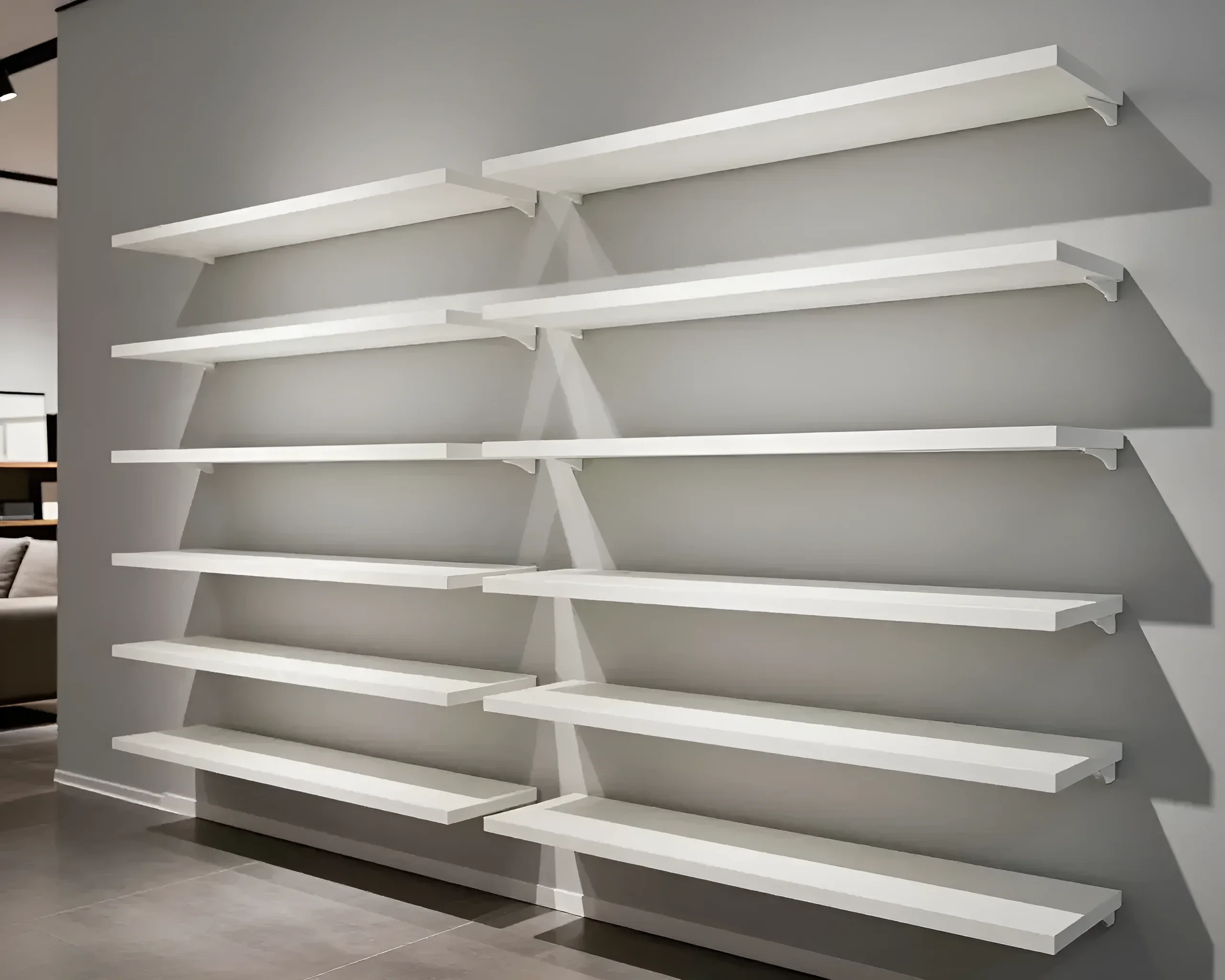
The structural design of shelves directly affects their reliability and aesthetic appeal. Let’s consider the main categories available on the modern furniture market.
1. Wall-mounted shelves with hidden mounting. These are “floating” structures where the fasteners are not visible. They are ideal for minimalist interiors. It’s important to remember that these shelves have a load limit (usually up to 5-10 kg, depending on the wall material).
2. Shelves on brackets. Here, the fasteners are part of the decor. White shelves pair excellently with black metal (loft), brass (classic), or wooden (Scandi) brackets. This is the most reliable option for heavy books.
3. Modular systems and shelving units. These consist of a set of open compartments. White shelving units are often used for room zoning, for example, to separate a workspace from a bedroom. Due to the absence of a back panel, they allow light to pass through.
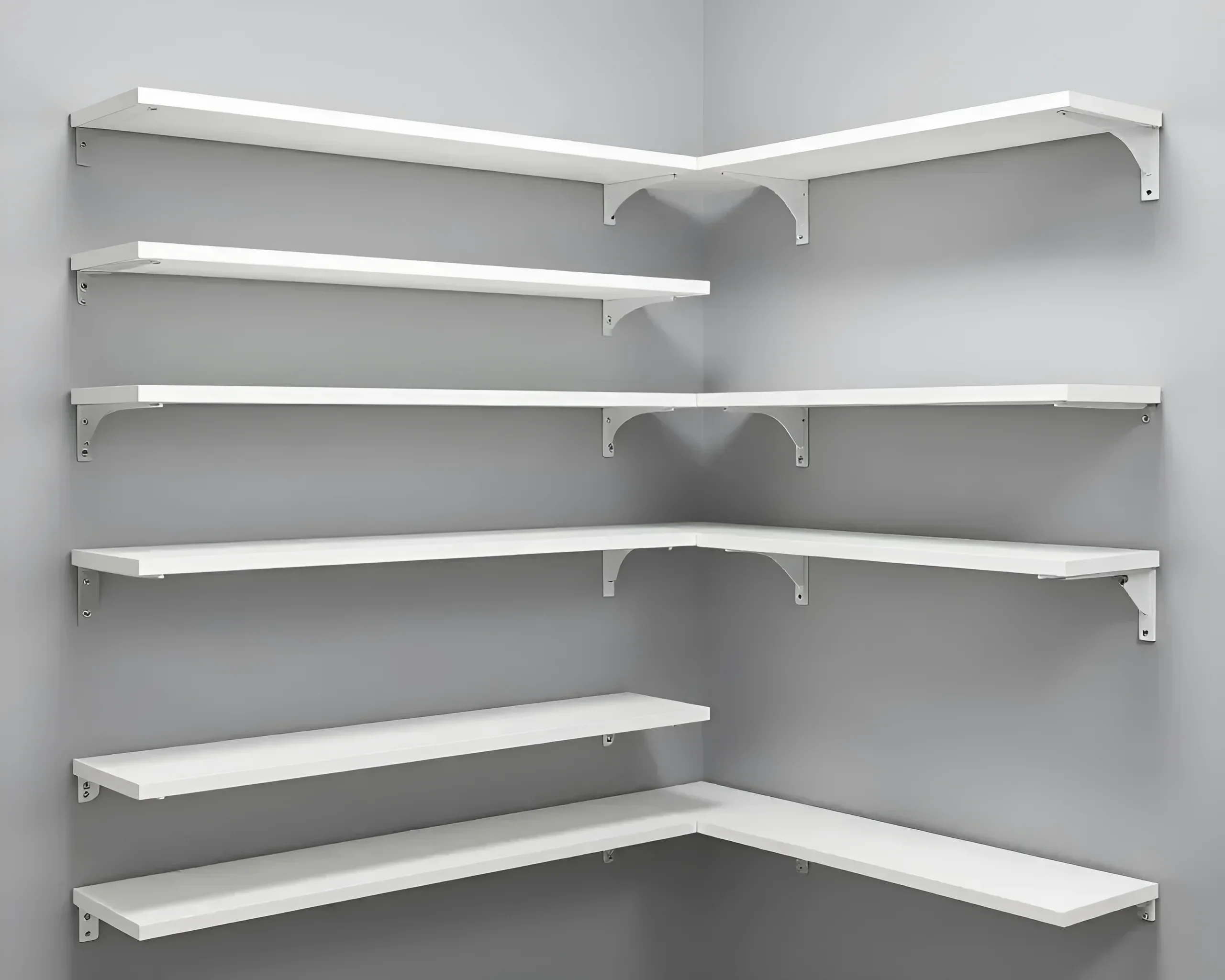
4. Corner shelves. These allow for effective use of “dead” spaces. In white, they don’t clutter the corner, making it visually lighter.
5. Box shelves (niches). Deep structures that create an effective frame around objects. In white, they look like an architectural element of the wall.
Materials for White Shelves: What to Choose for Durability and Style
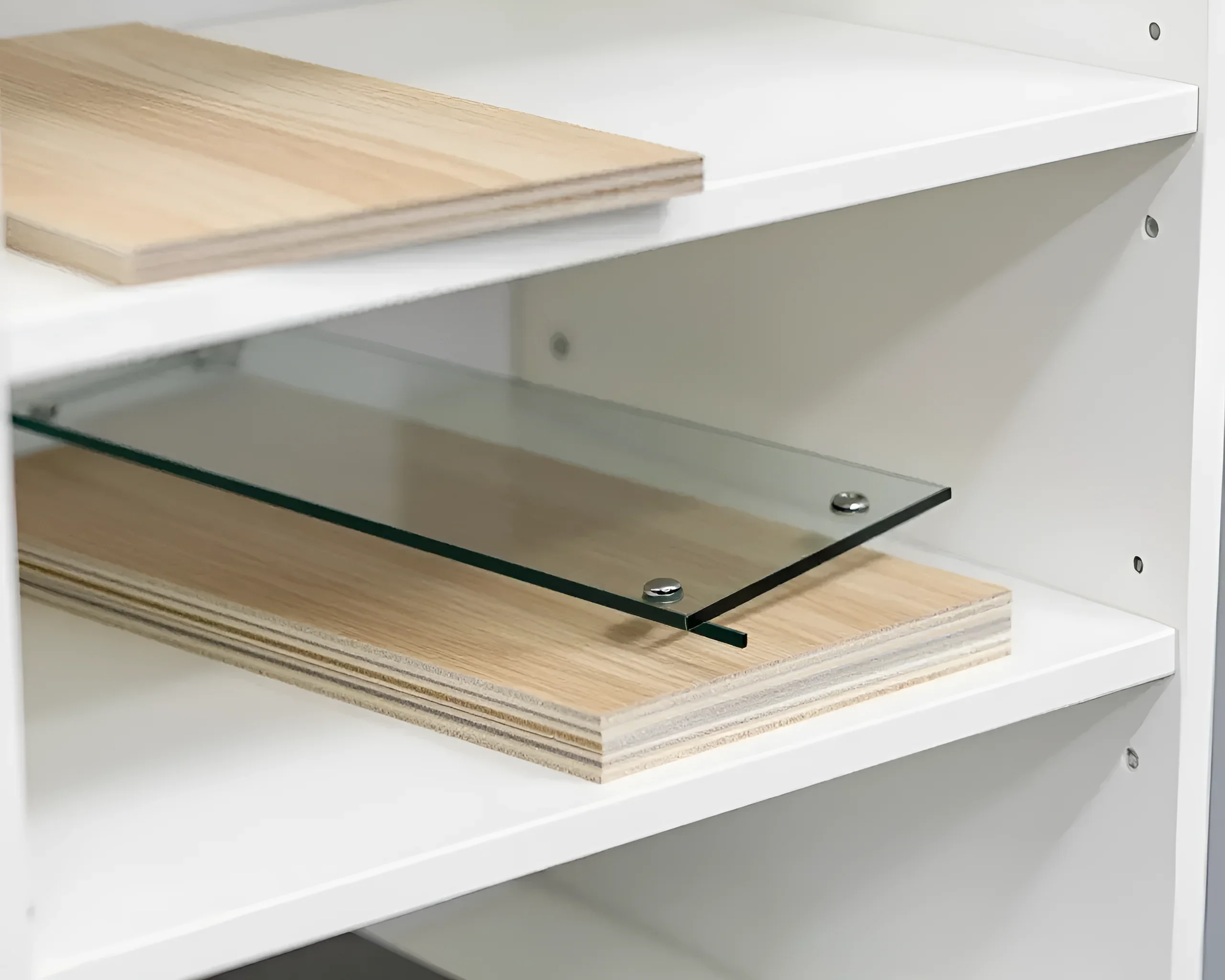
The choice of material determines not only the appearance but also how long the shelf will retain its pristine white color.
Particleboard (Laminated Chipboard). The most budget-friendly option.
Pros: Affordable price, a huge selection of textures (smooth white, wood-grain white).
Cons: Visible edges. Dust can accumulate over time at the junction of the edge and the laminate, forming a thin dark line, which is very noticeable on a white background.
MDF with enamel (painted MDF). An optimal choice for quality furniture.
Pros: Perfectly smooth surface without visible joints or edges. The ability to choose any level of gloss – from deep matte to high gloss. Enamel is more resistant to moisture and fading.
Cons: Higher cost, sensitivity to mechanical impact (chips may appear).
Solid wood. Usually pine, birch, or oak, coated with white wax, varnish, or opaque paint.
Pros: Eco-friendliness, unique wood texture that shows through the paint (in Provence or country style).
Cons: Wood “breathes,” so micro-cracks in the paint may appear at the joints due to humidity fluctuations.
Metal. Thin steel shelves painted with powder coating.
Pros: Incredible strength with minimal thickness (only 2-3 mm). Ideal for high-tech and loft styles.
Cons: A “cold” material, can rattle when placing objects.
Tempered glass (frosted white).
Pros: Absolute moisture resistance, ideal for bathrooms.
Cons: Requires constant cleaning, as any water drops are visible.
How to Choose the Perfect White Shelves: Practical Tips
When choosing white shelves, it’s important to consider not only their appearance but also their technical parameters. Here’s a checklist for a smart purchase:
- Check the shade in natural light. White is very deceptive. In a store under fluorescent lights, a shelf might seem snow-white, but at home, next to your curtains, it might lean towards blue or yellow. Bring a sample of your finishes (e.g., a piece of wallpaper or a kitchen facade).
- Determine the type of finish. Gloss visually expands space and looks festive, but it glares and collects fingerprints. Matte finish (soft-touch) looks modern and noble, showing less dirt, but it’s harder to clean greasy stains from.
- Edge quality. If you’re choosing particleboard, ensure the edge is applied with PUR glue (polyurethane). It provides an almost invisible seam and protects the board from swelling.
- Maximum load. For books, the shelf depth should be 20-25 cm, and the material thickness should be at least 18-22 mm. For light decor, a thickness of 16 mm is sufficient. If a shelf is longer than 80 cm without intermediate supports, it will inevitably sag under the weight of books.
Dimensions and Sizes of White Shelves: Considering Space and Functionality
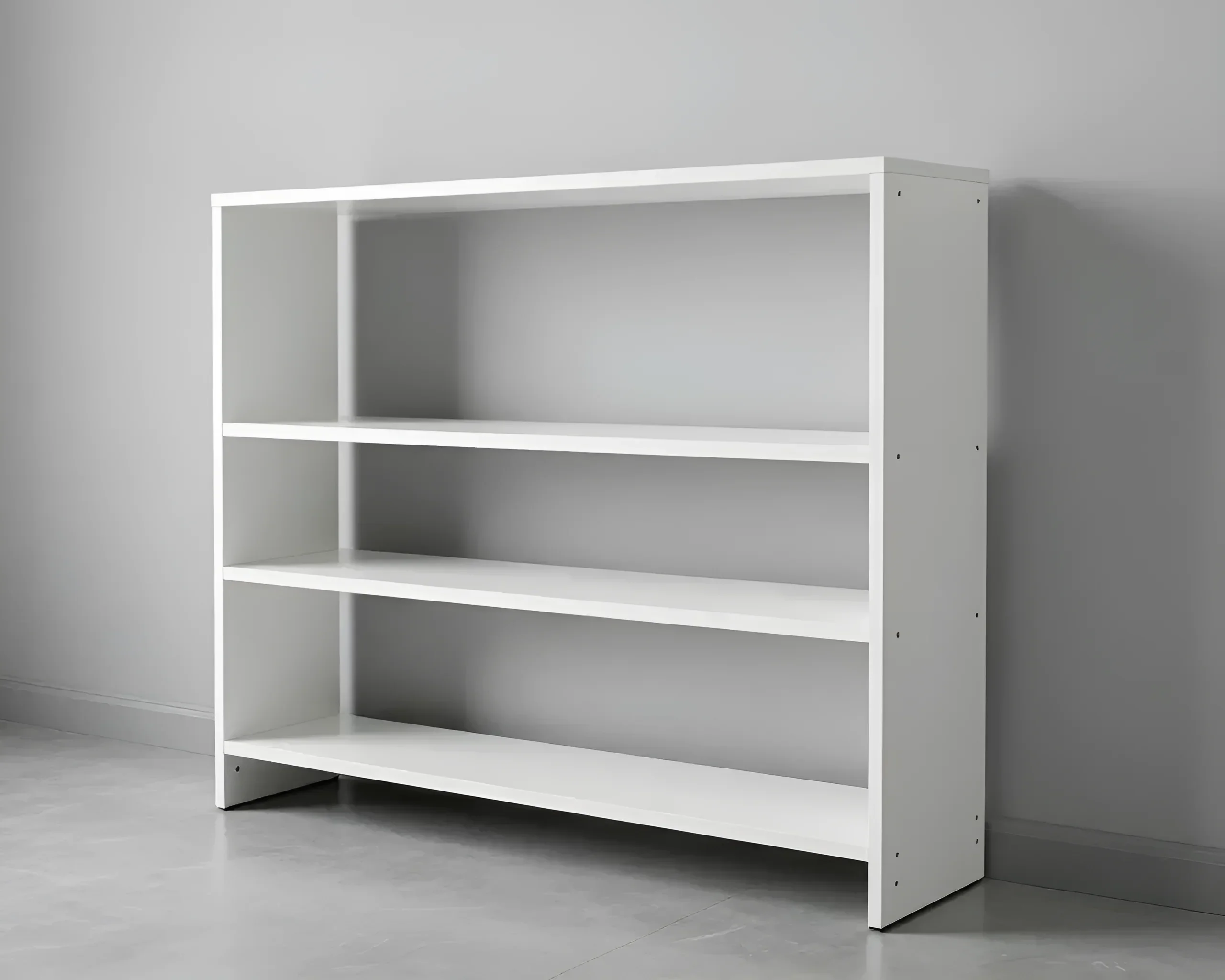
The right dimensions are key to ensuring a shelf is convenient to use and doesn’t “overwhelm” the interior. Here are standard specifications for different tasks:
Shelf Depth:
- 15–20 cm: for souvenirs, photo frames, spices in the kitchen, or cosmetics in the bathroom.
- 25–30 cm: standard for fiction books, A4 folders, and most decorative items.
- 35–45 cm: for large art albums, small appliances, or storing clothes in a wardrobe.
Thickness (Edge Height):
- 16–18 mm: economy standard, looks light, suitable for small spans.
- 25–38 mm: creates a sense of solidity and reliability. Such shelves look substantial and expensive.
- 50 mm and more: usually hollow shelves with hidden mounting (“tambourat”), creating the effect of a massive architectural detail.
Vertical Spacing Between Shelves:
- For standard books: 25–30 cm.
- For tall albums and vases: 35–45 cm.
- For CDs or small collections: 15–18 cm.
Functional Features of White Shelves: Transformation and Storage
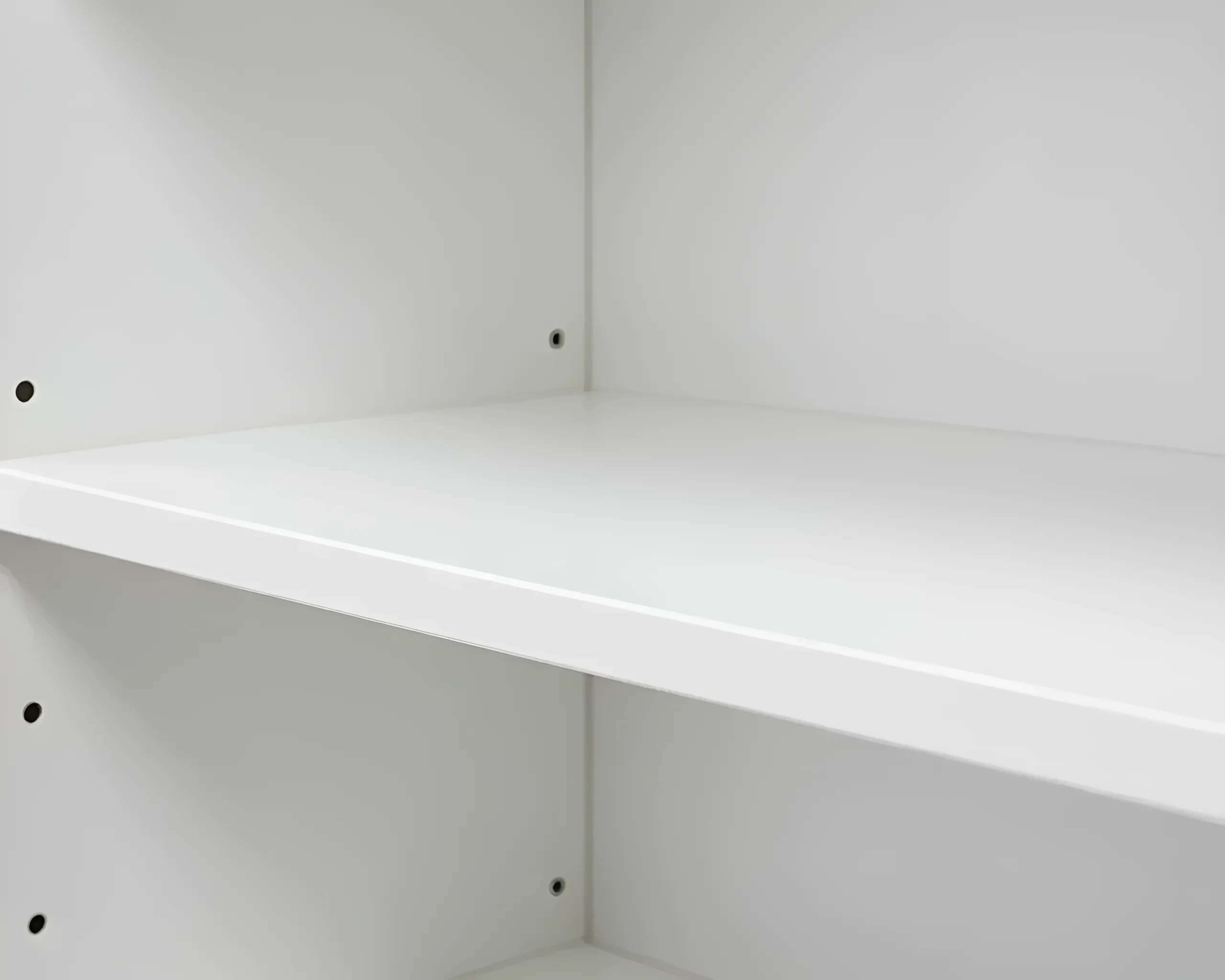
Modern white shelves are not just planks on a wall but well-thought-out storage systems. Let’s look at additional features that enhance usability.
Integrated Lighting. White is the best reflector. An LED strip installed in a groove at the bottom or top of a white shelf creates a soft glow. This not only illuminates decor but also serves as an additional lighting scenario for the room.
Cable Management. If you plan to place gadgets, lamps, or speakers on the shelf, choose models with special holes or cable channels. Black wires look extremely messy on a white background, so masking them is critical.
Stoppers and Edges. For narrow shelves in the hallway or kitchen, models with a small edge are relevant. This prevents items from falling and adds graphic detail to the design.
Pegboards. White shelves can be part of a wall system (pegboard). You can rearrange them in height and width depending on your current needs, which is ideal for children’s rooms and offices.
Care for White Shelves: Secrets of Cleanliness and Freshness
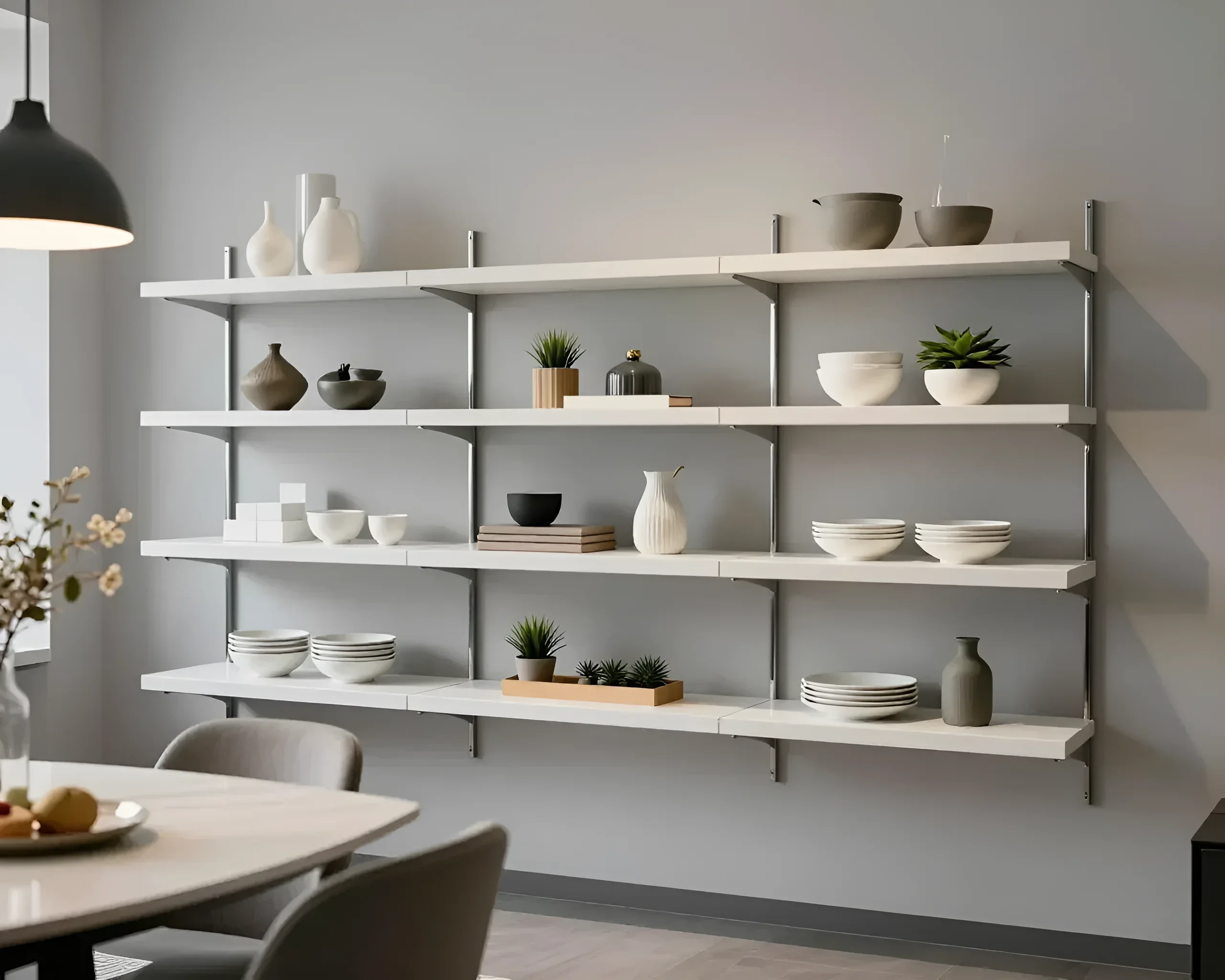
The main fear of white furniture buyers is the difficulty of care. In reality, with the right approach, white shelves can be more practical than dark ones (on which dust is much more visible).
1. Dust Control. Use microfiber cloths and an anti-static spray. This will reduce the amount of dust settling on horizontal surfaces.
2. Stain Removal.
– Fresh stains: a damp soft cloth is usually sufficient.
– Greasy marks (in the kitchen): a weak solution of dish soap.
– Stubborn stains (marker, paint): an alcohol-based solution (test on an inconspicuous area first).
– Caution: Never use abrasive powders or harsh sponges, as they will leave micro-scratches where dirt will accumulate even faster.
3. Protection Against Yellowing. Try to avoid hanging white particleboard shelves in direct sunlight. If unavoidable, choose furniture with a coating that has UV filters (this is usually indicated in the specifications of quality enamels).
4. Melamine Sponge. This is a “magic” tool for white furniture. It easily removes marks from pencils, shoe soles (if shelves are low), and other stubborn dirt without the use of chemicals.
Top 5 Stylish Solutions with White Shelves in Interior Design
How to make white shelves work for your interior? Here are five proven design techniques:
1. “Invisible Library.” Install white shelves from floor to ceiling and corner to corner, and paint the wall behind them in the same shade of white. Books will appear to float in the air, and the room will not lose its sense of volume.
2. Contrasting Background. Place white shelves against a dark wall (graphite, deep blue, emerald). This will create a powerful graphic effect and emphasize the geometry of the space.
3. Scandinavian Mix. Combine white shelves with elements of natural light wood (oak, ash). This will add warmth to the interior and eliminate the “hospital” effect.
4. Kitchen Alternative to Cabinets. Replace bulky upper kitchen cabinets with long white shelves. Arrange white dishes and clear glass on them. The kitchen will appear twice as spacious.
5. Vertical Garden. White shelves are an ideal base for climbing plants (Pothos, Spider Plant). The combination of bright green and pure white creates a sense of freshness and natural purity.
Frequently Asked Questions About White Shelves in Interior Design (FAQ)
Question: Won’t white shelves look cheap?
Answer: It’s not the color that looks cheap, but poor craftsmanship. Choose matte enameled MDF or solid wood with good hardware. Also, avoid plastic corner caps on fasteners – use hidden mounting.
Question: How to combine white shelves with beige walls?
Answer: This is acceptable, but it’s important that the shelves are noticeably lighter than the walls. If the shades are too close but have different temperatures (e.g., warm walls and cool shelves), the furniture will look dirty. It’s better to use contrast in brightness.
Question: What load can a standard white shelf from IKEA or similar hold?
Answer: Popular models with hidden mounting (110 cm long) are usually designed for 5-15 kg, depending on the wall type. If the wall is drywall without backing, the load should be halved.
Question: Can white shelves be hung in a child’s room?
Answer: Yes, it’s an excellent solution. White color doesn’t overload a child’s psyche, which is already surrounded by bright toys. However, choose materials with wear-resistant coatings (enamel or quality plastic) that are easy to clean.
Question: How to refresh a yellowed white shelf?
Answer: If it’s particleboard, only repainting will provide a radical solution. The surface needs to be lightly sanded, an adhesion primer applied, and then acrylic enamel in 2-3 coats. This will give the furniture a fresh look.
White shelves are an investment in your interior that will never go out of style. They adapt to any changes in your taste: simply change the decor on the shelves, and the room will sparkle with new colors. The main thing is not to skimp on the quality of the finish and the reliability of the installation, and then the whiteness will delight you for many years to come.