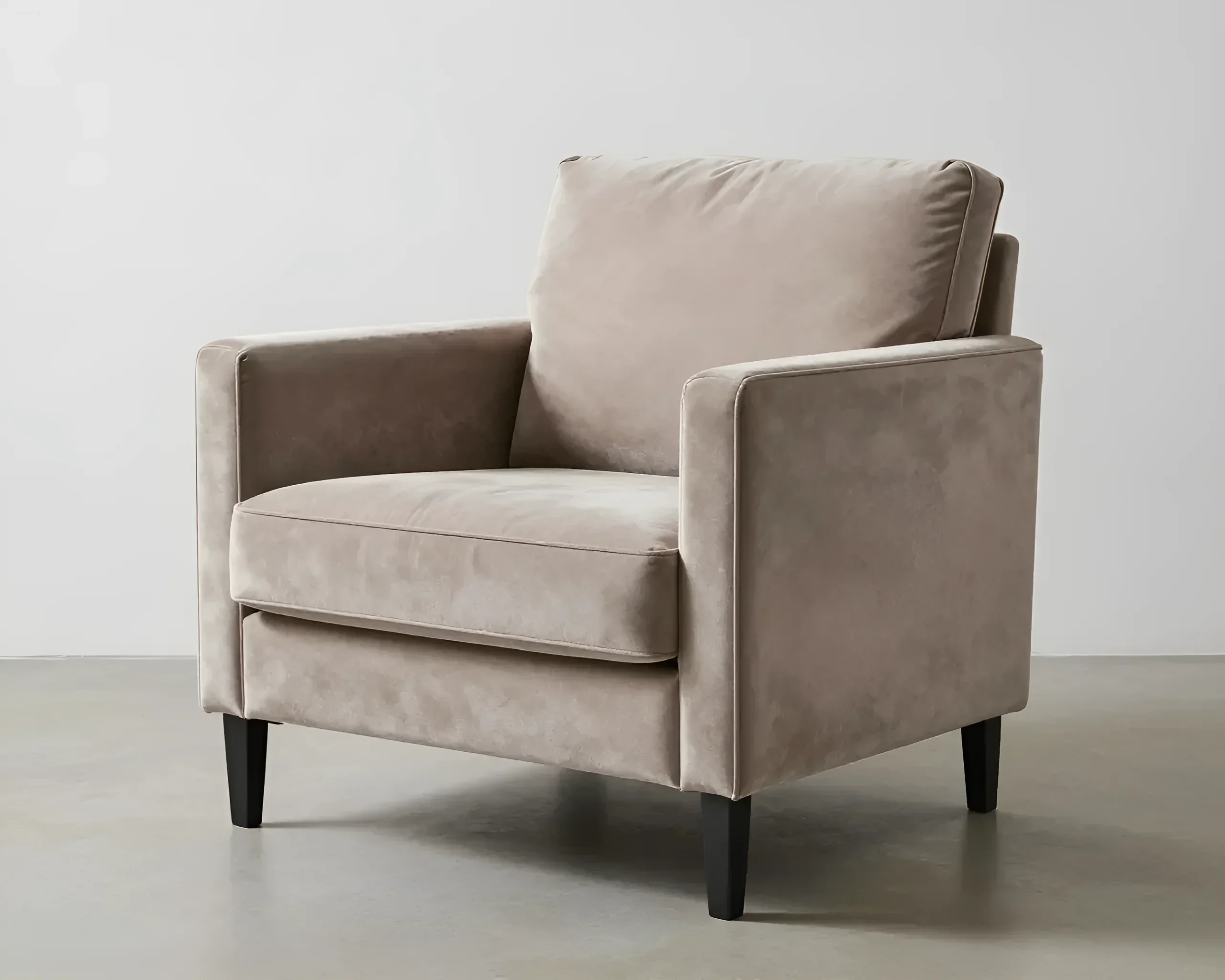
A modern living room armchair is not just an additional seating option, but a complete tool for creating a personal comfort zone. In today’s dynamic lifestyle, the living room has ceased to be merely a room for receiving guests; it is now a multifunctional space where we relax, work on laptops, or immerse ourselves in reading. Choosing the right armchair requires a balance between aesthetics, ergonomics, and material durability. In this article, we will delve into the technical characteristics to pay attention to, the differences between modern transformation mechanisms, and how to avoid mistakes with dimensions when planning your interior.
Modern Living Room Armchairs: A Guide to Choosing Perfect Comfort
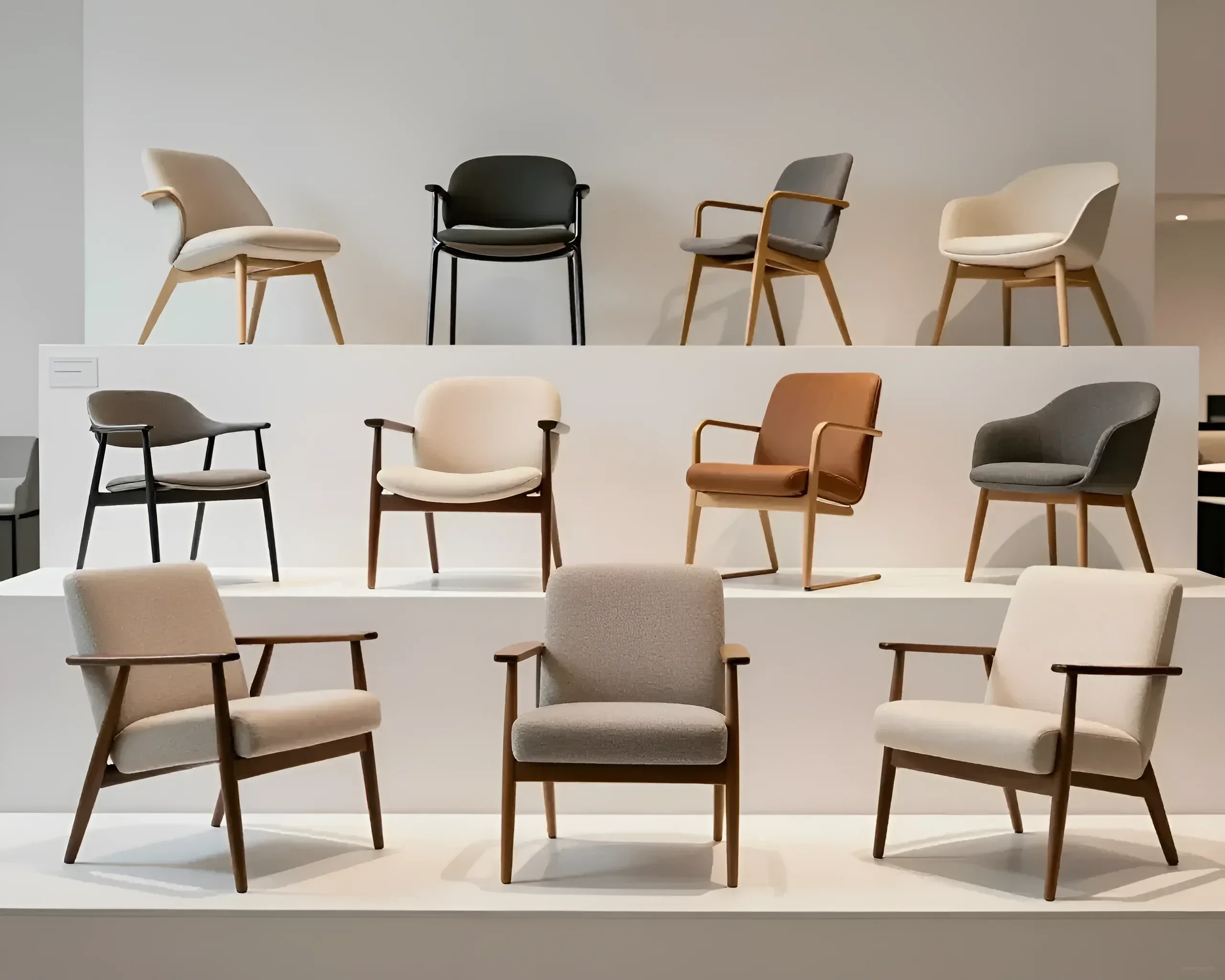
When you start choosing an armchair, it’s important to understand that modern style isn’t just about minimalism. It’s primarily about functionality. The ideal armchair should support your spine, not impede blood circulation in your legs, and harmoniously fit into the existing furniture arrangement. Modern models differ from classic “grandmother’s” versions by the absence of excessive decor, the use of high-tech fillers, and an emphasis on clean lines.
Key Comfort Criteria:
- Backrest Angle: An angle of 110–120 degrees is considered optimal for relaxation. If the backrest is strictly vertical (90 degrees), such an armchair is more suitable for work or formal conversations.
- Seat Depth: For a person of average height, the ideal depth is 50–60 cm. If the seat is deeper, you will need additional decorative pillows for lumbar support.
- Seat Height: Your feet should rest completely on the floor, and your knees should be bent at a 90-degree angle. Typically, this is a height of 40–50 cm from the floor.
Remember that “soft” doesn’t always mean “comfortable.” An overly soft armchair that you “sink into” can cause back pain with prolonged sitting due to a lack of lumbar support.
Types and Styles of Modern Living Room Armchairs: From Classic to High-Tech
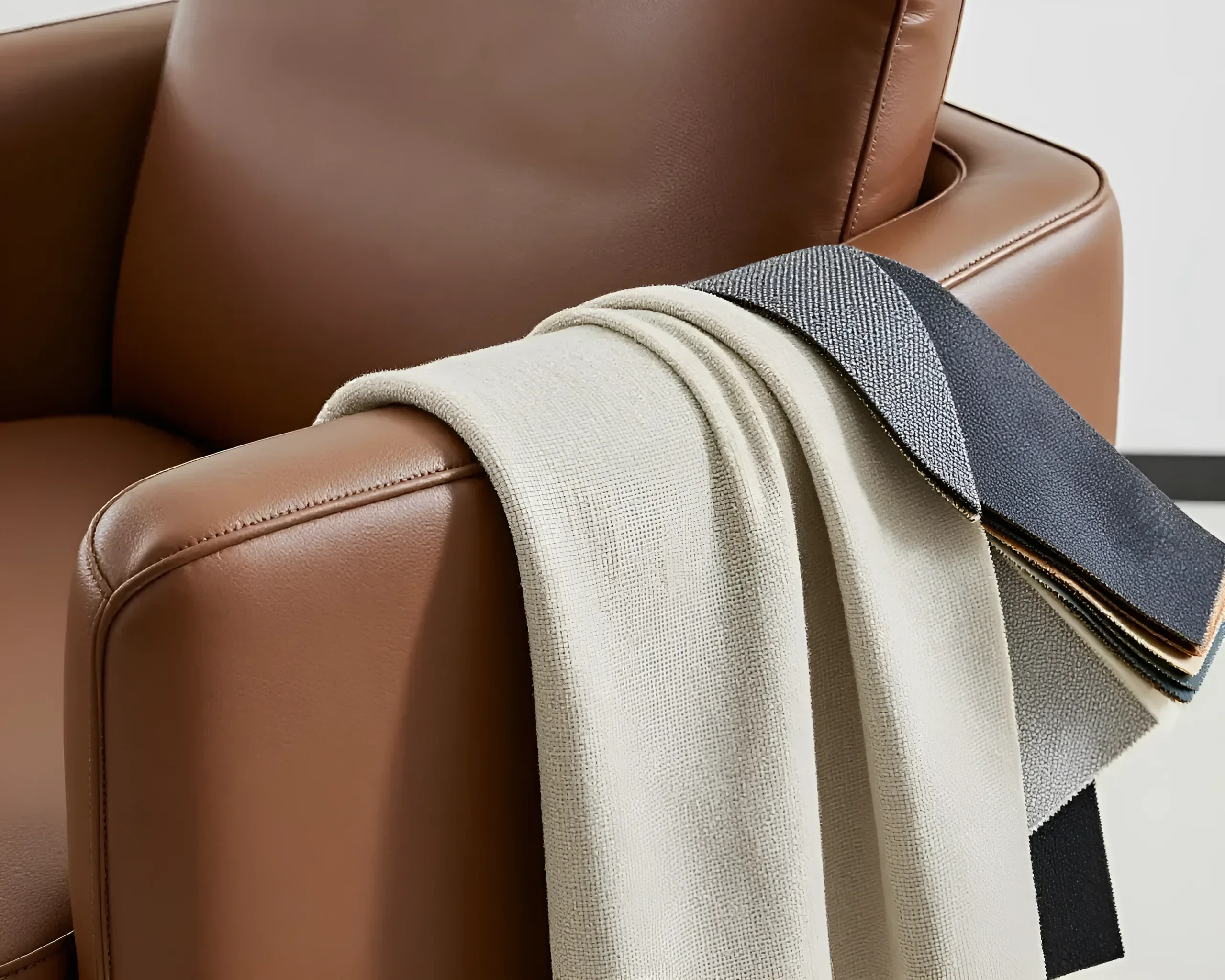
The market offers a huge variety of designs. To avoid confusion, let’s divide them into main categories that are most relevant in modern interior design:
- Lounge Chairs: These are accent models, often on thin metal or wooden legs. They look light and don’t clutter the space. Popular models are in Scandinavian and Mid-Century Modern styles.
- Recliner Armchairs: High-tech models with a reclining backrest and a retractable footrest. Operation can be mechanical (by leaning back) or electric (using a remote or touch buttons).
- Wingback Chairs: A modern interpretation of a classic. The high backrest with side wings protects from drafts and creates a sense of privacy. Excellent for reading nooks.
- Cocoon and Hanging Chairs: Bring an element of futurism and relaxation to the living room. Often made of rattan or techno-rattan with a soft inner mattress.
- Swivel Base Armchairs: Convenient for open-plan spaces (kitchen-living room) as they allow you to easily turn towards a conversationalist or the TV without moving the furniture itself.
High-tech style is characterized by models with chrome details and eco-leather or smooth fabric upholstery. For loft style, massive armchairs on a rough metal frame with “vintage” upholstery are typical.
Upholstery Materials for Modern Armchairs: Velour, Leather, Matting, and More — Pros and Cons
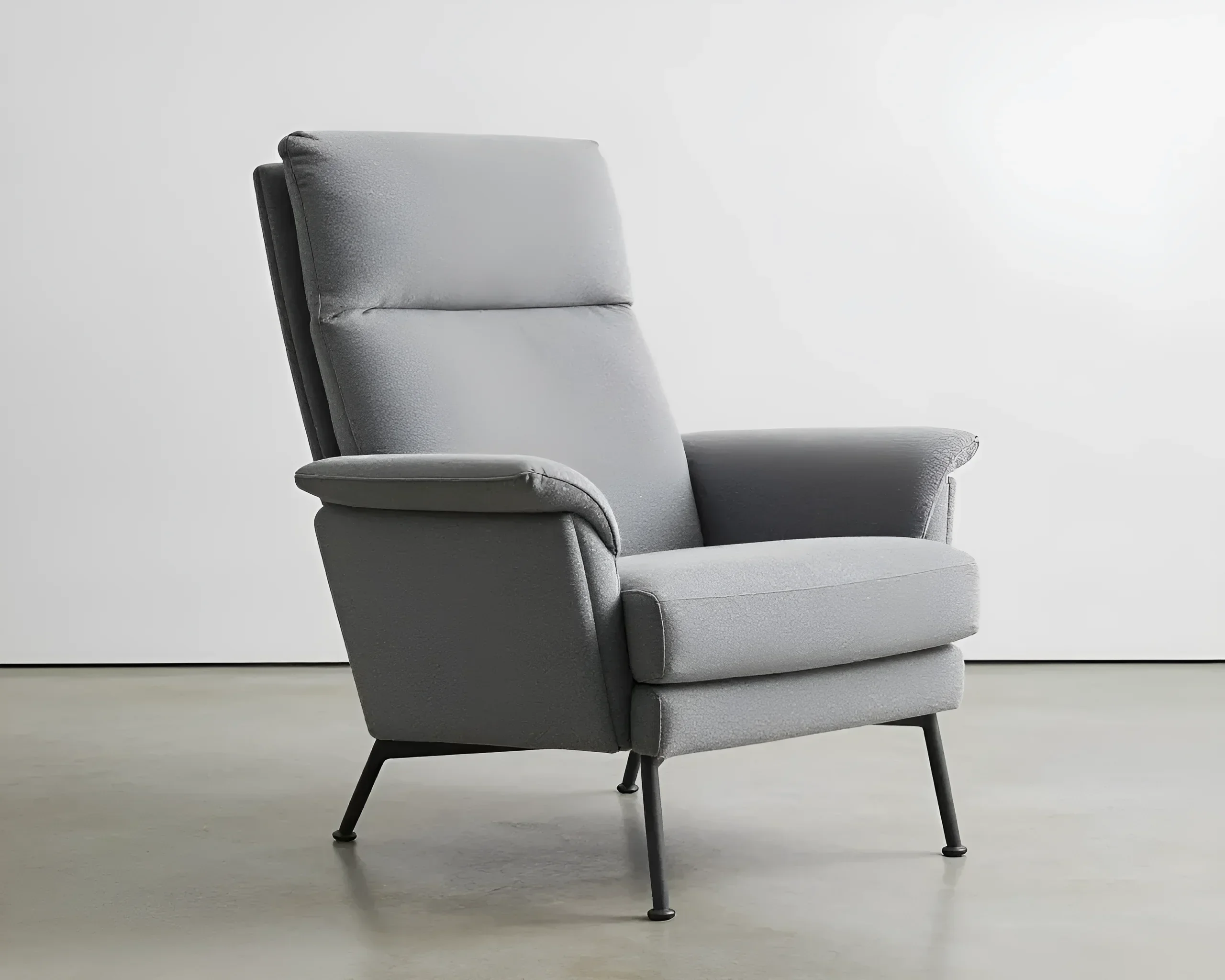
The choice of fabric is not only a matter of tactile sensation but also practicality. The table below shows the characteristics of the most popular materials for modern armchairs:
| Material | Durability (Martindale cycles) | Pros | Cons |
|---|---|---|---|
| Velour | 20,000 – 50,000 | Pleasant to the touch, looks luxurious, hypoallergenic. | Attracts dust, requires a special brush for cleaning. |
| Matting | 30,000 – 60,000 | Durable, fits perfectly into eco-style and Scandinavian designs. | Not suitable for cat owners (easily snags). |
| Genuine Leather | from 50,000 | Prestigious, durable, easy to clean from liquids. | High price, can be cold in winter and sticky in summer. |
| Microfiber | 40,000 – 80,000 | “Anti-claw” effect, easy to clean, does not fade. | Accumulates static electricity. |
Expert Tip: If you have small children or pets at home, choose fabrics with Easy Clean or Water Repellent treatment. They don’t absorb liquids instantly, allowing you to simply blot the stain with a napkin.
How to Choose a Modern Living Room Armchair: A Parameter Breakdown
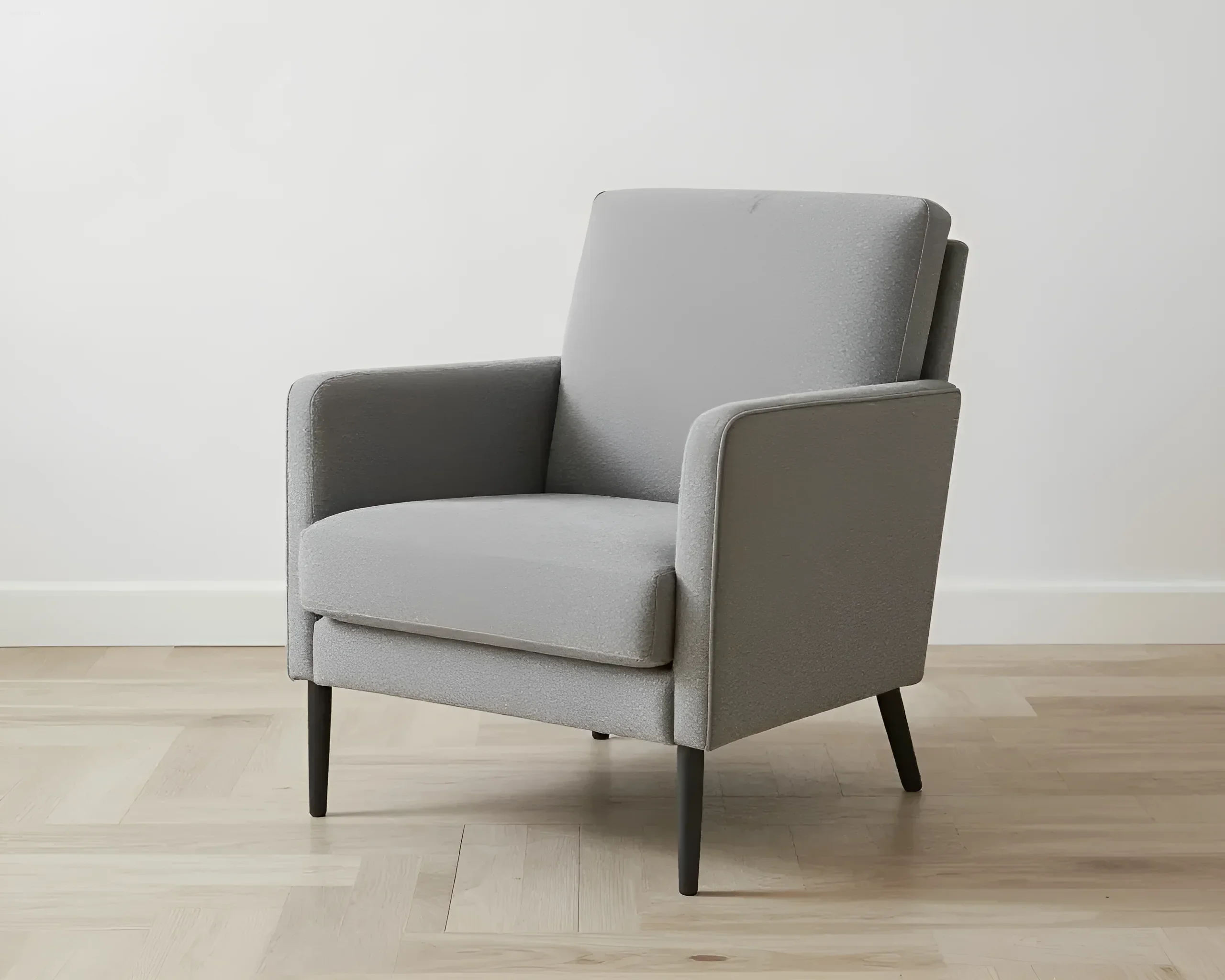
When buying, it’s important to look “under the hood” of the product. The durability of the armchair directly depends on its internal structure.
1. Frame:
- Solid Wood (oak, beech, ash): The most reliable and eco-friendly option. Lifespan – from 20 years.
- Metal Frame: Often used in modern designer models. Practically eternal, withstands heavy loads.
- Plywood: A good balance of price and quality. It’s important that the plywood thickness is at least 15 mm.
- Particleboard/MDF: Budget options, suitable for armchairs with low operational load.
2. Filler: Most modern armchairs use polyurethane foam (PUF). However, its density is critically important. For the seat, the density should be at least 30–35 kg/m³. If the density is lower, the armchair will sag within a year. Premium models use latex PUF with memory effect or an independent spring system, which provides targeted body support.
3. Ergonomics: Check for a lumbar support pillow. This is a small thickening at the lower part of the backrest that supports the natural curve of the spine. Without it, your back will tire quickly.
Dimensions and Size of Modern Armchairs: How to Find the Perfect Fit in Your Space
A common mistake is buying an armchair that seems small in a spacious showroom but takes up all the free space in a real living room. Before purchasing, be sure to measure the area you are willing to allocate for furniture.
Standard Dimensions of a Modern Armchair:
- Width: from 60 cm (compact models) to 100 cm (wide lounge options).
- Backrest height: 80–110 cm.
- Passage space: There should be at least 50–60 cm of free space around the armchair for comfortable movement.
If you are choosing a recliner, allow an additional 40–50 cm in front for the footrest and 15–30 cm at the back (if the backrest reclines backward). There are Wall-free models that can be placed almost flush with the wall – they slide forward when reclined.
Functionality and Mechanisms of Modern Armchairs: Transformation and Additional Options
Modern technologies have turned an armchair into a complex gadget. Let’s consider which functions might be useful for you:
Mechanical and Electric Recliners: Allow you to assume a “semi-lying” position. Electric models are smoother and allow you to fix the backrest in any intermediate position. Some are equipped with USB ports for charging your phone directly in the armrest.
Gliding Function: Unlike classic rocking chairs, gliders rock on a horizontal axis, which is smoother and safer for flooring. Often combined with a 360-degree swivel mechanism.
Built-in Massage and Heating: Found in premium segment models. Several vibration modes and lumbar heating help relieve muscle tension after a workday.
Sofa Beds: Often used as a guest option in modern living rooms. It’s important to choose models with a “pantograph” or “accordion” mechanism so that the sleeping surface is as flat as possible, without height differences between sections.
Caring for Modern Living Room Armchairs: Secrets of Durability and Cleanliness
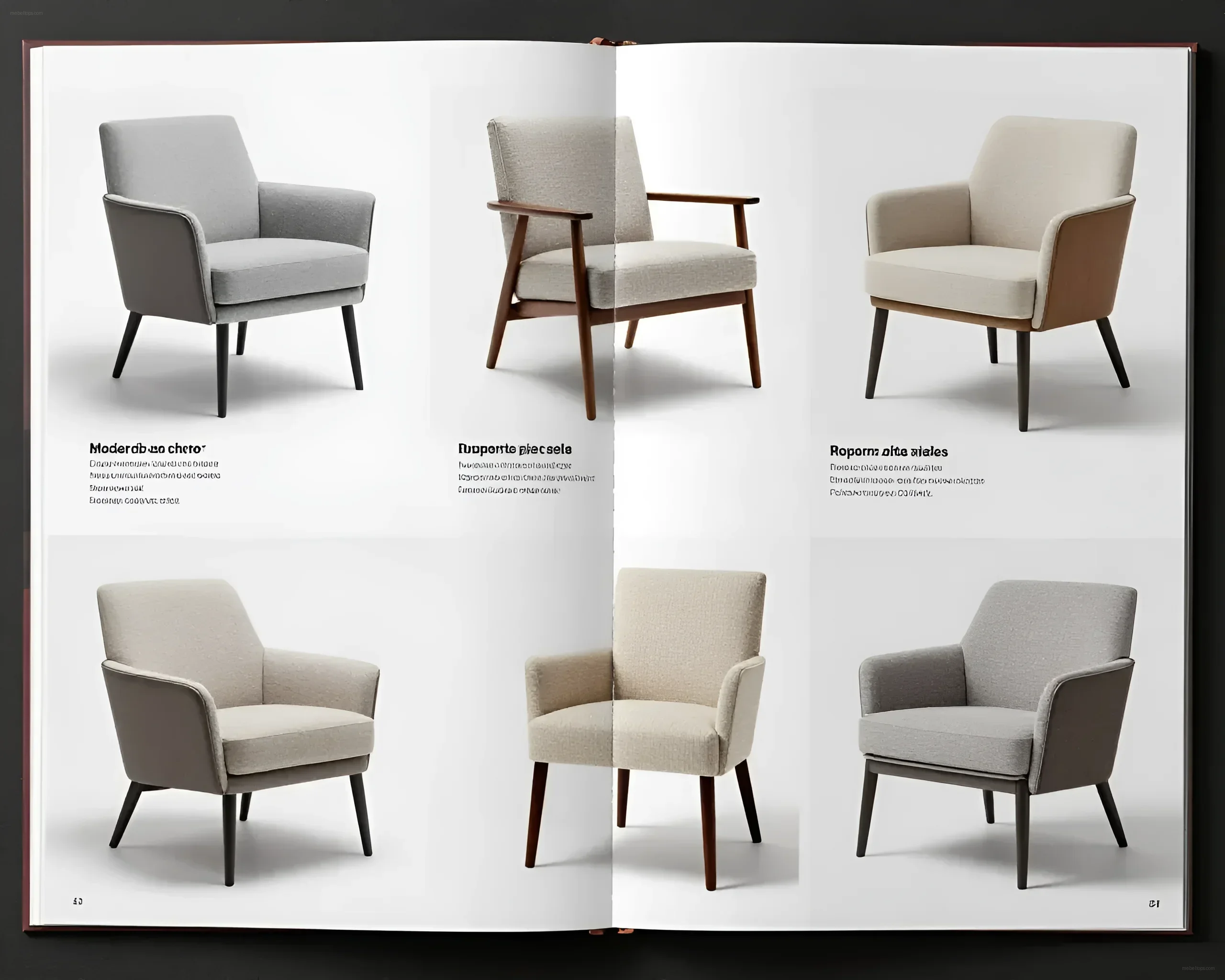
To keep your armchair looking its best for 5–10 years, follow simple operating rules:
- Regular Dry Cleaning: Vacuum the armchair once a week with a soft brush attachment, especially in seams and crevices where abrasive dust accumulates and damages fabric fibers.
- Stain Removal: Use only specialized products. Never apply cleaning solution directly to the upholstery – first apply it to a soft sponge or microfiber cloth.
- Sun Protection: Constant exposure to direct sunlight causes fabric pigment to fade (natural fabrics and dark velour are particularly sensitive). Place the armchair 1.5–2 meters away from a window or use heavy curtains.
- Leather Care: Leather armchairs should be treated with a special conditioner based on wax or oils 1–2 times a year to prevent drying out and cracking.
If the upholstery is removable (with zippers), wash it only on a “delicate wash” cycle at a temperature not exceeding 30 degrees without spinning to avoid fabric shrinkage.
Top 5 Modern Living Room Armchairs: Our Recommendations
Based on customer reviews and technical specifications, we have identified five types of models that will be a win-win choice:
- Minimalist Scandinavian Armchair: On high wooden beech legs with gray or dusty blue matting upholstery. Ideal for small apartments.
- Leather “Oxford”: A modern take on the English style. Low seat, deep seat, genuine leather with a patina effect. Suitable for a study or a loft relaxation area.
- Electric Recliner with USB: Maximum technological comfort. Microfiber upholstery. The best choice for movie buffs.
- Swivel Bowl Chair: On a metal base. Bright upholstery (mustard, emerald velour) will make it the main color accent of the interior.
- “Accordion” Transformer Armchair: A practical solution for one-room apartments where the living room turns into a bedroom at night.
Buyer’s Tips: What to Look for When Buying a Modern Armchair
Before paying for your purchase, conduct a final test. Don’t hesitate to sit in the armchair right in the store. Spend at least 5–10 minutes in it.
Pre-Purchase Checklist:
- Quality of Seams: They should be perfectly even, with no loose threads. Double stitching is a sign of high quality and durability.
- Absence of Strange Noises: The frame should not creak when sitting down or getting up. Creaking indicates poorly dried wood or low-quality assembly.
- Back Panel: If you plan to place the armchair in the middle of the room (zoning), make sure the back of the backrest is upholstered with the main fabric, not technical cloth.
- Warranty: For quality upholstered furniture, the manufacturer provides a warranty of at least 18 months on the filler and frame.
Frequently Asked Questions (FAQ)
Question: Which armchair is better for the back – soft or firm?
Answer: Medium firmness with pronounced lumbar support is optimal. An overly firm armchair creates pressure points, while an overly soft one forces the spine into an incorrect shape.
Question: How to know if an armchair will fit through a doorway?
Answer: Measure the width of the doorway and the minimum dimension of the armchair (usually the height without legs or the width). Most modern armchairs have removable legs, which makes them easier to maneuver.
Question: Is it worth paying extra for genuine leather?
Answer: If you don’t have pets with claws and are prepared for regular maintenance, then yes. Leather lasts 2–3 times longer than fabric and acquires a noble appearance over time.
Interesting Facts About Armchairs
- The first prototypes of modern recliners appeared in the mid-19th century, and one such armchair belonged to Napoleon Bonaparte.
- Scientists have calculated that people spend about 9 hours a day sitting. This is why investing in a quality armchair is primarily an investment in back health.
- The most expensive armchair in the world, the “Dragon’s Chair” by designer Eileen Gray, was sold at auction for $28 million.
Choosing a modern living room armchair is a process that requires attention to detail. By considering our recommendations on materials, mechanisms, and ergonomics, you can find a model that will delight you with comfort and impeccable appearance for years to come. Remember, the best armchair is the one in which you forget about time.