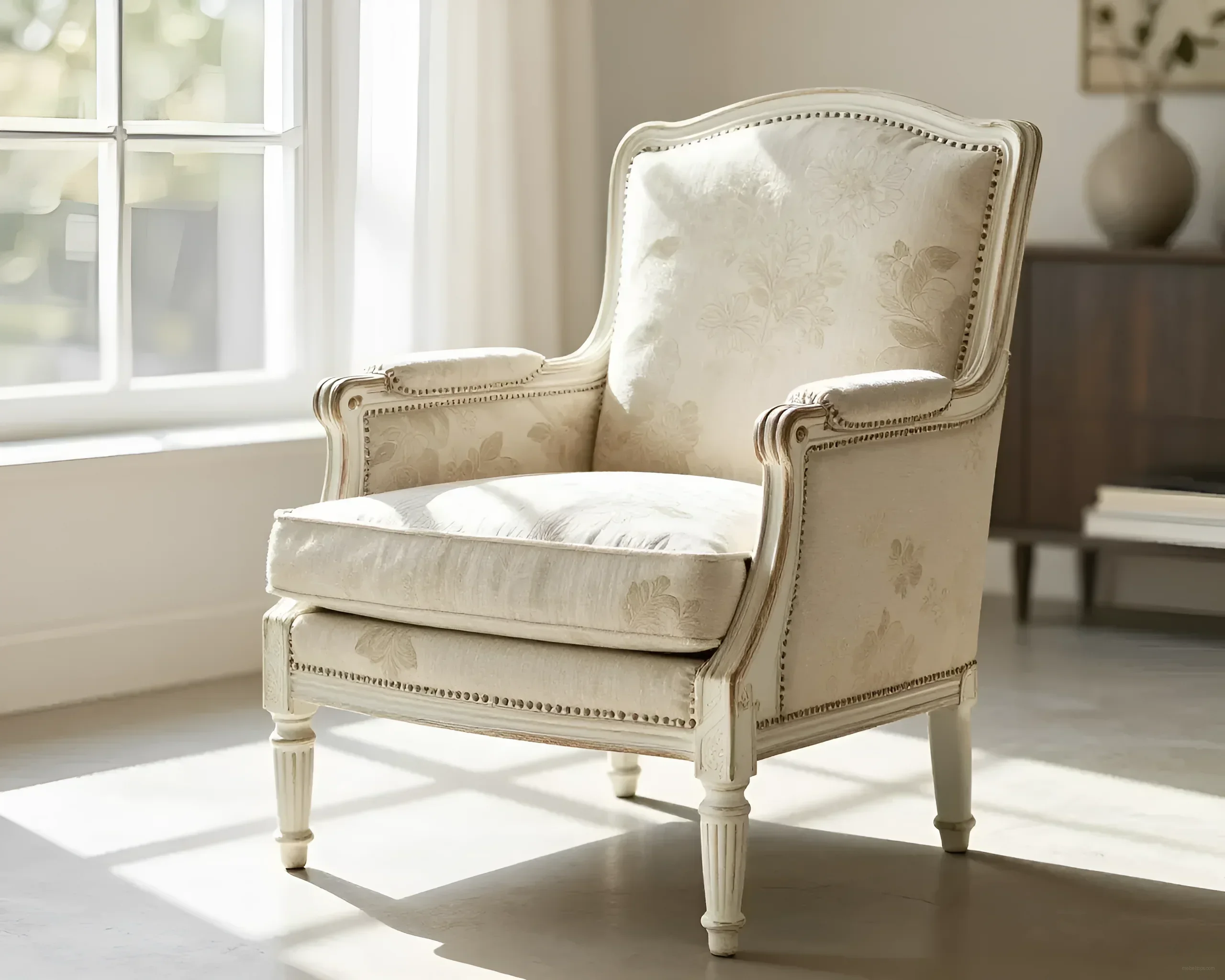
Provence style furniture is not just a trend, but a philosophy of comfort rooted in the sun-drenched provinces of Southern France. If you’re looking to create an interior that is simultaneously noble, cozy, and “with a story,” then Provence furniture is the ideal solution. Unlike cold minimalism or strict high-tech, this style emphasizes tactility, natural materials, and soft forms. However, behind its apparent lightness and rustic simplicity lie strict requirements for quality craftsmanship, from the choice of wood to the patina application technique. In this article, we’ll explore how to distinguish authentic Provence-style furniture from cheap imitations, what technical characteristics to look for when buying, and how to extend the life of these exquisite interior pieces.
Provence: The Embodiment of French Charm in Your Furniture
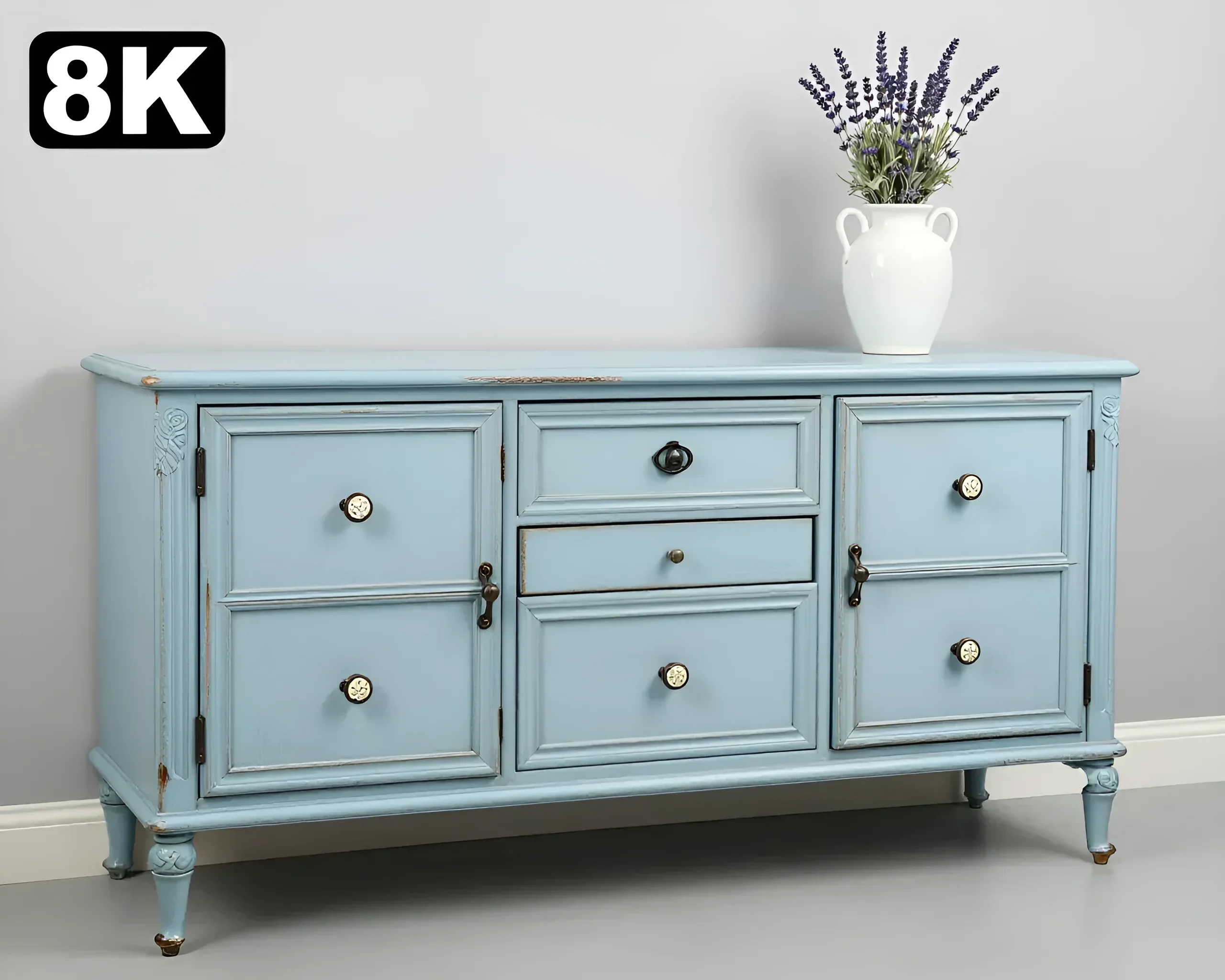
The Provence style, often called “French country,” emerged in the 17th-18th centuries. City dwellers, seeking to escape the hustle and bustle, furnished their country houses by imitating classic palace forms but simplifying them for rural life. This is why Provence-style furniture combines the aristocracy of classicism with the rustic reliability of peasant life. The main purpose of such furniture is to create a sense of generational continuity. It feels as if this chest of drawers or dining table belonged to your great-grandmother, carefully preserving the warmth of family meals.
For the modern buyer, Provence-style furniture is primarily about eco-friendliness. You won’t find glossy plastic, chrome metal, or garish neon colors here. Instead, you’ll find matte surfaces, open wood textures, and wrought-iron elements. It’s important to understand that Provence does not tolerate perfection. Small “imperfections” like wormholes, minor cracks (craquelure), and scuffs on the corners are not defects but carefully considered decorative techniques that give the piece character.
By choosing furniture in this style, you are investing in durability. Thanks to the use of solid wood and high-quality antique-style hardware, such items remain relevant for decades. Provence is a timeless style that adapts perfectly to both spacious country houses and cozy city apartments, bringing light and visual spaciousness to them.
Characteristic Features of Provence Furniture: Colors, Shapes, and Decor
To avoid mistakes when choosing, you need to clearly visualize the style’s visual markers. Provence has a very specific set of characteristics that distinguish it from other directions:
- Color Palette: Only pastel colors, as if faded by the sun, are used. The leaders are milky white, cream, ivory, soft lavender, olive, sand, and muted blue. Important: Avoid pure white “hospital” color; choose warm shades with a yellowish or grayish undertone.
- Shapes and Lines: The furniture has soft, curved contours. Characteristic features include cabriole legs (S-shaped curve), carved cornices on cabinets, and paneled facades. Despite the solidity of the materials, the furniture does not look bulky due to the elegance of its lines.
- Decorative Techniques: The main technique is patination. This is the artificial creation of the effect of metal oxidation or wood aging, where a darker patina is formed in the recesses of carvings or at the joints. Brushing is also often used – removing soft wood fibers with a metal brush to create a textured surface.
- Hardware: Handles, hinges, and locks are made of brass, bronze, or copper with an aged effect. No shiny chrome. Button or pull handles with ceramic inserts decorated with floral prints are popular.
- Painting: The facades of chests of drawers or cabinets are often decorated with hand-painted floral motifs (roses, lavender, wildflowers) or images of a rooster – the symbol of France.
When inspecting furniture in a store, pay attention to the quality of the paintwork. In Provence style, paint is often applied in thin layers so that the wood grain shows through. If the surface looks too smooth and “plastic,” it’s likely a cheap imitation made of MDF with a film coating.
Provence Style Furniture Materials: Naturalness and the Warmth of Wood
Authentic Provence is a celebration of natural materials. If you want your furniture to last long and look authentic, pay attention to the composition of the items. The table below lists the main materials used in production:
| Material | Application | Advantages in Provence Style |
|---|---|---|
| Solid Oak / Ash | Dining tables, sofa frames, cabinets | High density (up to 700 kg/m³), expressive texture, ideal for deep brushing. |
| Solid Pine / Birch | Chests of drawers, beds, etageres | More affordable price, softness of wood allows for intricate carving, eco-friendliness. |
| Wrought Iron | Bed frames, table legs, consoles | Visual lightness, strength, possibility of creating intricate patterns. |
| Natural Stone | Kitchen countertops and coffee tables | Granite or marble with a matte finish is used, resistant to moisture and heat. |
| Rattan / Wicker | Armchairs, inserts in cabinet facades | Add lightness and a “country house” feel to the interior. |
Special attention should be paid to textiles, which play a key role in Provence furniture. For upholstery of sofas, armchairs, and chairs, linen, cotton, burlap, and blended fabrics with a high content of natural fibers are used. The fabric density for upholstered furniture should be at least 300-400 g/m², and the abrasion resistance according to the Martindale test should be from 20,000 cycles and above. This ensures that the upholstery will not wear out after a couple of years of active use.
Technical Tip: When choosing solid wood furniture, be sure to inquire about the wood’s moisture content. The optimal level is 8–12%. If the wood was not dried properly, cracks or warping may appear on the facades over time, which cannot be corrected.
How to Choose the Perfect Provence-Style Living Room Furniture
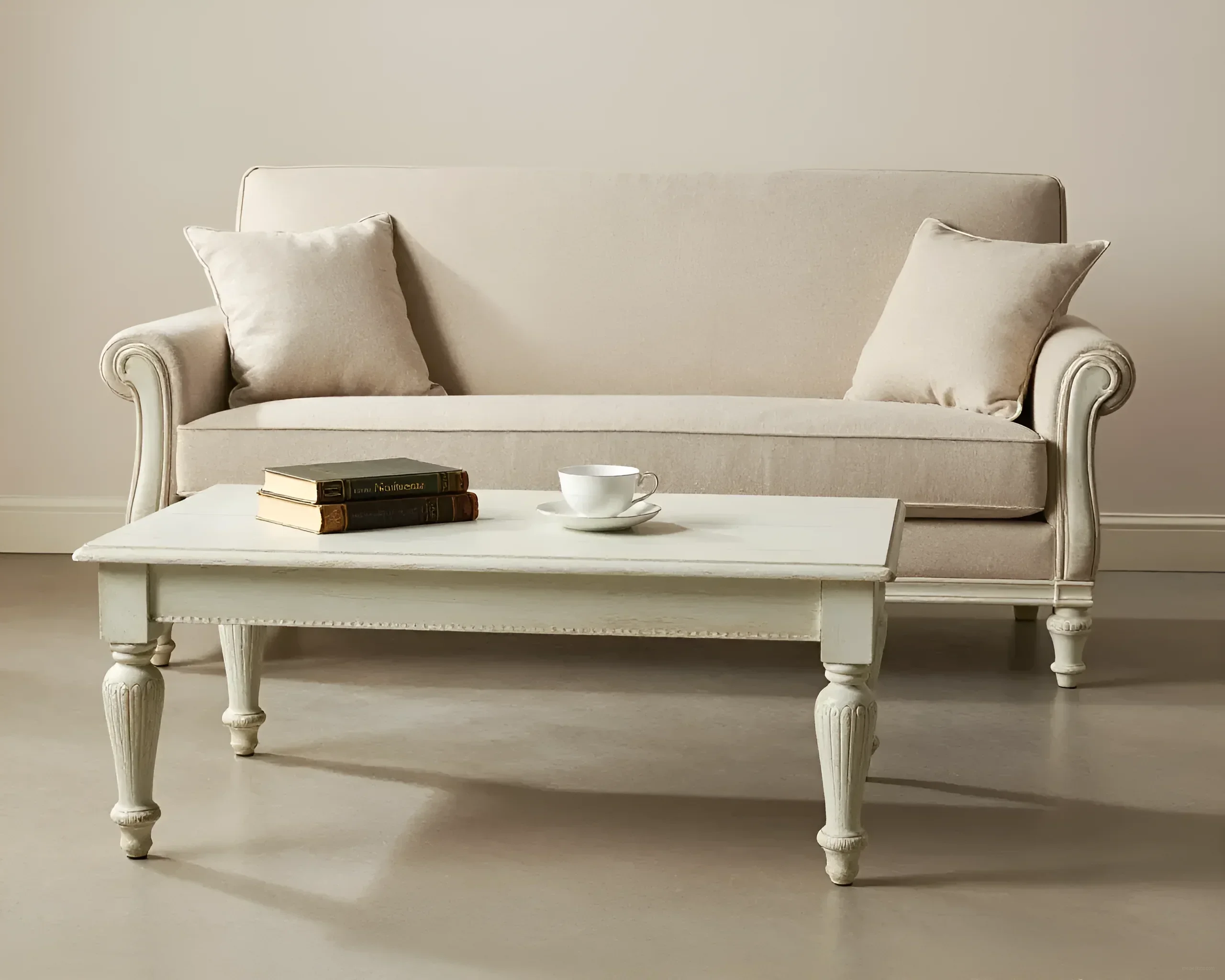
A Provence-style living room should be bright and welcoming. The sofa takes center stage here. This style is characterized by models with rounded armrests, an abundance of decorative pillows, and a “skirt” that covers the legs. The sofa frame must be made of solid coniferous or deciduous wood. Avoid models with metal frames unless they have wooden or wrought-iron decorative elements.
When choosing case goods for the living room, follow these rules:
- Sideboards and Display Cabinets: These are the “heart” of a Provence living room. Choose tall models (from 180 cm) with glass-fronted upper doors. Inside, there should be wooden shelves at least 20 mm thick to support the weight of heavy ceramic dishes.
- TV Stands: Even modern technology requires the right “frame.” A Provence-style TV stand is usually low-profile, with paneled doors and open niches for equipment. It’s important that the wires are hidden through special cable channels in the back panel, made of plywood, not cheap hardboard.
- Coffee Table: The ideal option is a model with a solid oak top and elegant carved legs. Sizes vary, but the standard height is 45–50 cm.
Don’t forget about armchairs. “Bergère” armchairs with high backs and “wings” that protect from drafts and create coziness are popular in Provence. The upholstery of the armchairs can differ from the sofa but should echo it in color or pattern (e.g., a solid sofa and armchairs with a small floral print).
Provence-Style Bedroom: Creating Coziness with Furniture
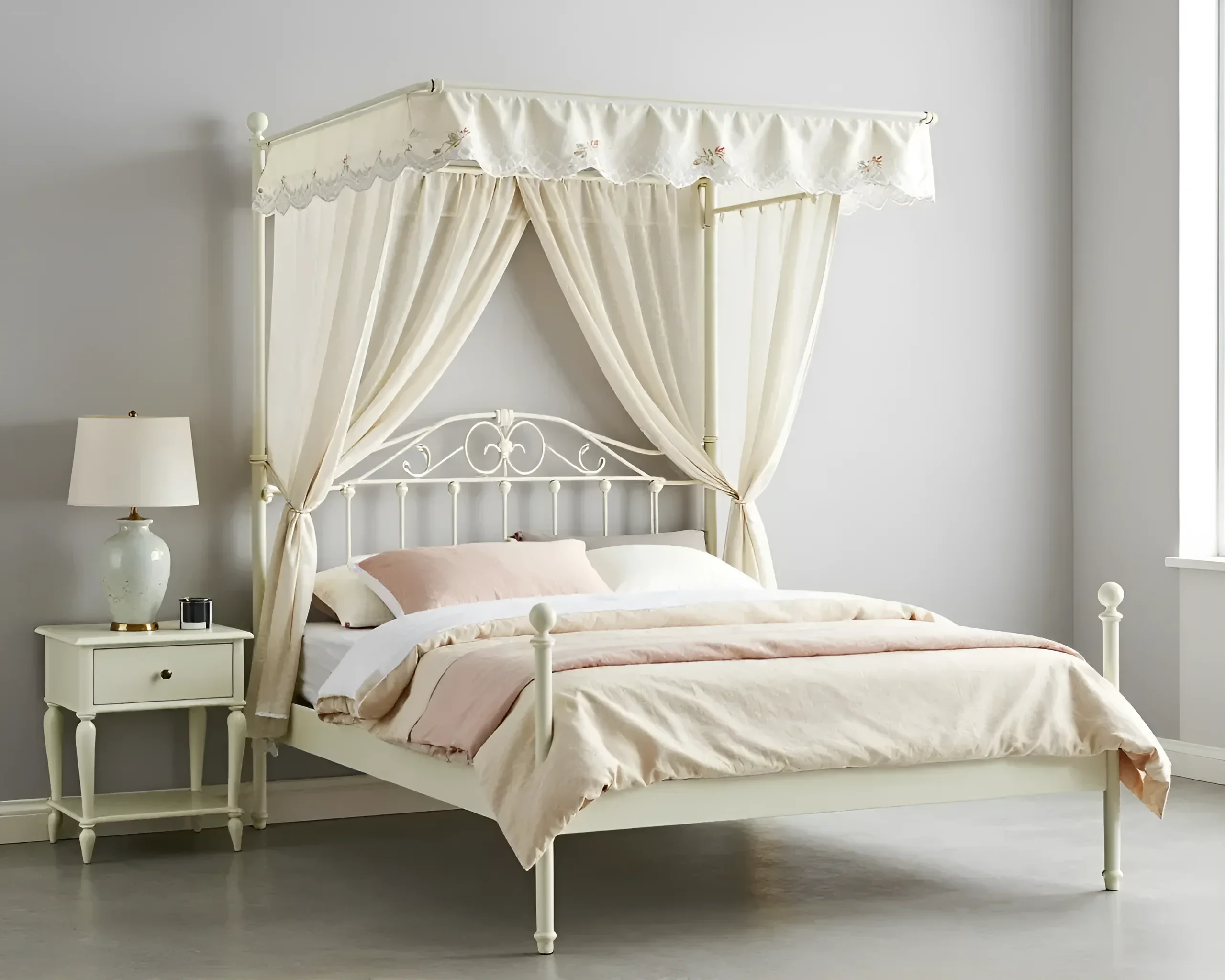
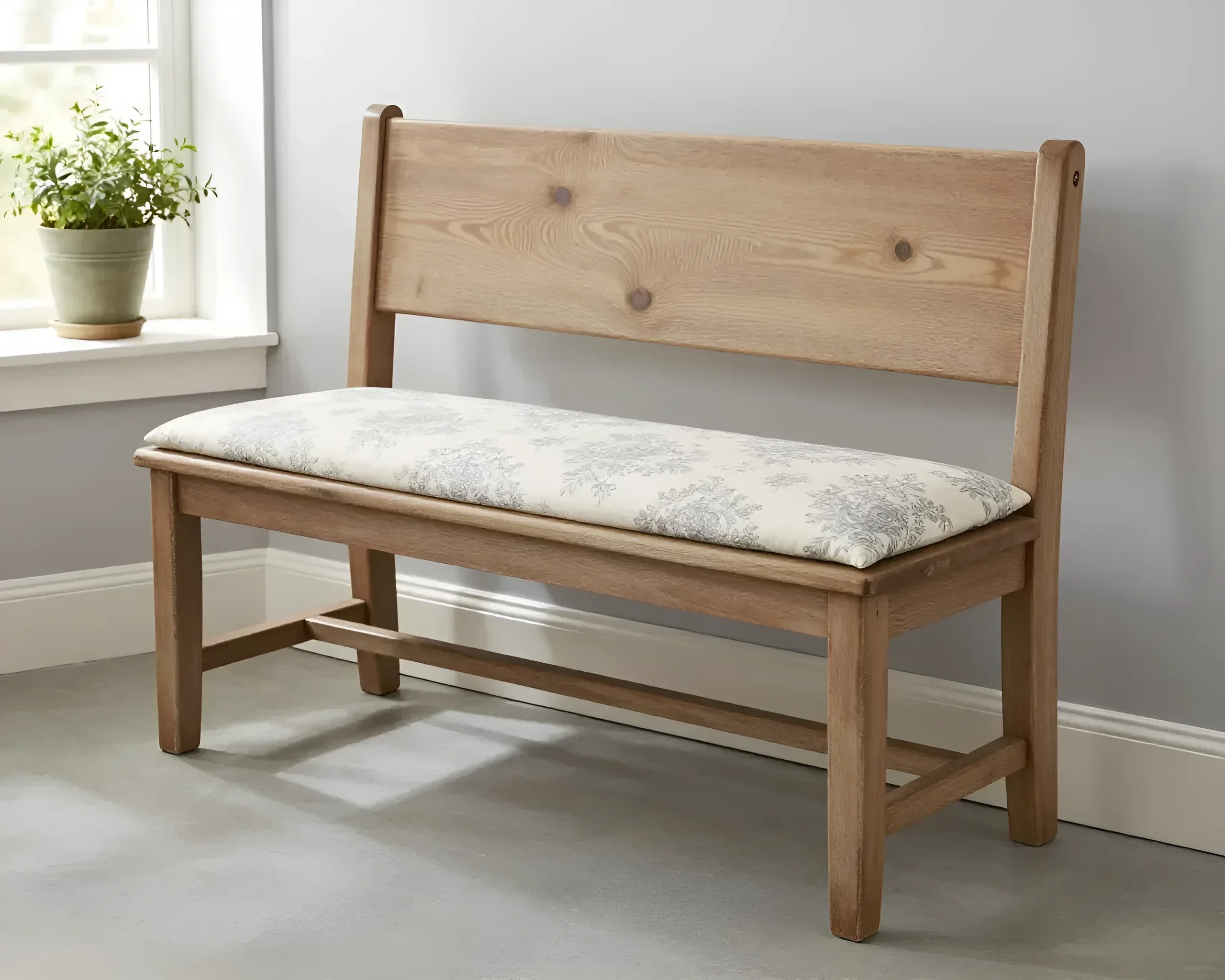
A bedroom is a place of maximum relaxation, so the furniture here should be as tactile and calm as possible. A Provence-style bed is the dominant feature of the room. There are two main types of headboards:
- Wooden: Massive, often with carving, patina, or painting. The headboard height is usually 110–140 cm.
- Wrought Iron: Intricate, painted white or olive, often with a gold or silver rubbed effect. Forging adds airiness to the interior.
Practical Tip for Choosing a Bed: Pay attention to the base. Despite its authentic appearance, the bed should be equipped with a modern orthopedic base with birch slats. The distance between the slats should not exceed 5 cm to ensure proper mattress ventilation.
Complement the bed with bedside tables on high curved legs. Their height should be level with the top edge of the mattress (usually 55–65 cm). A wardrobe in the Provence style is always a massive construction. Choose three-door models with a central mirror decorated with a bevel. The internal filling should include metal rods and pull-out drawers on hidden soft-close runners – this will ensure smooth operation and preserve the antique aesthetic.
A dressing table is another essential attribute. It should be elegant, with small drawers for jewelry and an oval mirror in a carved frame. The optimal depth of the table is 40–45 cm, so it doesn’t take up much space but is functional.
Provence-Style Kitchen Furniture: Functionality and Elegance
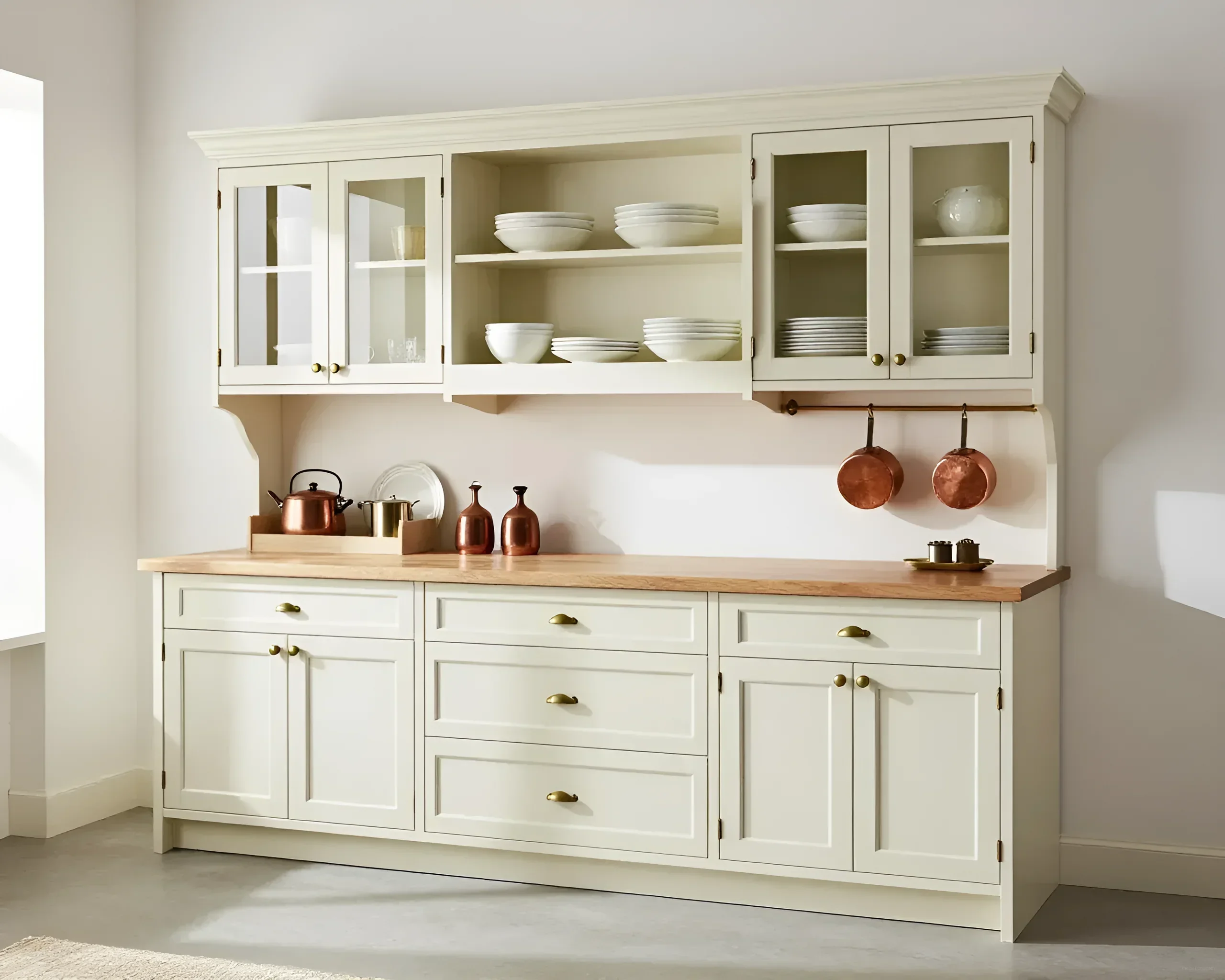
A Provence-style kitchen is a combination of rustic coziness and modern technologies hidden behind decorative facades. If you are planning to buy a kitchen set, pay attention to the following technical details:
- Facades: Only framed (paneled). It’s best to use solid ash or oak as the material, as they are less prone to deformation from moisture and temperature changes than pine. If the budget is limited, choose MDF with deep milling and enamel paint, but avoid PVC film – it peels off quickly near the stove.
- Countertop: Natural stone or solid wood (treated with special oil) is ideal. The countertop thickness should be 38–40 mm.
- Open Shelves: Provence welcomes displaying beautiful dishes. Replace some of the upper cabinets with open shelves on wrought-iron brackets.
- Dining Area: The table should be massive, preferably extendable. Round tables with a diameter of 100–120 cm (extending to 160 cm) are a classic choice. Choose chairs with soft seats and backs with a cross design (“peasant” type) or with rattan weaving.
Important about Appliances: Modern chrome hoods or ovens will spoil the look. Choose “retro” style appliances with brass switches and analog clocks. It’s best to make the refrigerator built-in and cover it with a facade in the overall kitchen style.
Caring for Provence-Style Furniture: Secrets of Durability and Beauty
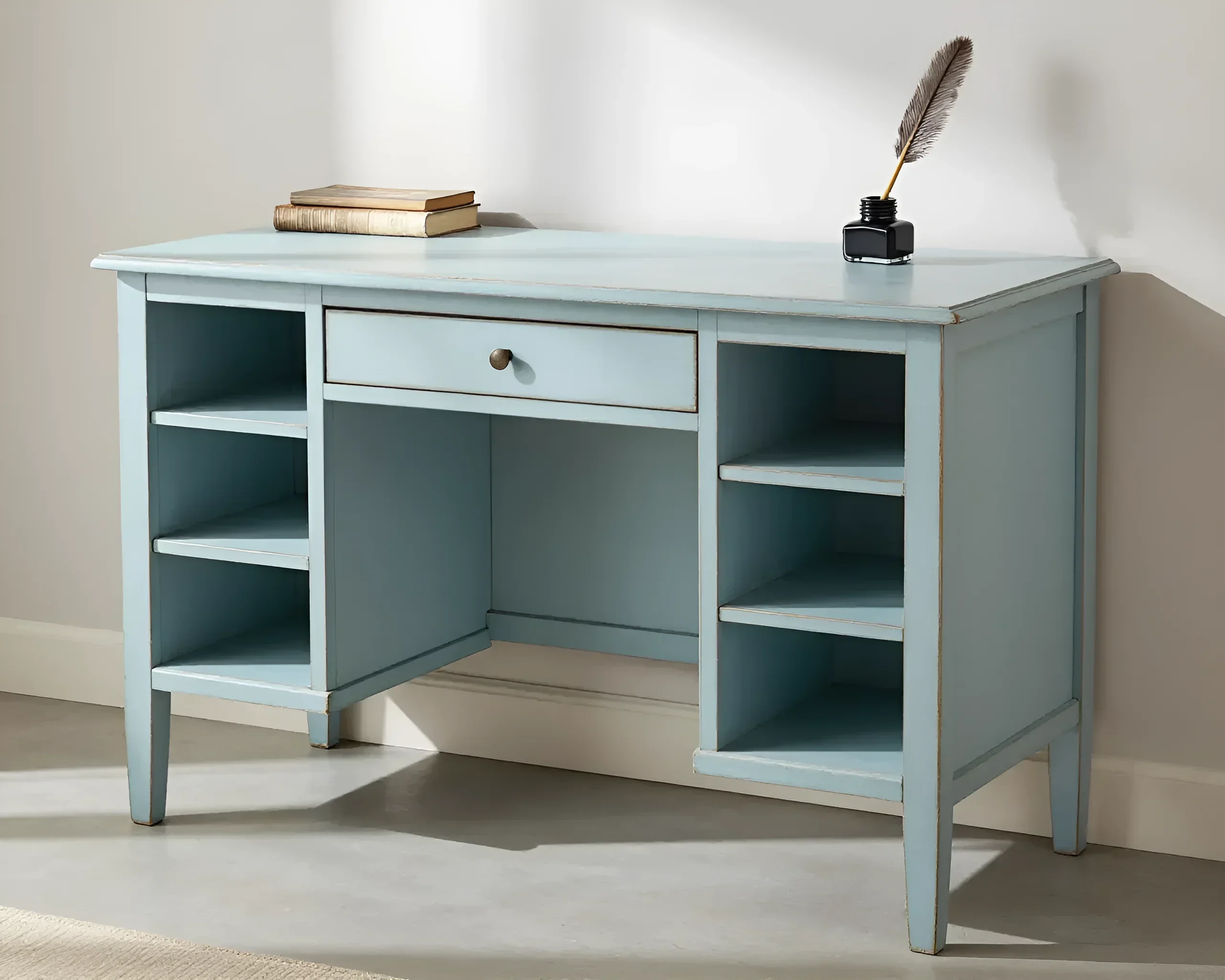
Furniture made of natural wood and fabrics requires a special approach. To prevent your “Provence” from turning into old junk, follow these recommendations:
- Microclimate: Wood is a living material. Maintain indoor humidity at 40–60% and temperature at 18–25°C. In winter, when radiators are on, use humidifiers, otherwise the wood may dry out and crack.
- Surface Cleaning: Use only soft microfiber cloths. Forget about aggressive cleaning agents with chlorine or abrasives. For lacquered and painted surfaces, wax-based polishes are suitable – they fill micro-cracks and create a protective layer.
- Textile Care: If the upholstery is non-removable, vacuum it dry once a week with a special attachment. Remove stains immediately using a soapy solution and a soft sponge, moving from the edges to the center.
- Sun Protection: Provence loves light, but direct sunlight can lead to uneven fading of paint and drying out of the wood. Use light curtains or blinds during peak sun hours.
- Patina Refreshment: Every few years, wooden furniture can be refreshed with special furniture wax. This will restore depth of color and a pleasant matte sheen to the surfaces.
Remember that minor scratches on Provence-style furniture are easily masked with color-matched wax pencils. Thanks to the artificial aging technique, minor signs of wear often only add charm to the furniture, making its appearance more natural.
Frequently Asked Questions About Provence-Style Furniture (FAQ)
1. Can Provence-style furniture be used in a small apartment?
Yes, and it’s an excellent solution. Light furniture colors visually expand the space, and the high legs of chests of drawers and sofas add “air,” making the interior less cluttered.
2. How does Provence differ from Shabby Chic?
Shabby Chic is more “feminine,” with a predominance of white, an abundance of ruffles, and a very strong degree of wear. Provence is more substantial, with more natural shades (olive, ochre) and often uses natural wood texture without paint.
3. Is it acceptable to use MDF in Provence furniture?
It is acceptable for kitchen facades or back panels if the budget is limited. However, for load-bearing structures, legs, and countertops, solid wood is highly recommended. MDF does not allow for quality brushing and fine artistic carving.
4. How to check the quality of patination when buying?
Run your hand over the surface: the patina should feel like a natural color change, not like a layer of accumulated dirt. It should be concentrated in the recesses and at the joints of the parts. If the patina is applied in even stripes across the entire surface, it is a sign of low-quality work.
5. Is Provence-style furniture suitable for a child’s room?
It is one of the best options. Natural wood is hypoallergenic, and the absence of sharp corners (thanks to rounded shapes) makes the furniture safe. Moreover, such an environment instills good taste in a child from an early age.
Choosing Provence-style furniture is a process that requires attention to detail. Focus on natural materials, check the quality of hardware, and don’t be afraid of pieces with “soul.” Properly selected furniture will create an atmosphere of peace and warmth in your home that will delight you for many years to come.