Русский
 Deutsch
 Українська
Integrating vintage furniture into a modern interior is not just a nod to fashion, but a conscious choice in favor of quality, history, and uniqueness. In an era of mass production, it is old items, bearing the imprint of time, that become key accents, giving the space depth and character. As a professional expert from mebeltops.com, I have prepared a comprehensive guide for you that will help not only choose a genuine treasure but also harmoniously integrate it into your life and layout, while preserving functionality and aesthetics.
What is Vintage Furniture and Why is it Relevant: A Style Guide
Before you start choosing, it’s important to understand the terminology. Vintage (from the French vintage – aging) in the context of furniture refers to items created between 20 and 100 years ago. Anything older than 100 years is considered antique, and anything younger than 20 years is simply used (pre-owned) or retro. The relevance of vintage in modern design is due to three factors: eco-friendliness (reuse), quality of materials (solid wood, natural veneer), and unique aesthetics not found in mass-market items.
For successful integration, it is crucial to understand the main vintage styles that are most commonly found on the market:
- Mid-Century Modern (MCM): Peak popularity – 1940s–1960s. Characterized by clean, organic lines, tapered legs, minimalist hardware, and the use of natural wood (teak, walnut, oak). It pairs perfectly with modern Scandinavian or minimalist interiors.
- Art Deco: 1920s–1930s. It embodies luxury, geometric patterns, symmetry, and the use of expensive materials (ebony, lacquer, chrome, glass, sharkskin). Art Deco pieces are often massive and require spacious, bright surroundings to maintain focus.
- Scandinavian Vintage (Danish Modern): 1950s–1970s. Emphasis on light wood (beech, pine), functionality, ergonomics, and lack of excessive decoration. It easily fits into any modern interior due to its neutrality and light palette.
- Soviet Modernism (SM): 1960s–1980s. Often underestimated but very high-quality vintage. Characteristics: lacquered veneer, simple geometric shapes, abundant modular units, and polished surfaces. It requires delicate restoration to remove outdated gloss.
Materials of Vintage Furniture: From Natural Wood to Unique Upholstery
The quality of vintage furniture is largely determined by its materials. Unlike modern counterparts made from MDF or particleboard, old items were often made from solid wood or high-quality veneer of valuable species, ensuring their durability and repairability.
Wood and Veneer: Assessing the Species
The choice of material directly affects wear resistance and restoration costs. Here are the main species found in vintage furniture:
- Teak: The primary material for MCM furniture. Dense, resistant to moisture and pests. Has a rich golden-brown hue. Ideal for tables and dressers.
- Walnut: Often used in American and European vintage from the 1950s–1970s. It has a beautiful grain and a dark, noble color.
- Oak: Characteristic of early vintage and Art Deco furniture. Very strong and heavy. Requires careful treatment of the finish (often oil or wax).
- Beech/Birch: Commonly found in Scandinavian and Soviet vintage. Light-colored, easily stained or bleached, but less resistant to scratches than teak.
Important about veneer: Vintage veneer (0.8–1.5 mm thick) is significantly thicker than modern veneer (0.3–0.5 mm). This allows for sanding and restoration without the risk of damaging the substrate, which is critical when buying.
Upholstery Materials and Hardware
Upholstery and hardware are elements that often require replacement or thorough cleaning, but they also lend authenticity to the piece:
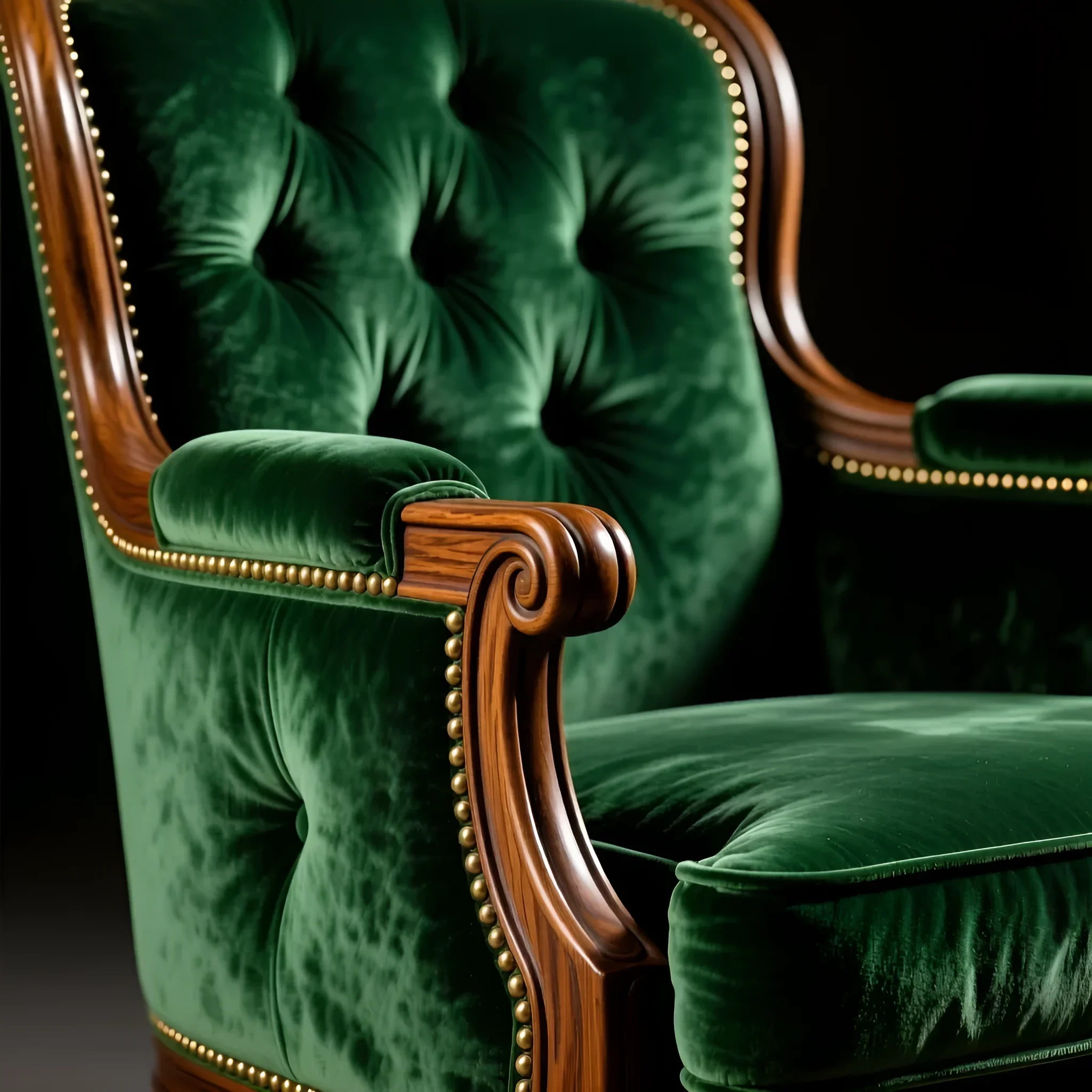
- Upholstery: Vintage armchairs and sofas were often upholstered in wool tweed, velvet, jacquard, or leather. If the fabric is in poor condition, budget for reupholstery. Using modern, yet stylized fabrics (e.g., deep blue or emerald velvet) can help “modernize” the piece.
- Hardware: Handles and legs made of brass or chrome are hallmarks of MCM and Art Deco. Patina (natural darkening) on brass is valued, but if it’s too strong, it can be carefully cleaned with special products.
How to Choose Vintage: Assessing the Condition and Authenticity of Antique Items
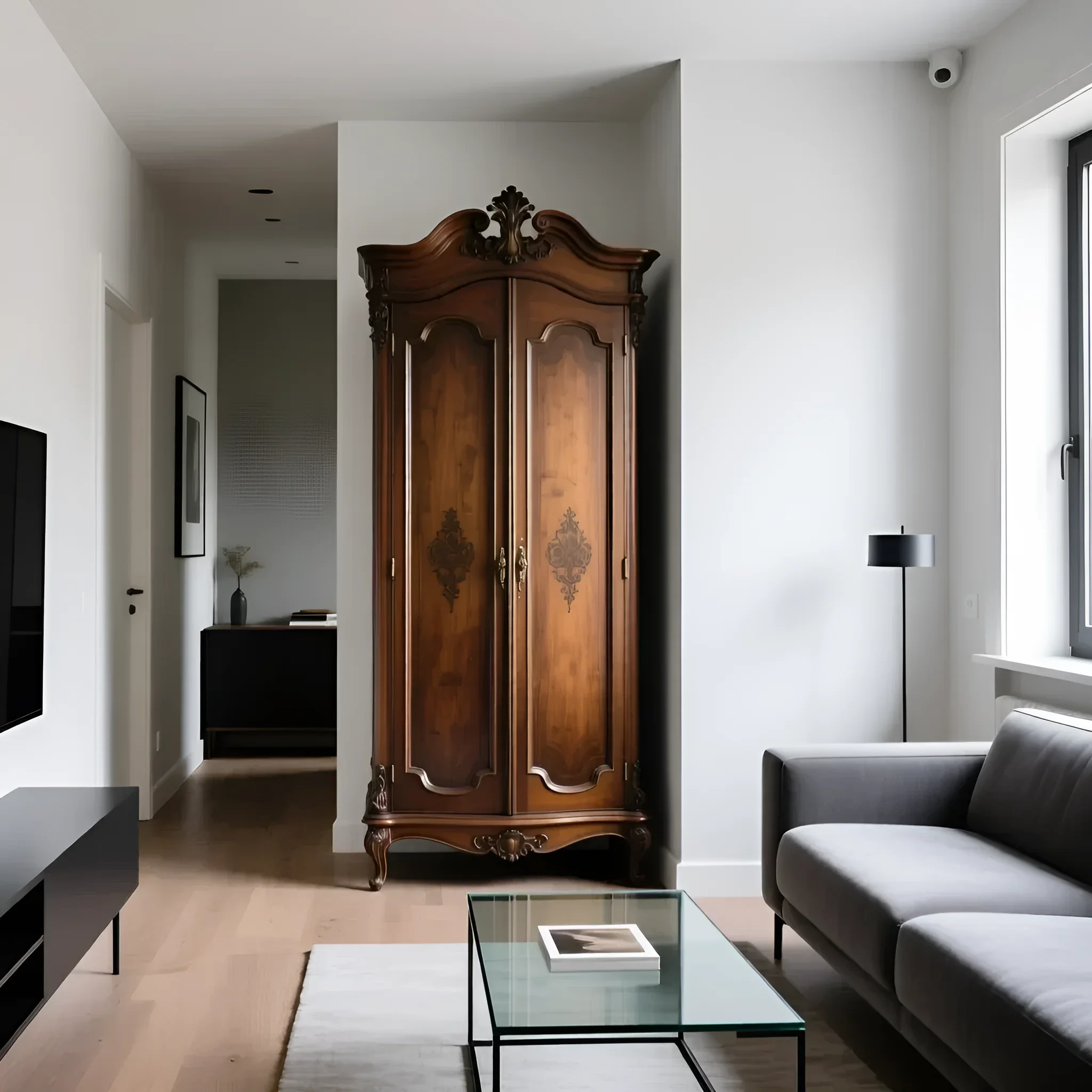
Buying vintage is always a balance between price, condition, and restoration cost. Your goal is to find a piece with a strong “bone structure,” even if its surface finish is damaged.
Condition Assessment Checklist
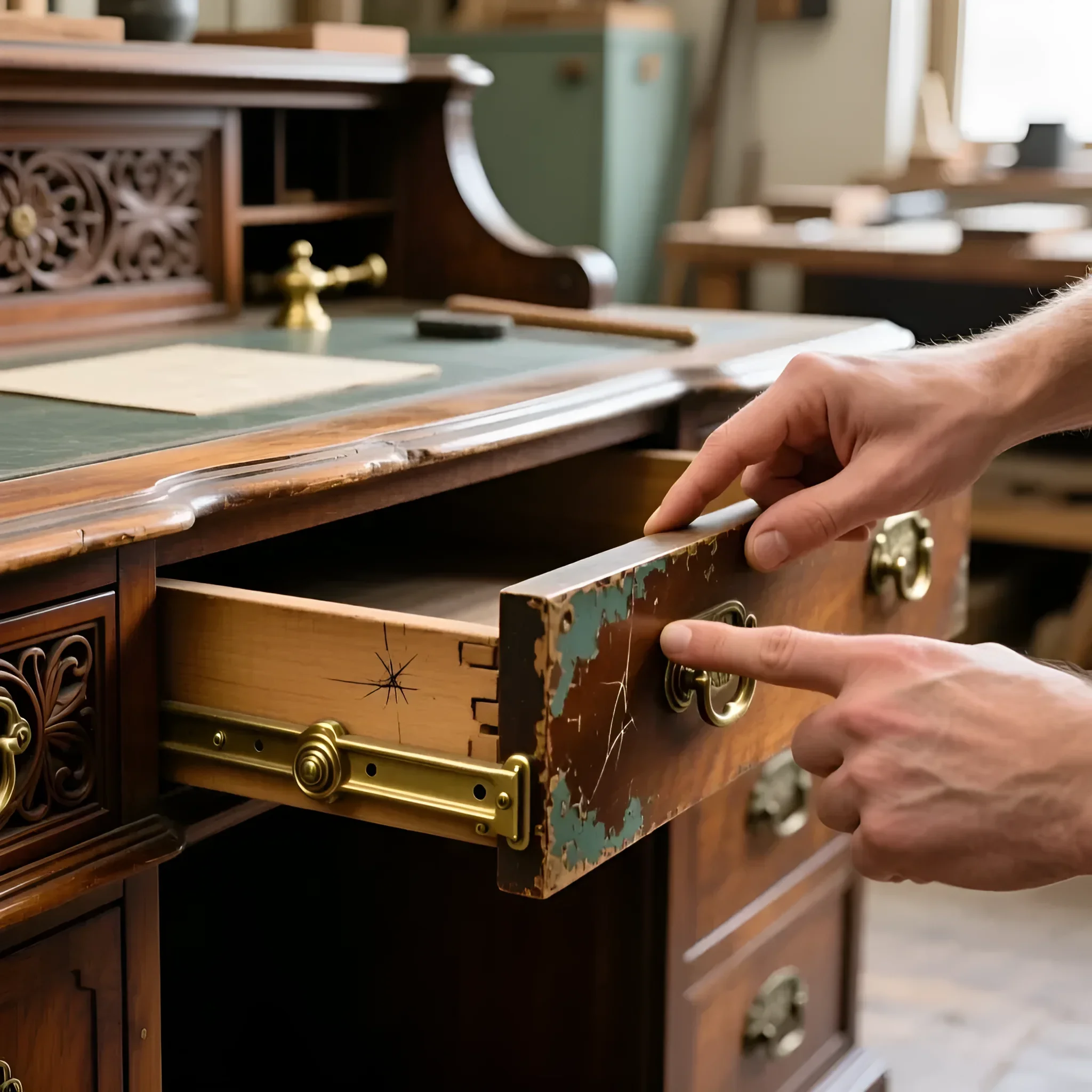
- Structural Integrity (Frame): Check the strength of the joints. Wiggle the chair or dresser. If the structure is wobbly, it will require significant repair (re-gluing of tenon joints), which can be expensive. Minor play is acceptable, but not critical.
- Wood Condition: Look for signs of pests (woodworm), mold, or deep cracks. Surface scratches, chipped lacquer, or minor water marks are cosmetic defects that are easily fixed.
- Drawers and Doors: Drawers should slide smoothly without sticking. Vintage dressers often lack modern runners, so the movement should be even due to precise wood fitting. Cabinet doors should close without warping.
- Finish: Assess the finish (lacquer, shellac, oil). Shellac often has white spots from water or alcohol – this is fixable. If the lacquer is heavily cracked (the “crocodile skin” effect), it will require complete removal of the old finish and reapplication.
Determining Authenticity and Value
Authenticity is often confirmed by factory stamps, markings, or stickers. Look for them on the back panels of dressers, under the seats of chairs, or inside drawers. For example, Danish furniture often has stamps like Made in Denmark or the designer’s name (Aarhus, Børge Mogensen).
| Item | “As Is” Condition (RUB) | Cost of Professional Restoration (RUB) | Total Cost |
|---|---|---|---|
| Vintage MCM Chair (requires re-gluing and reupholstery) | 3,000 – 7,000 | 8,000 – 15,000 | 11,000 – 22,000 |
| Dresser (requires sanding and new lacquer) | 15,000 – 30,000 | 18,000 – 35,000 | 33,000 – 65,000 |
| Lounge Chair (requires complete reupholstery, frame is intact) | 10,000 – 20,000 | 25,000 – 40,000 (depending on fabric) | 35,000 – 60,000 |
Tip: Always budget 50–100% of the purchase price for restoration if the item is not in perfect condition.
Determining Placement: How to Correctly Integrate Vintage Furniture Dimensions into a Modern Layout
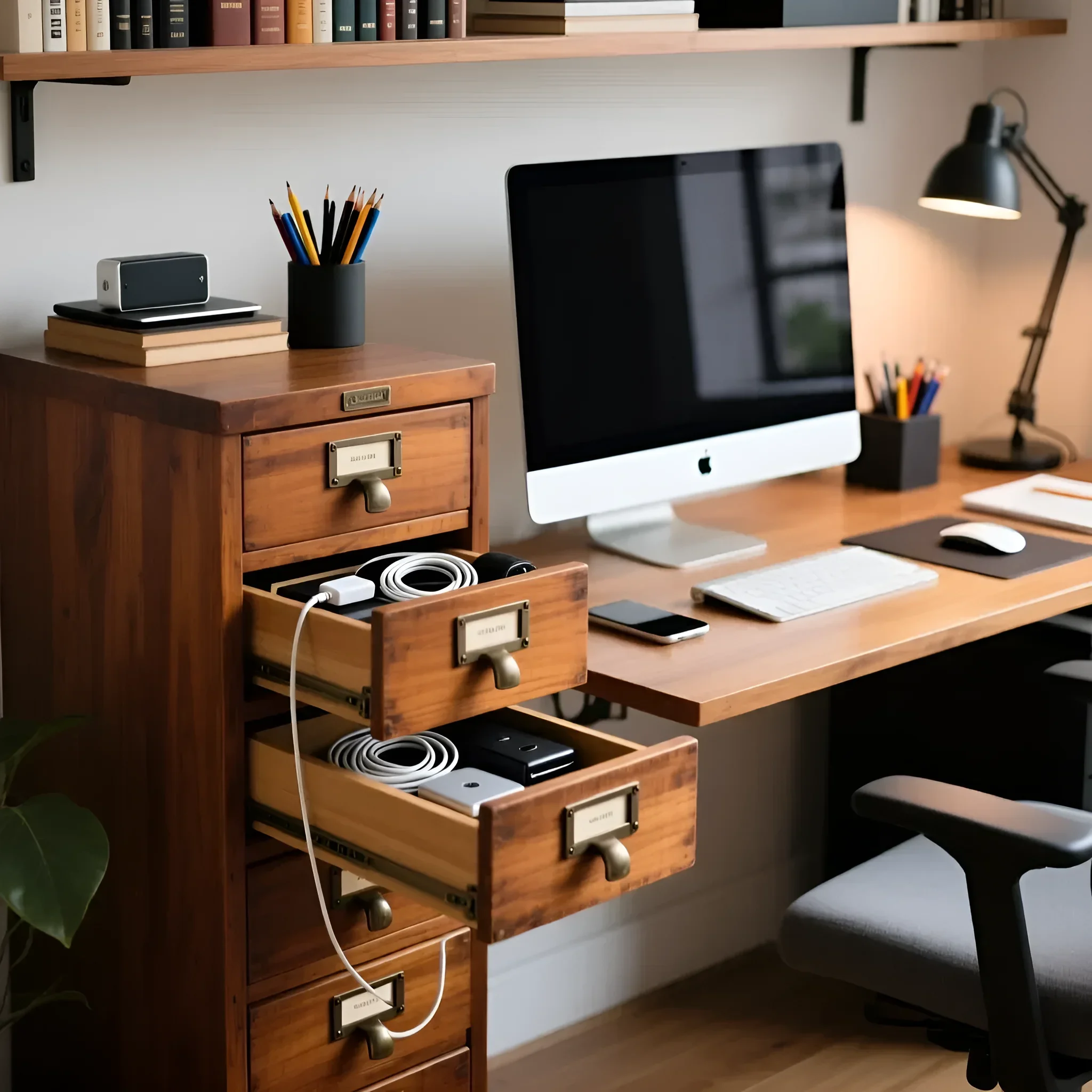
Vintage furniture often differs from modern counterparts in its dimensions, especially in depth and height. Successful integration requires contrast and proper zoning.
Working with Dimensions: The Contrast Rule
Many vintage pieces (especially MCM) were designed for small European apartments, making them ideal for modern studios. For example, vintage dressers and sideboards are often 40–45 cm deep, while modern equivalents can reach 60 cm. This saves space.
- MCM Sideboard/Credenza: Typical dimensions are 150–200 cm (width) x 40–45 cm (depth) x 70–80 cm (height). The low profile and slender legs create a sense of lightness, visually expanding the space. Place it against a plain, light-colored wall.
- Art Deco Cabinets: Often very tall and deep (up to 60 cm). They require large, open spaces. Use them as an accent piece in an entryway or study, rather than as part of a set.
Integration as an Accent Piece
The main secret to integration is not to create a “museum.” Vintage should be a focal point (Statement Piece).
Practical Tip: Use the 80/20 rule. 80% of the interior is a modern neutral base (minimalist walls, built-in furniture, neutral textiles), and 20% are vintage items that attract attention.
Placement Examples:
- Living Room: Combine a vintage armchair (e.g., a butterfly chair or a Danish lounge chair) with an ultra-modern sofa and a glass coffee table. The armchair should be the only vintage upholstered piece.
- Dining Room: Pair a vintage dining table (teak or walnut) with modern polycarbonate or metal chairs. This creates a dynamic contrast of textures and eras.
- Bedroom: Use a vintage dresser or vanity (Art Deco with a beveled mirror) as a focal point, but choose the rest of the furniture (bed, wardrobe) in a modern, unadorned style.
Functionality and Transformation: Adapting Old Furniture for Modern Needs
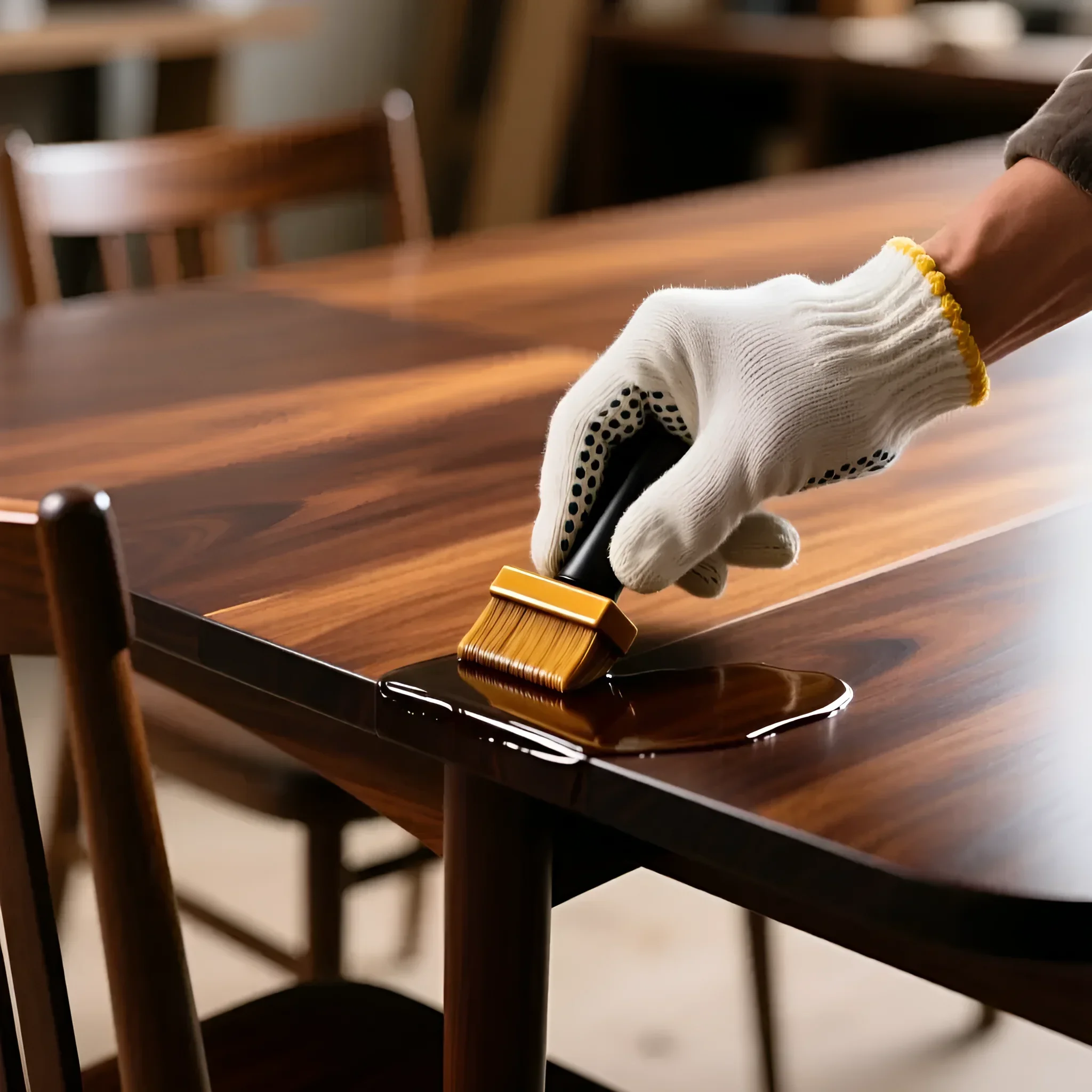
Old furniture, however beautiful, must be functional in the 21st century. This often requires minor modernization.
Changing Purpose
Many vintage items can serve entirely new purposes with a little adaptation:
- Sideboard as a TV Stand: Vintage MCM sideboards are ideal for this purpose. Their height (70–80 cm) is optimal for TV viewing. To integrate electronics, you need to carefully drill holes for cables in the back panel (use hole saws) and possibly replace one of the doors with a fabric insert to allow remote control signals to pass through.
- Bar Cabinet as a Workspace: Old secretaires or bar cabinets with drop-down lids can be transformed into a mini-office for a laptop.
- Dresser as a Console Sink: A low dresser with drawers can be adapted for a bathroom sink. This requires waterproofing the countertop (it’s better to replace it with marble or quartz) and precise drilling for plumbing.
Modernizing Hardware and Lighting
Improving the ergonomics of vintage pieces does not diminish their value but enhances their usability:
- Runners: If drawers slide poorly, you can install modern concealed runners with soft-close mechanisms. This requires professional milling work, but the result is worth it.
- Lighting: Add internal lighting. Install LED strips with motion sensors inside cabinets or sideboards. This is not only functional but also highlights the beauty of the stored items.
- Replacing Handles: If the original handles are lost or severely damaged, don’t hesitate to replace them with modern brass or matte black equivalents. This instantly “updates” a vintage piece to a modern style.
Caring for Treasures: Restoration and Careful Maintenance of Vintage Finds
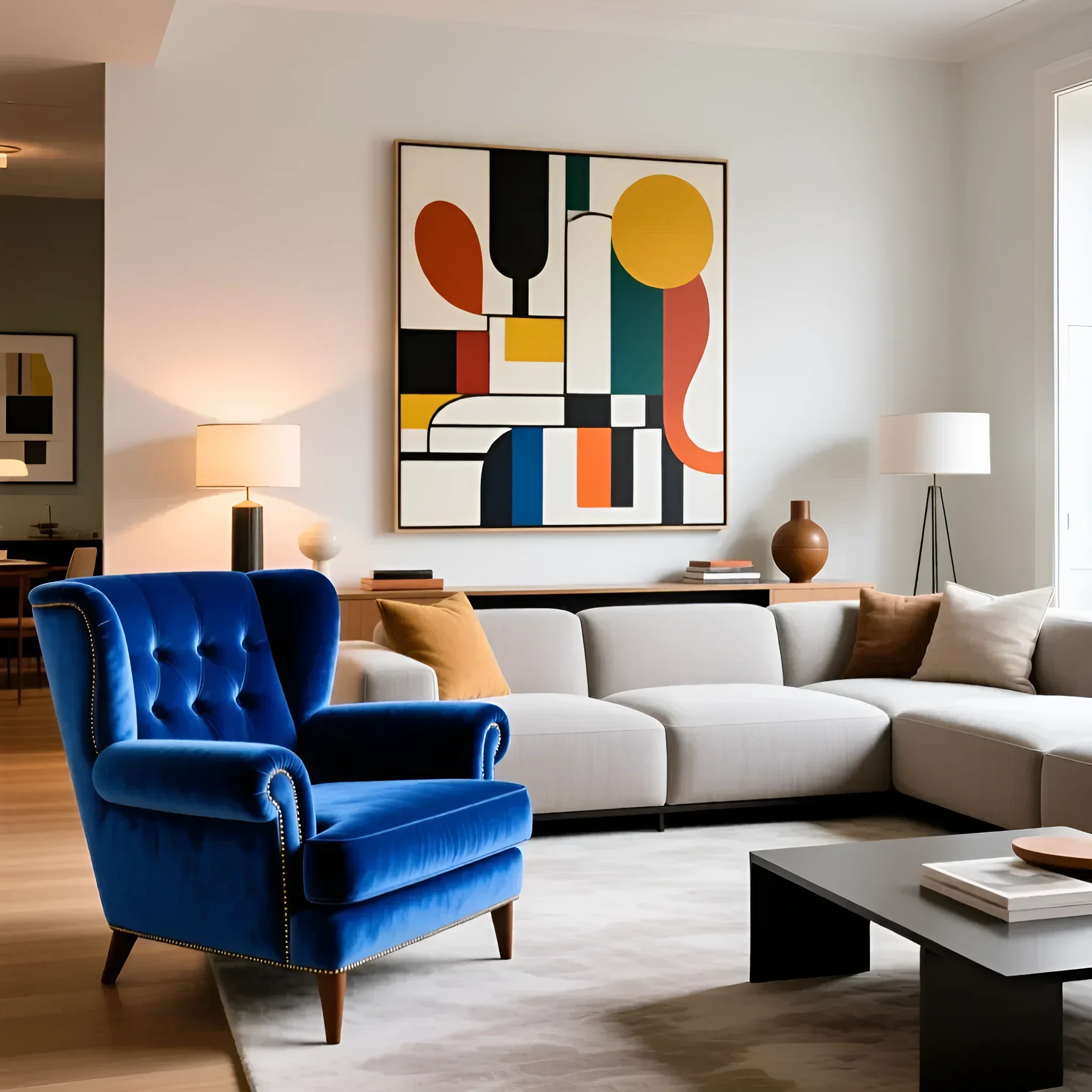
Vintage furniture requires specific care depending on its finish type. Improper cleaning or restoration can irreversibly damage the piece.
Types of Finishes and Care Specifics
Vintage finishes differ from modern polyurethane lacquers:
- Shellac: Very common in furniture from the first half of the 20th century. Provides a deep, warm sheen. Care: Does not tolerate water or alcohol (leaves white spots). Clean only with a dry, soft cloth. Minor scratches can be removed with wax-based polishes.
- Oil/Wax: Characteristic of Scandinavian vintage and teak. Creates a matte, natural surface. Care: Requires regular (every 1–2 years) reapplication of special furniture oils. This nourishes the wood and masks minor scratches.
- Polyester Lacquer (Gloss): Typical of Soviet and Eastern European vintage from the 1970s–1980s. Very durable but prone to chipping. Care: Wipe with a slightly damp cloth. Do not use abrasives.
Restoration: When to Do It Yourself and When to Call a Professional
DIY Restoration:
- Cleaning and polishing brass elements.
- Removing white spots from shellac (using the hot iron method through a cotton cloth).
- Applying fresh oil to teak or walnut.
- Minor repair of veneer chips using furniture wax.
Professional Restoration:
- Re-gluing the frame (requires disassembly and re-gluing of tenon joints).
- Complete removal of old lacquer and application of a new finish.
- Working with damaged, thin veneer.
- Professional reupholstery of soft furniture (especially complex shapes like Eames or Egg chairs).
Estimated Timelines: Professional restoration of a medium-sized dresser (sanding and new finish) takes 2–4 weeks.
TOP 5 Integration Ideas: Best Examples of Combining Vintage and Modern
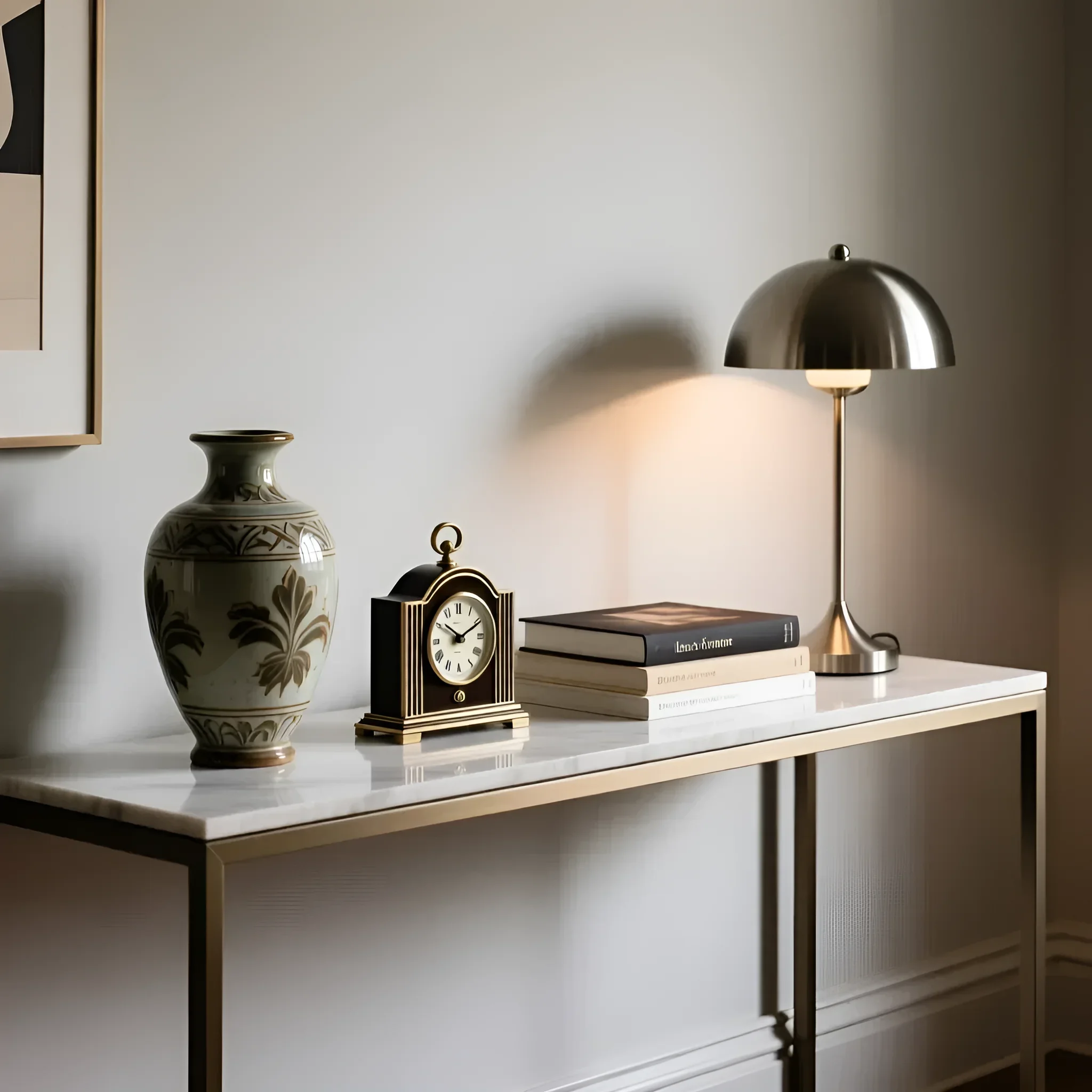
The art of integration lies in creating a dialogue between eras. Here are five proven ideas that guarantee a stylish result:
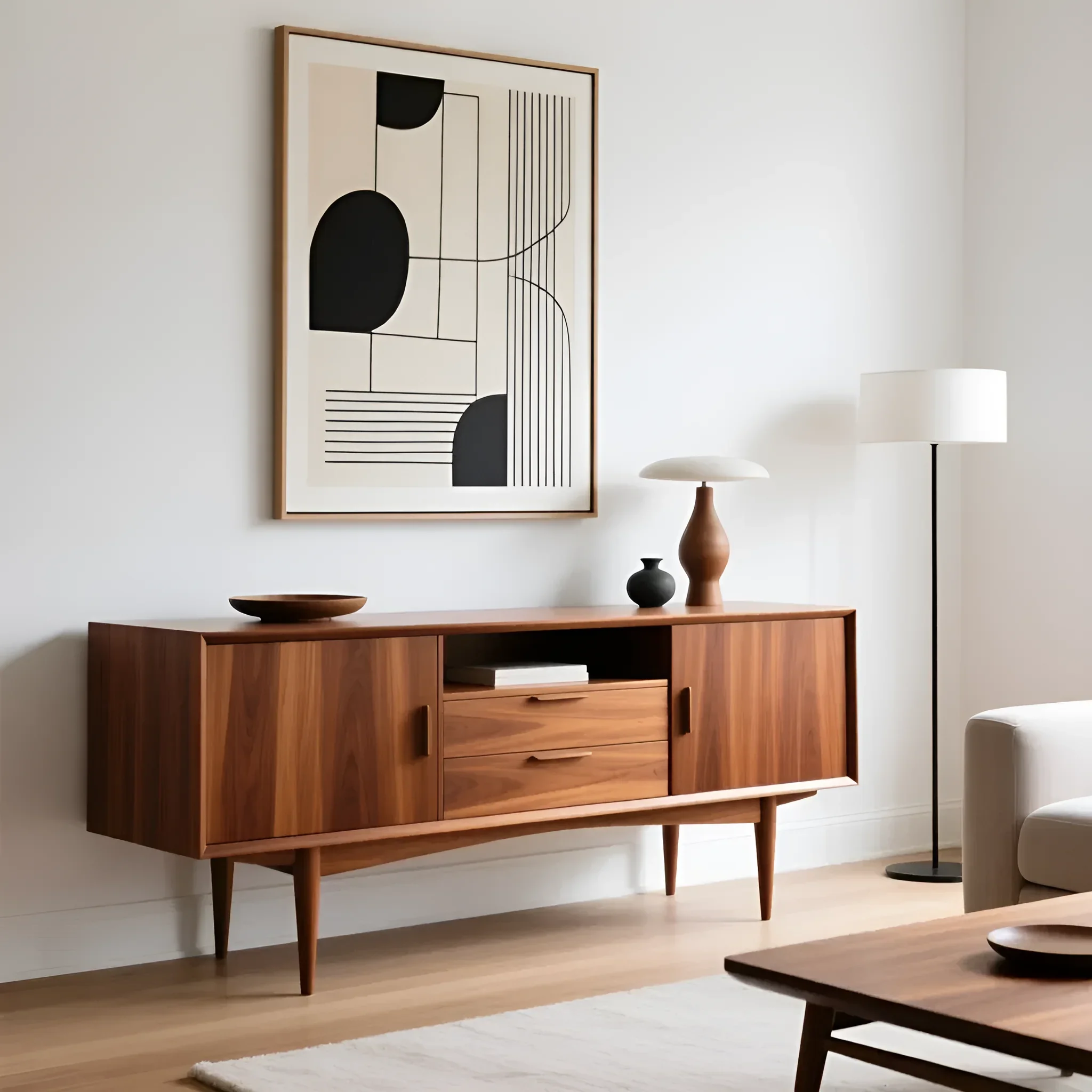
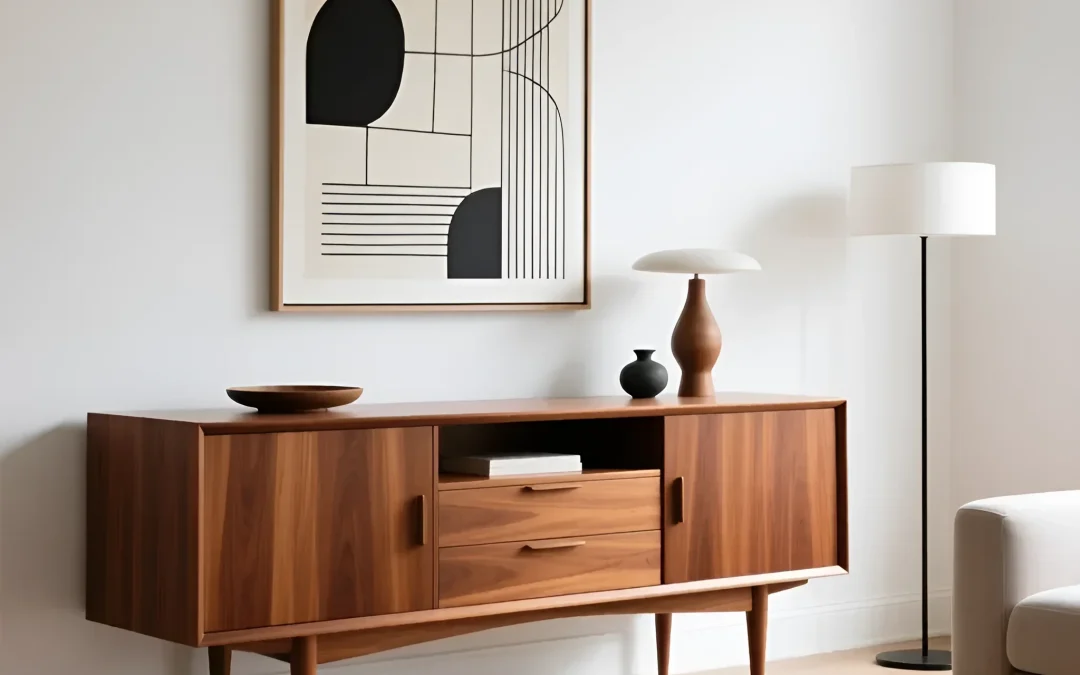
- Vintage Sideboard + Minimalist Painting: A low teak sideboard (MCM) becomes the perfect stand for a large, abstract minimalist painting. The contrast between warm wood and cool modern art gives the living room focus.
- Art Deco Armchair + Tech Lighting: Combine a massive armchair with geometric upholstery from the 1930s with an ultra-modern floor lamp on a slender metal leg (e.g., Flos Arco). This highlights the armchair’s luxury without weighing down the interior.
- Secretary/Bureau + iMac: Use an antique bureau with a drop-down desk as a workspace. The closed design allows you to hide wires and a laptop when not in use. The combination of classic wood and Apple’s slim aluminum body creates a “smart” contrast.
- Vintage Chairs + Modern Table: Take four to six vintage chairs that need reupholstering and update them using bright, solid-colored velvet or leather. Place them around a table with a glossy white or glass top.
- Beveled Mirror + Concrete Wall: Hang an Art Deco or early vintage mirror with a beveled edge on a bare concrete or brick wall. The luxury and shine of an old mirror against a rough, industrial texture is the height of integration.
Expert Tips from mebeltops.com: How Not to Overdo Vintage in an Interior
The most common mistake when working with vintage is turning an apartment into an antique shop or a museum. The goal is to create a harmonious, livable space where old and new complement each other.
The Rule of Three Items
For an average room (18–25 sq. m), two to three large vintage items are enough to set the mood without overloading the space. For example, in a living room, this could be: a dresser, an armchair, and a coffee table. Everything else (sofa, lighting, textiles) should be modern and serve as a neutral support.
Working with Color and Texture
If you use vintage furniture made of dark wood (walnut, teak), compensate with light, neutral walls (white, light gray, beige). This will prevent the space from looking gloomy.
- Avoid Original Upholstery: If you buy upholstered furniture, it’s almost always worth replacing the upholstery. Use modern, tactile fabrics (bouclé, chunky velvet) in current palettes. For example, if a 1960s-style armchair frame needs reupholstering, use a modern mustard or terracotta fabric.
- Neutralize the Floor: If you have parquet or wooden floors, avoid vintage Persian-style rugs unless it’s part of a deliberate eclectic mix. It’s better to choose a solid-colored, modern high-pile rug that will “ground” the vintage pieces.
Finishing Touches: Decor
Decor should be modern. If an old porcelain figurine sits on a vintage dresser, it creates a museum-like feel. Replace it with modern ceramics, abstract vases, or minimalist candles. This creates the necessary stylistic “bridge” between eras.
Expert Summary: Vintage furniture is an investment in your home’s character. Choose pieces with a solid structure, don’t be afraid of restoration, and remember that the key to success is contrast and moderation. A single, but perfectly integrated vintage item can transform the entire interior.
Image Gallery