
 Русский
 Deutsch
 Українська
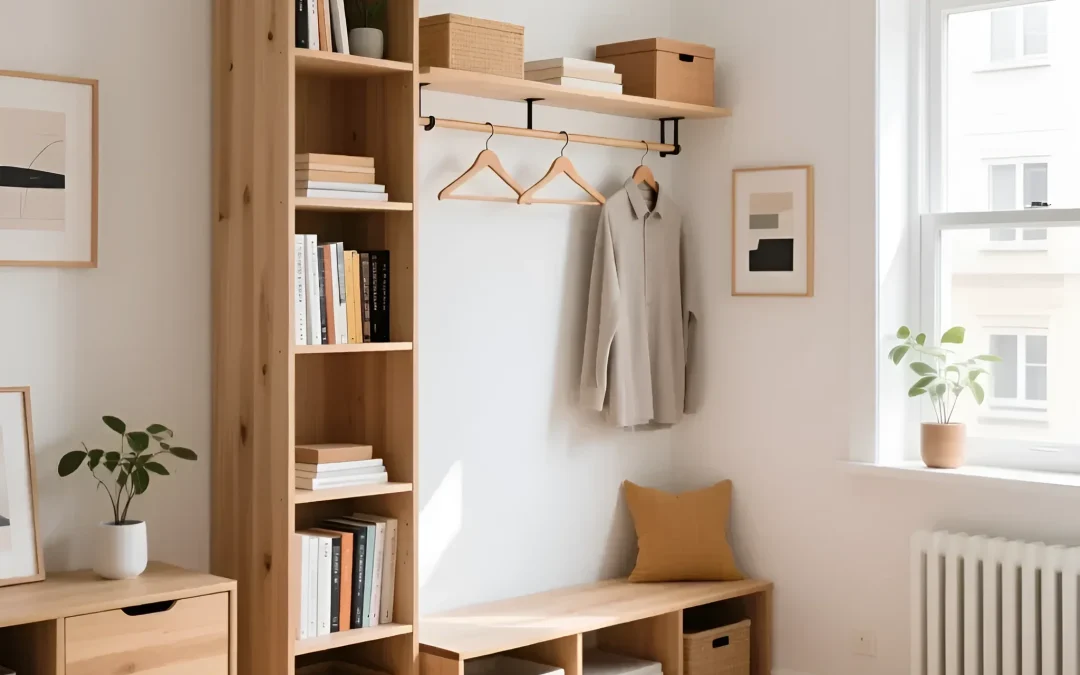
Organizing space in small apartments, studios, or one-room apartments is not just about arranging furniture; it’s about strategically utilizing every square centimeter and, more importantly, every cubic meter. If you’re facing a chronic lack of space, your main ally is capacious, vertical, and multifunctional furniture that can perform several tasks simultaneously without cluttering the interior.
Types and Kinds of Furniture for Effective Storage in Small Rooms
When working with limited space, you need to think vertically. Traditional cabinets 60 cm deep and open shelves that take up half the room are a luxury you cannot afford. Our task is to maximize the use of walls and corners.
1. Vertical Systems (Tall Cabinets and Columns)
- Tall Cabinets: They have a narrow width (40–50 cm) and a great height (up to 240 cm). They are ideal for storing household chemicals, books, or linens. Due to their shallow depth (30–40 cm), they do not protrude significantly into the walkway.
- Mezzanine Cabinets: These are placed above doorways, windows, or existing cabinets. They are perfect for seasonal storage (skis, Christmas decorations, winter blankets). They utilize the “dead zone” under the ceiling.
2. Modular and Suspended Structures
Modular furniture allows you to combine elements depending on the room’s geometry. You can choose a combination of narrow and wide sections, as well as open and closed elements. Suspended cabinets and shelves make cleaning easier and visually make the room feel more spacious because the floor remains clear.
3. Furniture with Integrated Storage
Every piece of furniture should have a hidden function:
- Beds with Lifting Mechanisms: The space under the mattress (usually 1.2–1.5 m³) becomes a huge niche for storing bedding or clothes.
- Ottomans and Benches: Hollow inside, they serve as additional seating and storage for magazines or children’s toys.
- Coffee Tables with Storage: Excellent for storing remote controls, chargers, and other small items that create visual clutter.
Materials and Construction: What Will Withstand Intensive Use in Studios
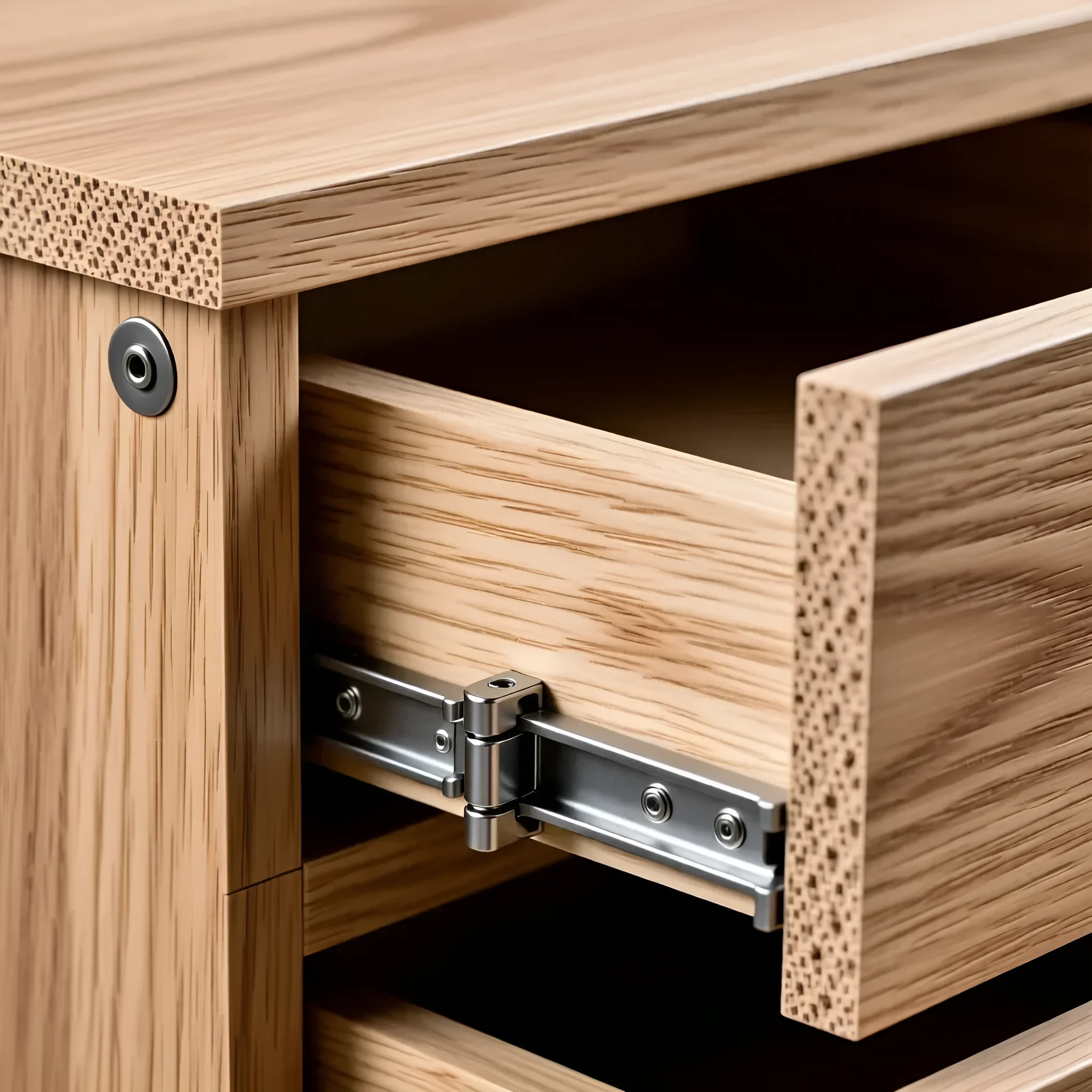
In a small apartment, furniture is used much more actively: a sofa turns into a bed daily, and a table can serve as both a workspace and a dining area. The durability of the construction and the quality of the materials become critically important.
Comparison of Materials for Cabinet Furniture
For compact storage systems, the key parameter is resistance to abrasion and loads.
| Material | Advantages for Small Apartments | Thickness Recommendations |
|---|---|---|
| Laminated Chipboard (ЛДСП) | Budget-friendly, wide range of colors. Ideal for vertical shelves and racks. | At least 18 mm (the standard 16 mm often sags under load). |
| MDF with PVC/Enamel | High resistance to moisture and mechanical damage (important for kitchens/hallways). Allows for complex milling. | 16–19 mm. Enamel is better for glossy surfaces that visually expand the space. |
| Metal (Frames) | Provides maximum strength with minimal thickness. Used in loft shelves and transformer bed frames. | Profile pipe 20×20 mm or 25×25 mm for load-bearing structures. |
Structural Features
- Back Panels: Avoid thin (3 mm) fiberboard. In narrow and tall cabinets, the back panel should be rigid (at least 6 mm) and recessed into grooves to ensure necessary geometric stability.
- Hardware: Frequently used furniture (transformers) requires reinforced hinges (rated for 80,000 opening cycles) and high-quality full-extension ball-bearing slides with soft-close mechanisms.
How to Choose Multifunctional Furniture: Transformer Sofas and Bed-Cabinets
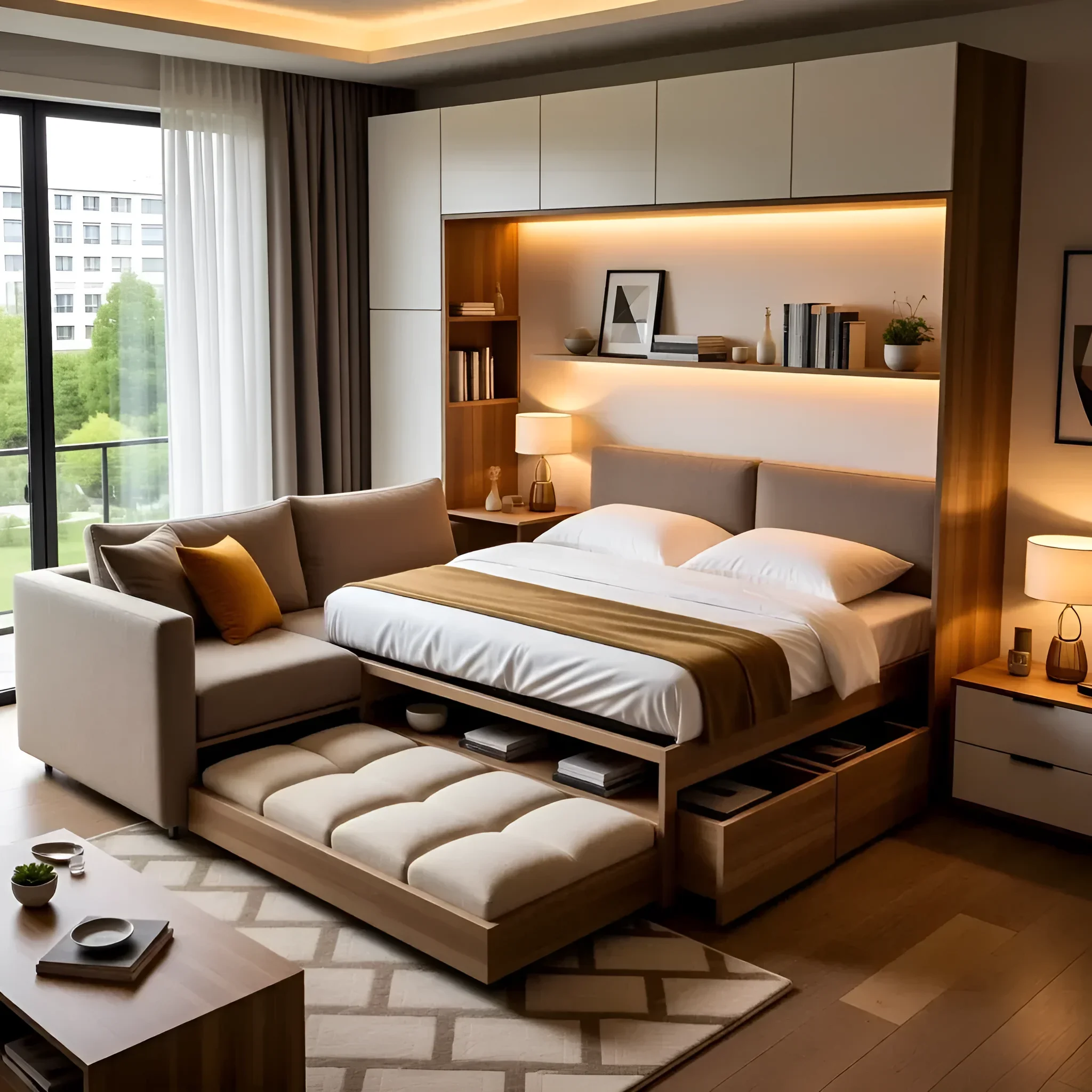
Multifunctional furniture is the heart of smart storage. It allows you to turn a living room into a bedroom, and a bedroom into an office, using the same area.
Transformer Sofa: Criteria for Choosing a Mechanism
In limited space, not only the ease of unfolding but also the space occupied when unfolded is important. The ideal sofa should be compact when folded and have built-in linen compartments.
- Eurobook (Еврокнижка): Reliable and simple. Requires a small gap from the wall (about 10 cm). Minimum sleeping area width: 140–160 cm. Pro: large linen compartment.
- Dolphin (Дельфин): Ideal for corner sofas. Pulls out from under the main seat forward. Pro: does not scratch the floor, does not require space for rollback.
- Accordion (Аккордеон): Compact when folded, but requires a lot of space to extend forward (up to 200 cm). Con: lack of a full linen drawer.
Bed-Cabinet (Murphy Bed): Gas Lift or Spring Block?
A bed-cabinet (or “Murphy bed”) can free up to 3–4 m² of floor space during the day. The choice of mechanism is critical for safety and durability.
- Gas Lifts (Hydraulics): Provide smooth and silent lifting/lowering. Require precise selection based on the weight of the mattress and frame (indicated in Newtons, usually 1200–1800 N for a double bed). Pro: high wear resistance (up to 90,000 cycles).
- Spring Blocks: A more budget-friendly but less durable option. Over time, the springs stretch, and the mechanism begins to require more effort. Recommended only for guest or children’s beds not used daily.
Tip: Always choose models where the bed frame is attached to a load-bearing wall. The loads on the lifting mechanism are very high.
Space Optimization: Precise Dimensions and Sizes of Compact Furniture

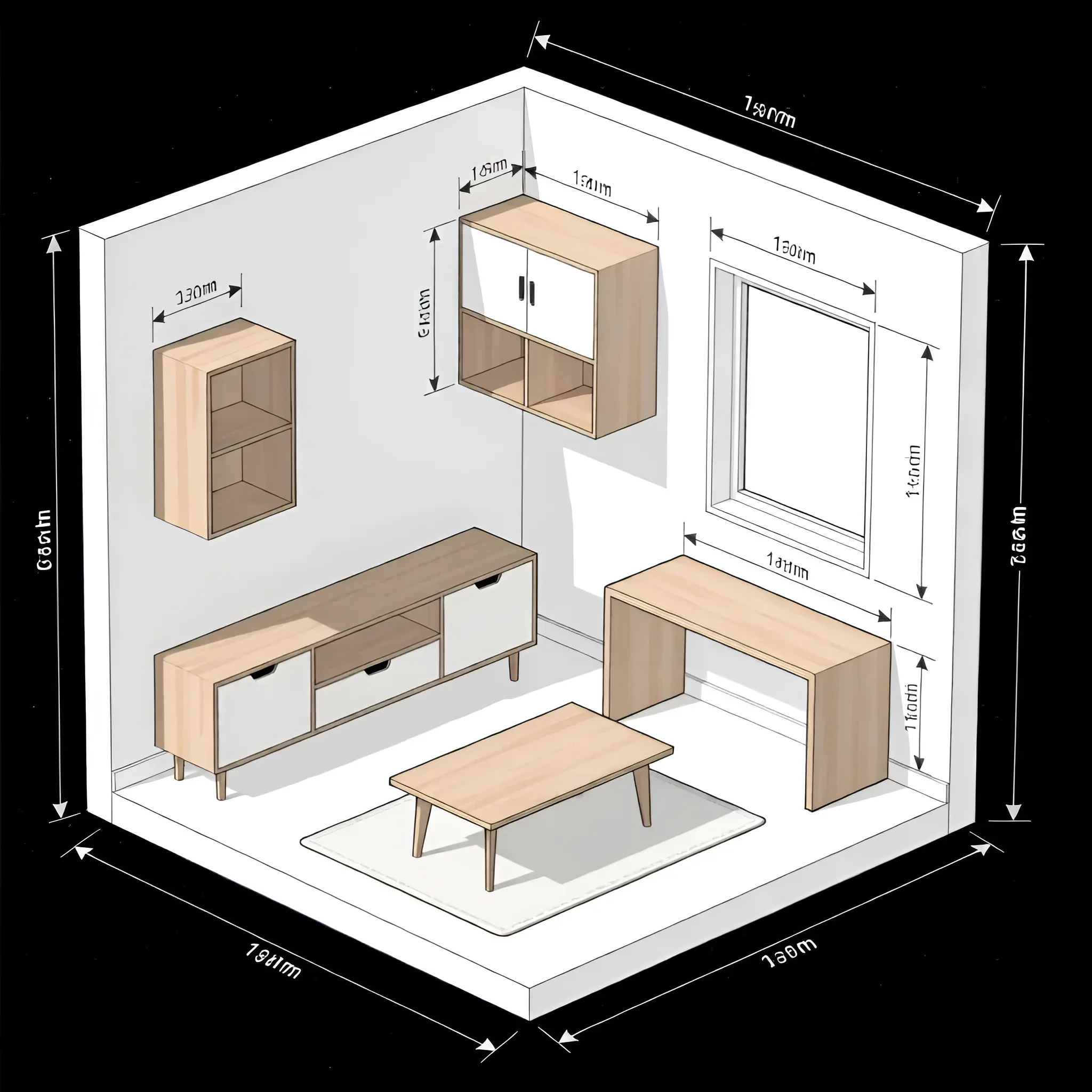
Optimization is choosing furniture with the minimum acceptable depth that retains functionality. Every centimeter counts.
Compactness Standards
- Wardrobe Depth: Standard is 60 cm. In small apartments, use 40–45 cm. In this case, hangers are placed not perpendicularly but parallel to the door (pull-out rods). You lose some convenience of access but save 15–20 cm of passage.
- Bookshelf Depth: Standard is 30 cm. For small apartments, it can be reduced to 20–25 cm if books are stored in a single row.
- Work Surface Height: Console desks that attach to the wall and fold up should have a depth of no more than 50–60 cm so as not to obstruct passage when folded.
Utilizing Corner Space
Corners often become “dead zones.” Use corner cabinets with a trapezoidal or L-shaped design. A corner cabinet with dimensions of 90×90 cm holds more than two straight cabinets of 60 cm, due to efficient depth utilization.
For kitchens or living rooms, consider “magic corner” pull-out systems. They allow you to pull out the inner shelves from the depth of the cabinet, making 100% of the volume accessible, whereas a standard corner cabinet only utilizes 60–70%.
Transformation Mechanisms and Smart Functionality: Pull-out and Lifting Systems
The quality of hardware determines the lifespan and ease of use of furniture in a small apartment. The more you move, open, and transform, the more reliable the mechanisms should be.
Pull-out Systems for Cabinets and Drawers
Forget about roller slides. They cannot withstand loads and quickly become loose with intensive use.
- Full-Extension Ball-Bearing Slides: Provide access to the entire contents of the drawer. They can withstand loads up to 30–45 kg. Soft-close mechanisms are essential (they dampen the closing inertia).
- Tip-on (Push-to-open) Systems: Allow you to eliminate handles. This is critically important in narrow corridors and passageways where protruding handles can cause injuries or damage clothing.
Lifting Mechanisms for Beds and Tables
When choosing a bed with storage, pay attention to the angle of mattress lift. The angle should be at least 45° to provide comfortable access to the drawer. If the angle is less, you’ll have to hold the mattress with your hand.
Console and Folding Tables:
- Book Mechanism: Folds in half. Ideal for dining tables. When folded, the depth is 20–30 cm.
- Brackets with Locking: Used for wall-mounted folding tables. It is important that the mechanism has a reliable locking lever to prevent accidental folding. Recommended load for a desk is at least 50 kg.
Care and Durability: How to Maintain the Appearance of Furniture for Small Spaces
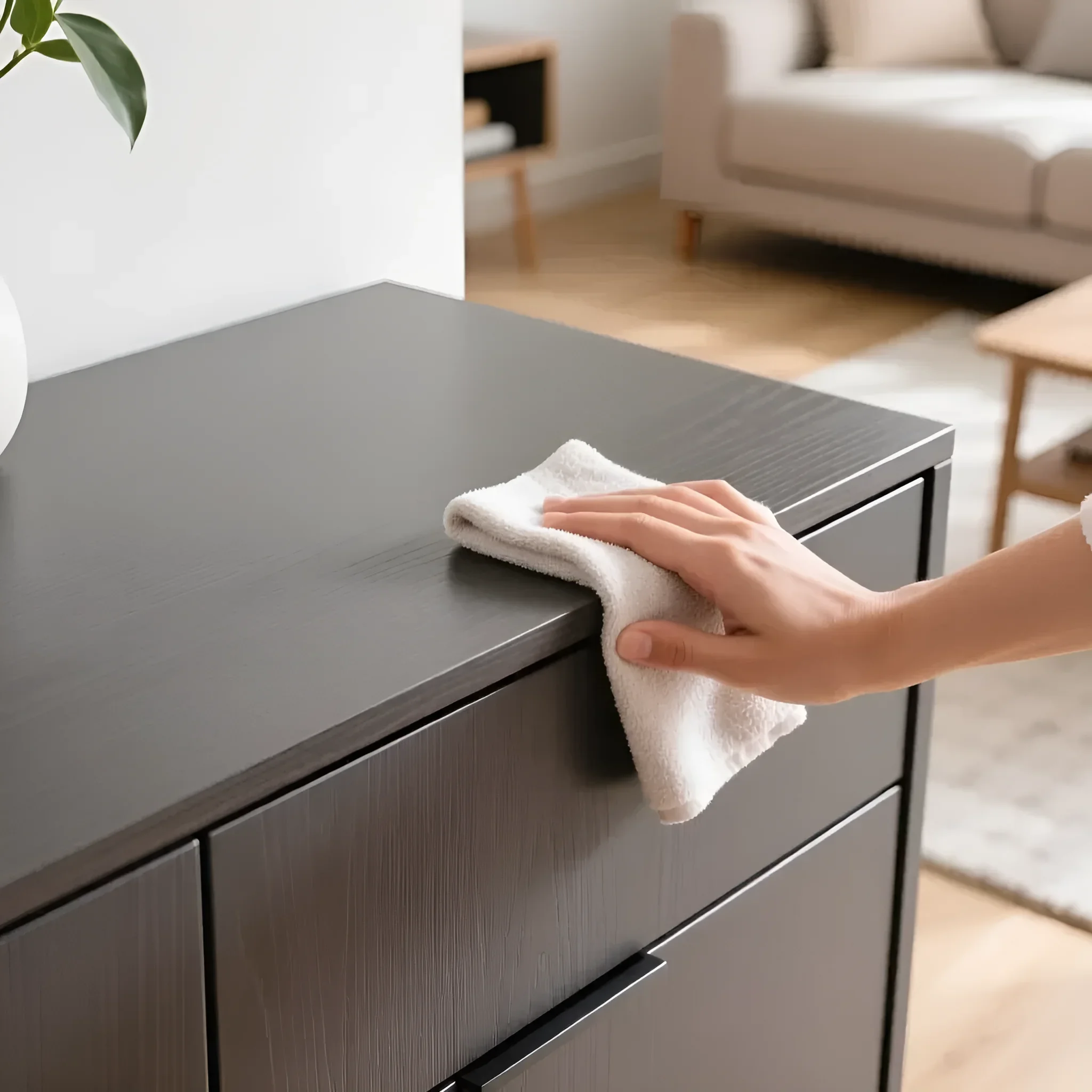
Intensive use of multifunctional furniture requires regular and proper care, especially for transformation mechanisms.
Mechanism Maintenance
- Lubricating Slides: Every 6–12 months, treat ball-bearing and pull-out slides with silicone lubricant or Teflon spray. Do not use household oils (they attract dust).
- Checking Fasteners: Regularly (every six months) check the tightness of screws and bolts in the lifting mechanisms of beds and sofas. Looseness can lead to frame deformation.
- Adjusting Gas Lifts: If the bed starts to lift too quickly or, conversely, requires more effort, the gas lifts may need replacement. Do not attempt to adjust them yourself if you are not a specialist.
Facade Care
- Glossy Surfaces (Acrylic, Enamel): Visually expand the space but are very demanding. Use soft microfiber cloths and non-abrasive cleaning agents to avoid micro-scratches.
- Matte Facades (Laminated Chipboard, Veneer): More practical but can absorb grease. Use specialized furniture cleaning products, avoiding chlorine and solvents.
Top 5 Storage Solutions: From Narrow Shelves to Hidden Niches
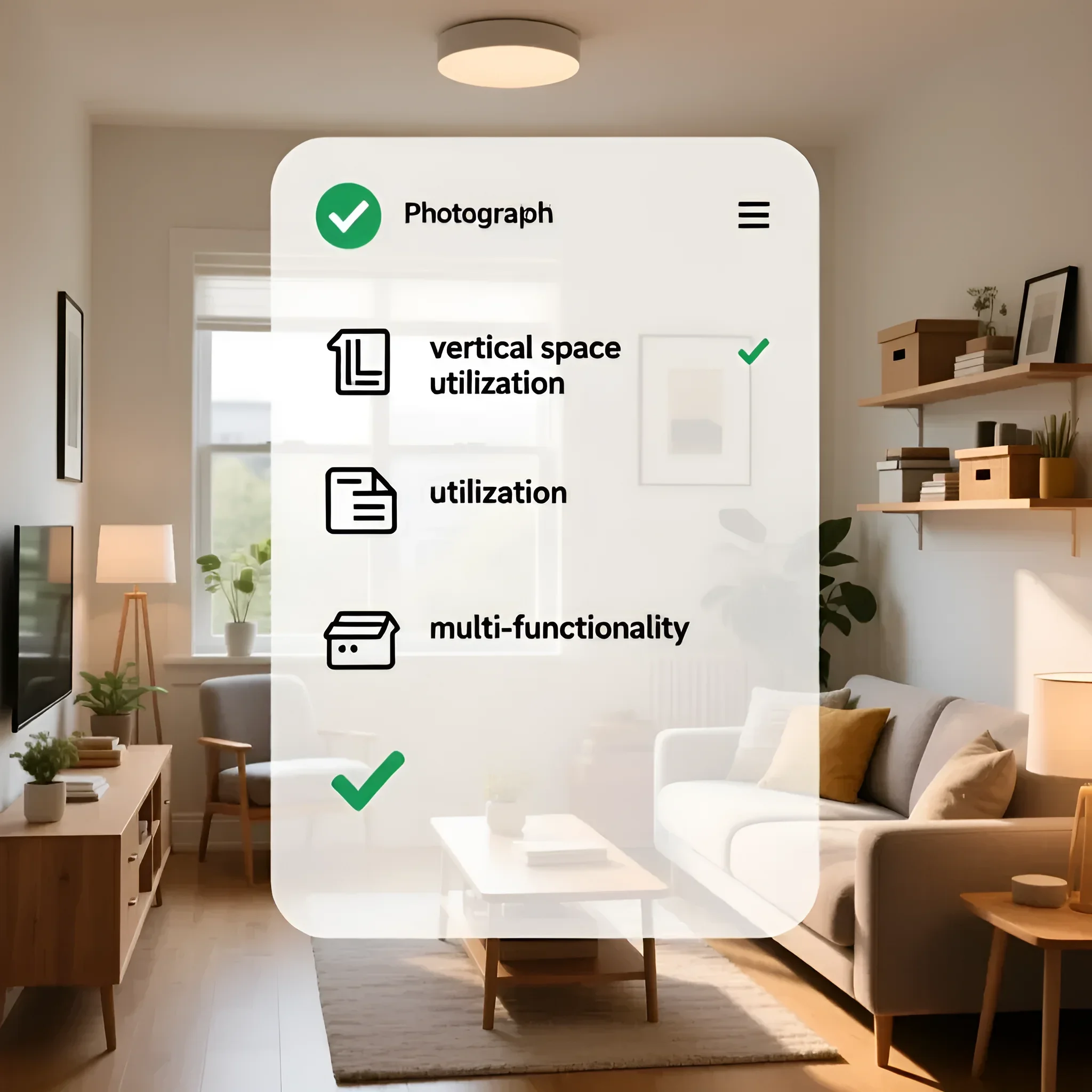
We present practical solutions that maximize the use of every corner of your small apartment.
1. Narrow Pull-out Systems (Bottle Holders)
Ideal for filling gaps between large furniture items or appliances (e.g., between the refrigerator and the wall). Width 15–25 cm, depth up to 60 cm. They are convenient for storing jars, spices, cleaning supplies, or umbrellas.
2. Pegboards
An excellent solution for the kitchen, hallway, or home office. They allow you to store tools, kitchen utensils, or stationery on a vertical surface, changing the configuration of shelves and hooks as needed. They completely free up the work surface.
3. Storage Under the Windowsill
The windowsill can be turned into a full-fledged work or relaxation area. Underneath, you can organize cabinets with hinged doors or pull-out drawers with a depth of 30–35 cm. This is a well-lit area, ideal for storing frequently used items.
4. Tall Cabinets in the Hallway
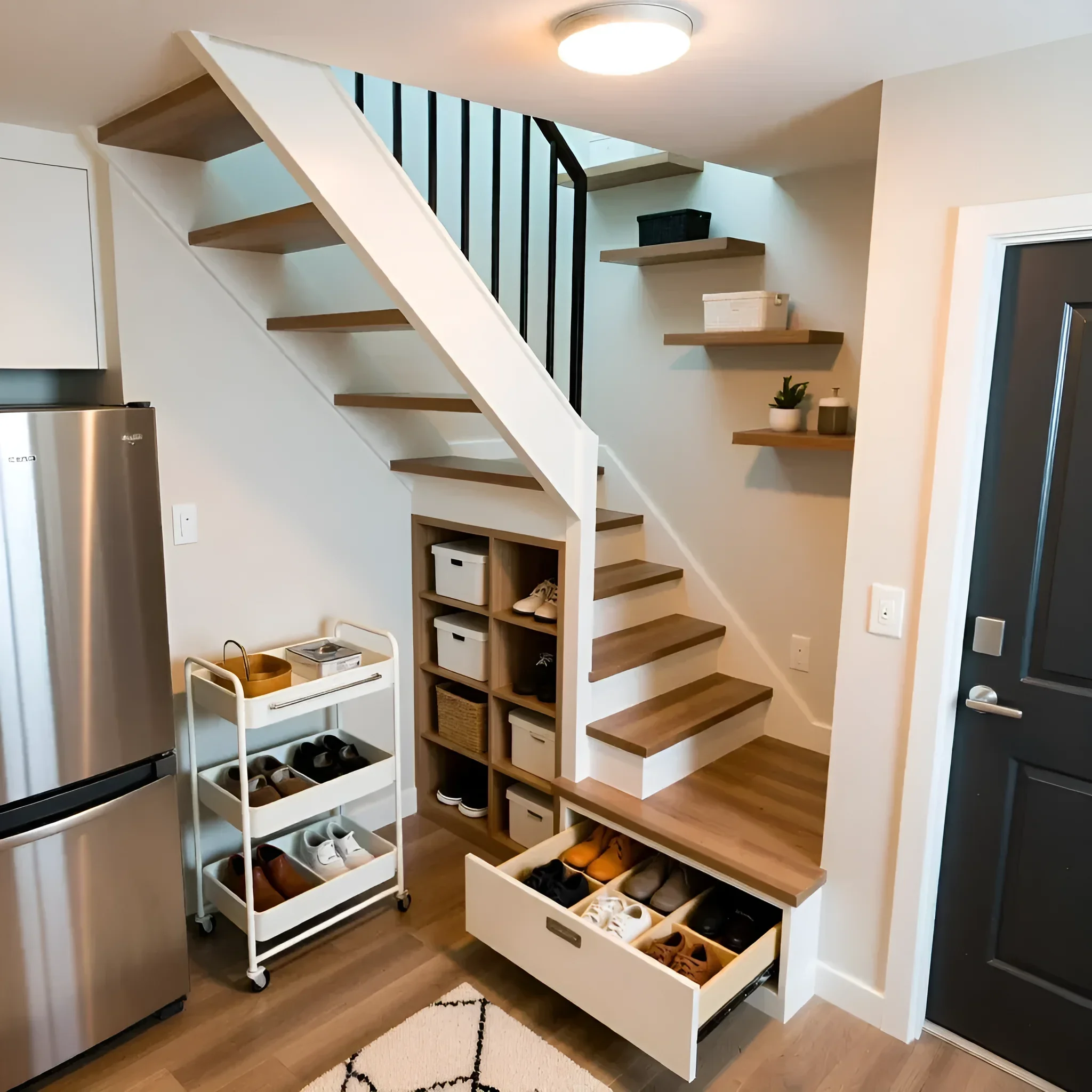
Instead of a traditional wide wardrobe, use several narrow columns (width 45 cm, depth 40 cm). One column can be equipped for outerwear, another for shoes (slanted shelves), and a third for accessories and bags.
5. Hidden Niches in a Podium
If ceiling height allows (from 270 cm), consider creating a podium. A podium 40–50 cm high can accommodate pull-out drawers with a depth of 100–120 cm or even a full pull-out bed. This is a radical but highly effective solution for zoning and creating a huge storage volume.
Expert Advice from mebeltops: Checklist for Furnishing a Small Living Space
To make your apartment as functional as possible, follow these practical recommendations when planning your purchases:
1. “Top-Down” Strategy
- Maximize Height: All cabinet furniture should be “ceiling-high” (230–250 cm) to avoid dust collectors and utilize the entire vertical volume.
- Depth vs. Width: If there’s a choice, it’s better to opt for a taller and narrower cabinet than a shorter and wider one.
2. Priority on Transformation
- Dual Function: Never buy furniture that serves only one purpose. Look for sofa-beds, console tables, ottomans with storage.
- Check Hardware: Before purchasing, personally check the smooth operation of all transformation mechanisms (especially gas lifts). Any play or squeaking is a sign of poor durability.
3. Visual Expansion
- Light Facades: Prefer white, light gray, or pastel facades. They reflect light and make furniture appear less bulky.
- Mirror Inserts: Built-in mirrors on sliding wardrobe doors are not only functional but also create the illusion of doubling the space.
4. Precise Measurements
Before ordering transformer furniture, always measure not only the area it occupies when folded but also the area required for its full functionality (e.g., the distance from the sofa to the opposite wall when it is unfolded).
5. Cable Management
In small apartments, wires quickly create chaos. Use furniture with integrated cable channels (e.g., in a desk) or special boxes that attach to the back panels of cabinets. This minimizes visual clutter and simplifies cleaning.