Русский
 Deutsch
 Українська
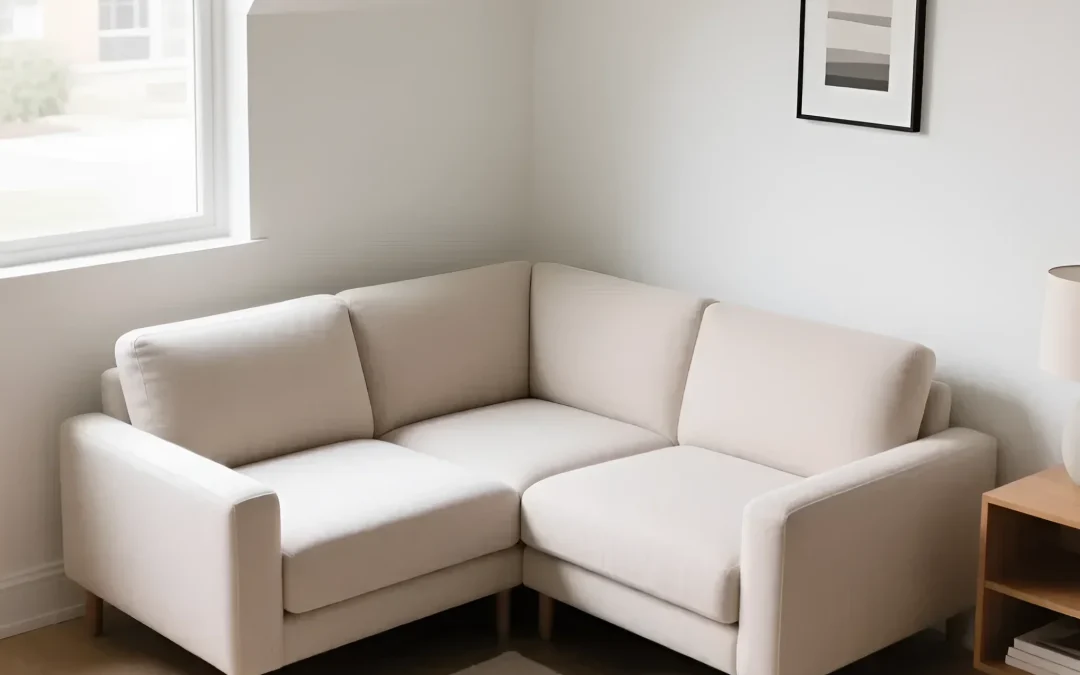
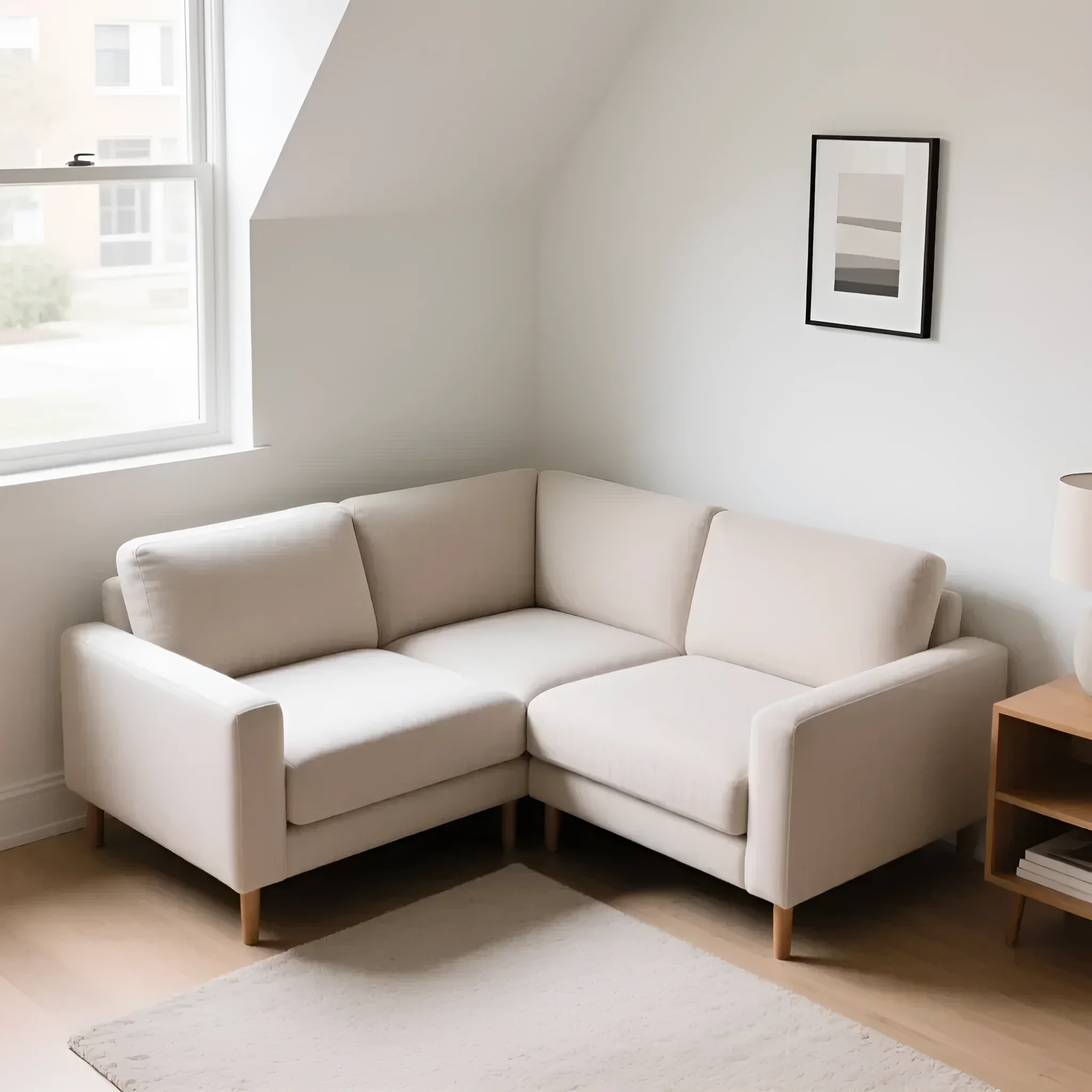
Choosing a corner sofa for a miniature living room is always a compromise between the desire for maximum seating and the need to maintain functionality and free space in the room. A corner sofa is one of the most effective solutions for small spaces, as it utilizes the “dead zone” – the corner – while providing 1.5–2 times more seating than a standard straight sofa of similar length. Our task as mebeltops.com experts is to help you avoid common mistakes and choose a model that won’t overload your room.
Types and Styles of Corner Sofas: How to Choose the Right Shape for a Miniature Living Room
When choosing corner furniture for small rooms, it is critically important to correctly assess the shape and construction of the sofa. Unlike spacious studios where you can afford massive U-shaped or semicircular models, small living rooms have strict limitations.
1. L-shaped Sofas (G-shaped)
This is your primary and almost only option. L-shaped sofas make the most effective use of one corner. They come in two main types:
- Monolithic: Sections are rigidly connected. Pro: High structural strength. Con: Impossibility to change the angle (left/right) in case of rearrangement.
- Modular: Consists of separate blocks that can be rearranged. Pro: Perfect adaptability. You can make the sofa left-handed, right-handed, or even temporarily detach a pouf or armchair. Modularity is critically important for small living rooms, as it allows you to “fit” the sofa into the available corner as precisely as possible.
2. Type of Corner: Stationary or Ottoman
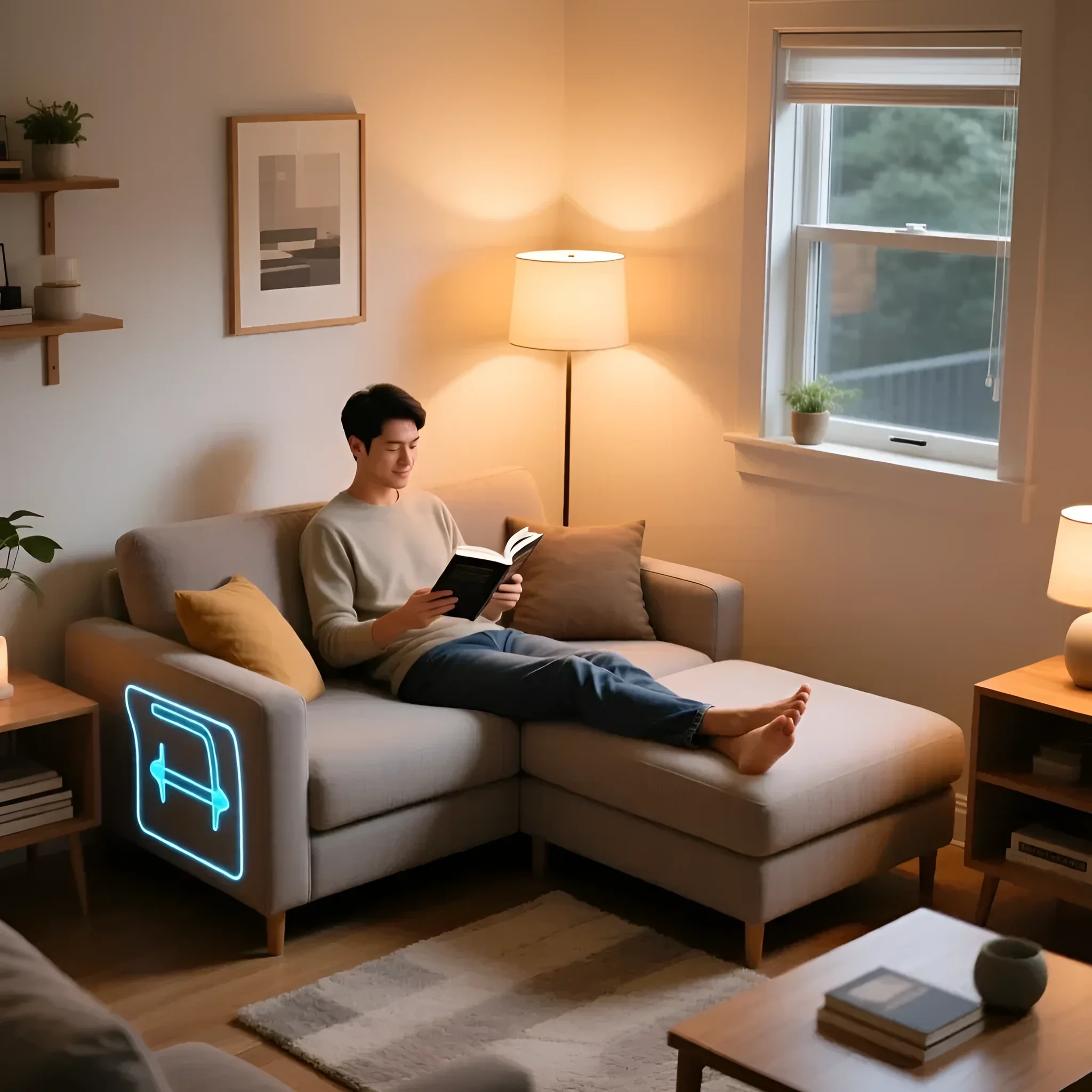
For compact rooms, we recommend considering models with an ottoman (chaise longue). An ottoman is not just a place for your feet; it is a crucial element of functionality:
- It is almost always equipped with a spacious storage drawer (capacity is usually 150–250 liters).
- It provides an additional, more comfortable lying-down space without needing to unfold the entire sofa.
- In small models, the ottoman often has a width of 60–80 cm and a length of up to 150 cm, which helps save on the overall sofa length.
Avoid U-shaped sofas. They require at least 350 cm of free space along the long wall and will completely block a room less than 18 m².
Upholstery and Frame Materials: Durability and Longevity for a Compact Corner Solution
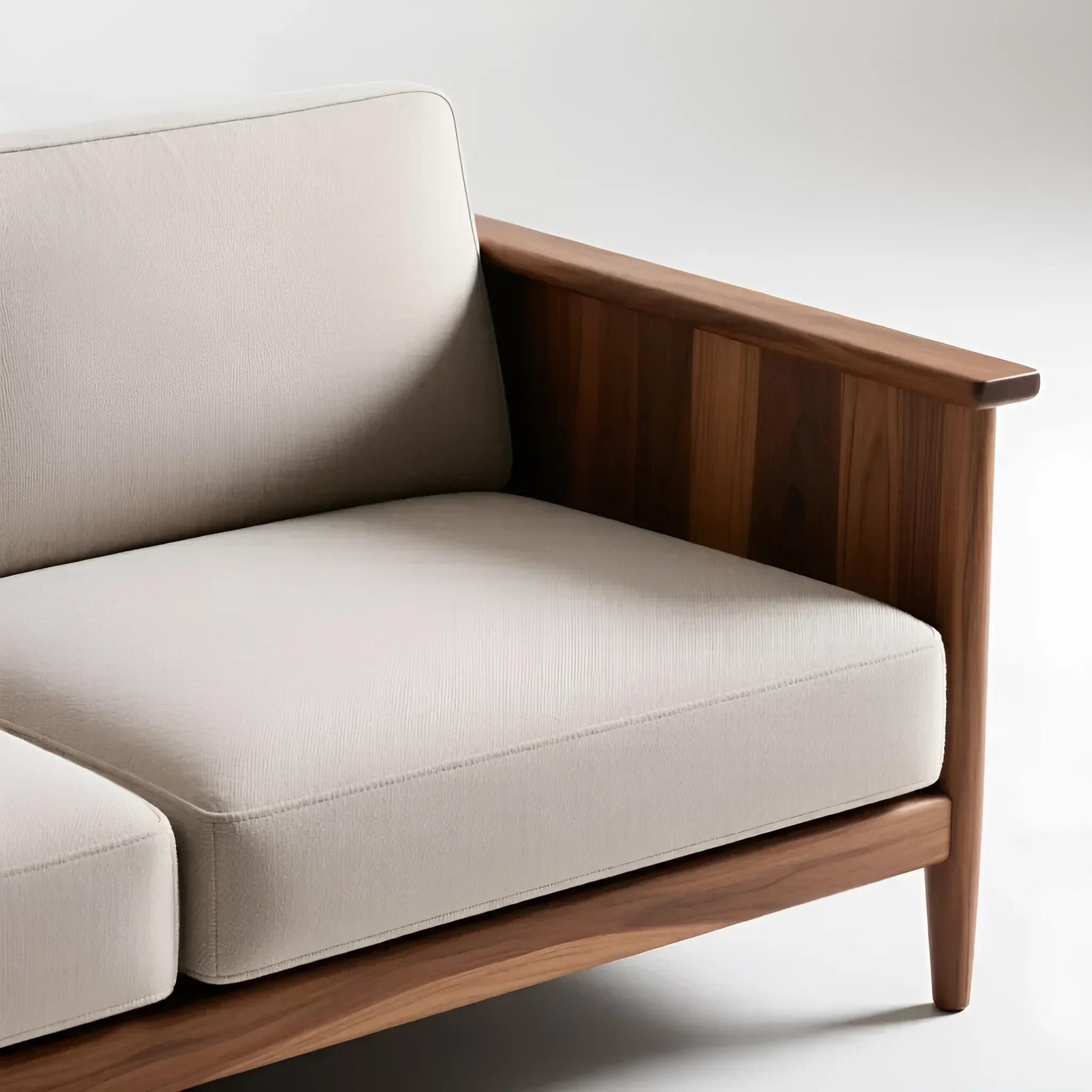
Since a corner sofa in a small living room often serves as the central element, a sleeping place, and storage, it is subjected to increased load. The choice of materials directly affects its lifespan and appearance.
Frame: The Foundation of Durability
For compact models, the frame should be sturdy but not bulky. Thick wooden beams or massive metal frames can add an extra 10–15 cm to the sofa’s width, which is unacceptable in a cramped room.
- Recommendation: A combination of plywood (birch, thickness from 10 mm) and dry lumber (moisture content no more than 8%). Metal elements (steel profile) are desirable in the load-bearing parts of the transformation mechanism.
- What to avoid: Frames made entirely of particleboard (low resistance to dynamic loads, risk of deformation with frequent transformation).
Upholstery: Practicality and Visual Volume
The upholstery fabric should be as wear-resistant as possible, as the sofa will be used daily and intensively. Its visual effect is also important – light, solid-colored fabrics with minimal texture “lighten” the furniture.
| Upholstery Type | Characteristics (for a small living room) | Martindale Test (min.) |
|---|---|---|
| Flock / Microfiber | Excellent wear resistance, easy to clean, water-repellent properties. Visually does not add bulk. | From 50,000 cycles |
| Velour / Chenille | Pleasant to the touch, but can wear out quickly at the corners. Requires more careful care. | From 30,000 cycles |
| Faux Leather (PU) | Easy to care for. It is important to choose high-quality PU, otherwise it will crack quickly. Not the best choice for a sleeping area. | From 40,000 cycles |
| Linen Weave (fine weave) | Durable, natural look. It’s better to choose melange shades that hide minor dirt. | From 35,000 cycles |
Expert Tip: Choose fabrics with a Martindale rating of at least 40,000 cycles. In a small room, a sofa is an investment; you cannot skimp on durability.
How to Choose the Ideal Corner Sofa: Assessing Ergonomics and Functionality for Small Spaces
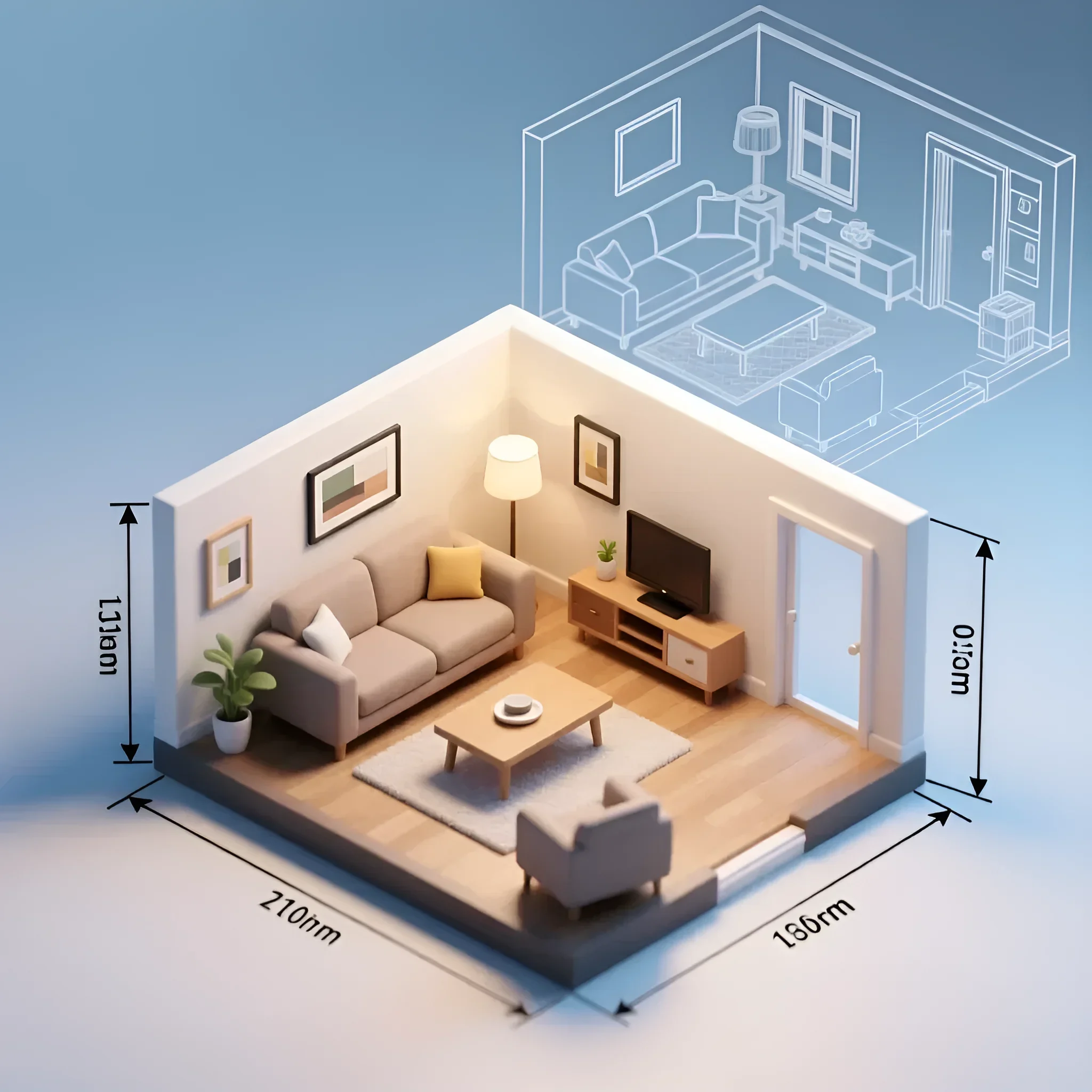
The ergonomics of a compact sofa should be aimed at maximizing usable area by reducing non-functional elements.
1. Armrest and Backrest Thickness
This is the easiest way to save 10–30 cm. Standard armrests are 15–20 cm wide. For a small living room, look for models with thin armrests (5–8 cm) or none at all (Eurobook type models with soft sides).
- Example: A sofa with overall dimensions of 240 cm. If the armrests are 5 cm each (total 10 cm), the usable seating length will be 230 cm. If the armrests are 15 cm each (total 30 cm), the usable length will be 210 cm. This is a difference of a whole seating place.
2. Seat Depth
The standard seat depth (from edge to backrest) is 60–70 cm. To save space, look for models with a shallow seat – 50–55 cm. This allows reducing the overall sofa depth (distance from the wall to the edge) to 85–95 cm, which is critically important for maintaining passage.
3. Filler: Density and Comfort
For daily use and transformation, a dense filler is necessary. Small sofas most often use polyurethane foam (PU foam) or a combination of PU foam and a spring system.
- High-density PU foam (HR or EL 3040 – 3542): Provides durability and elasticity. Ideal for economical but frequent sleeping places.
- Independent spring system (Pocket Spring): The best option for a primary sleeping place. Provides an orthopedic effect but can increase the height and, consequently, the visual bulk of the sofa.
Optimal Dimensions and Size: Calculating Seating and Passages in a Tight Living Room
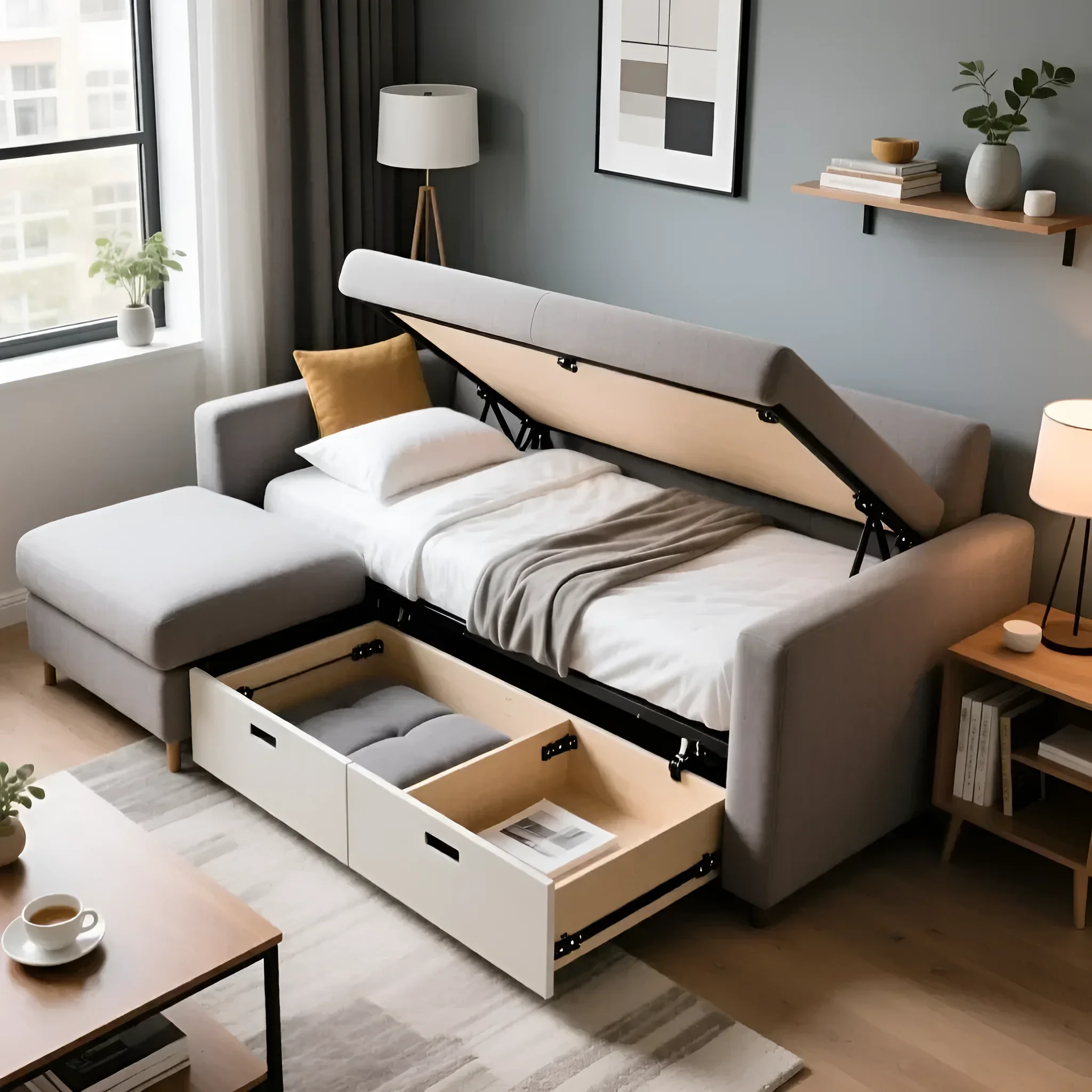
The main secret to choosing a corner sofa for a small room is precise calculation of the minimum permissible dimensions. The sofa should not only fit but also leave enough space for passage and the use of other furniture (coffee table, TV stand).
Minimum Permissible Dimensions
For living rooms with an area of 10–15 m², the optimal dimensions for a corner sofa are within the following ranges:
- Length along the main wall (L): 190–230 cm.
- Length along the corner wall (W): 130–160 cm (including the ottoman).
- Overall depth (D): No more than 95 cm (when folded).
The “60 cm Free Passage” Rule
To prevent the room from looking cluttered and to ensure comfortable movement, it is necessary to maintain a minimum distance between the sofa and opposite furniture (TV stand, shelving unit):
- Minimum 60 cm: This is the minimum comfortable passage for one person.
- 75–90 cm: The ideal distance for free passage and the ability to open drawers or cabinet doors.
Visual Lightening of the Structure
To prevent the sofa from looking like a “bull in a china shop,” pay attention to the following details:
- High legs (from 10 cm): A sofa standing on legs allows light and air to pass through, creating a sense of lightness and not visually blocking the floor.
- Thin backrest: Avoid models with bulky cushions or wide decorative backrests that can add 10–15 cm to the overall depth.
- Light upholstery: Light shades (beige, light gray, mint) reflect light and make the object less dominant.
Corner Sofa Transformation Mechanisms: From Guest Sleeping Area to Storage System
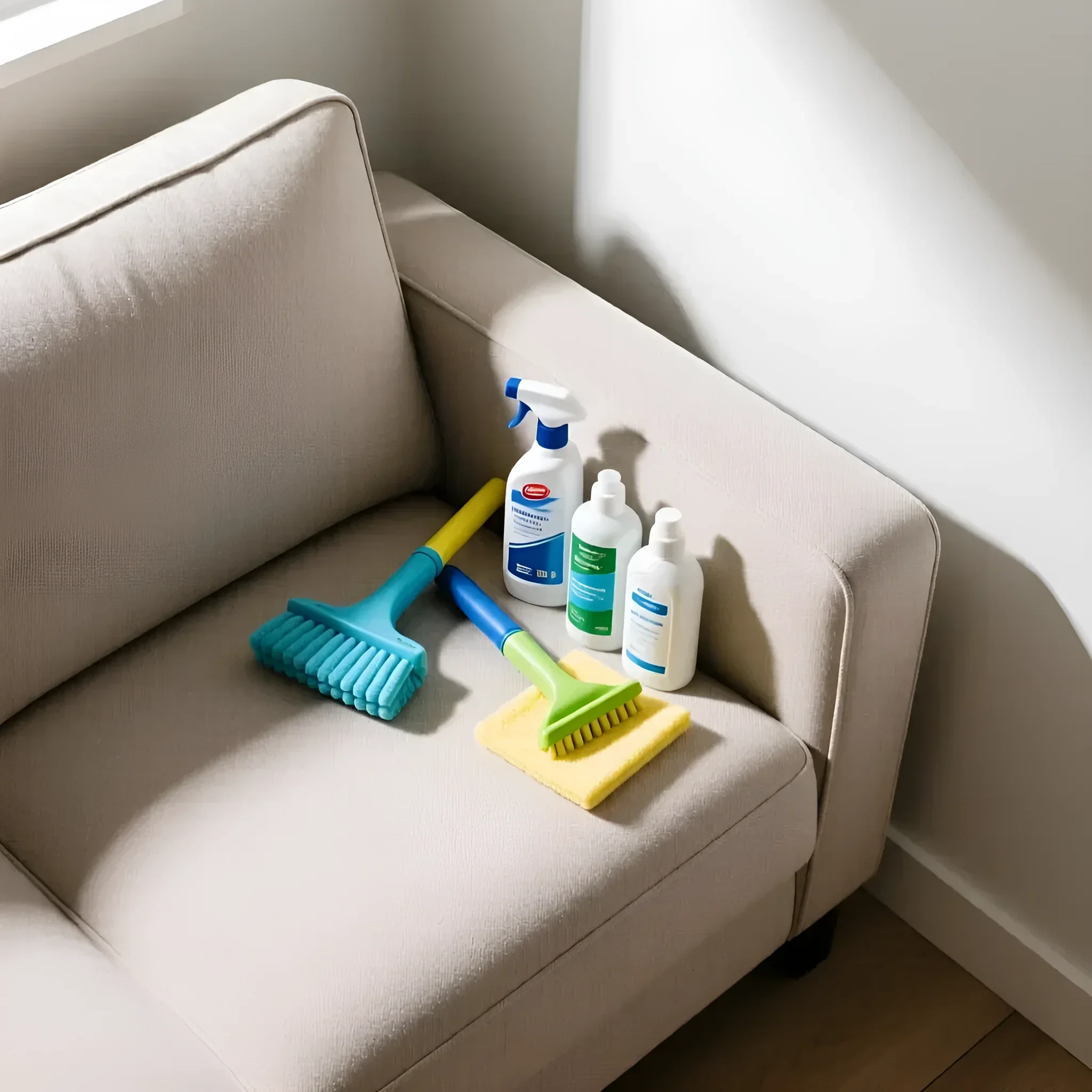
Choosing a transformation mechanism for a small living room comes down to finding one that requires minimal free space for unfolding and provides a maximally even sleeping surface.
Comparison of Popular Mechanisms for Compact Models
| Mechanism | Principle of Operation | Space Requirements | Suitable for Daily Sleep? |
|---|---|---|---|
| Dolphin | The section under the seat slides out and lifts to the level of the main seat. | Minimal. Only requires free space in front of the sofa. | Yes. Simple, reliable, even sleeping surface. |
| Eurobook | The seat rolls forward, and the backrest folds down into the freed space. | Requires 10–15 cm from the wall for the backrest to fold down (if the backrest is not reclining). | Yes. Most reliable, has large linen drawers. |
| Tik-Tak (Pantograph) | An analog of the Eurobook, but the seat “steps” forward without scratching the floor. | Minimal. Ideal for carpeted floors. | Yes. High cost, but very gentle on flooring. |
| French Fold-out (Meralatte) | Folds into three parts, thin mattress. | Requires complete clearing of space in front of the sofa. | No. Only for guest use (up to 10 nights a year). |
Conclusion for a small living room: The “Dolphin” and “Eurobook/Pantograph” mechanisms are optimal. They provide an even sleeping surface, are easy to operate, and, most importantly, do not require a large gap between the sofa and the wall, and also allow for the most efficient use of space under the seat for storage.
Care and Maintenance of a Corner Sofa in Limited Space
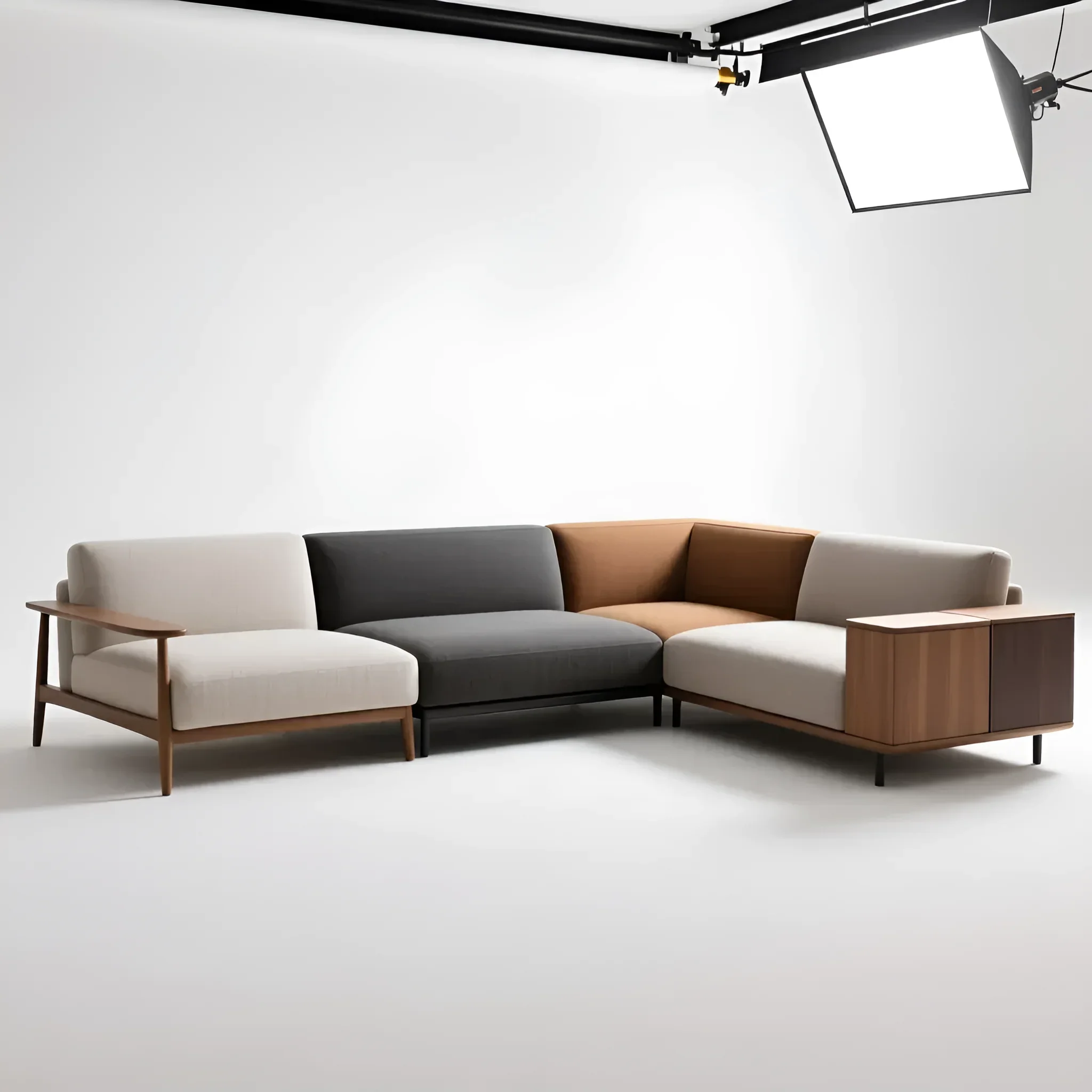
In a compact room, the sofa is used most intensively, which requires a more careful approach to care. Limited space also complicates access to the rear and side parts.
1. Access to Storage Drawers
Ensure that the linen drawers (usually located under the ottoman or seat) open easily and do not require moving the coffee table or other furniture. If the corner of the sofa is pressed tightly against the wall, the ottoman should lift upwards on gas lifts, not slide forward.
2. Upholstery Care
In small rooms, there is a higher risk of accidental stains. Choose upholstery with Easy Clean technology (e.g., flock or microfiber with Teflon impregnation). This allows removing most household stains with a damp cloth, minimizing the need for deep dry cleaning, which is often difficult due to the inability to move the sofa out of the room.
3. Mechanism Maintenance
If the sofa is placed tightly against the wall, access to the hinges and fasteners of the rear part may be difficult. Regularly (every 6 months) check and lubricate the moving parts of the mechanism (especially “Dolphin”) to avoid squeaking. Ideally, the sofa should be able to be moved slightly away from the wall (at least 5–10 cm).
Top 5 Corner Sofa Models Ideally Suited for Small Living Rooms (Review)
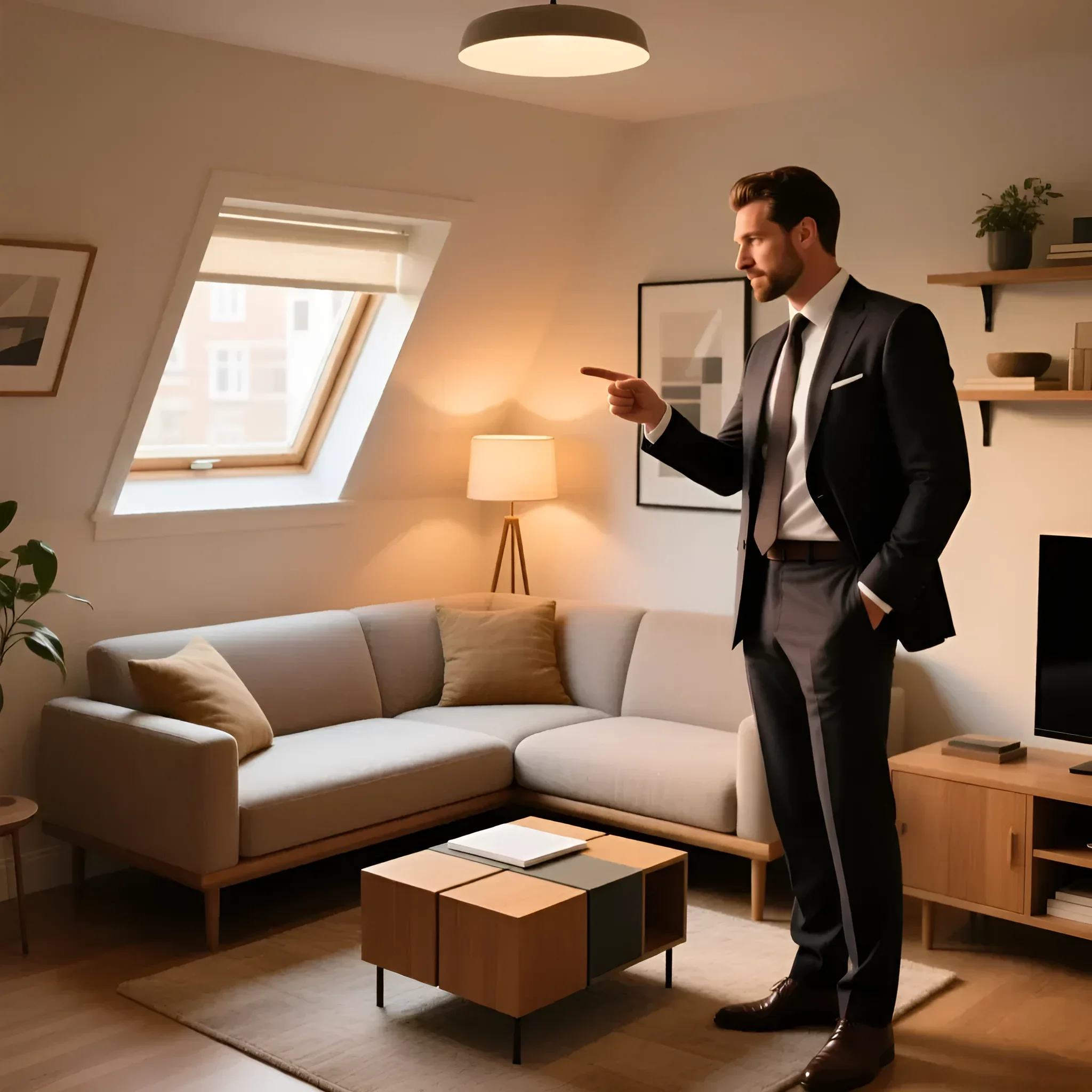
We have prepared a review of typical characteristics of models that best meet the requirements of compactness, functionality, and durability. Please note that the dimensions indicated are approximate but reflect the ideal ratio of dimensions.
- Model “Minimal L-200”:
- Dimensions: 200 x 140 cm (usable area).
- Mechanism: Eurobook.
- Features: No armrests (or soft sides 3 cm wide). Seat depth 50 cm. Filler – high-density PU foam. Ideal for studios where every centimeter counts.
- Model “Praktik Dolphin”:
- Dimensions: 220 x 155 cm.
- Mechanism: Dolphin (for daily sleep).
- Features: Ottoman with gas lift and a large linen drawer. Plywood frame. Narrow armrests (7 cm), often with built-in shelves or niches for remotes.
- Model “Optima Smart” (Modular):
- Dimensions: 210 x 130 cm (minimum configuration).
- Mechanism: Pantograph.
- Features: Angle can be changed. Sections attach with metal hooks. High metal legs (12 cm) for visual lightness.
- Model “Loft-Compact”:
- Dimensions: 230 x 160 cm.
- Mechanism: Dolphin.
- Features: Straight, clean lines. Upholstery – dense linen weave. Due to straight angles and a thin backrest (10 cm), the usable sleeping area is maximized (up to 195 cm in length).
- Model “Guest Mini”:
- Dimensions: 195 x 135 cm.
- Mechanism: Roll-out (most compact, but less even).
- Features: Full seating for 4 people. Maximally thin sides. Designed more for guest sleep than daily use.
Mebeltops Expert Advice: 7 Secrets to Help You Buy the Best Corner Sofa for a Small Room
To make your corner sofa a functional decoration rather than a “black hole” for space, follow these proven recommendations.
- Conduct a “Newspaper Test”: Before purchasing, cut out the full-size outline of the sofa from newspapers or cardboard. Lay it on the floor in your living room. This is the only way to realistically assess how much space will be left for passages and other furniture after installation.
- Refrain from decorative pillows: Bulky decorative pillows, often included in sets, eat up to 15–20 cm of seat depth. Choose models with a built-in, thin backrest.
- Choose a sofa on legs: As mentioned earlier, high legs (from 10 cm) visually lift the sofa, making it less bulky and easier to clean underneath (robot vacuums will appreciate this).
- Maximize storage: In a small living room, a corner sofa should be not only a seating area but also a mini-pantry. Prefer models with an ottoman equipped with gas lifts and additional niches in the armrests.
- Consider wall color: If the walls are light, choose a sofa in a similar tone or 1–2 shades darker. Contrasting, dark sofas (burgundy, dark blue) visually “shrink” the space and appear larger than they are.
- Check the backrest angle: Too strong a backward tilt of the backrest (more than 15 degrees) increases the overall depth of the sofa, consuming space. Ideally, the backrest should be almost vertical (8–10 degrees).
- Measure doorways: Corner sofas are often delivered in sections. Ensure that the largest section (usually the ottoman or main seat) will fit through the doorway (usually a minimum of 80 cm wide).
By applying these secrets, you can choose a corner sofa that will not only accommodate all your guests but also make your small living room as functional and cozy as possible.
Image Gallery