
 Русский
 Deutsch
 Українська

A TV stand has long ceased to be just a piece of furniture for electronics. In modern interiors, it serves as a key functional and stylistic element that integrates the multimedia system, hides cables, and sets the tone for the entire relaxation area in the living room. Choosing this furniture requires a careful approach, as an incorrectly selected stand can disrupt ergonomics, create visual clutter, or, worse, fail to bear the load.
Introduction: Why a TV Stand is the Heart of Your Living Room
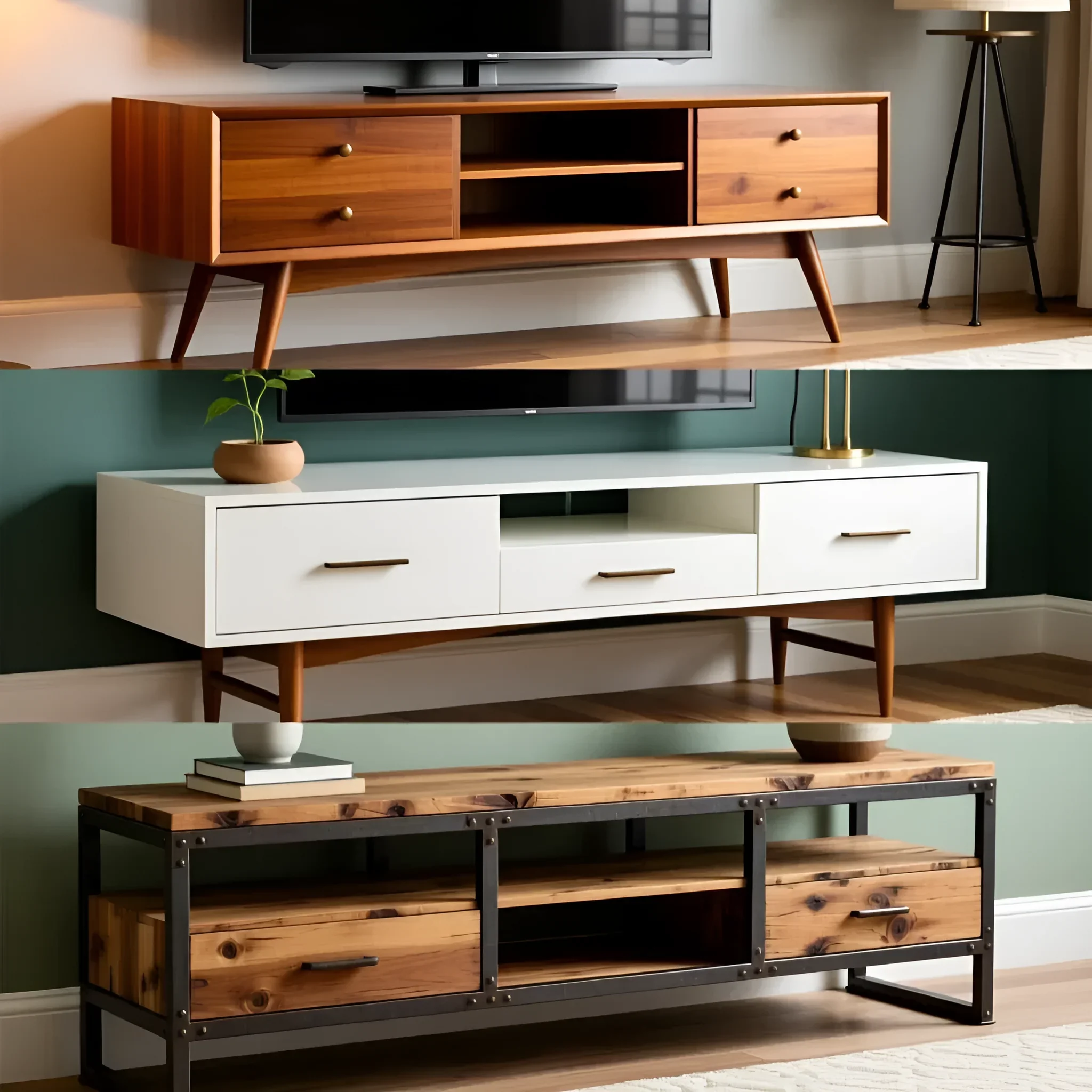
The TV viewing area is the focal point of any modern living room. Televisions, consoles, soundbars, and media players – all this equipment requires not only reliable placement but also competent integration into the design. A TV stand solves three main tasks:
- Aesthetics and Balance: The stand acts as an “anchor” for the TV, especially if it’s wall-mounted. It visually balances the large black rectangle of the screen and ensures a harmonious perception of space.
- Functionality: It is the central hub for storage. It houses not only electronics but also remotes, discs, chargers, and hides up to 90% of unsightly wires.
- Viewing Ergonomics: The correct height of the stand is critical for the comfort of your eyes. The center of the screen should be at approximately eye level for a seated person (typically 100–110 cm from the floor).
As professional experts, we recommend considering the TV stand not as an accessory, but as an integral part of your project, which should be chosen simultaneously with the television.
Types of TV Stands: Choosing by Style and Purpose
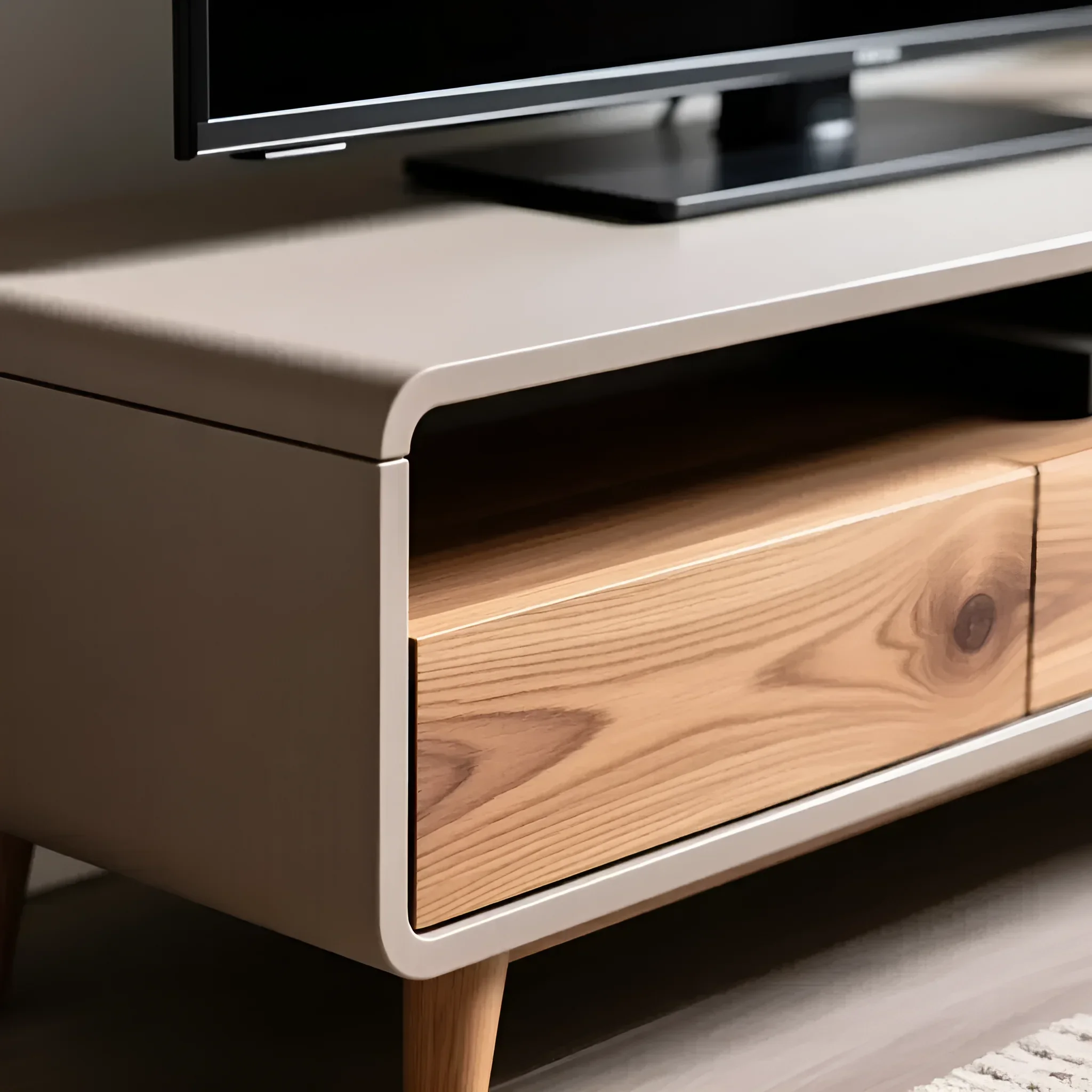
The market offers a huge variety of designs. Your choice should be based on the room size, interior style, and the amount of equipment that needs to be accommodated.
Floor-Standing TV Stands (Standard and Chest of Drawers)
This is the most common type. They can be designed as a low chest of drawers or a narrow, long console. Their main advantage is high stability and large capacity.
- Standard Low Stands: Height is typically 40–55 cm. Ideal for large TVs (65 inches and up) as they maintain a comfortable viewing height.
- Chest of Drawers Stands: Height 60–80 cm. Suitable for smaller TVs or for rooms where maximum storage is required (e.g., for linens or documents).
Wall-Mounted TV Stands (Consoles)
Wall-mounted models are attached directly to the wall. This is an ideal solution for minimalist, loft, or high-tech styles. They create a sense of lightness and simplify floor cleaning.
- Advantages: Visually expand the space, provide a modern look.
- Technical Nuance: Require secure mounting to a load-bearing wall. Depth usually does not exceed 30–40 cm. It is important to plan for hidden wiring within the wall in advance or use special cable channels.
Corner TV Stands
Corner designs are a lifesaver for small or non-standard rooms where every centimeter needs to be used as efficiently as possible. They can be trapezoidal or triangular.
- Purpose: Allow placement of the TV in a corner, freeing up central walls.
- Capacity: Often have deep side sections, but the central area for equipment may be limited.
Materials for TV Stands: MDF, Solid Wood, and Modern Plastic
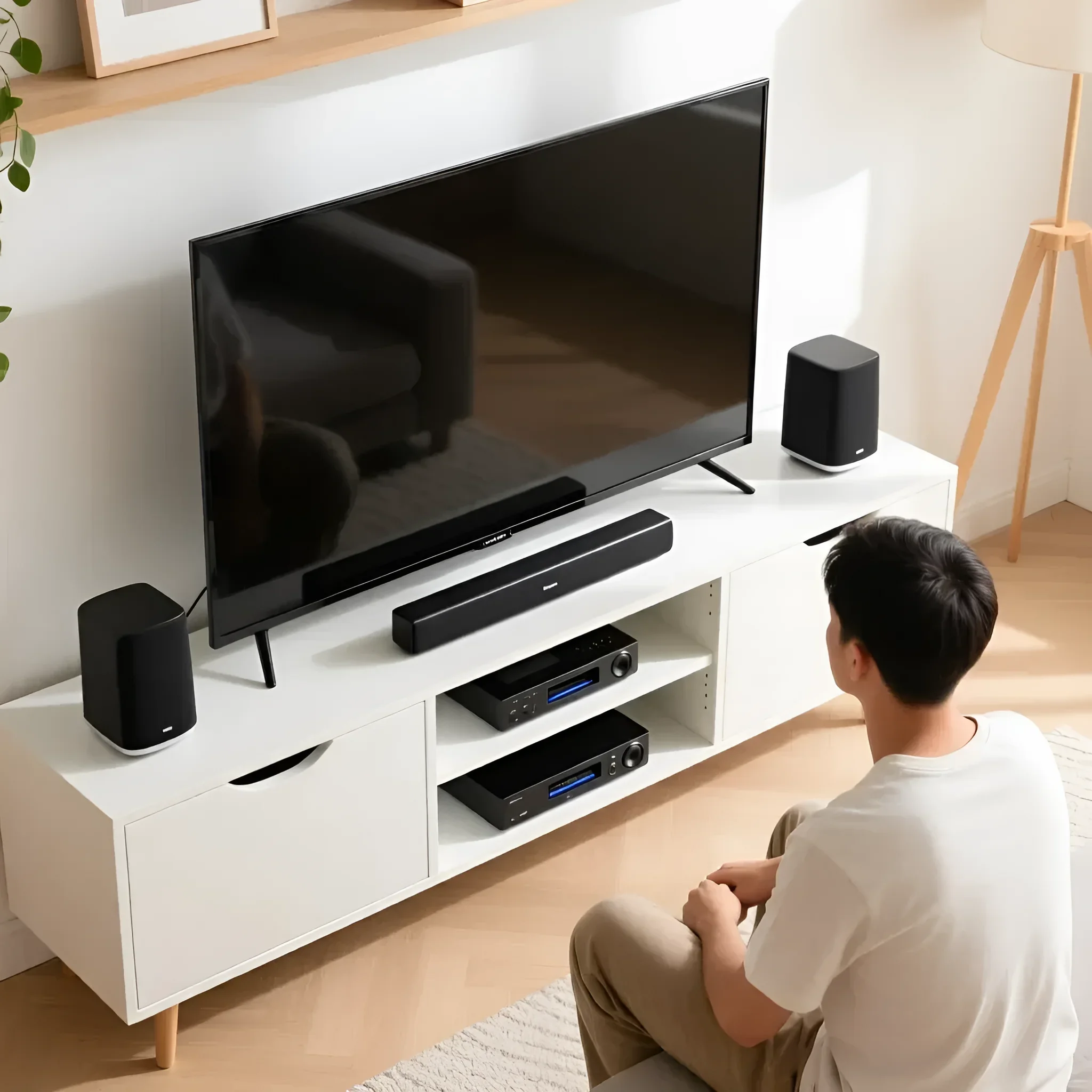
The choice of material directly affects the durability, appearance, and, of course, the cost of your TV stand. We will compare the most popular options used in the production of living room furniture.
1. Laminated Particleboard (LDSP)
This is the most budget-friendly and common material. Particleboard panels are covered with a decorative film (laminate).
- Characteristics: Panel thickness is usually 16, 18, or 22 mm. The thicker, the higher the rigidity and load-bearing capacity.
- Pros: Low price, a huge selection of colors and textures (imitating wood, stone). Lightweight.
- Cons: Low moisture resistance (especially at the edges), less durability, impossibility of milling complex shapes.
2. MDF (Medium-Density Fiberboard)
MDF is an optimal choice for price/quality ratio. Due to its high density, MDF can be milled, allowing for the creation of facades with relief or curved shapes.
- Finishing: MDF is often covered with PVC film, enamel (glossy or matte effect), or natural veneer.
- Advantages: More environmentally friendly than particleboard, high bending strength, moisture resistance (especially enameled MDF).
3. Solid Wood
Solid wood is the choice for classic, rustic, or Scandinavian interiors. The most popular species are pine (budget-friendly), beech, oak, ash (expensive and durable).
- Properties: Highest strength and durability. Ability to withstand very heavy loads.
- Care: Requires regular maintenance (wax, oil) and is sensitive to sharp changes in temperature and humidity.
Material Comparison by Key Parameters
| Material | Load Capacity | Moisture Resistance | Price (Conditional Score) | Stylistic Flexibility |
|---|---|---|---|---|
| LDSP (16 mm) | Medium | Low | ★☆☆ | Low |
| MDF (Enamel) | High | High | ★★☆ | High |
| Solid Wood (Oak) | Very High | Medium (when treated) | ★★★ | Medium |
How to Choose the Perfect TV Stand: Assessing Functionality and Ergonomics
Before focusing on design, assess the technical requirements of your equipment and operating conditions.
1. Calculating Load Capacity
Modern flat-screen TVs weigh relatively little (a 40-inch TV – 8-12 kg, a 75-inch TV – 30-40 kg). However, the stand must support not only the TV itself but also all peripherals: AV receiver (up to 15 kg), game consoles (5-8 kg each), soundbar, and decor.
- Practical Tip: If you plan to place heavy equipment, choose models with a tabletop thickness of at least 22 mm and reinforced side walls.
2. Cable Management and Ventilation
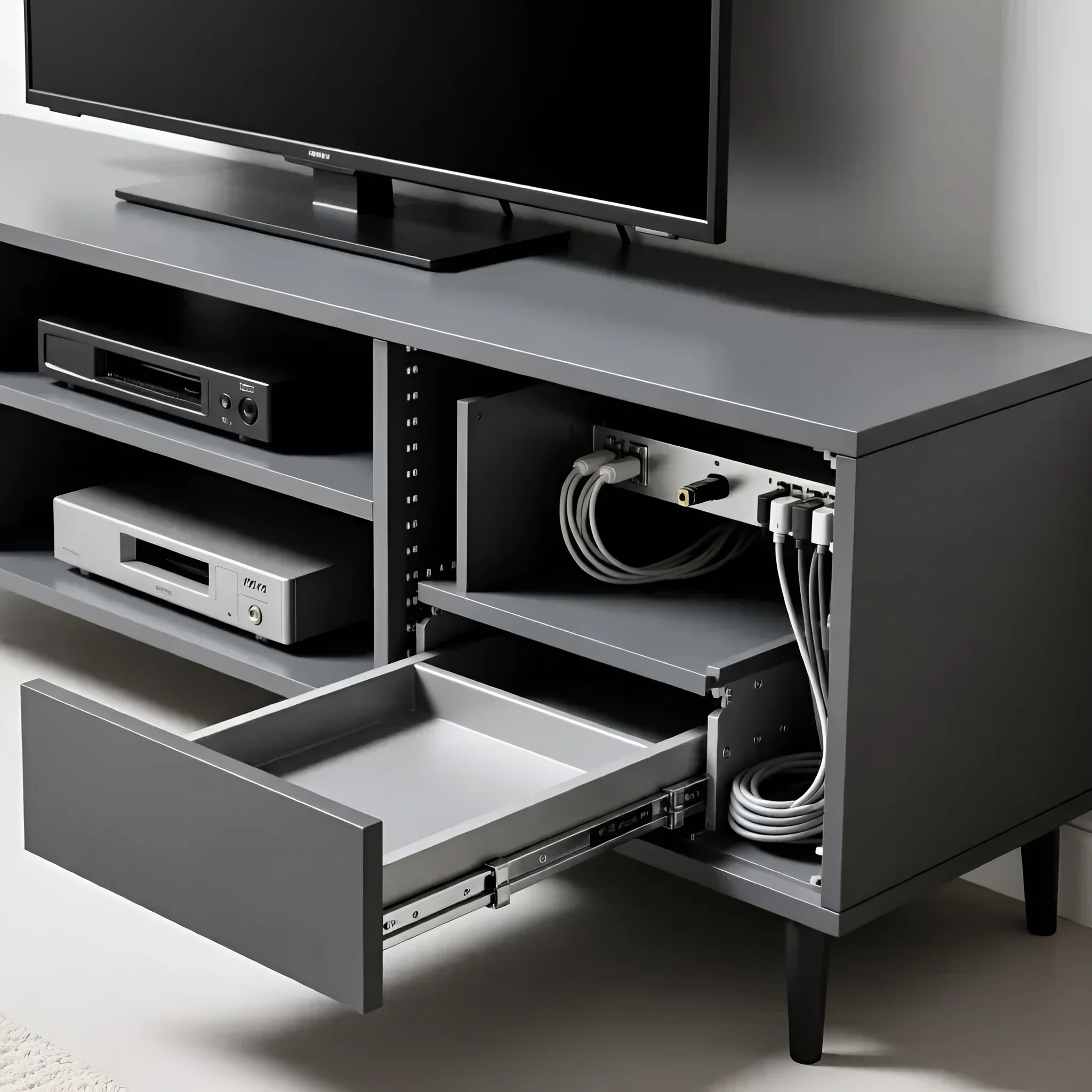
Nothing spoils the look more than tangled wires. Professional TV stands are equipped with special solutions:
- Cable Holes: Ideally, the stand should have several holes (5–8 cm in diameter) on the back of each compartment, as well as one large hole in the central part for routing cables to the outlet.
- Ventilation: Equipment (especially receivers and game consoles) heats up significantly. If you use closed compartments, ensure there are ventilation gaps at the back or bottom. Lack of ventilation can lead to overheating and failure of expensive equipment.
3. Stand Depth
The depth should match the largest equipment. For modern TVs, 30–35 cm is sufficient, but if you have an old AV receiver or a large console, you will need a depth of 45–55 cm. Remember that there should be 5–7 cm behind the equipment for cable connections and ventilation.
Dimensions and Size: How to Calculate the Ideal Placement of Equipment
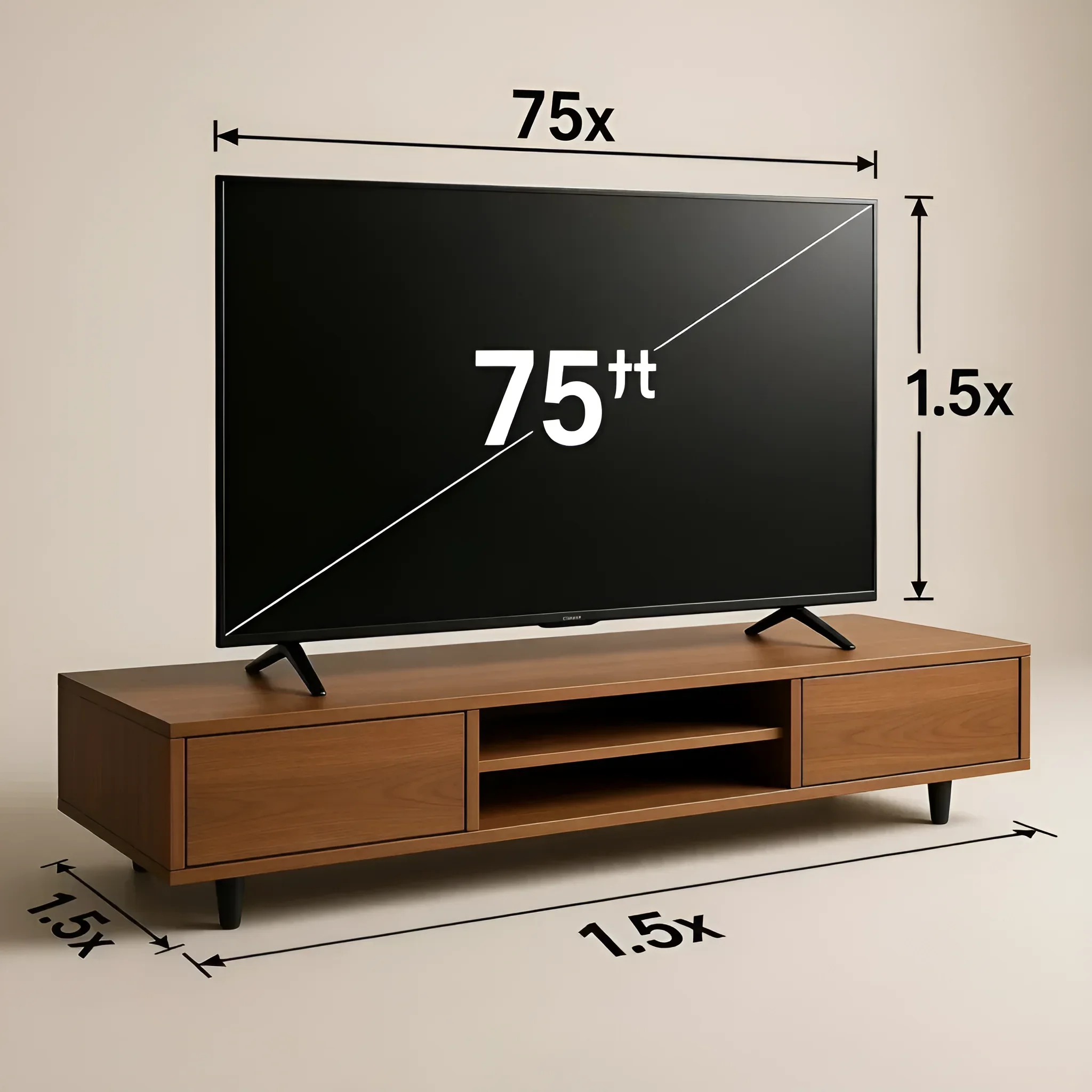
The dimensions of the TV stand are a key factor influencing visual order and viewing comfort. The golden rule of proportions applies here.
Width Rule: Balance with the TV
For the stand to look harmonious and serve as a stable base, it should be wider than the TV itself. This visually anchors the area and prevents the “floating” screen effect.
- Minimum Requirement: The width of the stand should exceed the width of the TV by at least 20% (10% on each side).
- Ideal Ratio: The stand should be 30–40 cm wider than the TV in total.
Table of TV and Stand Size Correspondence
| TV Diagonal (inches) | Approximate TV Width (cm) | Recommended Stand Width (cm) |
|---|---|---|
| 43
|