Русский
 Deutsch
 Українська
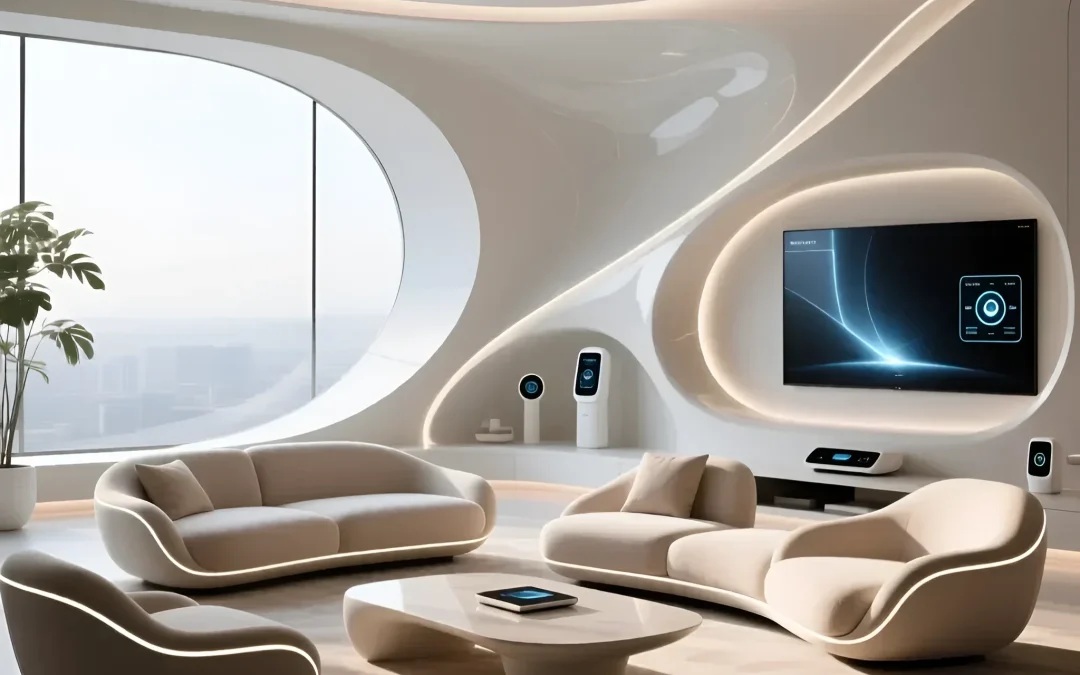
Welcome to the future of comfort! As a professional furniture expert, I’m ready to present you with a detailed forecast of what will define the look of our living rooms and bedrooms in 2026. The soft furniture market is undergoing not just a change of scenery, but a fundamental restructuring driven by the growing demand for sustainability, adaptability, and technology integration. If you’re planning an interior renovation or looking for an investment that will remain relevant for years to come, understanding these vectors is critically important.
2026 will be the year of a complete departure from strict, angular shapes in favor of softness, roundness, and unconditional, ‘enveloping’ comfort. We will see designers boldly combining high-tech fillers with natural, tactile upholstery, creating furniture that not only looks but also feels like a sanctuary.
Types and Styles of Soft Furniture: Transforming Silhouettes and New Forms
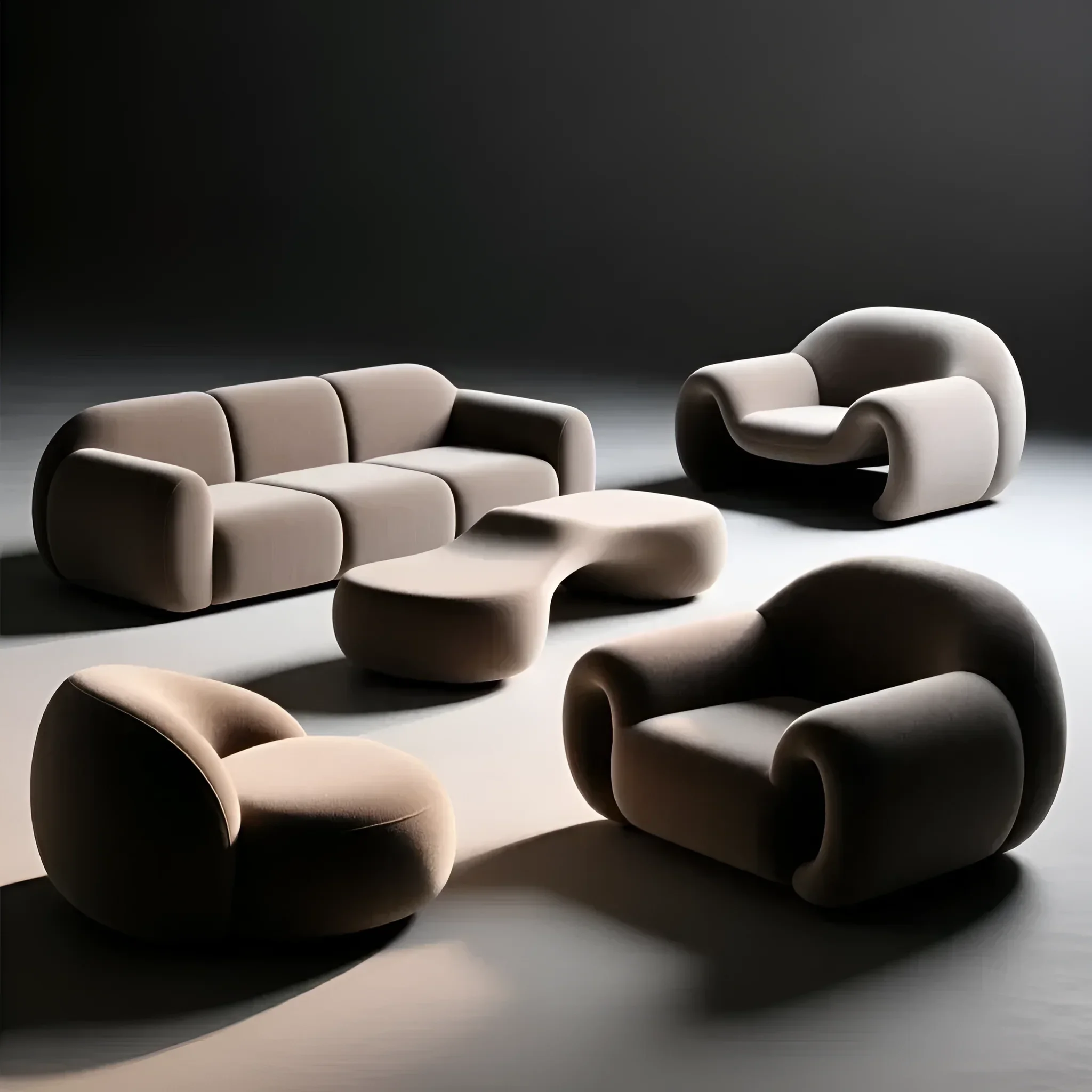
In 2026, soft furniture ceases to be a static object. The main focus shifts to biophilic design and maximum fluidity of lines. This directly impacts the types and silhouettes we will choose.
Trend Silhouette #1: Low Profile
Low-profile sofas, popular in the mid-20th century, are returning, but in a more substantial and comfortable execution. Their seat height rarely exceeds 35–40 cm (standard is 45–50 cm). This creates a sense of groundedness, relaxation, and visually expands the space, which is ideal for open-plan layouts.
- Advantages: Visual lightness, maximum comfort for lounging or semi-reclining.
- Selection Features: Ensure the seat depth is sufficient (from 90 cm), otherwise getting up from a low sofa might be uncomfortable.
Trend Silhouette #2: Curved & Sculptural Forms
Right angles give way to curved backs, semi-circular sections, and ‘cocoon’ chairs. Sofas that look like a single sculpture are in vogue. This is especially relevant for zoning large living rooms. Choose models where the curve radius is comfortable for sitting, not just for aesthetics.
Trend Type #3: Statement Chairs
A chair is no longer a secondary element. In 2026, it acts as an independent art object. Chunky, deep chairs with swivel mechanisms or ‘bergère’ style chairs with prominent wings, upholstered in materials contrasting with the sofa (e.g., a boucle sofa, a velvet chair), are in vogue.
Dimension Comparison: Standard vs. 2026 Trend
| Parameter | Standard (2023) | Trend (2026) | Practical Advice |
|---|---|---|---|
| Seat Height | 45–50 cm | 35–40 cm (Low Profile) | Requires 90+ cm seat depth. |
| Seat Depth | 60–75 cm | 80–100 cm (Deep Seating) | Ideal for relaxation, but may require extra back support cushions. |
| Shape | Rectangle, L-shaped | Semi-circle, S-shaped, modular | Provides better socialization and zoning. |
Materials of the Future: Upholstery and Filling Trends for 2026
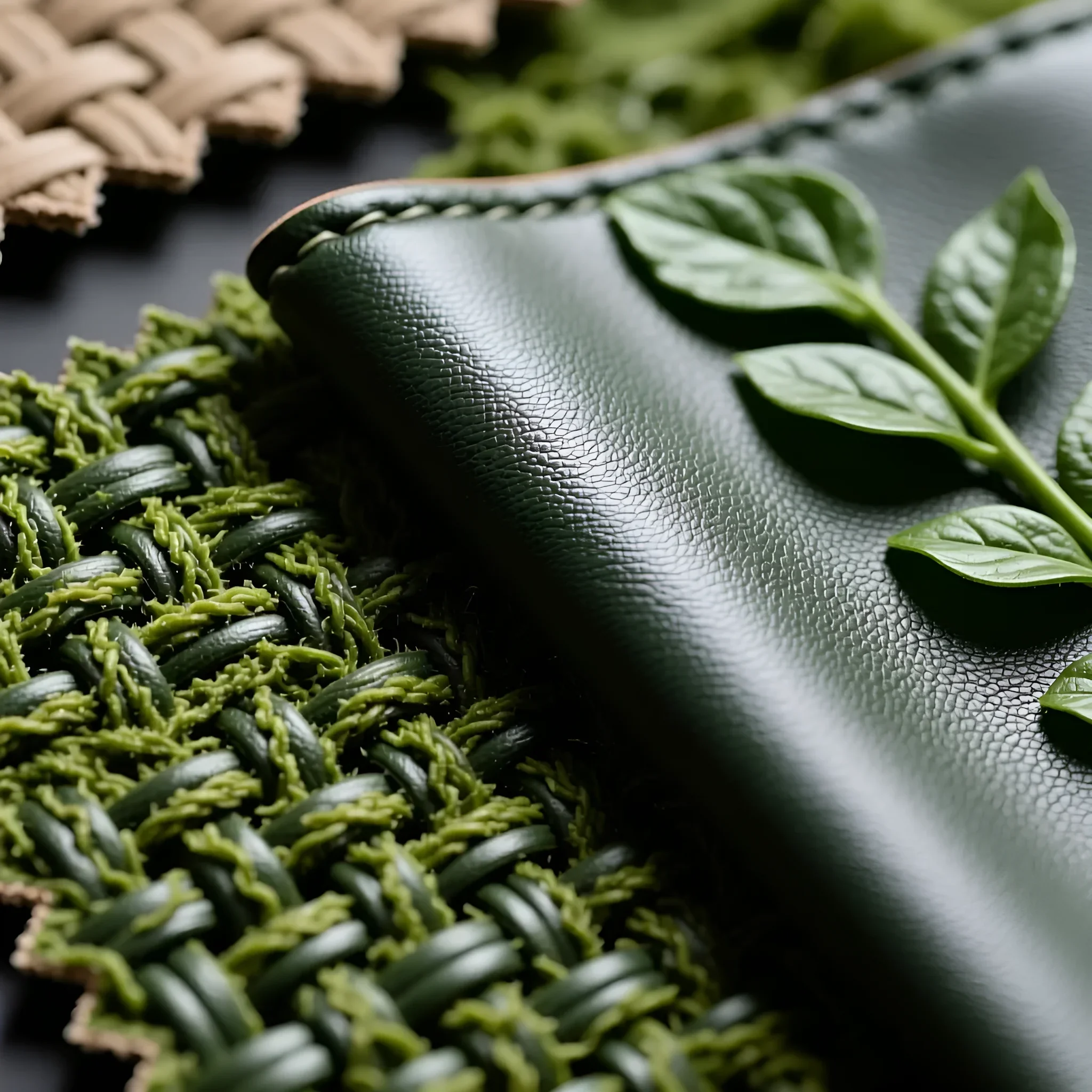
The keyword for 2026 is sustainability. Consumers are willing to pay more for materials with a minimal carbon footprint and maximum durability. Fillers are becoming more technological, and upholstery more tactile and textured.
Upholstery Material Trends: Focus on Texture
Smooth, uniform fabrics are out. Materials that invite touch, with a pronounced three-dimensional structure, are in vogue.
- Bouclé and ‘Teddy’ (Wool/Acrylic): Trend leaders. They offer maximum texture and are associated with coziness. It’s important to choose bouclé with a high weave density (from 400 g/m²) to avoid rapid pilling.
- Velvet and ‘Wet Earth’ Effect Velour: Not glossy, but matte, slightly creased velvet with a high content of viscose or cotton. It requires careful maintenance but looks incredibly luxurious, especially on curved sofas.
- Recycled Chenille: Known for its softness and durability. In 2026, most leading manufacturers will use chenille made from recycled polyester or other eco-friendly fibers. This ensures wear resistance (Martindale test from 50,000 cycles) while maintaining softness.
- Innovative Leather: Not classic smooth leather, but nubuck, aniline leather with natural imperfections, or eco-leather based on cactus (Desserto) or apple waste.
Filler Trends: Intelligent Comfort
2026 demands furniture that not only holds its shape but also adapts to the body, providing orthopedic support.
1. Seat Fillers:
- Multi-layer ‘Sandwiches’: A combination of highly elastic polyurethane foam (HR foam with a density of 40–50 kg/m³) at the base and a layer of Memory Foam or latex on top. This ensures a long service life (at least 10 years) and a ‘sinking’ effect.
- Down and Feather with Sectioning: For back cushions and decorative elements. The trend is to use a down-feather mix enclosed in special sections (cassettes) to prevent clumping.
2. Frames:
The use of FSF plywood (birch) and metal is relevant. Particleboard and MDF are receding due to lower eco-friendliness and strength. Powder-coated metal frames are standard for modular and transformable systems.
How to Choose a Sofa and Armchair: Trendy Colors and Textures for Your Interior
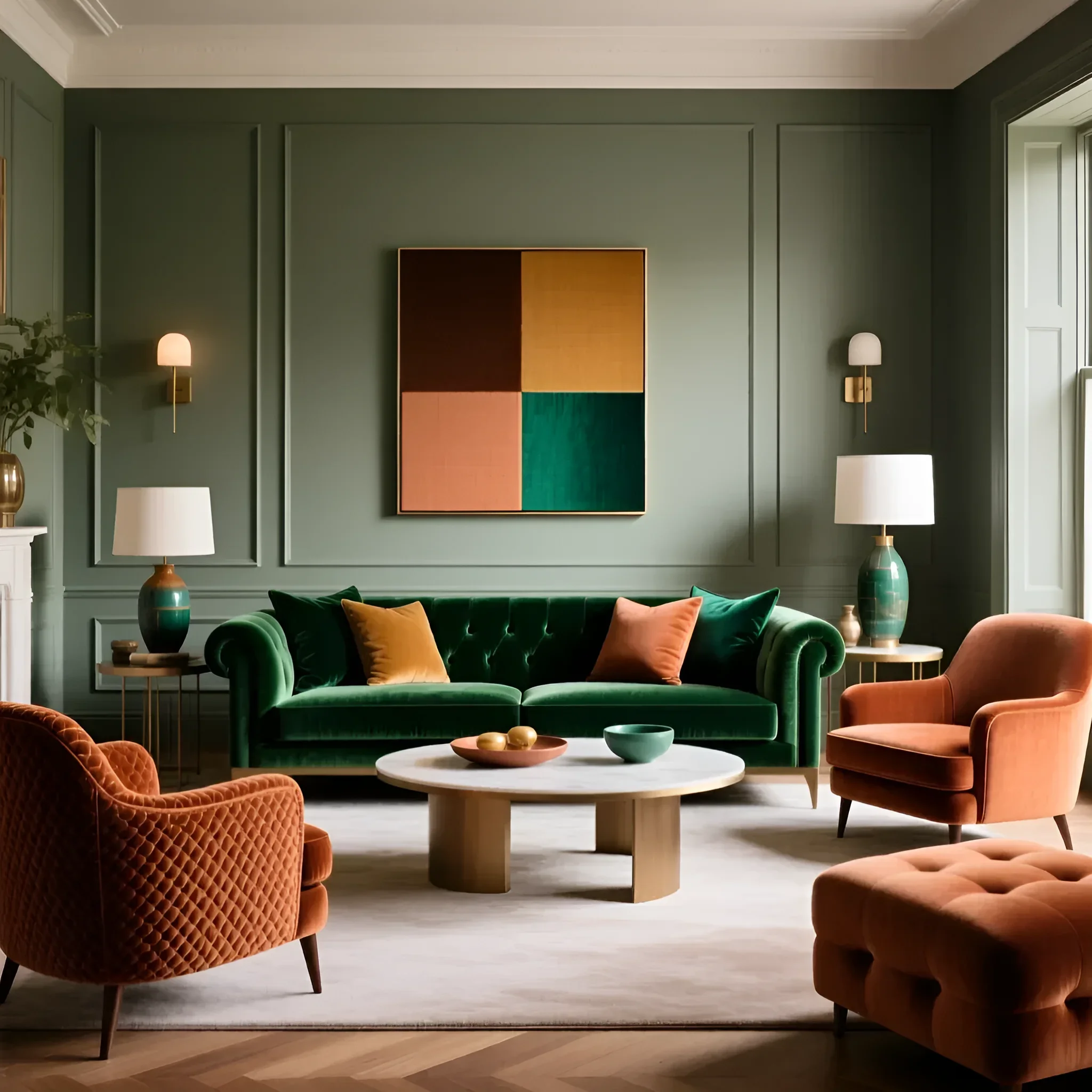
The color palette of 2026 is a dialogue between nature (neutral, earthy tones) and technology (deep, rich accents). The choice of color directly depends on the room size and furniture type.
2026 Palette: ‘Quiet Luxury’ and Rich Minerals
1. Base: Neutral and Earthy Tones
These colors are ideal for large, modular sofas as they don’t overwhelm the space. They create a backdrop for brighter accessories.
- Terracotta: A deep, matte shade reminiscent of natural minerals. Pairs perfectly with bouclé and velvet.
- Oatmeal and Ecru: Warm, complex beige tones. They are replacing cool gray, adding coziness.
- Sage Green: A muted green associated with biophilic design. Looks great on armchairs and chaises.
2. Accents: Depth and Richness
Accent colors are used for armchairs, ottomans, or one section of a modular sofa.
- Deep Indigo and Cobalt: Rich blue tones that work well with matte textures (wool, dense linen).
- Burnt Ochre: A warm, mustard or orange-brown shade that adds vintage chic to the interior.
- Plum and Bordeaux: Dark, wine-like shades, often used in velvet upholstery to create a dramatic effect.
Practical Tips for Choosing Color and Texture
When choosing trendy upholstery, especially textured ones, consider their practicality:
- For families with children and pets: Opt for fabrics with Easy Clean technology (e.g., microfiber or flock with Teflon impregnation). In 2026, these fabrics are visually indistinguishable from natural materials (bouclé or matting) but have a wear resistance rating of 60,000 Martindale cycles.
- For large forms: If your sofa is over 3 meters long, use neutral, light tones. If you want to incorporate a bright color (e.g., cobalt), limit it to an armchair or ottoman to avoid overwhelming the space.
- Light fabrics: If you’ve chosen a light bouclé or oatmeal velvet, be sure to check if the covers are removable. In 2026, this is becoming standard for high-quality soft furniture.
Dimensions and Sizes: Adaptive Furniture and Modularity as the New Standard
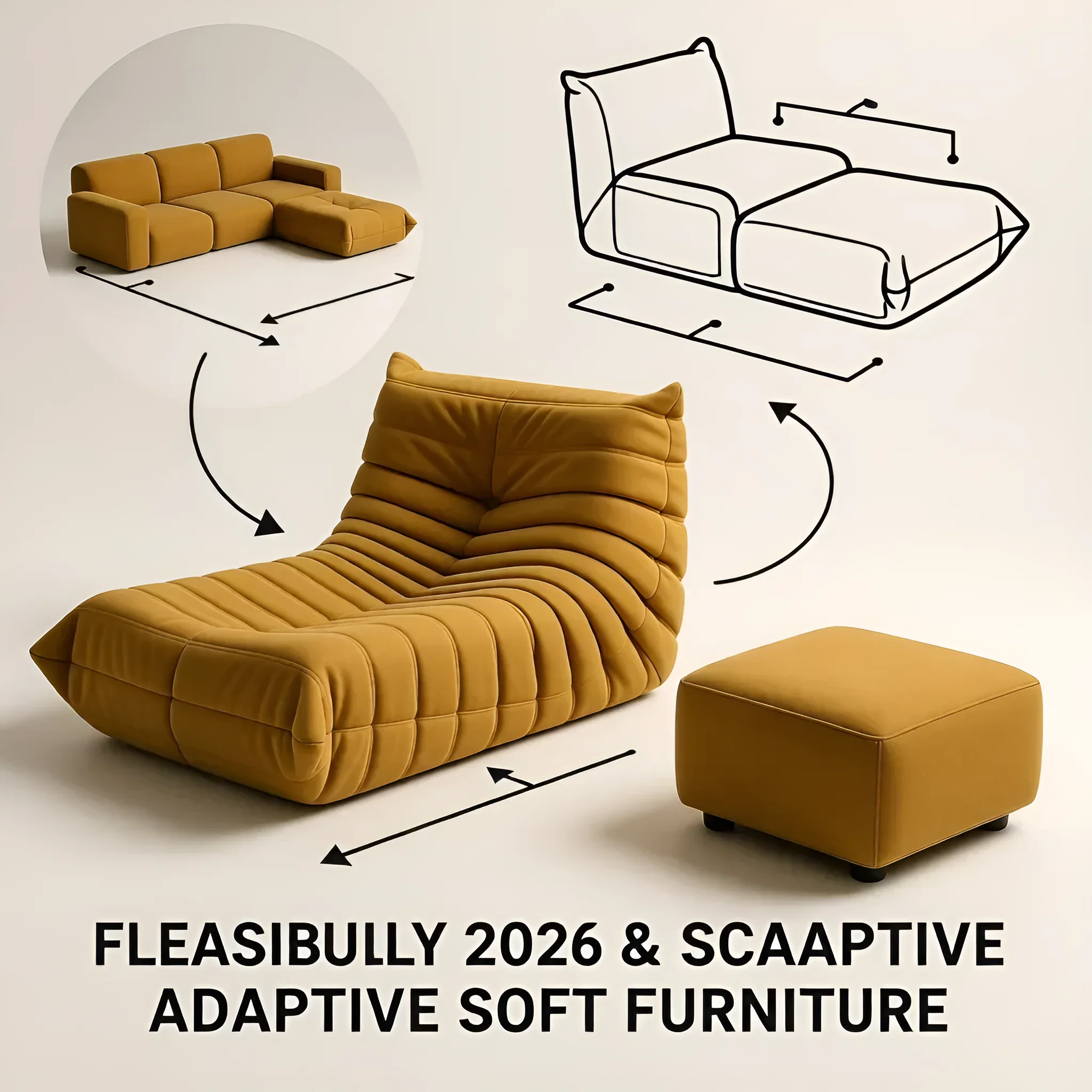
The most powerful trend of 2026 is maximum modularity. Furniture should easily adapt to life scenarios: from a large party to a private retreat. Standard L-shaped sofas are being replaced by systems that can be reassembled daily.
Modular Systems: Flexibility and Configuration
Traditional modular sofas had rigid connections. Trendy 2026 systems use innovative, often magnetic, connectors or simply sufficiently heavy sections with non-slip bases that allow for easy reconfiguration.
Key Modules for 2026:
- Middle Section: 80–100 cm wide, often without armrests, used to create infinite length.
- Corner Unit: Transitions from L-shape to C- or U-shape. Curved corner units are in trend.
- Oversized Ottoman: Becomes an independent element. Can be used as an extra seat, coffee table, or part of the sofa, turning it into a chaise. Dimensions are often 100×100 cm.
Adaptive Dimensions for Modern Living
Despite the trend towards bulky, deep sofas, manufacturers also consider limited spaces. Adaptive dimensions allow ’embedding’ comfort into compact forms.
- Deep yet Compact: Sofas with a seat depth of 90 cm but with narrow armrests (10–15 cm wide), saving overall length.
- Daybeds: The return of daybeds as a functional element. They have a length of 180–200 cm and a depth of 80–90 cm, allowing them to be used as an extra sleeping place or reading nook.
- Integrated Storage Systems: In 2026, storage becomes almost invisible. This can be drawers in the base of modules or hidden shelves in armrests that open with a push.
Modular System Configuration Comparison
| Configuration | Optimal Number of Sections | Pros of 2026 Trend | Cons (Practicality) |
|---|---|---|---|
| Straight (300-400 cm) | 3-4 sections | Ideal for low, deep forms. Easily converts into a daybed. | Requires a large wall space. |
| U-shaped (with two ottomans) | 5-7 sections | Maximum socialization, ‘sinking’ comfort. | High cost and difficulty of moving. |
| S-shaped (Curved) | 4-5 sections | Zoning of open space, visual accent. | Difficult to place in small rooms, requires special cushions. |
Mechanisms and Functionality: Smart Solutions in Soft Furniture 2026
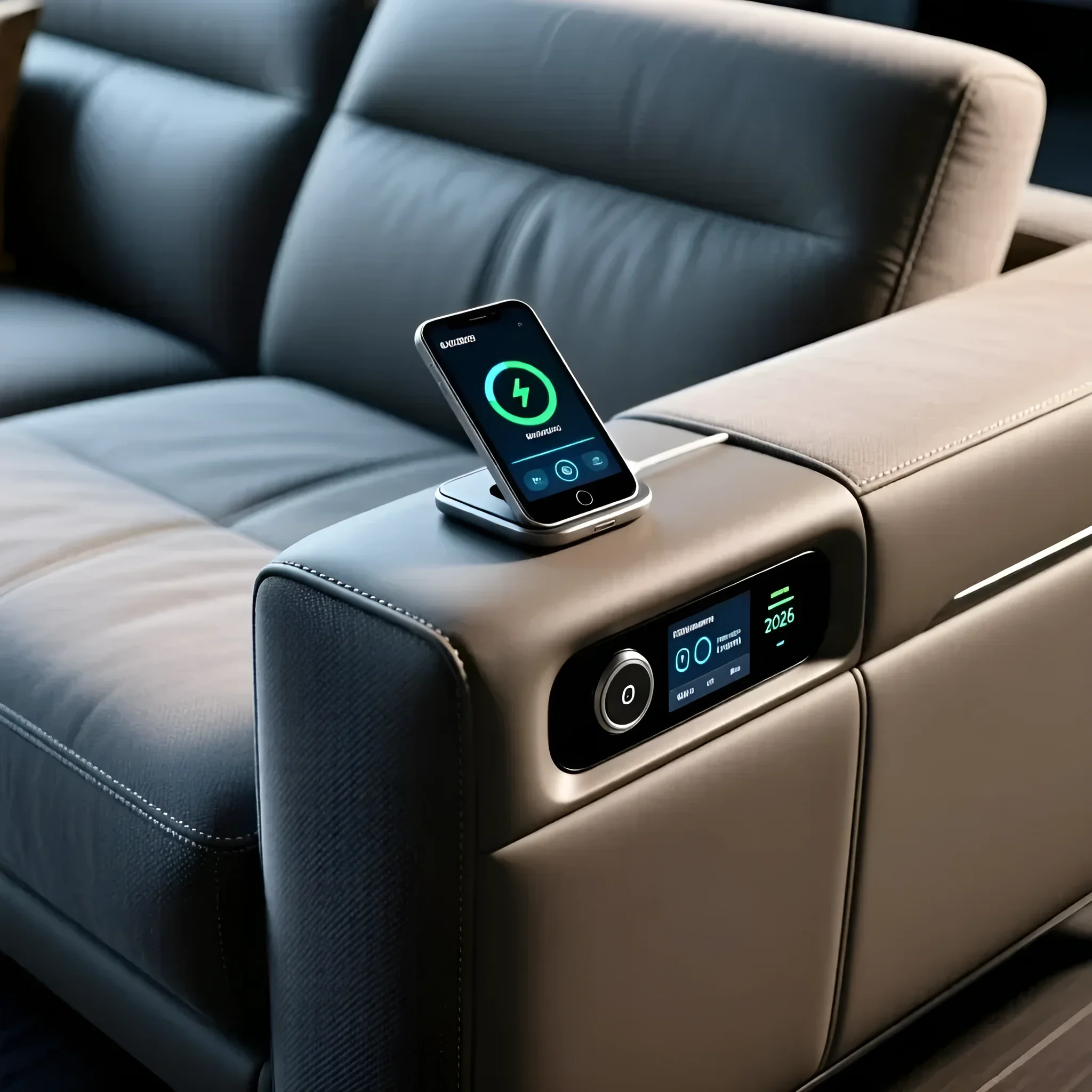
The integration of technology into soft furniture is more than just charging ports. In 2026, furniture becomes part of the ‘smart home’ ecosystem, offering solutions for relaxation and work.
Trendy Transformation Mechanisms
Mechanisms should be silent, fast, and remotely controlled.
- Electric Drive with Memory: Recliners with electric drives are becoming standard even for informal sofas. The 2026 innovation is the ability to save multiple positions in memory (e.g., ‘Cinema’, ‘Reading’, ‘Zero Gravity’).
- ‘Zero Wall’ Systems: Mechanisms that allow the sofa to recline without needing to pull it away from the wall. Space saving is critical.
- Integrated Sleeping Areas (for modules): ‘American sofa beds’ (sedaflex) with orthopedic mattresses 12–15 cm thick, integrated into one of the sections, are relevant.
Technology Integration (Smart Furniture)
The most notable technological trends in soft furniture for 2026:
1. Wireless Charging and Power:
Integrated wireless charging pads (Qi standard) in armrests or consoles are the minimum. The 2026 trend is hidden inductive chargers under the fabric, allowing devices to be charged by placing them directly on the sofa surface.
2. Climate Control and Heating:
High-end sofas and recliners are equipped with heating systems (especially relevant for leather upholstery) and even light seat cooling, controlled via an app or a touch panel on the armrest.
3. Acoustic Integration:
Integrated high-quality audio systems (often from Bang & Olufsen or KEF), hidden in the backrests or armrests. This eliminates the need for bulky speakers, maintaining the ‘quiet luxury’ aesthetic.
4. Smart Lighting:
Hidden LED lighting around the perimeter of the sofa base. It can be voice-controlled or managed via an app, changing color and intensity to create the desired atmosphere. This is not just decor but also a practical safety feature in the dark.
Care and Maintenance: How to Keep Trendy Furniture Relevant for Longer
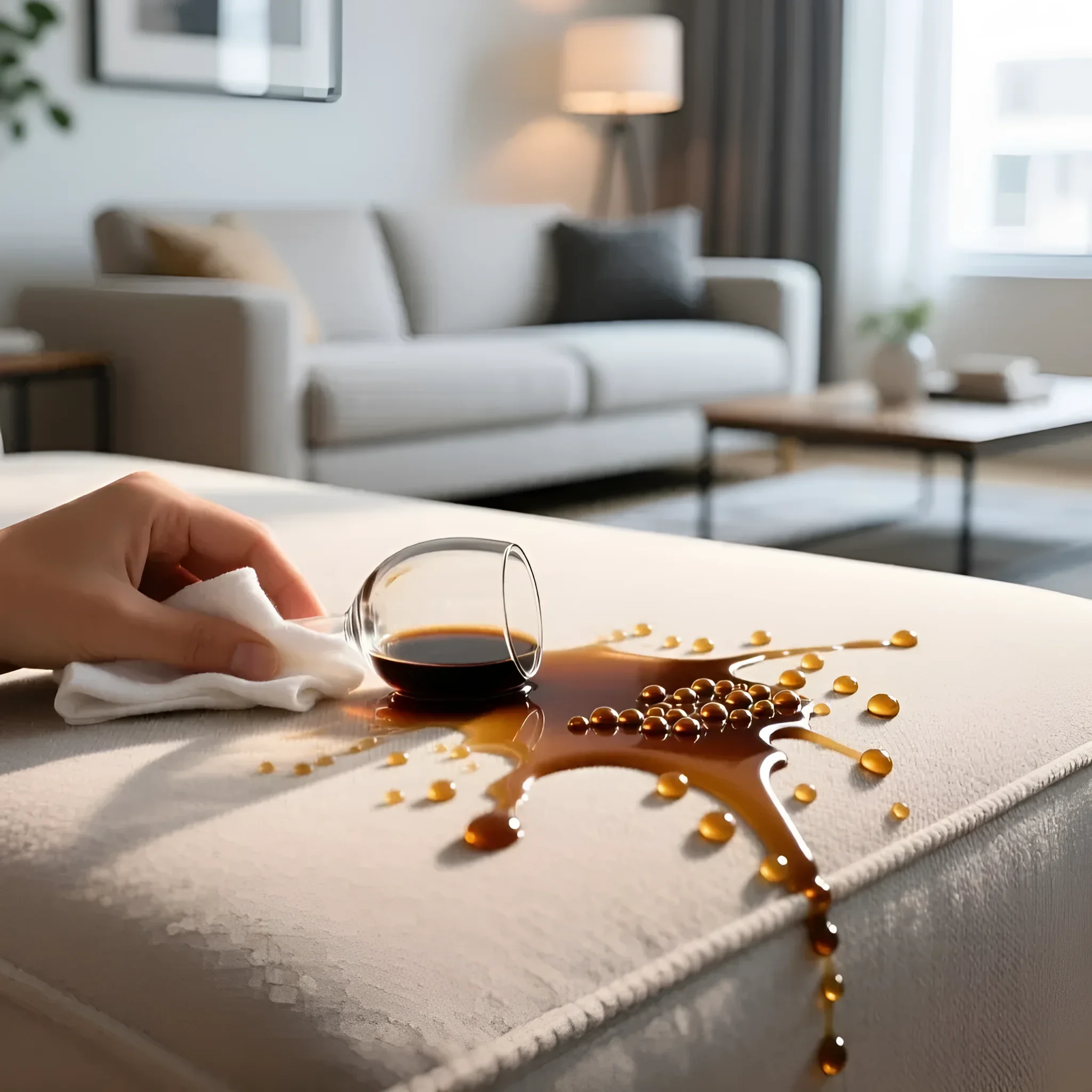
Since the trendy materials of 2026 are complex, tactile textures (bouclé, velvet, high-pile chenille) and high-tech fillers, proper care becomes critically important for extending service life and maintaining appearance.
Caring for Trendy Upholstery
1. Bouclé and High-Pile Fabrics:
- Problem: Pilling and dust accumulation in the deep texture.
- Solution: Regular dry vacuuming using a soft brush attachment (at least once a week). To remove pills, use an electric fabric shaver, but very carefully.
- Protection: Treatment with professional fabric protection sprays (fluorocarbon resin-based) to prevent moisture and stains.
2. Velvet and Matte Velour:
- Problem: Crushing of the pile and the appearance of ‘bald’ spots.
- Solution: Clean only in the direction of the pile. If severely creased, use a steam cleaner from a distance to lift the pile, but avoid direct contact to prevent water marks.
3. Removable Covers:
If you’ve chosen furniture with removable covers (and in 2026, this is recommendation #1 for light colors), always follow the manufacturer’s instructions. In 90% of cases, this means delicate washing at a temperature not exceeding 30°C without spinning, or professional dry cleaning.
Maintenance of Smart Systems and Modules
- Mechanisms: Electric recliners require periodic lubrication checks (every 1–2 years). If a mechanism starts to squeak, do not use household oils; consult a specialist.
- Electronics: Regularly check wiring (especially under modules). When cleaning with a damp cloth, avoid getting moisture on touch panels and charging ports.
- Modules: If your system uses magnetic connectors, ensure that dust and metal particles do not accumulate on the contacts, which can reduce the effectiveness of the fixation.
Top 10 Soft Furniture Trends for 2026: A Buyer’s Summary
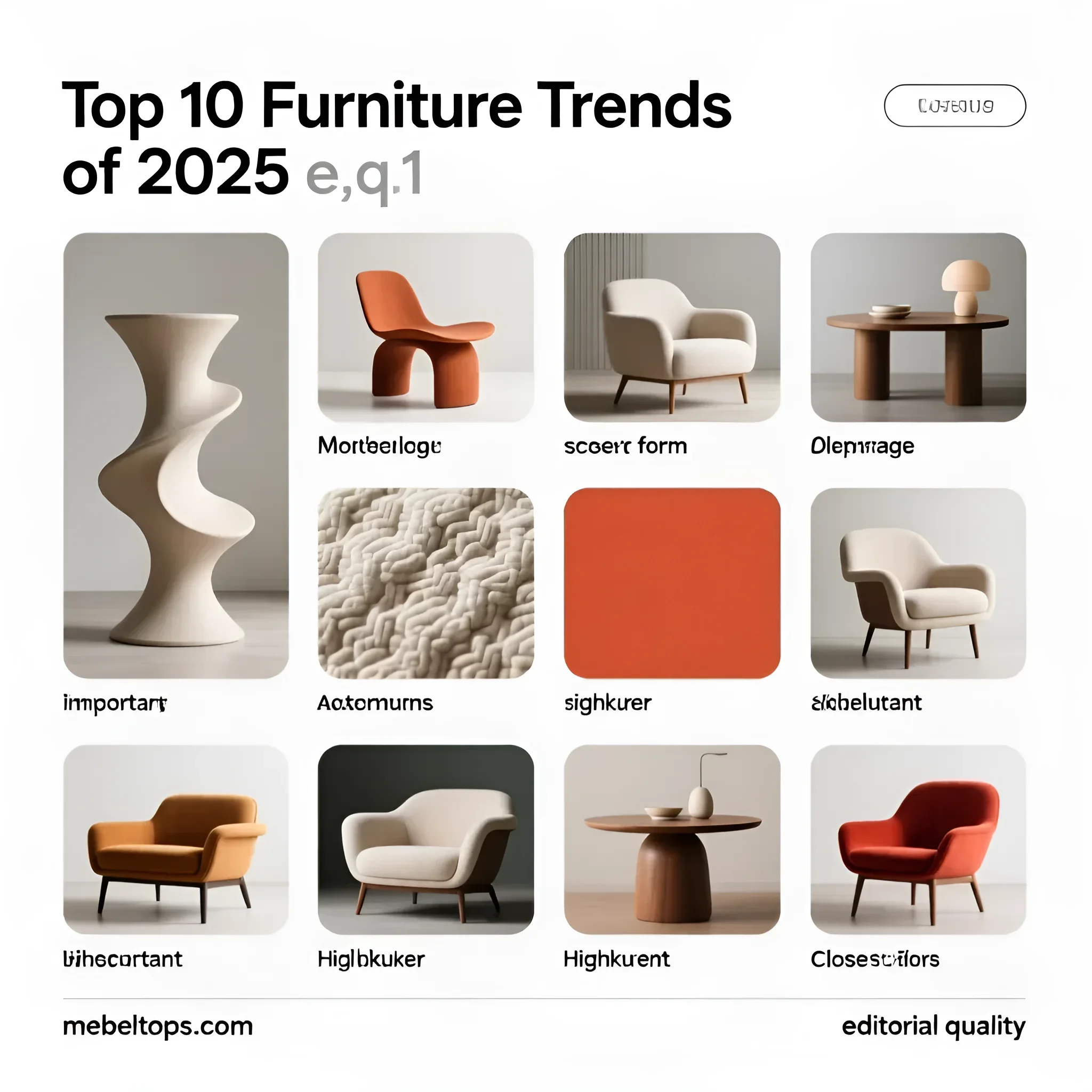
To make your selection easier, we’ve compiled the key directions that will dominate the market in 2026. Use this list as a checklist when visiting furniture stores.
Top 10 Soft Furniture Trends for 2026:
- Maximum Modularity and Adaptability: Furniture that can be reassembled in 10 minutes using light or magnetic connectors.
- Biophilic Design and Curvilinearity: A departure from rigid angles in favor of smooth, rounded forms (cloud sofas, cocoon chairs).
- Low Profile: Seat height of 35–40 cm, requiring deep seating (90+ cm) for maximum relaxation.
- Sustainable and Recycled Materials: Upholstery from recycled raw materials (polyester, viscose), as well as natural fibers (linen, wool).
- Textural Dominance: Fabrics with pronounced texture – bouclé, matte velvet, large chenille.
- ‘Quiet Luxury’ in Color: Base colors – terracotta, oatmeal, sage. Accent colors – deep indigo and burnt ochre.
- Hidden Technology: Wireless charging integrated under upholstery and acoustic systems built into the frame.
- Intelligent Comfort: Multi-layer fillers (HR foam + Memory Foam) and electric drives with memory function.
- Armchair as an Art Object: Chunky, statement armchairs with contrasting upholstery, often on a swivel base.
- Invisible Storage: Drawers in the base of modules and hidden shelves in armrests that do not disrupt the clean lines of the furniture.
Practical Guide to Buying Trendy Furniture
When purchasing furniture that aligns with the 2026 trends, focus not only on appearance but also on durability:
- Check Filler Density: For deep sofas, request polyurethane foam with a density of at least 40 kg/m³ for the seats. Lower density will quickly lead to sagging.
- Ask About Martindale: If you’ve chosen a textured fabric (bouclé, chenille), its wear resistance should be at least 40,000 cycles to withstand pilling under active use.
- Assess Module Weight: Trendy modules should be heavy enough not to slide on the floor during use (unless they have special connectors).
- Review Warranty on Mechanisms: The warranty for electric recliners is typically 18–24 months. Clarify the service conditions for integrated electronics.
Choosing soft furniture in 2026 is a choice in favor of an adaptive, eco-friendly, and intelligent space. By following these trends, you are investing in comfort that will delight you for years to come.
Image Gallery