
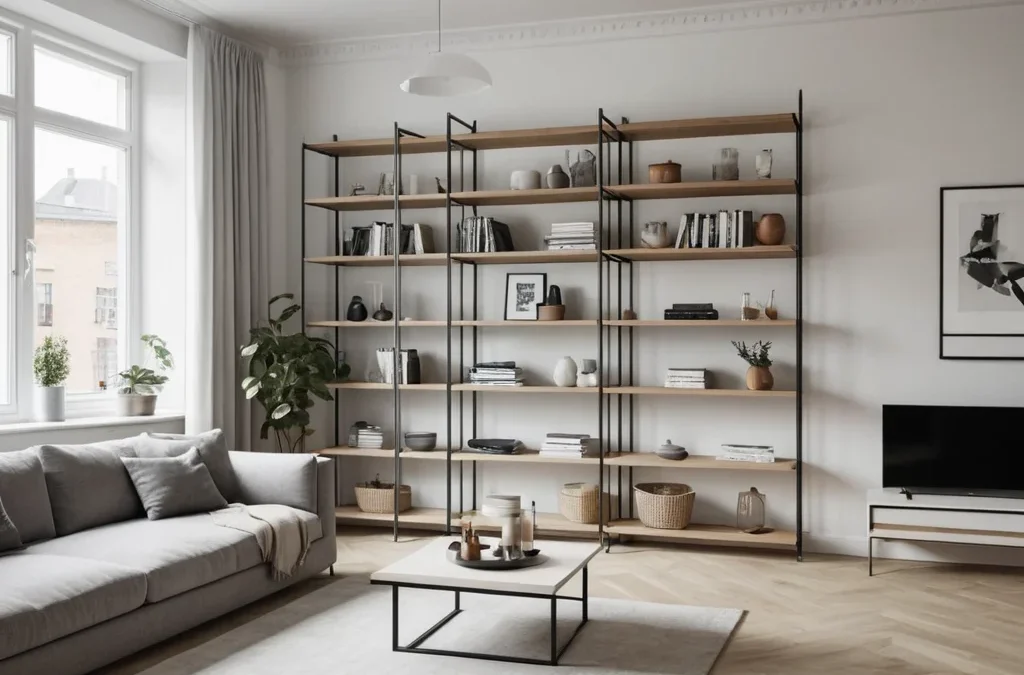
Metal shelving units are confidently conquering the spaces of modern homes and offices, displacing traditional wooden or drywall constructions. This is not just a storage space, but a full-fledged design element capable of transforming the interior. From loft to minimalism, from Scandinavian style to eclecticism – metal knows how to adapt and emphasize the chosen direction. But why has this material become so popular, and what pitfalls does its use hide? Let’s figure it out together so you can make an informed choice in favor of functionality, durability, and, of course, style.
In recent years, we have observed a clear trend towards using metal in furniture constructions. Interior designers actively incorporate it into various projects, noting its versatility and ability to create striking accents. Metal shelving units are a prime example of how practicality meets aesthetics. They can withstand significant loads, are durable, and, importantly, look modern and stylish. Their concise forms and variety of textures allow them to be integrated into almost any interior, from industrial loft with its brutal aesthetics to airy Scandinavian style, where metal can serve as a light complement to natural materials.
The popularity of metal shelving units is due to several key factors. Firstly, it is their impressive strength and durability. Unlike wood, metal is not subject to deformation from humidity, does not dry out over time, and is not an attractive environment for pests. Secondly, the appearance. Metal structures possess their own aesthetics – from glossy shine to noble matte finish, from simple straight lines to complex openwork shapes. This opens up wide possibilities for creating unique interior solutions. Thirdly, functionality. Metal shelving units are often perceived as lighter and more airy structures that do not overload the space, unlike massive wooden furniture. They are ideal for zoning rooms, creating accents, or organizing storage in small apartments. Fourthly, ease of maintenance. As a rule, metal surfaces are easily cleaned of dust and dirt, making them a practical choice for everyday use. Fifthly, environmental friendliness. Many modern metal shelving units are made from recyclable materials, which aligns with the growing interest in sustainable design.
Pros of Metal Shelving Units: Functionality and Aesthetics for Your Home
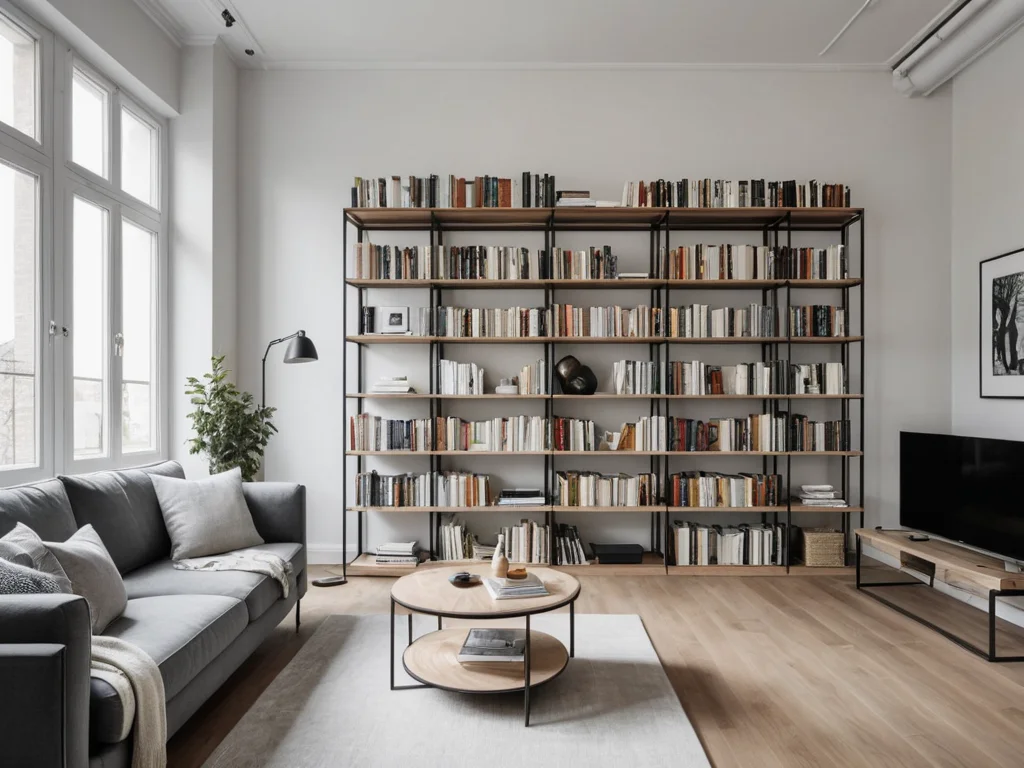
Metal shelving units have a number of undeniable advantages that make them an attractive choice for furnishing both residential and commercial spaces. Interior designers often recommend them for their combination of practicality, durability, and visual lightness.
Strength and Durability: This is perhaps the main advantage of metal shelving units. They are made of steel, aluminum, or other metals that can withstand significant loads. Metal shelves do not sag under the weight of heavy items, whether they are books, ceramics, appliances, or decor collections. Properly treated metal is resistant to corrosion, abrasion, and mechanical damage. Such a shelving unit will serve you for many years, retaining its original appearance and functionality, unlike furniture made of chipboard or MDF, which can deform or lose its appearance over time.
Versatility of Use: Metal shelving units are appropriate in almost any room and style. In the living room, they can serve as a stand for a TV, a display case for books and decor, a place to store vinyl or a player. In the bedroom – a light element for organizing storage of textiles, cosmetics, or jewelry. In the kitchen – a convenient system for storing dishes, spices, kitchen utensils, or even a small refrigerator. In a home office – a spacious archive for documents and office equipment. In a children’s room – a safe place for toys and books. Their concise forms and variety of finishes (powder coating in any color, chrome plating, wood or stone imitation) allow them to harmoniously fit into various interiors, from minimalism and loft to Scandinavian style and classic.
Aesthetic Appeal and Visual Lightness: Metal shelving units often look more “airy” than their wooden counterparts. Thin but sturdy supports and open shelves do not clutter the space, visually expanding it, which is especially valuable for small rooms. The variety of designs – from simple geometric structures to more complex shapes with elements of forging or perforation – allows you to choose a model that will become a real decoration of the interior. Metal gives the space a modern, industrial, or even futuristic touch, depending on the chosen finish and shape.
Ease of Maintenance: Caring for metal shelving units usually does not require much effort. Most modern coatings (powder coating, varnish) are easily cleaned of dust and dirt with a damp cloth. If necessary, mild detergents can be used. Unlike wood, metal does not absorb odors and does not require special polishing or protective agents. This makes them an ideal choice for kitchens, children’s rooms, and rooms with high humidity.
Fire Safety: Metal is a non-combustible material, which is an important advantage in terms of fire safety, especially if you plan to place the shelving unit near heat sources or use it to store flammable materials (for example, in a workshop or garage).
Customization Potential: Many manufacturers offer metal shelving units with the ability to choose the color, shelf configuration, and add extra elements (such as hooks, drawers, partitions). This allows you to create furniture that perfectly matches your needs and interior style.
Environmental Friendliness: Steel and aluminum are materials that can be recycled, which aligns with modern trends towards environmental friendliness and conscious consumption. By choosing such a shelving unit, you also contribute to environmental protection.
Collectively, these advantages make metal shelving units an extremely practical and stylish solution for the modern home.
Cons of Metal Shelving Units: How to Avoid Common Mistakes in Selection and Use
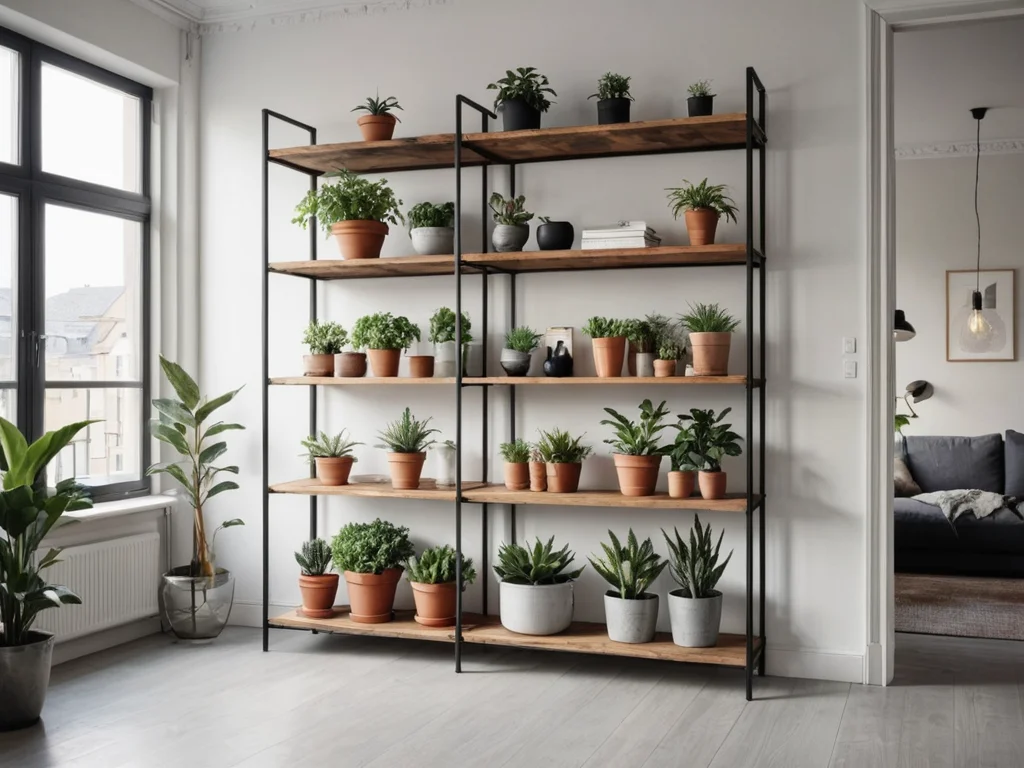
Despite numerous advantages, metal shelving units also have a number of features that can be perceived as disadvantages if not considered during selection and operation. Understanding these points will help you avoid disappointment and make the most successful purchase.
Cold Surface: Metal, especially uncoated or with a glossy finish, can feel cold to the touch. This can be uncomfortable if you plan to place items on the shelves that you frequently touch, or if the shelving unit will be in close proximity to relaxation areas. Solution: choose shelving units with a matte finish, powder coating, or combine metal shelves with wooden inserts. You can also use decorative elements such as baskets, boxes, or soft throws to soften the tactile sensation.
Noise: Metal tends to resonate. If heavy items are placed on or removed from the shelves, this can be accompanied by ringing or clanking. Also, contact with other metal objects can produce an unpleasant sound. Solution: avoid sudden movements when placing and removing items. You can use coasters, mats, or felt pads on the bottom of items placed on the shelves. It is also important to ensure that the shelving unit stands firmly on the floor and does not wobble, as vibration can amplify noise.
Risk of Scratches and Chips: Although metal is durable, its coatings (especially varnish or thin paint) can be susceptible to scratches and chips with careless handling, such as moving furniture or dropping sharp objects onto the shelf. Solution: choose shelving units with more durable coatings, such as powder coating, which is more resistant to mechanical damage. Be careful when using and moving the shelving unit. In case of minor scratches, they can be masked with special metal repair markers or touch-up paint matching the coating color.
Weight and Dimensions: Some metal shelving units, especially those made of thick metal or having a complex structure, can be quite heavy. This can make assembly and movement difficult, especially if you plan to frequently change their location. Solution: assess your strength and capabilities before purchasing. If the shelving unit is intended for a small apartment or needs to be moved often, choose lighter models made of thin metal or modular designs. Carefully read the product description, which usually indicates the weight of the item.
Condensation and Rust: In conditions of high humidity (for example, in the bathroom or near the stove in the kitchen), some types of metal, especially those poorly treated, can be prone to condensation and subsequent rust. Solution: choose shelving units with a reliable anti-corrosion coating (powder coating, galvanization, chrome plating). Avoid installing metal shelving units in rooms with extremely high humidity without proper protection. If the shelving unit has rusted, it can be removed using wire brushes or special agents, and then the surface can be treated with a protective compound.
Visual “Coldness” and Rigidity: For some interiors, especially those dominated by warm materials and cozy textures, purely metal structures may seem overly “cold” and austere. Solution: soften the look of the shelving unit by combining it with other materials. Use wooden storage boxes, textile baskets, plants, soft decorative elements. Painting the shelving unit in a warm color can also help create a cozier atmosphere.
Price: High-quality metal shelving units from well-known manufacturers can cost more than similar structures made of chipboard or plastic. Solution: compare prices from different suppliers, look for promotions and sales. Sometimes it is worth paying a little more for higher quality, durability, and stylish design that will last for many years.
By considering these potential downsides and knowing how to avoid them, you can choose the ideal metal shelving unit that will delight you with its functionality and aesthetics.
Metal Shelving Units in the Interior: Ideas for the Living Room, Bedroom, Kitchen, and Office
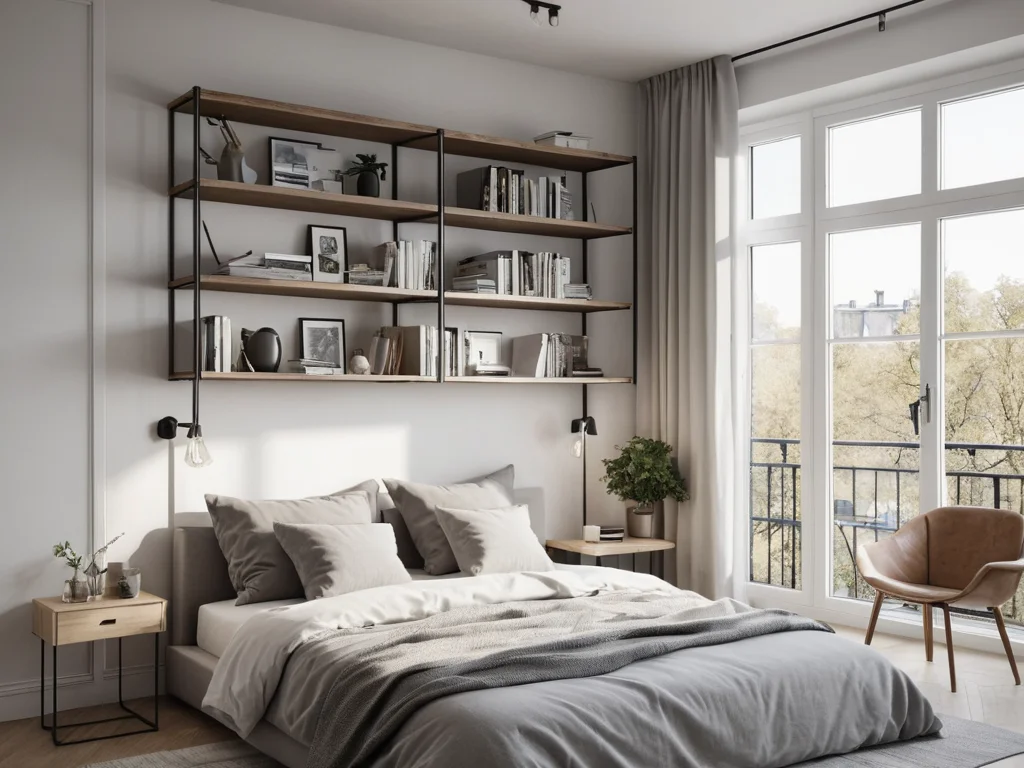
Metal shelving units are an amazingly versatile element that can bring sophistication and functionality to any room. They can be adapted for various tasks and styles, making the interior more expressive and modern. Let’s look at how exactly they can transform different areas of your home.
Living Room: In the living room, a metal shelving unit can become a central element or an elegant addition. For example, an open shelving unit made of black metal with thin shelves will be a great place to store books, vinyl records, stylish magazines, and decorative items. It can serve as an alternative to a traditional wall unit or TV stand, creating a feeling of lightness and space. Designers often use such shelving units to display collections – dishes, souvenirs, photo frames. In loft or industrial style, a shelving unit made of raw metal or with a rust effect will fit perfectly, which, combined with brickwork and concrete surfaces, will create an authentic atmosphere. For softer, modern interiors, shelving units with white or gray powder coating, which can be complemented with wooden elements or glass inserts, are suitable.
Bedroom: In the bedroom, metal shelving units can be used to create a cozy and organized atmosphere. Instead of bulky wardrobes, you can install a light shelving unit with shelves for storing textiles, bed linen, decorative pillows, or even small clothing items like scarves or bags. At the head of the bed, such a shelving unit can replace a bedside table; it is convenient to place a lamp, alarm clock, book, or a glass of water on it. To create a feminine, romantic look, you can choose a shelving unit with graceful lines and forged elements, painted in light colors. In minimalist bedrooms, concise shelving units made of thin metal without unnecessary details will look good.
Kitchen: In the kitchen, metal shelving units are the embodiment of practicality and functionality. They are ideal for storing dishes, kitchen utensils, spices, jars of cereals, and sauces. Open shelves allow you to quickly find the right item and make the space more organized. In industrial, loft, grunge styles, metal shelving units are a classic. They look great next to brick walls, wooden countertops, and stainless steel elements. You can use both tall and low shelving units, depending on your needs. For example, a tall shelving unit can replace kitchen cabinets in a small studio, while a low one can serve as an additional work surface or a place to store appliances. It is important to choose shelving units with a coating resistant to moisture and high temperatures, and that are easy to clean.
Office and Study: In the workspace, metal shelving units are indispensable for organizing the storage of documents, folders, books, office equipment, and stationery. Their strength guarantees a long service life, and the concise design promotes concentration. Open shelves allow for easy maintenance of order, and the ability to choose color and configuration allows for adaptation to corporate style or personal preferences. In modern offices, modular storage systems are often used, which can be assembled in various configurations, adapting to changing needs. In a home office, a compact metal shelving unit will help create a working atmosphere and efficiently use space.
Other Rooms: Metal shelving units have also proven themselves well in the hallway (for storing shoes, bags, hats), in the bathroom (for towels, cosmetics, household chemicals – provided moisture-resistant coating is chosen), in the garage or workshop (for tools and materials). Their strength and resistance to external influences make them an ideal solution for these areas.
By using metal shelving units, you can not only organize convenient storage but also significantly improve the aesthetics of your interior, giving it individuality and modern charm.
How to Choose the Ideal Metal Shelving Unit: Designer Tips and Buyer Checklist
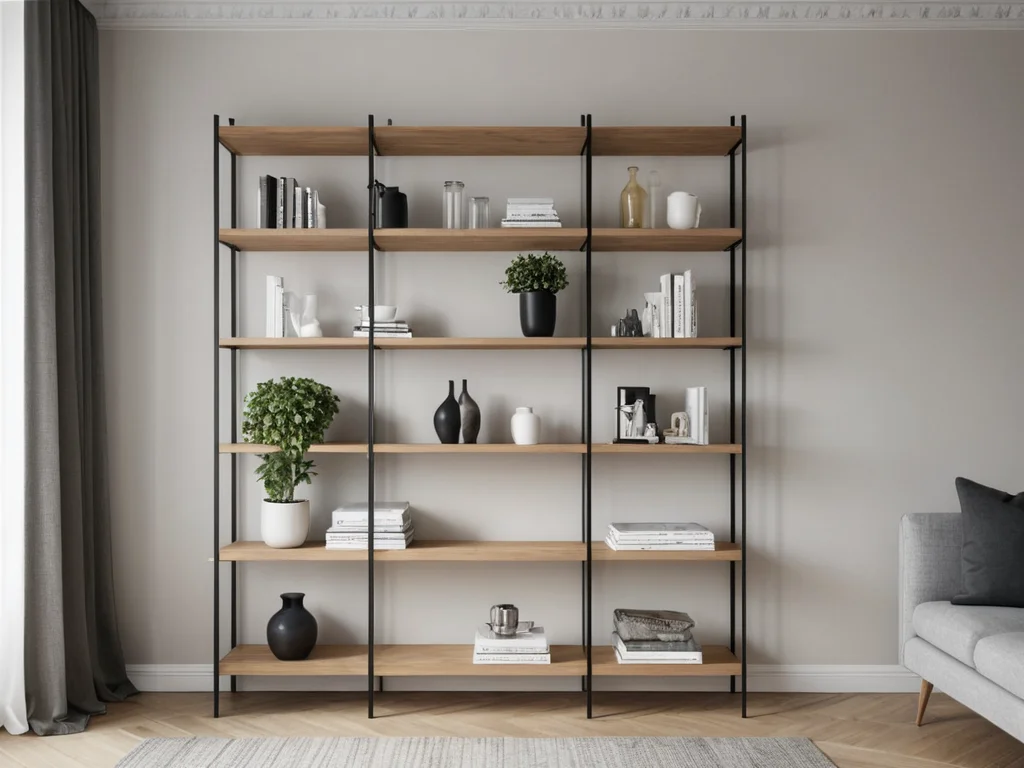
Choosing a metal shelving unit is a responsible step that requires attention to detail. To ensure your purchase brings you joy for many years, follow our expert recommendations. Interior designers advise paying attention to the following aspects:
1. Determining Purpose and Installation Location:
- What is the shelving unit for? Determine what items you plan to store on it. If it’s heavy books or equipment, the most durable construction is required. A more elegant model will suffice for light decor or textiles.
- Where will it stand? Assess the room size, lighting, and humidity level. For bathrooms or kitchens, choose shelving units with anti-corrosion coating. For small rooms – more compact and “airy” models.
2. Material and Construction:
- Type of Metal: Steel shelving units are usually stronger and more durable but can be heavier. Aluminum ones are lighter but less strong. For home use, steel constructions are most often chosen.
- Metal Thickness: The thicker the metal, the greater the load the shelving unit can withstand. Pay attention to the thickness of the profile and shelves.
- Connection Type: Welded constructions are generally stronger and more reliable than bolted assemblies. However, assembled models are more convenient for transportation and moving.
- Stability: Make sure the shelving unit has a reliable base and does not wobble. It may be necessary to adjust the legs or secure it to the wall (especially for tall and narrow models).
3. Coating and Finish:
- Powder Coating: One of the most popular and practical options. Provides a durable, even coating resistant to scratches, moisture, and UV radiation. Wide range of colors.
- Chrome Plating: Gives the shelving unit a shine and modern look. However, the coating may be less resistant to mechanical damage and lose its shine over time.
- Primer and Enamel: A more budget-friendly option. May be less durable and prone to chipping.
- Wood/Stone Imitation: Modern technologies allow applying coatings to metal that imitate the texture of wood or stone, which expands design possibilities.
- Color: Choose a color that will harmonize with your interior. Classic options are black, white, gray, metallic. But you can also choose a bright accent color.
4. Dimensions and Configuration:
- Height, Width, Depth: Carefully measure the space where the shelving unit will be installed. Make sure the chosen model will not obstruct passage and will harmoniously fit into the overall composition.
- Number and Spacing of Shelves: Think about what height between shelves will be optimal for your items. Some models offer adjustable shelf height, which is very convenient.
- Availability of Additional Elements: Consider whether you need side panels, a back panel, drawers, hooks, or other accessories.
5. Manufacturer and Price:
- Manufacturer Reputation: Give preference to well-known brands with good reviews. This guarantees the quality of materials and assembly.
- Warranty: Check the warranty period for the product.
- Price-Quality Ratio: Compare prices from different sellers. Not always the most expensive shelving unit is the best, but too cheap models can also disappoint in quality.
Buyer Checklist:
- Room dimensions measured?
- Purpose of the shelving unit determined?
- Metal type and construction thickness considered?
- Coating type matches operating conditions?
- Color and design match the interior?
- Stability and possibility of wall mounting checked?
- Manufacturer and warranty reliable?
- Price matches budget and quality expectations?
A thorough approach to choosing a metal shelving unit will allow you to acquire a truly functional, stylish, and durable piece of furniture that will become a harmonious addition to your interior.