Русский
 Deutsch
 Українська
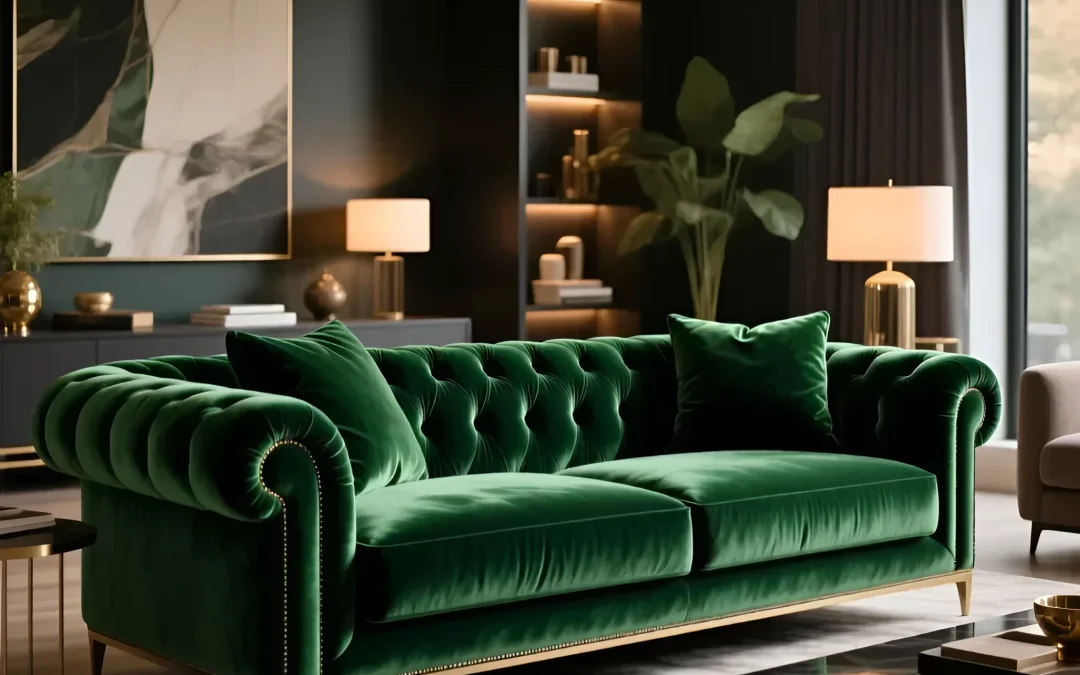
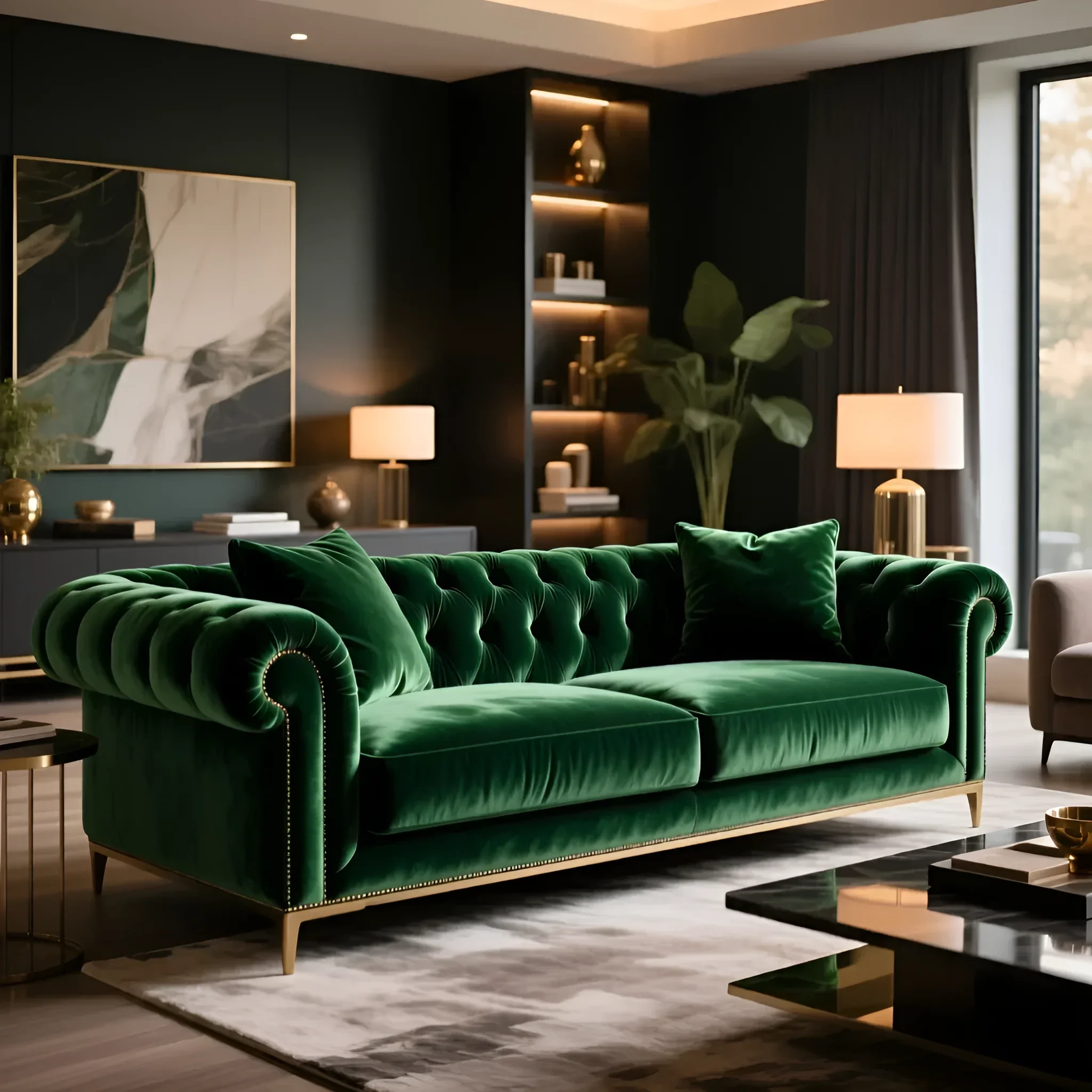
Choosing a sofa is not just about buying a large piece of furniture; it’s a long-term investment in your daily comfort, health, and the aesthetics of your living room. A sofa serves as the central element of the interior, a place for relaxation, family gatherings, and often, an additional sleeping space. Mistakes here are costly, as a quality model should last at least 7–10 years. Our guide will help you navigate the variety of styles, technical characteristics, and materials to make the most informed choice that won’t disappoint you years down the line.
Types and Styles of Sofas: From Classic to Modular Systems
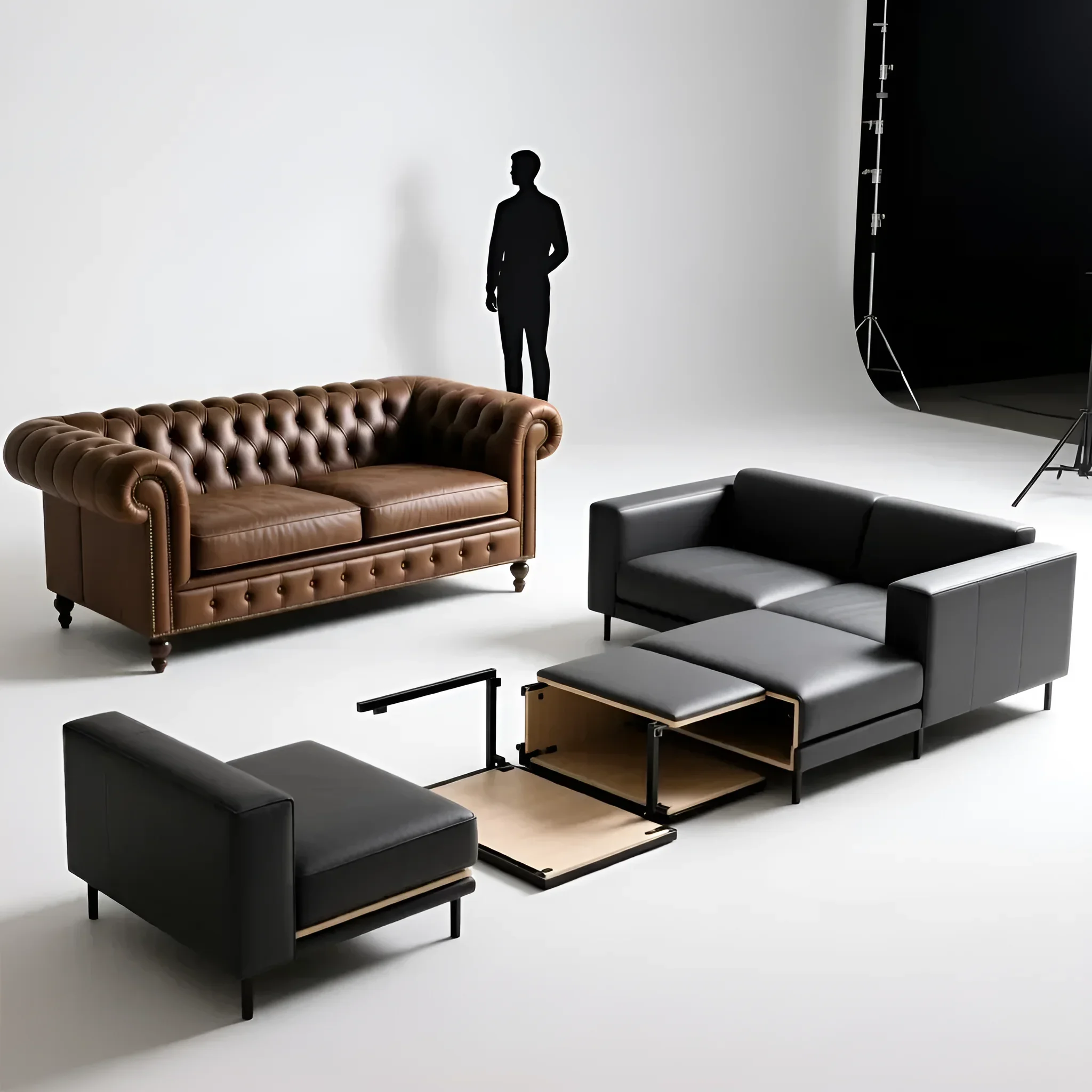
Before diving into materials, it’s essential to determine the right type of sofa based on your room’s geometry, size, and functional purpose.
Straight Sofas: Versatility and Classic Design
The most common type. They are ideal for placing against a wall or for zoning a space. Their main advantage is predictable dimensions and ease of integration.
- Two-Seater (Love Seat): Width 150–180 cm. Ideal for small studios or as an addition to the main set.
- Three-Seater (Standard Sofa): Width 200–240 cm. A standard choice for most living rooms, comfortably seating 3–4 people.
- Four-Seater (Grand Sofa): Width from 250 cm and above. Requires spacious rooms.
Corner Sofas: Maximum Seating Capacity
Corner models (L-shaped) effectively utilize room corners, offering significantly more seating space and, typically, more storage for linens or a built-in table.
- Symmetrical: Both sides are equal in length. Rarely encountered.
- Asymmetrical: Have a long and short side (e.g., 280×180 cm). It’s important to determine the corner orientation (left or right) in advance if the model is not universal.
- Corner with Ottoman: Part of the corner is a fixed chaise lounge without a back, ideal for stretching your legs.
Modular Sofas: A Construction Kit for Your Space
Modular systems are a set of independent sections (modules) that can be combined according to your needs and room configuration. This is the most flexible, but also the most expensive option.
- Advantages: Allows for creating U-shaped, corner, or even island compositions. Easily adaptable when moving or redecorating.
- Disadvantages: High cost and the need for careful planning of each module’s dimensions (standard modules usually have a step of 70, 80, or 90 cm).
Upholstery Materials: A Guide to Fabrics, Leather, and Their Practical Features
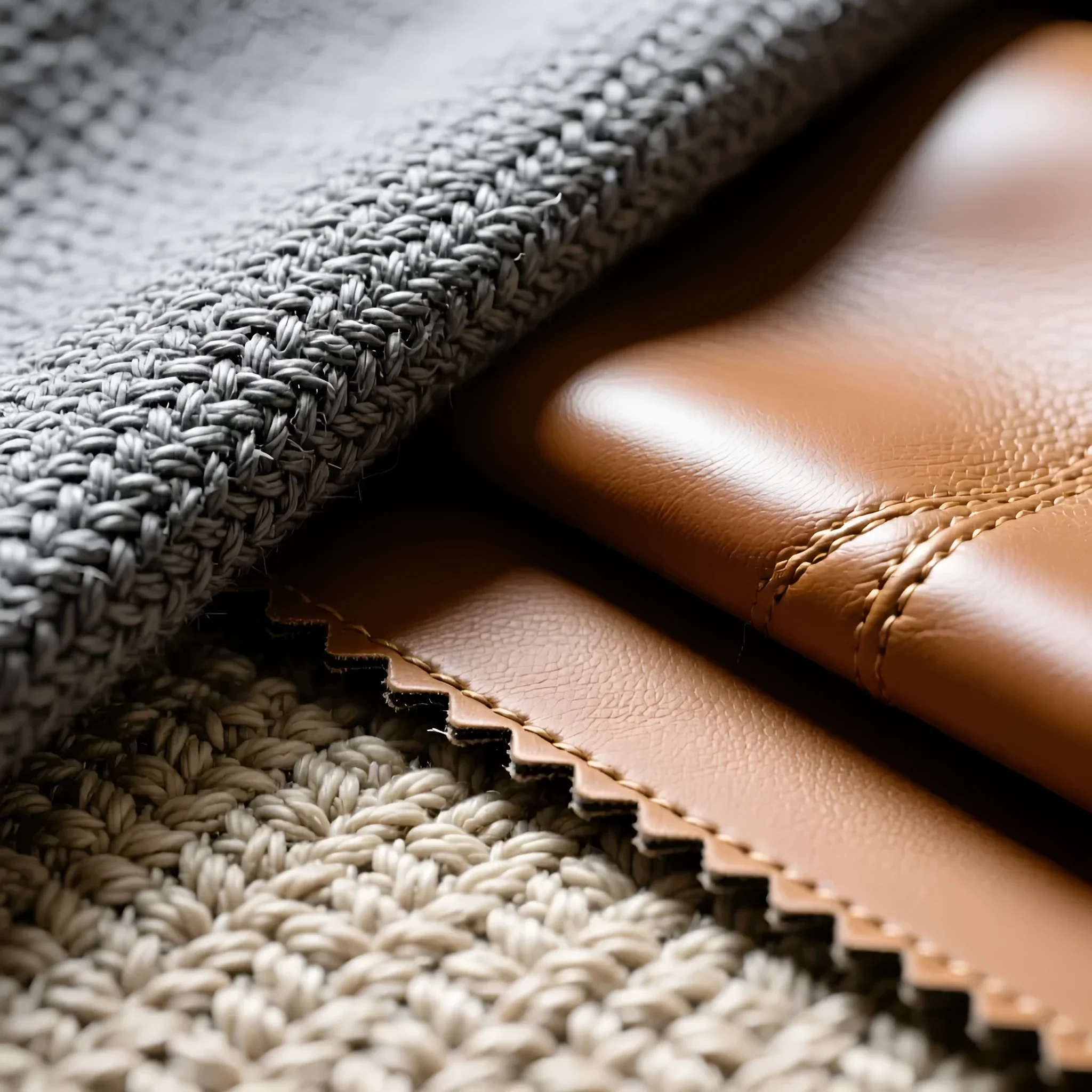
Upholstery is the face of the sofa, determining its appearance, tactile feel, and most importantly, durability. The choice of material should be based on the expected load, the presence of pets and children, and care requirements.
Key Technical Upholstery Parameters
When choosing upholstery, pay close attention to two key indicators:
- Martindale Test (Abrasion Resistance): Measures the number of friction cycles the fabric can withstand before showing visible damage.
- Fabric Density: Measured in grams per square meter (g/m²). The higher the density, the longer the fabric retains its shape and stretches less.
| Purpose | Minimum Value (cycles) | Examples of Use |
|---|---|---|
| Decorative pillows | 10,000 – 15,000 | Low load |
| Home use (medium load) | 20,000 – 30,000 | Living room without pets |
| Intensive daily use | 35,000 – 50,000 | Families with children, studios |
| Commercial use (HoReCa) | Over 60,000 | Offices, cafes, hotels |
Overview of Popular Fabric Upholstery Types
- Chenille: Dense, velvety fabric resembling velour but more durable. Thanks to its complex weave, it effectively hides minor stains. Cons: Can snag from pet claws.
- Matting (Rogožka): Characterized by a coarse, checkerboard weave. Extremely durable, eco-friendly (often made of cotton or linen). Ideal for Scandinavian and loft styles. Cons: Coarse texture, threads can snag.
- Flock: A non-woven material created by spraying pile onto a base. It has high water repellency and is easy to clean (often called “anti-claw”). Abrasion resistance is typically 50,000+ cycles. Cons: Accumulates static electricity, can wear out with improper care.
- Velvet: Elegant, soft material. Ideal for classic and art deco interiors. Cons: Wrinkles easily, requires gentle care, dust and fingerprints are visible.
- Microfiber: A synthetic fabric with very short pile, often with a Teflon coating. Excellent resistance to stains and fading.
Natural and Artificial Leather
Leather sofas are always associated with prestige and durability, but require an understanding of the differences between material types.
- Genuine Leather (Aniline/Semi-Aniline): Aniline is the most expensive, minimally processed, “breathes,” but easily absorbs liquids and scratches. Semi-aniline is a more practical option with a protective pigment layer. Pros: Durability, prestigious look, only gets better with age. Cons: High price, sensitive to temperature fluctuations (sticky in summer, cold in winter), requires regular moisturizing with special products.
- Eco-Leather (PU Leather): Modern polyurethane material on a cotton or fabric base. It is elastic, “breathes” better than PVC, and has no odor. Pros: Affordable price, easy to care for, high resistance to abrasion.
- Artificial Leather (Vinyl Leather/PVC): The most budget-friendly option. Cons: Does not “breathe,” prone to cracking and rapid wear with intensive use.
Frame and Filling: What’s Inside the Perfect Sofa
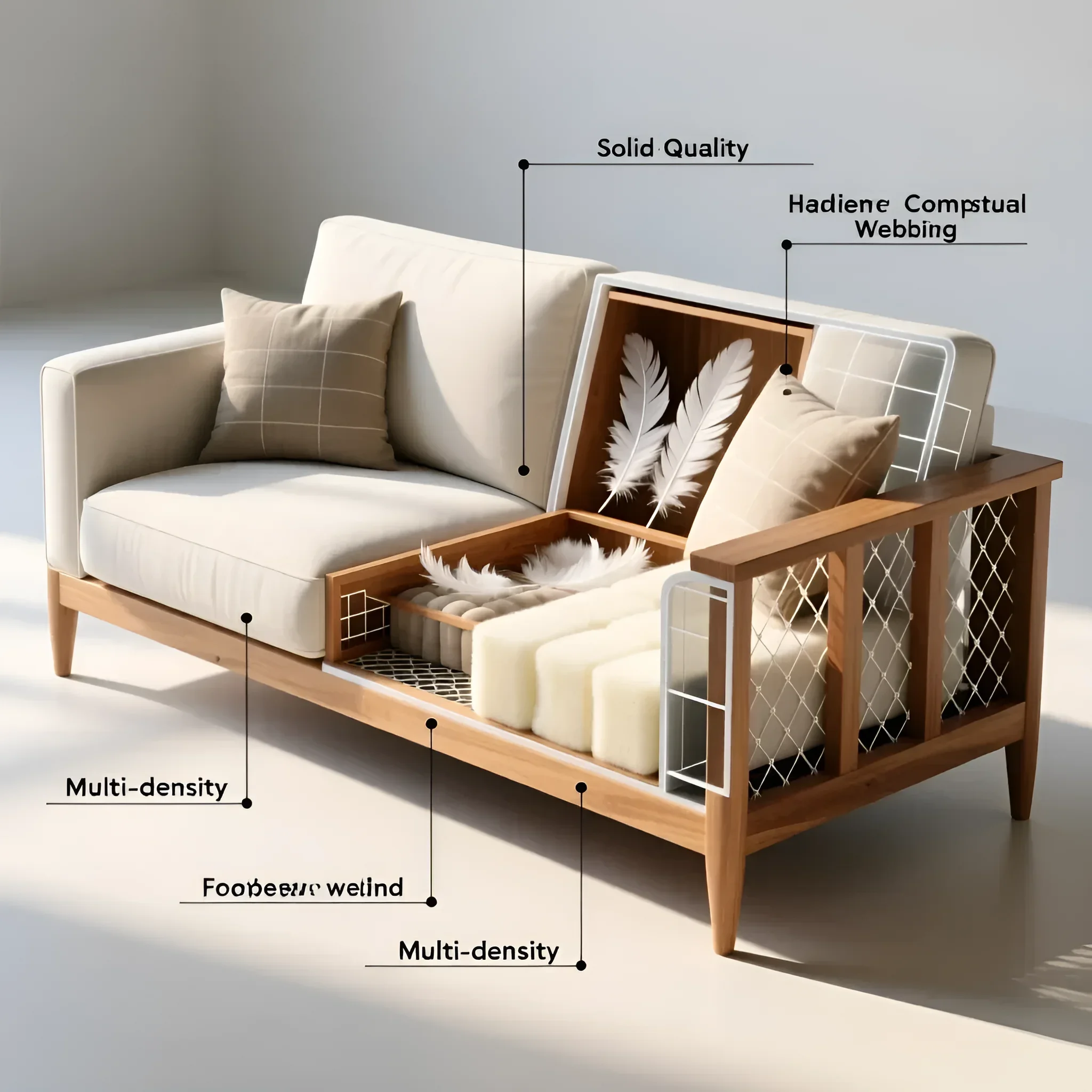
The durability of a sofa depends 80% on the quality of its internal components: the frame and the filling. These are the elements that cannot be replaced without completely disassembling the furniture.
Frame: The Foundation of Reliability
The quality of the frame determines whether the sofa will creak, become wobbly, and how long the transformation mechanism will last.
- Solid Wood: The most durable and eco-friendly option (beech, oak, ash). Used in expensive models. It’s important that the wood is well-dried, otherwise, it may dry out and creak.
- Metal Frame: Used for sofas with daily sleep mechanisms or in modern minimalist models. Extremely durable but increases the weight of the structure.
- Plywood (Birch): Optimal balance of price and quality. Plywood 12–18 mm thick provides high strength with minimal weight.
- Particleboard/MDF: Used in budget models. Particleboard is the least durable and can release formaldehyde (pay attention to emission class E0 or E1).
Filling: Comfort and Support
The filling is responsible for the elasticity, softness, and shape retention of the seats. Here, the choice is between polyurethane foam (PU foam) and spring blocks.
1. Polyurethane Foam (PU Foam)
PU foam is the most popular filler. Its quality is determined by two parameters: density and hardness.
- Density (kg/m³): This is the main indicator of durability. For sofa seats intended for daily use, the minimum density should be 30–35 kg/m³. If the density is below 25 kg/m³, the sofa will sag within 1–2 years.
- Hardness: Determines how soft the seat will be. HR (High Resilience) marking indicates high-resilience PU foam, which quickly regains its shape and provides orthopedic support.
- Sintepon and Holofiber: Used in backrests, armrests, and decorative pillows to add volume and softness.
2. Spring Blocks
Springs are used to create a more orthopedic and durable sleeping surface, especially in models designed for sleep.
- Dependent Spring Block (Bonnell): A classic, budget-friendly option. The springs are interconnected, so pressing one spring causes adjacent ones to sag (the “hammock effect”). Suitable for guest sofas.
- Independent Spring Block (Pocket Spring): Each spring is in its own casing and works autonomously. Provides targeted body support, ideal for daily sleep and for people with higher weight.
How to Choose a Sofa to Match Your Interior Style: From Scandi to Loft
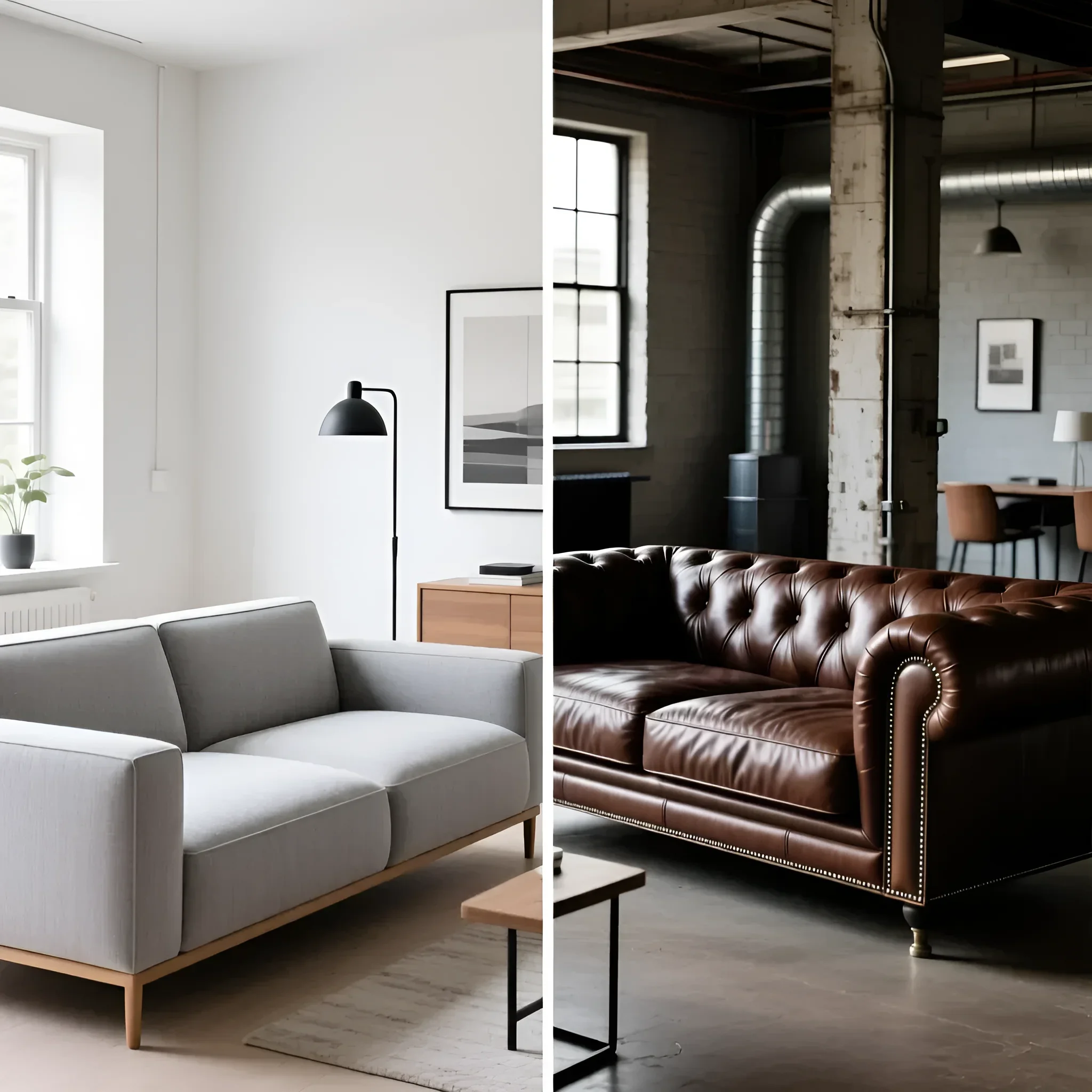
The sofa should harmoniously fit into the overall style of your home. The shape, legs, armrests, and, of course, the upholstery play a crucial role here.
- Scandinavian Style (Scandi): Requires simplicity, functionality, and natural materials.
- Shape: Straight, clean lines, thin, often wooden legs.
- Upholstery: Matting, linen, dense cotton. Colors: gray, beige, light blue, mint.
- Features: Removable covers for easy washing.
- Loft: Industrial, brutal style requiring massiveness and texture.
- Shape: Deep, low seating, wide armrests.
- Upholstery: Coarse natural or high-quality eco-leather (colors: black, brown, cognac). Dense velour or velvet in deep tones (emerald, sapphire) is also suitable.
- Features: Exposed metal or wooden frame, decorative stitching.
- Classic/Neoclassical: Elegance, symmetry, attention to detail.
- Shape: Chesterfield models with button tufting (capitonné), curved backs, massive armrests.
- Upholstery: Genuine leather, expensive velour, or velvet. Colors: burgundy, dark green, cream.
- Features: Decorative nails, carved wooden elements.
- Minimalism: Functionality over decoration.
- Shape: Strict geometric shapes, absence of decorative elements, hidden legs or low profile.
- Upholstery: Monochrome fabrics (microfiber, smooth chenille). Colors: white, black, graphite.
Dimensions and Ergonomics: The Perfect Size for Your Living Room
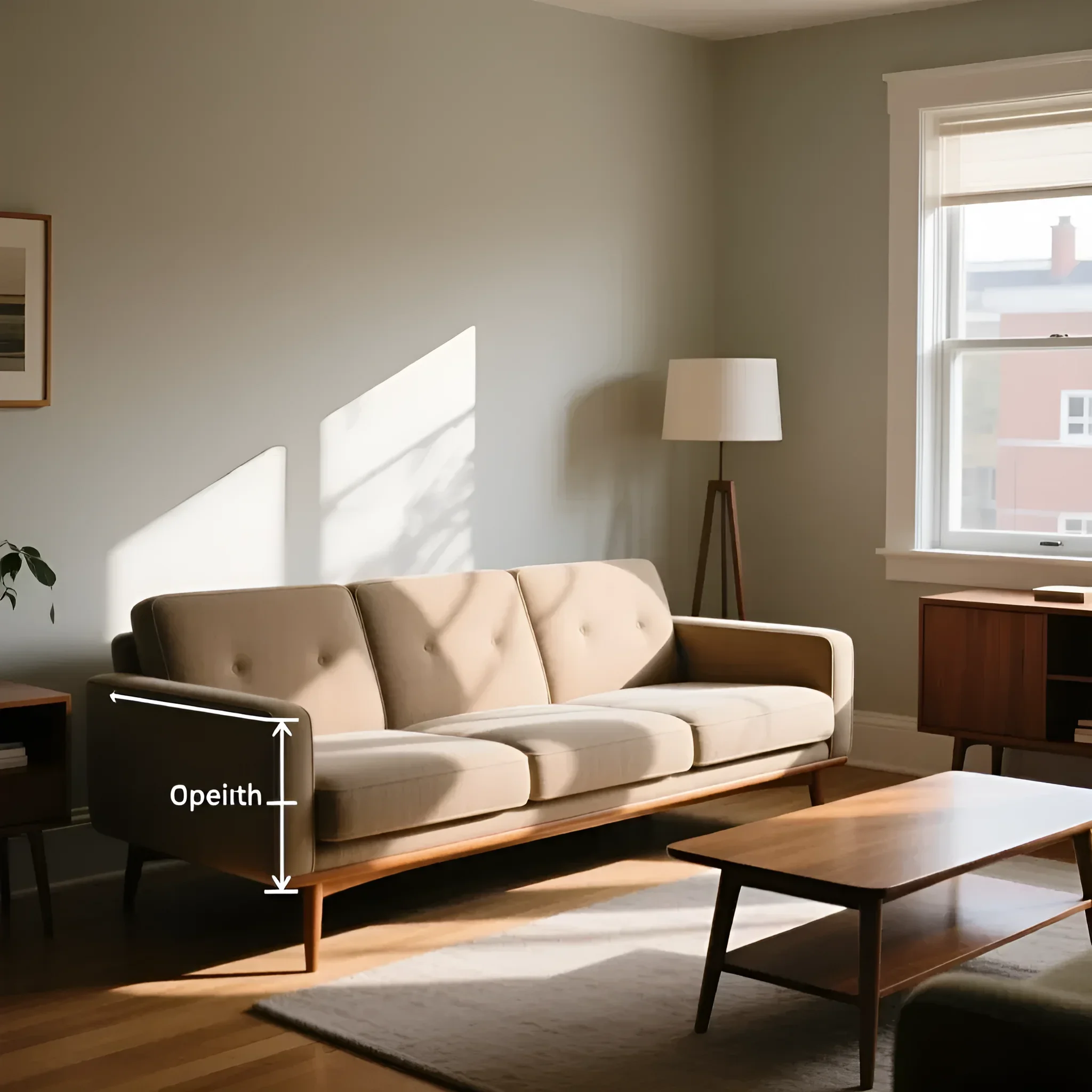
An ergonomic sofa provides proper body support and doesn’t clutter the space. The size selection should start with an analysis of the layout, not the catalog.
The “Traffic Flow” Rule
Before buying a sofa, be sure to conduct a “newspaper test” or use painter’s tape: outline the intended dimensions of the sofa on the floor. Ensure there is enough space around it for free passage:
- Minimum passage: 70 cm (comfortable passage 90–100 cm).
- Distance to coffee table: Ideally 30–45 cm, so you can easily reach for a cup without obstructing your legs.
- Distance to TV: For a 50-inch screen (127 cm), the minimum distance to the sofa should be 2.5–3 meters.
Key Ergonomic Parameters
These parameters affect your comfort during prolonged sitting:
- Seat height from the floor: Optimal is 40–45 cm. Sofas that are too low (35 cm, typical for loft) can be uncomfortable for the elderly.
- Seat depth: Standard is 55–65 cm. If the depth is more than 70 cm, you will need an additional lumbar pillow, otherwise your legs won’t reach the floor, which will disrupt blood circulation.
- Backrest angle: The ideal angle for relaxation is 100–110 degrees relative to the seat.
Calculating Dimensions for a Corner Sofa
When choosing a corner sofa (especially modular), you need to consider not only the total length of the sides but also the width of the armrests. Wide armrests (25–30 cm) can “eat up” up to half a meter of usable seating space, which is critical for small rooms.
Transformation Mechanisms: An Overview of the Best Solutions for Daily Sleep
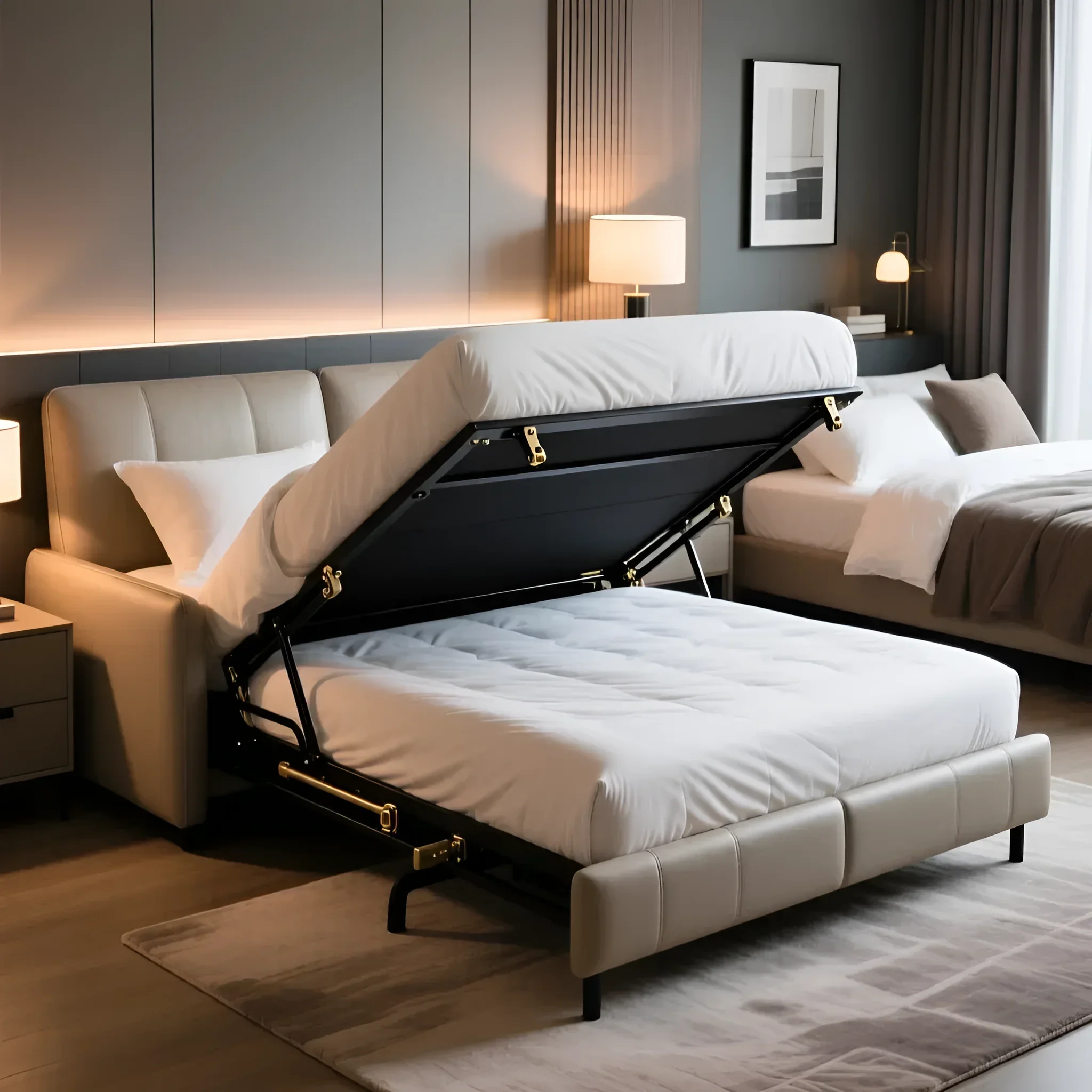
If the sofa is intended to be used as a full sleeping space every night, the mechanism must meet the highest requirements for durability, surface evenness, and ease of unfolding.
Mechanisms for Daily Use (Daily Sleep)
These mechanisms are characterized by high reliability, ease of operation, and a flat sleeping surface, often with an orthopedic mattress.
- Eurobook (Evroknizhka): The most popular and reliable mechanism. The seat rolls forward, and the backrest folds down into the resulting niche. Pros: Simple, reliable, has a large linen storage compartment, flat sleeping surface. Cons: Requires a small gap from the wall.
- Tick-Tock (Pantograph): An improved “Eurobook.” The seat doesn’t roll out but “steps” forward over the floor, preventing damage to the flooring. Pros: Gentle on the floor, high reliability.
- Accordion: Unfolds like an accordion: the seat is pulled forward, and the backrest (consisting of two parts) unfolds. Pros: Creates a high and flat sleeping surface similar to a bed. Cons: Takes up little space when folded, but requires a lot of space in front when unfolded (up to 240 cm).
- Dolphin: Often used in corner models. The lower part of the sleeping surface “emerges” from under the seat and rises to the level of the main seat. Pros: Easy transformation, ideal for corner sofas. Cons: High load on the mechanism, quality depends on the manufacturer.
Occasional Use Mechanisms
Suitable for infrequent use (a few times a month). They are compact, but the sleeping surface is often thinner and less even.
- French Fold-out (Sedaflex): The mattress and mechanism are hidden under the seat and unfold in three folds. Pros: Compactness. Cons: Thin mattress (6–8 cm), not suitable for daily sleep, pillows must be removed before unfolding.
- American Fold-out (Sedalift): A more durable analogue, folds in two, mattress is thicker (10–12 cm). Better suited for frequent, but not daily, sleep.
Care and Durability: How to Keep Your Sofa Beautiful for Years to Come
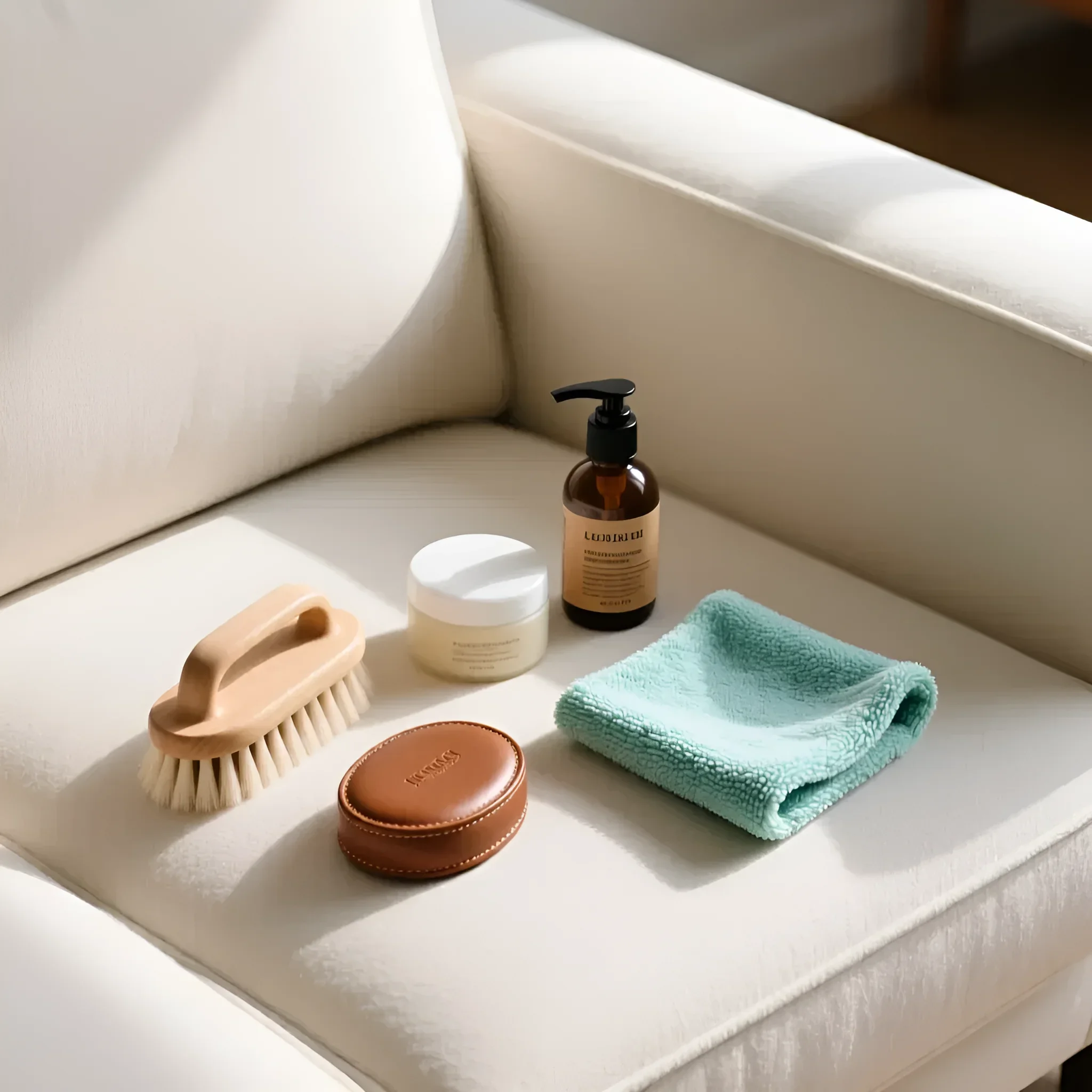
Proper care can double the lifespan of your sofa. The main thing is to know the type of upholstery and follow the manufacturer’s recommendations.
Fabric Care Coding System (Cleaning Codes)
On the sofa tag, you will find a letter code indicating how to clean the upholstery:
- W (Water): Upholstery cleaned only with water or water-based cleaning agents (e.g., microfiber, some types of flock).
- S (Solvent): Cleaned only with dry solvents or dry cleaning (e.g., some types of velour, chenille).
- W/S (Water/Solvent): Both dry and wet cleaning are allowed. The most versatile option.
- X (Vacuum Only): Dry cleaning with a vacuum cleaner only. Attempts at wet cleaning can damage the fabric (often silk or very delicate natural fibers).
Practical Tips for Caring for Different Materials
Fabric Care:
- Regularly (once a week) vacuum the sofa with a soft attachment to prevent dust and abrasive particles from embedding.
- Remove fresh stains (especially on flock and microfiber) immediately, using a soft white cloth and soapy water (if code is W). Do not rub the stain too hard to avoid damaging the pile.
- For velour and velvet, use a soft-bristled brush and clean strictly in the direction of the pile.
Leather Care:
- Keep leather sofas away from direct sunlight and heating appliances (at least 50 cm) to prevent drying and cracking.
- Every 6 months, treat genuine leather with special conditioners or waxes to maintain its elasticity.
- Use a slightly damp (but not wet) cloth to remove dust.
How to Prevent Filling Sagging
Even the densest PU foam can sag over time if the load is unevenly distributed. To extend the life of the filling:
- Regularly change your seating position (don’t always sit in the same spot).
- Fluff the back and seat cushions, if they are removable, to restore air circulation and shape.
- If the sofa has soft upholstery (without springs), try not to step on the seat with your feet.
FAQ: Frequently Asked Questions When Buying a Sofa
1. Which sofa is better: with PU foam or a spring block?
For seats not used for sleeping, high-resilience PU foam (HR 35+ kg/m³) is preferable as it provides more even support and weighs less. If the sofa is used for daily sleep, an independent spring block (Pocket Spring) will provide better orthopedic support and mattress durability.
2. How to check the frame quality directly in the store?
Try lifting one corner of the sofa. If the opposite corner easily lifts off the floor, the frame is sufficiently rigid and strong. If the sofa noticeably tilts or makes creaking noises, the assembly quality is low.
3. What is better for a home with pets: flock or matting?
Definitely flock (or its analogue “anti-claw”). Matting, despite its durability, has a pronounced weave that is very attractive to claws. Flock, being a non-woven material, does not allow claws to catch and pull threads. Look for flock with a Martindale rating above 50,000 cycles.
4. What seat depth is suitable for a low coffee table?
If you have a very deep sofa (over 65 cm), you will need a table at least 45–50 cm high to reach it comfortably without excessive bending. For standard depth (55–60 cm), a table height of 40–45 cm is suitable.
5. Does the color of the sofa affect its durability?
The color itself does not affect it, but the lightfastness of the dye does. Dark fabrics, especially black, blue, and burgundy, are more prone to fading under direct sunlight if they are not treated with special UV stabilizers. Light fabrics (beige, gray) are less susceptible to fading, but stains and dirt are more visible on them.
Image Gallery