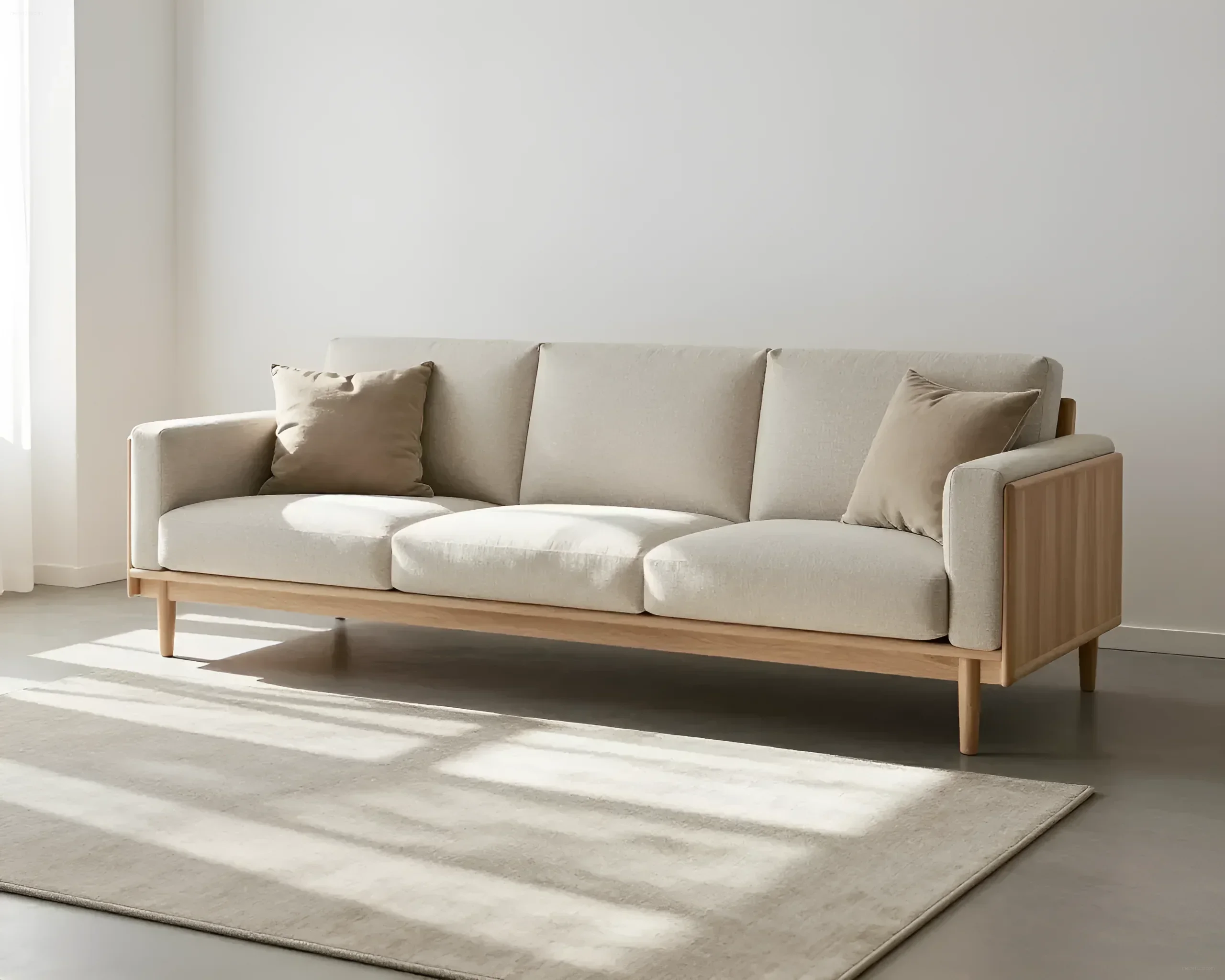
The Japandi style (Japandi) is not just another fashion trend, but a deep interior philosophy that emerged at the intersection of Scandinavian practicality and Japanese pursuit of harmony. The name of the direction speaks for itself: Japan + Scandi. From the Nordic countries, Japandi took its love for light, functionality, and home coziness (hygge), and from Japan – minimalism, low forms, and the aesthetic of imperfection (wabi-sabi). In the conditions of a typical Russian apartment, this style becomes a real salvation: it helps to visually expand the space, get rid of excess visual noise, and create a place for complete relaxation. The right choice of furniture is 80% of success in implementing this trend, as it is the interior items that set the desired geometry and tactility.
Japandi Style in an Apartment: What It Is and Why It’s So Popular
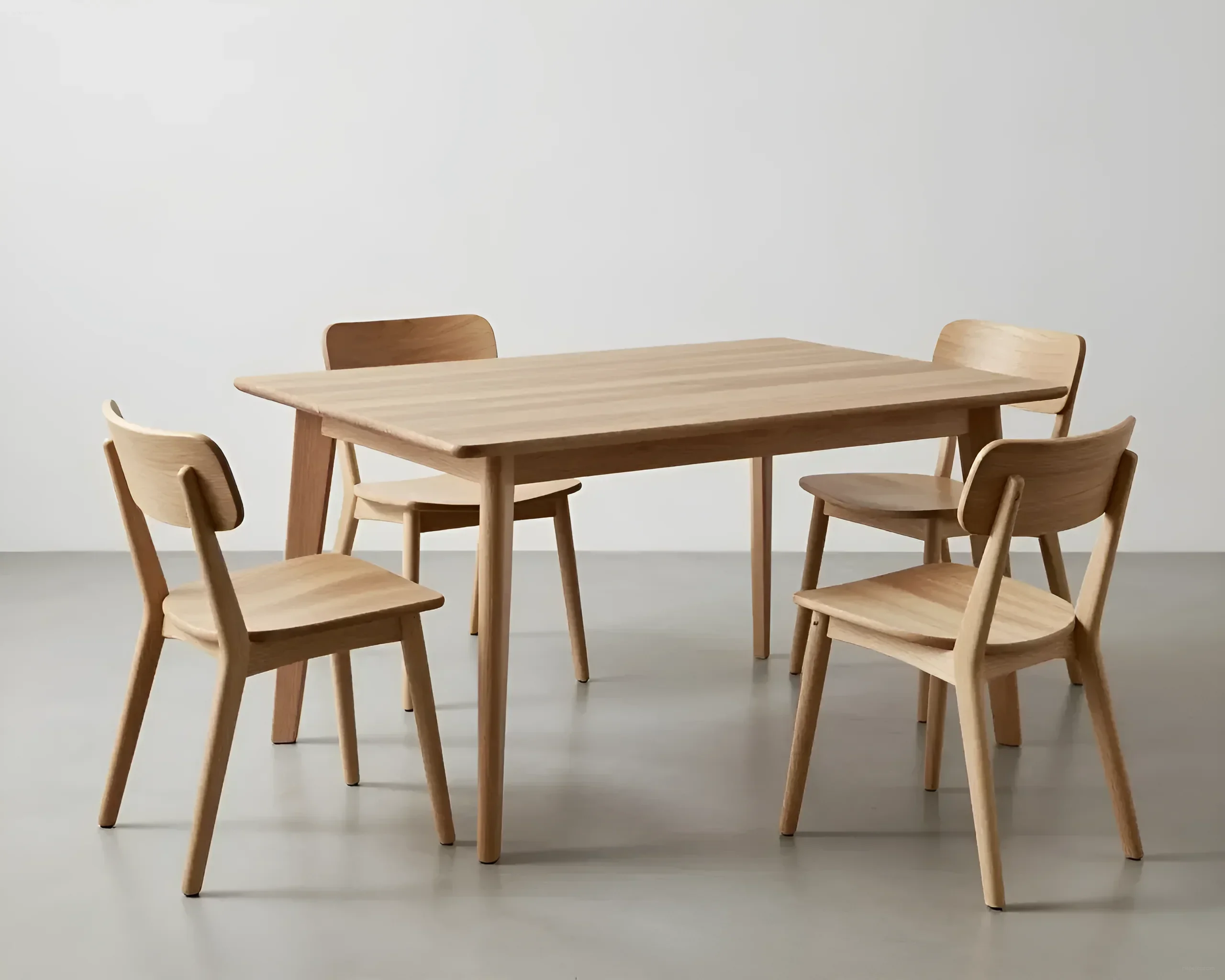
The popularity of Japandi in 2024–2026 is due to the global demand for environmental friendliness and psychological comfort. In a world oversaturated with information, your home should become a “sensory detox.” Japandi-style furniture is characterized by the absence of unnecessary decor, smooth or strictly geometric lines, and, most importantly, exceptional quality of materials.
Why Japandi is ideal for ordinary apartments:
- Visual Expansion: The use of light wood species and low furniture frames makes ceilings appear higher and rooms feel more spacious.
- Functionality: Each piece of furniture has a clear purpose. There is no room for “dust collectors” and random items here.
- Durability: The emphasis is on solid wood, high-quality veneer, and natural fabrics, which age beautifully over time, acquiring a special charm.
- Neutral Palette: Beige, gray, sandy, and soft earthy tones of furniture easily match any wall finish.
The main difference between Japandi furniture and pure Scandinavian style is the move away from sterile white towards warmer, “dirty” shades and the use of dark accents (e.g., black metal or dark walnut), characteristic of Japanese interiors.
Key Elements of Japandi Style: Furniture Made from Natural Materials
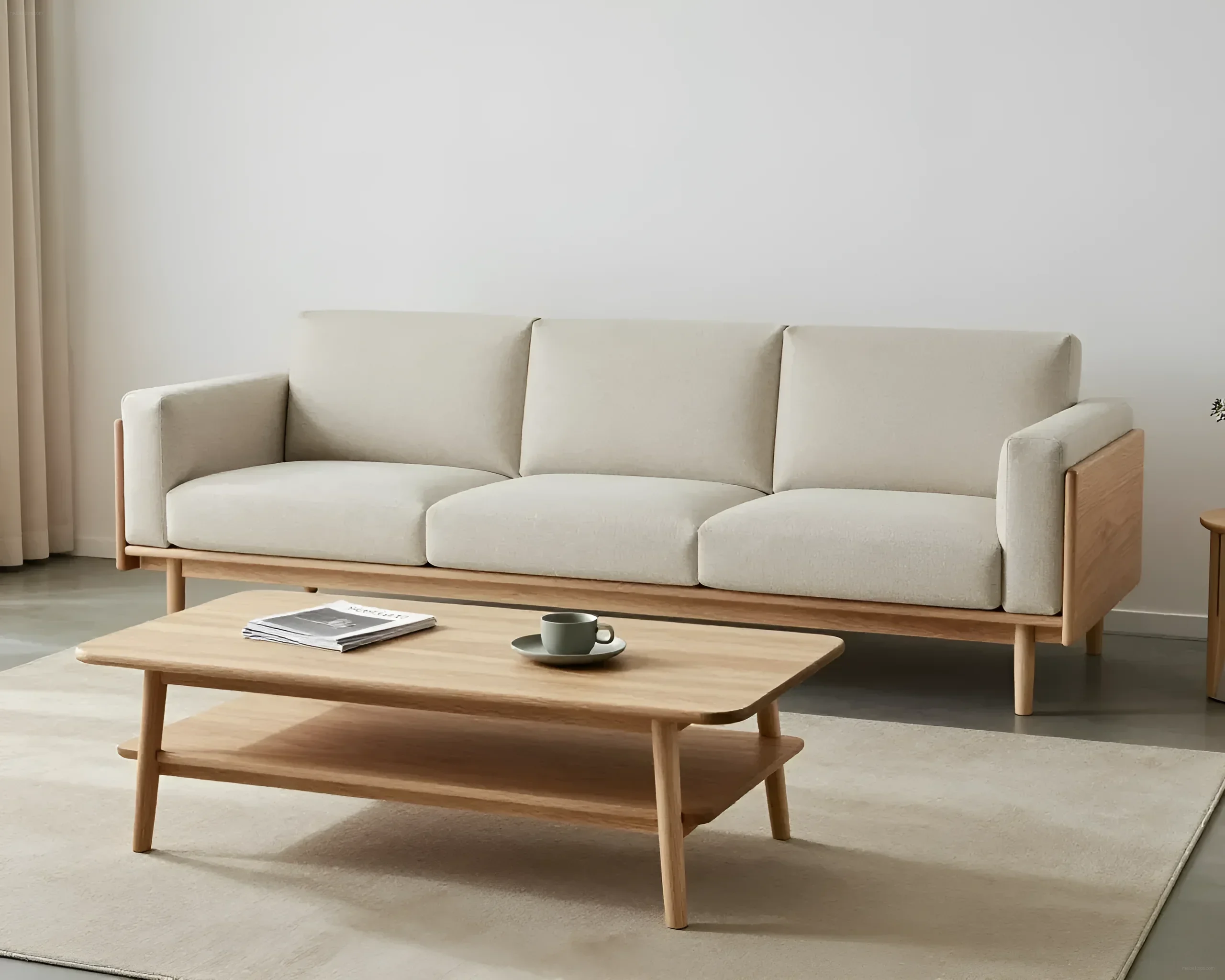
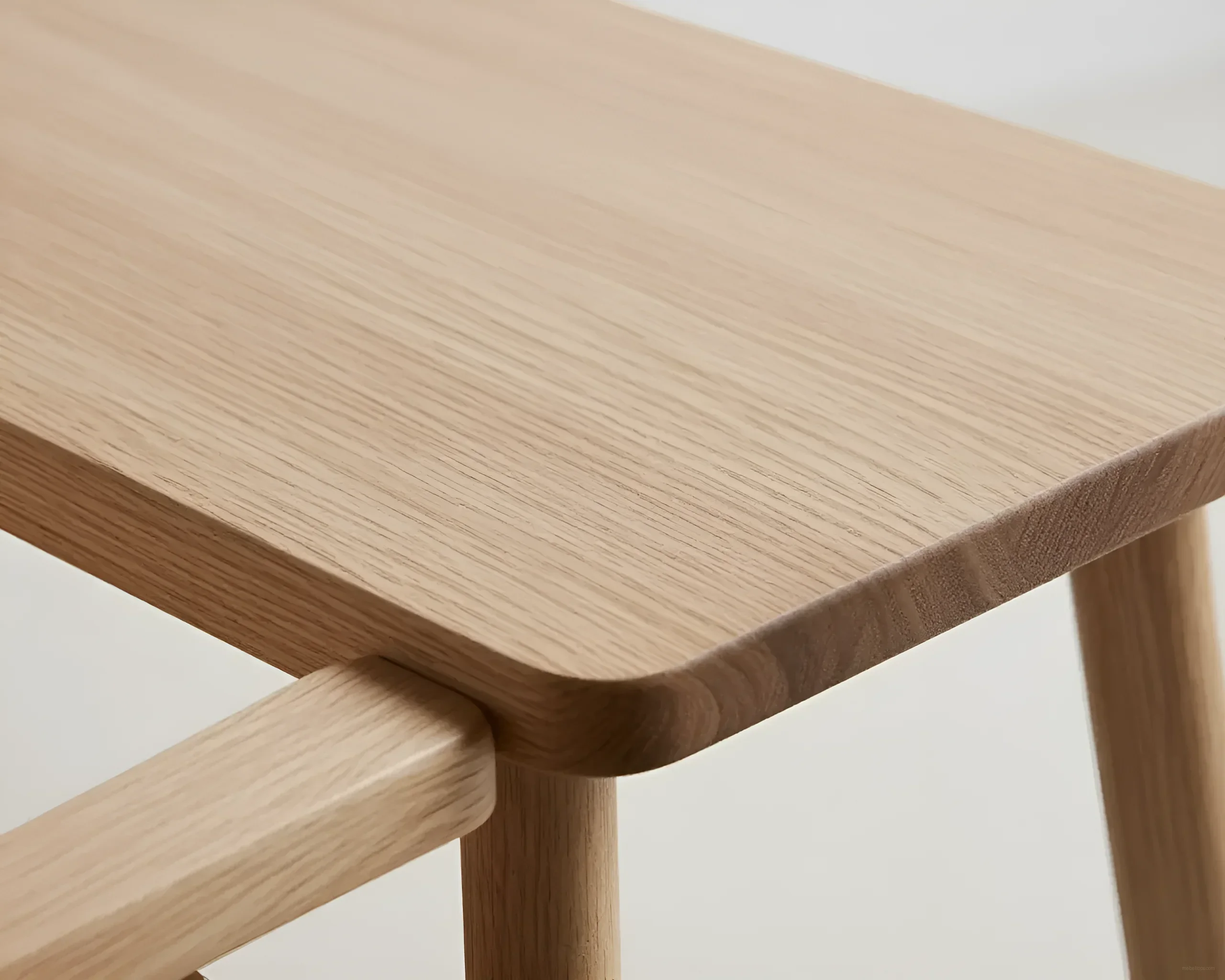
The foundation of the style is the honesty of materials. If you choose furniture, it should be as close to nature as possible. Artificial glossy surfaces, plastic, and cheap PVC film wood imitations are unacceptable here. Natural wood in the interior is the main hero of Japandi.
Popular wood species and their characteristics:
- Oak: The most reliable option. It has a pronounced texture and high density (about 700 kg/m³). Ideal for dining tables and sofa frames.
- Ash: Lighter than oak, it has a beautiful “active” grain pattern. Very elastic, so it is often used to create bent chair backs.
- Walnut: Used to create contrasting accents. Its deep chocolate hue lends nobility to the interior.
- Beech: Durable, but afraid of moisture. It is well suited for bedroom or living room furniture if it is covered with high-quality matte varnish.
In addition to wood, rattan, bamboo, jute, and boucle are actively used in Japandi furniture. Textiles should be rough and textured: linen, cotton, wool. An important technical nuance: when choosing furniture, pay attention to the finish. Japandi is characterized by the use of oil or wax, which leave the wood pores open, allowing you to feel its warmth and texture to the touch.
How to Choose Japandi-Style Living Room Furniture: A Checklist
A Japandi-style living room is a space where furniture “breathes.” Do not clutter the room with huge wall units. Instead, use modular systems and low-profile items. Here is a step-by-step checklist for choosing living room furniture:
- Sofa: Choose models with a low seat height (35-42 cm). The shape should be concise: straight lines or soft, rounded “stone” forms. Upholstery – matting or boucle in neutral colors (oatmeal, light gray). Avoid bulky armrests.
- Coffee table: Ideally, have two of different heights. One can be made of solid oak with a rough finish, the second – of natural stone or dark metal. A round or organic shape (drop-shaped) will soften the strictness of the lines.
- TV stand: Wall-mounted models or options on thin wooden legs are preferred. The fronts can be slatted (in the style of Japanese shoji screens) – this adds rhythm and lightness to the interior.
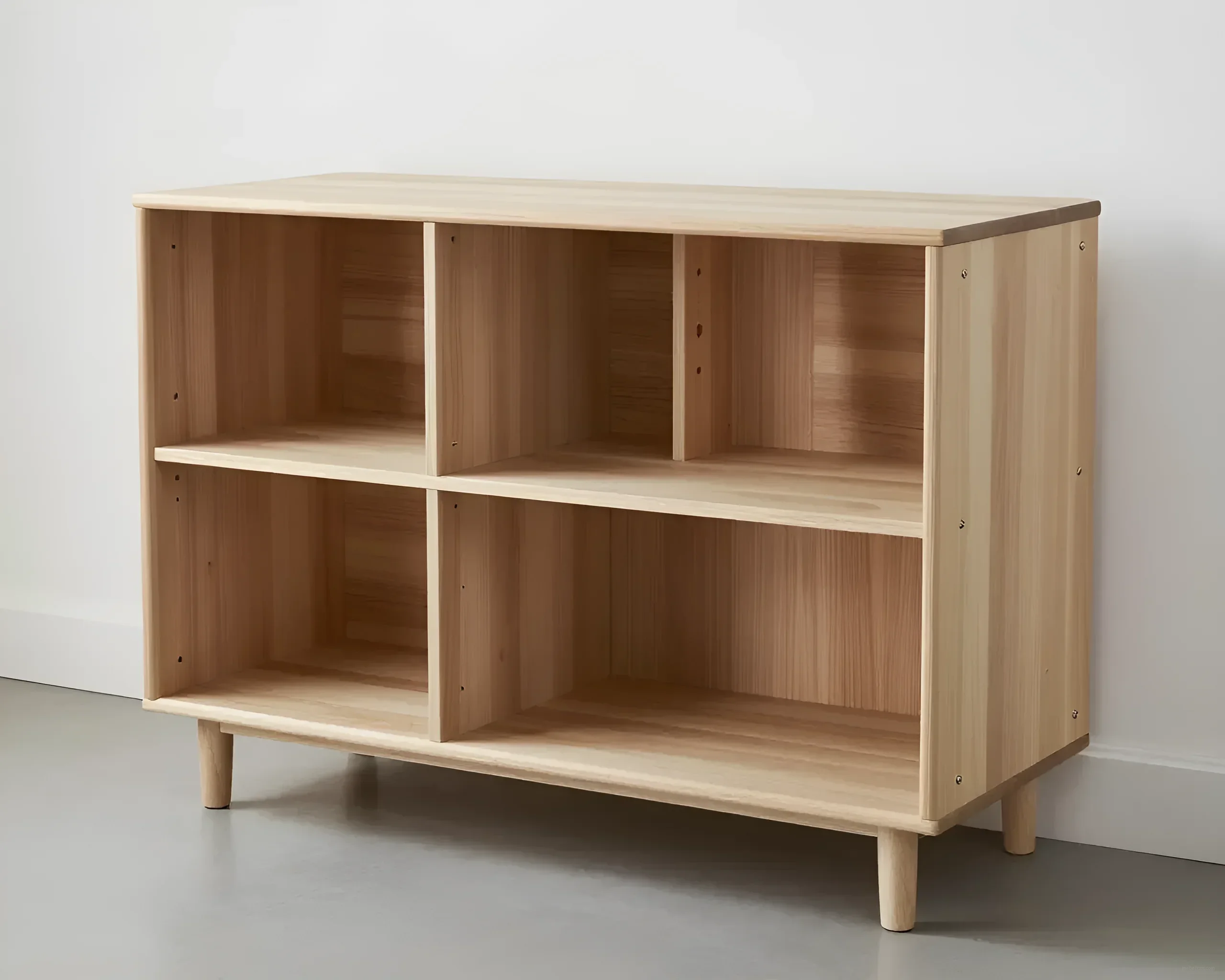
- Shelving units: Open shelves with minimal decor. The thickness of the shelves should be substantial (from 25 mm) to emphasize the reliability of the structure.
Technical Table: Comparison of Sofa Characteristics for Japandi
| Characteristic | Ideal Option (Japandi) | What to Avoid |
|---|---|---|
| Leg height | 10-15 cm (wood) or hidden | Chrome-plated, tall curved |
| Filling | High-density polyurethane foam + latex | Soft foam (quickly loses shape) |
| Fabric (Martindale test) | From 30,000 cycles (linen, chenille) | Eco-leather, velvet, jacquard with patterns |
| Frame color | Natural oak, matte black | Gold, silver, wenge (reddish) |
Japandi-Style Bedroom Furniture: Minimalism and Coziness
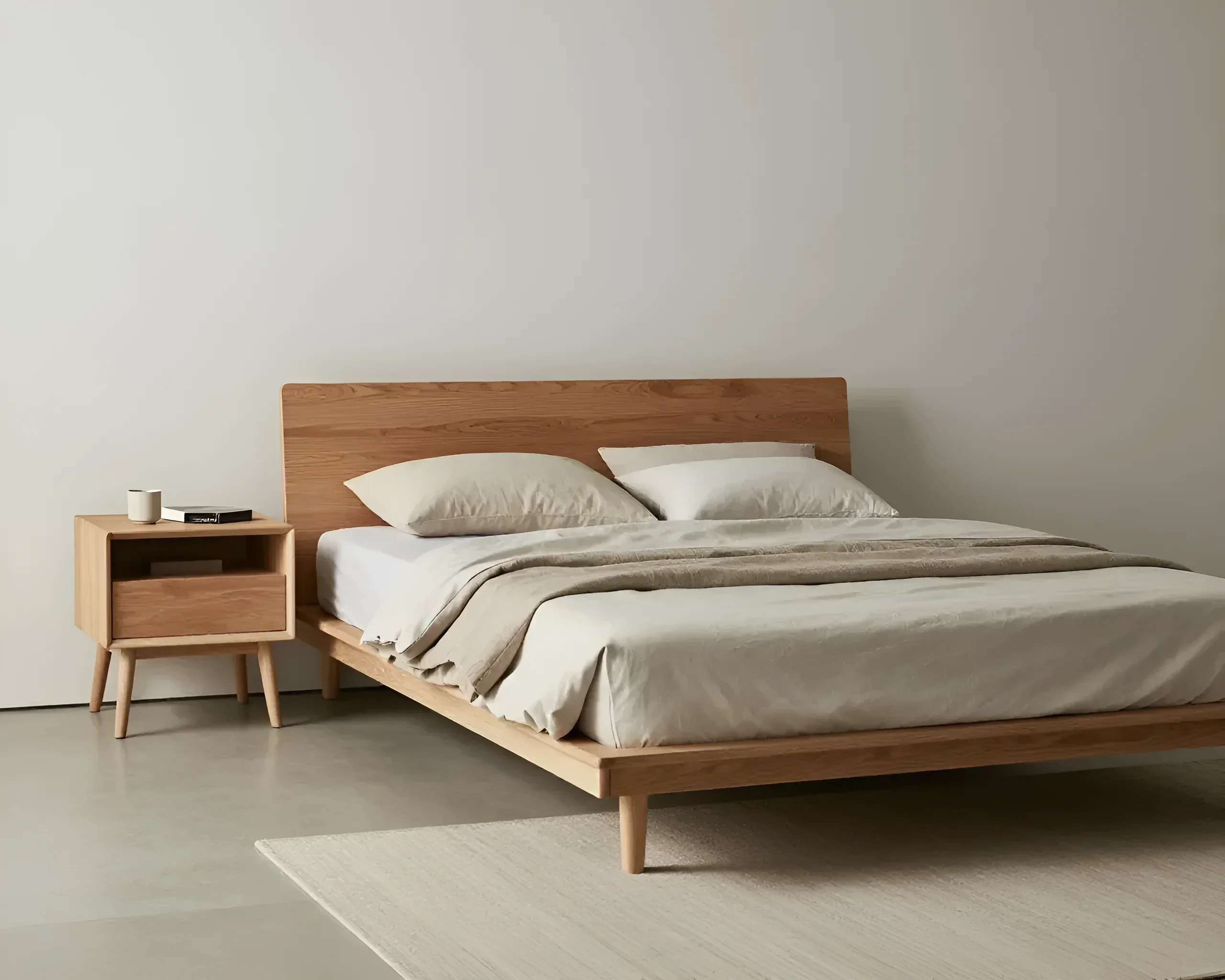
In the bedroom, Japandi manifests itself in its most tranquil form. The main accent here is the bed. It should be visually heavy, solid, yet simple. Platform beds are often used, mimicking Japanese futons but adapted to European comfort standards with a high mattress.
Criteria for Choosing Bedroom Furniture:
- Bed: Choose models with a wide wooden headboard. If the headboard is upholstered, it should be plain and without button tufting. The base height should be minimal.
- Bedside tables: Can be asymmetrical. On one side – a concise wooden cube, on the other – a light shelf or even a stump stool made from a solid wood slice.
- Wardrobe: The best solution is a built-in floor-to-ceiling wardrobe with smooth fronts in the color of the walls (a “seamless” effect). If the wardrobe is freestanding, choose models with rattan weaving or light wood fronts.
- Bench: At the foot of the bed, you can place a long, narrow oak bench or a woven model. This will add functionality and emphasize the style.
Remember about lighting: bedroom furniture should be softly illuminated. Choose lamps with shades made of rice paper or thin veneer – they perfectly complement wooden furniture.
Functionality and Ergonomics: Japandi Furniture for Small Spaces
For owners of small apartments, the Japandi style is a real find. Thanks to its conciseness, it does not overload the space. However, it is important to adhere to ergonomic principles here. Japandi furniture is often multifunctional, which aligns it with the Scandinavian approach.
Tips for Furnishing Small Rooms:
- Furniture on legs: When we see the floor under the furniture, the room appears larger. Choose chests of drawers and cabinets on thin but sturdy wooden legs.
- Sliding doors: Instead of hinged doors in wardrobes, use sliding systems resembling Japanese panels. This saves up to 1 sq. m of usable space.
- Round tables: A round dining table on a single central leg takes up less space and eliminates sharp corners, which is important for cramped rooms.
- Transformers: High-quality mechanisms are valued in Japandi. For example, a coffee table that can transform into a workspace should have reliable hardware (preferably of German or Austrian production).
Remember the “60/30/10 rule” for furniture arrangement: 60% of the space should remain free or occupied by main items, 30% – secondary furniture, and only 10% – accents. In Japandi, this balance shifts towards even more free space.
Caring for Japandi-Style Furniture: Preserving Natural Beauty
Since Japandi furniture is an investment in natural materials, it requires specific care. Natural wood in the interior is sensitive to humidity fluctuations and direct sunlight. To ensure your furniture lasts for decades, follow these rules:
- Humidity Control: The optimal level is 40-60%. In winter, when radiators are on, use humidifiers. In dry air, solid wood can crack.
- Surface Cleaning: Use only soft microfiber cloths. Forget aggressive chemicals with chlorine or abrasive particles. For oiled wooden surfaces, renew the protective layer with special compounds (e.g., based on carnauba wax) every six months.
- Textile Care: Linen and cotton covers are best cleaned with professional products or dry-cleaned. If the fabric has an Easy Clean treatment, stains can be removed with a regular damp sponge, but without rubbing.
- Sun Protection: Direct UV light can change the color of wood (oak darkens, and ash can turn yellow). Use light linen curtains or bamboo blinds to diffuse light.
Practical tip: If a small water stain appears on a wooden tabletop, do not try to scrape it off. Gently sand the area with fine-grit sandpaper (P240-P320) and cover it with furniture oil of the same color.
Top 5 Furniture Items That Will Perfectly Fit into Japandi Style
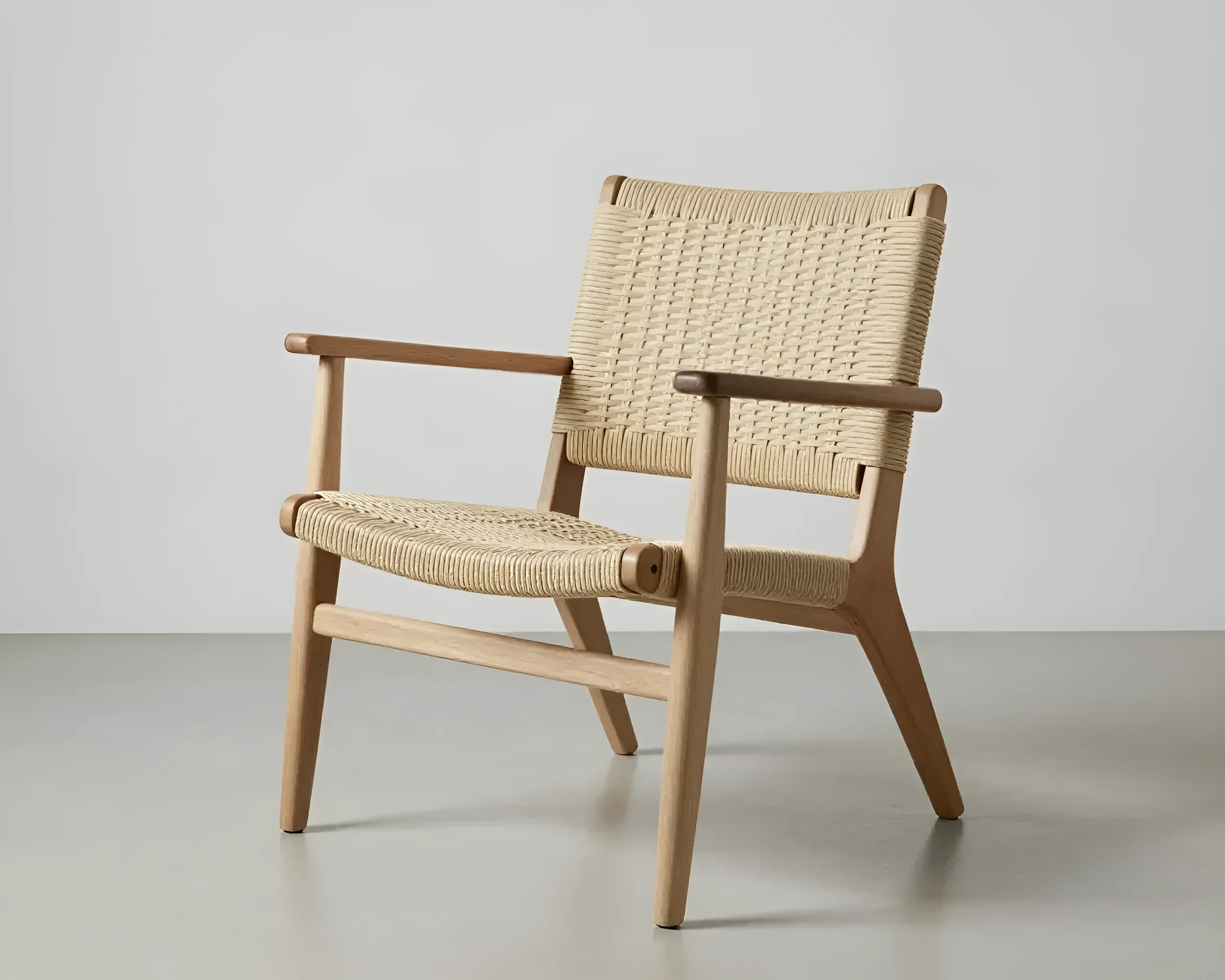
If you are not ready to completely change your interior, start with these five key items. They will instantly add Japandi aesthetics to any apartment:
- Low rattan armchair or one with a wooden frame: “Easy Chair” models with a woven seat. They look light and are very comfortable for reading.
- Ladder shelf: Leaning against the wall, it serves as a place for books and a couple of ceramic vases, without visually overloading the wall.
- Solid oak dining table with rounded corners: The tactility of wood during meals is the foundation of the style’s philosophy.
- Bedside lamp with a stone or ceramic base: The lampshade should be made of fabric or paper. This creates the “warm light” necessary for coziness.
- Minimalist chest of drawers with slatted fronts: The play of light and shadow on the slats creates dynamics in a calm interior.
These items are easily combined with simpler and more budget-friendly furniture, becoming focal points of the interior.
Buyer’s Tips: Creating a Japandi Interior in a Typical Apartment
Creating a Japandi interior is a process of eliminating the unnecessary. Start by auditing what you already have. Throw away furniture with cheap plastic hardware and colorful prints. When buying new furniture, focus on the following principles:
- Choose matte textures: Gloss kills coziness. Even metal should be matte, preferably black or satin.
- Pay attention to height: Try to “ground” the interior. If you have the option to choose a bed or sofa slightly lower than standard, do so.
- Quality hardware: In minimalism, attention is drawn to details. Soft-close mechanisms should work silently, and handles (if any) should be pleasant to the touch.
- Color harmony: Do not mix more than three shades of wood in one room. Ideally – one main (e.g., light oak) and one accent (black or dark walnut).
Remember that Japandi is about comfort, not about a picture from a magazine. Your furniture should be comfortable for you first and foremost. Don’t be afraid to leave empty corners – in this style, emptiness is as important as fullness.
Interesting facts about Japandi style:
- The style originated over 150 years ago when Danish designers began visiting Japan after its borders opened and were inspired by the Eastern approach to craftsmanship.
- Japandi often uses the “shou sugi ban” technique – a Japanese method of wood preservation by charring, which gives furniture a unique black color and texture.
- The philosophy of Japandi is closely linked to ecology: preference is given to furniture that will last 20-30 years, instead of cheap alternatives that require replacement after a couple of years.
FAQ: Frequently Asked Questions About Japandi Furniture
Question: Can Japandi furniture be combined with classic style?
Answer: It’s difficult, but possible. The main thing is to remove excessive gilding and monograms from the classic style. Keep quality parquet flooring and ceiling moldings, and choose concise furniture. Such a combination is called a “transitional style.”
Question: Isn’t this style too boring for a child’s room?
Answer: On the contrary, Japandi creates a calm environment that does not overload a child’s psyche. Add light wood furniture and muted textiles (terracotta, olive), and you will get an ideal space for development.
Question: Is Japandi furniture always expensive?
Answer: Solid wood is not cheap, but you can save money by choosing high-quality veneer or furniture made from birch plywood, which fits perfectly into the concept when properly treated with oil.