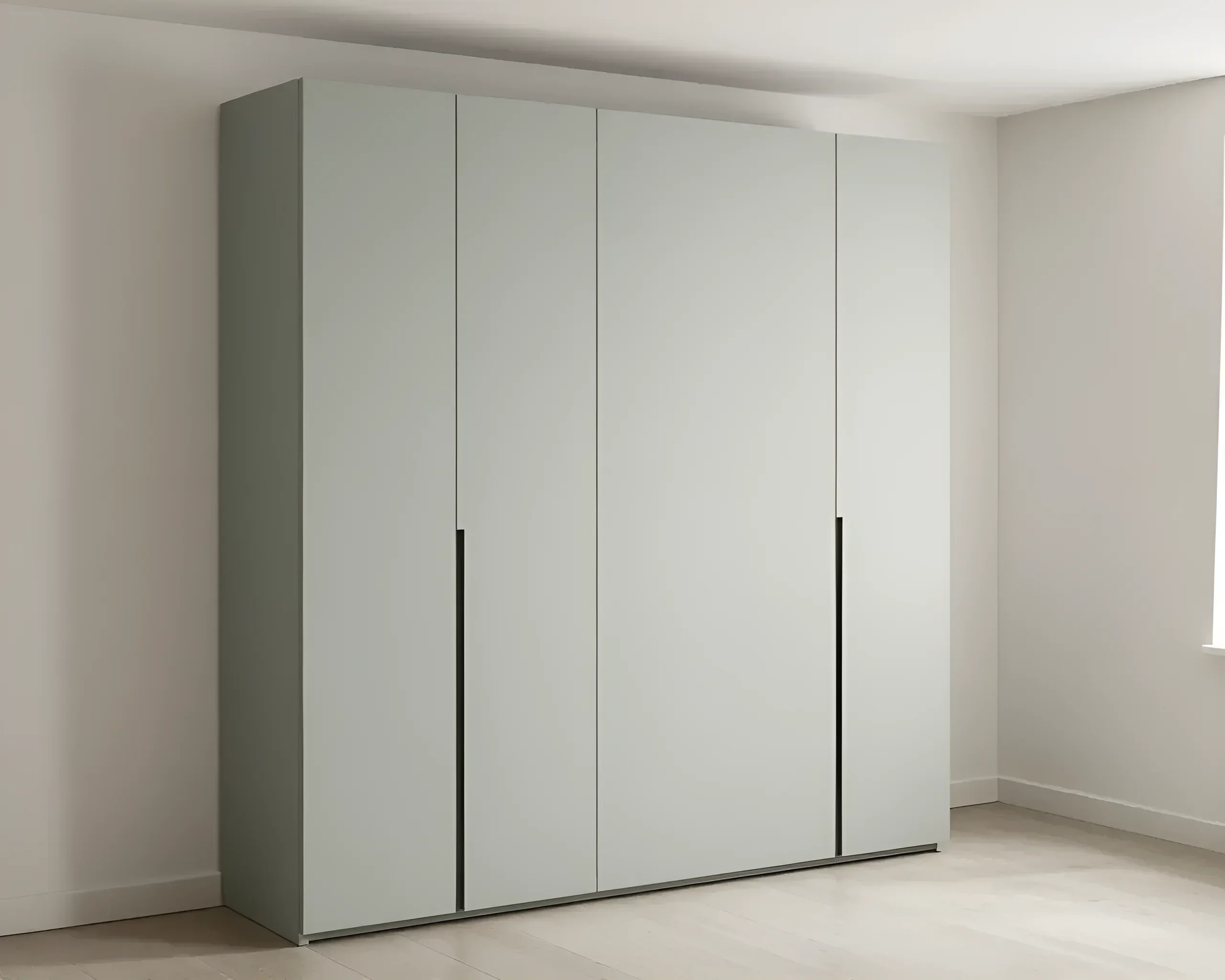
One of the main problems of small apartments, studios, and typical “Khrushchevkas” is the visual clutter of space with massive furniture. When a standard three-door wardrobe appears in a room with an area of 12-15 square meters, it instantly “eats up” volume, creating a feeling of tightness and pressure. However, there is a proven design technique that allows you to place even the most spacious storage system almost invisibly – this is the use of furniture in tune with the walls. The method of “dissolving” objects in space is based on the peculiarities of human vision: when the furniture facades and the wall surface have an identical shade and texture, the eye stops perceiving the wardrobe as a separate bulky item, reading it as a continuation of the wall plane.
Visual dissolution of the wardrobe: why choose furniture in the color of the walls?
The main goal of the “tone-on-tone” concept is to minimize visual noise. In a small room, every extra contrast, protruding corner, or bright color spot breaks up the space, making it visually even smaller. When you choose a wardrobe in the color of the walls, you achieve several critically important effects for the interior at once:
- Spatial integrity: The walls are not interrupted by dark or contrasting facades, which creates an illusion of infinity and spaciousness.
- Reduced psychological pressure: Bulky furniture stops “hanging” over the bed or desk. This is especially important for bedrooms, where coziness directly depends on the absence of heavy forms.
- Emphasis on details: By “dissolving” large furniture, you free up space for real decorative accents – paintings, textiles, designer chairs, or lighting, which previously got lost against the background of a huge wardrobe.
- Architectural correction: With the help of wardrobes in the color of the walls, you can correct the geometry of the room, for example, “level” a niche or turn a long “wagon” into a harmonious square.
Technically, this effect works best if the wardrobe occupies the entire height of the room – from floor to ceiling. Any gap above will instantly reveal the dimensions of the furniture and destroy the magic of invisibility.
Types of wardrobes that “blend in” with the interior
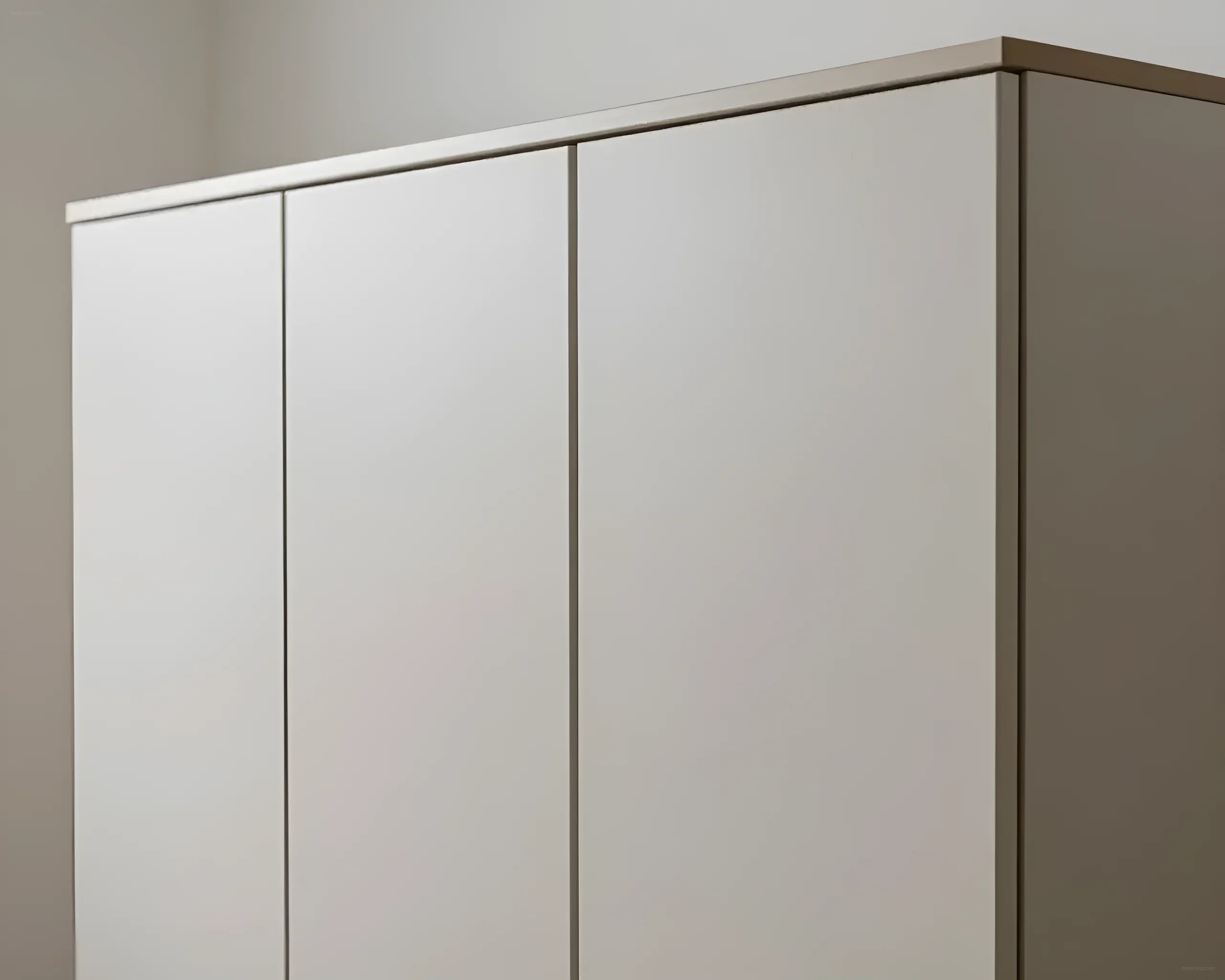
Not every wardrobe can be successfully disguised. To achieve the maximum “invisible” effect, certain structural solutions should be considered. The choice of a specific type depends on the layout and budget.
- Built-in sliding wardrobes: The ideal option for niches. The absence of visible side walls and a roof allows the facades to look like part of the wall. It is important to use hidden tracks (guides) so that they do not create unnecessary horizontal lines.
- Hinged wardrobes “to the ceiling”: Considered the most modern solution. Thanks to minimal gaps (only 2-3 mm) between the doors, such a storage system looks like a wall panel.
- Wardrobes with Push-to-open system: The absence of handles is a key condition. If there is no hardware on the facade, the eye does not find a hook confirming that it is furniture in front of it.
- Wardrobe partitions: If the wardrobe is used for zoning (e.g., separates the sleeping area from the living room in a studio), painting its back and side walls in the color of the walls turns it into a full-fledged false wall.
It is important to note that freestanding (cabinet) wardrobes are more difficult to “dissolve” due to visible joints with the floor and ceiling, as well as due to the shadow they cast on the walls. Therefore, for maximum effect, built-in installation using additional elements and false panels is recommended.
Materials for “invisible” wardrobes: from MDF to mirror facades
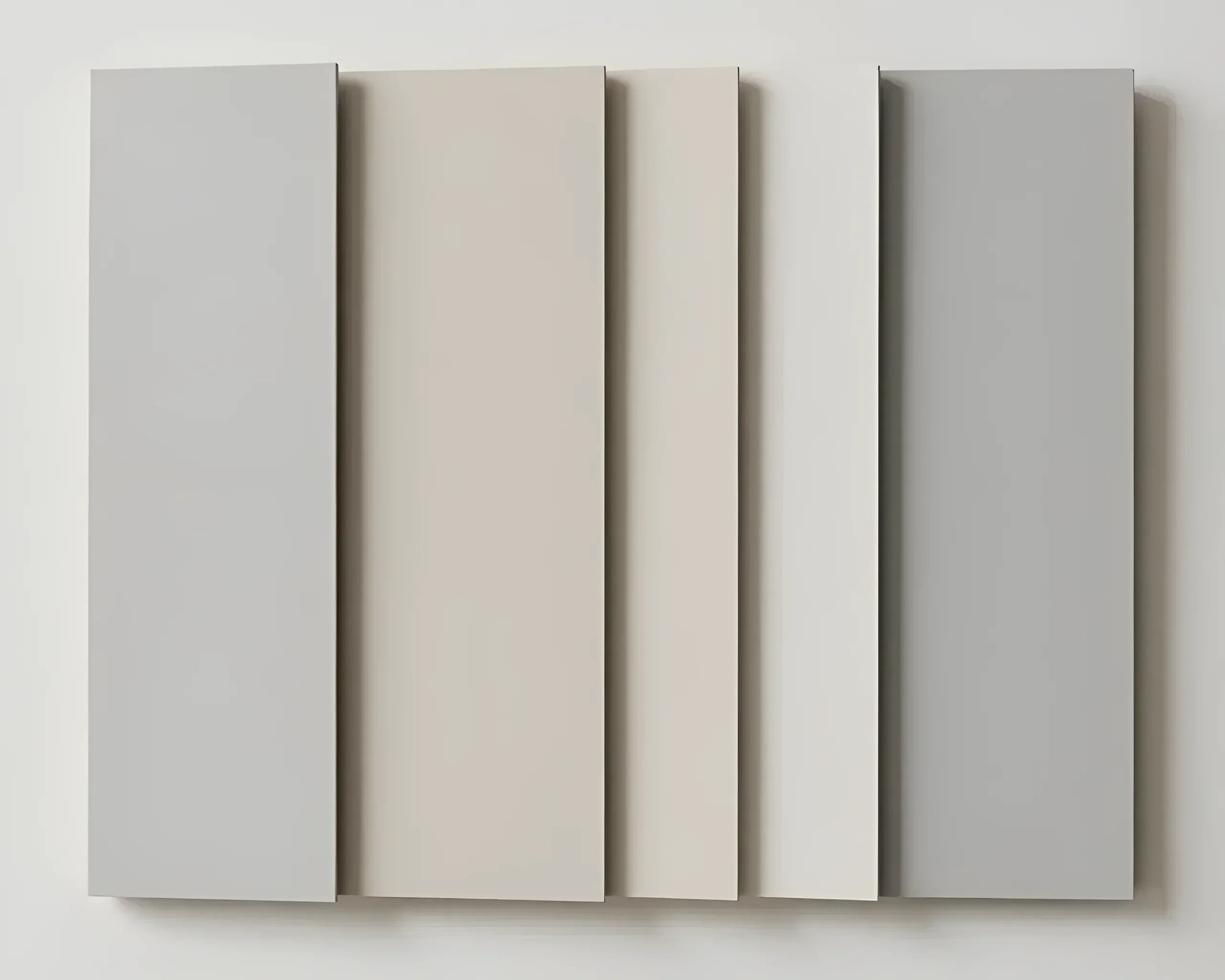
The choice of material is critical, as it determines how accurately you can match the color of the walls. Surfaces can be both matte and glossy, but each has its own technical features.
1. MDF for painting (enamel). This is the “gold standard” for creating hidden storage systems. The advantage is that you can order the painting of facades according to the same catalogs by which you chose the paint for the walls (RAL, NCS). This guarantees a 100% match in tone. Enamel can be matte, deep matte, or glossy.
2. Laminated particleboard (LDP). A more budget-friendly option. The difficulty lies in the limited palette of decors. It is almost impossible to pick LDP to match the wall paint exactly, so you often have to work backwards: first choose LDP, and then tint the wall paint to match it.
3. Mirror facades. A mirror does not imitate the color of the walls, but it reflects them, thereby doubling the space. If the wardrobe is located opposite a window or a light-colored wall, it literally disappears. However, a mirror requires perfect order in the room, as it reflects all visual chaos.
Comparative table of materials for facades:
| Material | Coloring possibility | Wear resistance | Cost |
|---|---|---|---|
| MDF Enamel | Ideal (RAL/NCS) | High (but afraid of chips) | High |
| LDP | Limited | Medium | Low |
| MDF Film | Medium (by film catalogs) | Medium | Medium |
| Veneer with varnish | Difficult (requires stain selection) | High | Very high |
How to choose the perfect shade of wardrobe for the wall color
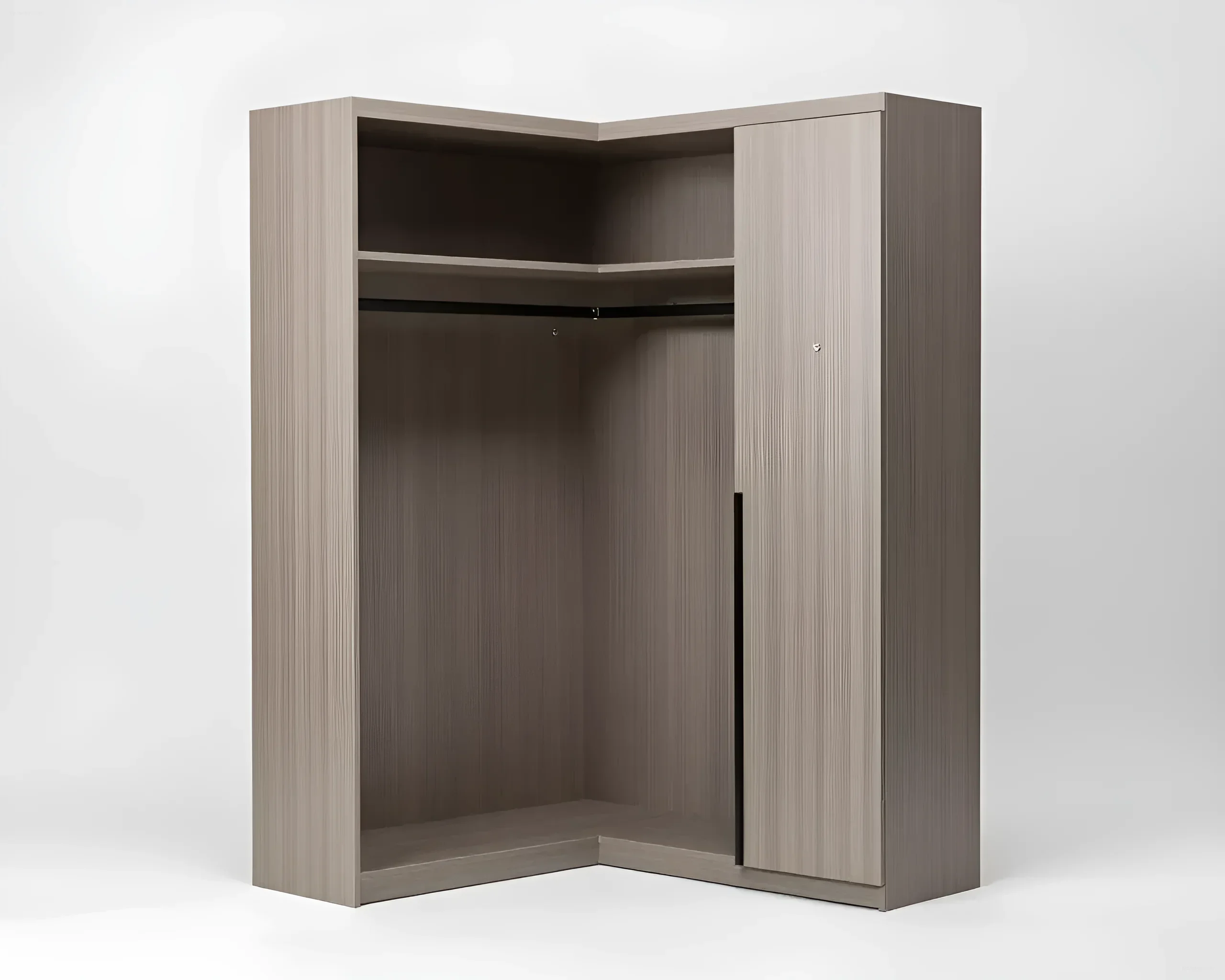
The most common mistake is buying a wardrobe of “just white” color for “just white” walls. In coloristics, there are hundreds of shades of white, gray, and beige. If the wardrobe has a cool undertone and the walls have a warm one, the furniture will look dirty or yellowish.
To avoid dissonance, follow the algorithm of professional designers:
- Use NCS or RAL fan: These are international color coding systems. If the walls are painted with paint with the code NCS S 1002-Y, then the wardrobe facades should also be ordered with the same code.
- Make color samples: Light in the store and light in your apartment are two different realities. Order a test sample (color sample) from the furniture manufacturer on a small piece of MDF and apply it to the wall at different times of the day (morning, afternoon, under artificial lighting).
- Consider the degree of gloss: Matte paint on the wall and glossy enamel on the wardrobe of the same color will look different. Gloss always appears lighter due to light reflection. For the “dissolving” effect, it is better to choose the same degree of matte finish (usually 5-10% gloss).
- Texture matching: If the walls have a pronounced texture (e.g., decorative plaster or canvas-like wallpaper), a smooth wardrobe may stand out. In this case, the facades can be covered with the same wallpaper as the walls, using special glue for furniture surfaces.
Dimensions and configurations: secrets of perfect integration
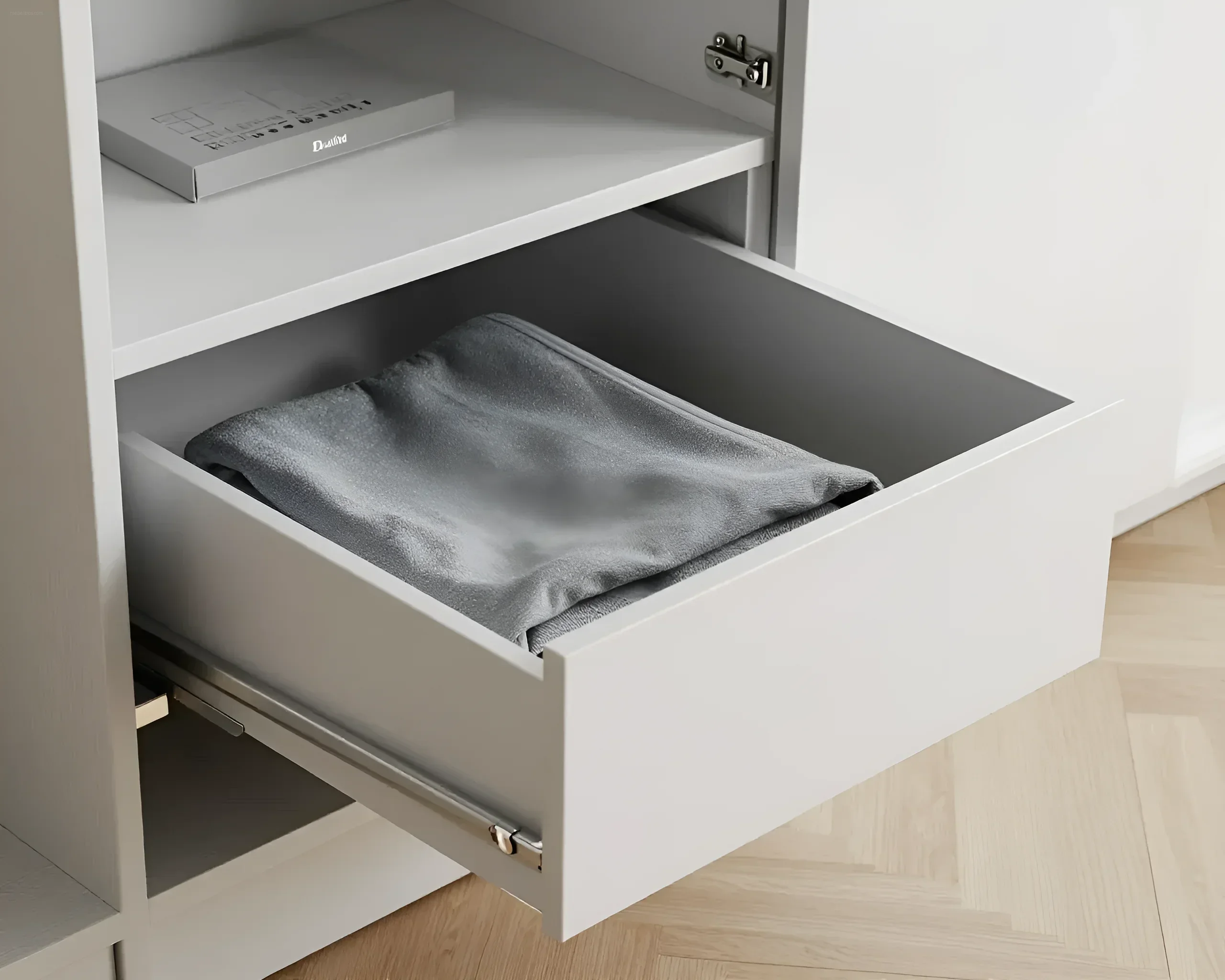
For the wardrobe to truly become “invisible,” it must be integrated into the room’s architecture. Any gap, crack, or protruding element will reveal it as an alien object.
1. Height “to the ceiling”. This is a critical requirement. If there is a 10-20 cm gap between the wardrobe and the ceiling, shadow accumulates there, clearly outlining the furniture’s boundaries. If the ceilings are stretch ceilings, use special inserts to attach the wardrobe tightly. If the ceiling is made of drywall, you can make a box into which the wardrobe will “drive” as if into a niche.
2. Baseboards and cornices. Do not break the baseboard line. It is optimal to run the floor baseboard directly along the bottom of the wardrobe (plinth), and the ceiling cornice along the top. This way, the wardrobe will look like a solid wall.
3. Construction depth. The standard depth of a wardrobe for clothes is 60 cm. In very narrow rooms, it is better to sacrifice the classic placement of hangers and make the wardrobe 40-45 cm deep with pull-out rods. An extra 15 cm of free passage will visually make the room much more spacious.
4. Absence of side walls. If possible, build the wardrobe from wall to wall. If the wardrobe ends in the middle of the wall, its side should be painted in the color of the walls and perfectly aligned vertically.
Functionality and ergonomics: hidden storage systems for maximum comfort
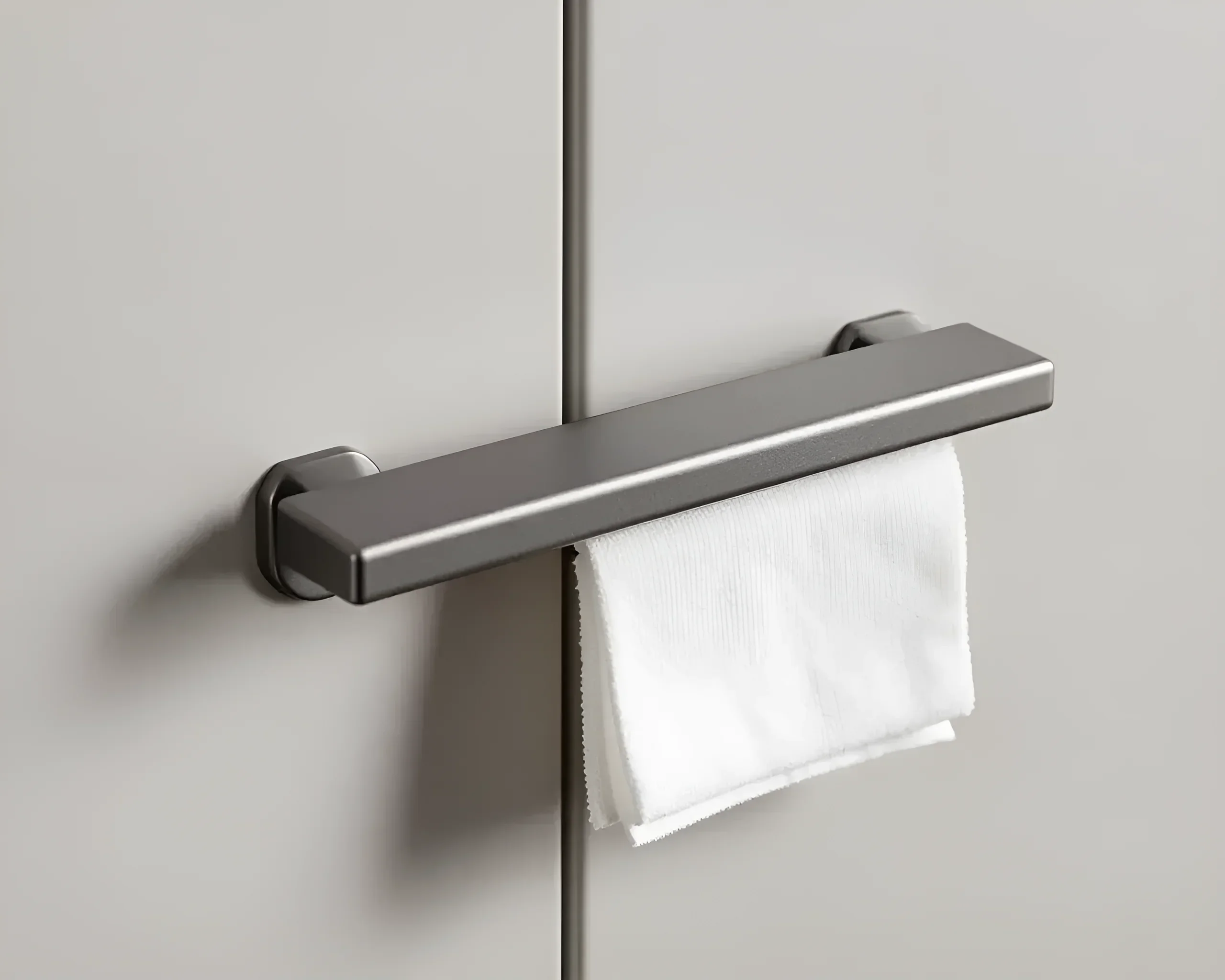
External invisibility should not come at the expense of internal convenience. Since we are talking about small rooms, every cubic centimeter inside the “dissolved” wardrobe should work effectively.
For hidden storage systems, the following “fillings” are recommended:
- Pantographs: Allow you to use the space under the ceiling for storing seasonal items, lowering the clothes rod to a convenient level.
- Pull-out baskets and trouser racks: They provide better visibility and ventilation of items than regular shelves.
- Hidden handles or profile handles: If the Push-to-open system seems inconvenient to you (e.g., due to fingerprints), use integrated milling handles on the edge of the facade. They are functional but completely invisible from the front.
- Internal lighting: Since wardrobes in the color of the walls often make the interior dark (if, for example, dark gray or deep blue is chosen), an LED strip with a door opening sensor becomes a necessity.
Expert tip: When designing a wardrobe in the color of the walls in the hallway, provide a hidden shoe section inside with inclined shelves – this will make the wardrobe less deep.
Care for furniture in the color of the walls: preserving the “invisibility” effect
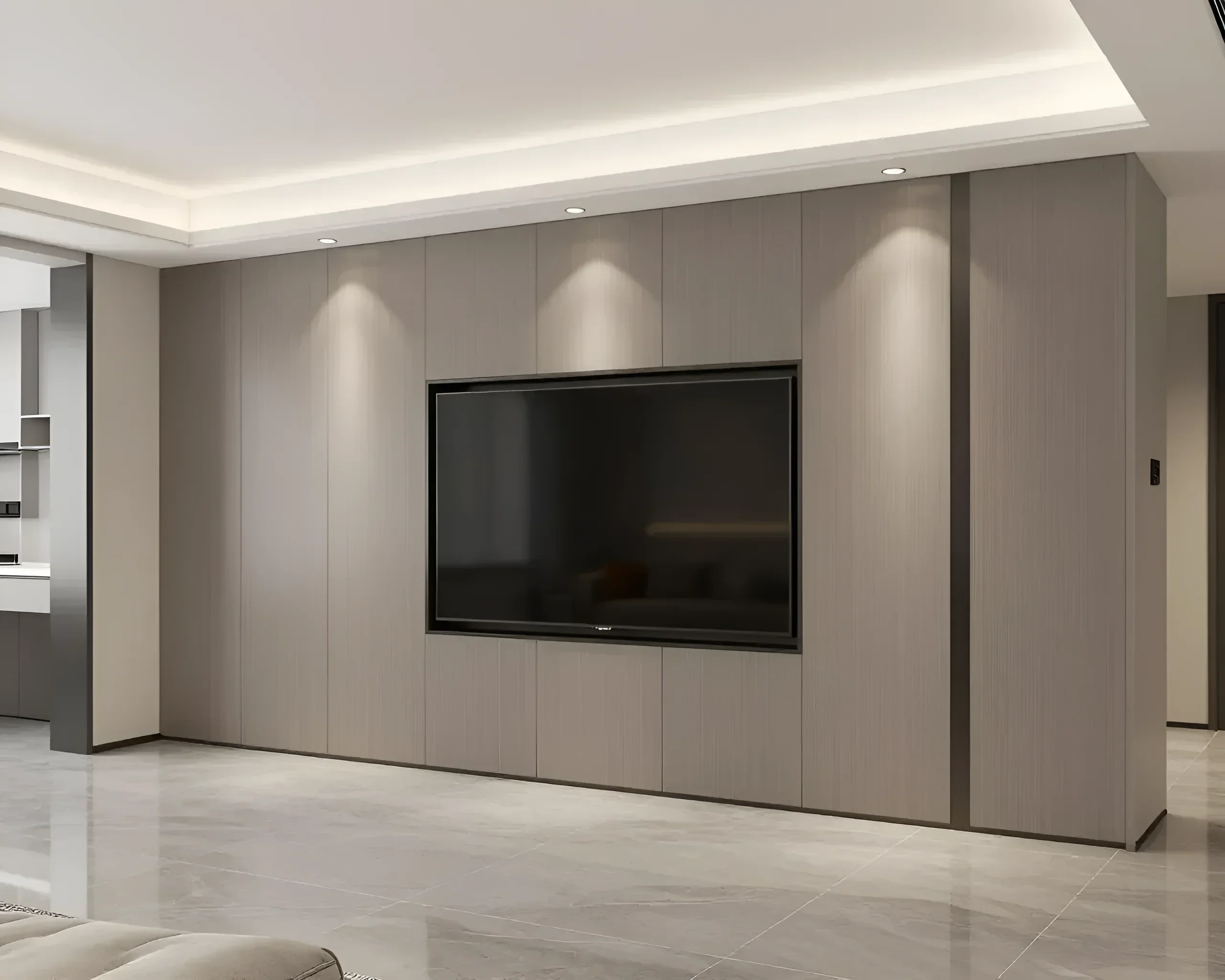
The “dissolving” effect can be easily destroyed by the untidy appearance of the furniture. Dust, fingerprints, and scratches on solid-colored facades (especially matte ones) are more noticeable than on wood texture.
Care rules:
- Matte facades: It is strictly forbidden to use alcohol-containing products and abrasive powders. They can leave glossy “bald spots” that will glare and reveal the wardrobe. Use a soft microfiber cloth and special sprays for matte surfaces.
- Light shades: White and beige facades can absorb household dirt over time. Wipe them with a weak soapy solution once a month.
- Push-to-open mechanisms: Regularly check the hinge adjustment. If the doors sag by even 1 mm, the gaps will become uneven, and the effect of a single wall will disappear.
If you painted the wardrobe with the same paint as the walls (in the case of MDF for painting), be sure to leave a small amount of paint in a tightly closed container. In case of chips or deep scratches, you can spot-repair the surface, maintaining a perfect color match.
Top 5 design solutions: wardrobes that disappear in space
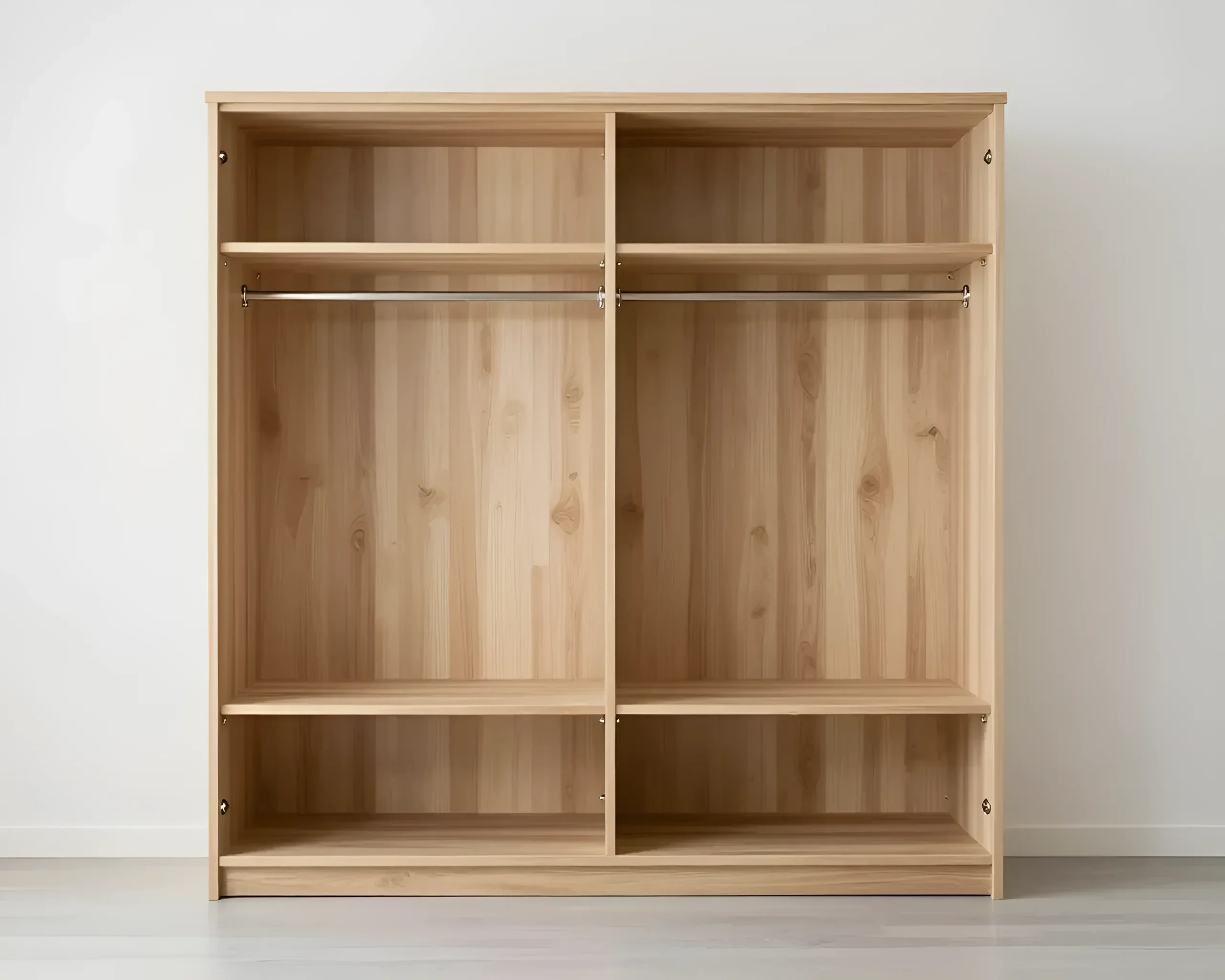
Let’s consider specific scenarios for using this technique that have proven effective in small spaces.
- Wardrobe around the doorway. The storage system is built on both sides of the door and above it. If you paint everything in the same color as the door leaf and walls, the entrance to the room will look like a portal in a deep niche, and there will be more storage space than in a regular wardrobe.
- Wardrobe-wall in the bedroom. Instead of a headboard or opposite the bed. Handleless facades from floor to ceiling. This creates the feeling of a clean, empty room, although all the wardrobe is hidden behind the facades.
- Mirror illusion. Combination of facades in the color of the walls and mirror inserts. For example, the central doors are mirrored, and the side ones are in the color of the walls. This “breaks” the space and visually doubles it.
- Window framing. Wardrobes are installed in the piers near the window, and a workspace or a bench for relaxation is organized under the windowsill. The wardrobes, as well as the slopes and the radiator grille, are painted in the color of the walls.
- Corner “invisible”. Corner wardrobes usually look very bulky. But if you make them in the color of the walls with radius (rounded) or, conversely, strictly straight facades without hardware, the corner is visually smoothed out.
Buyer’s tips: how to avoid mistakes when choosing a wardrobe in the color of the walls
To ensure your space-expanding project doesn’t turn into a disappointment, pay attention to the following nuances when ordering furniture:
- Don’t skimp on hardware. Hidden systems require perfect geometry. Cheap hinges sag quickly, and “invisible” seams turn into crooked gaps. Choose proven manufacturers (Blum, Hettich, Grass).
- Pay attention to lighting. If direct light from the window falls on the wardrobe, any unevenness in painting or joints will be emphasized by shadows. Plan the lighting so that the light is diffused.
- Gaps matter. The smaller the technical gaps between the doors, the more monolithic the wardrobe looks. The optimal gap is 2 mm. Check if the chosen hardware allows you to achieve such precision.
- Walls first, then furniture? No! Ideally, you should choose the wall paint and order the facades simultaneously, having both samples on hand. It often happens that the paint is already on the walls, but the furniture manufacturer does not have the desired enamel shade in their palette.
- Remember the baseboard. If you plan a built-in wardrobe, decide in advance how the floor baseboard will connect. It is best to order the baseboard together with the furniture or use a hidden baseboard.
Frequently Asked Questions (FAQ)
Question: Can I make a wardrobe in the color of the walls if I have patterned wallpaper?
Answer: Yes, it is possible. There are two ways: either cover the facades with the same wallpaper (this requires high skill from the installers), or choose one of the background shades of the wallpaper pattern and paint the wardrobe in that tone. The second option will create a “support” effect and also visually lighten the structure.
Question: Won’t the room look too boring and monotonous?
Answer: Monotony is the base. You can add brightness through decor: pillows, vases, carpets. The main thing is that the “base” (wardrobe) will not attract attention and create chaos.
Question: How much more expensive is a “to the ceiling” wardrobe compared to a regular one?
Answer: The cost increases by approximately 20-30% due to material consumption and installation complexity (fitting to the curvature of the ceiling and floor). However, this effect is worth the cost, as you get 15-20% more useful storage volume.
Interesting facts about hidden furniture
- The technique of “mimicking” furniture to the walls was first widely used in minimalist and Japandi interiors, where purity of lines is a cult.
- Psychologists claim that in rooms with hidden storage systems, people feel calmer, as the brain does not spend resources on processing small visual details and object boundaries.
- In modern smart apartments with an area of up to 20 sq. m, furniture in the color of the walls is the only way to accommodate all necessary items without turning the living space into a warehouse.
- The use of vertical milled lines on facades in the color of the walls not only hides the wardrobe but also visually “lifts” the ceiling, creating a rhythmic architectural pattern.
Choosing a wardrobe in the color of the walls is not just following fashion, but a practical and functional approach to organizing life in a small space. By investing in quality materials and precise shade selection, you get an interior that looks “designer,” remains spacious, and at the same time accommodates everything necessary for a comfortable life.