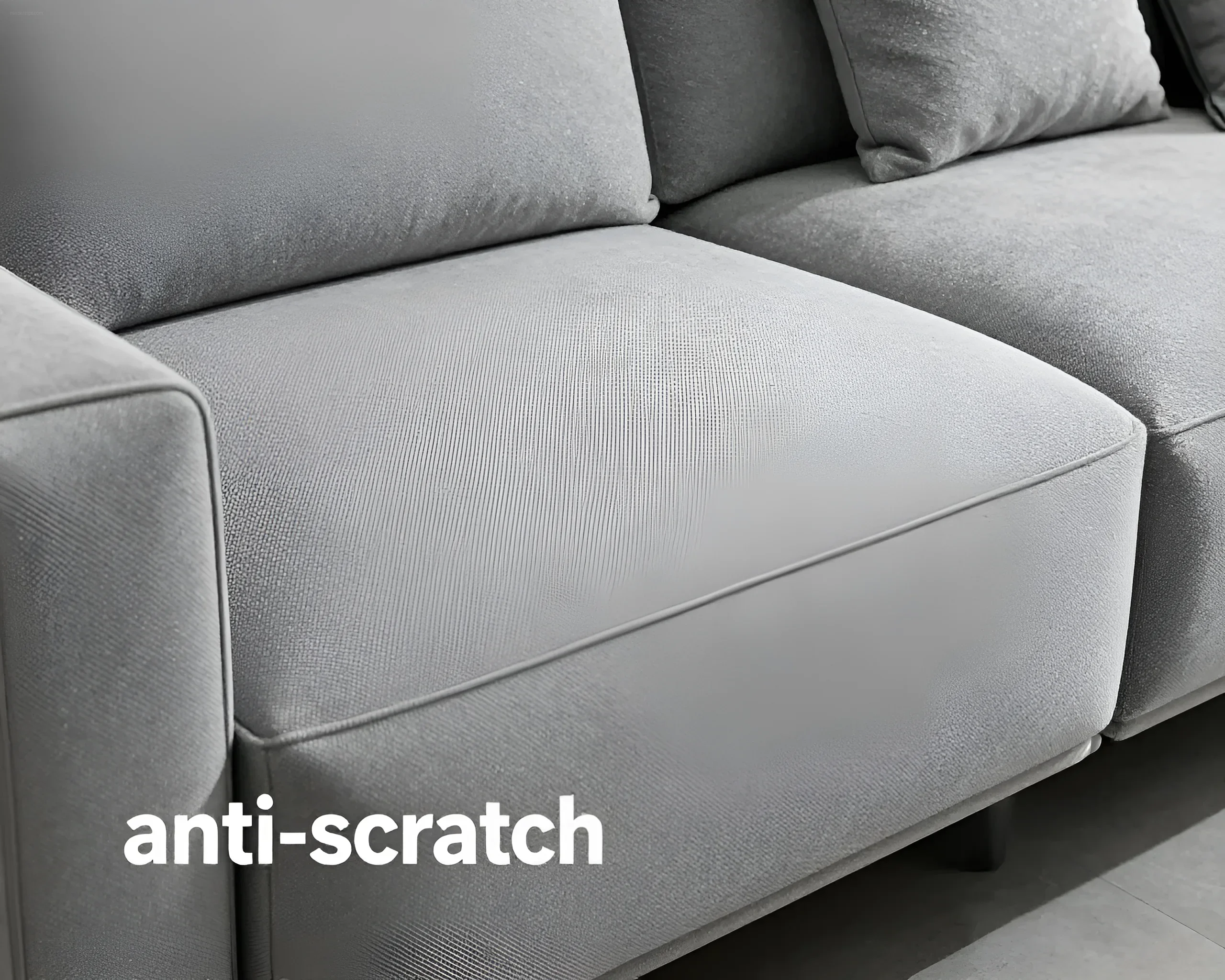
Every cat owner sooner or later faces a dilemma: either a stylish interior or a beloved pet. Cat claws can turn expensive chenille or matting into rags in literally a couple of weeks. This is where the category of fabrics, popularly known as “anti-claw,” comes into play. This is not some specific magical material, but a group of upholstery with special technical characteristics that make them practically invulnerable to snagging. The main task of such fabric is to prevent the claw from catching on the weave thread. If there’s no loop to pull out, the cat quickly loses interest in the sofa as a scratching post. In this article, we will conduct a detailed analysis of the two main market favorites – velour and microfiber – so you can make an informed choice and keep your furniture in its original condition for years to come.
Anti-Claw Fabric for Sofas: What It Is and Why You Need It
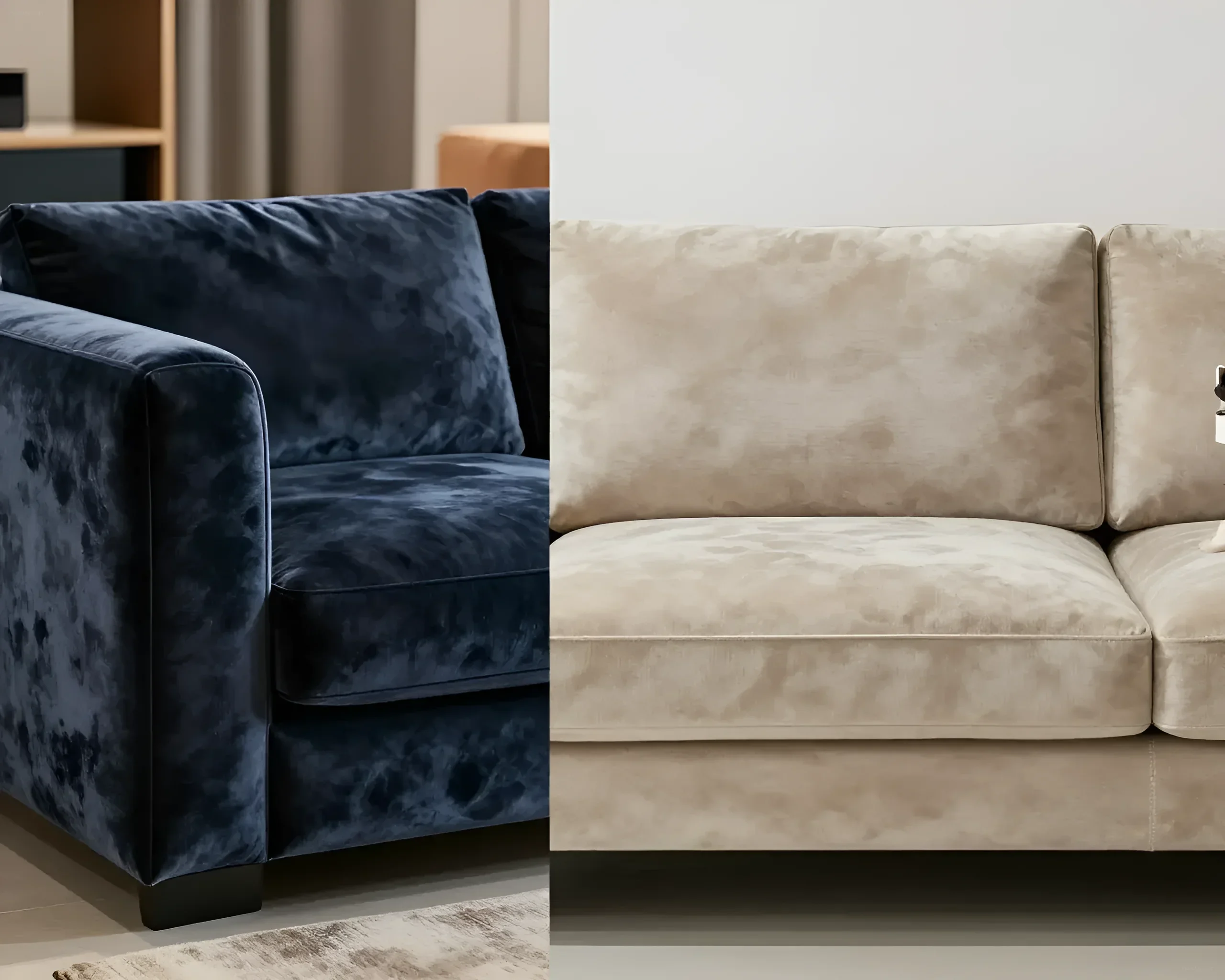
Before we move on to the comparison, let’s clarify the terminology. The marking “anti-claw” (or pet-friendly) in furniture manufacturing means that the fabric has increased density and a specific pile structure. The main secret lies in the absence of visible thread interweaving on the face side. In ordinary matting, threads go crosswise, forming microscopic “windows.” A cat’s claw fits perfectly into such an opening, catches the thread, and pulls it out. The result is snags that cannot be removed.
Fabrics with an “anti-claw” effect are usually made using non-woven technology or have a very short, dense pile on a strong base. Key technical parameters to pay attention to when buying a sofa at mebeltops.com:
- Martindale Test: A measure of wear resistance. For home use, 20,000 cycles are considered normal, but for the “anti-claw” category, this figure should start from 50,000 and reach 100,000 cycles.
- Fabric Density: Measured in grams per square meter (g/m²). High-quality protective upholstery has a density of 350 to 600 g/m². The higher the density, the harder it is for a claw to penetrate the material to the base.
- Teflon Coating: Many modern velours and microfibers are treated with a compound that not only repels water but also makes the fibers more slippery. The claw simply slides off the surface without causing damage.
You need this if your cat ignores the scratching post or if you simply want to invest in durable furniture that can withstand not only claws but also children’s games, spilled coffee, and active daily use.
The Main Stars of Our Test Drive: Velour vs. Microfiber for Cats
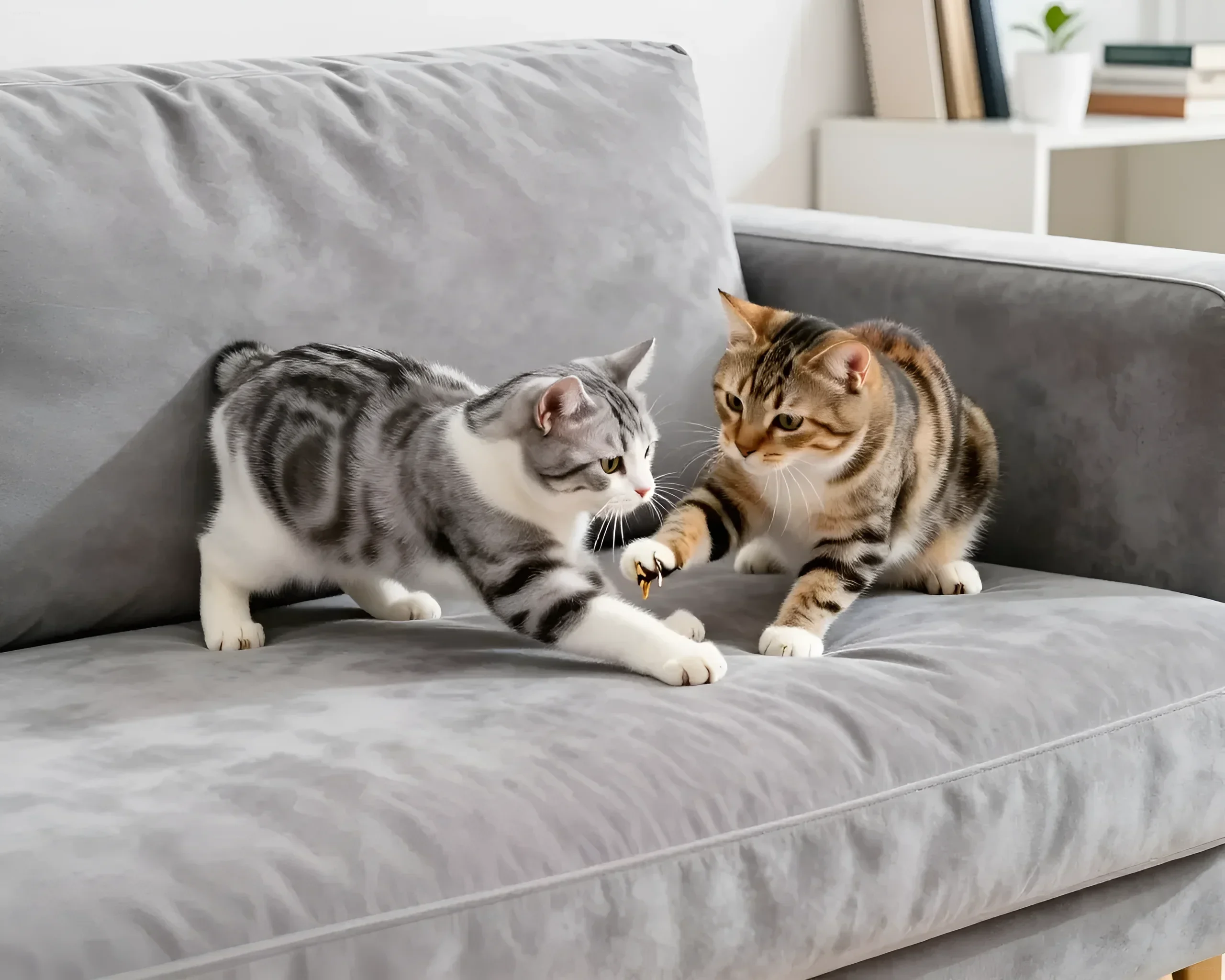
Two materials currently dominate the furniture industry, vying for the title of the ideal “anti-claw.” Let’s examine their structural features.
Velour is a knitted fabric with a cut pile. Modern furniture velour is very different from what we were used to seeing 20 years ago. It consists of a strong base (usually polyester) and a dense vertical pile. Because the pile is very short and tightly packed, a cat’s claw finds no purchase. There are variations: microvelour (with very fine pile) and corduroy (with a characteristic rib, which, by the way, is less resistant to cats).
Microfiber (artificial suede) is a high-tech non-woven material. It is produced by splitting fibers into the finest microfilaments. Visually, it can resemble natural suede or nubuck. Microfiber has no looped weave at all; it’s a solid fabric. It is considered the “gold standard” for pet owners due to its phenomenal tensile strength.
Let’s compare their basic characteristics in a table:
| Characteristic | Modern Velour | Furniture Microfiber |
|---|---|---|
| Structure | Pile on a knitted base | Non-woven microfiber |
| Tactile Sensation | Soft, warm, cozy | Smooth, cool, velvety |
| Snag Resistance | High | Maximum |
| Ease of Care | Medium (collects fur) | Low (easy to clean) |
| “Writing” Effect | Present (hand marks) | Minimal or absent |
“Anti-Claw” Test Drive: How Velour and Microfiber Handle Cat Claws
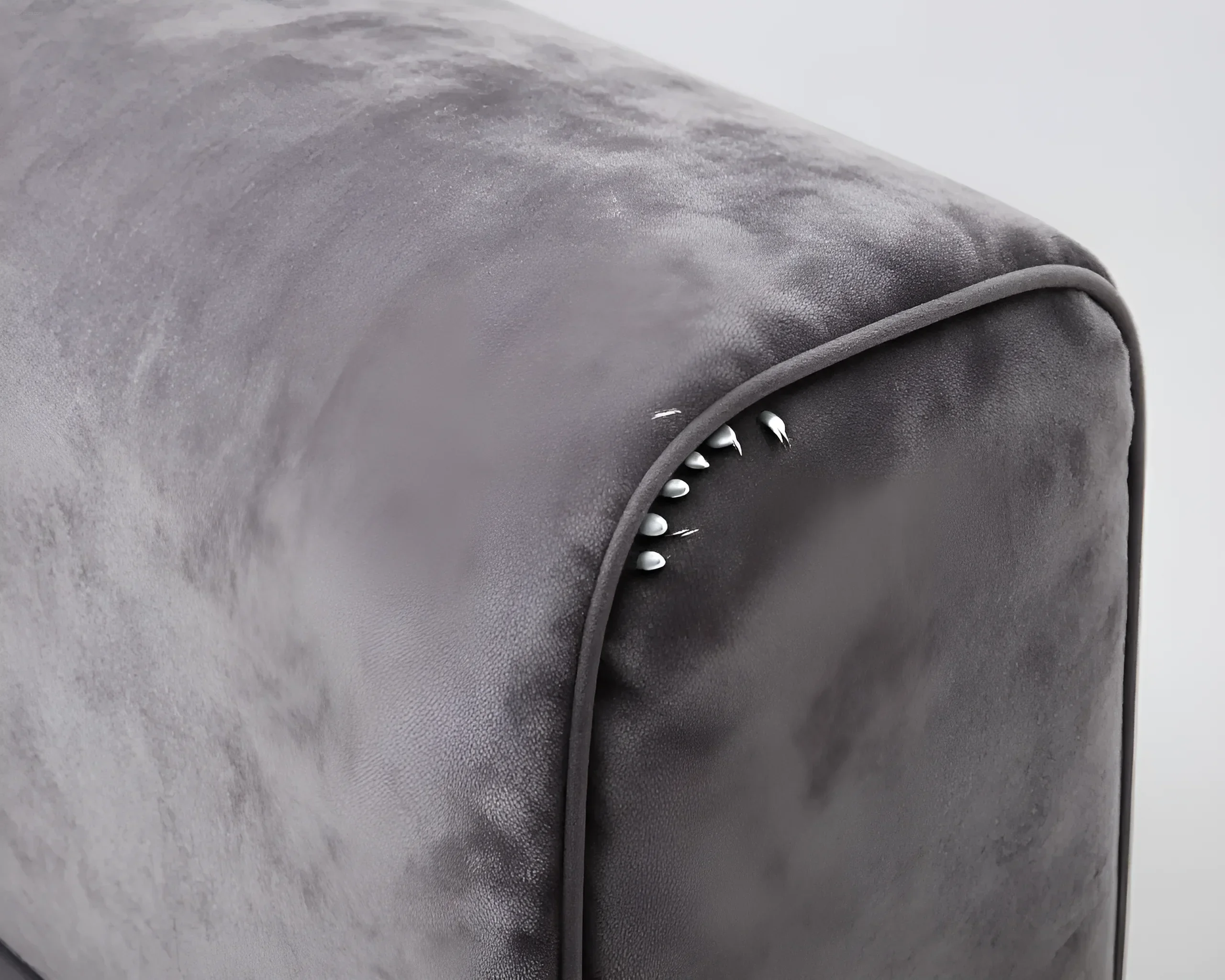
We conducted a practical experiment, simulating a cat’s behavior on both types of surfaces. For the test, we used fabric samples with a density of 450 g/m² and a metal brush with sharp teeth, mimicking a cat’s grip.
Velour Test Results: Under intense mechanical stress, the velour pile slightly compresses, but the threads do not pull out. The claw slides through the pile and hits the dense backing. If the backing is of good quality (fleece-backed), no damage remains. However, if the cat has very sharp, untrimmed claws, micro-punctures may remain on cheap velour, which are, however, invisible to the eye due to the density of the pile.
Microfiber Test Results: This material proved to be a real bulletproof vest. Due to the absence of pile as such (microfiber threads are 100 times thinner than human hair and woven as densely as possible), there is simply nothing to snag. The brush slid over the surface, leaving no scratches. The only nuance is that on light microfiber, gray marks from the claws themselves (dirt) may remain after an “attack,” which are easily removed with a damp cloth.
Test Drive Verdict: Both materials are excellent at protecting against snags. Microfiber is slightly more resistant to aggressive scratching, while velour better masks possible micro-damage due to its texture.
Pros and Cons of Velour: Softness vs. Durability
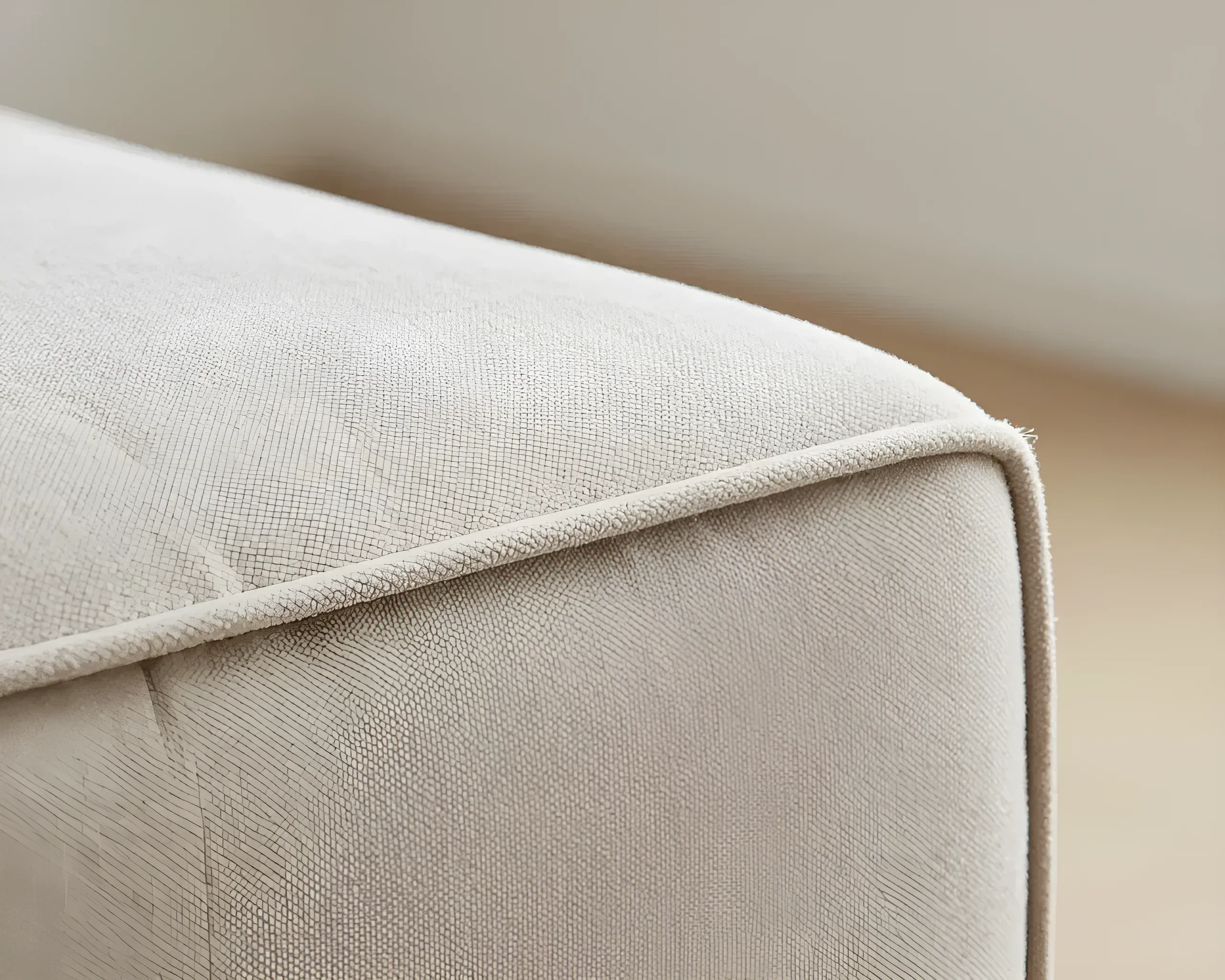
Velour is the most popular choice for mebeltops.com clients. And here’s why:
- Aesthetics and Comfort: Velour looks expensive. It shimmers in the light, creates deep shades, and is pleasant to the touch. For a living room where creating a cozy atmosphere is important, it’s an ideal option.
- Hypoallergenic: High-quality synthetic velours do not accumulate dust as much as natural fabrics and do not cause allergies.
- Durability: Good velour does not wear out on elbows and seats for years.
However, there are also cons that we must warn you about:
- Fur: Velour is a magnet for cat fur. Due to static electricity, the pile attracts hairs. If your cat sheds a lot, you will have to clean the sofa with a vacuum cleaner or a lint roller at least twice a week.
- Difficult Stains: If the cat not only scratches but also, for example, marks its territory or soils the sofa with food, cleaning velour is more difficult. The pile can “remember” the direction of the stain, and after cleaning, a halo will remain.
Expert Tip: Choose velour with a short pile and a matte texture. The shorter the pile, the less fur it will collect, and the harder it will be for the cat to “ruffle” it.
Advantages and Disadvantages of Microfiber: Practicality in Detail
Microfiber is often chosen by those who prioritize practicality. It is often called “indestructible” fabric.
Advantages:
- Ease of Cleaning: Most stains are removed with a regular sponge and soapy water. Microfiber often has an Easy Clean impregnation that prevents dirt from penetrating the fiber.
- Breathability: Despite its density, the fabric “breathes.” It’s not hot on such a sofa in the summer, and not cold in the winter.
- Ignores Fur: Unlike velour, microfiber is practically not electrified and does not retain fur in its structure. It’s enough to simply run your hand over it to gather hairs into a ball.
Disadvantages:
- Modest Appearance: Microfiber looks more restrained than velour. Some find it too “office-like” or plain.
- Sensitivity to High Temperatures: Do not place the sofa close to a heater or iron the upholstery – synthetic microfibers can melt.
Practical Tip: If you choose microfiber, pay attention to models with an “antique” effect or leather imitation. They look solid and have all the protective properties of “anti-claw.”