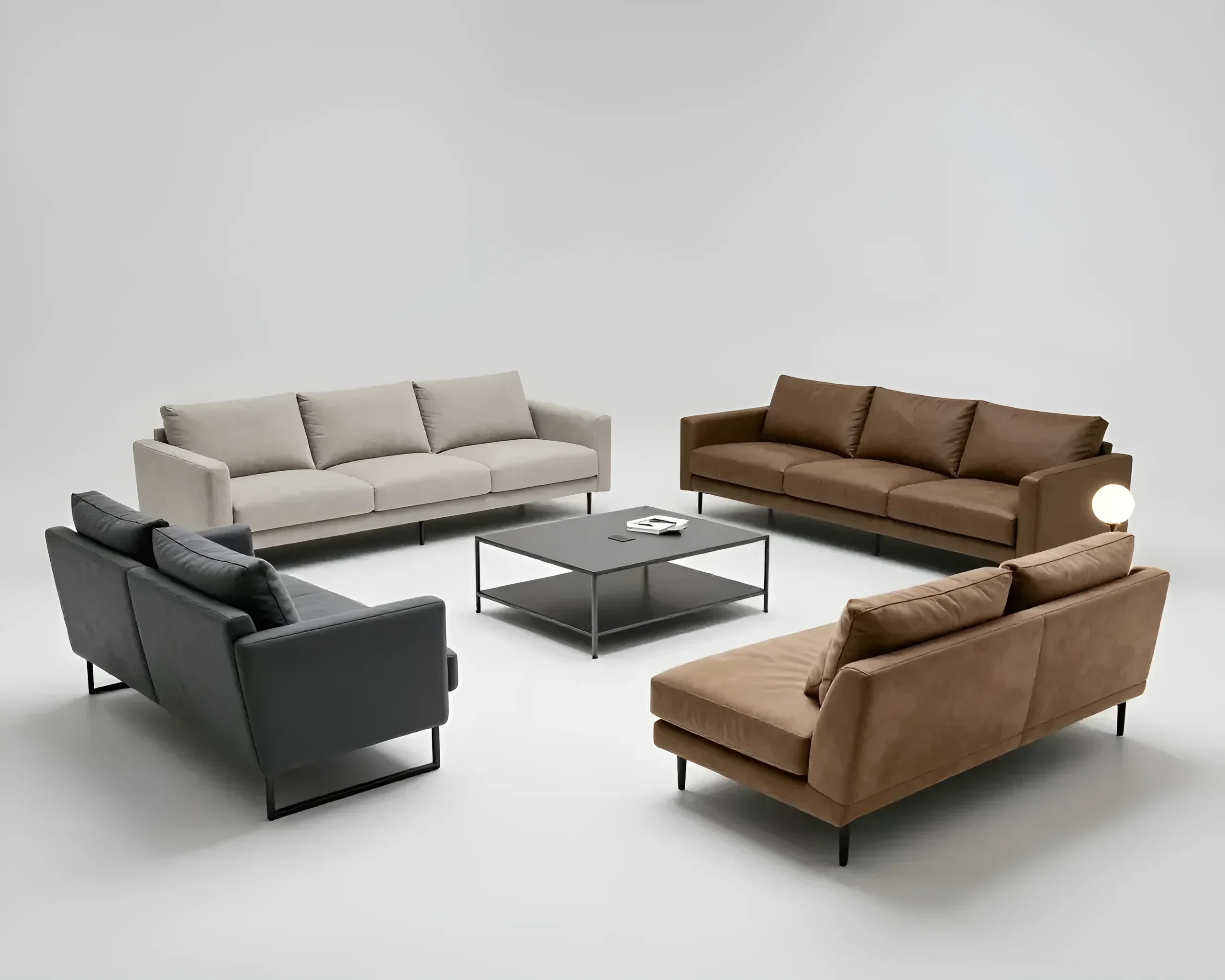
The modern pace of life dictates its own rules for decorating living spaces: the interior should be flexible, functional, and easily adaptable to the changing needs of the family. Modular furniture is a kind of “adult construction set” that allows you to move away from the bulky and static sets of the past in favor of lightness and individuality. Unlike cabinet furniture made according to a single template, modular systems consist of individual sections that can be combined in any order, purchased over time, or rearranged, completely changing the look of the room without unnecessary costs. In this article, we will analyze in detail how modular furniture is structured, what technical characteristics to pay attention to, and how to create a space that will work for you.
Modular Furniture: What It Is and Why It Changes the Interior
Modular furniture is a collection of independent functional blocks (modules) made in a unified style, color, and material. If a classic living room wall is a monolithic structure that cannot be divided, then a modular system allows you to choose only the elements you really need. For example, you can take two display cabinets, a TV stand, and a wall shelf, abandoning a bulky wardrobe that doesn’t fit the room’s dimensions.
Why has the modular approach become revolutionary for modern interiors? Firstly, it’s absolute planning freedom. You become the designer yourself, determining the number and arrangement of elements. Secondly, it solves the problem of non-standard spaces. Narrow corridors, niches, rooms with low ceilings – modules allow you to effectively use every centimeter of space. Thirdly, it’s an economic benefit: you can purchase furniture in parts, gradually expanding the system as needed or as financial opportunities allow.
Key differences between modular systems and standard sets:
- Interchangeability: elements can be easily swapped without loss of functionality.
- Unified size grid: all modules in one collection have a multiple width, depth, and height, ensuring perfect docking.
- Mobility: moving or renovating becomes easier, as the furniture is disassembled into compact blocks.
- Multifunctionality: the same module in different combinations can serve as part of a workspace or a storage area in a bedroom.
Types of Modular Furniture: From Sofas to Wall Units
The modular principle is now applied to almost all furniture categories. Let’s consider the main groups that are most in demand on the market.
1. Modular sofas and upholstered furniture. These are systems consisting of straight and corner sections, ottomans, armrests, and even built-in tables. You can assemble a compact two-seater sofa or a huge U-shaped seating area for a home theater. An important advantage is the ability to change the configuration “on the fly” by simply disconnecting the hook fasteners.
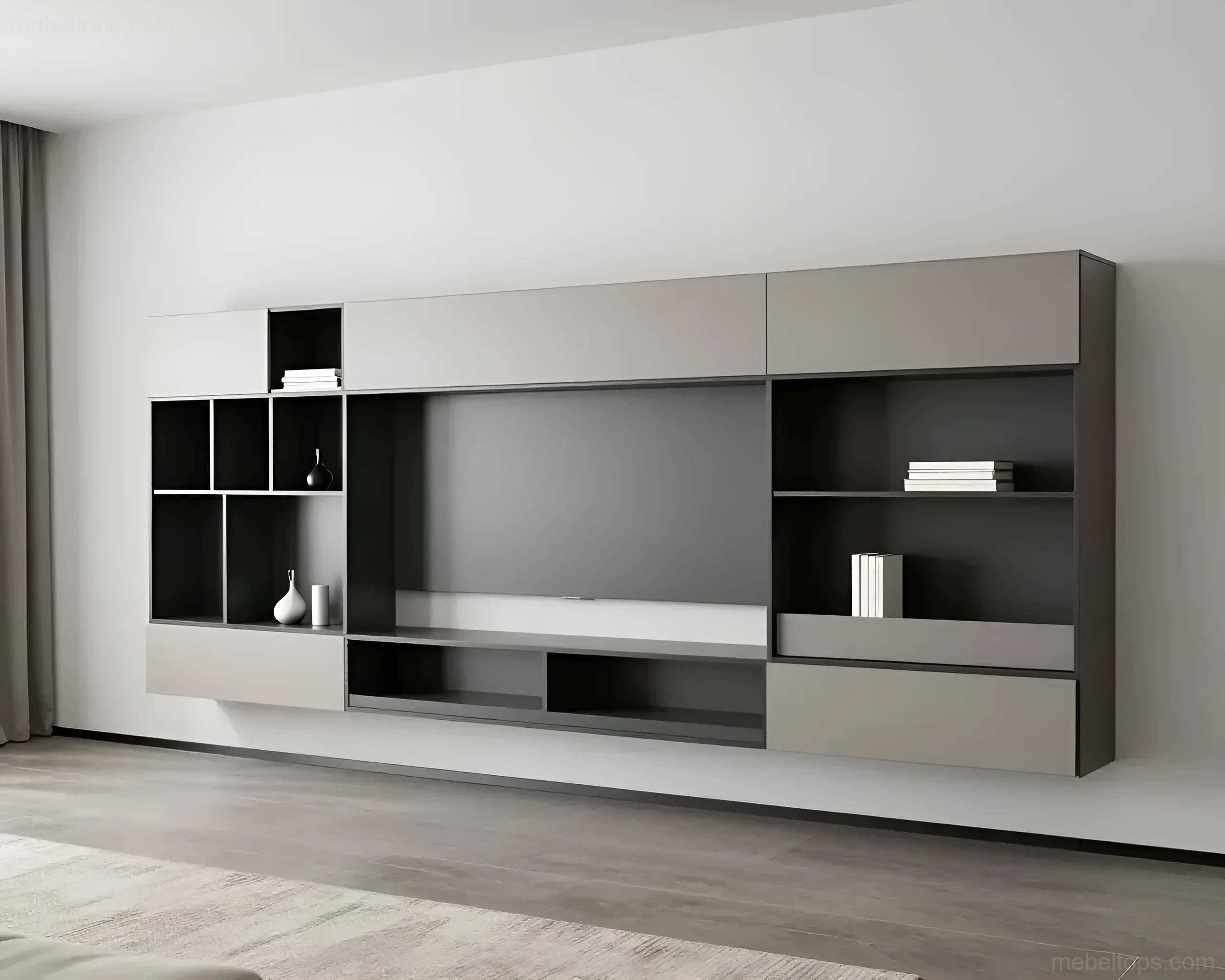
2. Modular wall units and shelving for the living room. These include TV stands, wall cabinets, open shelves, tall cabinets, and chests of drawers. Modern systems often feature suspended installation, creating the effect of “floating” furniture and making cleaning easier.
3. Modular kitchens. This is perhaps the most common type. Kitchens are assembled from standard base and wall cabinets (from 15 to 90 cm wide). This allows you to fit the set into a kitchen of any size, bypassing pipes, ventilation ducts, and other architectural features.
4. Hallways and wardrobes. Modules allow you to combine shoe cabinets, coat racks, mirrors, and wardrobes into a single composition, even in the tightest hallway. In wardrobe systems, modules are represented by mesh baskets, rails, and drawers that attach to guides.
5. Modular children’s furniture. The most practical option for “growing into.” First, you buy a bed and a toy chest, and a few years later, you add a desk and shelves for textbooks from the same series.
Materials for Modular Furniture: Choosing Practicality and Style
The durability and appearance of furniture directly depend on the materials of the frame and facades. The following solutions are most commonly used in modular systems:
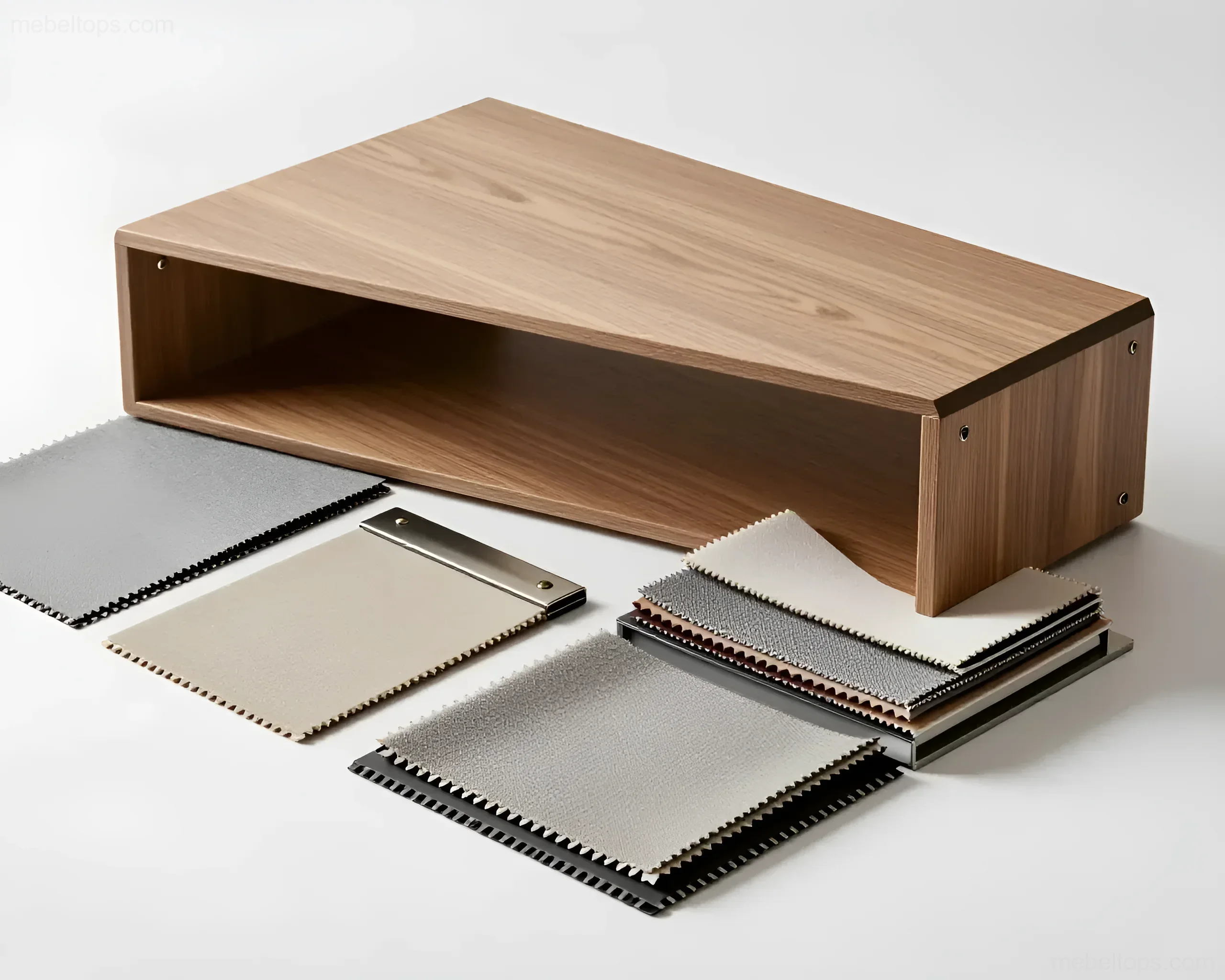
- Laminated particleboard (LDSP): The most budget-friendly and popular material. When choosing, it is important to pay attention to the formaldehyde emission class – only E1 (or E0) is permissible for residential premises. The thickness of the board should be at least 16 mm, optimally 18-22 mm for load-bearing shelves.
- MDF (Medium-Density Fiberboard): A denser and more environmentally friendly material that can be milled (to create patterns on facades). MDF is moisture-resistant, making it ideal for kitchens and bathrooms. Facades can be covered with PVC film, enamel, or natural veneer.
- Solid wood: Used in premium modular collections. This is the most durable, but also the most expensive option, requiring the maintenance of a certain level of humidity in the room.
- Metal and glass: Often used in loft-style shelving frames or as inserts in living room facades. Tempered glass 4-6 mm thick is safe and can withstand significant loads.
For upholstered modular furniture, the choice of upholstery is critically important. Experts recommend fabrics with a high Martindale test rating (wear resistance):
Table 1. Characteristics of popular fabrics for modular sofas
| Fabric Type | Martindale Cycles | Features |
|---|---|---|
| Matting | 20,000 – 40,000 | Durable, coarse weave, suitable for eco-style |
| Velvet | 40,000 – 60,000 | Soft, pleasant to the touch, modern look |
| Microfiber | 50,000+ | Easy to clean, “anti-scratch” effect, durability |
| Jacquard | 30,000 – 50,000 | Dense, intricate patterns, resistant to stretching |
How to Choose Modular Furniture: A Guide to the Perfect Interior
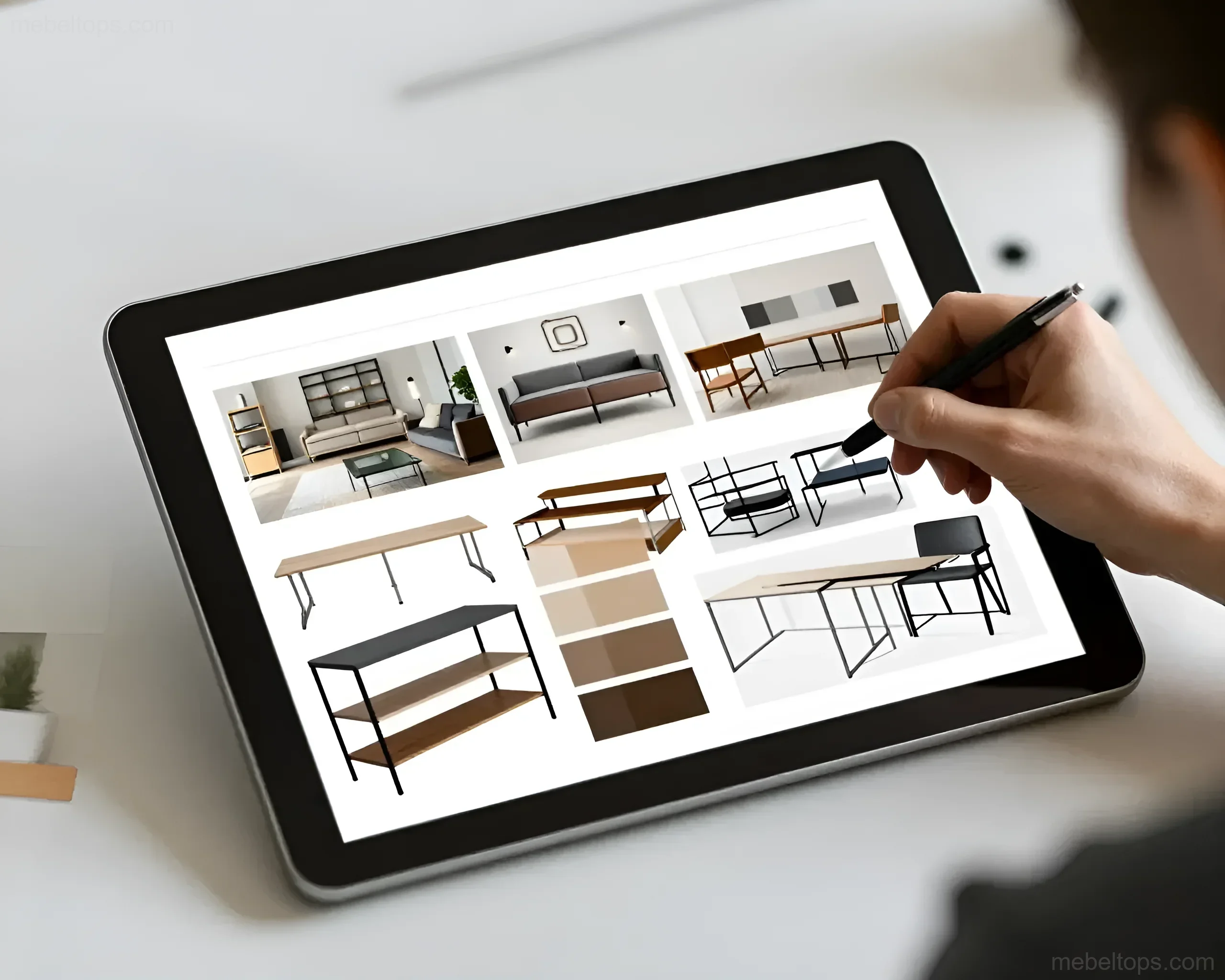
Choosing a modular system requires more careful planning than buying a ready-made wardrobe. To avoid disappointment, follow the algorithm of professional designers:
- Accurate room measurement. Measure not only the length of the walls but also the ceiling height, the distance to windowsills, outlets, and switches. Consider baseboards – they can “steal” up to 2-3 cm of useful length.
- Determine functional zones. What exactly will you store? Books require shelves 30-35 cm deep, clothes require wardrobes 55-60 cm deep. If you are assembling a TV area, make sure the stand matches your TV’s diagonal with a 10-15 cm margin on each side.
- Choose style and color. The beauty of modular furniture is that it can be combined in terms of color. For example, the lower modules can be dark (wood-like), and the upper ones can be light or mirrored to visually expand the space.
- Check the hardware. This is the heart of modular furniture. Hinges should have soft-close mechanisms, and drawers should have full-extension ball-bearing slides (telescopic). Cheap roller slides quickly fail and are noisy.
- Possibility of additional комплектации. Ask the seller how long this collection will be produced. This is important if you plan to buy additional elements in a year or two.
Dimensions and Configurations: Creating a Space for Yourself
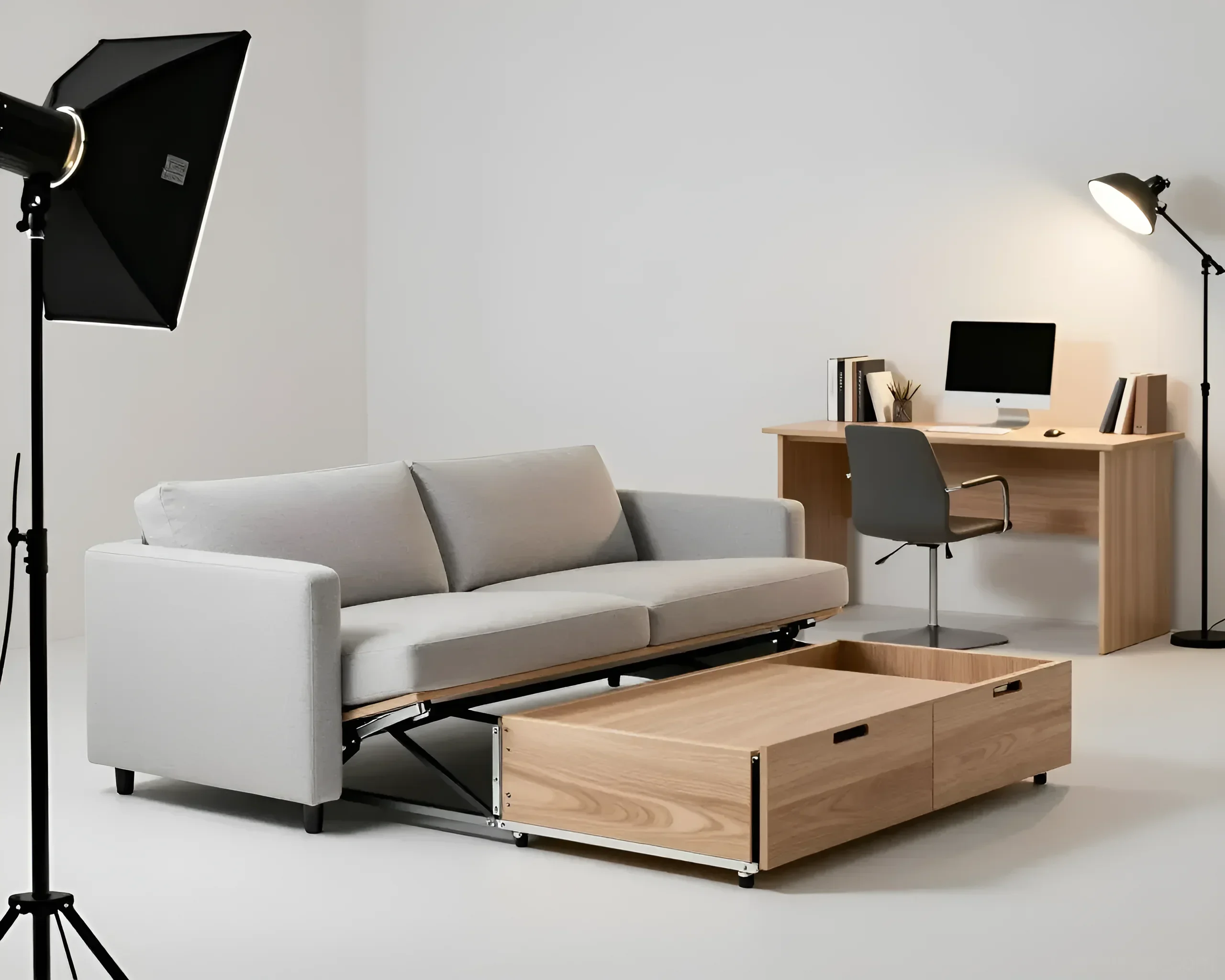
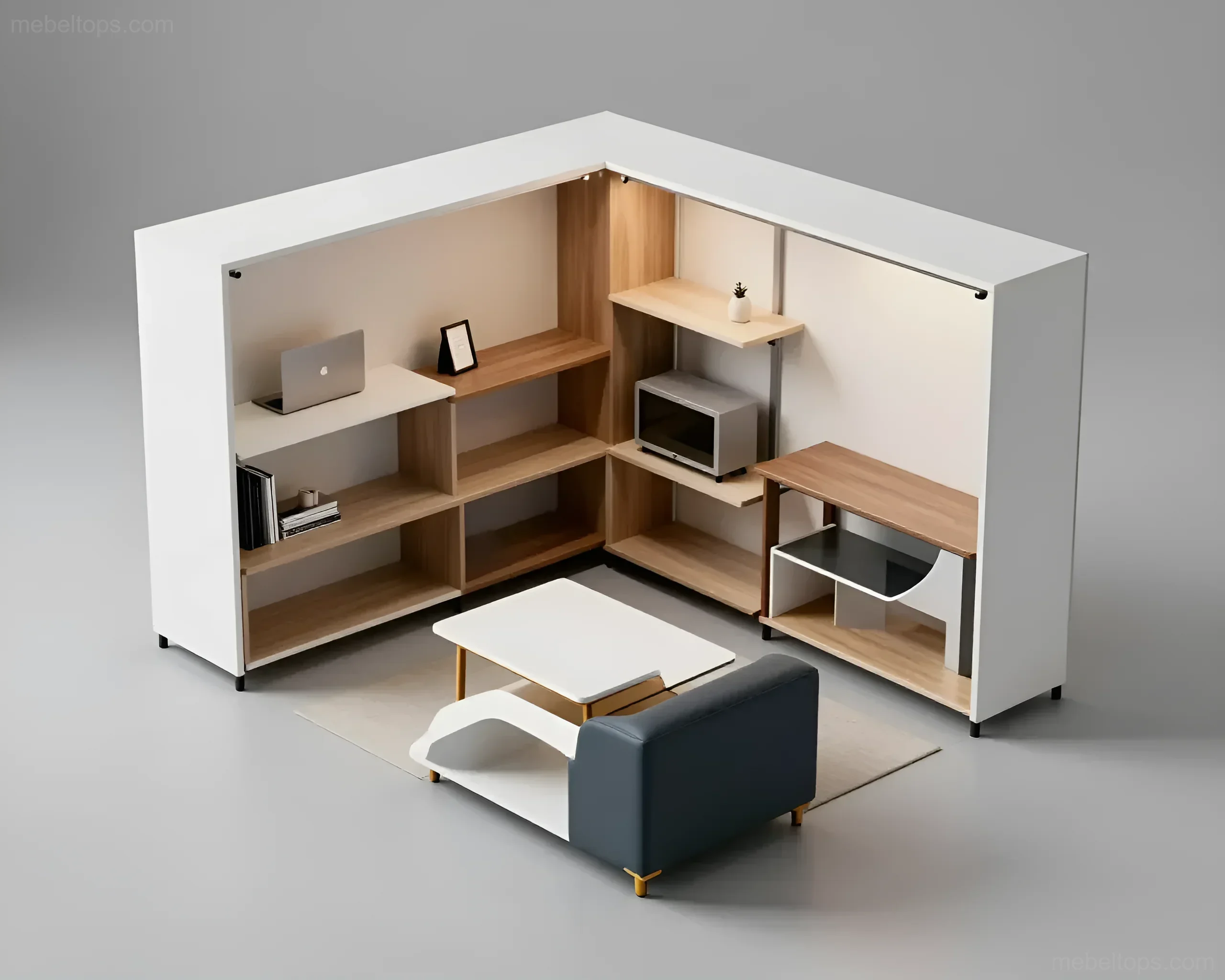
Standardization is the main feature of modular systems. Most manufacturers adhere to a specific size increment, allowing for perfect docking of different types of elements. The standard width of modules is usually 400, 450, 600, 800, and 900 mm.
When planning a configuration, consider the following technical nuances:
- Depth. The standard for living rooms is 40-45 cm. This is enough for storing dishes, books, and electronics, and the furniture does not obstruct the passage. For bedrooms and hallways, choose modules with a depth of 60 cm to allow hangers with clothes to fit freely.
- Height. Modules can be floor-standing (on legs or a plinth) or wall-mounted. Using tall, narrow cabinets that reach the ceiling helps to visually “elongate” the room and increase storage volume by 30%.
- Corner solutions. A corner module (trapezoidal or L-shaped) allows you to utilize the “dead zone” in the corner of the room. This is the most capacious element in any collection.
- Gaps and clearances. When assembling a composition of several modules, micro-gaps may remain between them. To make the system look monolithic, use special inter-module connectors.
Tip: If the room is small, choose modules with glossy facades or built-in lighting. This will create depth and add “air” to the interior.
Functionality of Modular Furniture: Transformation and Convenience
The main value of modular furniture lies in its adaptability. Let’s look at practical examples of how the functionality of modules simplifies life:
Space transformation. Do you have guests? A modular sofa easily transforms from a corner unit into two separate armchairs and a large ottoman-table. In a child’s room, a modular desk can “grow” with the child by repositioning the tabletop to different levels of support cabinets.
Hidden storage. Many modular elements have hidden functions. For example, ottomans with internal niches, coffee tables with lifting mechanisms that turn into a workspace, or beds with modular pull-out drawers for linens.
Technology integration. Modern modular wall units feature cable management – special openings and channels for hidden routing of wires from TVs, consoles, and audio systems. This eliminates visual clutter in the interior.
Lighting as a functional element. Modules are often equipped with built-in LED strips or spotlights. This is not only decorative but also provides full lighting for work areas or the interior of cabinets, significantly increasing convenience of use in the evening.
Caring for Modular Furniture: Extending Its Lifespan
To ensure your modular system brings you joy for many years, follow the operating rules specific to the materials used.
For cabinet furniture (LDSP, MDF):
- Avoid direct contact with water. If you spill liquid on the joint of the boards, wipe it dry immediately, otherwise the edge may swell.
- Use microfiber cloths. Avoid abrasive powders and aggressive chemicals (containing chlorine or acetone).
- Every six months, check the tightness of screws and eccentric fasteners. Modular furniture, with active use, can settle slightly, causing the facades to sag. Adjusting hinges takes 5 minutes but prevents hardware failure.
For upholstered furniture:
- Regularly vacuum the sofa modules, especially in the joints where dust and small debris accumulate.
- If the modules are connected by “crocodile” hooks, keep them clean. If lint or threads get into the mechanism, it can make it difficult to disconnect.
- When stains appear, use specialized foam cleaners, after testing them on an inconspicuous area of the fabric first.
Top 5 Solutions: Modular Furniture for Modern Homes
Based on sales experience and customer reviews from mebeltops.com, we have identified 5 of the most effective configurations:
- “Studio Standard”: A combination of a low, long TV stand and a tall, narrow shelving unit. Ideal for zoning space in studio apartments without blocking light.
- “Bedroom Workspace”: Integration of a desk into a wardrobe system. The tabletop is attached between two tall cabinet modules, creating a cozy and functional niche.
- “Endless Sofa”: Using five or more modules to create a large seating area in country houses. Modules can be arranged along walls or assembled into one huge “island” in the center of the room.
- “Hidden Hallway”: A combination of a closed shoe module (slim format) and a wall-mounted mirror with shelves. This frees up floor space and visually expands a narrow corridor.
- “Invisible Wall Unit”: Using modules with facades in the color of the walls and without handles (push-to-open mechanism). Such furniture literally dissolves into the space, while providing a colossal storage volume.
Frequently Asked Questions About Modular Furniture (FAQ)

Can modular furniture be assembled by myself? Yes, modular systems are designed to be intuitively assembled. Each module comes with instructions. However, for hanging cabinets on the wall, we recommend hiring professionals, as it requires precise marking and reliable fastening.
How strong are the fasteners between sofa modules? Modern fasteners (hooks, “crabs”) are made of steel 2-3 mm thick. They securely fix the blocks, preventing them from shifting on a smooth floor. At the same time, they can be disconnected with one hand movement by lifting one of the sections.
What if one module is damaged? This is the beauty of modular furniture. You don’t need to replace the entire set – just order one similar module. The main thing is to know the collection name and the decor (color) article number.
Can modules from different collections be used? If they match in depth and height, then technically, yes. However, achieving visual harmony is difficult due to differences in material texture and shades. It’s best to stick to one series from one manufacturer.
Expert Advice from mebeltops.com: How to Make the Right Choice
To conclude our review, we offer a few practical tips from mebeltops.com experts to help you avoid mistakes when purchasing:
- Don’t buy everything at once. Start with basic elements (e.g., a bed and a wardrobe). Live in the interior for a week or two, figure out what you’re missing (bookshelves, nightstands, or a chest of drawers), and only then order additional modules.
- Choose universal colors. White, gray, anthracite, or light oak are a base that won’t get boring in a couple of years and to which it’s easiest to match decor.
- Pay attention to the back panel. In quality modules, the back panel made of HDF is inserted into a groove, not nailed to the ends. This ensures perfect geometry and structural strength.
- Edging matters. Choose furniture where the edges are treated with 2 mm thick PVC or ABS edging (on the front parts). Thin melamine edging (“paper”) quickly chips and peels off.
- Check the load capacity of the shelves. If you plan to store heavy books, choose modules no wider than 60 cm or with reinforced shelves at least 22 mm thick to prevent sagging.
Modular furniture is a long-term investment in your comfort. It allows your interior to grow and change with you, while remaining stylish and functional. By choosing quality materials and reliable hardware, you create a space that will delight you for years to come.