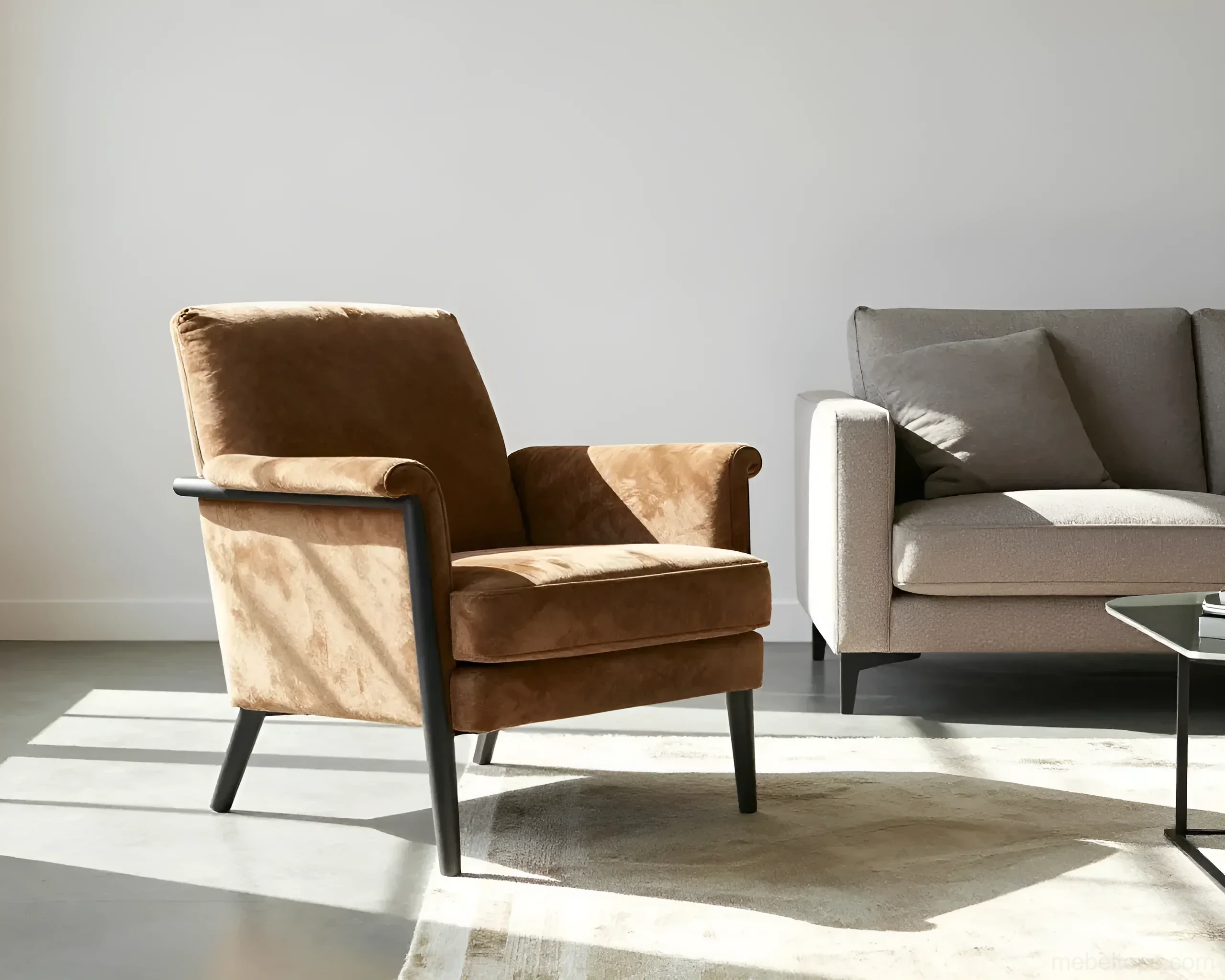
Vintage furniture today is not just a nod to the trend of eco-friendly consumption, but a powerful tool for self-expression in design. In an era of mass production from particleboard and MDF, unique items with a history become the very “anchor” that gives an interior individuality, depth, and tactile warmth. However, buying an old chest of drawers or armchair is always a risk of encountering hidden defects, unpleasant odors, or dimensions that don’t meet modern ergonomic standards. In this article, we will cover all the technical and aesthetic nuances of working with vintage items so that your choice is informed and the furniture serves for decades to come.
Vintage Furniture in a Modern Interior: Why Bother?
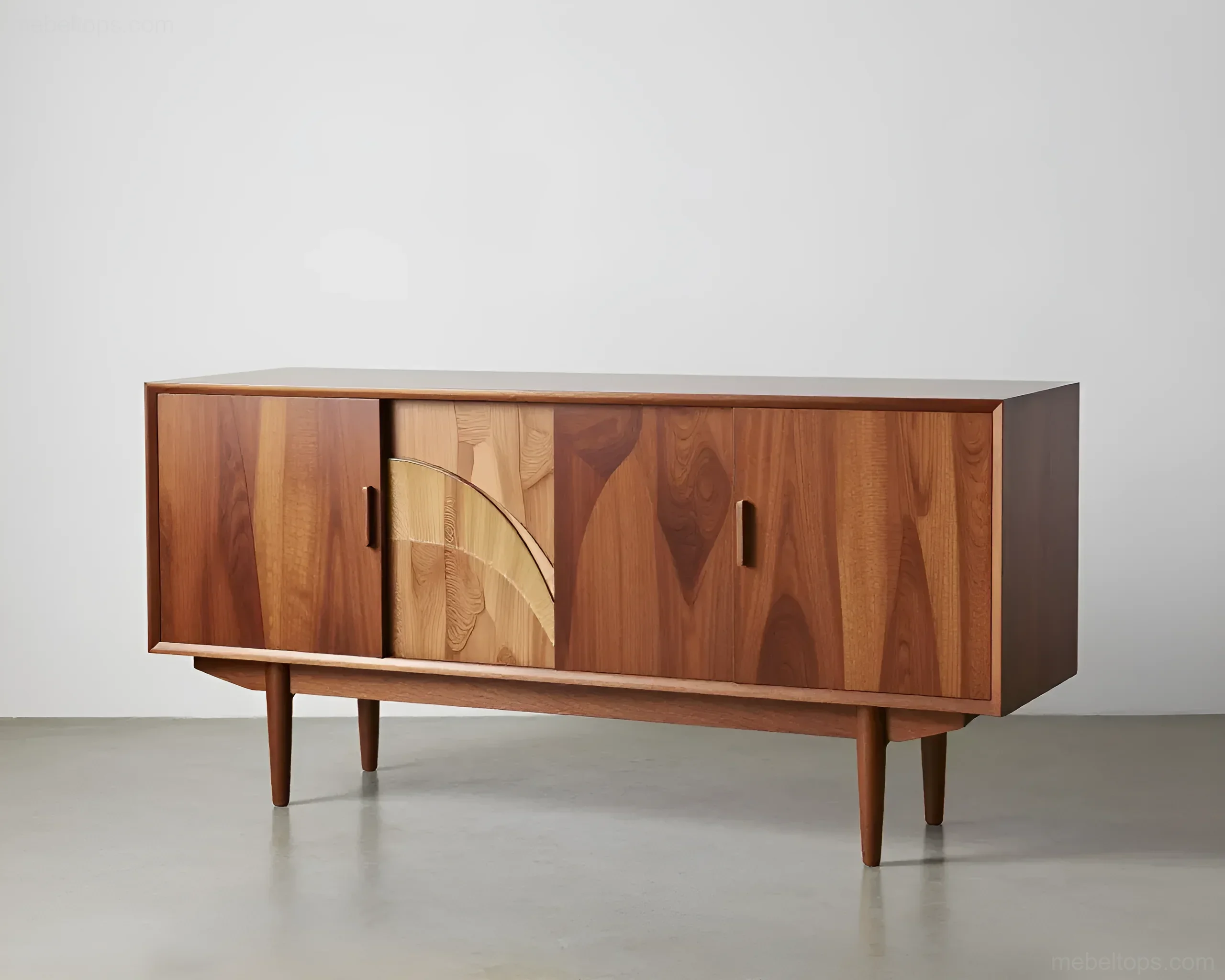
Before you set off in search of the perfect 1960s armchair, it’s important to understand the practical value of vintage. Unlike modern mass-market furniture, items created 40-70 years ago possess a number of characteristics that are hard to find in the budget segment today.
- Material Quality: Until the 1980s, even mass-produced furniture was often made from solid wood (oak, beech, birch) or high-quality blockboard veneered with precious wood veneers (teak, walnut, rosewood).
- Eco-friendliness: In old furniture, the formaldehyde emission level is practically zero, as all binders in the boards have already “weathered” over decades. Furthermore, reusing furniture is a contribution to the zero-waste concept.
- Investment Appeal: While a new sofa from a chain store loses 50% of its value immediately after delivery, iconic design pieces (e.g., chairs designed by Hans Wegner or Alvar Aalto) only increase in price.
- Unique Aesthetics: Vintage allows you to avoid the “catalog apartment” effect, where all furniture is bought from one place. A single retro piece can become the visual center of a room.
Important clarification: Furniture aged 20 to 100 years is considered vintage. Anything older is antique and requires a different approach to storage and use. In modern interiors, the “mid-century modern” period (1950s-1970s) is most in demand due to its conciseness and functionality.
Types and Categories of Vintage Furniture for the Modern Home
The choice of vintage is vast, but not every item is suitable for active daily use. Let’s consider the main categories that adapt best to modern conditions.
1. Case Furniture (Sideboards, Chests of Drawers, Sideboards). This is the “golden fund” of vintage. Low, long cabinets on slender legs from the 60s are ideal for modern TV panels. Their height usually ranges from 60 to 80 cm, creating a proper horizontal line in the space. Popular materials include teak and walnut veneer.
2. Dining and Desks. Mid-20th-century tables are distinguished by their elegant bases. Extendable models with a “butterfly” mechanism are often found; when folded, they take up minimal space (90-100 cm diameter), and when extended, they can seat up to 8-10 people. Pay attention to the condition of the aprons (frames under the tabletop) – they should be free of cracks.
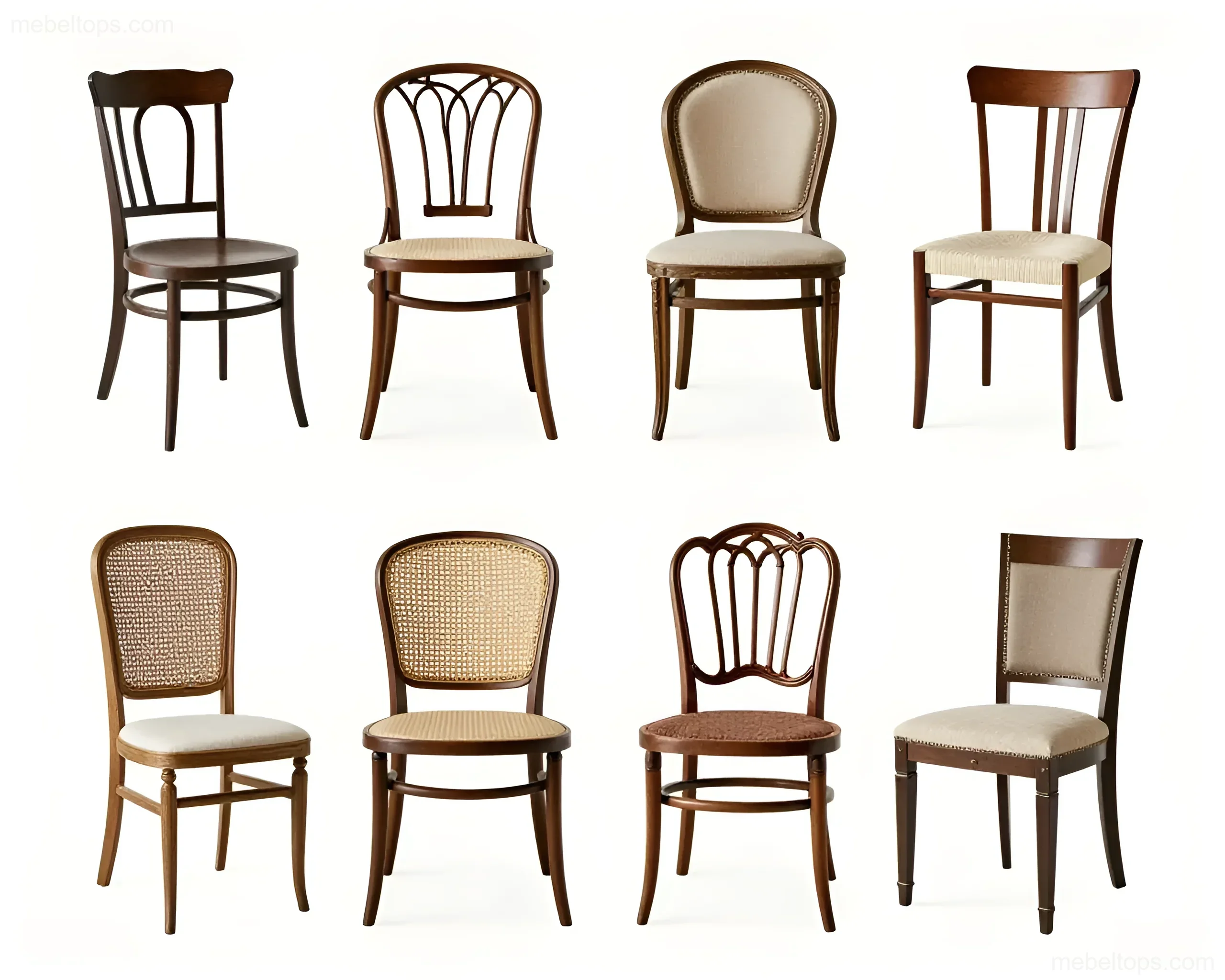
3. Chairs and Armchairs. The most popular category. Scandinavian chairs made of bent plywood or solid beech have excellent ergonomics. Technical nuance: the seat height of vintage chairs is often 42-44 cm, while modern standards tend towards 45-47 cm. This should be taken into account when selecting a table.
4. Lighting. Lamps and chandeliers made of brass, Murano glass, or plastic from the 70s are ready-made art objects. However, they require mandatory inspection of wiring and replacement of sockets with modern ones (usually E27 or E14) to avoid short circuits.
Materials of Vintage Furniture: What to Look For and How to Assess
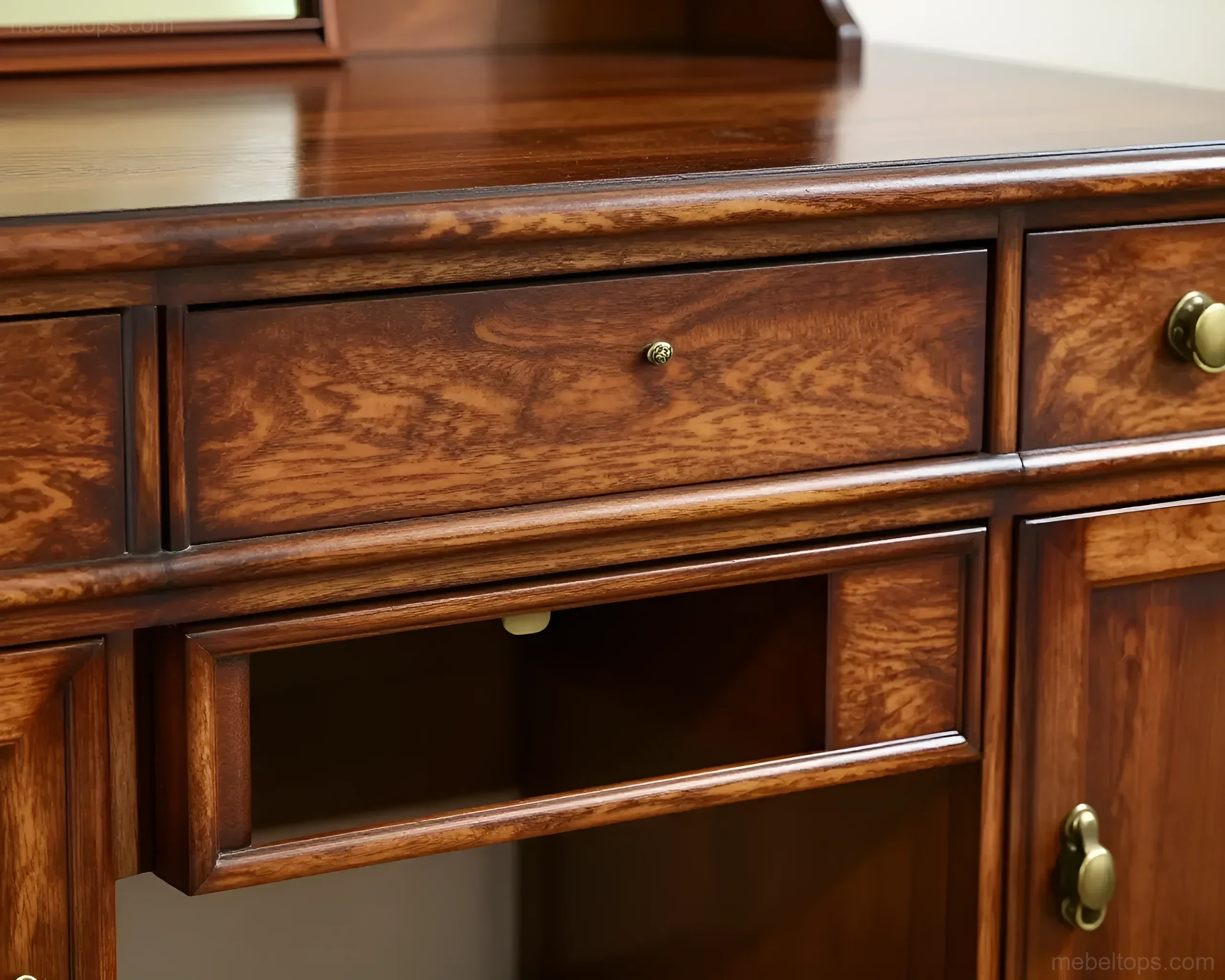
When inspecting furniture, it’s important to understand what it’s made of. This directly affects the complexity of restoration and the longevity of the item. The table below lists the main materials and their characteristics:
| Material | Where found | What to look for | Restoration difficulty |
|---|---|---|---|
| Solid Oak/Beech | Chair frames, legs, tables | Absence of woodworm holes | Low (easy to sand and paint) |
| Teak Veneer | Chest of drawers fronts, tabletops | Layer thickness (whether it’s worn down to the base) | Medium (requires careful scraping) |
| Brass/Bronze | Handles, leg caps | Presence of deep corrosion (green patina) | Easily cleaned with special pastes |
| Bakelite/Plastic | Handles, decorative elements | Cracks and chips (cannot be repaired) | Cannot be invisibly restored |
How to check quality on the spot:
- Smell: Open all drawers. The smell of old wood is normal, but a strong smell of mold or “grandma’s trunk” is extremely difficult to remove. It can indicate fungus within the wood.
- Joints: Wiggle the item. If the mortise and tenon joints are loose, they can be fixed by re-gluing. However, if the wood at the joints crumbles, the item is critically worn.
- Finish: Shellac was often used until the 1960s, and nitro-lacquers later. If the lacquer has a “spiderweb” pattern (craquelure), it will have to be completely removed.
How to Choose Vintage Furniture: Practical Tips for Beginners
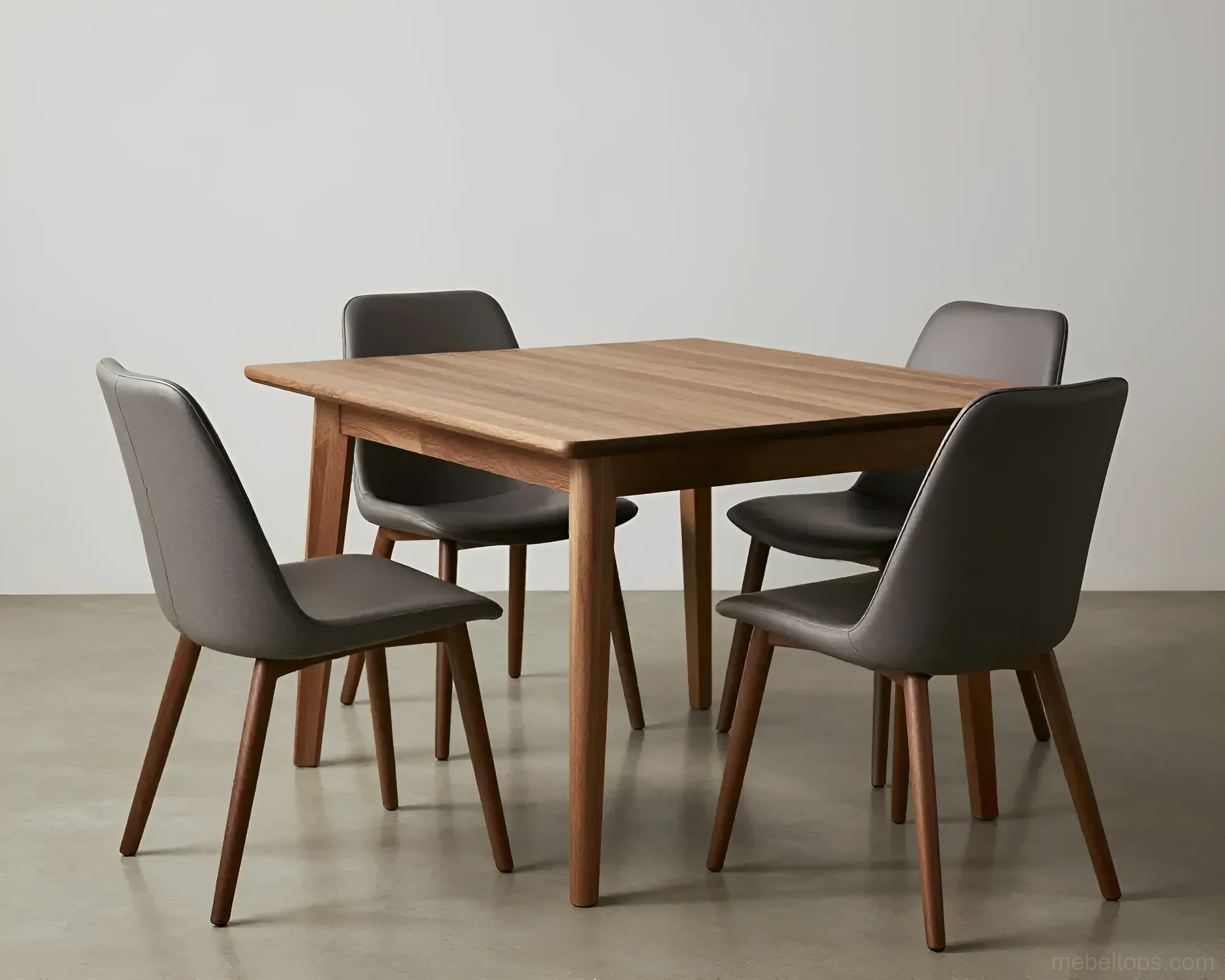
Buying vintage is a quest. To avoid spending money on “firewood,” follow the algorithm of professional dealers. You can look for furniture on online platforms (Avito, “Yula”), at flea markets, or in specialized vintage shops. In the latter case, the price will be 3-5 times higher, but you will get a restored item.
Tip 1: Look for shape, not color. The upholstery of a chair might be terrible, and the lacquer on a chest of drawers might be peeling. All of this can be changed. The main thing is the clean lines and proportions. If you like the silhouette of the armrests, buy the piece.
Tip 2: Check the geometry. Bring a tape measure. Old cabinets often warp due to improper storage. Measure the diagonals of the facade – if the difference is more than 5-7 mm, the doors may never close tightly even after repair.
Tip 3: Hardware is 50% of success. Original handles, keys, and locks are very difficult to find. If a chest of drawers is missing one handle, be prepared to replace the entire set with modern ones, which can detract from the item’s charm.
Tip 4: Estimate restoration costs. Sometimes a chair bought for 1000 rubles requires re-upholstery and varnishing for 10,000 rubles. Always budget for consumables or professional services at double the purchase price.
Dimensions and Proportions: How to Fit Vintage into Your Space
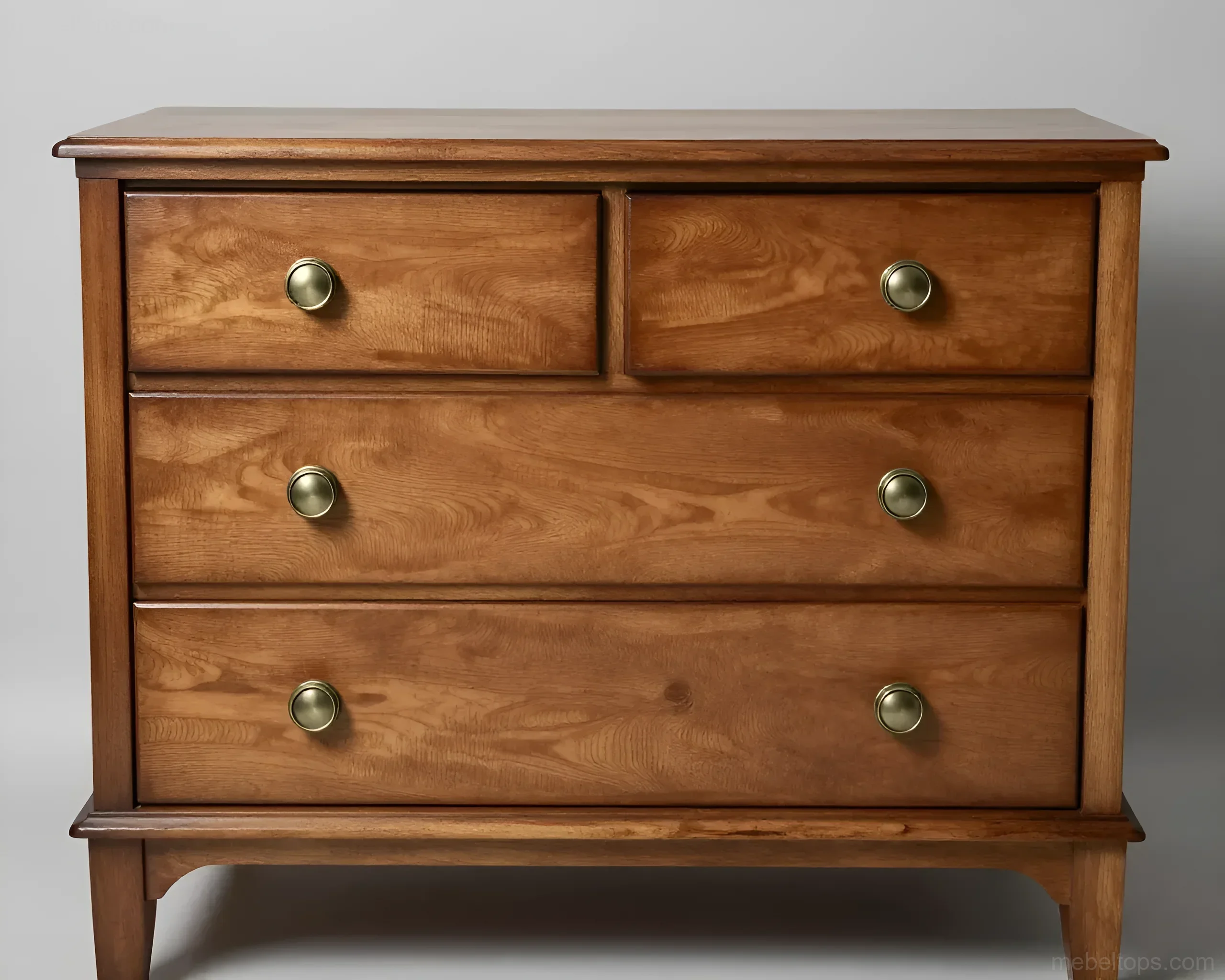
A common mistake is to buy a vintage wardrobe and discover that it looks tiny in a room with 3-meter ceilings, or, conversely, it overwhelms the space. Furniture from the 1950s-1970s was designed for typical apartments of that time, which were not known for their vastness.
Typical vintage dimensions:
- Chest of drawers height: Often 10-15 cm lower than modern counterparts. This is a plus for small rooms – the space visually remains open.
- Wardrobe depth: Old wardrobes often have a depth of 50-55 cm, while modern hangers require at least 60 cm. Clothes may hang at an angle.
- Chair width: Vintage chairs (e.g., famous models on “stick legs”) are much more compact than modern “plump” sofas. Their width is usually 60-70 cm, allowing them to be placed even in a narrow corner.
Practical tip: Use masking tape to mark the dimensions of the future item on the floor. Remember that vintage furniture on high legs appears lighter and smaller than solid furniture of the same size standing on a plinth.
Functionality and Restoration: Bringing Old Things to Life
If you decide to restore furniture yourself, start small. Restoration is a process that requires patience and adherence to technology. Do not try to immediately paint antique oak with enamel – you can irrevocably damage a valuable item.
Main stages of home restoration:
- Cleaning: Wash the furniture with a weak solution of household soap. Use white spirit to remove old wax.
- Removing old finish: It’s better to use special gel strippers rather than just a sander. Sanding can easily wear through a thin layer of veneer (only 0.5-1 mm) down to the plywood.
- Repairing defects: Veneer chips are filled either with “patches” of similar veneer or with hard furniture wax matched to the color.
- Finishing coat: For 1960s vintage, hard wax oil or matte varnish is ideal. Glossy varnishes highlight all imperfections and often look cheap.
- Re-upholstery: If the chair has its original springs, try to keep them, only replacing the upper layers of filler (polyurethane foam, latex) and fabric. Choose fabric with a high Martindale abrasion cycle (from 30,000 cycles).
Care and Maintenance of Vintage Furniture: Preserving Charm for a Long Time
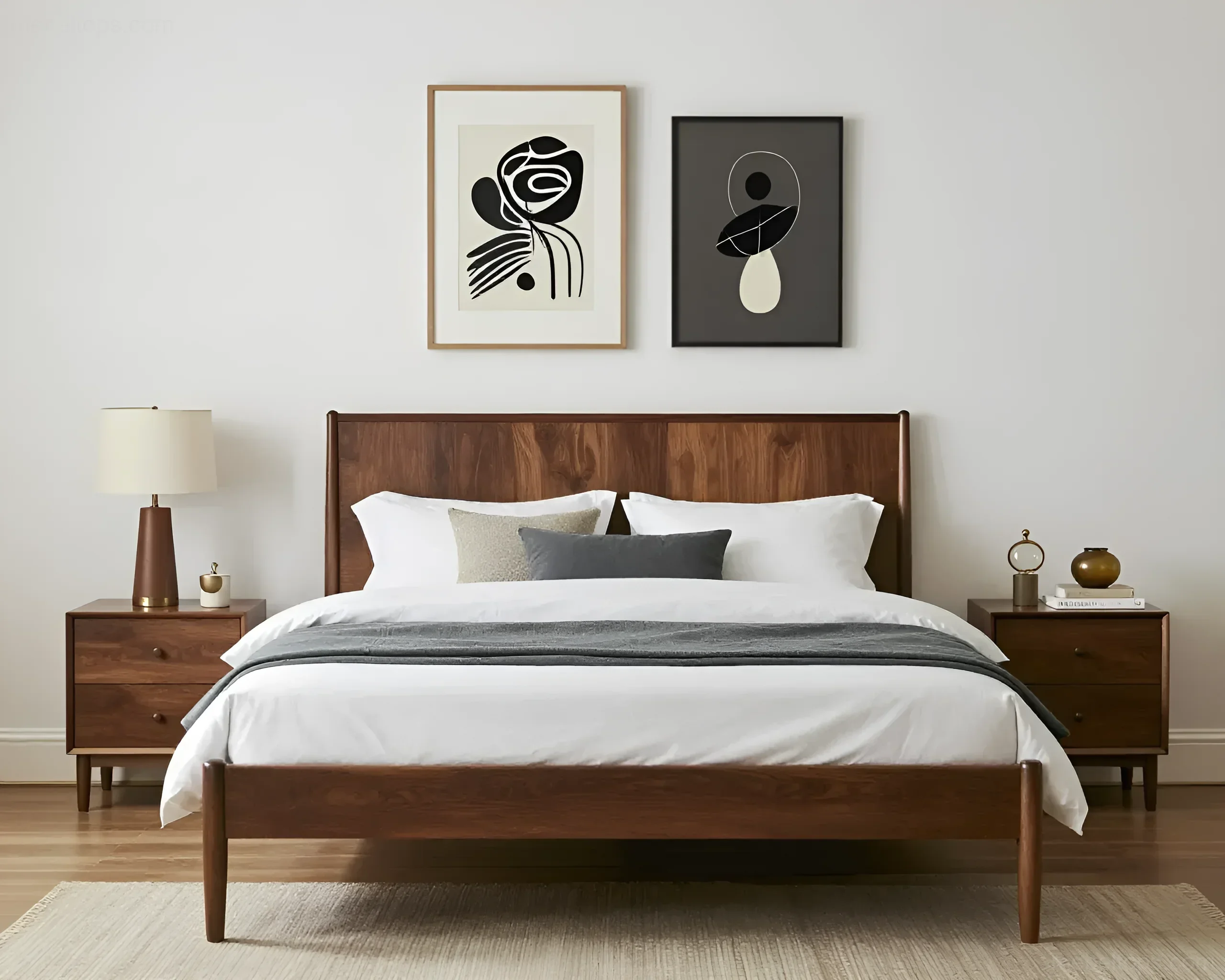
Vintage furniture requires more careful handling than modern laminate. Wood is a living material that reacts to environmental changes.
- Microclimate: The optimal humidity for old furniture is 40-60%. In winter, when radiators are on, wood can dry out, leading to cracks. Use humidifiers.
- Sunlight: Direct UV rays discolor veneer and damage the lacquer layer. Do not place valuable items directly opposite a window without heavy curtains.
- Surface protection: Use hot pads and cork coasters for glasses. White rings from hot cups on old lacquer are the most difficult problem to remove.
- Regular care: Every six months, treat solid wood or veneered furniture with a quality beeswax-based polish. This will nourish the wood and create a protective barrier.
What not to do: Absolutely avoid using aggressive household chemicals with alcohol or abrasives. Also, do not place vintage furniture close to heating radiators (at least 50 cm distance).
TOP 5 Ideas for Using Vintage Furniture in Modern Interiors
How to make vintage not look like a warehouse of old things? Here are proven techniques from professional decorators:
- Accent chest of drawers in a minimalist bedroom. Against a backdrop of monochrome walls and a modern bed, an old teak chest of drawers will become the main decoration. Add a modern mirror or abstract painting above it.
- Mixed chairs around the dining table. Combine 2-3 modern chairs with a couple of restored vintage models. An important condition is the uniform seat height and similar wood tone.
- Vintage armchair as an art object. Upholstering an old armchair in a bright, contrasting fabric (e.g., a large geometric print or bright velvet) turns it into a central element of the living room.
- Old suitcase or trunk instead of a coffee table. This will add a spirit of travel to the interior. The main thing is to secure the lid so it doesn’t slam shut accidentally.
- Workspace from a retro desk. Compact 1960s desks with drawers are excellent for working on a laptop without cluttering the home office space.
Frequently Asked Questions (FAQ)
Q: How to distinguish vintage from a modern replica?
A: Look at the back and bottom. Old furniture often shows signs of manual processing, factory stamps, old nails, or flat-head screws (cross-head screws came later). Veneer on old items is usually thicker.
Q: Is old furniture safe from a hygiene perspective?
A: If the item was stored in a dry room, it is safe. Upholstered furniture (chairs, armchairs) purchased secondhand should always be completely re-upholstered with new filler – old foam can accumulate dust mites and polymer breakdown products.
Q: Is it worth painting vintage furniture in bright colors?
A: If the wood has a beautiful texture (walnut, oak), it’s better to preserve its natural look. Painting is best for furniture made from simple woods (birch, pine) or items whose surface is heavily damaged and cannot be locally repaired.
Interesting Facts About Vintage Furniture
- The word “vintage” came into the furniture world from winemaking, where it denotes wine of a specific harvest year with unique characteristics.
- The most copied piece of vintage furniture in the world is the Eames Lounge Chair, created in 1956. Its design has not changed for over 60 years.
- In the USSR in the 1960s, “Helsinki series” furniture was produced, which was not inferior in quality and design to the best Scandinavian examples and is highly valued by collectors today.
- Many modern brands (e.g., IKEA or Vitra) regularly re-release their archival models from the 1950s-1970s, confirming the relevance of that design.
Using vintage furniture is a path for those who value quality, history, and ecology. Don’t be afraid to experiment: even one old cabinet can completely change the atmosphere of your home, making it truly cozy and unique. The main thing is to carefully check the condition of the materials and not skimp on quality restoration.