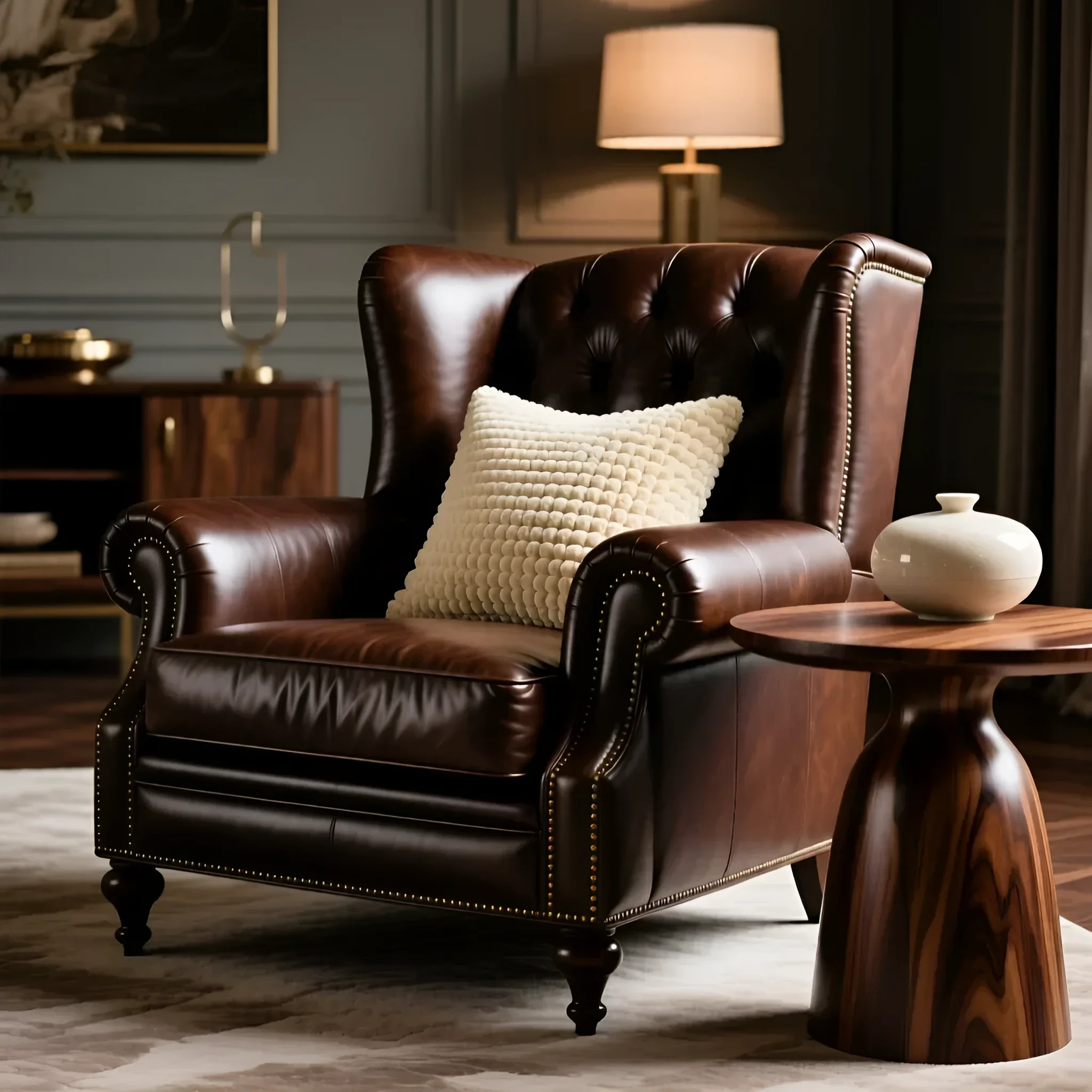
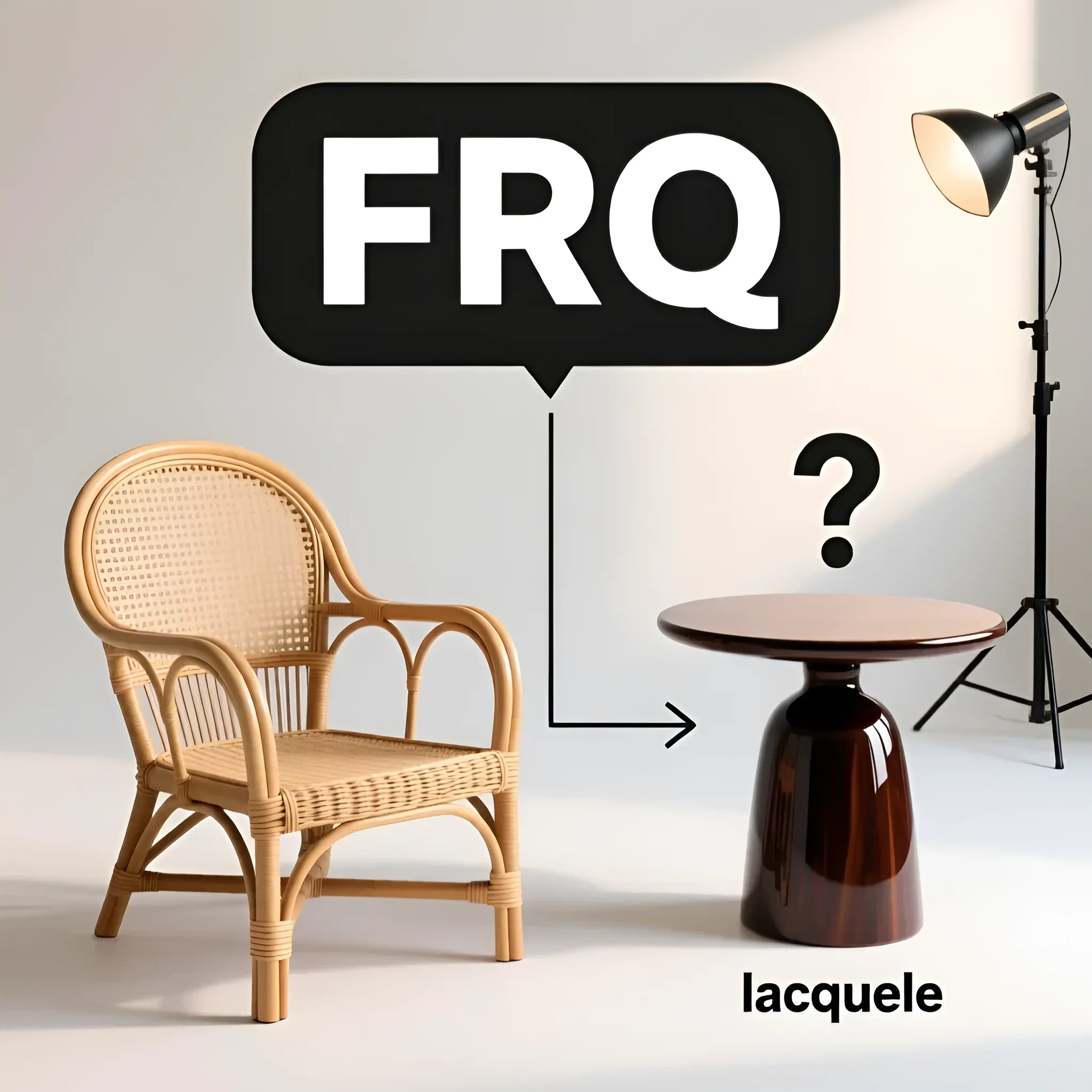
Texture is not just what you feel when you touch furniture; it’s the non-verbal language of design that gives an interior depth, character, and completeness. While color sets the mood, it’s texture that makes a space rich and layered. As professional experts from mebeltops.com, we’ve developed a practical guide to help you stop fearing bold combinations and learn to combine materials so that your interior looks expensive, thoughtful, and, most importantly, cozy.
The Magic of Textures in Interiors and the Role of Furniture
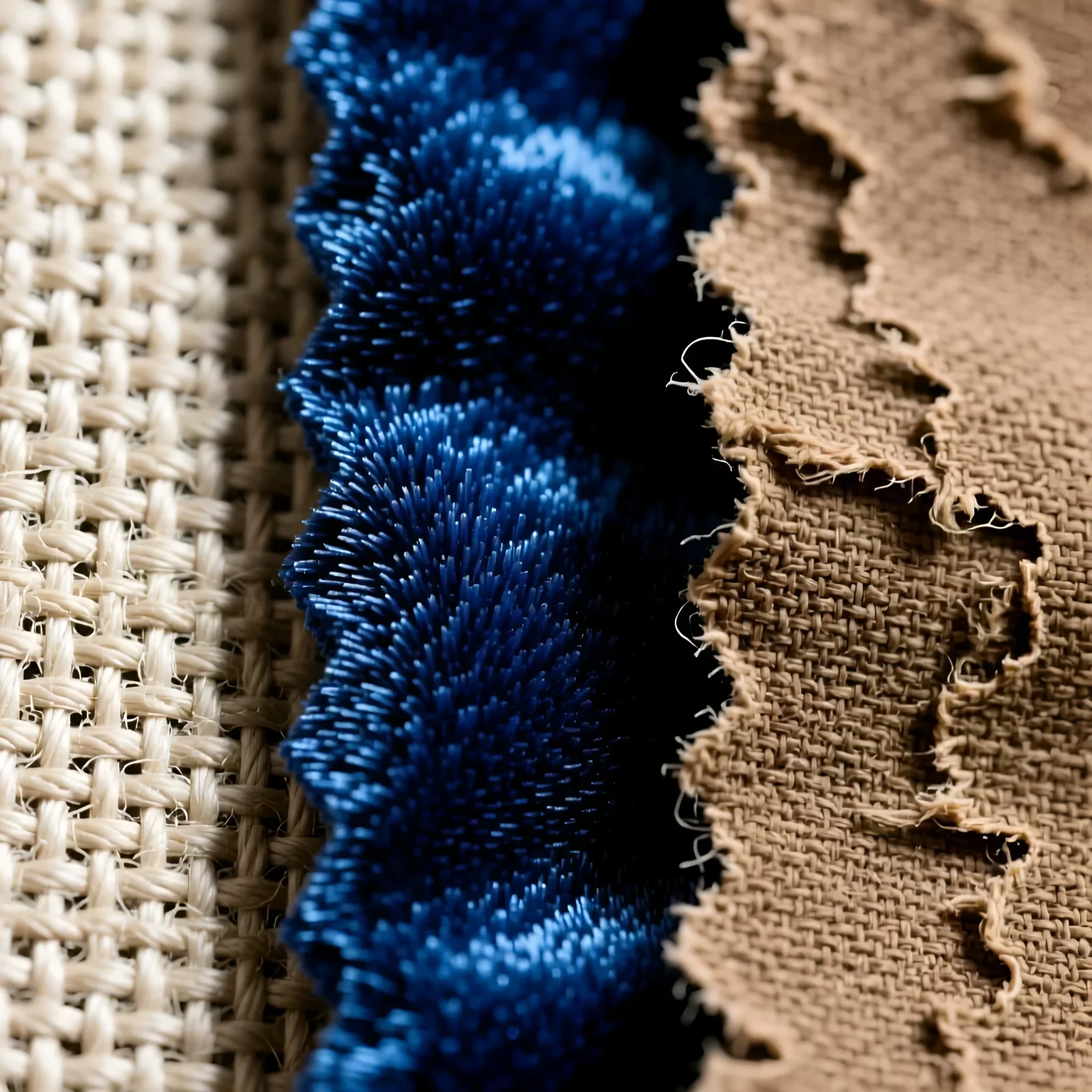
Texture (or фактура) is the visual and tactile quality of a surface. In the context of furniture, it includes the weave of the fabric, the grain of the leather, the pattern of wood fibers, and the degree of shine of metal or plastic. Furniture plays a key role in this process, as large items (sofas, wardrobes, beds) occupy 60–70% of the visible area, becoming a canvas for showcasing textural mastery.
Why Texture is More Important Than Color:
- Visual Weight: Rough, dense textures (like basket weave, unfinished wood) appear heavier and draw the eye. Smooth and shiny textures (silk, gloss) are lighter and reflect light. Proper weight distribution creates balance.
- Feeling of Warmth: Plush (velvet, velour) and natural (wool, linen) textures make a room feel warmer and softer.
- Hiding Imperfections: Fine-grained or patterned textures (like tweed) better mask stains and minor damage than solid, smooth surfaces.
Main Types of Textures in Upholstery and Furniture Finishes: Pros and Cons
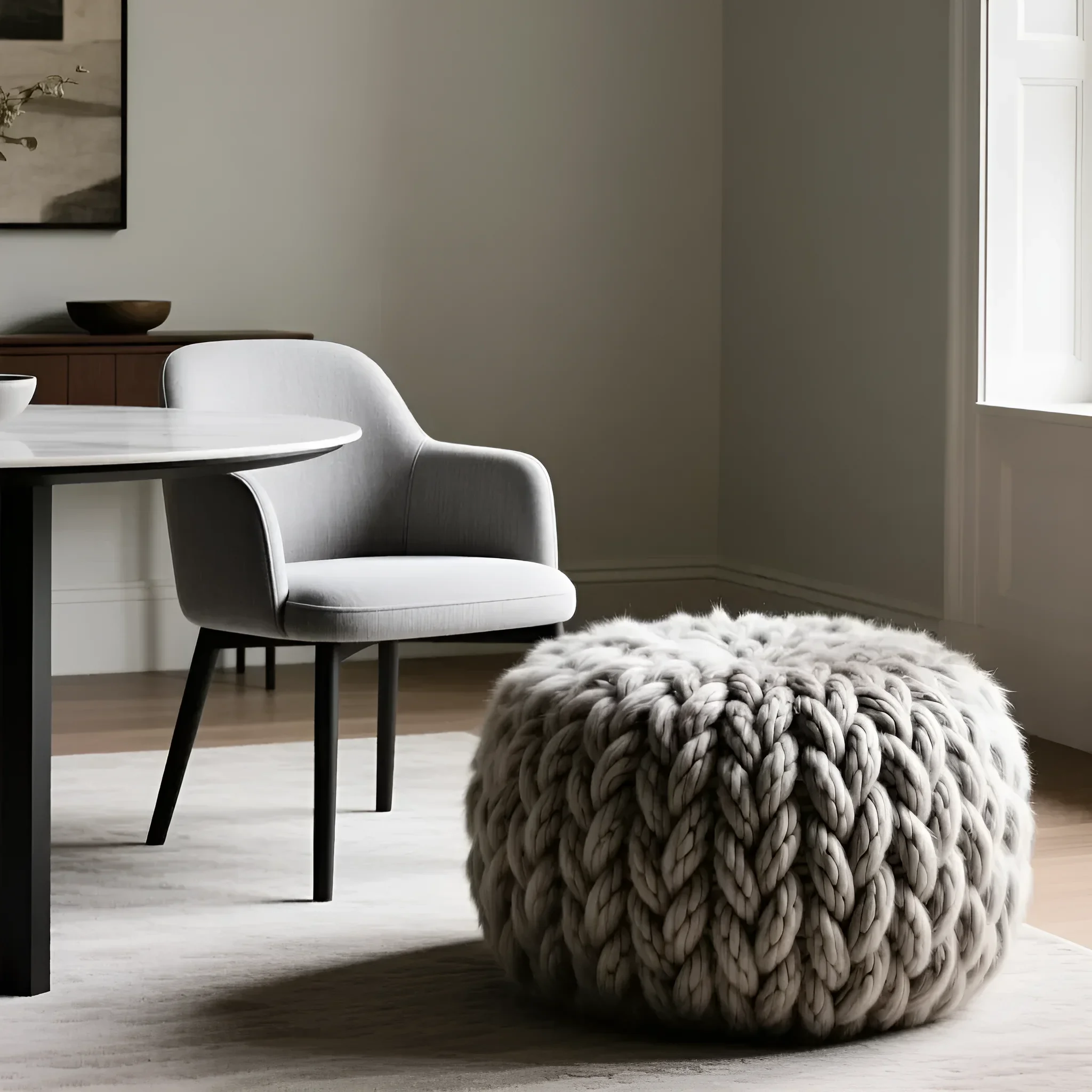
For successful combination, you need to clearly understand the type of material and its performance characteristics. We classify textures by their tactile properties.
Group 1: Plush (Softness and Luxury)
- Materials: Velvet, velour, chenille, faux fur.
- Characteristics: High light reflectivity, color changes depending on the direction of the pile. Requires careful maintenance.
- Technical Data: High-quality velour (from 50,000 Martindale cycles) ensures durability for daily use.
- Pros: Tactilely pleasant, visually rich, ideal for accent elements.
- Cons: Pile shows touch marks, harder to clean dust and pet hair.
Group 2: Woven (Durability and Naturalness)
- Materials: Basket weave, linen, cotton, jute, tweed, burlap.
- Characteristics: Distinct, often coarse weave structure. Very durable, good air permeability.
- Technical Data: Basket weave (from 25,000 cycles) is one of the most wear-resistant options for sofa bases. Linen often has low abrasion resistance unless blended with synthetics (less than 15,000 cycles).
- Pros: Create a natural, relaxed look. Resistant to snags (if the weave is tight).
- Cons: Can be stiff, wrinkles easily (pure linen).
Group 3: Smooth (Practicality and Modernity)
- Materials: Genuine leather, faux leather, microfiber, smooth synthetic fabrics.
- Characteristics: Minimal texture, high density. Easy to clean.
- Technical Data: Microfiber with Teflon coating – up to 100,000 cycles. Leather (1.2–1.4 mm thickness) provides maximum wear resistance.
- Pros: Ideal for homes with pets and children, easy to clean, modern appearance.
- Cons: Can look “flat” without additional decorative elements. Leather is sensitive to direct sunlight.
Rules for Combining Textures: From Contrast to Harmony
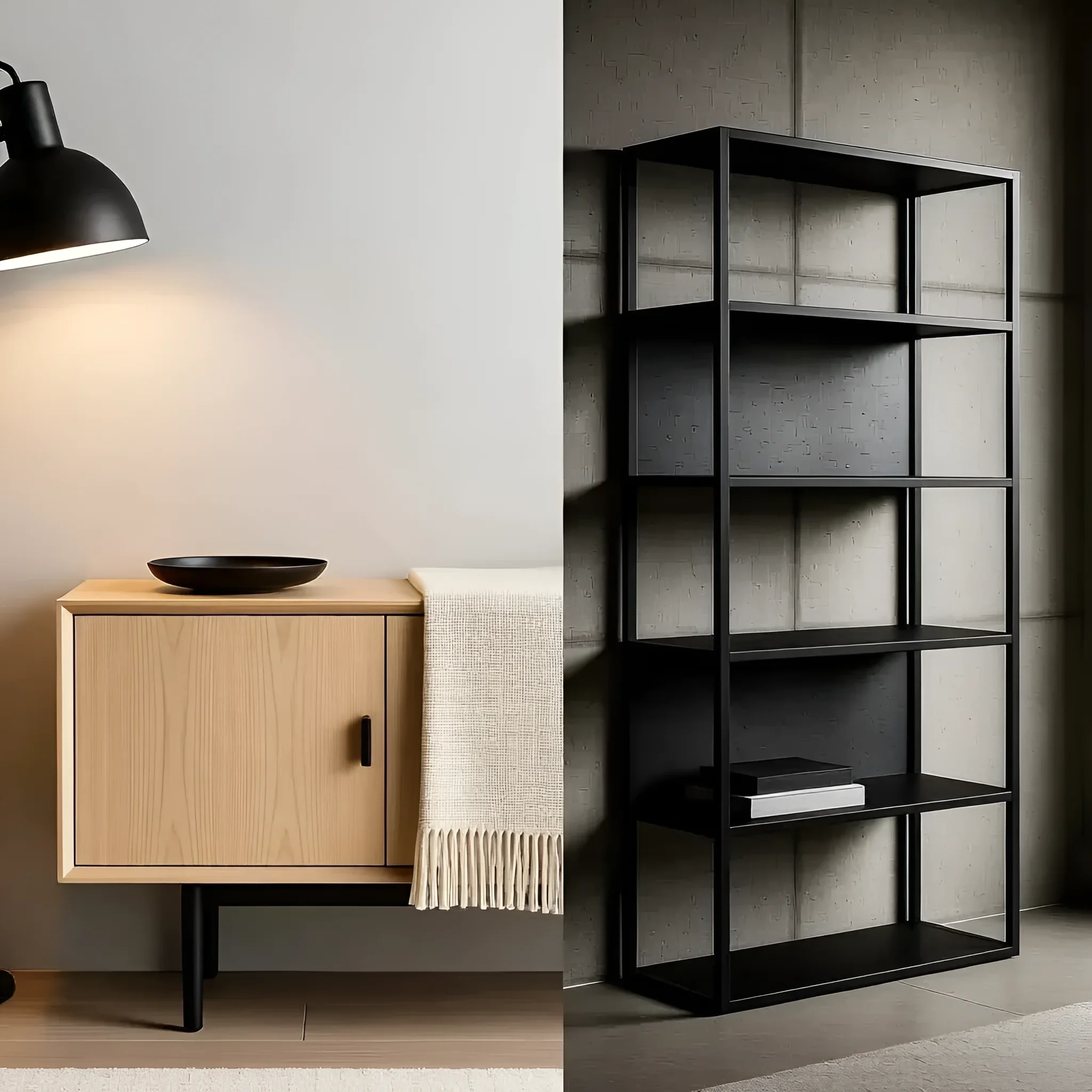
The main secret to successfully combining textures is tactile contrast. An interior consisting solely of smooth or solely of plush surfaces looks monotonous. Your goal is to create a dialogue between materials.
The 60/30/10 Rule for Texture
Apply this rule not only to color but also to texture, using three levels of texture:
- 60% – Dominant Texture (Base): The most practical, neutral, and durable. This could be a dense, medium-coarse basket weave on a sofa or matte wood on wardrobes.
- 30% – Secondary Texture (Contrast): Adds interest. This could be plush armchairs, a leather ottoman, or a glossy tabletop. This texture should be opposite to the dominant one.
- 10% – Accent Texture (Shine/Roughness): The boldest and most striking materials. Faux fur, silk cushions, patinated metal, rough unfinished stone. Use them on small, easily replaceable items.
Combination Techniques
- Contrast “Smooth vs. Rough”: The most effective combination. For example, a smooth polished marble tabletop (cold, hard) next to a rough jute woven rug (warm, soft).
- Contrast “Matte vs. Glossy”: Matte, light-absorbing surfaces (e.g., kitchen fronts made of Fenix NTM) create calmness. Gloss (polished metal, glass) adds dynamism and reflection. In the living room: a matte linen sofa + a coffee table with a glossy metal base.
- Using One Texture in Different Scales: If you love wood, use coarse-grained oak for the floor and fine-grained beech for the cabinet fronts to avoid monotony while maintaining the overall warmth of the material.
How to Choose Textures for Your Interior Style: From Scandi to Loft
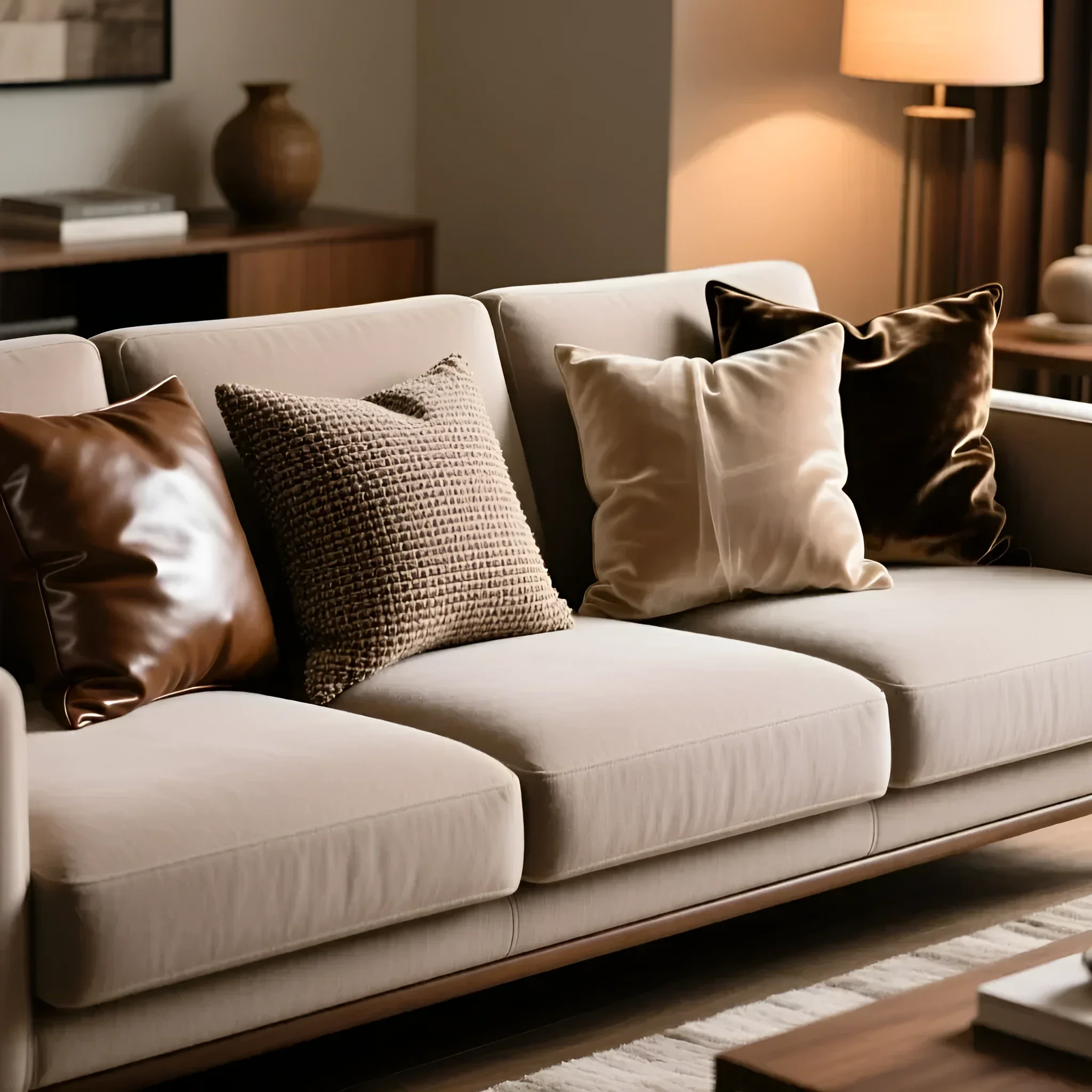
Interior style dictates not only the shape of furniture but also acceptable texture combinations. Properly chosen textures instantly “confirm” the chosen direction.
| Style | Dominant Textures (60%) | Contrasting Textures (30%) | Accent Textures (10%) |
|---|---|---|---|
| Scandinavian (Scandi) | Matte light oak, dense cotton, linen, coarse wool (light shades). | Smooth metal (chrome/white), smooth felt, minimally textured leather. | Soft faux fur (sheepskin), woven rattan baskets. |
| Loft/Industrial | Rough concrete, aged wood (open-pore ash), natural grained leather (dark). | Smooth glass, polished or blued metal, dense canvas. | Velvet (deep colors, for contrast), high-pile rugs. |
| Minimalism | Matte, monolithic surfaces (MDF, Fenix), microfiber, smooth textiles. | Mirrored surfaces, gloss, polished stone (marble, quartz). | Thin suede, solid velour (in very small doses). |
| Classic/Art Deco | Polished dark wood (walnut, wenge), velvet, chenille. | Smooth leather, satin, beveled glass. | Shiny metals (gold, brass), fringe, tassels. |
Practical Tips for Combining Textures Using Sofas and Armchairs as Examples
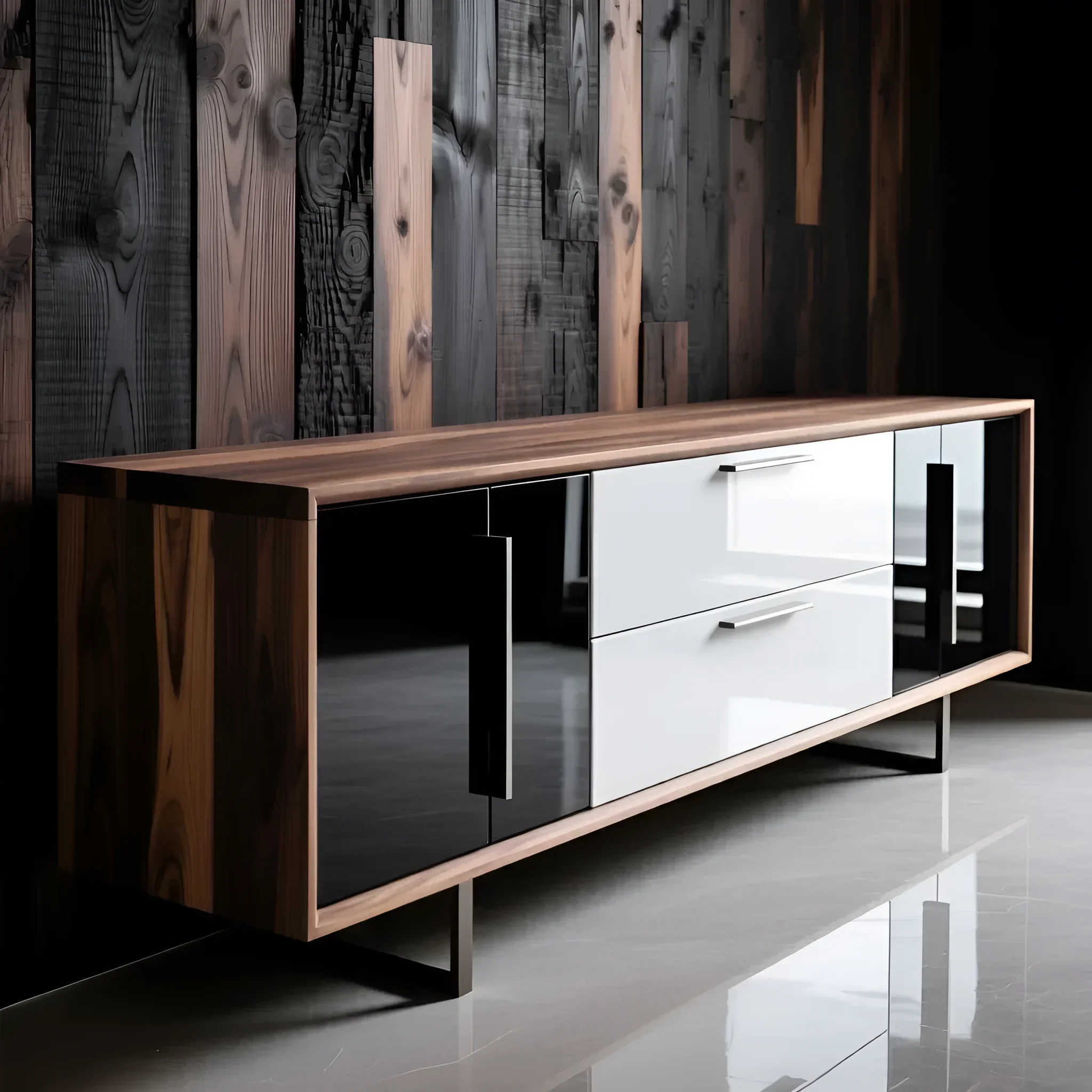
Upholstered furniture is the perfect platform for experimenting with tactile sensations. Here, textures layer to create maximum coziness.
The Secret of Layering: Three Levels of Upholstery
When choosing a “sofa + armchair + decor” set, use three different textures to avoid the feeling of a furniture set from the same store:
- Main Sofa: Basic Texture. Choose a durable, neutral material with a moderate texture that will serve as a background. For example, dense microfiber or basket weave (30,000+ cycles). It’s practical and doesn’t overload the space.
- Accent Armchair: Contrasting Texture. The armchair should stand out. If the sofa is matte and woven, the armchair should be smooth or plush. Ideal: faux leather or velvet. If the armchair has a curved shape, a plush texture will emphasize its curves through the play of light.
- Pillows and Throws: Intensive Texture. Use them to introduce the boldest textures that are impractical in large quantities. On a basket weave sofa, place pillows made of faux fur, thick knit, or smooth silk. This difference in textures instantly elevates the comfort level.
Practical Example: The sofa is upholstered in light gray basket weave. Add a dark blue velour armchair (medium contrast). Complete the look: two pillows in light beige linen and one pillow in a smooth metallic fabric (high contrast).
Combining Patterns and Textures
If you use a patterned fabric, its texture should be as simple and smooth as possible so as not to compete with the visual ornament. Conversely, if you choose a complex texture (e.g., bouclé or tweed), the color should be monochrome or neutral. Mixing complex patterns and complex textures often leads to visual chaos.
Combining Textures in Cabinet Furniture Finishes: Wood, Gloss, and Matte Surfaces
Cabinet furniture (wardrobes, sideboards, tables) requires a more restrained approach, as these items usually last longer than upholstered furniture and should be versatile.
Wood: Open and Closed Grain
The texture of wood is determined by its porosity:
- Open Grain (Rough Texture): Oak, ash, wenge. The grain is clearly defined, the surface feels textured. Ideal for loft, rustic, and Scandi styles.
- Closed Grain (Smooth Texture): Maple, beech, cherry. The surface is smoother, the fibers are less noticeable. Pairs well with gloss and minimalism.
Combination Tip: If you use coarse-grained oak on the floor, choose either very smooth or fine-grained woods for cabinet furniture. Too much “rough” wood makes a room visually heavy and dark.
Matte vs. Glossy Finishes
The choice of finish determines how light interacts with the furniture:
| Characteristic | Matte Finish (Laminate, Fenix, Film) | Glossy Finish (Enamel, Acrylic, Glass) |
|---|---|---|
| Visual Effect | Absorbs light, creates a sense of warmth and calm. | Reflects light, visually expands space, adds dynamism. |
| Tactility | Soft, velvety, warm to the touch. | Cold, hard, perfectly smooth. |
| Practicality | Modern matte coatings (anti-fingerprint) are very practical. | Easy to clean, but fingerprints and minor scratches are visible. |
| Combination | Pairs perfectly with plush fabrics and rough wood. | Pairs perfectly with smooth leather and metal. |
Expert Tip: In modern interiors, a combination of matte fronts (60% of the volume) with glossy accents (e.g., glass shelves or metal legs – 40% of the volume) is popular. This allows you to maintain the coziness of matte while adding the necessary shine.
Caring for Furniture with Different Textures: Preserving Beauty for a Long Time
Different textures require different cleaning approaches. Improper care can permanently damage the material’s texture.
Caring for Plush Textures (Velvet, Velour)
- Problem: Pile gets flattened, collects dust.
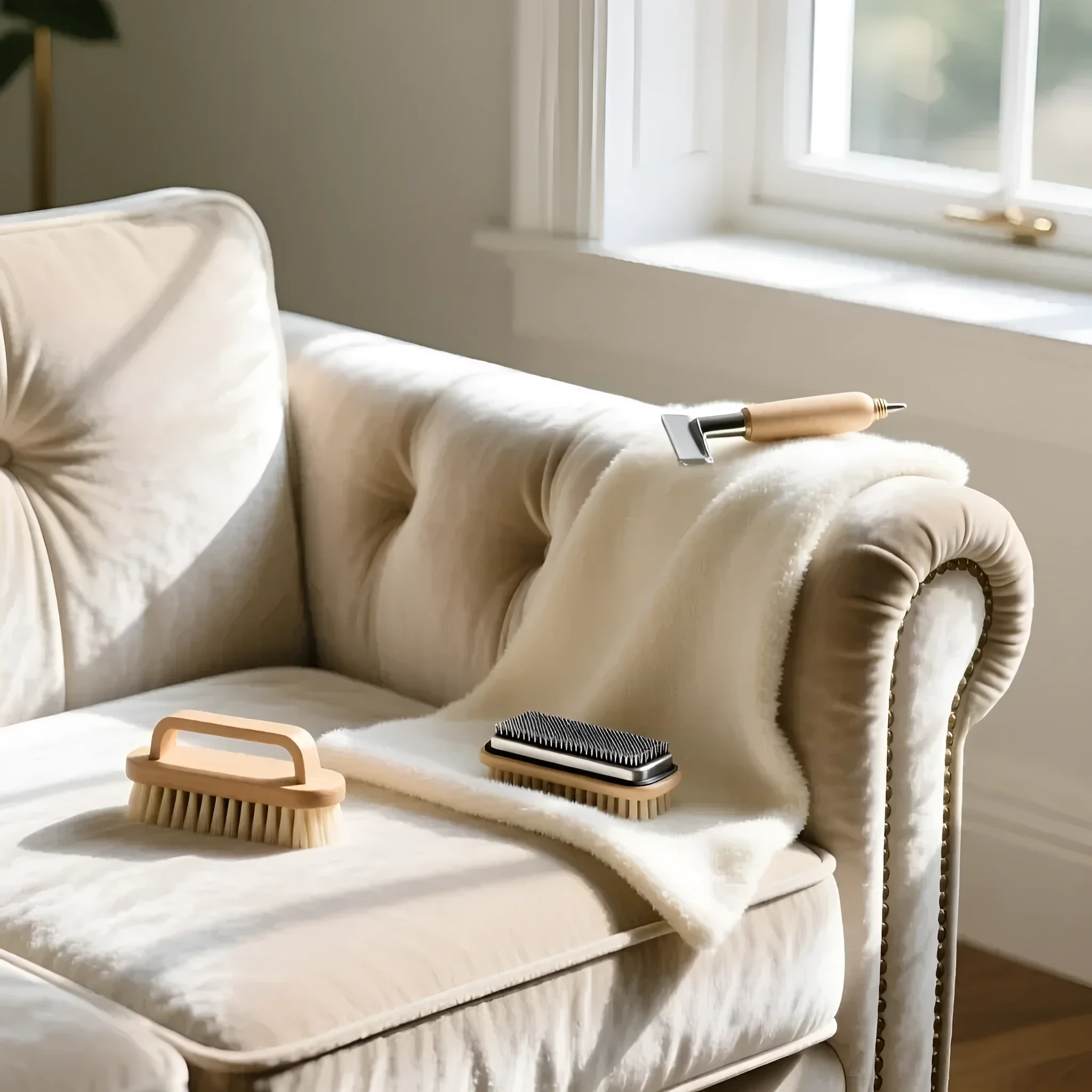
- Care: Regular dry cleaning with a soft brush or a vacuum cleaner with an upholstery attachment. To restore flattened pile, use steam (steamer or iron at a distance of 10-15 cm) and a brush. Never rub the pile harshly, as this can damage its structure.
Caring for Woven Textures (Basket Weave, Linen)
- Problem: Dust and small particles get trapped in the weave.
- Care: Deep vacuuming with a crevice tool 1-2 times a week. Remove stains immediately, using minimal water and moving in the direction of the weave to avoid deforming the threads.
Caring for Smooth Leather
- Problem: Drying, cracking, loss of grain.
- Care: Regular wiping with a soft damp (not wet!) cloth. Twice a year, use special leather conditioners to maintain its elasticity and natural texture. Avoid harsh chemical cleaning agents.
Caring for Matte and Glossy Finishes
- Matte: Use microfiber and mild soapy solutions. For modern coatings like Fenix, warm water is enough to wipe away fingerprints.
- Glossy: Requires delicate care to avoid micro-scratches. Use soft cloths and glass cleaners without abrasive particles.
Frequently Asked Questions About Combining Textures in Furniture Decor
1. Can natural and faux leather be combined?
Yes, but with caution. Visually, natural leather has a deeper and more unique grain. If you combine them, the faux leather should be of the highest possible quality (e.g., with a “nubuck” effect) and used on an item that is not the focal point (ottoman, bench) to avoid a stark contrast in quality and tactility.
2. How to correctly combine three different types of wood?
Follow the rule: One dominant tone + One dominant pore type. For example: Light oak (open grain) for the floor and table. Add dark walnut (closed grain) for small shelves. The third element (10%) can be painted wood or veneer with minimal texture. The main thing is that all three woods have either the same temperature (warm) or the same degree of processing (matte).
3. Is metal a texture, and how to use it?
Absolutely. Metal is a smooth, hard, often reflective texture. Its use is critical for creating contrast. Metal can be:
- Glossy (chrome, polished gold): Adds a cool, modern accent. Works great with plush fabrics (velvet) and matte finishes.
- Matte (wrought iron, patinated bronze): Creates warmth and a historical feel. Pairs perfectly with coarse linen and unfinished wood (loft, rustic).
4. What texture should I choose if I have a cat?
Avoid large weaves (basket weave, bouclé) as claws can easily snag the threads. The best choice is smooth, dense, anti-vandal fabrics such as microfiber with a high Martindale cycle (over 60,000) or flock fabrics. These materials have minimal texture, making them less attractive for scratching and more resistant to damage.
Image Gallery