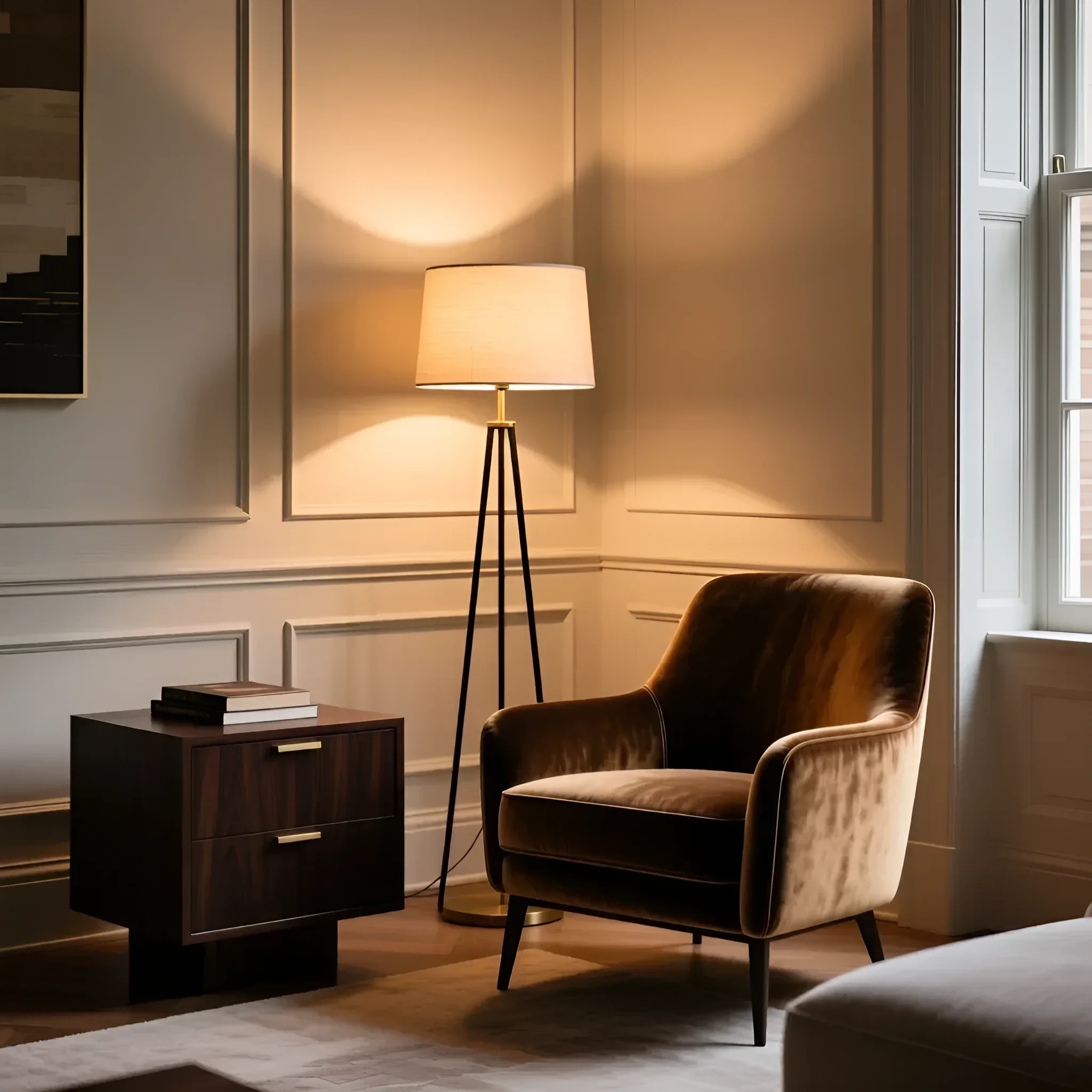
A floor lamp, or standing lamp, has long ceased to be just a light source. Today, it is a powerful zoning tool, a key accent in design, and, most importantly, an integral part of comfort. A correctly chosen floor lamp can radically change the perception of space, add warmth and coziness, and provide necessary functional lighting where overhead light is powerless. Our task as mebeltops.com experts is to provide you with the most detailed guide to choosing this piece of furniture and decor, so that your purchase is not only stylish but also practical.
Introduction: Why a Floor Lamp is a Key Element of Modern Interiors
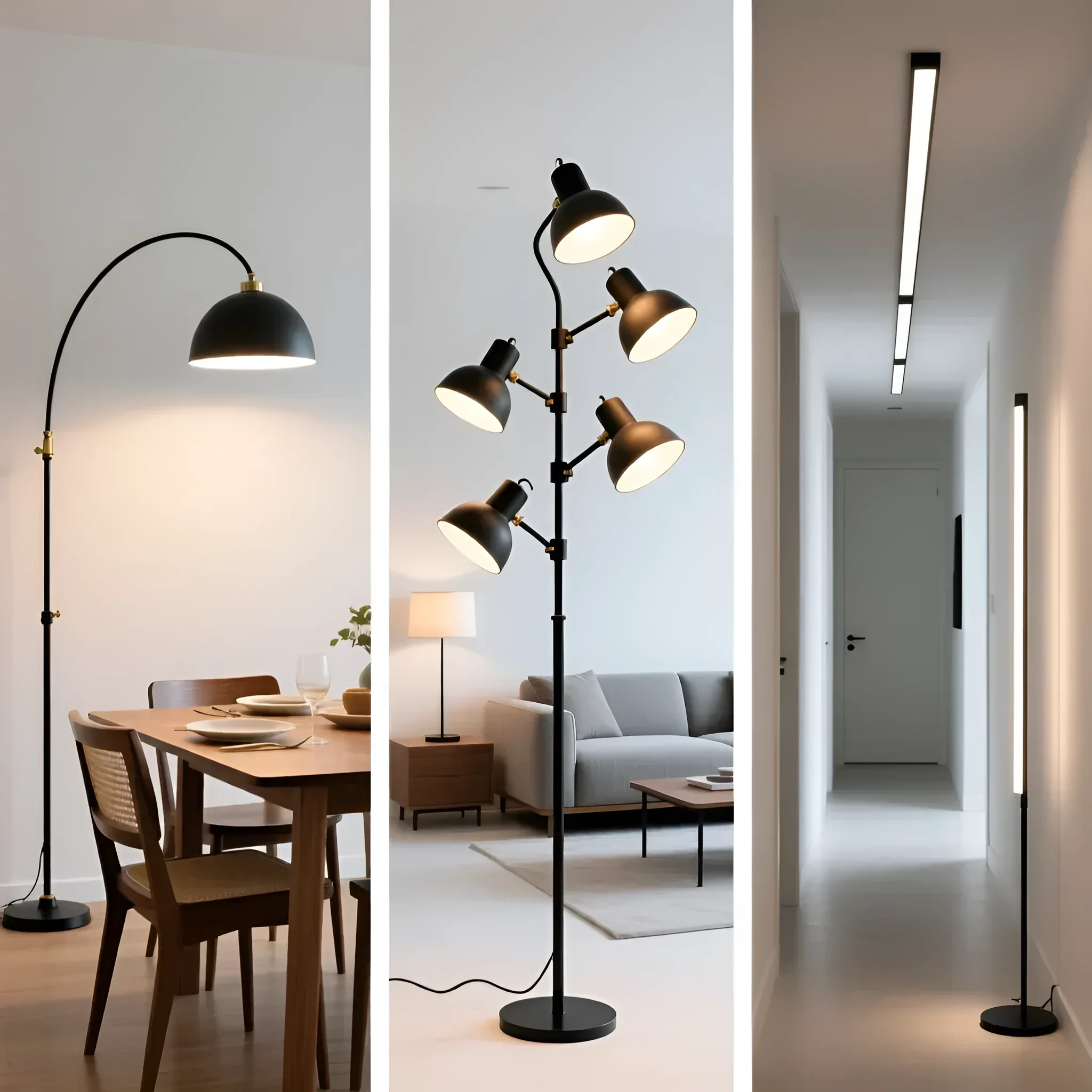
A floor lamp performs three critically important functions in a modern living space that no chandelier or built-in spotlight can fully replace:
- Zoning and Accent Lighting: A floor lamp helps visually highlight a specific area (e.g., a reading zone by an armchair or a relaxation corner) without requiring complex installation.
- Creating Atmosphere: Soft, diffused light coming from human height makes the room cozier and more relaxing. It’s the perfect way to move away from harsh “office” overhead lighting.
- Mobility: Unlike stationary fixtures, a floor lamp can be easily moved to any part of the room or even the apartment, which is especially valuable for frequent rearrangements or changes in room function.
When choosing a floor lamp, you are investing not just in a lamp, but in the flexibility and multifunctionality of your interior.
Types and Kinds of Floor Lamps: Standing Lamps for Any Task
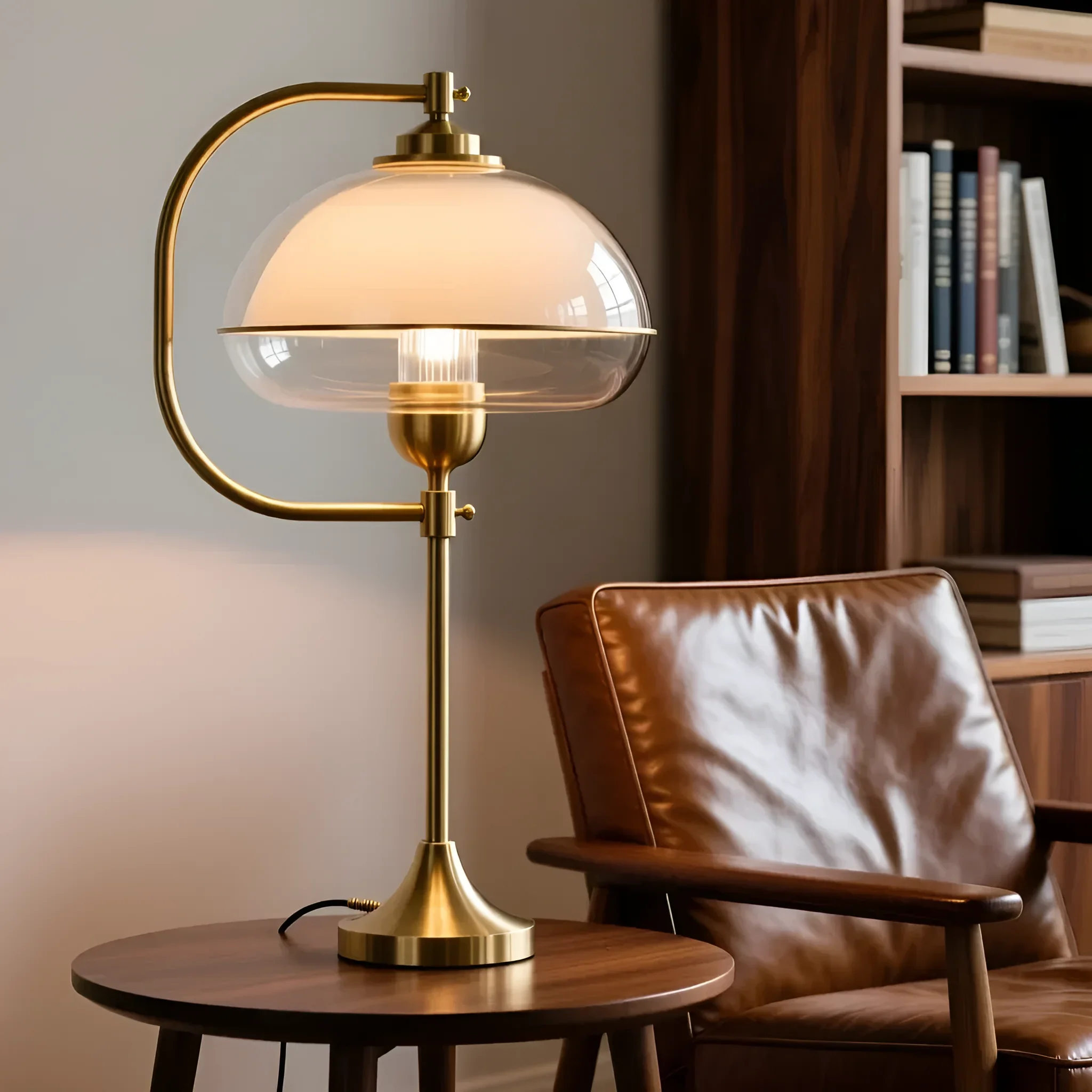
The classification of floor lamps is based on their design and how they distribute light. Understanding these types is crucial for choosing a fixture that will suit a specific task – whether it’s reading or general illumination.
Classification by Design and Functionality
There are four main types of floor lamps:
- Uplighter Floor Lamp: A fixture with a shade directed strictly upwards. Its main purpose is to reflect light from the ceiling, providing soft, diffused general lighting. Ideal for living rooms and dining rooms with high ceilings (from 2.7 m). Typical height: 170–185 cm.
- Task Floor Lamp: Often equipped with a flexible or adjustable “arm” (gooseneck or articulated mechanism) and a directional shade. Provides focused, bright light necessary for work or reading. Main stand height: 140–160 cm.
- Arc Floor Lamp: Characterized by a curved, long stand that allows the light source to be placed over a sofa or armchair, while the base remains to the side. Requires significant space for placement (the reach can be up to 150–220 cm). Important: for stability, the base of an arc floor lamp must be very heavy (weight from 10 kg, often made of marble or cast iron).
- Shelf Floor Lamp: A multifunctional model that combines a lamp and a small shelf or set of shelves. An excellent solution for small apartments where every square centimeter counts. Height: 150–170 cm.
Comparative Table of Floor Lamp Types
| Floor Lamp Type | Primary Purpose | Space Requirements | Recommended Brightness (Lumens) |
|---|---|---|---|
| Uplighter | General, diffused lighting | Free space near the wall, high ceilings | 1000–1500 Lm |
| Task Lamp | Local, directional lighting | Next to an armchair or workspace | 400–800 Lm (focused beam) |
| Arc Lamp | Accent lighting over furniture | Large floor area, reach up to 2.2 m | 800–1200 Lm |
| Shelf Lamp | Multifunctionality, storage | Room corner, minimum 40×40 cm | 600–900 Lm |
Materials and Design: How to Choose a Floor Lamp that Matches Your Furniture
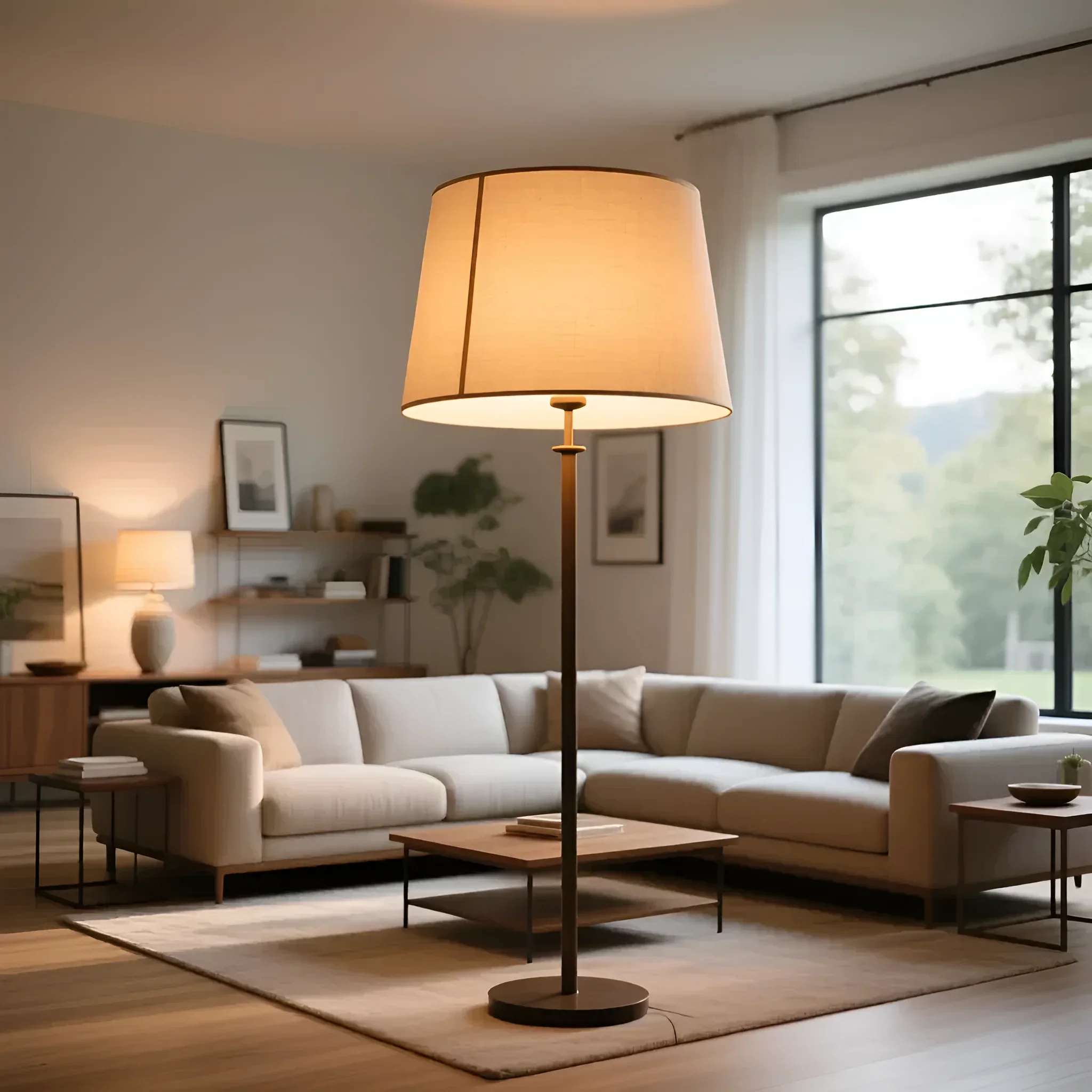
The choice of materials determines not only the appearance of the floor lamp but also its durability and light diffusion quality. Harmony is achieved when the material of the base and shade echoes the main elements of your furniture.
Materials for Base and Stand
- Metal (Steel, Brass, Chrome): The most common and durable option. Powder-coated steel (matte black or white) is ideal for Loft and Minimalism styles. Polished brass or copper is the choice for Mid-Century Modern and Classic styles. Tip: when choosing an arc floor lamp, ensure the stand is made of thick-walled metal to minimize vibrations and the risk of falling.
- Wood (Solid or Veneer): Typical for Scandinavian style (light oak, ash) or Eco. Often used in tripod constructions. Wood brings warmth and softness. Technical nuance: for the stability of wooden tripod floor lamps, the legs should be spread at an angle of at least 30–45 degrees relative to the vertical axis.
- Marble or Stone: Used as a weight for bases (especially arc models) or as a decorative element in premium models. A marble base (diameter 30–45 cm) is a sign of high quality and stability.
Materials for Shades and Lampshades
The shade determines the character of the light flow:
- Textile (Cotton, Linen): Provides soft, diffused glow, ideal for the living room. Fabric density (often indicated in grams per meter) affects light transmission. The denser the fabric, the cozier, but less light.
- Frosted Glass or Acrylic: Excellent light diffusion, eliminating glare. Often used in uplighter floor lamps. Easy to clean.
- Metal (Opaque): Used to create directional light (for reading). Light exits only through openings, not diffusing through the side walls. Typical shade diameter for reading: 15–25 cm.
Choosing the Ideal Floor Lamp: Lighting, Functionality, and Dimensions
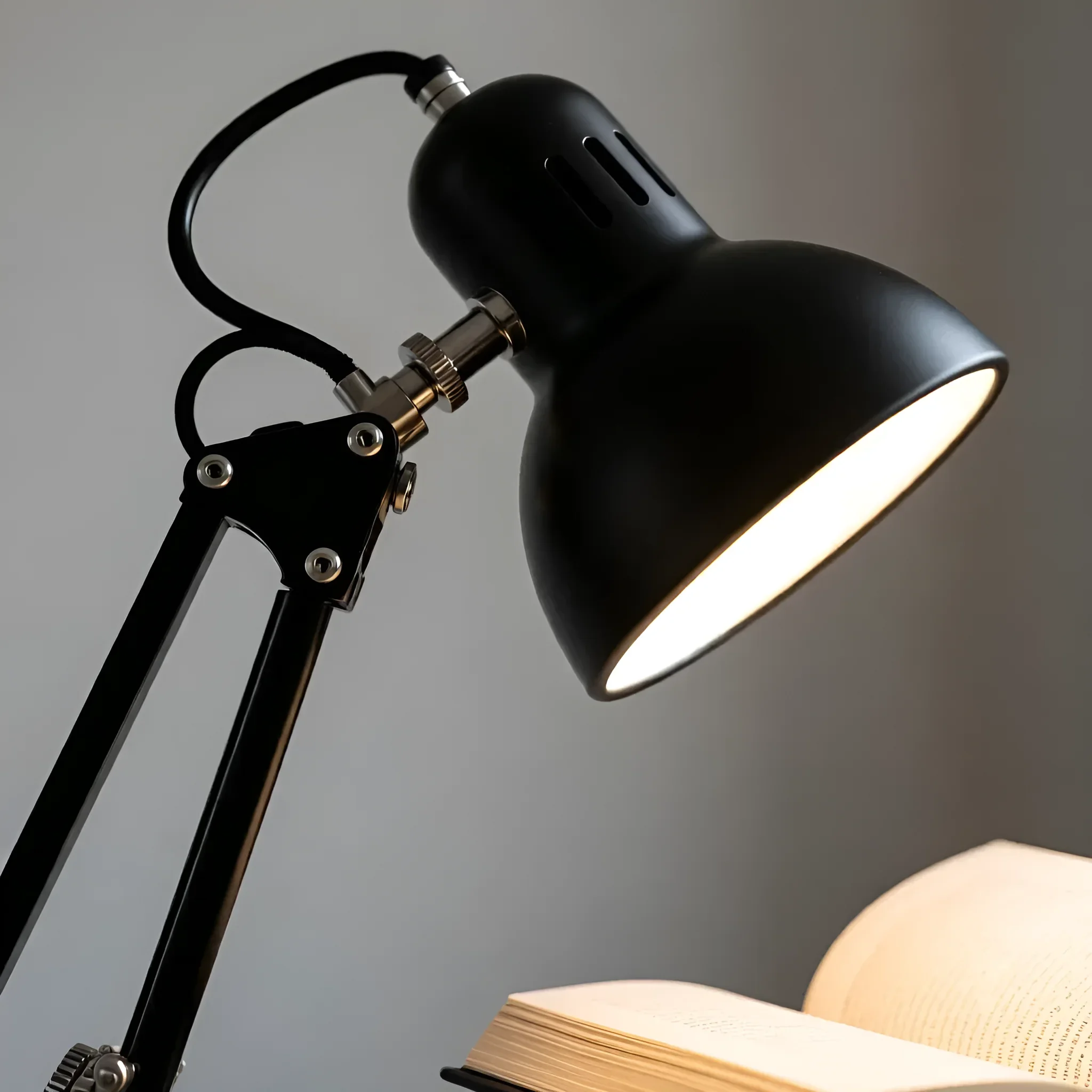
Choosing a floor lamp is a balance between aesthetics and technical parameters. The most important characteristics are the type of bulb, its brightness (lumens), and color temperature (Kelvin).
Technical Lighting Specifications
1. Brightness and Luminous Flux (Lumens, Lm):
- For accent lighting (reading): 400–800 Lm is sufficient.
- For creating background light in a large room: 1000–2000 Lm.
- Comparison: A 60W incandescent bulb produces about 800 Lm. A modern 10W LED bulb produces the same 800 Lm. We always recommend LED bulbs due to their energy efficiency and low heat emission.
2. Color Temperature (Kelvin, K):
- Warm White (2700K – 3000K): Ideal for bedrooms, living rooms, and relaxation areas. Creates a maximally relaxing atmosphere.
- Neutral White (3500K – 4000K): Suitable for work areas, studies, or kitchens where clearer color perception is required.
- Cool White (5000K – 6500K): Rarely used in residential spaces, more suitable for technical purposes.
3. Color Rendering Index (CRI):
This indicator (from 0 to 100) determines how natural colors appear under the lamp’s light. For residential spaces and decorative lighting, choose bulbs with a CRI of at least 80. For art studios or detailed work, a CRI of 90+ is required.
Size and Proportions
The floor lamp should be proportional to the surrounding furniture:
- Height: Standard floor lamp height is 150–185 cm. If the floor lamp is used for reading, its shade should be at the eye level of a seated person (approximately 110–130 cm from the floor) to prevent direct light from entering the eyes.
- Placement near a sofa: If the floor lamp is placed next to a sofa, its diameter should be smaller than the width of the armrest to avoid obstruction.
- Base: Ensure that the base (especially for arc models) does not protrude into the passage area. For floor lamps placed in a corner, a base diameter of 25–30 cm is sufficient.
Floor Lamp Mechanisms and Functionality: Adjustments That Transform Space
Modern floor lamps offer much more than just on/off. Functionality determines the convenience of daily use.
Brightness Adjustment (Dimming)
Dimmers allow you to adapt the lighting to the situation – bright light for reading, dim light for watching movies.
- Stepped Dimmer: Provides 3 or 4 fixed brightness levels (e.g., 25%, 50%, 75%, 100%). Simple and reliable.
- Continuously Variable (Smooth) Dimmer: Allows you to set the brightness precisely to your liking. More common in LED models.
- Bulb Requirement: If you are buying a floor lamp without a built-in LED module, make sure the bulbs you choose are marked “Dimmable.” Regular bulbs may flicker or fail quickly when used with a dimmer.
Types of Switches
- Foot Switch: The most convenient option for floor lamps. Located on the cord, about 30–50 cm from the base.
- Rotary or Pull Chain Switch: Located on the stand or shade. More common in classic models.
- Touch Control: Found in modern LED floor lamps. On/off and dimming are controlled by a light touch of the metal part of the housing.
Integration with “Smart” Systems
Premium floor lamps of 2024 are often equipped with integration capabilities:
- Wi-Fi and Bluetooth: Allow you to control the light via a mobile app, set timers, scenes, and change color temperature (from 2700K to 6500K).
- Voice Control: Compatibility with Google Assistant, Siri, or Alice. This is especially convenient for arc floor lamps located far from the user.
Care and Maintenance: Extending the Life of Your Stylish Floor Lamp
Proper care ensures that your floor lamp will retain its original appearance and functionality for years to come. Care depends on the material of the shade and base.
Cleaning Shades
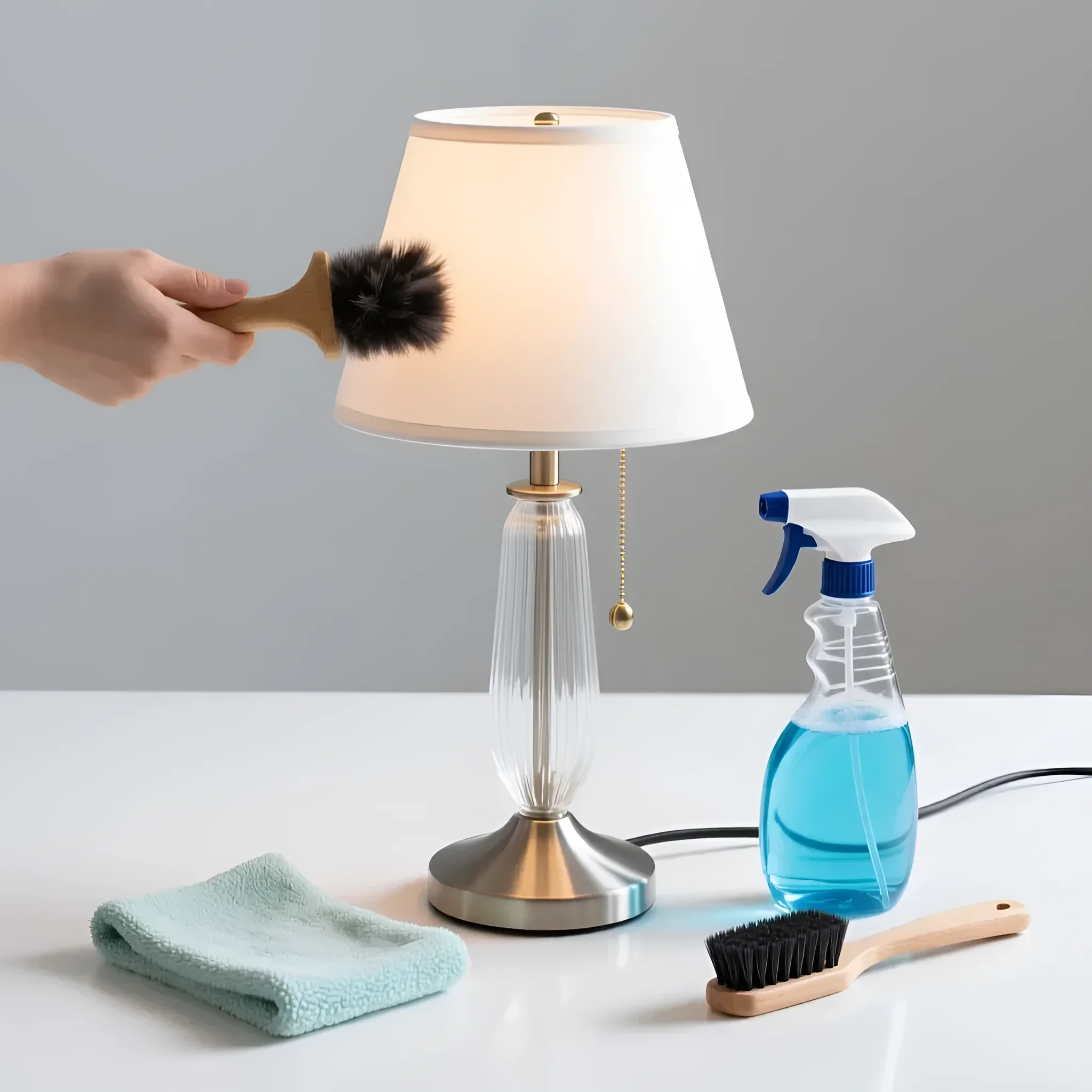
- Textile Lampshades: Regular dry cleaning with a soft brush or a vacuum cleaner with a furniture attachment. For stains, use specialized foam cleaners for fabric, always testing them on an inconspicuous area.
- Glass and Acrylic Shades: Wipe with a soft cloth dampened with a non-abrasive detergent or glass cleaner. Caution: never use abrasive sponges, which can leave micro-scratches.
- Metal Shades: Wipe with a dry or slightly damp microfiber cloth. For glossy surfaces (chrome, polished brass), use special polishes to avoid fingerprints.
Electrical Part Maintenance
Bulb Replacement: Always disconnect the floor lamp from the power outlet before replacing the bulb. When using LED bulbs, ensure the new bulb matches the required socket type (E27, E14, GU10) and, if the floor lamp is dimmable, that the new bulb also supports dimming.
Cable Check: Periodically inspect the cable for wear or damage, especially if the floor lamp is frequently moved or is in a location where the cord may be pinched by furniture.
Top 5 Best Floor Lamps of 2024: Reviews and Recommendations from mebeltops
Our experts have analyzed hundreds of models available on the market and selected five leaders in various categories, based on the ratio of price, quality, functionality, and durability. The models presented below are examples of ideal solutions for different tasks.
1. Arc Floor Lamp “Sculpture 2.0” (Premium Class)
- Features: The perfect solution for illuminating a coffee table or the center of a sofa. The polished black marble base (18 kg) guarantees absolute stability.
- Specifications: Boom reach up to 210 cm. Shade – matte aluminum. Built-in LED module 1200 Lm, color temperature adjustable from 2700K to 4000K. Control: touch dimmer and Bluetooth.
- Recommendation: Requires a spacious living room (from 25 sq. m).
2. Tripod Floor Lamp “Scandi Light” (Eco and Style)
- Features: Classic Scandinavian design. Legs made of solid beech, treated with natural oil. Lightweight and mobile.
- Specifications: Height 155 cm. Lampshade diameter 50 cm made of dense linen fabric. E27 socket (compatible with any LED bulbs). Foot switch.
- Recommendation: An excellent solution for bedrooms and studies. Provides soft, warm background light.
3. Reading Floor Lamp “TechnoFocus” (Functionality)
- Features: A specialized model for those who read a lot or work with documents. Has two independent lamps: a main one (uplighter) and a side one (directional spotlight).
- Specifications: Total height 180 cm. Luminous flux: 1500 Lm (main light) + 600 Lm (spot). Control: two independent dimmers on the stand.
- Recommendation: The most practical choice for corners where both general and local lighting are needed.
4. Minimalist Floor Lamp “Thin Line” (LED Design)
- Features: Ultra-thin design, practically invisible when turned off. Made in the form of a vertical light line.
- Specifications: Height 165 cm. Built-in LED module with a lifespan of 50,000 hours. Power 15W (1200 Lm). Color temperature 4000K (neutral white).
- Recommendation: Ideal for Minimalism and High-Tech styles. Takes up minimal space (base 20×20 cm).
5. Shelf Floor Lamp “Compact” (Solution for Small Spaces)
- Features: Combination of a lamp, charging station, and table.
- Specifications: Height 145 cm. Table diameter 35 cm. Built-in USB ports (5V/2.1A) for charging gadgets. Light spot directed downwards, ideal for bedside areas.
- Recommendation: Maximizes usable space. Suitable for small bedrooms and hallways.
Frequently Asked Questions (FAQ) About Buying Floor Lamps
We answer the most common questions that arise when choosing a floor lamp.
1. How heavy should the base of a floor lamp be?
It depends on the type. For upright floor lamps (height 160–180 cm), a weight of 3–5 kg is sufficient. However, if you are choosing an arc floor lamp with a reach of more than 1 meter, the base weight should be at least 10–12 kg (most often made of marble or cast iron) to provide counterweight and prevent tipping.
2. Which type of bulb is better: E27 or built-in LED module?
E27/E14 (replaceable socket): Pro – you can choose the power, color temperature, and functionality (e.g., a smart bulb) yourself. Con – requires periodic replacement. Built-in LED module: Pro – provides a maximally slim design and a long service life (up to 50,000 hours). Con – if it fails, the entire module needs repair or replacement, not just the bulb.
3. Where is the best place to position a reading floor lamp?
A reading floor lamp should be positioned behind the shoulder of the seated person (to the left if you are right-handed, and vice versa), so that the light falls on the page and the head does not cast a shadow. The shade should be below eye level to avoid glare.
4. How safe are tripod floor lamps?
Tripod floor lamps are very stable, provided their legs are properly spread. However, they take up more floor space (base diameter can reach 60–80 cm). If you have small children or active pets, a floor lamp with a heavy flat base that stands close to the wall would be a safer choice.
5. What distance is needed from an arc floor lamp to a sofa?
For comfortable use, the shade of an arc floor lamp should hang over the coffee table or sofa seat at a distance of 30–50 cm from the seated person’s head. When purchasing, always check the maximum boom reach to ensure the light reaches the desired point and the base remains outside the main movement area.