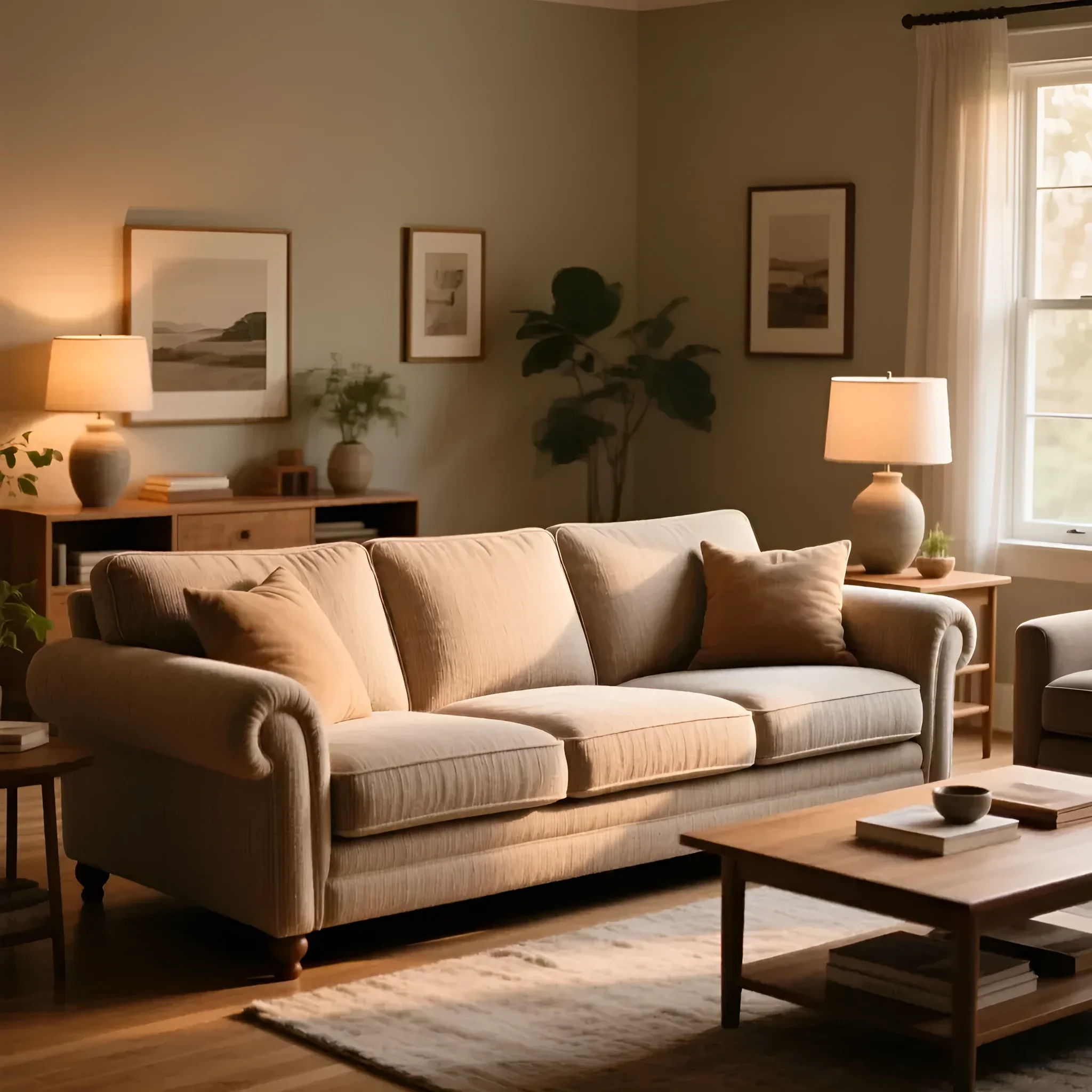
A sofa is more than just a piece of furniture; it’s the main functional and aesthetic centerpiece of any living room. It defines the style, sets the comfort level, and most importantly, should serve you faithfully for at least 7-10 years. Choosing the ideal model requires a deep understanding of technical characteristics, from the density of the filler to the upholstery’s wear resistance. In this comprehensive guide, we, the experts at mebeltops.com, will break down all the key aspects to help you make an informed decision and avoid overpaying for a short-lived product.
The Sofa is the Heart of the Living Room: Where to Start Your Choice
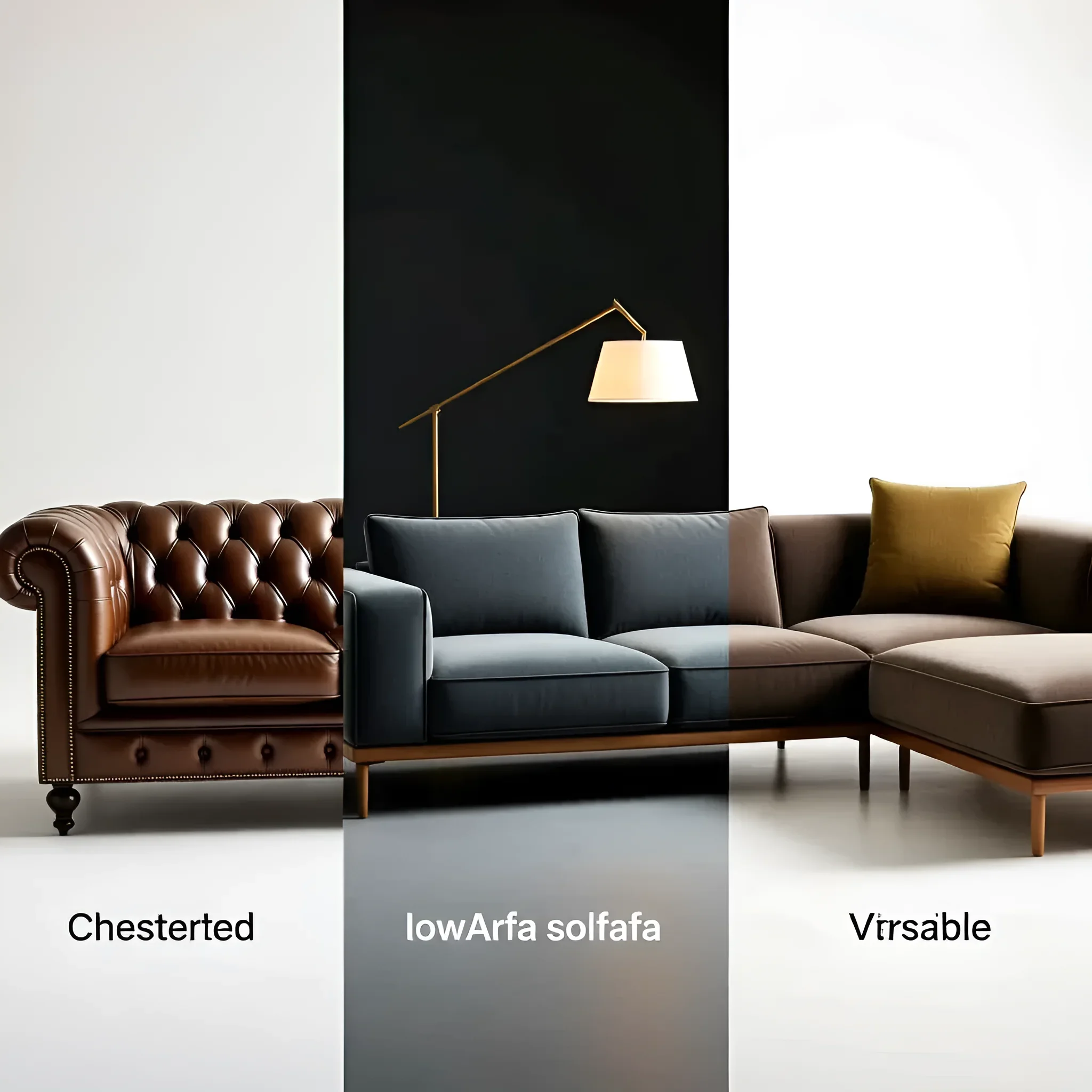
Before diving into catalogs and choosing colors, you need to clearly define two things: functionality and space.
1. Functional Purpose:
- For Sitting and Hosting Guests Only: If the sofa is used exclusively for relaxation, you can choose models without complex transformation mechanisms. The focus is on seating comfort and upholstery durability.
- For Daily Sleep: If the sofa will replace a bed, the reliability of the mechanism, the evenness of the sleeping surface, and the quality of the mattress/filler (ideally independent spring units or high-resilience HR polyurethane foam) are critically important.
- Space Zoning: In large or studio apartments, a corner or modular sofa can act as a partition, separating the living room from the kitchen.
2. Budget and Durability:
The price of a sofa directly depends on three components: the frame (solid wood/plywood), the mechanism (Eurobook/Puma), and the upholstery (fabric with a Martindale test of 50,000 cycles or higher). Do not skimp on the frame and mechanism if you plan for active daily use.
Types of Sofas for the Living Room: From Classics to Modular Systems
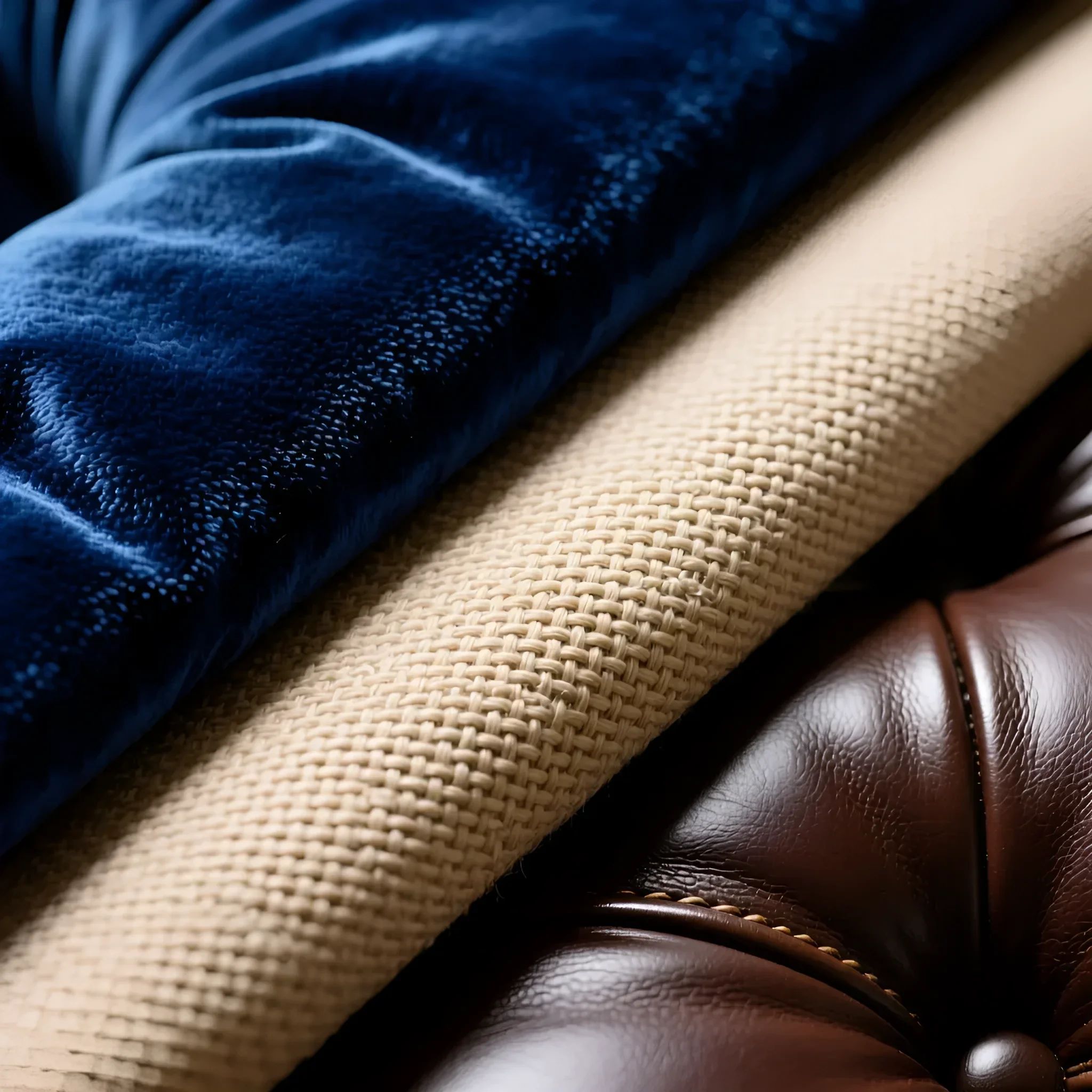
The choice of sofa construction should match the geometry and size of your room, as well as the number of people you plan to accommodate.
- Straight (Classic) Sofa:
- Characteristics: The most common and versatile type. Excellent for small rooms or in combination with armchairs.
- Dimensions: Standard models often range from 180 cm (two-seater) to 240 cm (three-seater) in length. Depth is usually 90-105 cm.
- Expert Tip: If the room is narrow, choose models with thin armrests to maximize usable seating space.
- Corner Sofa (Sectional):
- Characteristics: Utilizes the “dead” corner space, offering maximum seating capacity. Ideal for large families or frequent entertaining.
- Shapes: L-shaped (most popular) or U-shaped (for very spacious living rooms).
- Dimensions: Typical corner models start from 250×160 cm. U-shaped ones can reach 400×200 cm.
- Important: Always specify the corner side (left/right) when ordering if the section is not reversible.
- Modular Sofa:
- Characteristics: The most flexible option. Consists of individual elements (modules) – an armchair, an ottoman, a corner section – which can be rearranged and fixed using special hidden locks or clips.
- Advantages: Allows you to adapt the sofa to changing needs or room shape. You can add or remove sections.
- Disadvantages: Higher cost, more difficult to achieve a flat sleeping surface when transformed.
Upholstery is Everything: Comparing Popular Materials and Their Durability
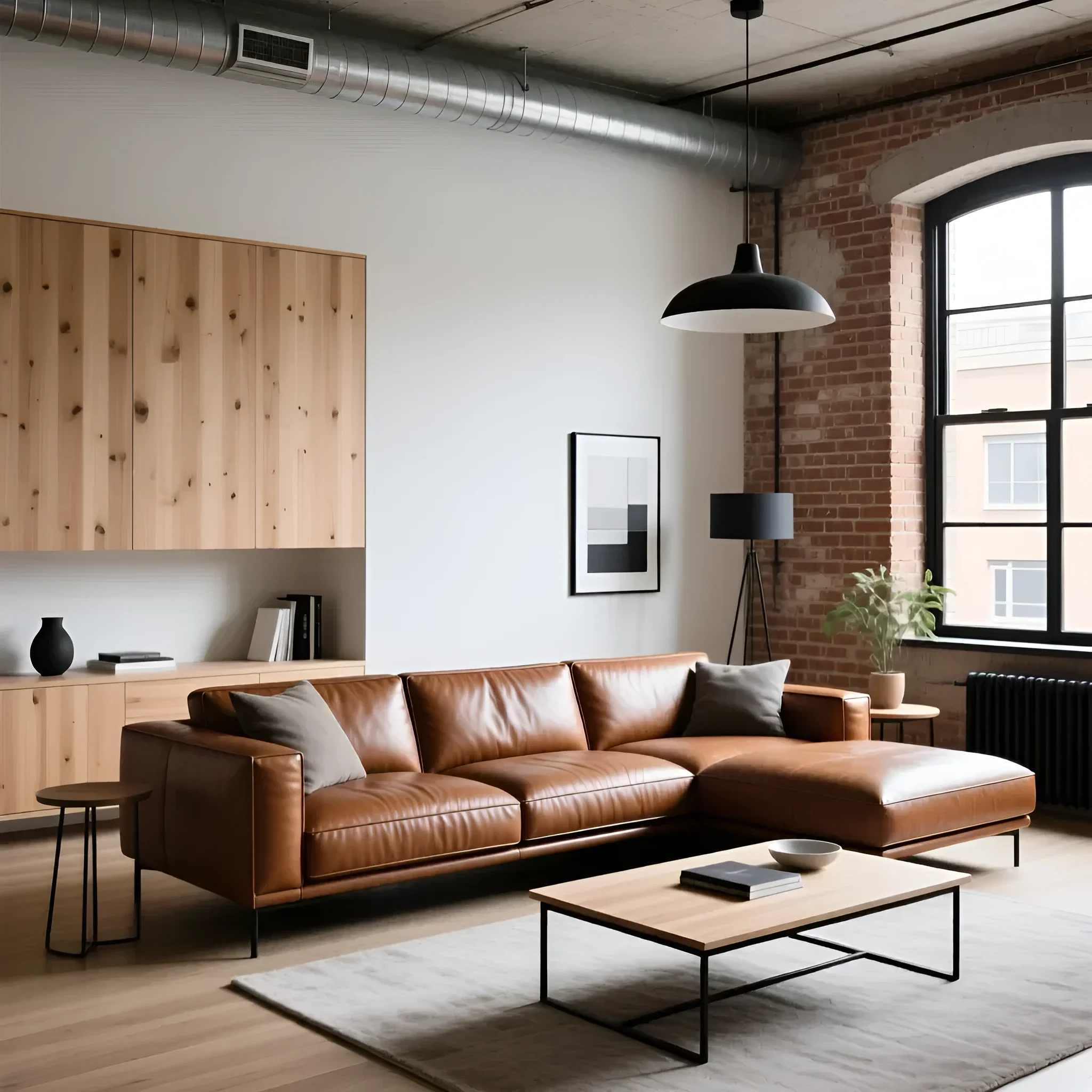
The upholstery material is 70% of the success. It affects durability, ease of care, and, of course, tactile sensations. The main indicator of wear resistance is the Martindale Test (number of friction cycles until visible wear appears).
Comparative Table of Upholstery Materials
| Material | Martindale Test (cycles) | Key Characteristics | Care | Usage (Recommendation) |
|---|---|---|---|---|
| Matting (Rogožka) | 30,000 – 45,000 | Rough, woven texture. High durability, holds its shape well. Trendy for Scandinavian and Loft styles. | Dry vacuuming. Difficult to remove stains due to the weave. | Daily use, living rooms with pets (less attractive to claws than velvet). |
| Velvet/Velour | 20,000 – 35,000 | Soft, pleasant-to-touch pile. Luxurious appearance. Requires careful handling. | Dry cleaning only. Pile can get “crushed” (memory effect). | Living rooms with low traffic, accent sofas. Not suitable for pets. |
| Flock (Microfiber) | 50,000 – 70,000 | Highest wear resistance, “anti-claw” effect. Water-repellent properties. | Light damp cleaning, resistant to most household stains. | Maximum active use, families with children and pets. |
| Genuine Leather | Not measured (indicator is thickness) | Status, durability (10+ years). Develops a noble appearance over time. | Regular treatment with special leather creams, sensitive to direct sunlight. | Offices, classic interiors. Requires climate control (dislikes dryness). |
Practical Tips for Choosing Upholstery
- For Daily Sleep: Choose fabrics with a Martindale rating of at least 40,000 cycles (flock, microfiber, dense chenille).
- For Sunny Sides: Avoid natural fabrics and cheap faux leather – they fade quickly. Synthetic blends (polyester) are more resistant to UV radiation.
- Color: Light upholstery requires mandatory protective treatment (e.g., Teflon). Dark fabrics (especially blue, gray, burgundy) effectively mask minor stains.
How to Choose the Perfect Sofa Style: Scandinavian, Loft, Classic
The sofa’s style should harmonize with the rest of the interior. Let’s explore the key features of popular styles.
Scandinavian Style (Scandi)
Essence: Functionality, simplicity, light colors, natural materials.
- Shape: Straight, clean lines, low back. Often on high wooden legs (for easier cleaning).
- Upholstery: Natural or semi-natural fabrics – matting, linen, dense cotton. Colors: gray, beige, light blue, mint.
- Comfort: Medium seat depth (55-60 cm), firm cushions.
Industrial Style (Loft)
Essence: Brutality, spaciousness, texture, aged elements.
- Shape: Massive, low models. Deep seating (70-80 cm). Wide armrests, often wooden or metal.
- Upholstery: Aged or vintage leather, dense matting in dark shades (graphite, dark brown, black).
- Details: Exposed seams, metal rivets, minimal decoration. Chesterfield sofas in leather are often used.
Classic and Neoclassical Styles
Essence: Elegance, symmetry, attention to detail, richness.
- Shape: Curved lines, high or rounded armrests. Button tufting (capitone) is often used.
- Upholstery: Expensive velvet, velour, jacquard, or high-quality leather. Colors: burgundy, emerald, ivory.
- Comfort: Soft, deep seats. Decorative pillows with tassels or fringe.
Transformation Mechanisms: Understanding Sofa Beds for Daily Sleep
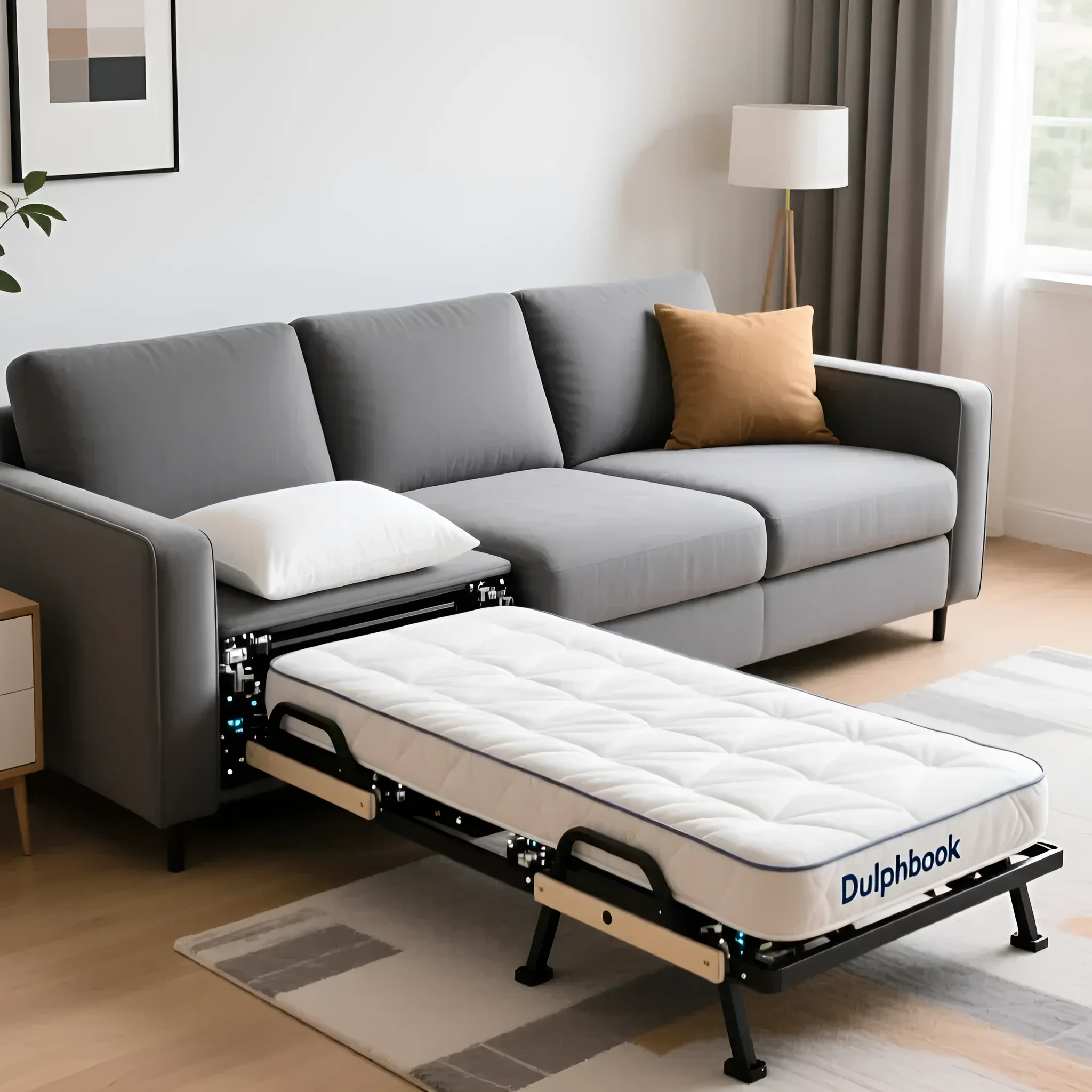
If the sofa is purchased for regular sleep, the mechanism must be maximally reliable and provide a flat surface. We will compare the three most popular types suitable for daily use.
Comparison of Mechanisms for Daily Use
- “Eurobook” (Eurobook):
- Principle: The seat slides forward on rollers, and the backrest folds down into the freed space.
- Pros: Extremely reliable (minimal moving parts). Creates a flat and high sleeping surface. Always has a large storage compartment for bedding.
- Cons: Can scratch the floor when extended if there are no rubber wheels. Requires some space behind the backrest.
- Recommendation: Ideal for daily use.
- “Pantograph” (Tick-Tock):
- Principle: An improved “Eurobook.” The seat first lifts up and then steps forward without touching the floor.
- Pros: Does not damage the floor covering (especially important for parquet and laminate). Reliable, has a bedding compartment.
- Cons: More complex and expensive mechanism than “Eurobook.”
- Recommendation: The best choice for daily sleep if you value your flooring.
- “Dolphin” (Dolphin):
- Principle: Most often used in corner sofas. The lower part of the sleeping area “emerges” from under the main seat and rises to its level.
- Pros: Quick transformation, large sleeping area.
- Cons: The sleeping surface often consists of two parts with different firmness (main seat and pull-out section), which is not always comfortable for the back.
- Recommendation: Good for guest or occasional sleep.
Mechanisms for Guest Sleep (not recommended for daily use):
- “French sofa bed” (Sedaflex): Compact, but has a thin mattress (6-8 cm).
- “Click-Clack”: Has multiple backrest positions, but the fold line can often be felt during sleep.
Dimensions and Ergonomics: How to Calculate the Ideal Sofa Size for Your Room
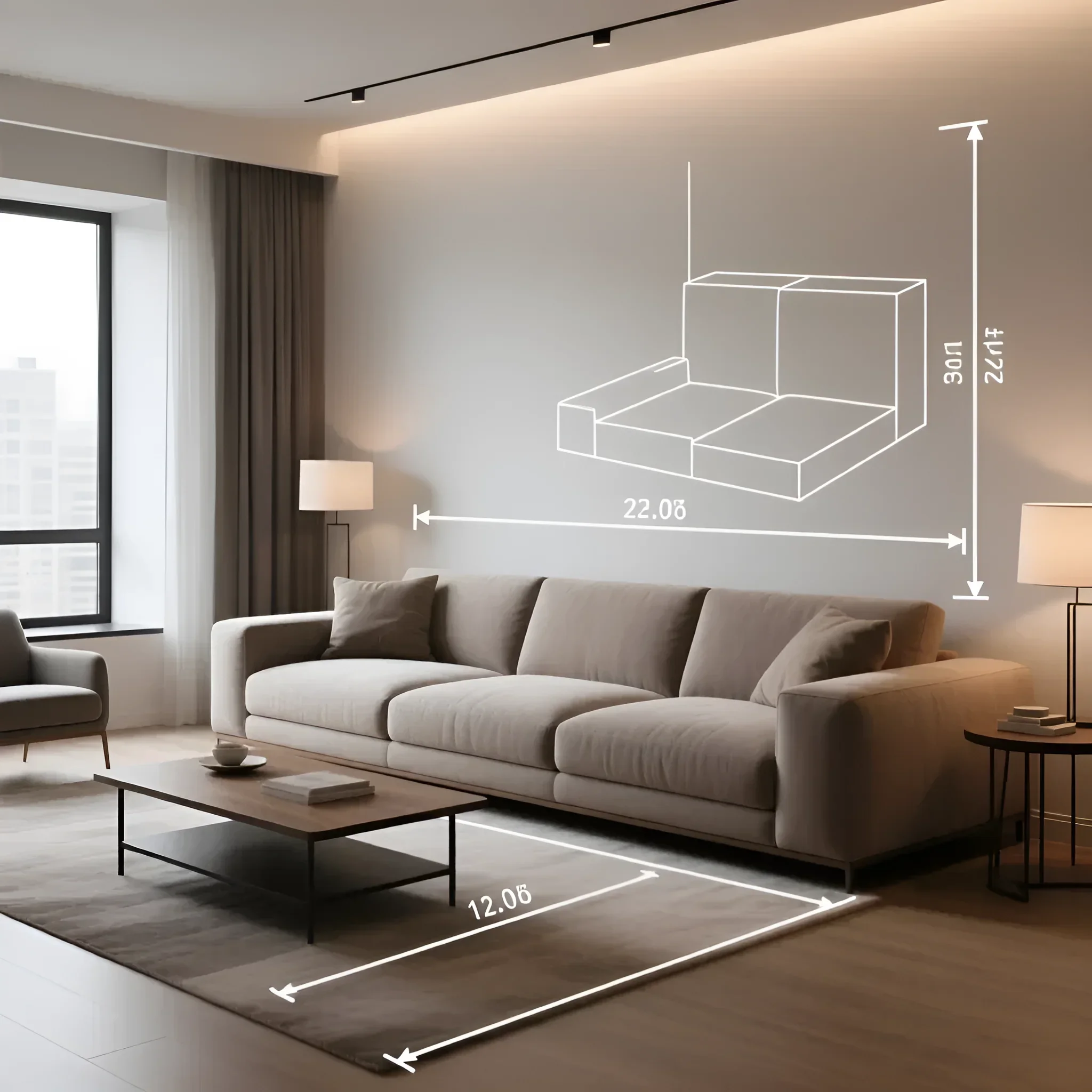
The most common mistake is buying a sofa that is too large for the room or blocks pathways. Size selection should be based on strict calculations.
1. Calculating Length and Width
Measure the area you are willing to allocate for the sofa and subtract the minimum clearance for passage (at least 70 cm). If the sofa is a sofa bed, be sure to measure its full length when unfolded.
- “60-70 cm per person” Rule: For comfortable seating, one person requires 60-70 cm of width. A three-seater sofa should be at least 180 cm long.
- Corner Sofa in a Small Living Room: For a room of 15-20 m², do not choose a model longer than 280 cm, otherwise, it will “eat up” all the space.
2. Seat Depth and Backrest Height
These parameters affect comfort and style.
- Standard Depth (55-65 cm): Comfortable for sitting, suitable for people of average height. Allows you to sit without your knees hitting the edge.
- Deep Seat (70-85 cm): Characteristic of loft models. Ideal for lounging or sitting with legs tucked up. Requires additional pillows for back support when sitting conventionally.
- Backrest Height: A low backrest (up to shoulder level) visually expands the space (Scandi, Minimalism). A high backrest (above the head) provides maximum neck and head support (Classic).
Practical Test: When choosing in a store, sit on the sofa so that your back is firmly against the backrest. Your feet should be flat on the floor, and your knees should be bent at a 90-degree angle. If the sofa is too deep, you will need to use cushions.
Frame, Filler, and Hidden Defects: What to Look for When Buying
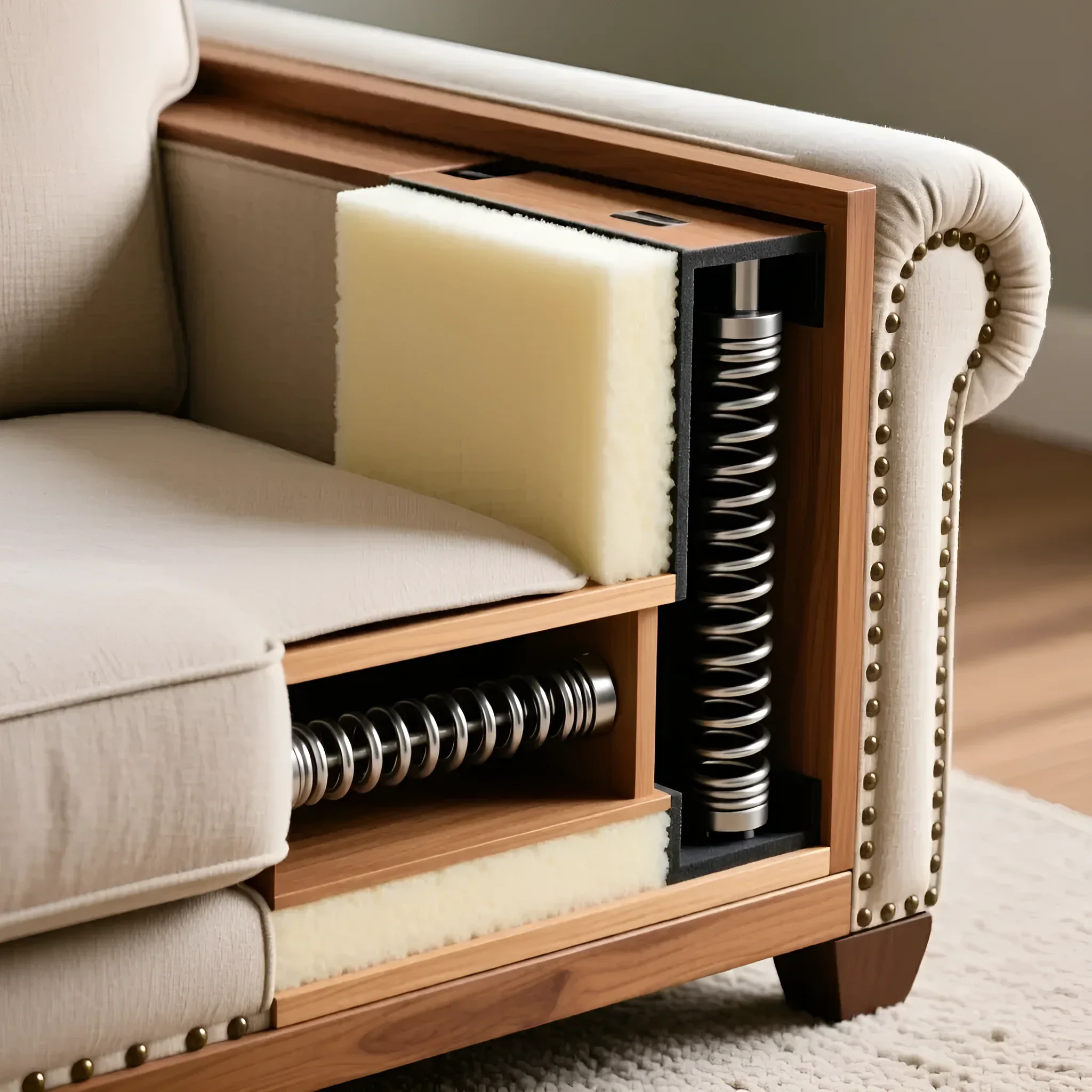
The most important aspects of a sofa are hidden inside. The quality of the frame and filler determines how long the sofa will retain its shape and not start creaking.
1. Frame: The Foundation of Durability
The frame must be strong and not wobbly. Check it by gently rocking the corners of the sofa.
- Optimal Choice: Plywood (birch) or solid wood (beech, oak). Plywood provides high strength and moisture resistance, which is critical for mechanisms.
- Acceptable: Metal frame (especially for sofa beds).
- Avoid: Pure particleboard (chipboard) in load-bearing structures. It crumbles under load, especially at the points where mechanisms and legs are attached.
2. Filler: Density and Comfort
The quality of the filler is determined by its density (kg/m³), not just its softness. Filler that is too soft but not dense will sag quickly.
- Polyurethane Foam (PU Foam):
- Minimum density for seats: 30 kg/m³. If the density is below 25 kg/m³, the sofa will sag within 2-3 years.
- Best Choice: HR (High Resilience) grade PU foam. It quickly regains its shape and lasts longer.
- Spring Units:
- Independent Springs (Pocket Spring): The best option, especially for daily sleep. Each spring is in a separate pocket, providing point support and eliminating the “wave effect.”
- Bonnel: An outdated but inexpensive option. Springs are interconnected, reducing the orthopedic effect.
- Additional Layers: In more expensive models, a layer of Holliber or Synthetic Down is added over the PU foam to provide softness and rounded shapes.
3. Hidden Defects and Quality Check
- Check the seams: Seams should be even, without gaps or tension. On patterned fabrics, the pattern should match at the seams.
- Check the mechanism: Open and close the sofa 3-4 times. The movement should be smooth, without jamming or loud creaking.
- Smell: A strong, sharp chemical odor (phenol) may indicate the use of cheap, low-quality adhesives or low-grade PU foam. A quality sofa may have a slight “new furniture smell” that dissipates quickly.
Sofa Care: Practical Tips for Maintaining Upholstery Freshness and Shape
Proper care can double the lifespan of your sofa. The basic rules depend on the type of upholstery.
Daily and Weekly Care
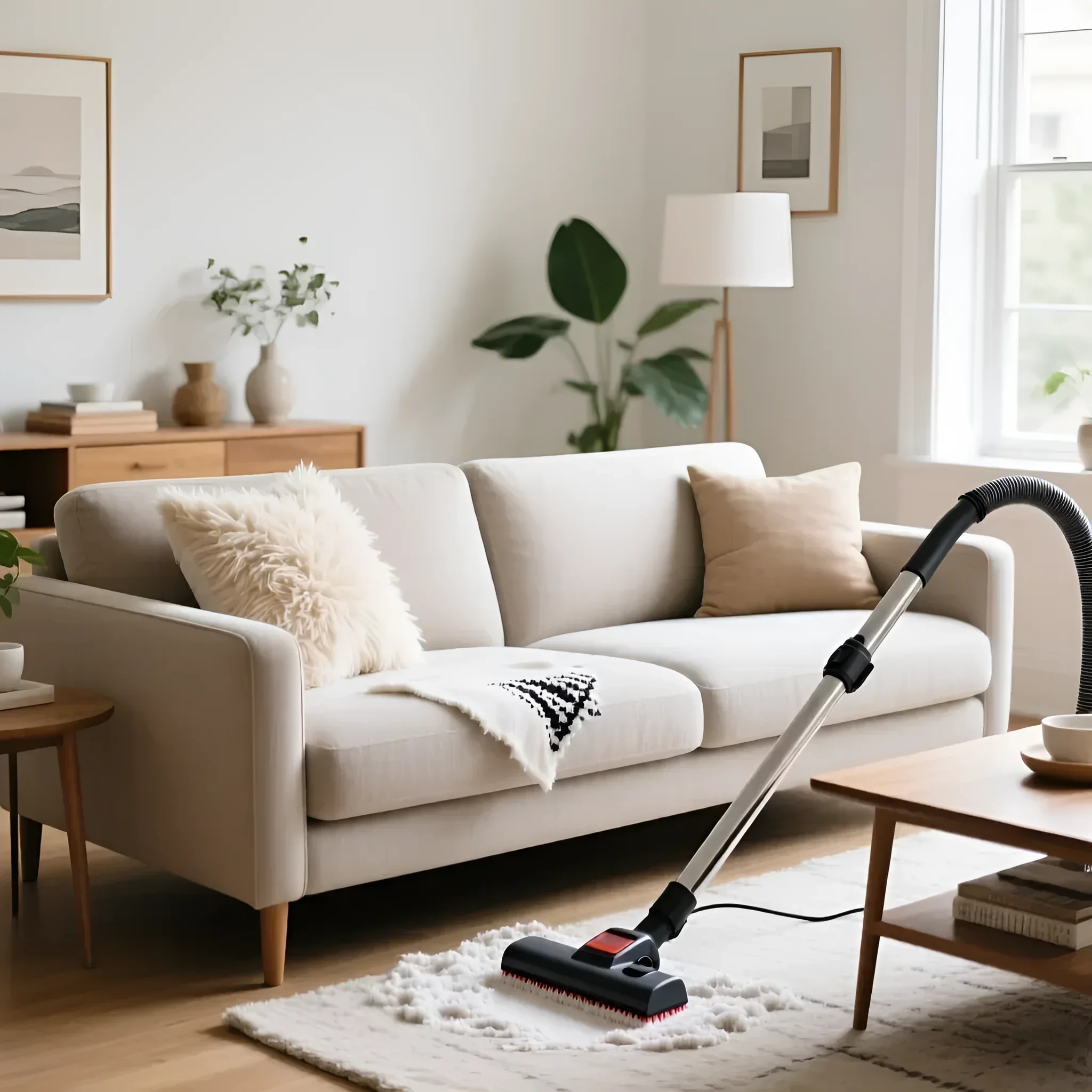
- Vacuum Cleaner: Regularly use a soft vacuum cleaner attachment to remove dust. This prevents dirt from embedding into the fabric structure and protects the pile (especially velvet) from wear.
- Cushions: Fluff the seat and back cushions daily. This helps restore the shape of the filler (PU foam, hollofiber) and prevents localized sagging.
- Avoid Direct Sunlight: If the sofa is near a window, use curtains or blinds during the day to prevent fabric fading.
Stain Removal by Upholstery Type
Important: Always test cleaning products on an inconspicuous area of the upholstery (e.g., the underside of the sofa).
- For Woven Materials (Matting, Chenille):
- Use a mild soapy solution or a specialized water-based furniture stain remover.
- Rub with a soft sponge from the edges of the stain towards the center to avoid streaks.
- Do not use stiff brushes – they can damage the weave.
- For Pile Materials (Velvet, Flock):
- Pile should not be excessively wet. Remove stains quickly using dry cloths to absorb as much moisture as possible.
- Clean only with a soft cloth or sponge, moving strictly in the direction of the pile. Rubbing against the pile will cause irreversible crushing.
- For Leather and Eco-Leather:
- Stains are easily removed with a damp cloth.
- At least twice a year, treat genuine leather with special conditioners or waxes to prevent cracking and drying out.
- Never use abrasive cleaners or solvents.
Maintenance
Once a year, check the leg fastenings and transformation mechanisms. Lightly lubricate the moving parts of the mechanism (e.g., with lithium grease) to prevent squeaking and jamming. This is a simple procedure that significantly extends the life of your sofa.