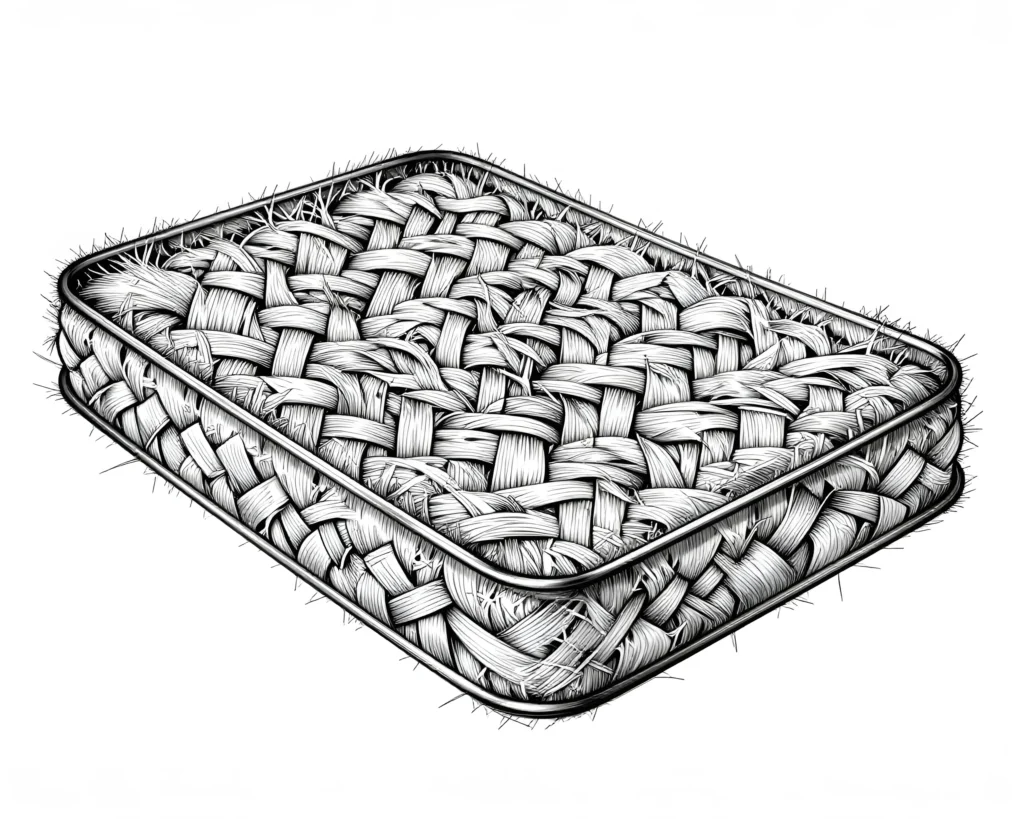
A topper is a thin mattress pad placed over your main sleeping surface to adjust firmness, add support, or simply extend the life of an old mattress. At first glance, it seems like a minor detail, but it is exactly what determines whether you wake up refreshed or with an aching back. In this article, we will break down the three main fillers — latex, coconut, and Memory foam — compare them across a dozen parameters, and help you choose the right option for your lifestyle, weight, and habits. No fluff: just specifications, numbers, and proven tips.
What is a topper and why do you need it: 5 main benefits
A topper is a mattress of reduced thickness (usually from 2 to 10 cm) that does not replace the main mattress but complements it. It is placed on top and changes the sleeping experience without requiring the purchase of a new bed. This is one of the most economical solutions if your old mattress still holds its shape but has become too soft or, conversely, too hard.
Here are five reasons why a topper becomes a bedroom savior:
- Firmness adjustment. If your mattress has "sagged" or, on the contrary, become hard as a board, a topper with the right filler smooths out the problem. Soft Memory foam adds compliance, while hard coconut fiber provides firm support.
- Hygiene and mattress protection. The topper absorbs sweat, dust, and mechanical stress, while the main mattress underneath stays clean and lasts longer. This is especially relevant if your mattress is expensive and you want to preserve its condition.
- Comfort for different people. When one partner likes it soft and the other likes it firm, a topper allows you to "adjust" the sleeping area for the more demanding person without compromise.
- Mobility and lightness. Unlike a full-sized mattress, a topper is easy to move, wash the cover, and store. It is ideal for a guest bed, a sofa bed, or a teenager's bed.
- Quick sleep upgrade. Buying a new mattress is expensive and time-consuming. A topper costing a fraction of the price changes the sleeping experience dramatically, giving you the "new mattress" effect for a small budget.
Please note: a topper does not fix a broken spring unit or severely deformed filler. If the frame underneath is collapsing or springs are poking through, fix the base first, then add the topper.
Latex, Coconut, or Memory: A Detailed Comparison of Materials
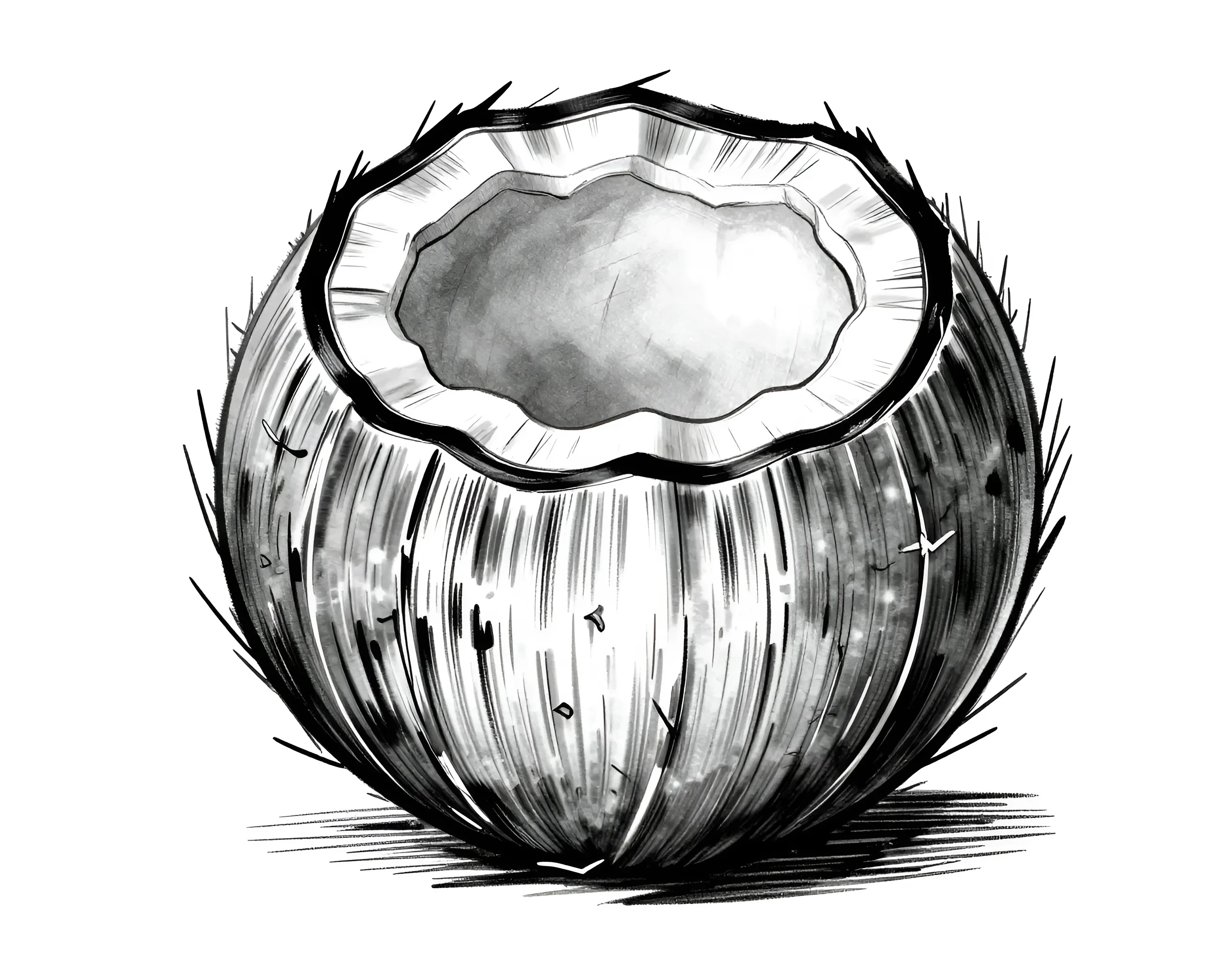
Three fillers provide three fundamentally different sensations. Let's analyze each by key parameters so you can make an informed choice rather than guessing.
Latex is foam based on rubber tree sap (natural) or its synthetic analog (synthetic latex, latex foam). It is resilient, "lively," quickly returns to its original shape, and is well-ventilated due to its cellular structure. Natural latex usually has a density of 60–90 kg/m³, breathes perfectly, does not accumulate static electricity, and is hypoallergenic. The downside is that it is heavier than foam and sensitive to direct sunlight, which dries it out over time.
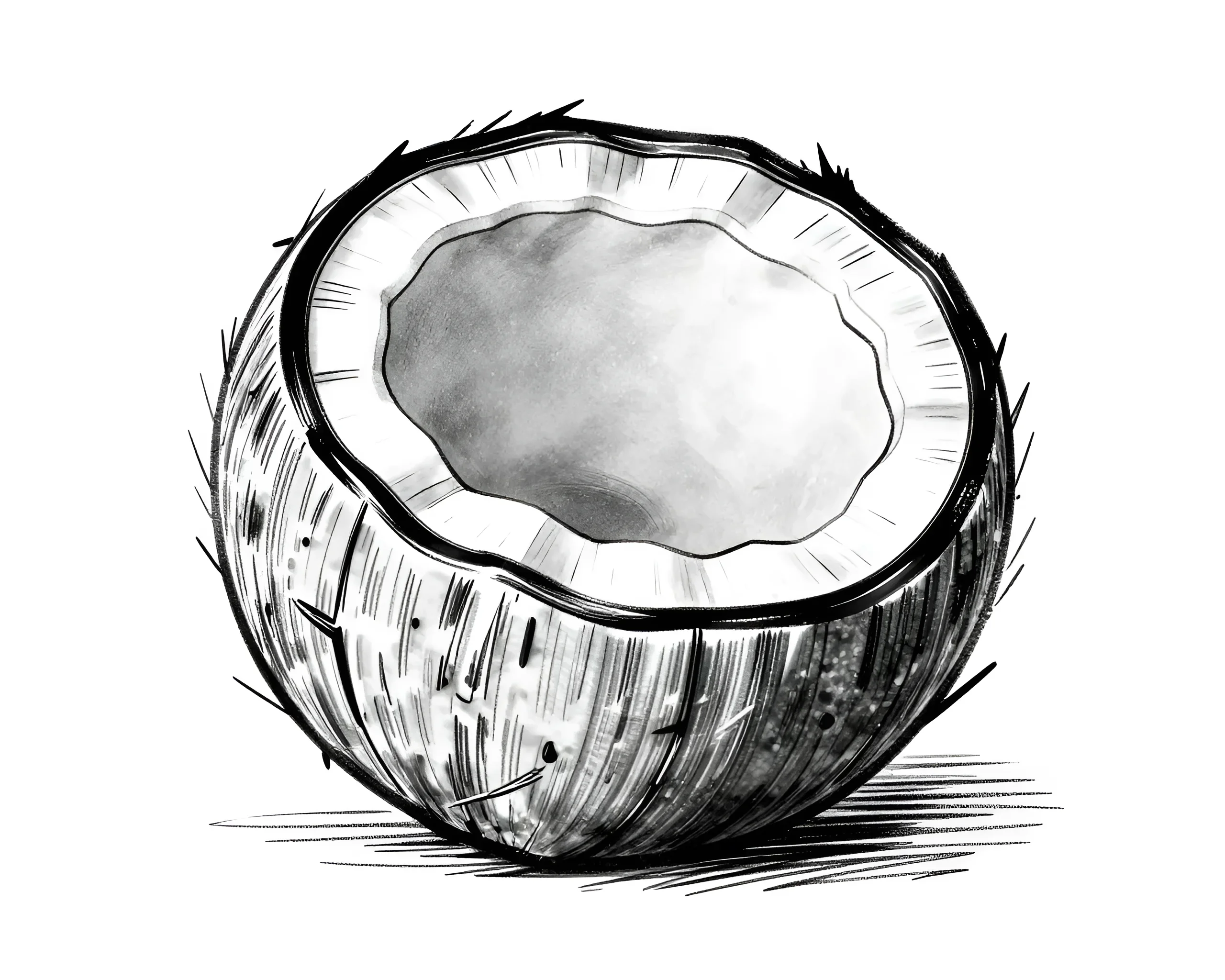
Coconut (coir) is coconut shell fiber pressed into a mat using latex or synthetic binding. It is the hardest and most resilient of the three options. Coir does not sag under weight, provides excellent support for the back and spine, is moisture-resistant, and practically does not rot. The density of a coconut mat is usually 100–150 kg/m³. The downside is that it doesn't "hug" the body but rather supports it, so only those who need firmness can sleep on it.
Memory (memory foam) is viscoelastic foam that reacts to body temperature and softly sinks, repeating contours. It relieves pressure from shoulders, hips, and the back of the head, and does not create pressure points. Memory density is usually 40–80 kg/m³. The downside is that it retains heat: it can be stuffy in hot weather, and in the first seconds after lying down, it feels "sticky" due to its viscous sinking.
Now, a visual comparison of parameters that really affect sleep:
| Parameter | Latex | Coconut (Coir) | Memory |
|---|---|---|---|
| Firmness | medium, resilient | high, hard | low, compliant |
| Spine support | good | maximum | medium, point-based |
| Ventilation | excellent | good | medium (heat retainer) |
| Weight reaction | resilient, fast | minimal | slow, "enveloping" |
| Hypoallergenic | high | high | high |
| Weight per 1 m² (5 cm) | medium | heavy | light |
| Deformation tendency | low | very low | medium (if overheated) |
| "Hug" sensation | no | no | yes |
The table shows that there is no "all-purpose" material: latex is the golden mean, coconut is for those who love firmness, and Memory is for those who value pressure relief and "dissolving" into the mattress. This understanding is the basis for the choice in the next section.
Who is each type of topper suitable for: choosing for your lifestyle
Choosing a filler is not about "what's trendy," but about how you sleep, how much you weigh, and what bothers you in the morning. Let's break it down.
Latex is suitable if:
- you sleep on your side and have shoulder or hip pain — resilient latex gently conforms to contours without letting you sink;
- you often sweat in your sleep — the cellular structure wicks away moisture perfectly;
- you or your partner are allergic to dust mites — latex is not a breeding ground for them;
- you value medium firmness and "lively" resilience, like a good orthopedic mattress.
Coconut is your option if:
- you sleep on your back and have lower back problems — firm support keeps the spine in a neutral position;
- your weight is above average (from 90–100 kg) — coir does not sag or "settle" under load;
- your old mattress has become too soft and you want to restore its hardness without buying a new one;
- you prefer to sleep "on a hard surface," like a good sofa or the floor with a dense covering.
Memory is worth getting if:
- you sleep on your stomach or in a "free" position and have pain in the back of the head, shoulders, or pelvis — the foam relieves point pressure;
- you have circulation problems or wake up with "numb" limbs — the enveloping effect helps;
- you are light (up to 60–70 kg) — Memory sinks well under a light body and provides the necessary comfort;
- you value the feeling of "dissolving" into the mattress and a soft transition between body zones.
Practical tip: if you sleep as a couple and have different preferences, look at combined toppers — for example, coconut on one side and Memory on the other. Then each person can flip the topper to their side. This is a compromise that works better than trying to please both with one mattress.
Thickness and density: how to choose optimal parameters
Two numbers on the packaging — thickness and density — matter more than the brand. Let's analyze how to read them and what they provide.
Thickness determines how much the topper will change the sensation. Use this as a guide:
- 2–3 cm — light correction. Suitable if the mattress is generally fine but you want it slightly softer or slightly firmer. This is a "cosmetic" layer; it won't change the firmness radically.
- 4–5 cm — universal working option. Provides noticeable comfort, adds resilience or softness without making the sleeping area heavy. The most popular size for home use.
- 6–8 cm — serious correction. Such a topper is almost an independent mattress and can be slept on even without the main one if the base is flat. Good for sofas and beds with a hard base.
- 9–10 cm or more — this is already a full-fledged thin mattress. Get it if you want to replace an old mattress but aren't ready for the dimensions and weight of a large one.
Density (kg/m³) indicates how "substantial" and durable the filler is. The higher the density, the longer the topper will last without sagging. Guidelines:
- for Memory and latex, the comfortable minimum is 40–50 kg/m³, optimum 60–80 kg/m³; below 35 kg/m³, the foam will quickly "settle" and lose its shape;
- for coconut, the density is usually 100–150 kg/m³ — here, the number is less important than the quality of pressing and binding: cheap coir with synthetic glue can crumble, whereas latex-bound coir lasts for years.
Important combination rule: for a heavy person, take either coconut of any thickness or latex/Memory of increased density and thicker (5–7 cm). For a light person, 3–5 cm of medium density is enough. If you often change positions in your sleep, add 1–2 cm to the minimum thickness so that transitions between zones are smooth.
A common mistake is to buy a topper "for the future," very thick, to last "for years to come." But a too-thick soft layer under a hard mattress can have the opposite effect: you will sink and lose support. Start with 4–5 cm and adjust the sensations, rather than chasing the maximum right away.
Topper care: cleaning, storage, and extending service life
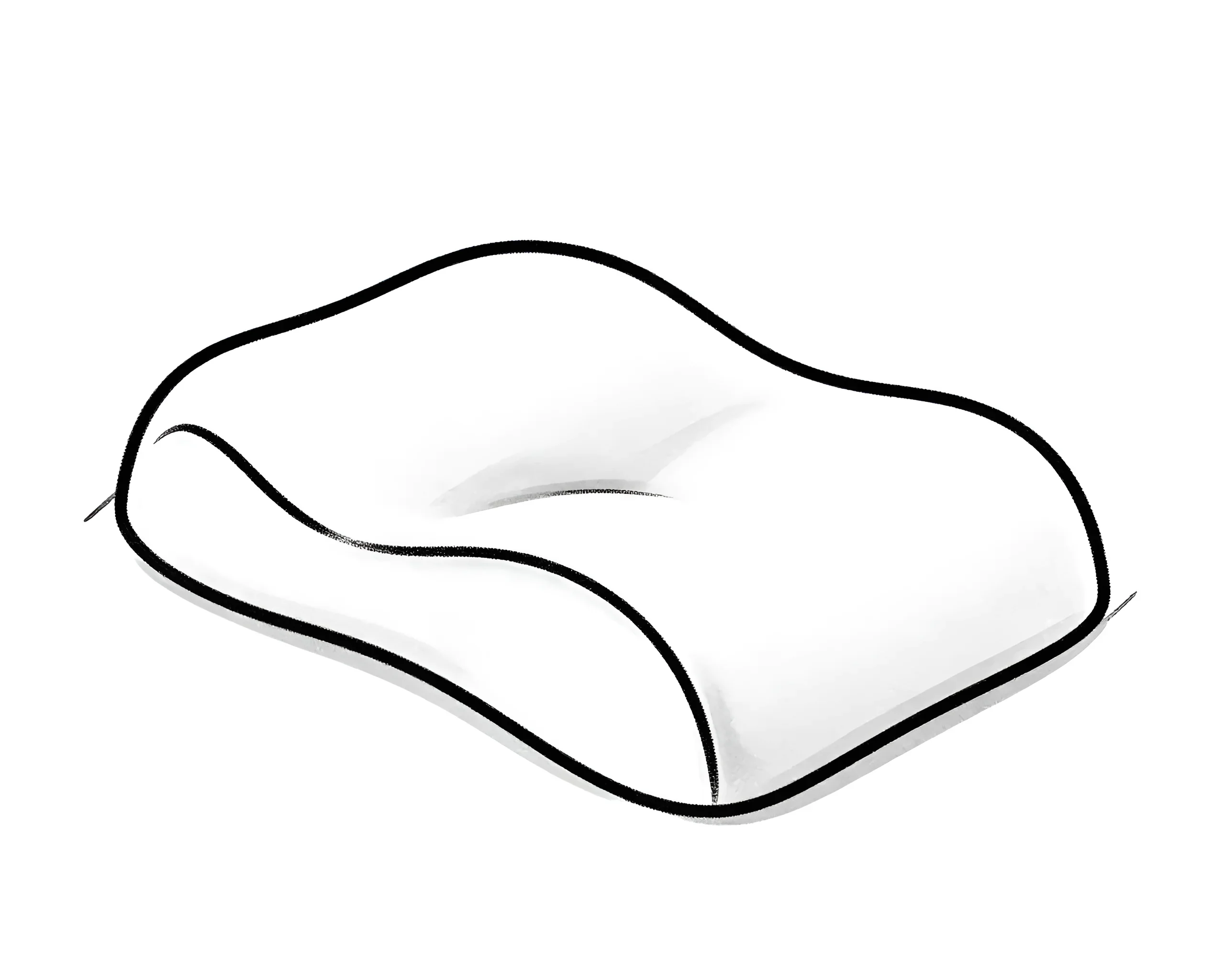
A topper lasts longer if you take care of it. The good news: care is easier than for a full-sized mattress because the layer is thin and light. Here is what really extends the life of the filler.
Cover and washing. Almost all toppers come with a removable zippered cover. Wash it in the machine at 30–40 °C on a delicate cycle without bleach. Before washing, zip it up and turn the cover inside out so the zipper doesn't snag the fabric. Dry it flat, not on a radiator — overheating deforms the seams.
Filler cleaning. The filler itself (latex, coconut, Memory) is usually not washed. For local stains, use a soft damp sponge with a neutral detergent; do not rub or soak. Memory and latex are afraid of aggressive chemicals and solvents. Coconut can be lightly vacuumed with a furniture attachment to remove dust from the fibers.
Ventilation and flipping. Every 2–3 months, flip the topper from head to toe — this distributes the load evenly and prevents "pressure sores." If the topper is double-sided (e.g., coconut/Memory), periodically change the side so both surfaces serve equally. Ventilate the bedroom: fillers love dry air, and dampness breeds mold in stagnant moisture.
Protection from sun and heat. Do not leave latex and Memory under direct sunlight — they dry out and destroy the foam structure. Coconut is more tolerant of light but also doesn't like overheating. Do not place heaters on the topper and do not put hot appliances on it.
Storage. If the topper is not in use (e.g., a guest one), store it flat or carefully rolled up — do not fold it in half across the seams to avoid breaking the filler structure. Store in a dry place, not under heavy objects. Before long-term storage, ventilate and ensure the filler is dry.
With such care, latex and coconut toppers last 5–8 years, Memory — 4–6 years. If the filler has started to lose shape, sag, or smell unpleasant, it's a signal that the layer has done its job and it's time to update.
TOP-5 topper models by price-quality ratio
We won't name exact amounts because they vary from region to region, but we will show five configurations that consistently provide the best result for your money. Look for these specific parameters in the description — and you won't overpay for marketing.
1. Latex 5 cm, density 60–70 kg/m³. This is the "gold standard" for most. Resilient support, excellent ventilation, suitable for side and back sleeping. Look for a cover with a zipper around the perimeter and a removable pillowcase. An excellent option for daily bedroom use.
2. Coconut-cotton 3–4 cm. The combination of coir and cotton fiber provides firmness with slight softness. Ideal for "treating" a sagging mattress and restoring hardness. Heavy but very durable. Get it if you sleep on your back and love resilient support.
3. Memory 7 cm, density 50–60 kg/m³. A soft "enveloping" layer for pressure relief. Works well on a hard base or over coconut. An excellent choice for those who fear shoulder and neck pain. Look for ventilation channels in the foam — they reduce heat retention.
4. Combined coconut/Memory 4+4 cm. A double-sided topper: hard coir on one side, soft foam on the other. This is a solution for couples with different preferences. Flip it — and everyone sleeps on their own side. The price is higher, but the functionality is maximum.
5. Latex 3 cm on a cotton base. A light budget option for a guest bed or sofa bed. Doesn't change firmness radically but adds comfort and protects the mattress. Good as a first topper to understand which filler is closer to you without large investments.
General advice when choosing a model: read the composition, not the name. The description should indicate the type of filler, its density, and the thickness of each layer. If the seller just writes "orthopedic topper" without numbers — that's a reason to be cautious.
Frequent questions about toppers: answering 7 main doubts
1. Will a topper replace a mattress? No, it complements it. For full sleep on a hard base (floor, bench), take a thickness of 7–8 cm. For correcting a regular mattress, 3–5 cm is enough.
2. Which topper is better for the lower back? As a rule, a firm one: coconut or dense latex. Soft Memory can increase lower back sagging if you already have problems. If you have back pain, consult a doctor first, then choose the firmness.
3. Can you sleep on a topper without a mattress? Yes, if the thickness is from 7 cm and the base is flat and strong. Thin 2–3 cm without a mattress will not provide support and will quickly deform.
4. Won't Memory be stuffy in summer? Partially yes, the foam retains heat. You can reduce the effect with a ventilation cover, ventilating the room, and choosing foam with channels. If you sweat a lot, latex will be more comfortable.
5. How to know if the topper has sagged? Signs: dents are visible under the shoulders and hips that do not recover within an hour; the filler rustles or crumbles; a smell has appeared. In this case, the layer has done its job.
6. How long does a topper last? With normal care, latex and coconut — 5–8 years, Memory — 4–6 years. The exact term depends on the sleeper's weight, load, and care.
7. Is a cover needed if the topper is already in a pillowcase? Yes, the cover protects the filler from sweat and dust and can be washed. Do not remove it for long — bare filler gets dirty faster and loses properties.
Interesting facts about materials: things you didn't know about your sleep
Let's finish with a selection of facts that help understand why the same topper works differently for different people.
- Latex is obtained from rubber tree sap, and one average mattress takes the sap of several hundred trees — that's why natural latex is always more expensive than a synthetic analog.
- Coconut coir is the "second life" of the shell: what used to be waste now supports the backs of millions of people. It is one of the most eco-friendly fillers.
- Memory foam was originally developed for the aerospace industry to reduce body load on pilots during launch — and only later came to mattresses.
- Body temperature is the main "regulator" of Memory: the warmer the room, the softer the foam becomes, so the same topper feels different in winter and summer.
- Latex does not accumulate static electricity, so hair and dust "stick" to it less — a pleasant bonus for allergy sufferers.
- A coconut mat is not afraid of moisture and can even lie in a damp basement without losing shape — this is its main difference from foam.
- An average person changes positions 20–40 times a night, and it is a topper with the right resilience that helps the body "move" without sharp drops and without the feeling of a "numb" side.
Choosing a topper is not a lottery, but simple arithmetic: your weight, your position, your mattress, and the desired firmness. Determine exactly what you don't like about your current sleep, choose a filler according to our criteria, take a thickness of 4–5 cm to start, and don't forget about care. And after one or two nights, you will be surprised how little it takes to sleep really well. Enjoy your rest and sweet dreams!


