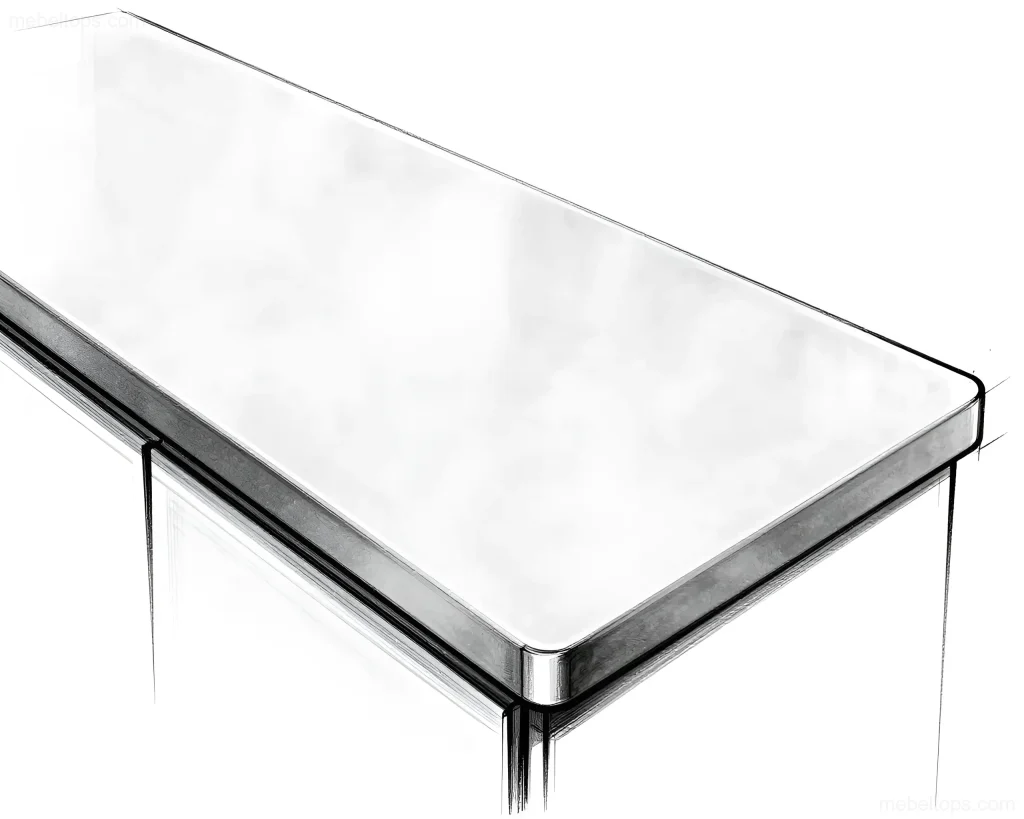
Choosing a countertop is not about what is "beautiful" or "expensive," but about how you will live with this surface every day: cutting on it, placing hot items, washing, and wiping. In this guide, we will break down five main materials—HPL plastic, compact laminate, artificial acrylic stone, quartz agglomerate, and wood—based on specific characteristics: density, porosity, absorption of coffee and beet juice, heat resistance, scratch resistance, chip repairability, types of miter joints, and undermount sink installation methods. If you are choosing a work surface for the first time or replacing an old one, this material will help you make a decision without unnecessary fluff.
Types of Kitchen Countertops: From HPL Plastic to Solid Wood
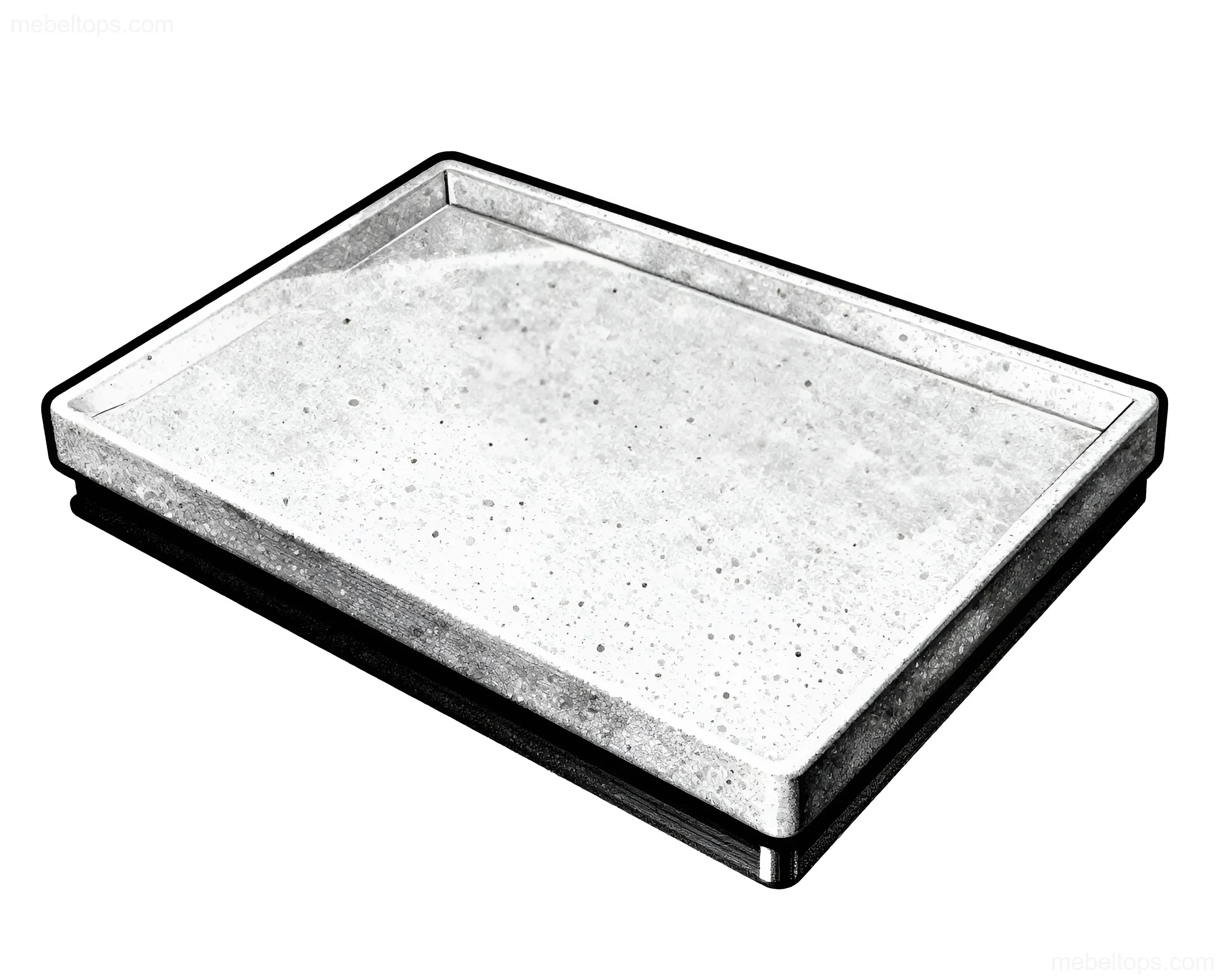
Let's start with what is generally available on the market. Conceptually, all countertops are divided into five groups, and each has its own behavioral logic in everyday life.
- HPL Plastic (Laminate) — this is chipboard or MDF covered with a decorative layer of paper impregnated with melamine resins. The most mass-market and affordable option. Thickness is usually 28 or 38 mm. The surface is dense but not infinitely durable: with a strong impact or overheating, the layer can bubble.
- Compact Laminate — this is a different level. There is no chipboard "backing" here: the entire mass is impregnated with resins under high pressure, so the material is uniform in thickness. Thickness is usually 12.5 or 19 mm. In essence, it is "dense" HPL without compromises.
- Artificial Acrylic Stone — a composite of acrylic resin and mineral filler (usually hydrated aluminum oxide). The surface is monolithic, seamless when installed correctly, and easily repaired.
- Quartz Agglomerate — a sintered mass of 90–95% quartz sand and polymer binders. Very dense, almost non-porous, but heavy and less repairable than acrylic.
- Wood (Solid) — usually oak, ash, walnut, beech. A living material that breathes, reacts to moisture, and requires maintenance. However, it looks expensive and warm.
Many people miss the key difference between HPL and compact laminate: HPL has a wood board inside that is afraid of water at the edge, while compact laminate is a single material, so even if chipped, it does not "fray" with fibers. This is important if you plan to cut on the countertop or have active children.
Materials and Their Features: Density, Porosity, and Liquid Absorption
Density is not just a number in the specs, but how well the material "holds its shape" and how difficult it is to penetrate the surface. Let's look at the real values.
- HPL Plastic: density about 800–900 kg/m³ (due to the chipboard inside). The surface layer is denser, but underneath is a loose structure.
- Compact Laminate: 1400–1500 kg/m³. Uniform, without voids.
- Acrylic Stone: 1900–2100 kg/m³. Depends on the filler.
- Quartz Agglomerate: 2300–2500 kg/m³. The "heaviest" of the artificial ones.
- Wood: oak 700–750 kg/m³, ash 670–700, beech 680–720. Depends on humidity and species.
Now about porosity — this is what is really felt in daily life. Quartz agglomerate has a porosity of less than 0.5%, meaning it essentially absorbs nothing. Acrylic stone is about 0.1–0.5%, also practically non-absorbent, but with prolonged contact with aggressive liquids, it can slightly "stain" in micro-cracks. HPL plastic and compact laminate have a closed surface, but if the top layer is damaged, liquid gets inside. Wood is porous by definition: even with impregnation, it absorbs, just slower.
A practical test you can perform in the showroom: drip coffee, red wine, or beet juice on a sample, leave it for 10–15 minutes, and wipe it off. On quartz and acrylic, the trace will disappear completely. On HPL, it will too, if the surface is intact. On wood without fresh impregnation, a stain will remain. On compact laminate, you get a clean result if the surface is undamaged.
An important nuance: absorption depends not only on the material but also on the contact time. Beet juice and wine are the "meanest" liquids. If you cook with them often, it's better not to leave puddles on the surface for longer than a couple of minutes, even on quartz.
Heat Resistance and Scratch Resistance: Comparing Work Surfaces
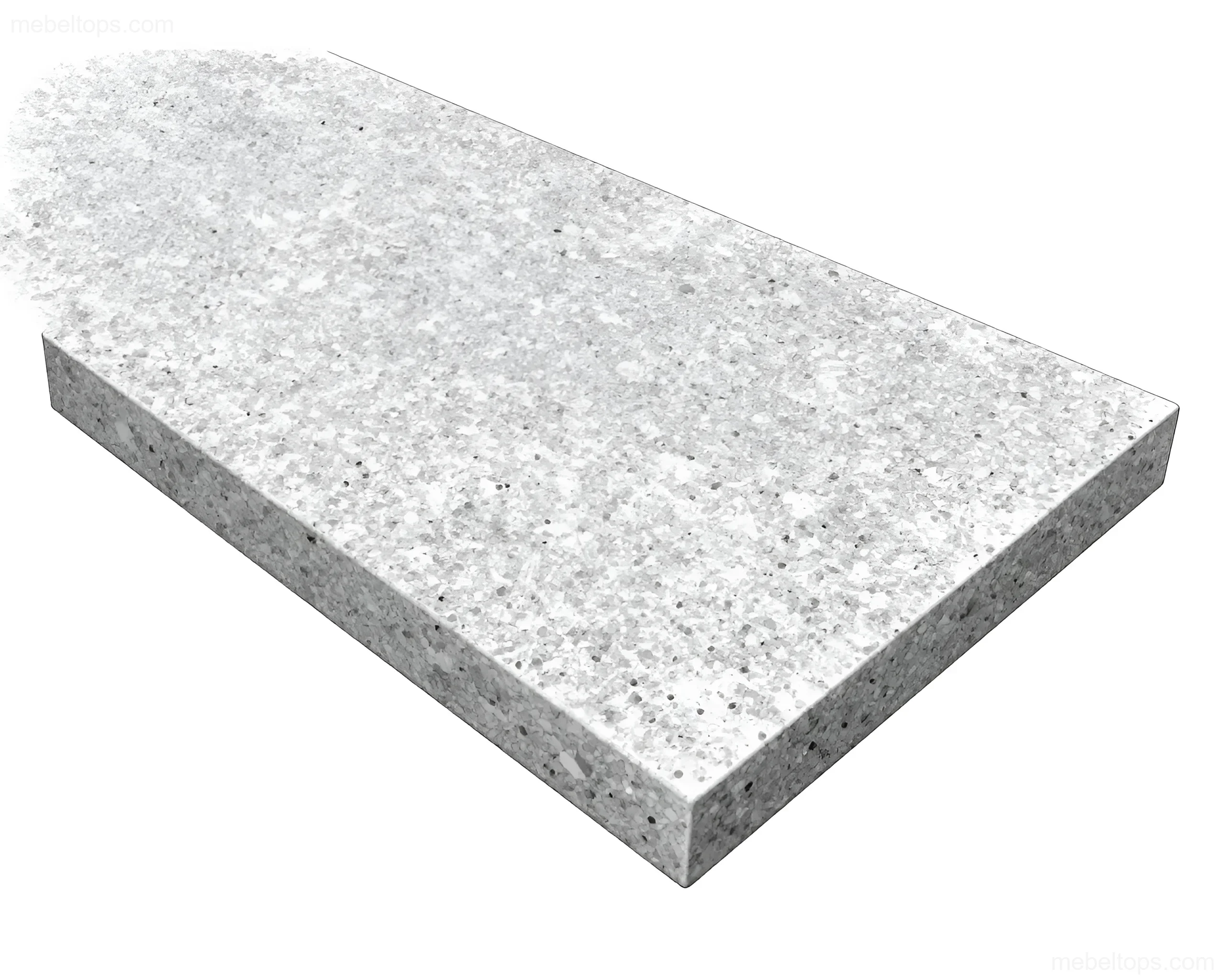
Heat resistance is how many degrees a material can withstand without changing color, structure, or getting "scars." Here it is important to distinguish between short-term contact (placing a hot pan) and long-term (leaving an iron or oven).
- HPL Plastic: withstands short-term contact up to 180–200°C. A hot pan from the oven (200–230°C) can leave a white spot or "burn" the decor. An oven or iron is a guaranteed defect.
- Compact Laminate: up to 300–350°C for a short time. Much more tolerant of heat, but extreme heating is also undesirable.
- Acrylic Stone: up to 90–120°C. This is its weak point. Do not place hot dishes directly on it—only use a trivet. Otherwise, deformation or a white mark occurs.
- Quartz Agglomerate: up to 300°C and higher. Practically not afraid of heat, but a sharp temperature drop (thermal shock) can cause a micro-crack in rare cases.
- Wood: up to 100–120°C. Hot items leave marks, so a trivet is mandatory.
Thermal shock is when you place something very hot on a cold surface or vice versa. Quartz and compact laminate handle it best. Acrylic and wood—worse. HPL—somewhere in the middle, but with frequent changes, the decor can "float."
Scratch resistance is a separate story. On the Mohs scale: quartz is about 6–7 (almost like glass), compact laminate 5–6, HPL 4–5, acrylic 3–4, wood 2–3. But numbers are one thing, and life is another. A knife on wood won't leave a deep scratch if you don't press hard, while on acrylic, a knife leaves marks if used carelessly. On quartz, a knife doesn't scratch, but a heavy blow from a cast-iron pot can cause a chip. On HPL, a knife doesn't scratch, but a sharp object falling can pierce the decor.
Practical advice: if you cut on the countertop, wood and HPL forgive more than acrylic. Quartz is the most "indestructible" in terms of scratches, but requires a cutting board for knives so as not to dull them and not to create micro-chips.
Types of Miter Joints and Undermount Sink Installation Methods
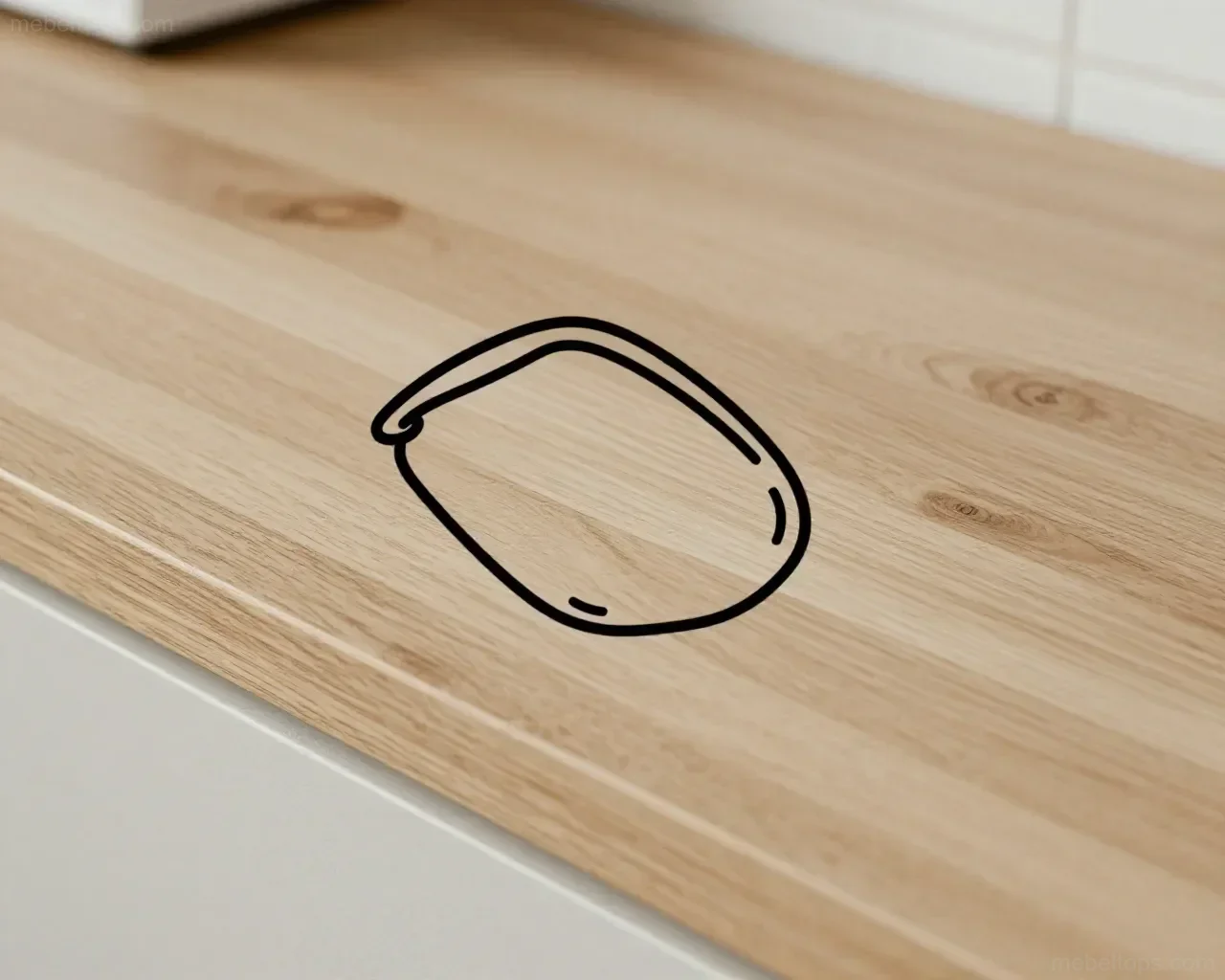
A miter joint (or edge profile) is a chamfer along the perimeter of the countertop that makes the edge neat and protects the end from moisture. Types of edge profiles:
- Straight (square) — the simplest, without a chamfer. Cheap, but the edge is exposed.
- 45° chamfer — a classic, rounds the corner, looks beautiful.
- Radius (R-shaped) — a smooth rounded edge, safer for children.
- W-shaped (wave) — decorative, with a curve.
- Bulgarian (beveled) — a wide beveled edge, looks massive.
For undermount sinks (where the sink is recessed into the countertop rather than sitting on top), the edge profile is critically important. If you have an undermount sink, the edge must be such that it doesn't "fray" and absorb water. For HPL and compact laminate, a straight or radius profile with subsequent sealing is best. For stone—any, but taking into account that acrylic can be "buffed" after installation, while quartz cannot.
Undermount sink installation has several schemes:
- Bottom mount (suspended) — the sink is attached to the underside of the countertop with clamps. The most common method. Requires the countertop to be thick enough (for HPL—38 mm, for compact laminate—19 mm, for stone—from 20 mm).
- Top mount (drop-in) — a classic, the sink sits on the surface. Simpler, but less aesthetic and harder to clean (the joint with the rim).
- Integrated (undermount with flange) — a sink with a flange that is flush-mounted. Requires precise edge profiling and sealing.
When installing undermount, always use sealant between the sink rim and the countertop. For stone—acrylic sealant in color, for HPL and compact laminate—neutral silicone. Silicone should not be acetic—it corrodes some resins.
How to Choose a Countertop: Chip Repair, Joint Sealing, and Thermal Shock
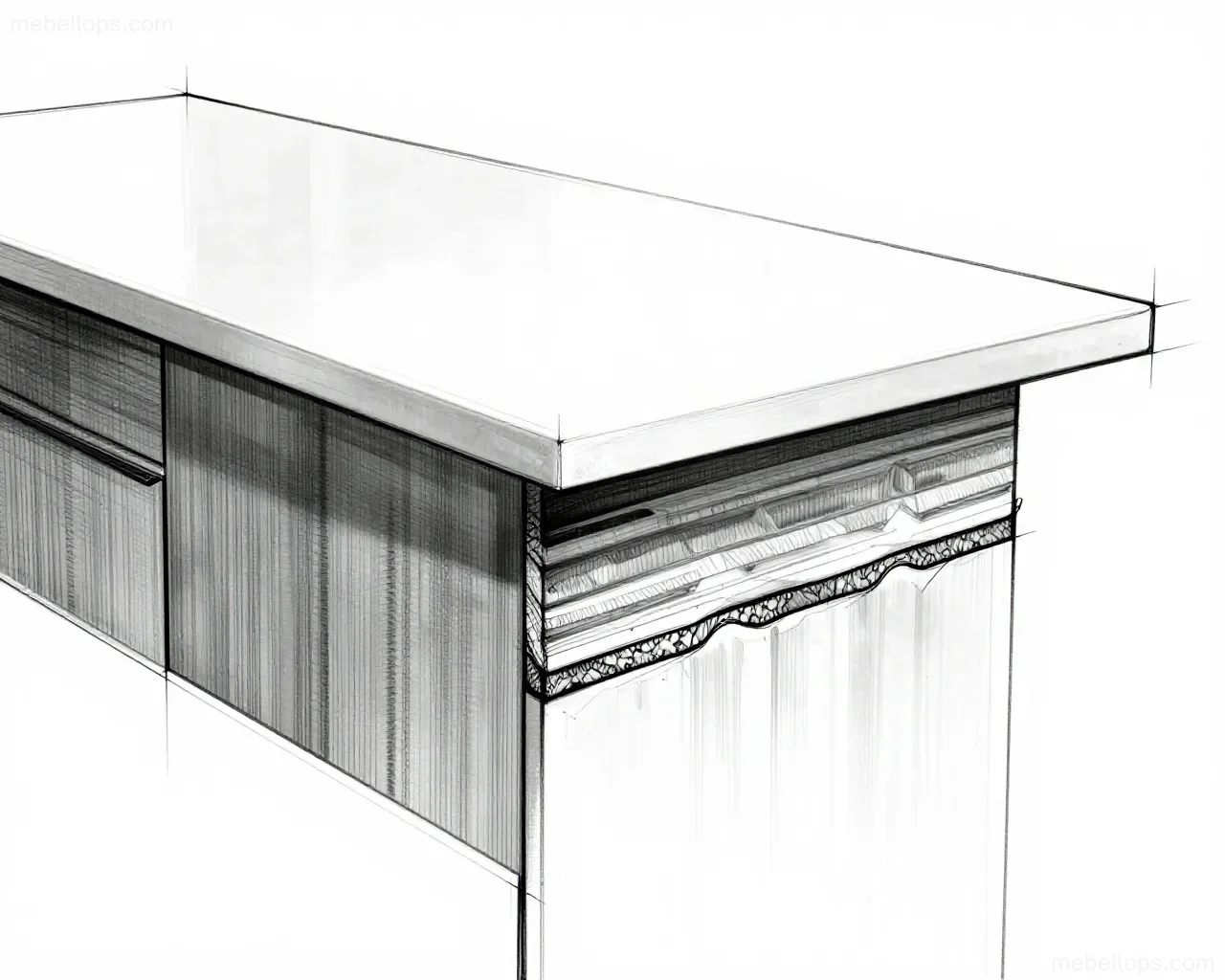
Repairability is what distinguishes a "living" material from an "indestructible" one. Let's be honest:
- Acrylic Stone — the champion of repair. A chip, scratch, or even a crack can be filled with acrylic paste, polished, and the trace will disappear. This is its main advantage. You can "revive" the surface after any household damage.
- Quartz Agglomerate — repairability is average. Small chips can be filled with epoxy paste in color, but polishing to perfection is difficult. Deep cracks are a problem.
- Compact Laminate — chips are filled with paste or sealant, but the edge cannot be "restored" completely. It is better not to allow chips.
- HPL Plastic — a chip on the edge is hard to treat: the chipboard inside will swell, the decor will peel off. Prevention is better.
- Wood — scratches and small chips are sanded and covered with oil/varnish. Deep cracks require restoration.
Sealing joints with the backsplash is what saves your kitchen from leaks. If the backsplash does not fit the countertop perfectly (which happens due to uneven walls), the gap is filled with sealant. For stone—acrylic or silicone in color. For HPL and compact laminate—silicone. Important: the sealant must be flexible to compensate for thermal deformations. Rigid sealant will crack in a year.
Thermal shock is not just about hot dishes. It's about placing a cold bottle from the fridge on a hot surface or vice versa. Quartz and compact laminate handle this fine. Acrylic and wood—better to avoid sharp changes. HPL—tolerable, but don't abuse it.
Practical advice on choosing: if you have children and cook often, get compact laminate or quartz—they forgive more. If repairability and monolithicity are important—acrylic. If the budget is limited—HPL, but with a thick edge. If aesthetics and "warmth" are important—wood, but be ready to maintain it. And in any case—do not skimp on sealant and installation. This is what will extend the life of your countertop for years.
Dimensions, Sizes, and Practical Installation Tips
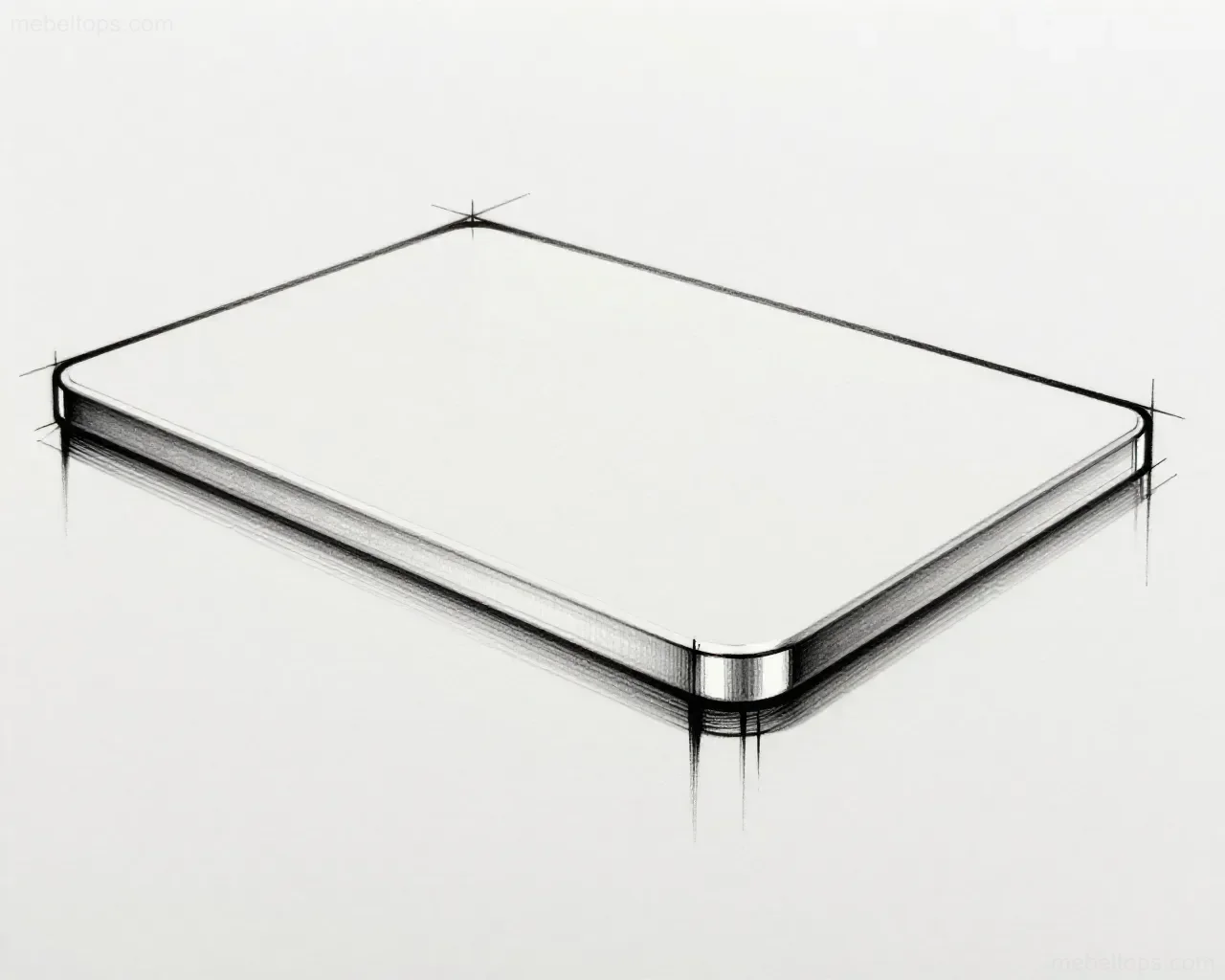
The standard depth of a kitchen countertop is 600 mm. This corresponds to the standard depth of kitchen cabinets. But there are options: 450 mm (for narrow kitchens), 800 mm (for bar areas), 900–1000 mm (for islands). Width depends on the layout, but the minimum passage between the countertop and the opposite wall or furniture is 900–1200 mm, otherwise, it will be cramped.
The height of the countertop from the floor is 850–900 mm. This is the standard, but if you are taller than 180 cm, you can raise it to 900–920 mm; if shorter than 160 cm, lower it to 820–850 mm. The height of the sink and hob can differ: the sink is often made 50–100 mm lower than the main surface so as not to bend over, and the hob—50–100 mm higher so as not to bend your back.
The overhang of the countertop beyond the cabinet edge is 20–30 mm. This is a "visor" that protects the edge from splashes and makes it look neat. If the overhang is more than 40 mm, there is a risk that the countertop will break under load (especially HPL on chipboard). For stone, an overhang of up to 50–60 mm is acceptable, but better with support.
Practical installation tips:
- Before installation, check the floor level. If the floor is uneven, the countertop will "walk," and the seams with the backsplash will crack.
- Under an HPL or compact laminate countertop, be sure to place supports (legs or a frame) if the span is more than 1200 mm. Otherwise, it will sag.
- Stone is heavy: quartz—about 23–25 kg/m² at 20 mm thickness, acrylic—19–21 kg/m². Make sure the frame can handle it.
- Wood requires acclimatization: lay the boards in the kitchen for 2–3 days before installation so they adapt to the room's humidity.
- Leave a 2–3 mm gap between the countertop and the wall to compensate for expansion (especially for wood and stone).
Care and Maintenance: Specifics for Each Material Type
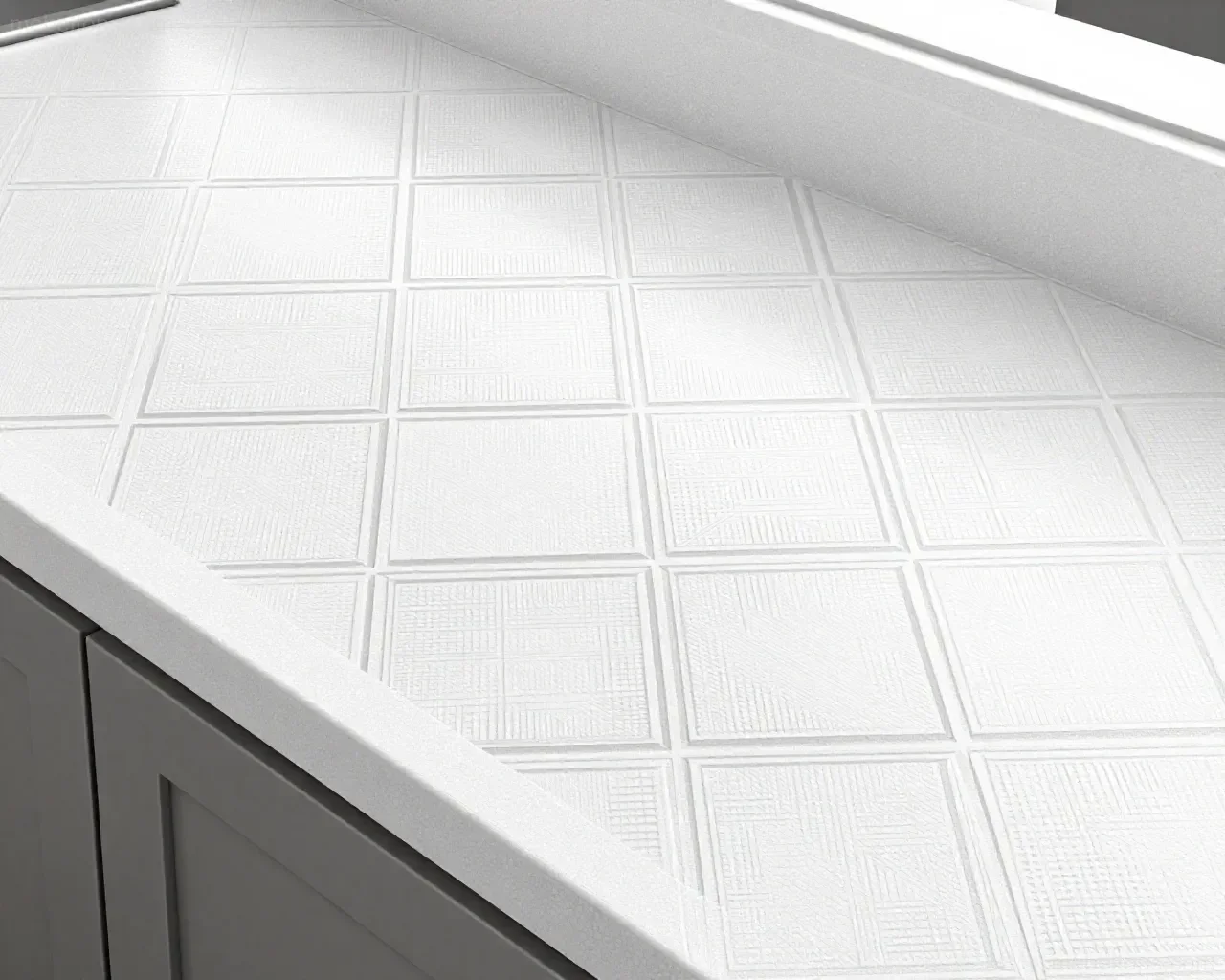
Care is what distinguishes "set and forget" from "fuss every day." Let's break it down by material.
- HPL Plastic: wipe with a damp cloth, do not use abrasives or solvents (acetone, white spirit). Re-seal the edge once a year if there are micro-cracks. Do not place hot items without a trivet.
- Compact Laminate: same as HPL, but you can use mild abrasives to remove stains. Seal the edge during installation and check once a year.
- Acrylic Stone: wipe with a damp cloth, for polishing—acrylic paste. Do not use chlorine-containing agents—they cloud the surface. Every 2–3 years, you can do a "refreshing" polish.
- Quartz Agglomerate: wipe with a damp cloth, for stains—mild abrasive. Do not use acidic agents (vinegar, citric acid) in concentrate—they can damage the binder. Check the sealant once a year.
- Wood: wipe with a damp cloth, do not leave puddles. Every 6–12 months, cover with oil or wax (depends on the coating type). Do not wash under running water. If scratches appear—sanding and re-coating.
General rule for all materials: do not use chlorine bleaches, do not place hot items without a trivet, do not cut directly on the surface (except wood, but even that should be protected). And most importantly—do not wait until a chip or crack becomes large. The sooner you fix it, the better.
Frequently Asked Questions and Interesting Facts About Kitchen Countertops
[IMAGE_FOR_SECTION_8]
We have collected what is most often asked when choosing.
- Can I place a hot pan directly on the countertop? On quartz and compact laminate—yes, but better with a trivet. On acrylic and wood—no, only a trivet. On HPL—risky, better a trivet.
- How to remove a coffee or wine stain? On stone and HPL—wipe with a damp cloth, if the stain has set—mild abrasive. On wood—immediately, otherwise it will remain. Do not use chlorine.
- What to do if the edge chips? On acrylic—paste and polishing. On quartz—epoxy paste in color. On HPL and compact laminate—sealant or paste, but it won't be perfect. On wood—sanding and oil.
- Which countertop is best for an undermount sink? Compact laminate, quartz, or acrylic. HPL—only at 38 mm thickness and with good sealant. Wood—not recommended, it will absorb water.
- Can I make a countertop from different materials? Yes, for example, stone in the sink and hob area, wood in the prep area. But the joint must be airtight and neat.
Interesting facts:
- Acrylic stone can be "welded"—that is, glued so that the seam becomes monolithic. That is why it is used not only for countertops but also for windowsills, bathtubs, and decorative elements.
- Quartz agglomerate does not burn and does not support combustion, making it fire-safe. But at extreme heat (over 300°C), the binder may start to decompose.
- Wood on a countertop "breathes": it expands and contracts depending on humidity. Therefore, expansion gaps are left between boards, and 2–3 mm to the wall.
- HPL plastic was invented in the 1930s, and since then it has not lost its popularity due to its simplicity and affordability. But modern decors no longer look like "plastic"—there are imitations of stone, wood, and concrete.
- Compact laminate is often confused with HPL, but they are different materials. Compact laminate is homogeneous, HPL is a composite with chipboard inside. When chipped, this is immediately visible: the compact laminate edge is dense, the HPL edge is fibrous.
Bottom line: there is no "ideal" countertop for everyone. There is one that fits your lifestyle, budget, and willingness to maintain it. If you want "set and forget"—get quartz or compact laminate. If repairability and monolithicity are important—acrylic. If the budget is limited—HPL, but with a thick edge. If aesthetics and "warmth" are important—wood, but be ready to maintain it. And in any case—do not skimp on sealant and installation. This is what will extend the life of your countertop for years.


