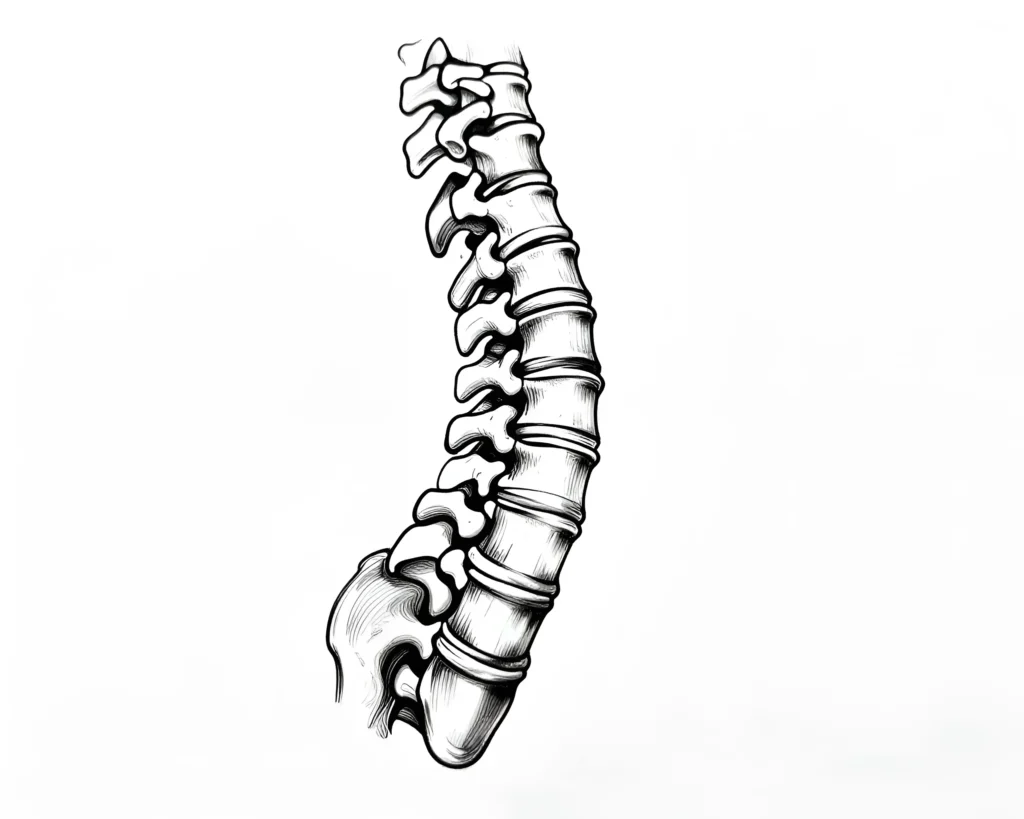
In the morning, you wake up feeling as if you had been lying on a board all night, or, conversely, sinking into an endless pit. Your lower back aches, your neck is stiff, and routine movements are difficult. If this sounds familiar, it is likely not just about your back, but also about what you are sleeping on. A mattress is not just a soft pad, but a full-fledged support for your spine for 7–8 hours a day. And your well-being throughout the day depends on its characteristics. In this article, we will analyze which types of mattresses are suitable for back support, which fillers really work, how to choose the firmness for your weight and posture, and we will also provide practical care tips so that your purchase serves you for a long time and comfortably.
Why your back hurts during sleep: the connection with mattress choice
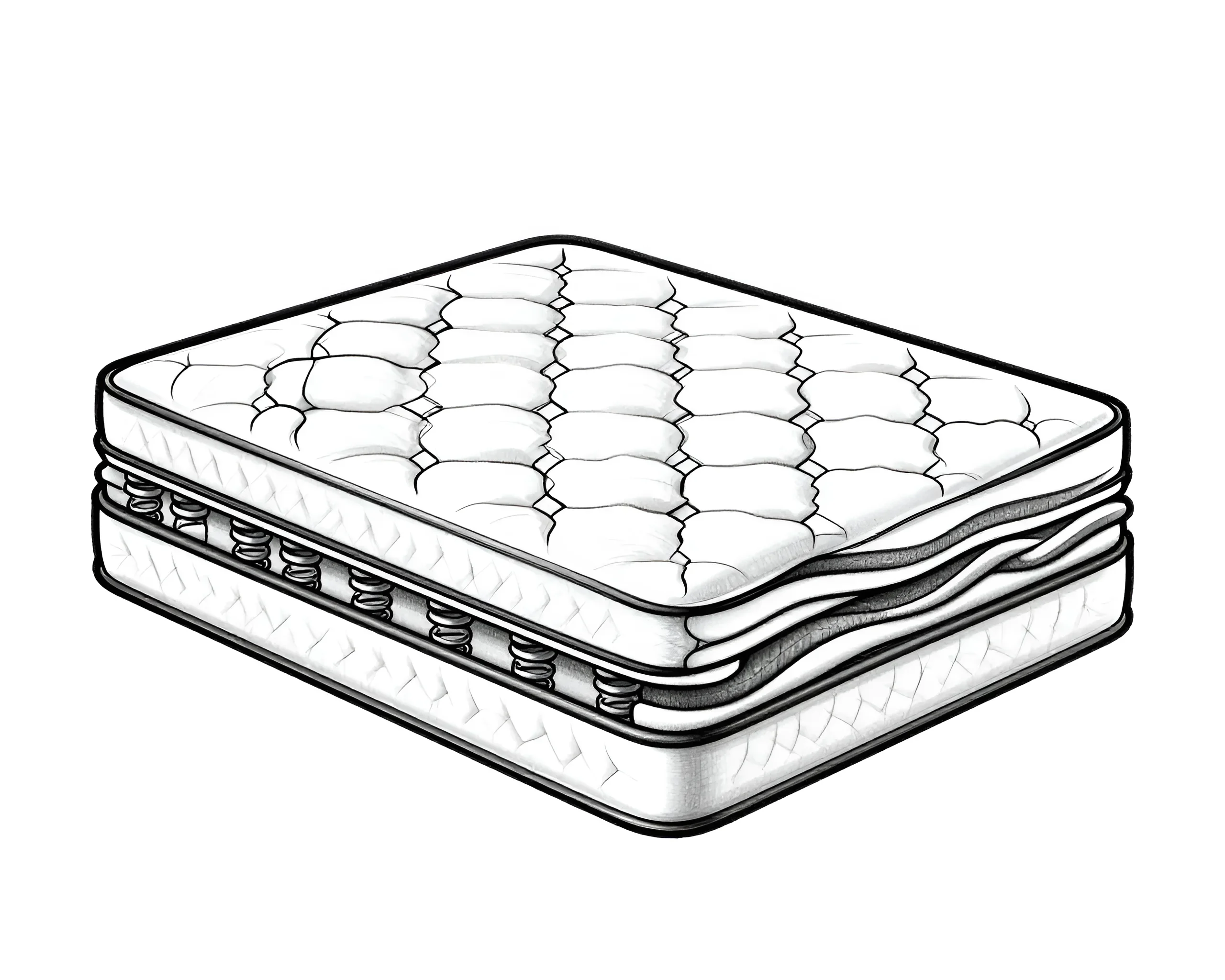
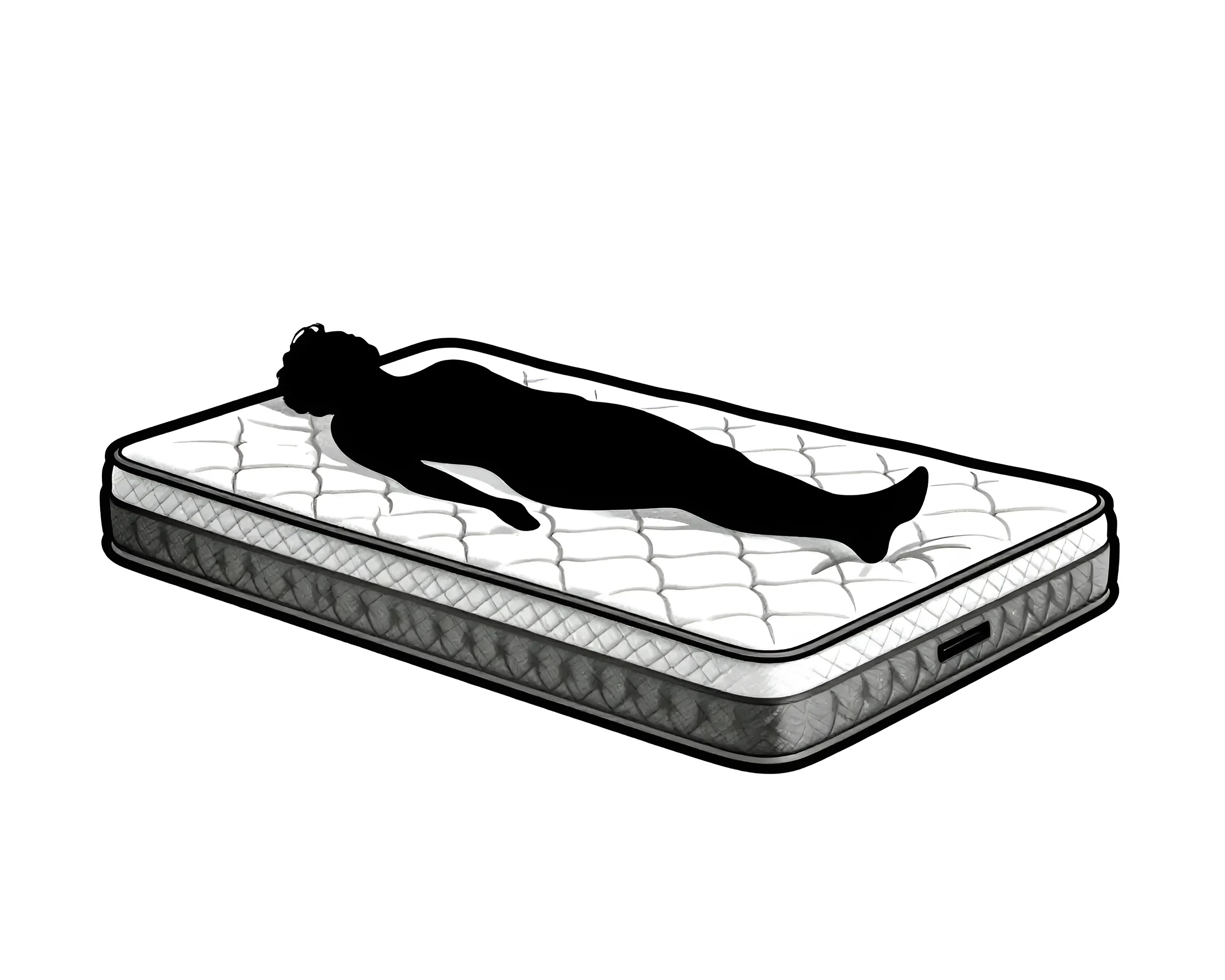
During sleep, the muscles that hold the body in an upright position during the day relax completely. All the load of maintaining the shape of the spine shifts to the mattress. If it does not correspond to your anatomical features, an imbalance occurs: some parts of the spine sag more than necessary, while others remain without support. As a result, the intervertebral discs receive uneven pressure, and the muscles that should be resting are forced to work in micro-correction mode. In the morning, this is felt as stiffness, heaviness, or aching pain in the lower back and neck.
The main mistake many people make is thinking that "the softer, the more comfortable." For a person with a sensitive back, a mattress that is too soft creates a "sinking" effect: the hips and shoulders, being the most massive parts of the body, go deeper into the filler, while the lower back remains unsupported. The spine takes the shape of the letter "C" instead of the natural "S". Conversely, a mattress that is too hard does not allow the body to lie in a physiological position — it sort of "hangs" on the surface, and pressure points form in the shoulder blade and hip areas. Both options lead to you changing your position 20–40 times a night, and your sleep becomes shallow.
It is important to understand: a mattress does not cure the back, but it can either aggravate discomfort or create conditions under which the spine rests in a neutral position. If you have chronic problems, you should consult a doctor before buying to clarify what restrictions or preferences regarding firmness and support are suitable for you. The mattress itself is a tool for comfort, not therapy.
Main types of mattresses for spinal support: pros and cons
The modern market offers several main mattress designs. Each has its strengths and weaknesses, and the choice depends on your weight, preferences for a "sinking" or "supportive" feeling, and budget. Let's analyze the main types.
- Spring mattresses (dependent springs). A construction of springs connected to each other by wire. Pros: affordable price, good ventilation, noticeable elasticity. Cons: the "hammock" effect — if two people sleep side by side, one feels the movements of the other; uneven support, as the springs work as a single system; over time, the springs can deform and create sags. For a problematic back, this option is usually not recommended because the spinal support is "patchy".
- Springless mattresses (filler made of foam materials and natural fibers). A construction of layers of polyurethane foam, latex, coconut coir, felt, and other materials. Pros: point support, no "hammock" effect, long service life, the ability to combine layers of different firmness. Cons: higher price, some people may experience a feeling of "sinking" in soft models. For the back, this is one of the most balanced options.
- Mattresses with independent spring blocks (pocket). Each spring is enclosed in a separate fabric bag. Blocks come in 500, 700, 1000, and more springs per square meter. Pros: point support (each spring reacts to the load separately), good ventilation, no "hammock" effect, wide range of firmness. Cons: higher price compared to dependent springs; if the springs are of low quality, the block may "creak" or lose its shape. For the back, this is one of the best options, especially in combination with elastic fillers.
- Latex mattresses. Filler made of natural or synthetic latex. Pros: high elasticity, hypoallergenic, resistance to deformation, good thermoregulation. Cons: a specific smell in the first days, higher price, latex can be heavy. For the back, latex provides "live" support that adjusts to the body's shape but does not sink.
- Hybrid mattresses. A combination of a spring block and fillers (latex, memory foam, coir). Pros: combines the advantages of springs (ventilation, elasticity) and fillers (comfort, point support). Cons: harder to choose for specific tasks, higher price. For the back, hybrids are often the optimal choice because they allow you to adjust the firmness and support for specific body zones.
In short: for a problematic back, springless models with elastic fillers or spring models with a pocket block of 700+ springs per square meter and high-quality top layers are most often recommended. Dependent springs are a "growing" option that quickly loses shape and does not provide uniform support.
Filler materials and their impact on back health
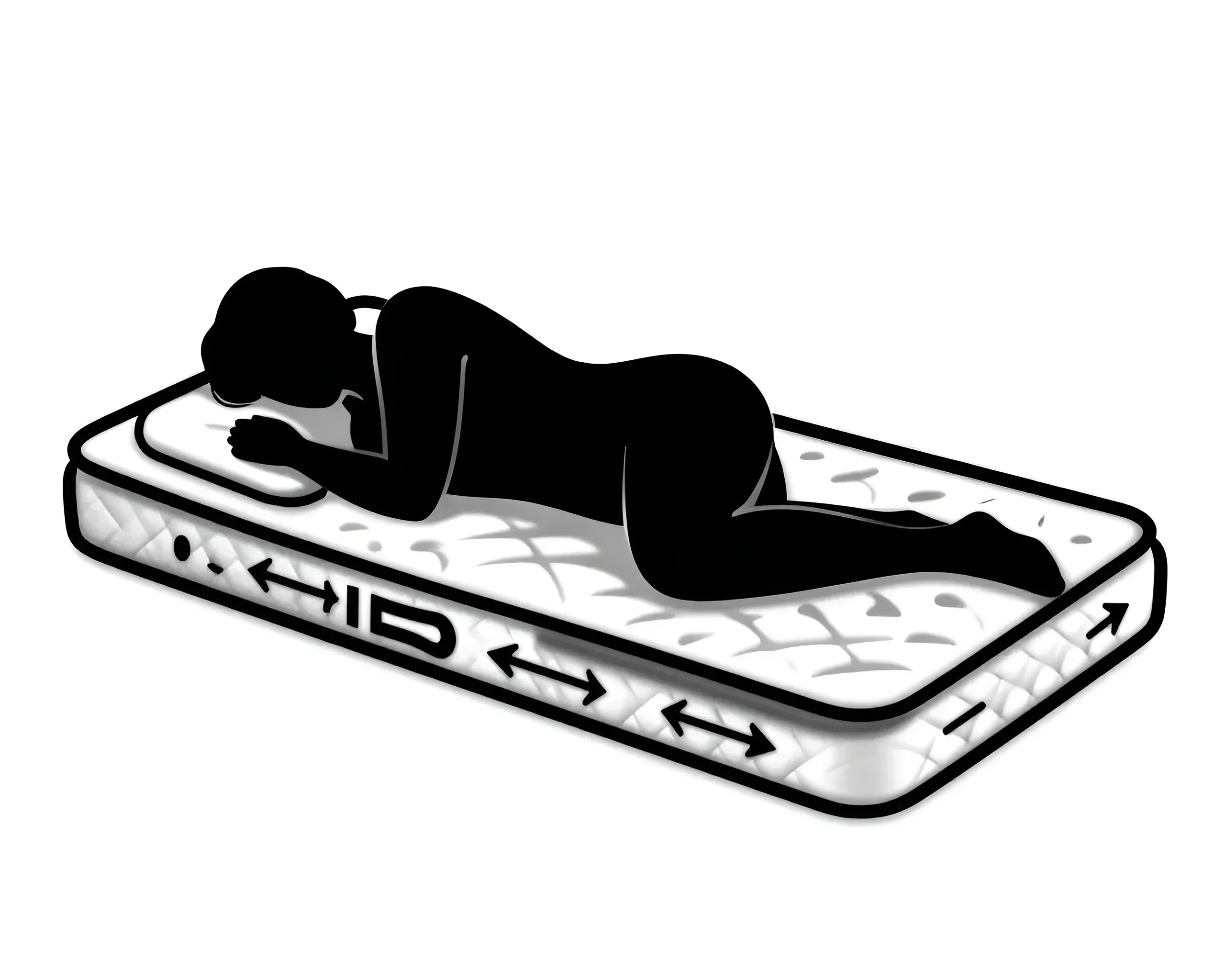
The filler is what your body is in contact with for most of your sleep. Its properties determine how the load is distributed, how heat and moisture are removed, and how long the mattress will keep its shape. Let's analyze the main materials.
- Polyurethane foam (PU foam) of standard density. The basic material for most mattresses. Density varies from 20 to 40 kg/m³. For back support, it is better to choose PU foam with a density of 30 kg/m³ and above — it holds its shape longer and does not sink. Soft foam (20–25 kg/m³) is suitable as a top comfort layer, but not as the main load-bearing one.
- Memory foam. Modified PU foam that reacts to body temperature and slowly returns to its original state. Pros: precise repetition of the body contour, reduction of pressure points, comfort for those who like a "sinking" feeling. Cons: some people experience a feeling of "getting stuck", difficulty changing positions; it can be hot in warm climates. For the back, memory foam relieves local pressure well, but if you value elastic support, it is better to combine it with a firmer layer.
- Latex (natural and synthetic). Natural latex is foamed rubber tree sap. It is elastic, "breathable", and resistant to deformation. Synthetic latex (latex foam) is cheaper and lighter but less durable. For the back, latex provides elastic support without sinking, well-suited for those who do not like a feeling that is too soft or too hard. Latex density is usually 50–80 kg/m³.
- Coconut coir. Coconut fiber pressed into mats. A hard, dense, "breathable" material. Pros: naturalness, firmness, moisture resistance, good ventilation. Cons: too hard on its own for comfortable sleep, so it is used as a layer (usually 1–3 cm) to regulate overall firmness. For the back, coir is useful because it prevents sinking into soft layers and supports the lower back in a neutral position.
- Felt and batting. Natural or blended fibers used as soft layers. They give a feeling of a "hug", softening the transition between the body and the hard layer. For the back, felt is useful as an additional comfort layer, but it does not carry the main load.
- Hollowfiber and synthetic padding. Synthetic fillers that eventually clump together. They are not suitable for the back as a main layer — only as a thin layer in budget models. The service life of such a filler is limited to 2–3 years.
Practical advice: look for mattresses that have at least two different filler layers in the construction. For example, elastic latex or dense foam for support + a thin layer of coir or felt for comfort. Single-layer mattresses quickly lose their shape and do not provide uniform support.
Firmness zones: how they help relieve tension in the lower back
Firmness zones are areas of the mattress that differ in elasticity. Usually, a mattress is divided into 5 zones: head and neck, shoulders, lower back, hips, legs. Each zone uses a filler of different density or springs of different heights. Why is this necessary?
The fact is that the load on the mattress is distributed unevenly. The shoulders and hips are the most massive parts of the body, and they create the greatest pressure. The lower back and neck are "lighter" areas, and if the mattress is equally firm everywhere, a "sag" occurs in the lower back area relative to the hips. Firmness zones solve this problem: in the hip and shoulder areas, a more elastic or firm filler is used, which prevents the body from sinking, and in the lower back area, it is slightly softer so that it does not "bulge" and create unnecessary tension in the muscles.
How it works in practice. When you lie on your side, your hips and shoulders go deeper into the mattress than your lower back. If the mattress has no zones, the lower back remains "in the air", and the spine bends. With firmness zones, the hips and shoulders receive additional support, and the lower back gently "goes" into the filler, maintaining a natural curve. As a result, the spine remains in one line, and the muscles are not forced to compensate for the sag.
What to look for when choosing a mattress with zones:
- Number of zones. A minimum of 5 zones is the standard. 7 zones provide more precise support, but the difference in feeling is not always noticeable.
- Type of zoning. Zones can be created by different filler density (springless mattresses) or different spring heights (spring blocks). Both options work, but in springless mattresses, the transitions between zones are usually smoother.
- Zone boundaries. The more clearly defined the boundaries, the more precise the support. In high-quality mattresses, the zones do not "blur" after a few months of use.
If you sleep on your back, firmness zones are especially important for the lower back. If on your side — for the hips and shoulders. If on your stomach — for the hips and lower back. Therefore, before buying, honestly evaluate which position you sleep in most often, and look for a mattress where the zones are adjusted specifically for this position.
How to choose the level of firmness for your weight and sleep position
Mattress firmness is not an abstract concept of "soft/hard", but a specific characteristic that depends on your weight, height, and sleep position. There is no universal "ideal" level, but there are guidelines.
By weight. The higher the weight, the firmer the mattress should be so that the body does not sink. Approximate table:
- Weight up to 60 kg: soft or medium-soft mattress (filler density from 25 kg/m³, pocket springs from 500/m²).
- Weight 60–80 kg: medium level of firmness (density from 30 kg/m³, pocket springs from 700/m²).
- Weight 80–100 kg: medium-firm or firm (density from 35 kg/m³, pocket springs from 700/m²).
- Weight over 100 kg: firm or very firm (density from 40 kg/m³, pocket springs from 1000/m², additional load-bearing layer).
By sleep position.
- On the back. Medium or medium-firm support is needed. The lower back should not sink, but it should not "bulge" either. A combination of elastic filler (latex, dense foam) with a thin layer of coir in the lower back area works well.
- On the side. Slightly softer support is needed in the shoulder and hip areas so they do not create excessive pressure. Memory foam or medium-density latex works well. The lower back should be well supported so the spine does not bend.
- On the stomach. Firm support is needed, especially in the hip area, so the lower back does not sag. A firm filler (coir, dense foam) or a spring block with high density works well.
Practical test. Before buying (in a store or at an exhibition), lie on the mattress in the position you usually sleep in, and ask an assistant to see how your back lies. If the lower back "sags" or, conversely, "bulges", the mattress is not suitable. If the spine lies in one line, this is a good sign. The test should last at least 5–10 minutes because the first sensations can be deceptive.
If you sleep as a couple and have different preferences for firmness, consider a mattress with two different halves (different firmness zones across the width) or two separate mattresses sewn together. This will allow each person to sleep at their own level of support.
Sizes and dimensions: why it is important not to save on area

One of the most underestimated factors is the size of the mattress. If the mattress is too narrow or short, you involuntarily limit your freedom of movement, and during the night the body takes uncomfortable positions that create unnecessary tension in the back. Let's analyze the main sizes and who they are suitable for.
- Single (90×190 cm or 80×190 cm). Suitable for children and teenagers, as well as adults up to 170 cm tall and weighing up to 80 kg. For an adult taller than 175 cm, such a mattress will be too short — the legs will hang off, and this will create unnecessary tension in the lower back when changing positions.
- One-and-a-half (120×190 cm or 140×190 cm). A compromise option for one adult or for a couple willing to sleep "cuddled up". For the back, it is better to choose a width of 140 cm so there is enough space to change positions without falling off the edge.
- Double (160×200 cm or 180×200 cm). The standard for a couple. A width of 160 cm is the minimum, 180 cm is more comfortable, especially if one of the partners likes to spread out. A length of 200 cm is suitable for heights up to 190 cm.
- King-size (200×200 cm and above). Maximum comfort for a couple. Each sleeps on their own "half" and does not disturb the other. For the back, this is a plus because you can freely change positions without disturbing your partner.
The height of the mattress is also important. The standard height is 16–25 cm. For the back, it is better to choose a height of 20 cm and above, because a thick mattress has space for a multi-layered construction with firmness zones. Thin mattresses (less than 15 cm) usually have a simplified construction and do not provide full support.
Practical advice: measure not only the bed but also the space around it. If the mattress does not allow you to get up freely from any side, you will involuntarily "tuck" your legs or turn into an uncomfortable position. Leave at least 60–70 cm of free space on each side.
Top 5 criteria for choosing a mattress for back pain
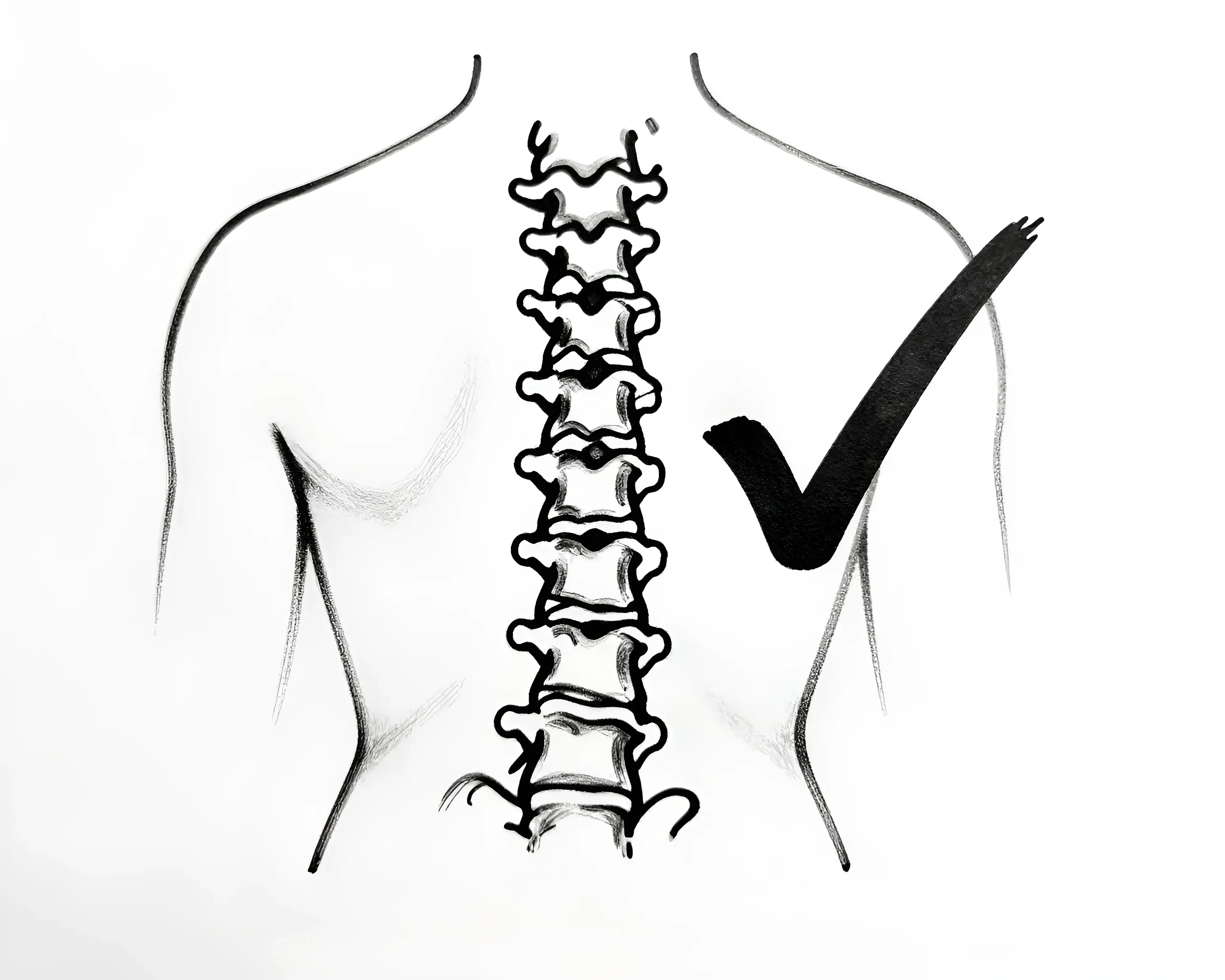
To not get lost in the variety of models, focus on five key criteria. They do not depend on the brand and price, but directly affect how you will feel after sleep.
- 1. Uniformity of support. The mattress must support the spine in a neutral position in all positions. Check this in the store: lie on your side, on your back, on your stomach and see how your back lies. If the lower back sags or bulges in any position — look for another model. Uniformity is more important than absolute firmness or softness.
- 2. Quality and density of the filler. The higher the density of the main load-bearing layer, the longer the mattress will keep its shape. For the back, look for a density of 30 kg/m³ and above. If there is latex in the construction — check if it is natural or synthetic (natural is more durable). If coir — make sure it is not too thick (more than 3 cm can be uncomfortable).
- 3. Firmness zones. For a problematic back, this is not an option, but a necessity. A mattress with 5 or 7 firmness zones adjusts more precisely to the body's shape and reduces local pressure on the lower back and shoulders. Pay attention to the smoothness of transitions between zones — sharp boundaries can create "steps" that are felt by the body.
- 4. Ventilation and thermoregulation. If the mattress "does not breathe", the body sweats, and this creates discomfort that prevents deep sleep. Look for models with perforated filler, natural fibers (felt, coir, latex), or a spring block that provides air channels. For the back, good sleep is more important than maximum softness, and good sleep requires a normal temperature.
- 5. Warranty and service life. A high-quality mattress for the back should last 7–10 years. If the warranty is less than 5 years, this is a reason to be cautious. Check what is included in the warranty: sagging of more than 2–3 cm, filler deformation, spring creaking. The longer the term, the higher the confidence that the mattress will not lose its shape after a couple of seasons.
Additionally, pay attention to the cover: it should be removable (for washing) and made of breathable material (cotton, bamboo, microfiber with perforation). The fabric cover should not be too thin — it protects the filler from dust and deformation.
Mattress care: how to extend service life and maintain properties
Even the highest quality mattress will lose its properties if it is not cared for. The good news: care does not require special skills or expensive products. A few simple rules are enough.
- Turn the mattress. Every 2–3 months, turn the mattress from end to end (head to feet) so that the load is distributed evenly. If the mattress is double-sided (both sides are suitable for sleep) — turn it to the other side every 6–12 months. This prevents local sagging in the places where you usually sleep.
- Use a mattress pad. A thin mattress pad (2–5 cm) made of breathable material protects the main mattress from moisture, dust, and mechanical damage. It should not be too soft, otherwise, it will change the feeling of firmness. A mattress pad also simplifies care: it can be removed and washed without touching the main mattress.
- Do not jump or sit on the edge. Sudden loads deform the filler and springs. If you have small children, it is better to use a separate mattress or a mattress pad with a protective layer.
- Ventilate. Once a week, remove the bedding and leave the mattress to "breathe" for 1–2 hours. This helps remove moisture and prevents the development of dust mites. Do not take the mattress out into direct sunlight — ultraviolet light destroys the filler.
- Clean in time. Stains from moisture or food are best removed immediately before they soak in deep. Use a soft sponge and a neutral detergent (without bleach). Do not soak the mattress and do not wash it completely — this will destroy the filler structure.
- Check the base. The mattress should lie on a flat, firm base: a bed with slats, a sofa bed with a hard bottom, or a special mattress box. If the base sags or has irregularities, the mattress will deform unevenly, even if it is of high quality itself.
The average service life of a high-quality mattress is 7–10 years. If during this time the mattress has not sagged, does not creak, and has not lost its shape, it can still serve. But if you feel that the support has become worse and morning discomfort has increased, it is time to think about a replacement. Do not try to "fix" an old mattress with pillows or extra layers — this will not solve the problem, but will create a new imbalance.
Frequent questions about mattresses for a problematic back
Which mattress is better: spring or springless? There is no single answer for the back. Springless mattresses with elastic filler (latex, dense foam) provide uniform support and do not create "patchiness". Spring mattresses with a pocket block of 700+/m² also support the back well, especially in combination with high-quality top layers. Dependent springs are usually not recommended for a problematic back.
Do I need a mattress with memory foam? Memory foam relieves local pressure well and is suitable for those who like a "sinking" feeling. But if you value elastic support to easily change positions, it is better to choose latex or dense foam without memory foam. You can combine: a thin layer of memory foam on top + an elastic layer on the bottom.
How long should a mattress last? A high-quality mattress — 7–10 years. If the warranty is less than 5 years, this is a signal that the manufacturer is not confident in its durability. But even with a good warranty, watch the condition: if the mattress has sagged, creaks, or you wake up with new discomfort, perhaps it has already worked its time.
Can I sleep on a mattress without a base? No. The mattress should lie on a hard, flat base. If you put a mattress on the floor or on a soft sofa, it will deform unevenly and quickly lose its shape. For the floor, use a special mattress box or a hard stand.
How to understand that the mattress does not suit me? Main signs: you wake up with new discomfort in your back that was not there before; you change positions often in your sleep; the mattress has sagged in the places where you usually sleep; you feel "steps" or irregularities. If at least two of these signs are present — it is time to look for a replacement.
Do I need an orthopedic mattress? The term "orthopedic" is not standardized and is often used in marketing. In essence, it is a mattress with firm or medium-firm support and firmness zones. If you have a doctor's recommendations regarding firmness or type of support, follow them. If not — choose a mattress that supports the spine in a neutral position in your usual sleep position.
Interesting facts about sleep and spinal health
Let's finish the article with a few facts that will help you look at your sleep from a different angle.
- In one night, a person changes position on average 20–40 times. This is a normal process, and a good mattress allows you to do this without discomfort. If you wake up with the feeling that you "lay in one position", perhaps the mattress does not allow you to freely change your position.
- The spine "rests" during the night and restores the intervertebral discs that are compressed under load during the day. If the mattress does not support the back in a neutral position, this process is less effective.
- The temperature of the mattress surface affects the quality of sleep. The optimal temperature is 28–32 °C. If the mattress "does not breathe", the body sweats, and this interferes with the transition to deep sleep phases, in which tissue repair occurs.
- The average person spends about 26 years of their life sleeping. A significant part of this is spent on a mattress that you chose, perhaps 5–10 years ago. This is a reason to periodically evaluate how well it still fits.
- A mattress should not be "ideal" for everyone. What is comfortable for one person may be uncomfortable for another. Therefore, before buying, it is important to test the mattress in your sleep position, and not just rely on reviews or marketing terms.
Choosing a mattress for the back is not a one-time decision, but an investment in daily comfort. Do not rush, test, compare characteristics, and do not hesitate to consult a doctor if you have chronic problems. A properly selected mattress will not solve all back issues, but it will create conditions under which the spine can rest, and you can wake up without the feeling that the night was a "punishment". And that is already a lot.


