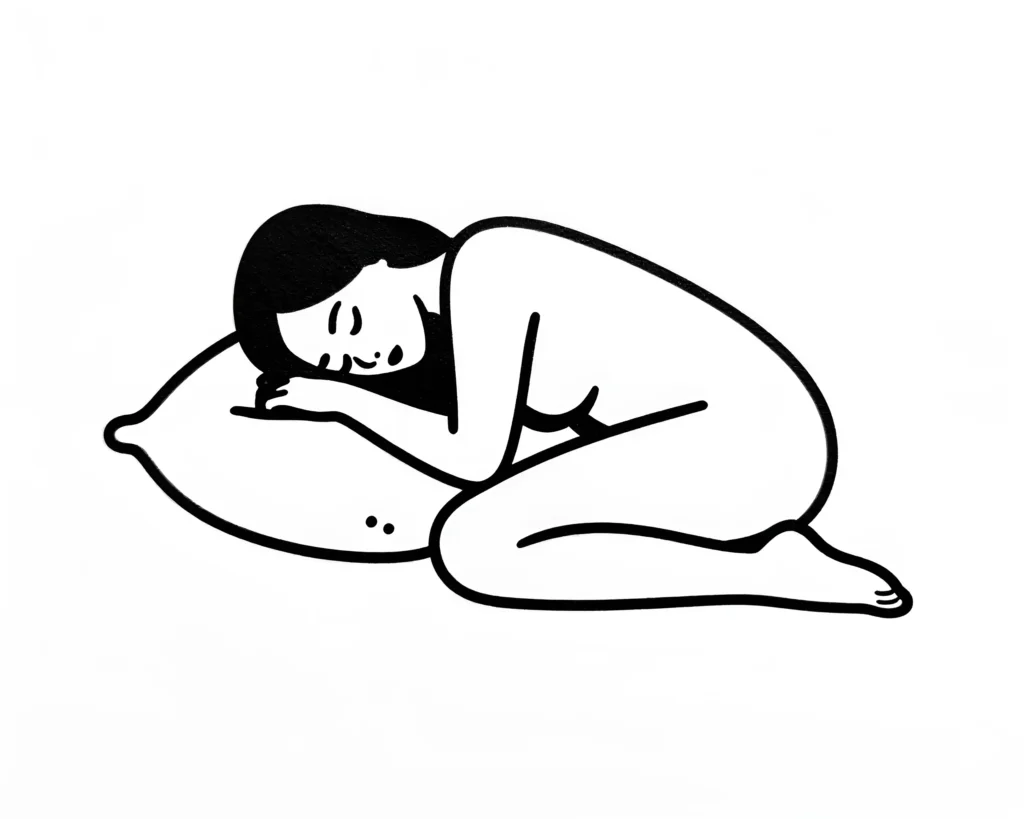
We spend about eight hours in bed every night, and it is the pillow that determines whether you wake up refreshed or with an aching neck and stiff shoulders. The problem is that there is no such thing as a universal pillow: what is perfect for side sleeping can turn a night on your back into torture, and vice versa. In this article, we will analyze how to choose a pillow for your sleeping position, which fillers provide the necessary support, and which ones only create an illusion of comfort. You will get specific figures for height, firmness, and dimensions so that when buying, you don't rely on feelings in the store, but on proven parameters.
Why sleeping position is so important for choosing a pillow
Imagine you put your head on a pillow that is two centimeters higher or lower than necessary. The neck is forced to compensate for the difference: with a pillow that is too high, the cervical vertebrae bend upward; with one that is too low, they sag downward. In both cases, the neck muscles (trapezius, scalene, transverse muscles) remain tense all night, and the ligamentous apparatus experiences uneven load. By morning, this manifests as stiffness, headache in the back of the head, and sometimes numbness in the fingers.
Now look at the three main sleeping positions and how the geometry of the neck changes in each of them:
- Side sleeping. The head is shifted to the side relative to the spine. A gap forms between the ear and the mattress, which the pillow must fill. If the pillow is lower than this gap, the neck tilts toward the mattress; if it is higher, it tilts away from it. In both cases, the cervical spine receives a lateral load that should not exist in a natural position.
- Back sleeping. The head and neck are in the same vertical plane. The pillow here is only needed to gently fill the natural lordosis (neck curve). A pillow that is too high lifts the chin to the chest and narrows the airways; one that is too flat does not support the curve, and the neck "sags."
- Stomach sleeping. The head is turned to the side, and the neck is twisted 90–180 degrees. The pillow in this position should be as flat as possible or absent altogether, otherwise, the neck curve is multiplied significantly.
It is important to understand: most people change their position 20–40 times a night. Therefore, the ideal pillow is one that provides acceptable support in the two or three positions you use most often. If you sleep primarily on your side (about 60% of people do this), focus on this position, but check that your neck will not hyperextend when you are on your back.
Another factor that is often overlooked is the thickness of the mattress. If the mattress is soft and sinks 5–7 cm under the weight of the body, the pillow should be slightly higher because the shoulder "goes" into the mattress. On a firm mattress, the shoulder remains on the surface, and the pillow can be 1–2 cm lower.
Pillow for side sleeping: supporting the neck and shoulders
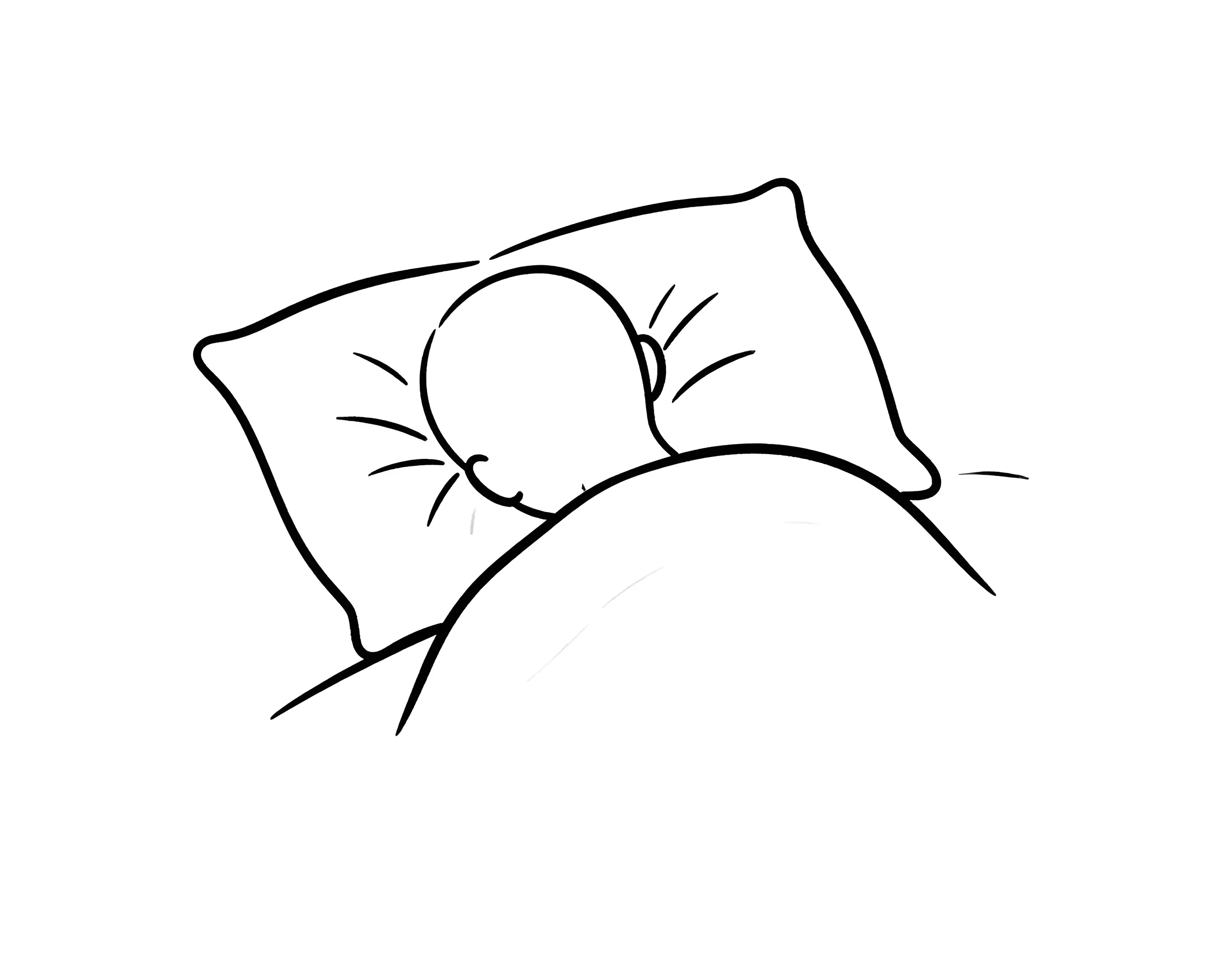
Side sleeping is the most common position, and it requires the highest and firmest pillow. The task is simple: fill the space between the ear and the mattress so that the line from the ear through the shoulder to the pelvis remains straight, parallel to the bed surface.
How to determine the required height. Measure the width of your shoulder from the tip of the shoulder blade to the earlobe. This is the base height of the pillow. Average values:
- Women: 10–12 cm (shoulder width is usually 36–40 cm, but the pillow should not be the same width — it fills only part of the gap, the rest is compensated by the mattress's elasticity).
- Men: 12–15 cm (shoulder width 42–48 cm).
- People with broad shoulders (athletes, overweight people): 14–16 cm.
Practical test: lie on your side, ask someone to look at you from the side. The line from the earlobe through the shoulder joint should be horizontal. If the ear "sags" below the shoulder, the pillow is low. If the ear is noticeably higher than the shoulder and the neck is tilted back, the pillow is high.
Firmness and elasticity. For side sleeping, the pillow should be firm or medium-firm. A soft pillow (down, feathers, thin synthetic padding) quickly flattens under the weight of the head, and after 30–40 minutes, the support disappears. Look for fillers with high elasticity: latex, polyurethane foam with a density of 40–60 kg/m³, hollowfiber with a density of 120–150 g/m². The pillow should hold its shape when compressed: if you squeeze it in your fist and let go, it should recover its shape in 1–2 seconds, not "breathe" slowly for 10 seconds.
Shape and construction. For side sleeping, pillows with an anatomical relief work well: a bolster or wave that supports the neck, and a depression for the head. The height of the bolster should match the width of your shoulder. Pillows with two zones are also convenient: high (for the side position) and low (for the back position), which allows you not to change the pillow when changing positions.
Width and length. A standard 50×70 cm pillow suits most people. If you like to hug the pillow or put your hands on it, choose 60×70 cm or 70×70 cm. For people with broad shoulders, not only the height but also the depth of the bolster is important: it should be at least 8–10 cm so that the neck does not "fall out" of support.
Features of choosing a pillow for back sleeping
Back sleeping is considered a neutral position for the spine: the load is distributed evenly, and the neck is in a natural position. But this is where people most often make mistakes when choosing a pillow because it intuitively seems that "the softer and higher, the more comfortable." In reality, back sleeping requires a pillow of moderate height and medium firmness.
Height. The optimal pillow height for back sleeping is 6–10 cm. This is enough to fill the lordosis (natural neck curve) and not lift the head. A simple guide: the pillow height should be approximately equal to the height of your fist (clenched). If the fist is high (men's hands), take 9–10 cm; if low (women's), 6–8 cm.
Firmness. Medium or medium-soft. The pillow should gently adapt to the shape of the head and neck but not sink. Good options: medium-density latex, memory foam with a density of 30–50 kg/m³, siliconized hollowfiber 100–120 g/m². Avoid models that are too firm — they will lift the head and create hyperextension in the cervical spine.
Shape. For back sleeping, a pillow with a gentle bolster or wave is ideal: low side (6–8 cm) for the neck, slightly higher (8–10 cm) for the head. If you use a pillow with one height, choose 7–9 cm. Flat pillows (less than 5 cm) do not support the lordosis, and the neck is left without support — the muscles are forced to hold the head all night.
Common mistake. Many choose a pillow focusing only on side sleeping and get a model that is too high for the back position. If you change positions in your sleep, look for a pillow with an asymmetric profile: one side is higher (12–14 cm), the other is lower (7–9 cm). This way you can roll over without changing the pillow.
Additional tip. If you sleep on your back and have a tendency to snore, pay attention to pillows with an anatomical depression for the head. It fixes the head in a neutral position and prevents the chin from dropping to the chest, which narrows the airways.
How to choose a pillow for stomach sleeping
Stomach sleeping is the most uncomfortable position for the neck because the head is forced to turn to the side, and the cervical spine experiences maximum rotational load. Nevertheless, about 10% of people prefer this position, and for them, it is important to choose a pillow that at least minimizes discomfort.
Height. The minimum possible: 3–5 cm. The lower the pillow, the less the neck curve. The ideal option is a flat pillow or even a thin bolster of 2–3 cm. Some people sleep on their stomachs without a pillow at all, placing their head on the mattress, or put a pillow under their stomach (pelvis) rather than under their head. This relieves the lower back and allows the neck to be closer to a neutral position.
Firmness. Soft or medium-soft. A firm pillow when sleeping on the stomach will increase neck hyperextension. Suitable: a thin layer of down, feathers, soft siliconized hollowfiber (60–80 g/m²), thin latex.
Shape. Flat, without bolsters or waves. Anatomical pillows with a high bolster are categorically unsuitable for stomach sleeping — they will create additional curvature. If you use a universal pillow with two sides, choose the flattest side for stomach sleeping.
Alternative: pillow under the stomach. A thin bolster or rolled-up blanket under the pelvis (below the navel) lifts the lower back and reduces the arch. This allows you to use a flatter pillow under your head without the feeling that your lower back is "sagging." The height of the bolster under the stomach is 5–8 cm.
Important. If you sleep on your stomach regularly and have chronic neck or lower back pain, it makes sense to consult an orthopedist or neurologist. Prolonged stomach sleeping can be a symptom or cause of posture problems, and the pillow here is only part of the solution.
Fillers and materials: what's inside your pillow
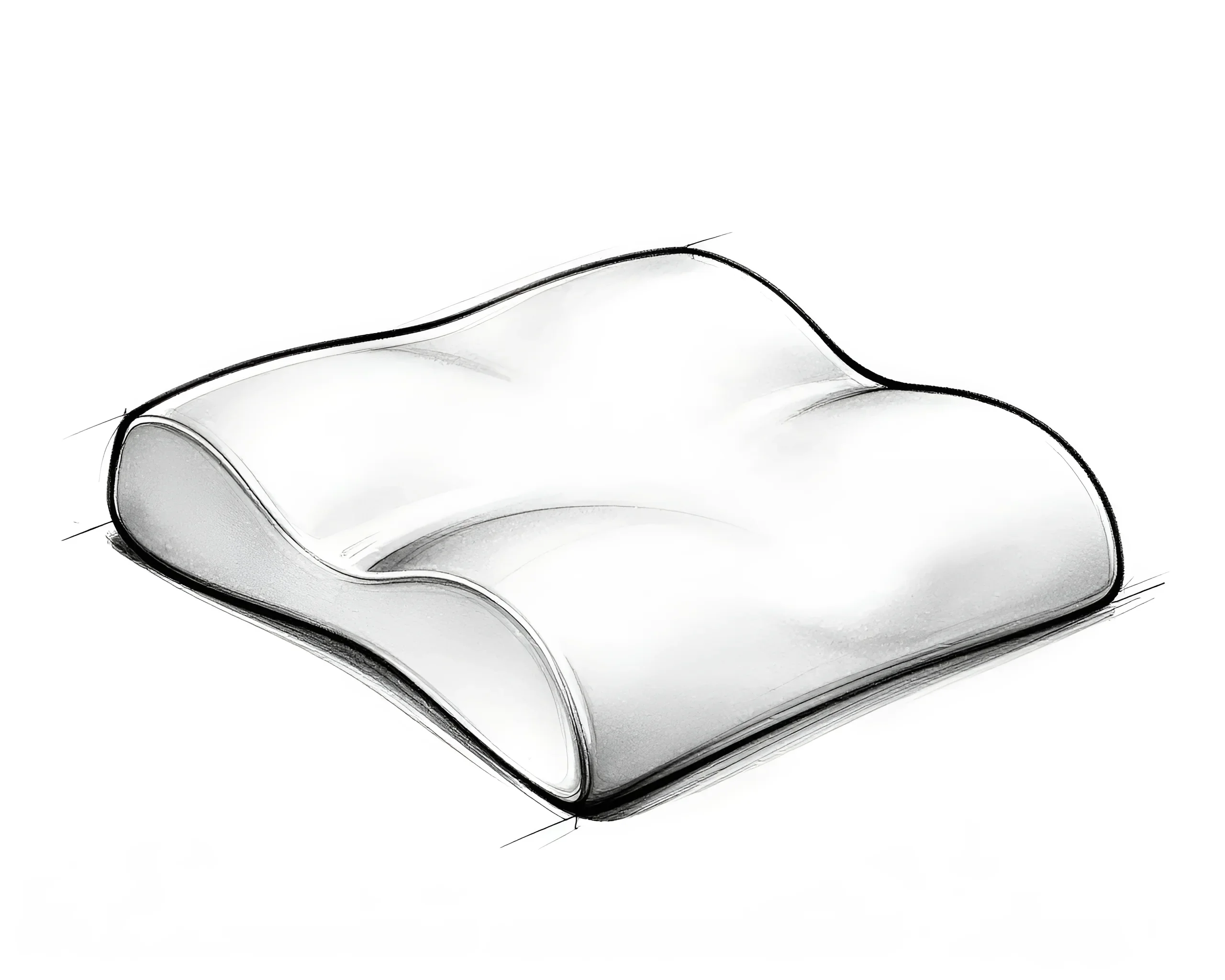
The filler determines almost all the properties of the pillow: height, firmness, elasticity, breathability, service life. Let's analyze the main options from budget to premium.
Down and feathers. A classic that does not lose popularity. Down pillows are soft, warm, and adapt perfectly to the shape of the head. Cons: low elasticity (they flatten quickly), require regular fluffing, can cause allergies (feather mites), not suitable for side sleeping (too soft). Down density: 150–250 g per 50×70 cm pillow. The higher the density, the firmer and higher the pillow. For side sleeping, a down pillow is usually insufficient in elasticity.
Synthetic padding and its derivatives. A budget option. Synthetic padding (polyester fiber) is soft, light, but quickly clumps (service life 1–2 years). Better: siliconized hollowfiber — fibers are twisted into a spiral, which provides elasticity and shape. Hollowfiber density: 60–150 g/m². For side sleeping, take 120–150 g/m², for back — 80–120 g/m², for stomach — 60–80 g/m². Service life with proper use: 3–5 years.
Latex (natural and synthetic). One of the best options for a combination of elasticity, support, and durability. Natural latex (from Hevea juice) is hypoallergenic, breathable, and does not absorb moisture. Density: 40–80 kg/m³. For side sleeping — 60–80 kg/m³, for back — 40–60 kg/m³. Latex does not flatten over time, lasts 7–10 years. Minus: weight (a latex pillow is 3–4 times heavier than a down one), price is above average. Synthetic latex (PUC — polyurethane foam with added latex) is cheaper but less durable (4–6 years).
Memory foam. A heat-sensitive material: at body temperature, it becomes soft and adapts to the contours of the head and neck; when cooling, it restores its shape. Density: 30–60 kg/m³. For side sleeping — 50–60 kg/m³, for back — 30–50 kg/m³. Plus: precise support, pressure relief. Minus: in cheap models, there may be a "chemical smell" (isothiazolinone vapors), not everyone likes the feeling of "sinking." Quality memory foam without smell lasts 5–8 years.
Gel-latex, gel-foam. A combination of latex or foam with a gel layer. Gel wicks away heat, which is important for people who sweat in their sleep. In properties, it is close to pure latex or memory foam, but with improved thermal regulation.
Coconut coir (coconut fiber). A firm filler that does not deform. Used in orthopedic pillows as a base. Coconut itself is firm and not very comfortable, so it is combined with latex or foam. A pillow with coconut coir is suitable for those who prefer firm support and sleep on their back or side.
Comparative table of fillers:
- Down/feathers: softness 10/10, elasticity 3/10, service life 5–7 years, hypoallergenic — low.
- Hollowfiber: softness 7/10, elasticity 5/10, service life 3–5 years, hypoallergenic — high.
- Latex: softness 6/10, elasticity 9/10, service life 7–10 years, hypoallergenic — high.
- Memory foam: softness 7/10, elasticity 8/10, service life 5–8 years, hypoallergenic — high.
- Coconut coir: softness 2/10, elasticity 10/10, service life 10+ years, hypoallergenic — high.
Orthopedic pillows: when special support is needed
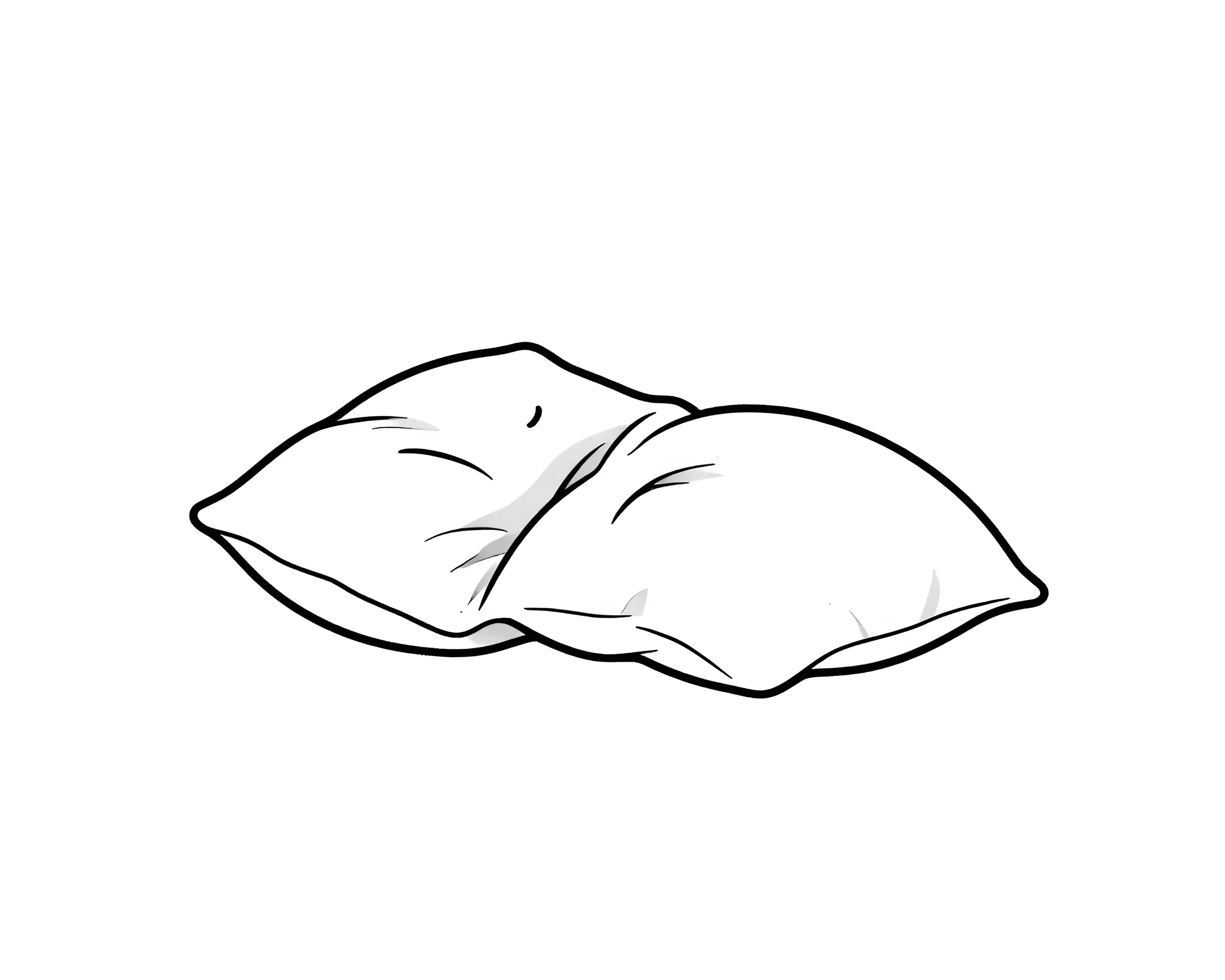
An orthopedic pillow is not a marketing term, but a specific design developed to maintain the physiological position of the neck. It has an anatomical profile: a bolster (or wave) to support the cervical spine and a depression for the head. The height of the bolster is usually 8–14 cm, the depth of the depression is 3–5 cm.
When to pay attention to an orthopedic pillow:
- You have a diagnosed cervical osteochondrosis, herniated discs, or protrusions.
- You regularly wake up with neck pain, headache in the back of the head, numbness in the hands.
- You sleep primarily on your side and have broad shoulders (need high elastic support).
- You snore or have sleep apnea (proper neck support helps keep the airways open).
- You are recovering from a neck injury or surgery.
How to choose an orthopedic pillow. Key parameters:
- Bolster height. For side sleeping: 10–14 cm. For back sleeping: 6–10 cm. If the pillow has two sides — one side is higher, the other is lower.
- Material. Latex (natural or synthetic) — the best option: elastic, breathable, durable. Memory foam — a good alternative, especially if you prefer soft support. Coconut coir + latex — for those who like firmness.
- Density. For side position: 50–80 kg/m³ (latex) or 40–60 kg/m³ (foam). For back position: 30–50 kg/m³.
- Size. Standard 50×60 cm or 50×70 cm. For broad shoulders — 60×70 cm. The depth of the bolster should be at least 8 cm, otherwise, the neck will not be fixed.
Adaptation. You need to get used to an orthopedic pillow. The first 3–7 days there may be discomfort: the neck is "not used" to the new position. This is normal. If the pain intensifies or does not go away after 2 weeks — the pillow does not fit in height or firmness, you need to find another model. Do not endure pain: it means the parameters do not match.
What to expect. With the right choice, an orthopedic pillow reduces the load on the cervical discs by 20–30% (according to biomechanical research). Neck muscles relax, blood flow improves, morning headaches decrease. But this is not a panacea: if there is a serious pathology, the pillow is an addition to treatment, not a replacement.
Practical tips: how to choose the perfect pillow
Let's put everything into a clear algorithm that you can use in the store or when ordering online.
Step 1. Determine your main sleeping position. Remember in what position you fall asleep and in what you wake up. If you fall asleep on your side and wake up on your back — you have two main positions. Write them down. If you don't remember, observe yourself for 2–3 nights (or ask your partner to photograph you from the side).
Step 2. Measure shoulder width. From the earlobe to the tip of the shoulder blade when you are standing straight. This is the base height of the pillow for side sleeping. For back sleeping, take the height of your fist.
Step 3. Assess mattress firmness. Lie on the mattress and ask someone to see how much the surface sinks under your shoulder. If the deflection is more than 5 cm — add 1–2 cm to the pillow height. If the mattress is firm (deflection less than 2 cm) — take a pillow 1 cm lower than the calculated one.
Step 4. Choose a filler. For side sleeping: latex 60–80 kg/m³, memory foam 50–60 kg/m³, hollowfiber 120–150 g/m². For back sleeping: latex 40–60 kg/m³, memory foam 30–50 kg/m³, hollowfiber 80–120 g/m². For stomach sleeping: soft hollowfiber 60–80 g/m², thin down, flat foam.
Step 5. Check the cover. The cover should be removable with a zipper (for washing). Material: cotton, bamboo fiber, ticking. Avoid synthetics that do not breathe and create a greenhouse effect. If you have allergies — look for a cover with anti-allergy treatment or made of bamboo.
Step 6. Test in the store (if possible). Lie on the pillow in the position you sleep at home. Lie for 5–10 minutes. Check: the neck is not tilted to either side, the shoulder is not "sunk" or "pushed out," the head is not lifted or lowered. If after 5 minutes you start turning or changing positions — the pillow does not fit.
Step 7. Adaptation at home. Get used to a new pillow for 1–2 weeks. Do not change it the first night if it feels "not right." Give yourself time. If after 2 weeks the discomfort has not gone away — the pillow does not fit, look for another one.
Additional tips:
- Do not buy a pillow "for growth." If you need a height of 10 cm now, do not take 14 cm "just in case."
- If you sleep on your stomach and use a pillow under your stomach, make sure it does not shift in your sleep (rubber base or fixation).
- Change your pillow every 2–3 years (synthetics) or 5–7 years (latex, down). A flattened, lumpy pillow does not perform its function.
- If you sleep on your side and have narrow shoulders (women), and the pillow seems too high — try putting a thin bolster under your neck instead of getting a lower pillow. This will provide point support.
- For couples: if one sleeps on their side and the other on their back, it is better to buy two different pillows than to share one compromise one.
Frequently asked questions and interesting facts about pillows
How many years does a pillow last? Depends on the filler. Synthetic padding and cheap hollowfiber — 1–2 years. Quality hollowfiber — 3–5 years. Down and feathers — 5–7 years (with regular fluffing and washing of the cover). Latex — 7–10 years. Memory foam — 5–8 years. Coconut coir — 10 or more years. Guide: if the pillow has stopped holding its shape after compression, lumps have appeared, you wake up with neck pain that you didn't have before — it's time to change.
Can an orthopedic pillow be washed? Depends on the design. If the cover is removable — wash the cover at 30–40°C. Do not wash the latex or foam pillow itself in the machine: it will deform. Wipe with a damp cloth or air it out. Down pillows can be washed at 40°C with a delicate detergent, but they need to be dried horizontally, fluffing periodically.
Which pillow is better for people with allergies? Latex (natural), memory foam, coconut coir, siliconized hollowfiber. Avoid down and feathers (mites), as well as cheap synthetic padding (accumulates dust). A bamboo cover or one with anti-allergy treatment is an additional plus.
Memory foam pillow: myth or reality? Reality, but with caveats. Memory foam really adapts to the shape of the head and reduces point pressure. However, in cheap models (density less than 30 kg/m³), the effect is minimal, and the chemical smell can be pronounced. Quality memory foam (density 40–60 kg/m³, CertiPUR certificate or equivalent) is an excellent choice, especially for people with neck pain.
Is a neck pillow needed separately from the main one? In most cases, no. An orthopedic pillow with a bolster performs both functions. Separate neck bolsters (so-called "neck pillows") are useful for daytime rest, on the road, in the office, but for night sleep, they are usually inconvenient: the neck is fixed in one position, and when changing positions, the bolster gets in the way.
Interesting facts:
- The average person changes position 20–40 times a night. This means the pillow should be versatile enough not to create discomfort every time you roll over.
- The first pillow in history was just rolled-up clothes or a bag of straw that people put under their heads. In Ancient Egypt, pillows were made of wood or stone and served more for protection against insects than for comfort.
- In Japan, thin pillows made of rice husks (tamago) are still popular. They are firm, flat, and suitable for back or stomach sleeping, but practically unsuitable for side sleeping.
- Latex for pillows is obtained from the juice of the Hevea rubber tree. From one tree, you can get about 10 liters of juice per year, from which pillows for several people are made.
- Studies show that the right pillow reduces cortisol (stress hormone) levels during sleep by 10–15%, which improves the quality of deep sleep.
- If you sleep on your side and have broad shoulders, and the pillow still seems low — try putting a thin rolled-up blanket under it. This will give an additional 1–2 cm without buying a new pillow.
Choosing a pillow is not a matter of fashion or brand, but a matter of biomechanics. Measure your shoulder, determine your position, choose the height and firmness for yourself. And remember: the ideal pillow is one that you forget about when you fall asleep and that does not remind you of itself with pain when you wake up. If after reading this article you still have doubts — that's normal. Try 2–3 options, give yourself time to adapt, and your sleep will become noticeably more comfortable in a week.


