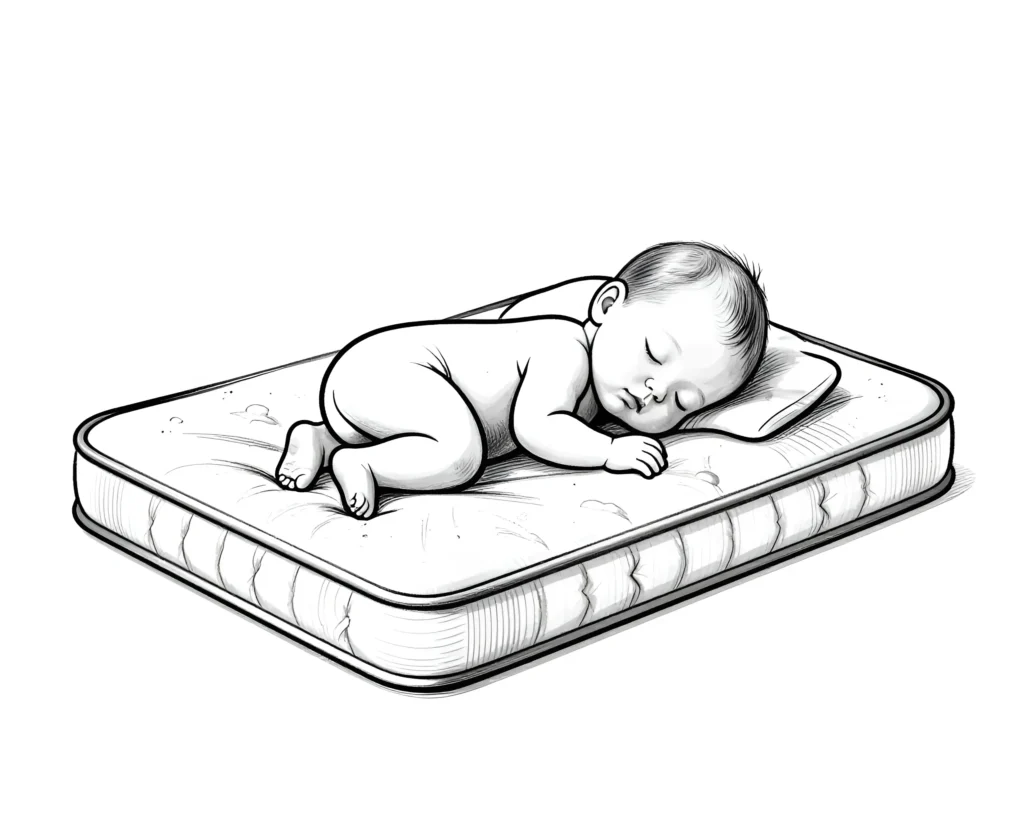
Every parent knows: a good sleep is half the health of a growing organism. And the quality of sleep directly depends on what the child is lying on. A mattress for a child is not just a "small version" of an adult product. It is a separate category with its own requirements for firmness, materials, safety, and dimensions. A mistake at the purchase stage can turn into back pain, allergies, or just poor sleep for years to come.
In this article, we will break everything down: which materials are suitable for a baby's sleep, and which are for a teenager, how not to overpay for marketing adjectives, which certificates to look for, and how to choose the size so that the mattress does not stick out of the bed and does not sag. The material is written practically, without fluff, with specific figures and comparisons that really help to make a decision in a store or when ordering online.
Age stages: how the need for a mattress changes from 0 to 18 years old
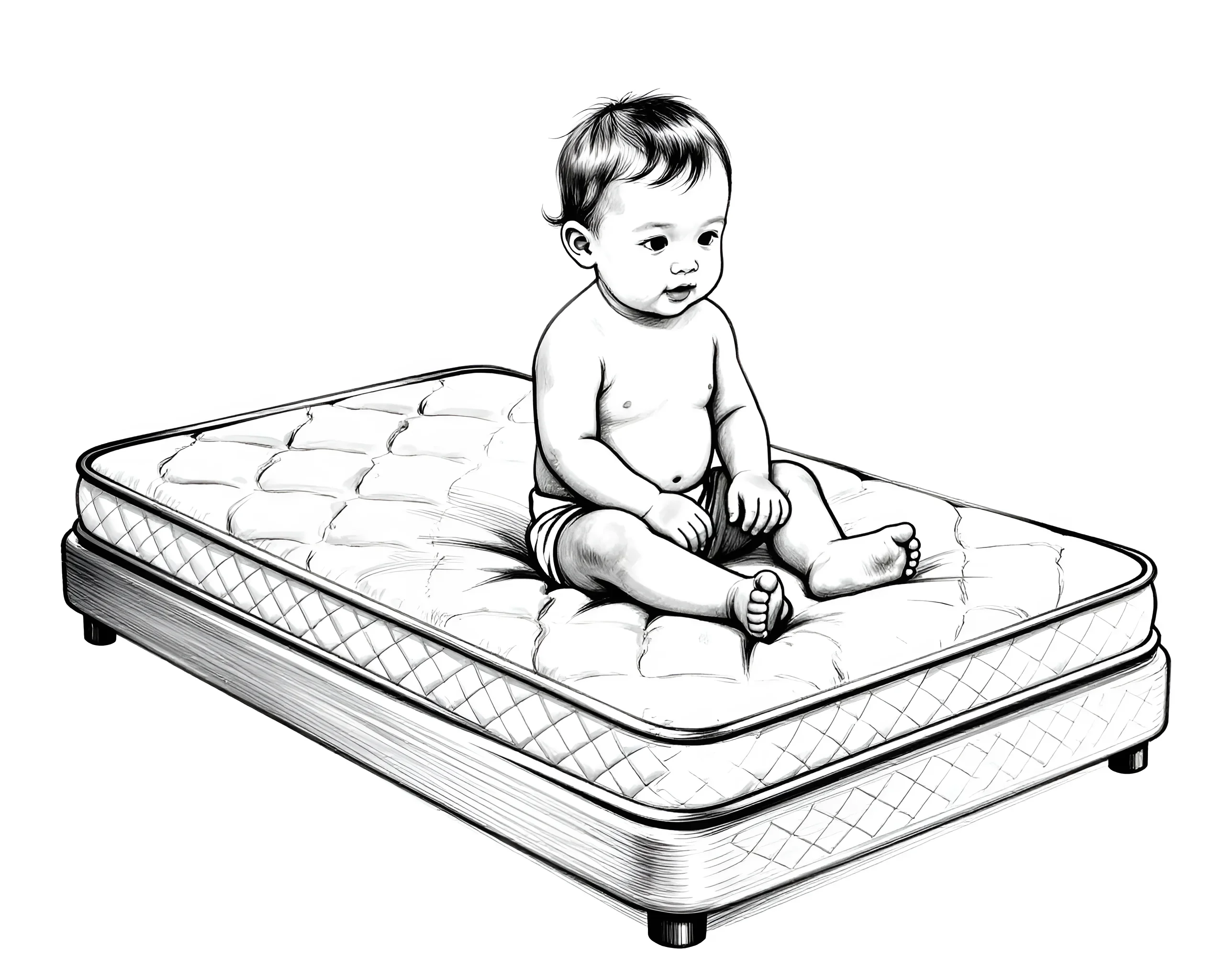
A child's body grows non-linearly: growth spurts, changes in proportions, spine formation — all this requires different levels of support. Therefore, the same mattress will not be suitable for two years ahead, let alone a decade.
0–1 year (newborn and infant). At this age, a child spends up to 18 hours a day sleeping. The spinal column is not yet formed, bones are soft and cartilaginous. The mattress must be firm (firmness 80–90 on a ten-point scale), absolutely flat, without sagging. Height — no more than 6–8 cm. Any "orthopedic waviness" and soft fillers at this age are unnecessary and even harmful: the child may sink in, which disrupts blood circulation and the formation of the musculoskeletal system. The ideal option is a thin mattress made of coconut coir or dense polyurethane foam with a firm fabric upholstery.
1–3 years. The child begins to crawl, stand up, and walk. The first curves of the spine appear. The mattress should still be firm or medium-firm (70–85). A small "comfort layer" on top is allowed — 1–2 cm of latex or soft felt so that the child is not lying on a "board". Mattress height — 7–10 cm. It is important that the cover is removable and washable: at this age, children often wet the bed, drop food, and cleanliness is priority number one.
3–7 years (preschool age). The child is actively moving, sleeping in different positions, and often turning over. The mattress can be medium-firm (60–75). It makes sense to have double-sided models: one side is slightly firmer, the other is slightly softer, and you can change them according to the season or the child's feelings. Height — 10–12 cm. Filler: a combination of coconut and polyurethane foam, or latex with felt. A zipper cover around the perimeter is mandatory.
7–12 years (primary school age). The child grows quickly, the center of gravity changes, and the lumbar curve is formed. The mattress is medium-firm or firm (60–80), depending on the build. For overweight children — firmer, for thin ones — slightly softer. Height — 12–16 cm. Spring blocks are appropriate here (springless ones are still good, but spring ones provide better point support). Cover — made of natural, breathable fabrics.
12–18 years (adolescence). In essence, this is already an adult mattress, but taking into account that height and weight are still changing. Firmness is selected individually: for a thin teenager — 65–75, for a dense one — 75–85. Height — 16–22 cm. Any modern fillers are allowed: latex, memory foam, spring blocks. The main thing is the correct height for the bed and orthopedic support. A teenager can already say for themselves that it is "too hard" or "the lower back is sinking", so listen to their feelings.
Important nuance: if a child is diagnosed with scoliosis, kyphosis, or other posture disorders, the mattress is selected strictly according to the orthopedist's recommendation. In such cases, individual firmness and, possibly, a specialized orthopedic block are usually needed. Do not hesitate to ask the doctor for a written recommendation — this will simplify the choice in the store.
Filling materials: what is better for a child's sleep
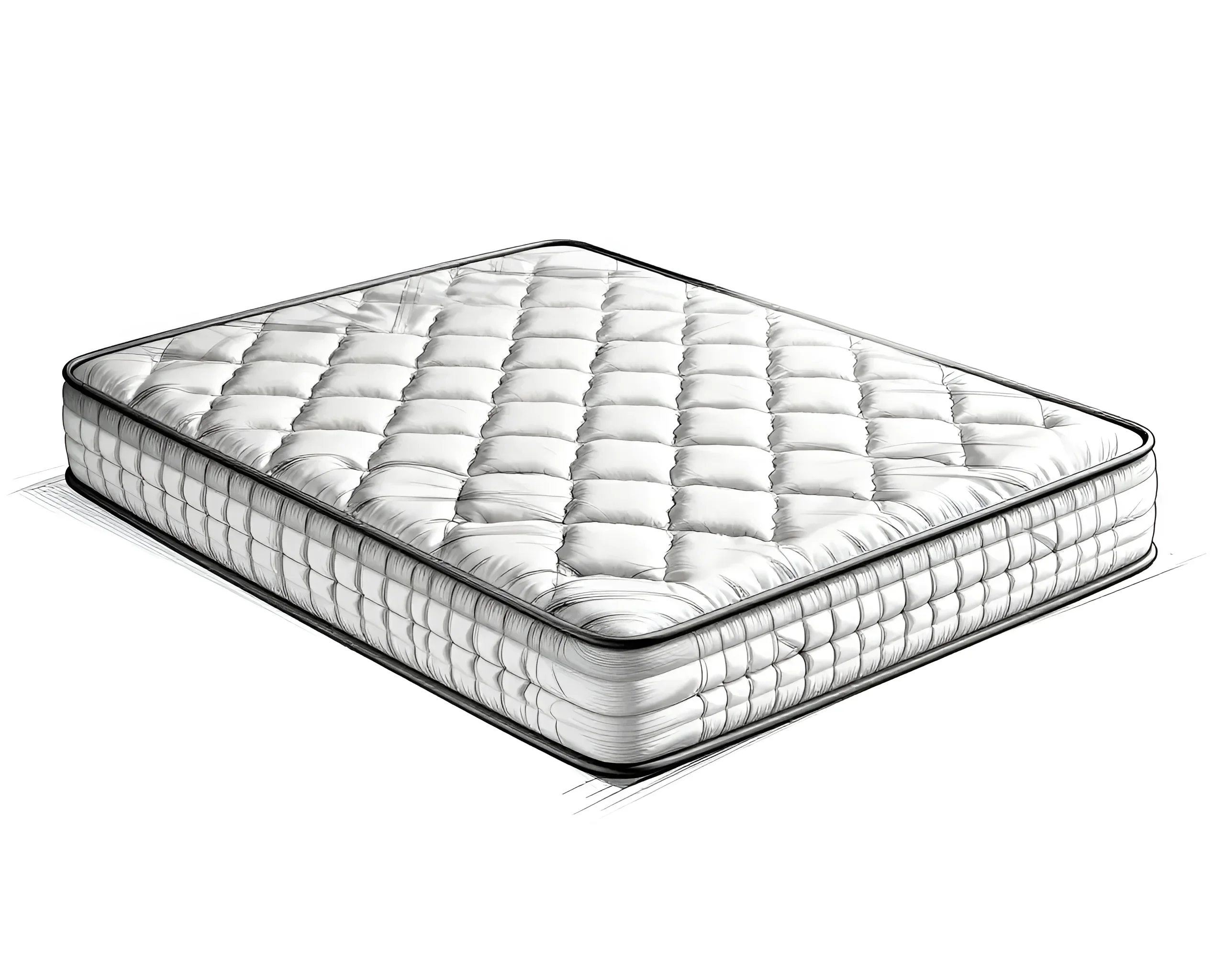
The filler determines the firmness, elasticity, breathability, and durability of the mattress. Let's analyze the main options found in children's models.
Coconut coir (coconut fiber). This is a natural fiber from coconut shells, pressed into slabs. Firmness — high, 80–90. Pros: absolutely natural material, does not accumulate static electricity, hypoallergenic, does not absorb moisture, lasts 10–15 years. Cons: firm (ideal for a newborn, too much for a teenager), can be noisy when bent, contains formaldehyde glues in low-quality production. What to look for: coconut density — from 120 to 160 kg/m³; the higher, the firmer and more durable. For children under 3 years old, it is the optimal option. The thickness of the coconut layer in a children's mattress is usually 2–4 cm.
Polyurethane foam (PU foam). The most common and affordable filler. It comes in different types: regular (density 20–30 kg/m³), elastic (30–40 kg/m³), memory foam (with memory effect, 40–60 kg/m³). Pros: wide range of firmness, affordable price, lightness, does not require special care. Cons: cheap PU foam deforms quickly (in 1–2 years), can emit volatile organic compounds (VOCs) in the first weeks after purchase. What to look for: density — for children not lower than 25 kg/m³, better 30–40. Emission class — E1 or E0 (European standard). Memory foam is not recommended for children under 5 years old: the child may "sink in" and it is difficult for them to turn over on their own. For teenagers 12+, it is acceptable as an upper comfort layer of 2–3 cm.
Latex (natural or synthetic). Natural latex is rubber tree sap, synthetic is based on polyurethane with the addition of rubber. Pros: elastic, "adjusts" to the body, does not accumulate moisture, hypoallergenic (provided the child is not allergic to latex!), durable (10–15 years), well-ventilated. Cons: more expensive than coconut and PU foam, can cause allergies in predisposed children (percentage is about 1–2%), starts to crumble over time (after 7–10 years). What to look for: natural rubber content — from 50% to 100%; the higher, the better. Density — 70–90 kg/m³. For children from 3 years old, it is an excellent option, especially in combination with coconut underneath.
Felt (wool). Natural felt made of sheep or camel wool. Pros: natural, hygroscopic (absorbs moisture and releases it into the air), warm, antistatic. Cons: absorbs odors, requires regular ventilation, can be dusty (dust mites), medium firmness. What to look for: density — from 200 to 300 g/m². Not suitable for children with wool allergies. In children's mattresses, felt is usually used as an intermediate layer of 1–2 cm between the firm base and the upper filler.
Spring blocks. For children under 7 years old, springs are generally not used (too much load on individual points, the child is light). From 7–10 years old, independent spring blocks (pocket spring type) are acceptable. Pros: point support, good ventilation, durability. Cons: more expensive, heavier, can "creak" in low-quality production. What to look for: number of springs per m² — from 100 to 500; 100–200 is enough for children. Spring diameter — 5–7 cm. Spring height — 10–12 cm.
Practical advice on combinations. The most universal "children's" mattress is a sandwich: coconut (3 cm) or firm PU foam at the bottom, felt or medium PU foam (1–2 cm) in the middle, latex or soft PU foam (2–3 cm) on top. Such a design provides a firm base with a comfortable top and lasts 5–7 years, covering the age from 3 to 10 years.
Firmness and orthopedics: how to choose the right level of support
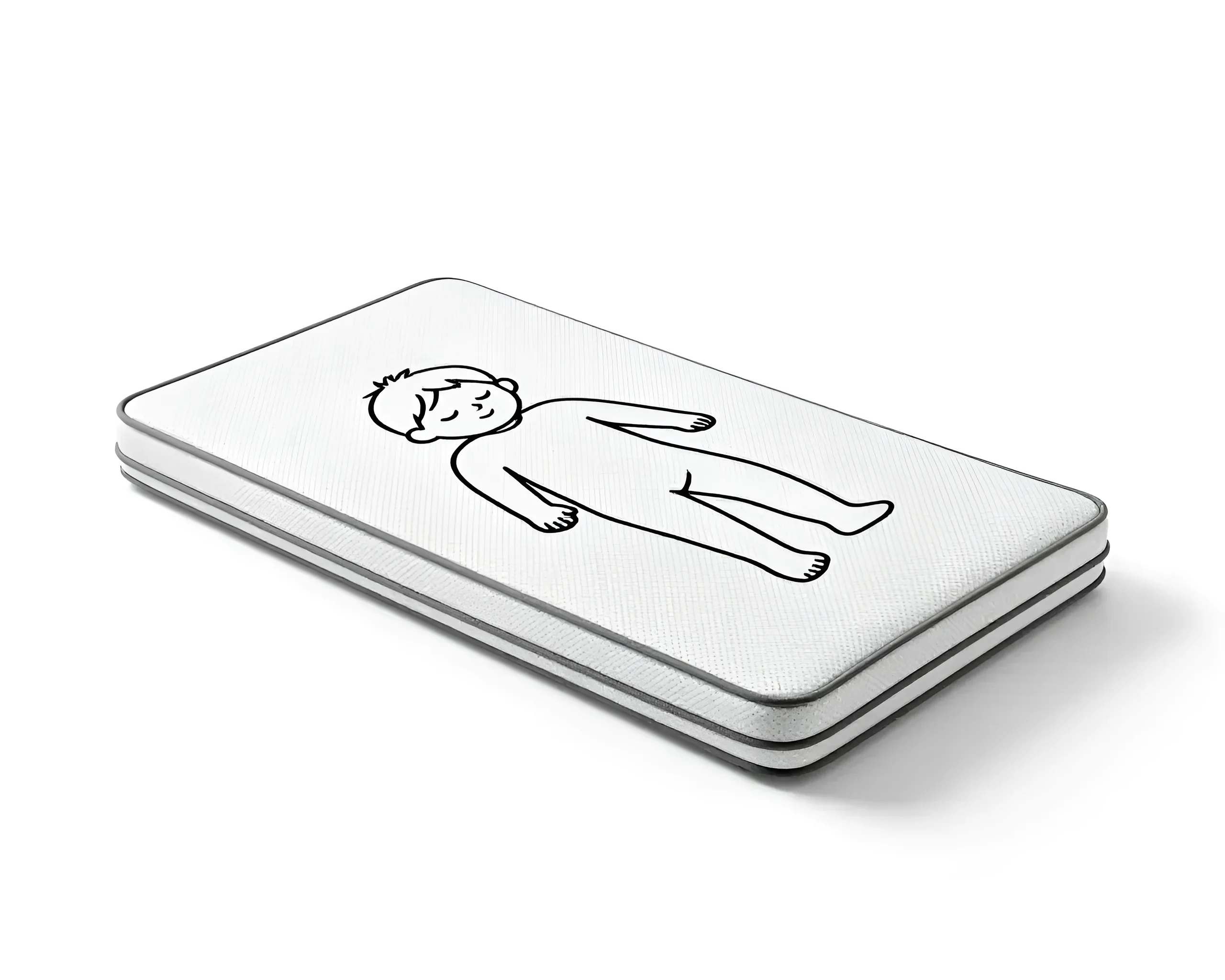
Mattress firmness is not "the firmer, the better" and not "the softer, the more comfortable". It is a balance at which the child's spine in a supine position lies in line with the ears, shoulders, and hips. If the mattress is too soft, the child sinks in, the lower back "sags", and the back muscles are overstrained. If it is too firm, the load is concentrated on protruding points (shoulder blades, sacrum), blood circulation is disrupted, and the child often wakes up and turns over.
How to determine the required firmness in practice. Lay the child on their side on the mattress (or on a similar surface in the store). Look at the line of the spine: it should be straight, parallel to the surface. If a "dimple" is visible in the lumbar region, the mattress is a bit soft. If the child "bulges" in the shoulder blade or hip area, it is a bit firm. This test does not work for a newborn (the child does not hold their back yet), so follow the recommendation: firmness 80–90, flat surface, no sagging.
Firmness scale and its age correspondence. Manufacturers usually indicate firmness in points (from 1 to 10) or in N/m² (newton per square meter). For clarity:
- 1–3 points (soft): not suitable for children under 12 years old. Only for adults with low weight.
- 4–5 points (medium-soft): acceptable for teenagers 14–18 years old with normal or low weight.
- 6–7 points (medium-firm): universal option for children 7–14 years old. Suitable for the majority.
- 8–9 points (firm): for children 0–3 years old and for teenagers 12+ with high weight.
- 10 points (extra-firm): only by orthopedist's prescription, for newborns.
Orthopedic mattresses for children. The term "orthopedic" in the children's segment means: the mattress supports the physiological curves of the spine, prevents sagging, and distributes the load evenly. This is not necessarily a "wavy" surface (like some adult orthopedic models). For children, the orthopedic effect is achieved through the correct combination of firm and soft layers. If a child has scoliosis up to 10° (grade I), a quality mattress with the correct firmness is sufficient. With scoliosis of 10° and above — only by a doctor's prescription, often with an individual orthopedic block.
Double-sided mattresses. Many children's mattresses have two sides of different firmness (e.g., 70 and 80). This is convenient: in winter, when the child sleeps in a warm blanket, you can put the soft side; in summer, in a light blanket, — the firm one. You can also change sides as they grow: at 3 years old, firm, at 7 — slightly softer. Make sure both sides have the same height, otherwise the mattress will "skew" the bed.
What to avoid. Do not buy mattresses with "memory effect" for children under 5 years old: the child may not have time to turn over if they get stuck in a dip. Avoid mattresses with springs until 7 years old (except in cases where the child weighs more than 30 kg). Do not take mattresses without a cover or with a cover that does not come off: cleanliness is critical in childhood.
Safety and ecology: certificates, hypoallergenic properties, and absence of toxins
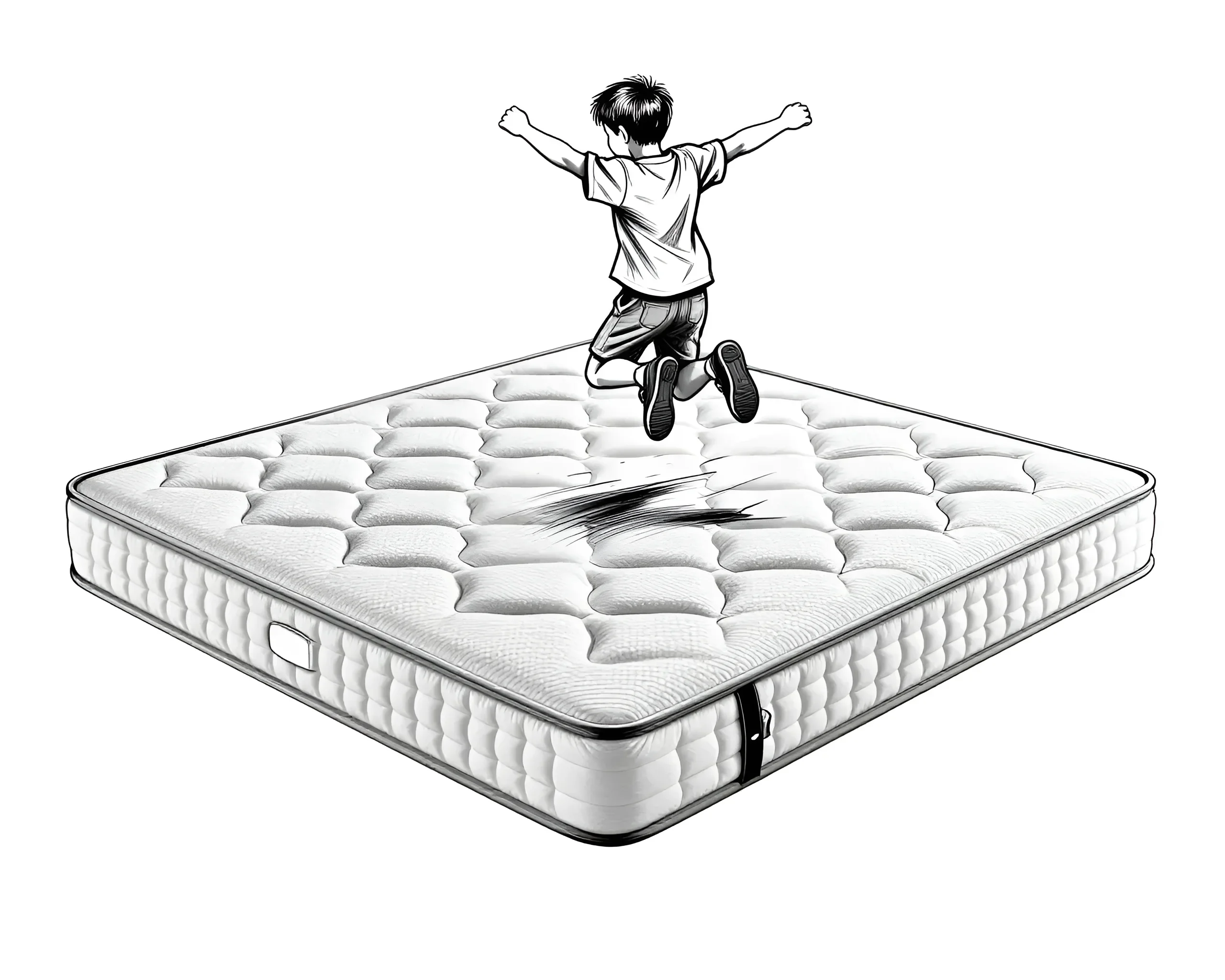
A children's mattress is not just a "small mattress". A child spends up to 18 hours a day on it, breathes the fumes of the filler, and contacts the cover fabric with the entire surface of their body. Therefore, safety requirements are many times higher than for an adult product.
Certificates to look for.
- GOST R 51321-99 (or the newer GOST R 51321-2019) — Russian standard for mattresses. Confirms that the product has passed tests for strength, resistance to deformation, and content of harmful substances.
- EAEU Certificate of Conformity — for goods sold in the countries of the Eurasian Economic Union. Confirms health safety.
- CertiPUR® (international) — certificate for polyurethane foam, confirming the absence of heavy metals, formaldehyde, pyrogens, and other toxic substances. If there is PU foam in the mattress, look for this logo.
- Oeko-Tex Standard 100 — international certificate for textiles. Class 1 (for children under 3 years old) or Class 2 (for children over 3 years old). Confirms the absence of more than 100 potentially harmful substances in the fabric.
- ECOFIIBER — certificate for natural fibers (coconut, felt, latex), confirming the absence of formaldehyde glues.
- Manufacturer's brand certificates — many brands have their own test protocols. This is not a replacement for state certificates, but an additional indicator of responsibility.
Hypoallergenic properties. For children with atopic dermatitis, dust or mite allergies, it is important that the mattress is hypoallergenic. What this means in practice:
- The filler should not be a "nursery" for dust mites. Spring blocks and dense latex are better in this regard than loose felt or hollowfiber.
- The cover should be made of dense fabric (at least 150 g/m²) so that mites do not penetrate inside. Ideally, a cover with anti-allergic impregnation (without chlorine and formaldehyde).
- Natural latex can cause allergies in predisposed children. If the child is allergic to latex (gloves, condoms, etc.) — choose a mattress without latex.
- Coconut coir and quality PU foam are hypoallergenic by default.
Absence of toxins. What to pay attention to when buying:
- Smell. A new mattress may have a slight "factory" smell, which goes away in 3–7 days with ventilation. If the smell is sharp, chemical, "plastic" and does not go away in a week — this is a reason to be wary. Do not buy a mattress "by eye" in a store if it is in a closed cover and smells strongly.
- Glues. In multi-layer mattresses, layers are glued together. Safe glues are polyurethane-based without isocyanates, or hot pressing (no glue at all). Formaldehyde glues are unacceptable. Ask the seller what glue was used or look at the certificate.
- Cover dyes and impregnations. The cover should be without bright synthetic dyes. Natural fabrics (cotton, bamboo, linen) are preferable. Impregnations against moths and dust mites — only based on natural components (e.g., essential oils), without pyrethroids.
Practical checklist before buying:
- Request a certificate of conformity for a specific batch (not a general one, but with a number and date).
- Smell the mattress: the smell should be neutral or slightly "fabric-like".
- Look at the seams: they should be even, without sticking out threads and glue.
- Touch the filler through the cover: there should be no lumps, irregularities, "waves".
- Make sure the cover is removable and washable at 40–60 °C.
- Check if there are any sharp elements (fasteners, zippers) on the side adjacent to the body.
Dimensions and sizes: mattress selection table by age and bed
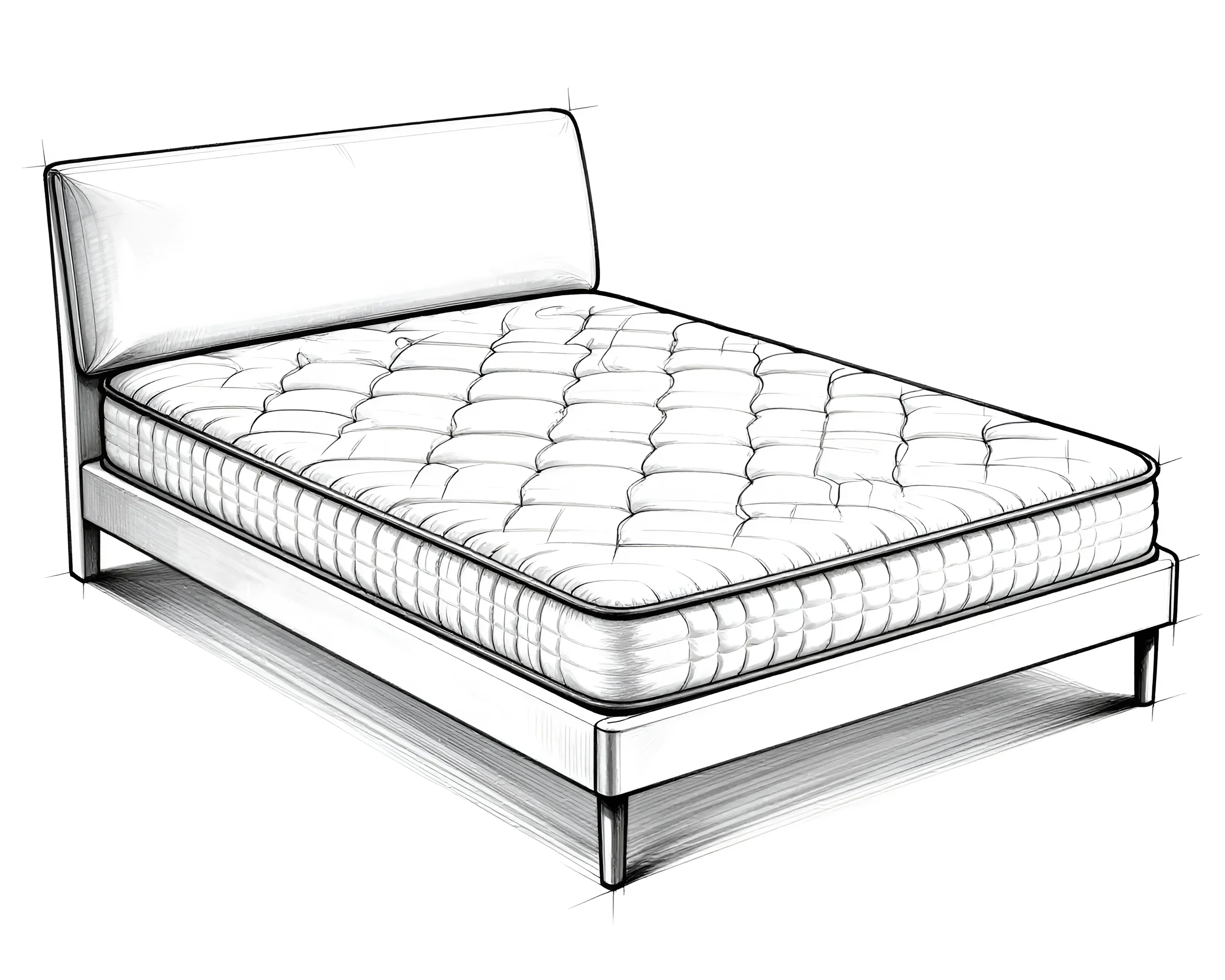
One of the most common mistakes is to buy a mattress "for growth" or, conversely, "tight". The mattress must completely cover the bed base, without gaps and sticking out edges. If the mattress is smaller than the base, the child may pinch a finger or leg in the gap. If it is larger, the mattress will sag, bend, and the springs (if any) will break in six months.
Standard sizes of children's mattresses (width × length, cm):
- 60 × 120 — for cribs, first 6–12 months.
- 60 × 140 — for transformer cribs, 1–3 years.
- 60 × 160 — for children's beds with sides, 2–5 years.
- 70 × 160 — for children's beds, 3–7 years.
- 80 × 190 — for school beds, 7–12 years.
- 90 × 190 — for teenage beds, 10–14 years.
- 120 × 200 — for teenage and adult beds, 12–18 years.
- 140 × 200 — for adult beds (teenager 14+, if sleeping alone in a double bed).
Thickness (height) of the mattress by age:
- 0–1 year: 5–7 cm (thin, so the child does not "drown" in the crib and is easy to take out).
- 1–3 years: 7–10 cm.
- 3–7 years: 10–14 cm.
- 7–12 years: 14–18 cm.
- 12–18 years: 16–22 cm.
How to measure correctly. Measure the internal width and length of the bed base (not the external dimensions with sides!). The mattress should be 1–2 cm smaller in width (so as not to be pinched by the sides) and exactly the same length or 1–2 cm smaller. If the base is 60 × 120 — take a mattress 59–60 × 119–120. If the base is 80 × 190 — mattress 79–80 × 189–190.
Mattress weight. Approximate weight: thin mattress for a newborn (60 × 120 × 6) — 2–4 kg; mattress for a preschooler (70 × 160 × 12) — 6–10 kg; teenage (90 × 190 × 16) — 12–18 kg; adult size (120 × 200 × 20) — 20–30 kg. If they bring you a "teenage" mattress and it weighs 5 kg — most likely, the filler is cheap and will not last long.
Advice on "growth". Do not buy a 120 × 200 mattress for a three-year-old child "for growth". Firstly, it will be too heavy and inconvenient for a children's bed. Secondly, in 10 years the mattress will degrade, and by the time the child grows up, it will already be of poor quality. It is better to buy two mattresses: one for 3–7 years, the second for 7–14 years, the third for 14–18 years. Or one quality one for 7–18 years (size 90 × 190 or 120 × 200), and use a more compact one until 7 years old.
Top 5 proven models for different ages
Below are examples of specific models that have proven themselves well among parents. This is not an advertisement, but a guide: you can look for analogs by characteristics. We do not indicate prices, as they vary greatly depending on the region and season, but we provide enough information so that you can compare models with each other.
1. For a newborn (0–1 year): thin coconut coir mattress, 60 × 120 × 6 cm. Filler: 100% coconut fiber, density 140 kg/m³, no glue (hot pressing). Cover: cotton, removable, washable at 40 °C. Firmness: 90. Certificates: GOST, Oeko-Tex Class 1. What to look for when choosing: no smell, flat surface, cover without seams on the child's side. Analogs by characteristics: models labeled "for newborns", "coconut", "no PU foam".
2. For a toddler 1–3 years old: double-layer mattress, 60 × 140 × 8 cm. Filler: coconut (3 cm) at the bottom, felt (2 cm) or soft PU foam (3 cm) on top. Cover: cotton with a zipper around the perimeter, washable at 60 °C. Firmness: 80 (coconut side) / 70 (felt side). Certificates: GOST, Oeko-Tex Class 1. What to look for: the cover must be completely removable, not just the top part; the zipper must be metal, not plastic (the child can unzip it).
3. For a preschooler 3–7 years old: three-layer mattress, 70 × 160 × 12 cm. Filler: coconut (3 cm) + PU foam density 30 kg/m³ (4 cm) + latex (3 cm). Cover: bamboo or cotton, anti-allergic impregnation, washable at 40 °C. Firmness: 75 (coconut side) / 65 (latex side). Certificates: GOST, Oeko-Tex Class 2, CertiPUR for PU foam. What to look for: latex — at least 70% natural rubber; PU foam — emission class E1.
4. For a schoolchild 7–12 years old: mattress with independent springs, 80 × 190 × 16 cm. Filler: block of independent springs (100–150 pcs/m², diameter 6 cm, height 10 cm) + coconut (2 cm) + latex (3 cm). Cover: cotton/bamboo, washable at 40 °C. Firmness: 70–75. Certificates: GOST, Oeko-Tex Class 2. What to look for: springs — not "bonnell" (dependent), but specifically pocket (independent); number of springs — at least 100 per m²; coconut — without formaldehyde glue.
5. For a teenager 12–18 years old: mattress with latex and memory foam, 90 × 190 × 18 cm or 120 × 200 × 20 cm. Filler: spring block (200–300 pcs/m²) + latex (4 cm) + memory foam (2 cm). Cover: twill or bamboo, washable at 40 °C. Firmness: 65–75 (selected according to the teenager's weight). Certificates: GOST, Oeko-Tex Class 2, CertiPUR. What to look for: memory foam — no more than 2–3 cm (so the teenager does not "sink in"); latex — 80–100% natural; springs — pocket, at least 200 per m².
General advice on choosing a model. Do not focus only on the brand. Two mattresses of the same brand can have different quality depending on the batch. Look at specific characteristics: filler density, cover composition, certificates. If in a store — ask to cut the cover (some sellers do this on samples) and look at the filler. If ordering online — read reviews, but remember that some of them may be fake. It is better to look at reviews with photos and videos.
Frequently asked questions from parents (FAQ)
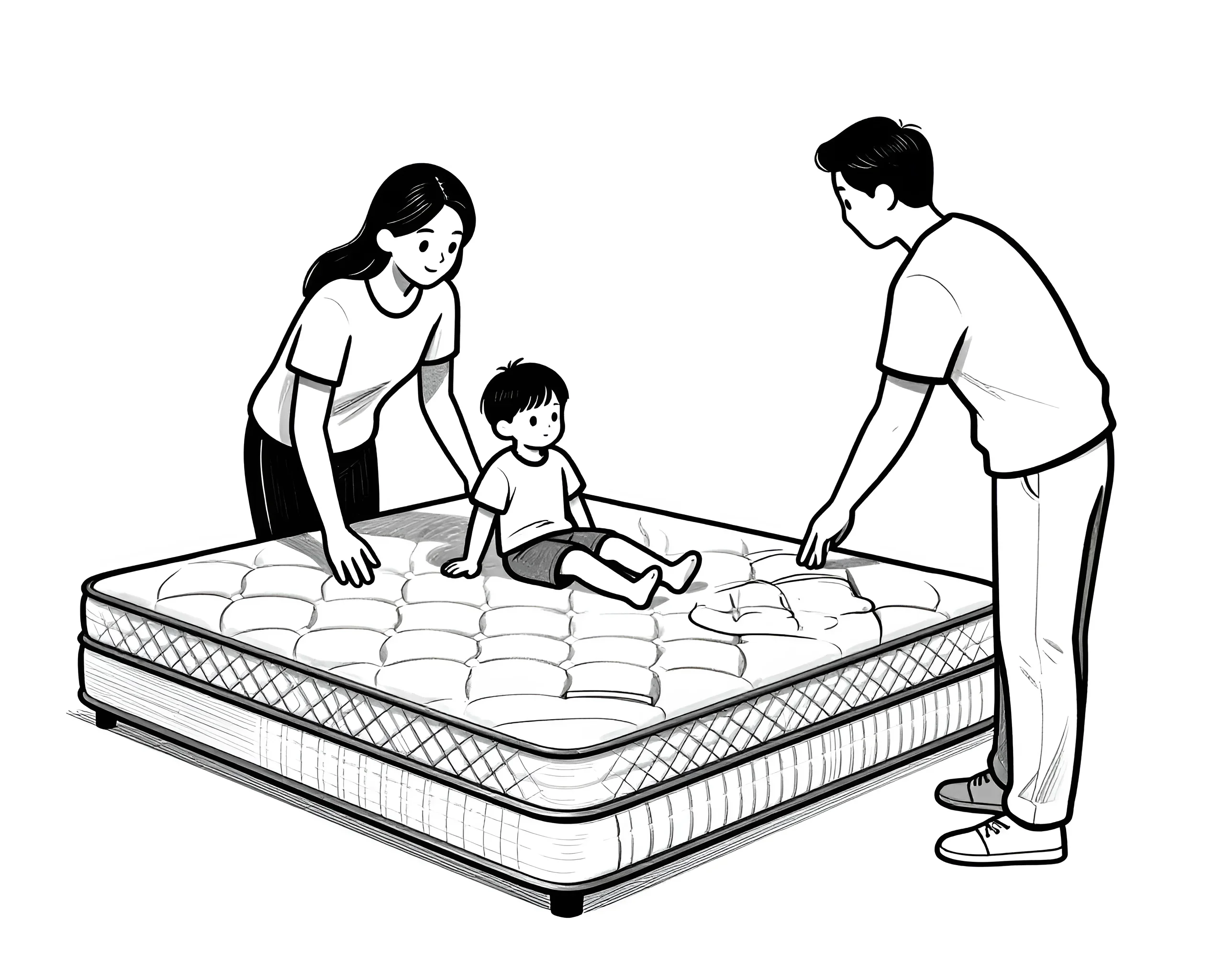
Does a child need an orthopedic mattress if they don't have scoliosis? No, a special "orthopedic" mattress (with a wavy surface, individual blocks) is not needed. A quality mattress with the correct firmness is sufficient. The term "orthopedic" in the children's segment is often used by marketers to increase the price. In reality, the orthopedic effect is provided by the correct combination of firm and soft layers, not by "waves" on the surface.
How often should a child's mattress be changed? On average: mattress for a newborn (thin, coconut) — 1–2 years; mattress for 1–3 years — 3–4 years; mattress for 3–7 years — 4–5 years; mattress for 7–12 years — 5–7 years; mattress for 12+ — 7–10 years. But the terms depend on quality and load. Signs that the mattress needs to be changed: sagging more than 2 cm, spring creaking, filler clumping, stains that do not wash off, smell that does not go away after ventilation.
Can an adult mattress be used for a child? Theoretically yes, if the size fits and the firmness is correct. But in practice, adult mattresses are often too soft for children under 7 years old, and the cover is not designed for frequent washing at high temperatures. If you take an adult mattress for a teenager 14+ — this is acceptable. For younger children — a specialized children's model is better.
Is a mattress pad needed? Yes, for children under 7 years old — mandatory. A mattress pad protects the mattress from moisture, stains, dust, and mites. Choose a mattress pad made of natural fabrics (cotton, bamboo) or a membrane (breathable, but moisture-proof). Thickness — 1–2 cm. Washing — at 60 °C, at least once every 2 weeks. For teenagers 12+, a mattress pad is desirable, but not mandatory if there is clean bedding and the mattress is in a cover.
How to store a mattress correctly if the child is moving or the bed is changing? The mattress should lie horizontally, on a flat surface, in a dry place with good ventilation. Do not store the mattress in a rolled-up form (even if it is "rollable" — this is marketing, after rolling, the filler structure is damaged). Do not store in direct sunlight (latex and PU foam degrade). Do not put heavy objects on the mattress. Before storing — ventilate for 2–3 days, make sure there is no moisture.


