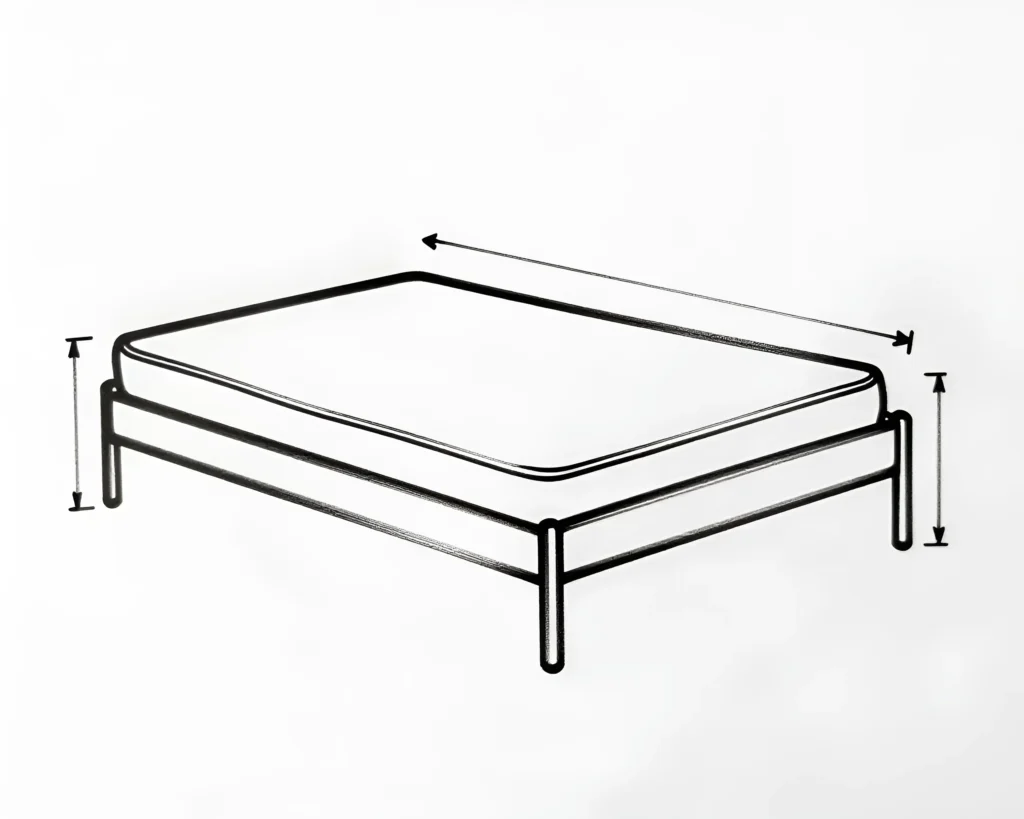
Buying a mattress is not just about choosing a "soft" or "firm" sleeping spot. It is a precise calculation where millimeters matter just as much as the filling. One incorrectly taken measurement, and you will end up with a mattress that keeps sliding off the base, leaves gaps where your shoulder falls through, or sticks out from the frame and snags your bedding. The good news is that choosing the right mattress size for your bed is easier than it seems if you know a few key rules and have a tape measure on hand. In this article, we will break everything down: from standard dimensions to corner designs, from headboard height to the five mistakes even experienced buyers make. After reading this, you will be able to go to a store or open an online catalog with a clear understanding of exactly what size you need.
Standard mattress sizes: a table and how not to get confused
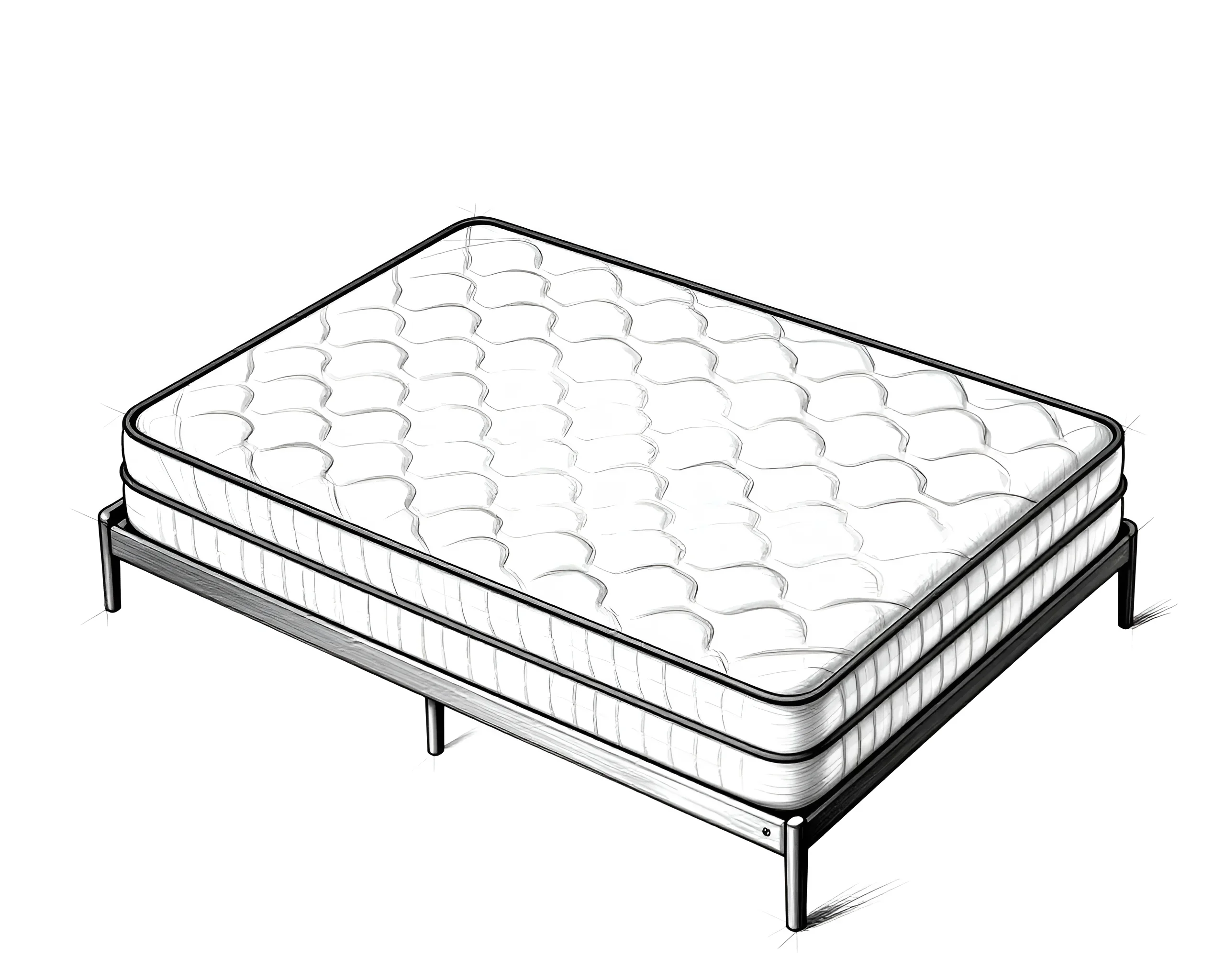
The mattress market has long been standardized, and that is a good thing: you won't have to search for "your" size in an endless list. Manufacturers produce items in strictly defined dimensions that are tied to typical beds. Let's break down the main categories so you understand which option fits your needs.
Single mattresses are the choice for children, teenagers, and adults sleeping alone. The most common sizes here are 90×190 cm and 120×190 cm. The first option saves space and fits perfectly into compact bedrooms, while the second gives more freedom for sleep, especially if you like to sprawl out. For younger children, there are shortened and narrowed models: 60×120 cm, 70×190 cm, 80×190 cm. Such mattresses often come with cribs and growth systems.
Double mattresses start at 140×190 cm. This is the minimum comfortable size for a couple, where each sleeper gets about 70 cm of width. Next come 160×190 cm, 180×190 cm, and 200×200 cm. The greater the width, the less you will "feel" each other while sleeping. If one of the partners is large or likes to toss and turn, it is better to look at 180×190 and above. For large family bedrooms and master bedrooms in country houses, sizes 200×200 cm and 200×220 cm are popular — this is a full-fledged "king-size" sleeping zone.
To avoid getting confused by the numbers, here is a summary table of the main sizes and their typical applications:
- 60×120 cm — for cribs, nurseries, changing tables with a mattress.
- 70×190 cm — for children's beds, teenage sleeping spots.
- 80×190 cm — for children's and teenage beds, compact single beds.
- 90×190 cm — classic single mattress for adults and teenagers.
- 120×190 cm — extended single, comfortable for one person.
- 140×190 cm — minimum double, for small bedrooms.
- 160×190 cm — standard double, the most popular size.
- 180×190 cm — extended double, for couples who value space.
- 200×200 cm — large double, for spacious bedrooms.
- 200×220 cm — maximum standard size, for master bedrooms.
Pay attention to the length: most mattresses are produced with a length of 190 cm, but for tall people (height from 185–190 cm and above), manufacturers offer options with a length of 200 and even 210 cm. If you or your partner are taller than average, look for models with a length of 200 cm immediately — this will eliminate the feeling that your feet are "falling off" the edge.
Another nuance: in different countries and even among different manufacturers, permissible size deviations are 1–2 cm. This is normal and is taken into account during production. But if you are buying a mattress for a specific bed with a narrow frame, it is better to clarify the tolerance with the seller so that the product does not "shift" to the side and leave gaps.
How to measure your bed correctly: a step-by-step guide
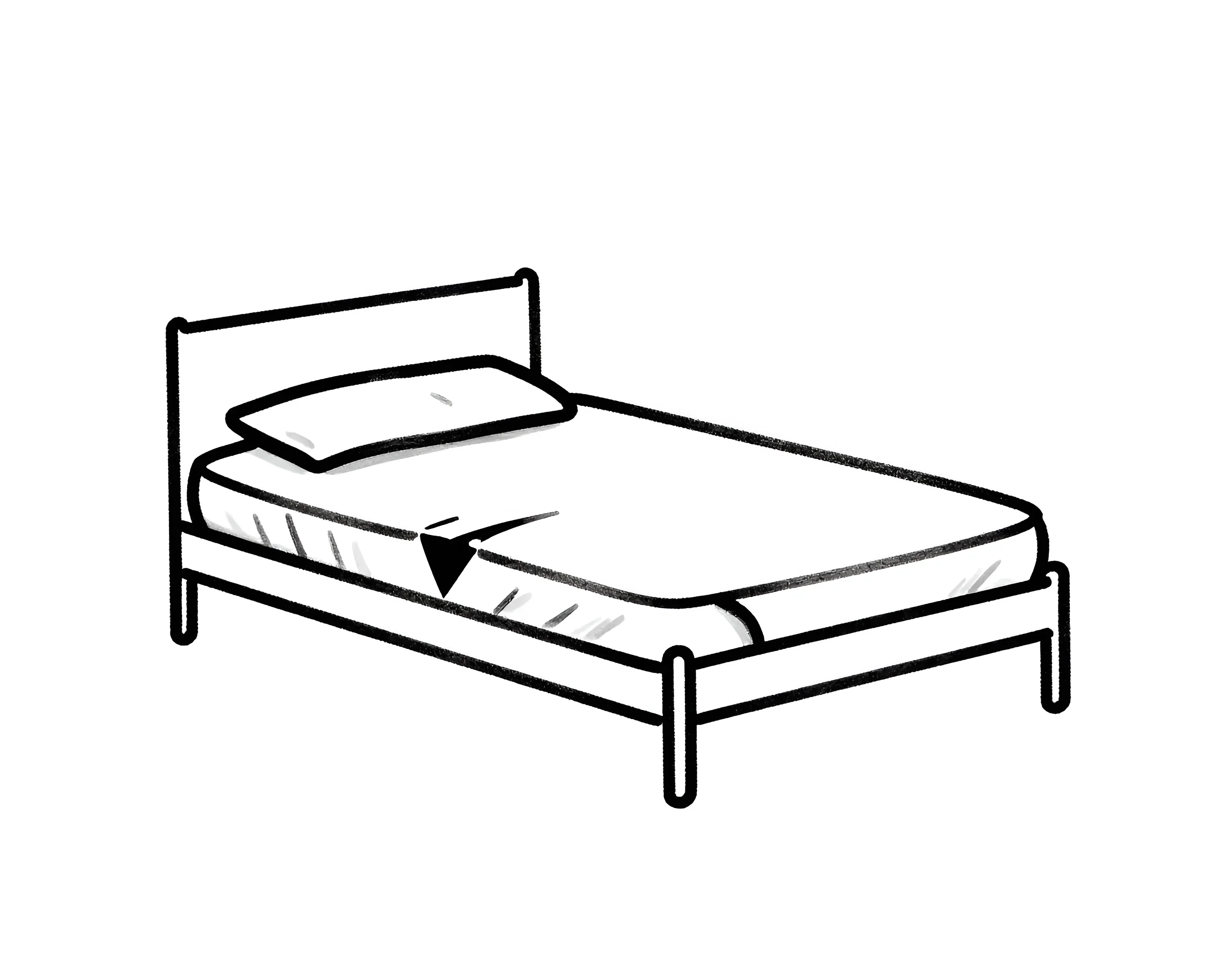
The most common question is: "Can I just take a tape measure and measure the bed?" You can, but with caveats. Many buyers measure the bed "from the top" when an old mattress, mattress pad, or sheet is on it. This is the main cause of errors. Let's go through the steps that guarantee an accurate result.
Step 1. Clear the sleeping area. Remove the old mattress, mattress pad, sheets, and blankets. You need to see the bare frame or bed base. If the bed has an orthopedic base, make sure all slats are in place and not sticking out.
Step 2. Measure the base, not the frame. This is critically important. A bed has an outer frame (sides, headboard, footboard) and an inner base on which the mattress is placed. The mattress should lie on the base, not on the frame. Therefore, measure the inner part: from the inner wall of one side to the inner wall of the other, and from the inner part of the headboard to the inner part of the footboard. If you measure the outer frame, the mattress will be 5–10 cm larger and will not fit in place.
Step 3. Measure at three points. A bed can be slightly skewed, especially if it is more than five years old. Measure the width at the headboard, in the middle, and at the footboard. Do the same with the length. If the numbers differ by more than 1 cm, take the smaller value — the mattress must fit into the narrowest spot.
Step 4. Consider edges and stoppers. Some beds have inner edges, stoppers, or trim that extend 2–5 cm inward. This reduces the actual sleeping area. If such elements exist, subtract them from the measurement. Otherwise, the mattress will press against the stoppers and deform over time.
Step 5. Add a tolerance. After all measurements, subtract 1–2 cm from the resulting size. This is a tolerance for material "settling" and for the fact that the mattress should not sit too tightly. If you got 160 cm in width, look for a mattress of 158–160 cm (depending on the manufacturer's permissible deviations). If the bed has a rigid frame without edges, the tolerance can be minimal — 1 cm.
Step 6. Write it down and double-check. Write down both sizes (width × length) and double-check after a few minutes. Errors in writing are a rare but occurring reason for buying the "wrong" mattress. Especially if you are measuring in the evening, tired, and in a hurry.
Practical tip: if you are buying a mattress online, place a sheet of paper on the bed and trace the outline of the base. This is a visual way to ensure you are measuring the right part, not the frame. It is also convenient to take a photo of the measurements on your phone — this way you won't lose the numbers when comparing options in the catalog.
Mattresses for non-standard and corner beds
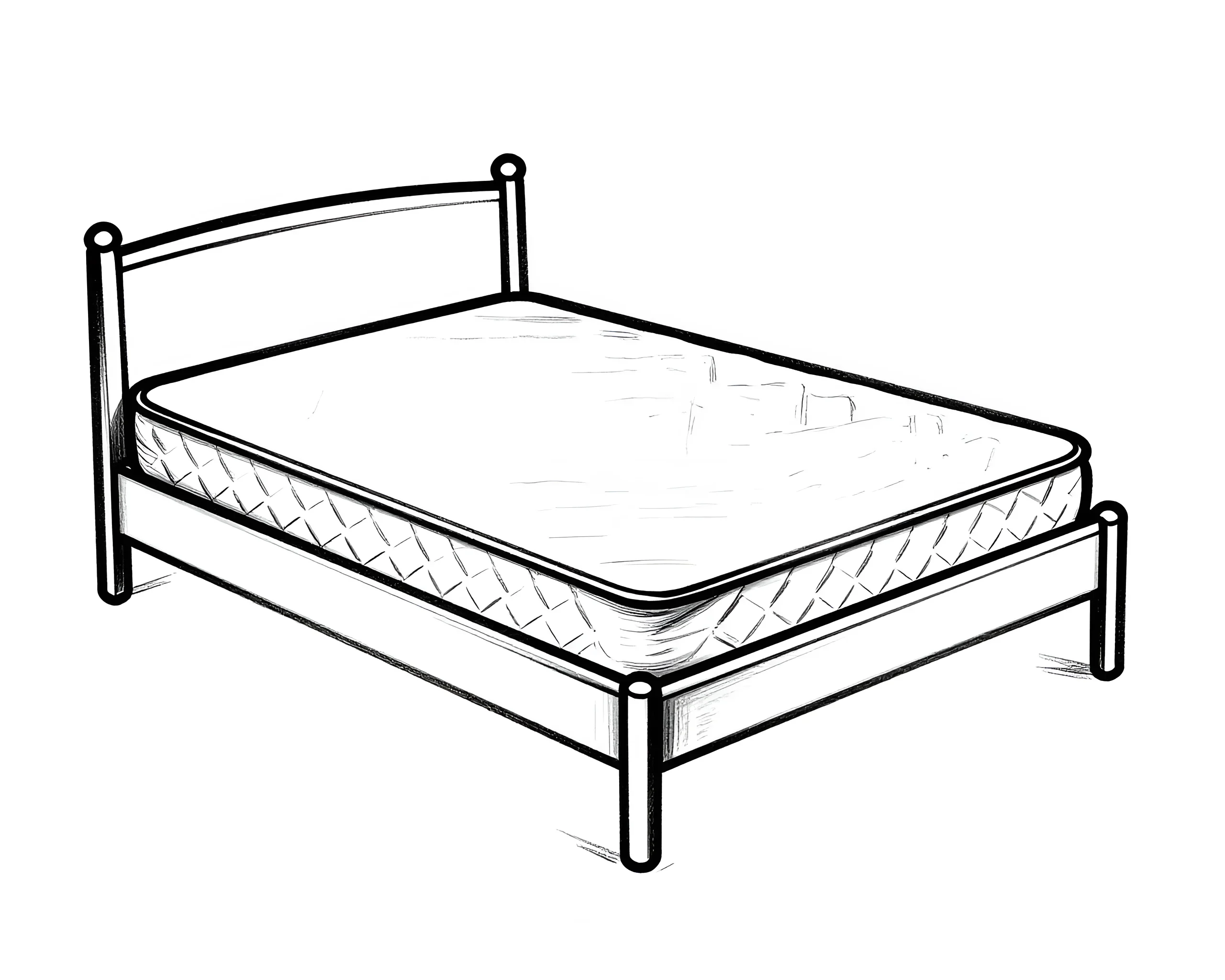
Not all beds have a rectangular shape. In modern interiors, corner, curved, modular, and asymmetric designs are increasingly common. Choosing a mattress for them is more difficult, but quite possible if you understand the principles.
Corner beds are designs where the sleeping area is "L" or "U" shaped. They are popular in small apartments where the bed also serves as a place for sitting or storage. For such beds, mattresses are usually ordered in a custom size. You measure each "leg" of the corner base separately, as well as the depth of the corner. Manufacturers working with custom orders will cut the mattress according to your outline. Important: with corner designs, the joint between the mattress parts should be at the corner, not in the middle of the sleeping area, otherwise there will be a "step" in the corner.
Modular beds consist of several sections that can be rearranged. In this case, mattresses are often made modular as well — from two or three parts that connect to each other. Each part has its own size, and when ordering, you need to specify the dimensions of each section separately. The connection is usually made with a zipper or magnetic fasteners so that the mattress does not separate during sleep.
Beds with a curved base are found in designer interiors. Here, the mattress is made according to a template: you make a pattern out of cardboard or thick paper, apply it to the base, and send it to the manufacturer. Such a mattress will cost more than a standard one, but it will exactly replicate the shape of the bed.
Convertible beds and folding mechanisms have their own features. The mattress for them must be flexible enough not to break when folded, and at the same time hold its shape when unfolded. The size of the mattress for a convertible is usually fixed and tied to a specific mechanism. When replacing a mattress in a convertible, it is important not only to measure the sleeping area but also to ensure that the new mattress will not interfere with the mechanism folding. Leave 1–2 cm of clearance in height if the mechanism has stoppers.
If your bed is non-standard but you don't want to order a custom-sized mattress, there is a compromise option: take the nearest standard size and use fasteners (elastic bands, zippers, magnets) so that the mattress does not slide. But this solution is only suitable for small deviations — up to 3–5 cm. If the difference is greater, the mattress will bulge, and the fasteners will not help.
Practical tip: when ordering a non-standard mattress, always ask the manufacturer to send a pattern or drawing for approval before production begins. This is free and allows you to catch an error before the product is sewn. After manufacturing, it is much more difficult to return or exchange a non-standard mattress than a standard one.
Mattress height: how to choose for the headboard and frame
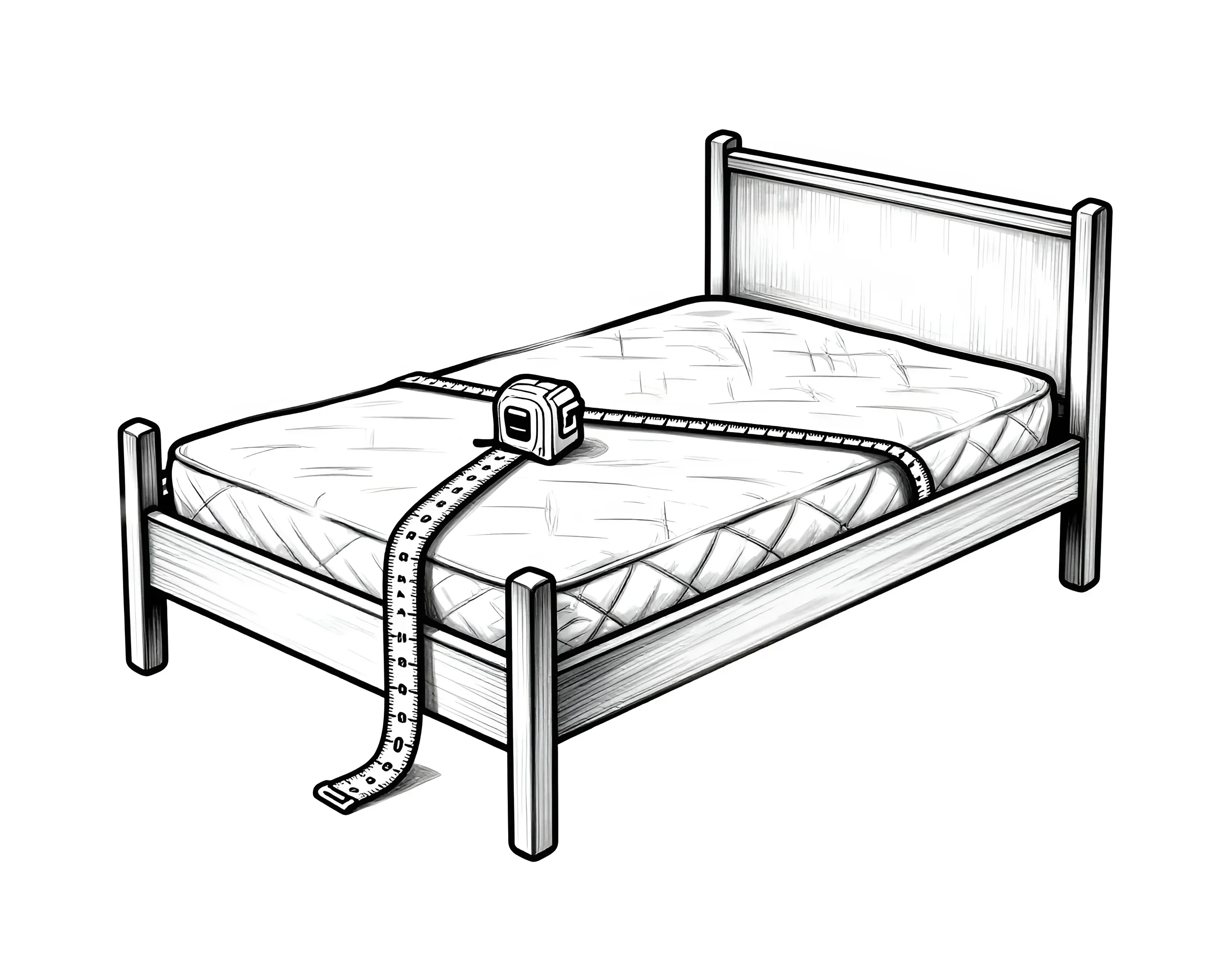
Mattress size is not just length and width. The height (thickness) of the mattress directly affects how it will look in the bed, how comfortable it will be to get up and lie down, and whether it will interfere with the operation of mechanisms. Let's break down how to choose the height.
Standard mattress height ranges from 15 to 25 cm. This is a range that suits most beds. Mattresses 15–18 cm high are considered low, 19–22 cm are medium, and 23–25 cm are high. Orthopedic and premium models can reach 30 cm or more, but they require a corresponding bed frame.
Choosing height for the headboard. The bed headboard is not only a decorative element but also a functional one: people hold onto it when getting up, lean on it while reading a book. If the mattress is too high, the headboard will be below the level of the sleeping area, and it will be uncomfortable to lean on it. If the mattress is too low, the headboard will be "high" and will look visually disharmonious. The optimal ratio: the top edge of the mattress should be 5–15 cm below the top edge of the headboard. If the headboard is low (up to 80 cm from the floor), choose a mattress no more than 20 cm high. If the headboard is high (from 100 cm), you can take a 25–30 cm mattress.
Choosing height for the bed frame. The bed frame has a certain depth — the distance from the floor to the level where the base lies. If the mattress is too high, it will protrude from the frame, and the bedding will catch on its edges. If the mattress is too low, it will "fall" into the frame, and when getting up, you will hit the base. Ideally, the mattress should protrude from the frame by 2–5 cm. This is enough to tuck in a sheet, and little enough not to interfere.
Height and type of base. If the bed has an orthopedic base with slats, the mattress must be high enough so that the slats do not "poke through" the filling. The minimum height for a slat base is 18 cm. For a solid base (plywood, chipboard), you can take a mattress from 15 cm. If the base has a spring block or additional shock absorbers, consider their height: the mattress should lie on them, not fall between them.
Height and height of the sleeper. For tall people (from 185 cm), a mattress 22–25 cm high is more comfortable, as they will not hit the headboard when getting up. For short people (up to 165 cm), a 15–18 cm mattress is sufficient — a high bed will be uncomfortable for them. If people of different heights sleep as a couple, focus on the taller one.
Practical tip: before buying a mattress, measure the height of the bed from the floor to the top edge of the headboard and to the level of the base. Then add the desired mattress height to the base height and see where the top edge will be relative to the headboard. This is a simple calculation that will save you from many disappointments.
Top 5 mistakes when choosing a mattress size
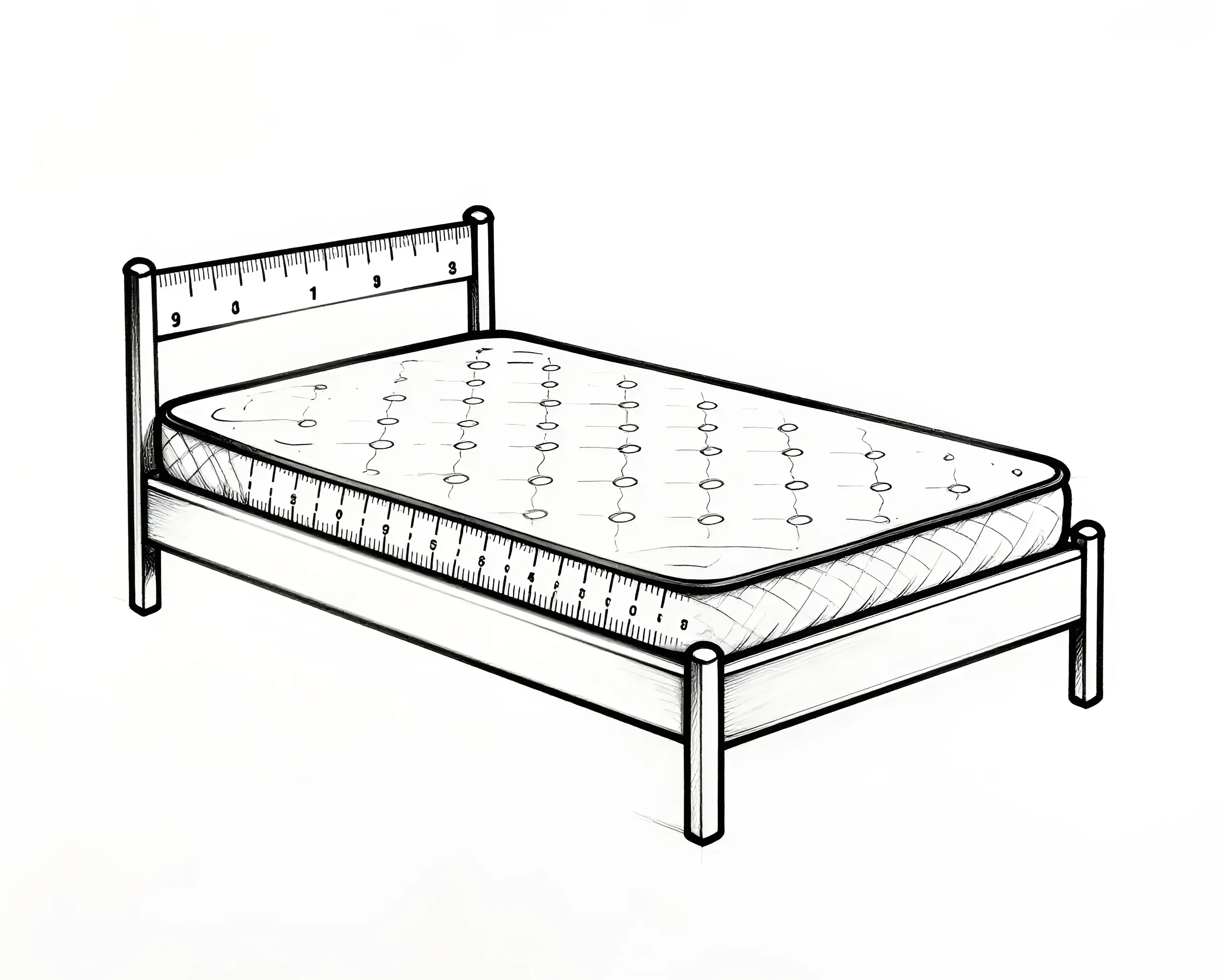
Even with a careful approach, buyers make typical mistakes that lead to the mattress not fitting. Let's break down the five most frequent ones so you can avoid them.
Mistake 1: Measuring the bed with a mattress and bedding. This is the most common mistake. People measure the bed "as is," without removing the old mattress, mattress pad, and sheet. As a result, the size is 5–15 cm larger than the real one. The new mattress does not fit in place, and you have to find somewhere to put it. Always remove everything lying on the base and measure the bare frame.
Mistake 2: Measuring the outer frame instead of the base. A bed has an outer frame and an inner base. The mattress is placed on the base, so you need to measure it. If you measure the outer frame, the mattress will be larger by the thickness of the sides (usually 5–10 cm on each side). As a result, it will not fit into the bed or will stick out.
Mistake 3: Buying "by eye" without measuring. Some buyers come to the store, look at the bed in the catalog, and take the "same" size. But beds of the same models can differ in dimensions due to different batches, manufacturers, or even because one bed has edges and another does not. Always measure your specific bed, and do not rely on the model.
Mistake 4: Ignoring tolerance. Mattresses have a tolerance of 1–2 cm, and this is normal. But if you take a mattress "tight" without considering the tolerance, it may not fit in a narrow space. Always subtract 1–2 cm from the measurement so that the mattress lies freely on the base. If the bed has a rigid frame without edges, the tolerance can be minimal, but still consider it.
Mistake 5: Not considering mattress height. People often choose a mattress by length and width, forgetting about height. As a result, the mattress turns out to be too high for the headboard or too low for the frame. This is not critical for sleep, but it affects comfort and appearance. Always consider the height when choosing, especially if you have a low or high headboard.
Bonus mistake, which is made less often but is also worth mentioning: buying a mattress "for growth." Some take a mattress slightly larger than needed, "just in case." But a mattress does not grow or shrink: if it is larger, it will bulge, and the fasteners will not help. Take the exact size considering the tolerance, and you will not regret it.
Frequently asked questions about mattress size
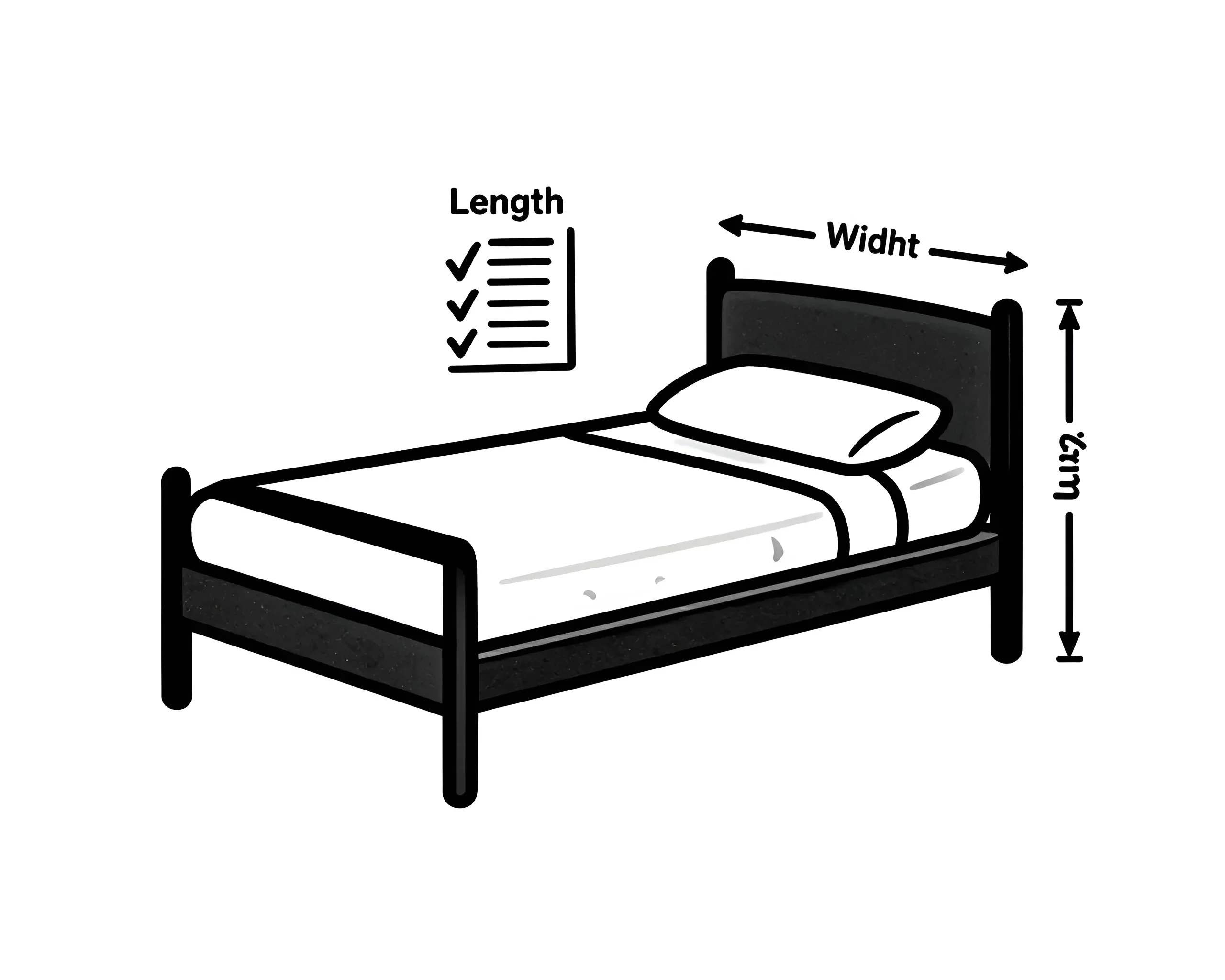
Can I use a mattress smaller than the bed base? You can, but it is undesirable. If the mattress is 3–5 cm smaller than the base, it will slide, and a gap will be visible underneath, into which a shoulder or elbow can fall. If the difference is more than 5 cm, the mattress will look untidy and may deform from constant shifting. It is better to choose a mattress of the exact size or order a non-standard one.
What to do if the mattress is 1–2 cm larger than the base? This is a permissible tolerance, and the mattress should fit in place. If it does not fit, check if there are any protruding elements on the base (slats, stoppers, trim). If the base is flat and the mattress still does not fit, perhaps you measured the outer frame, not the base. Double-check the measurements.
Can I cut the mattress to make it fit? It is not recommended. A mattress has a multi-layered structure (filler, springs, cover), and when cut, it loses its shape, the filler may come out, and the cover will tear. If the mattress does not fit, it is better to exchange it or order a new one. Some manufacturers accept mattresses for exchange within 14–30 days if they have not been used.
What mattress size to choose for a 160×200 bed? If your bed has a 160×200 cm base, look for a 160×200 cm mattress considering a 1–2 cm tolerance. That is, the actual size of the mattress can be 158–160 cm in width and 198–200 cm in length. This is normal. If the bed has edges, subtract them from the measurement.
Can I use two single mattresses instead of one double? You can, and many do. Two 90×190 cm mattresses placed side by side provide a 180×190 cm sleeping area. This is convenient if the bed has no edges and the base allows it. But there will be a gap between the mattresses into which a shoulder can fall. To avoid this, use a connecting tape or a transition pillow. If the bed has edges, two mattresses may not fit side by side, and in this case, it is better to take one double.
How to know if a mattress is expired or deformed? A mattress is deformed if it has sagged by more than 2–3 cm, if the filler is coming out, if the springs have burst and are sticking out. In this case, the mattress needs to be replaced. The size of the new mattress must correspond to the bed base, so repeat the measurements before buying, especially if the bed is old and may have deformed.
Interesting facts about mattresses and their sizes
Let's finish the article with a few facts that will show that behind the familiar mattress size numbers lies a long history and non-obvious solutions.
The first "mattresses" appeared in Ancient Egypt: people laid broken branches covered with fabric on wooden frames. The size of such "mattresses" was determined by the size of the frame, and, just like now, people tried to ensure that the filler did not stick out over the edges. That is, the problem of size selection has existed for over three thousand years.
The standard size of 160×200 cm, which is considered the "golden mean" for double beds today, appeared in Europe at the beginning of the 20th century. Before that, beds were significantly narrower — 120–140 cm, because people slept "on their side" or "curled up," not sprawled out. The expansion of sizes is connected with changes in everyday life: people began to sleep longer, change positions more often, and they needed more space.
In Japan, thin futon mattresses 5–10 cm high, which are laid on the floor, are still popular. This is radically different from the European tradition of high mattresses on beds. If you have ever planned a move to Japan or just want to try sleeping on the floor, remember: the size of the mattress in this case is determined not by the bed, but by the floor area.
The largest mattress in the world was created in 2012 in Germany: its dimensions were 12×12 meters, and more than 100 people could sleep on it at the same time. This, of course, is not a household mattress, but it clearly shows that size is not just about comfort, but also about marketing and records.
An interesting fact from production: mattresses are cut on automatic lines with millimeter precision, but a 1–2 cm tolerance remains. This is because fillers (foam, latex, springs) have different density and shrinkage, and it is impossible to guarantee absolute precision during production. Therefore, tolerance is not a "flaw," but a technological necessity.
Another fact: mattress size affects how it is packaged. Modern mattresses are often sold rolled up in vacuum packaging. At the same time, a 160×200 cm mattress in a rolled-up state takes up as much space as a 90×190 cm mattress. This is convenient for delivery, but upon unpacking, the mattress needs 24–72 hours to fully expand and take its working shape. If you are ordering a mattress online, consider this time: do not sleep on it on the first day, let it "open up."
I hope this article has helped you understand mattress sizes and avoid typical mistakes. Remember: accurate measurement, considering tolerance and height — these are the three pillars on which the right choice stands. Take your measurements calmly, with a tape measure and a notebook, double-check the numbers, and your new mattress will serve you for a long time and comfortably. Sweet dreams!


