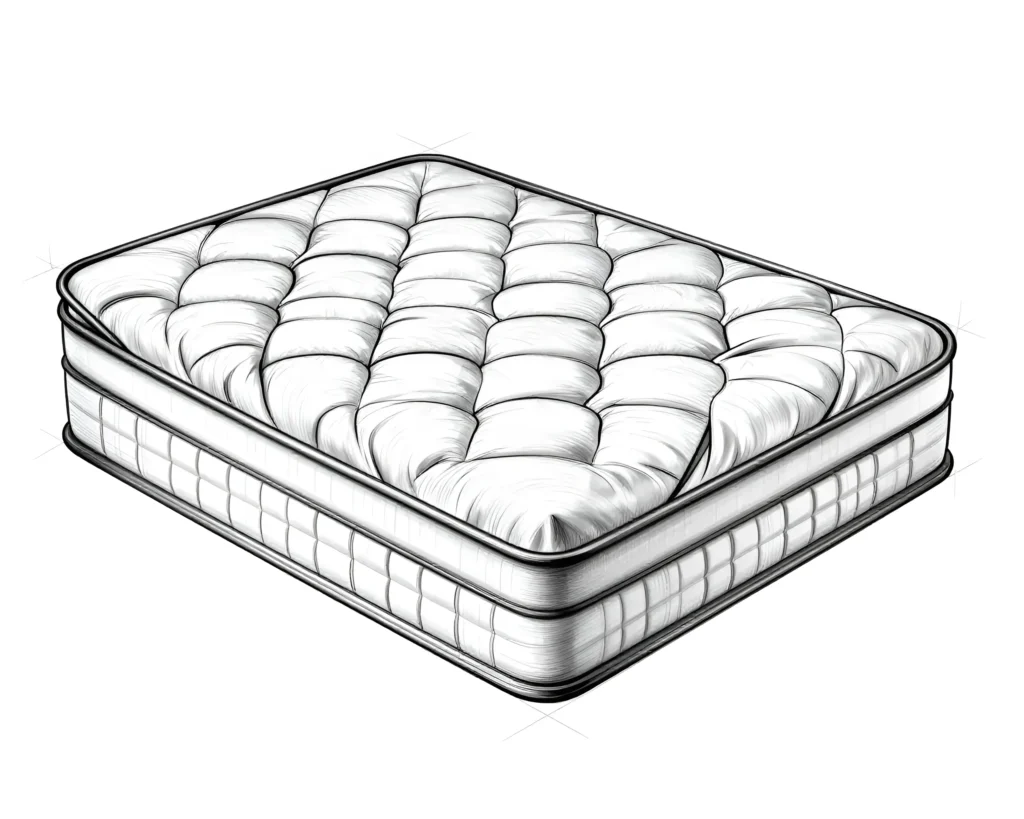
Have you ever woken up feeling like you slept on a hard board, even though you have a decent mattress underneath? Or, conversely, did you sink into the feathers so much that your back resembled a question mark by morning? In both cases, the solution might be simpler than it seems and doesn't necessarily involve buying a new mattress. We are talking about a topper — a thin layer of comfort that turns a "so-so" sleeping place into one you want to fall asleep on. In this article, we will break down exactly what a topper is, in what situations it really saves the day, and how not to waste time on a purchase that turns out to be unnecessary.
What is a topper and how does it differ from a mattress and a mattress protector
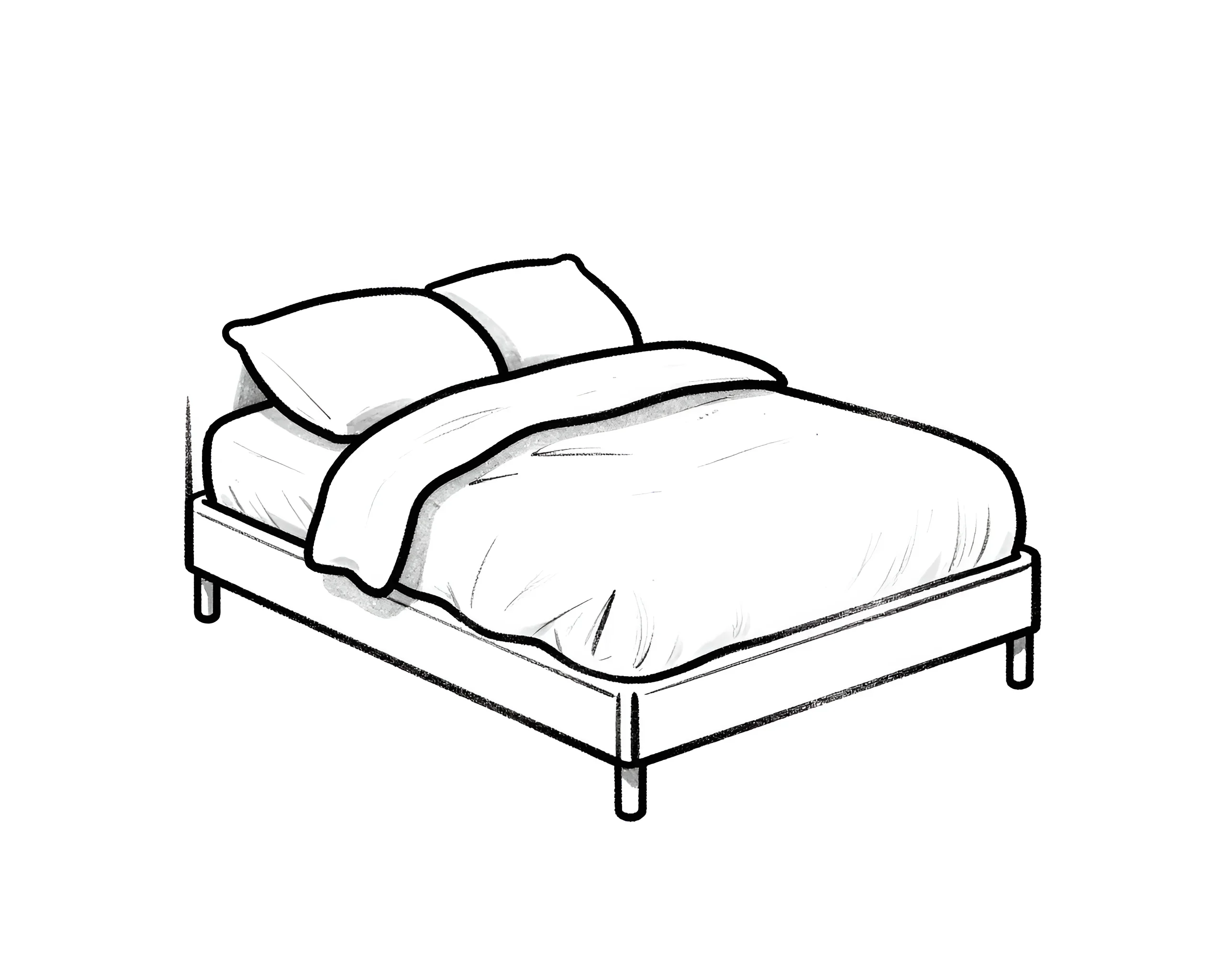
A topper (from the English topper — "top layer") is a thin mattress placed on top of the main sleeping area. Its thickness usually varies from 2 to 10 cm, whereas a full-fledged mattress has a height of 15 to 30 cm. Essentially, a topper acts as a "comfort layer": it does not replace the mattress but complements it, smoothing out irregularities, adding softness, or, conversely, firmness.
The main thing people confuse in everyday life is three products that are similar in name but fundamentally different. Let's break it down so you never confuse them again in a store or when ordering.
- Mattress — an independent product for sleeping. It has a height of 15 cm or more, bears the load, and provides support for the spine. It is placed on a base (frame, slat base, floor) and is used as the main element of the sleeping area.
- Topper — an additional layer 2–10 cm thick. It is not intended for use as the sole sleeping element (with rare exceptions, for example, on a floor base). Its task is to change the feel of an existing mattress: to soften, strengthen, add orthopedic support, or simply "tighten up" an old mattress.
- Mattress protector — a thin layer (usually 1–3 cm) that protects the mattress from moisture, dust, and mechanical damage. It may contain a small layer of soft filler, but its primary function is protective, not orthopedic. A mattress protector does not change the firmness of sleep as significantly as a topper.
In short: a mattress is the foundation, a topper is a "repair" over the foundation, and a mattress protector is the "casing" that protects everything else. You buy a topper when you want to change the feel of your sleep. A mattress protector is for when you want to extend the life of your mattress and protect it from stains and sweat.
Another important nuance: a topper can be used on a sofa, on the floor, and on a slat base. In this, it is more versatile than a mattress, which requires a full-fledged base. But if you put a topper on the floor, choose models at least 5 cm thick, otherwise the hardness of the floor will be felt too clearly.
Main types of toppers: materials and their features
The filler determines everything: firmness, thermoregulation, durability, and the feel when lying down. Let's go through the main materials you will encounter in stores and on the mebeltops.com website.
Polyurethane foam (PU foam) — the most common and affordable material. It comes in regular and memory foam versions. Regular PU foam is soft, resilient, and holds its shape well. Density varies from 20 to 40 kg/m³. The higher the density, the longer the topper will not sag and the better it will support the body. For a topper, the optimal density is 30–35 kg/m³. Memory foam reacts to body temperature: under load, it becomes softer, and after the load is removed, it slowly returns to its original state. This gives a "hugging" sensation that those who like a soft, "warm" sleep enjoy. The downside of memory foam is that it accumulates heat, so for hot climates or for those who sweat in their sleep, it is better to choose models with perforation or combined ones (memory foam + regular PU foam).
Latex — a natural or synthetic material obtained from hevea sap or based on polyurethane with the addition of latex fibers. Latex toppers are resilient, "breathable," and hypoallergenic. They do not accumulate heat like memory foam and last longer — with proper care, a latex topper will last 10–15 years. The downside is the price. Latex is always more expensive than PU foam. Also, latex has a characteristic odor in the first days after purchase, which dissipates in 2–3 days with ventilation.
Coconut coir — coconut palm fibers pressed into a mat. Coir is hard, so toppers with it are used to increase firmness. If your mattress is too soft and you sink into it, a 2–3 cm layer of coir on top will solve the problem. Coir is not afraid of moisture, does not rot, and does not attract dust mites. But it does not provide softness — this is a "hard" version of a topper.
Felt and wool — natural materials that add softness and warmth. Woolen toppers absorb moisture well and wick it away, creating a dry microclimate. They are suitable for those who sleep in a cool room and want to add a "warm" layer. The thickness of such toppers is usually 3–5 cm.
Combined toppers — a combination of two or more materials. For example, a layer of coir at the bottom for firmness, and memory foam on top for comfort. Or latex + PU foam. Combined models allow you to customize the feel "for yourself" and often give better results than single-layer ones.
| Material | Firmness | Thermoregulation | Service life | Who is it suitable for |
|---|---|---|---|---|
| PU foam (regular) | Medium | Medium | 5–8 years | Universal option |
| Memory foam | Medium, adaptive | Accumulates heat | 7–10 years | Lovers of soft sleep, low weight |
| Latex | Medium-hard, resilient | Good, "breathes" | 10–15 years | Those who sweat, allergy sufferers |
| Coconut coir | High | Excellent | 10+ years | Those who need a hard sleep |
| Wool / felt | Low | Warm | 5–7 years | For cool rooms |
When a topper is really needed: 5 life scenarios

A topper is not a whim and not a "waste of money." In five situations, it solves the problem better than buying a new mattress and costs significantly less.
Scenario 1: The mattress has served for 7–10 years and has started to "get tired." You wake up with lower back pain, feel springs or sags. Replacing the mattress is expensive. A 5–7 cm topper with a resilient filler (latex or PU foam with a density of 30+ kg/m³) will smooth out sags, add support, and bring back the feeling of a "new" mattress. This is the most frequent and most justified scenario.
Scenario 2: The mattress is too hard. You bought an orthopedic mattress, and now your back "creaks" in the morning. A 3–5 cm topper made of memory foam or soft latex on top will soften the surface without depriving the mattress of its supporting properties. You will get comfort without losing the orthopedic function.
Scenario 3: The mattress is too soft. You sink in, your back "floats." A topper with coconut coir or hard latex 2–4 cm on top will add resilience and prevent the body from sinking. This is especially relevant for people with a higher weight, for whom standard mattresses do not provide sufficient support.
Scenario 4: Sofa as the main sleeping place. You live in an apartment where a sofa bed or folding mechanism is the only place to sleep. The mechanism unfolds, but the surface remains uneven, with seams and joints. A 5–7 cm topper turns the sofa into a full-fledged sleeping place. This is perhaps the most "saving" scenario: a topper literally changes the quality of life.
Scenario 5: Guest space or teenager's room. You have a folding chair, a floor space, or an old mattress that guests sleep on. A 3–5 cm topper makes this place decent, not just "well, bear it for one night." For a teenager who is growing and whose support needs are changing, a topper is a way to adjust the sleeping place without buying a new mattress every two years.
Important: a topper is not needed if you have a new, high-quality mattress that suits you. In this case, it will be superfluous and may even disrupt the correct geometry of sleep by adding an unnecessary layer.
How to choose a topper: thickness, density, and firmness
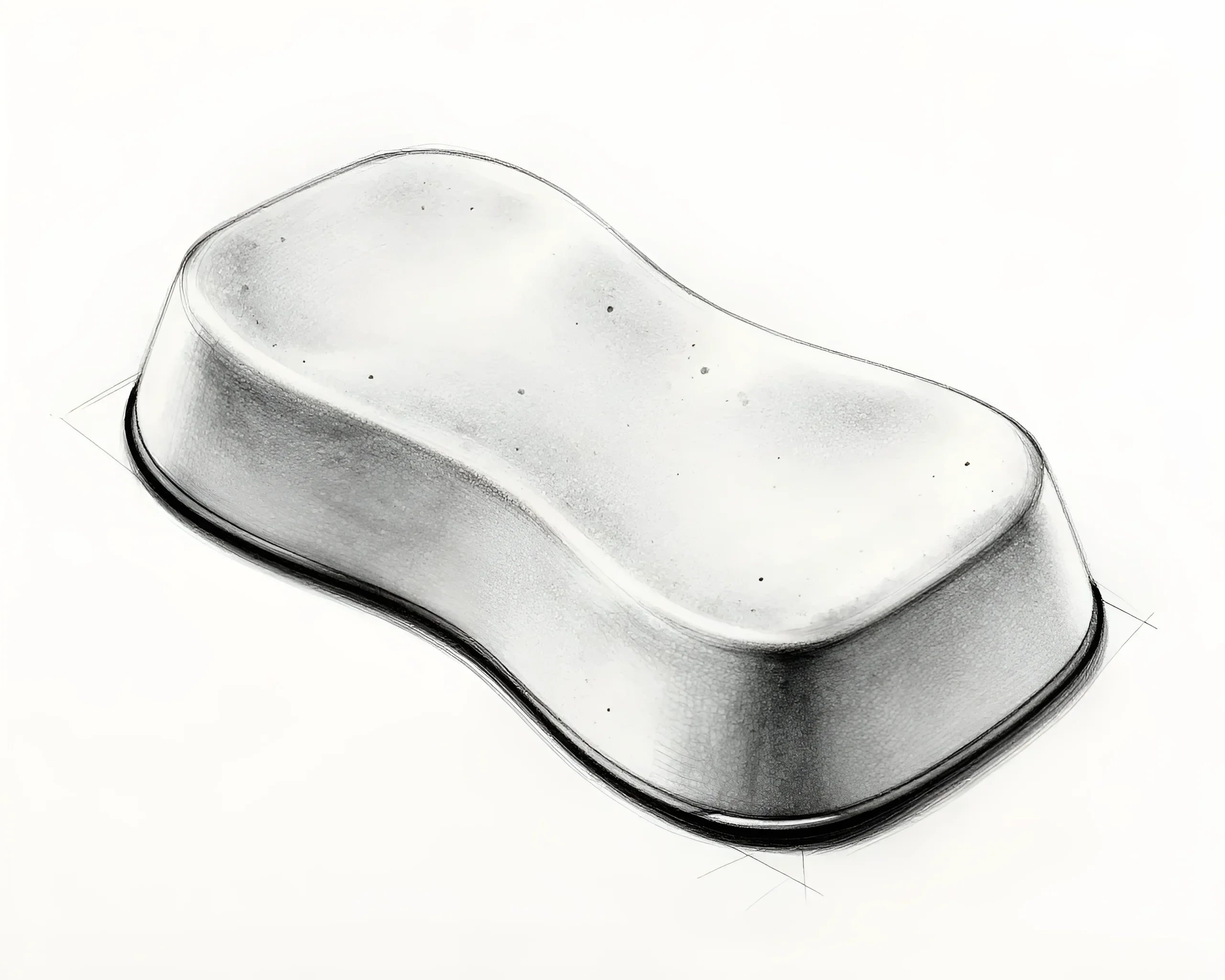
Three parameters determine whether the topper will work for you or become a dust bag under the bed. Let's break down each one.
Thickness. This is the first question the consultant asks, and it is the most important one. Here is a guide:
- 2–3 cm — light adjustment. Suitable if the mattress is generally good, but you want to soften or strengthen it slightly. On a sofa, this thickness is not enough — the joints of the mechanism will be felt.
- 4–5 cm — universal "golden" size. Smooths out most irregularities, adds noticeable comfort. Good for a sofa, for an old mattress, for a guest place.
- 6–10 cm — full-fledged "underlay." Used on the floor, on a slat base without a mattress, on very old mattresses with serious sags. In terms of feel, it approaches a thin mattress.
Filler density. For polyurethane foam, this is an indicator in kg/m³. The higher it is, the longer the topper will not deform. For a topper that will lie on a sofa and be subjected to daily load, take a density of 30 kg/m³ or more. For a guest space where the topper is used once a week, 25 kg/m³ is sufficient. For latex, density is usually not indicated in the same units — resilience and thickness are more important here.
Firmness. Toppers are divided into categories: soft (S), medium-soft (MS), medium (M), medium-hard (MH), hard (H). How to choose?
- If the mattress is hard and you want to soften it — take a soft or medium-soft topper (S, MS).
- If the mattress is soft and you sink in — take a hard (H) or medium-hard (MH) topper.
- If the goal is simply to add an "airy" layer of comfort to a normal mattress — a medium (M) one will do.
Practical advice: if you weigh less than 60 kg, softer options will suit you. If more than 90 kg — aim for hard and medium-hard, otherwise the topper will quickly sag and lose its shape. For couples with a large weight difference (e.g., 55 and 95 kg), it is better to take a medium-hard topper — it will be a compromise for both.
Another point: pay attention to the cover. It should be removable with a zipper so it can be washed. The cover material is cotton, bamboo, or microfiber. A bamboo cover has antibacterial properties and wicks moisture well. Cotton breathes but deforms faster. Microfiber is practical but less "breathable."
Sizes and dimensions: how to match a topper to your bed
There is no room for "approximately" and "by eye" here. The topper must completely cover the sleeping surface, otherwise there will be a cold mattress or even a base at the edges, and the whole point of the purchase will be lost. Here are the standard sizes you will find on sale:
- 90 × 190 cm — single bed, single sofa bed
- 90 × 200 cm — single, extended
- 120 × 190 cm — one-and-a-half (most popular size)
- 120 × 200 cm — one-and-a-half, extended
- 140 × 190 cm — euro single
- 160 × 190 cm — double
- 160 × 200 cm — double, extended
- 180 × 190 cm — wide double
- 180 × 200 cm — wide double, extended
- 200 × 200 cm — king size
How to measure? Remove all sheets, mattress protectors, blankets. Measure the length and width of the mattress (or sofa in the unfolded state) from edge to edge. Do not focus on the size of the frame or the sofa body — the sleeping surface may be 2–5 cm narrower. If your size is non-standard (e.g., 125 × 195 cm), look for a topper that can be trimmed. PU foam and latex can be cut with a utility knife or a special mattress knife. But note: after trimming, the product warranty is usually voided.
For a sofa bed, there is a nuance: after unfolding, the sleeping surface may have a slight bend or "step" at the fold. A topper 5 cm thick or more bends enough to lie flat. A 2–3 cm topper on such a sofa will "break" at the fold, and you will feel the corner. Therefore, for sofa beds, at least 5 cm.
If the topper will lie on the floor, keep in mind that it should be no thinner than 5 cm, otherwise the hardness of the floor (especially tile or concrete) will be felt like a "punishment." On a wooden floor, 4 cm is already enough.
Care and maintenance: how to extend the life of a topper
A topper is a product that comes into direct contact with the body or through a thin sheet. This means it absorbs moisture, sweat, and skin oils. Without care, any topper, even the most expensive one, will start to "smell" and lose its properties in 2–3 years. Here is what to do.
Removable cover. Wash it once every 1–2 months at 30–40 °C. Do not use chlorine bleach — it destroys cotton and bamboo fibers. Dry the cover spread out, not on a radiator (overheating deforms the fabric).
The topper itself. Most toppers cannot be washed whole. PU foam and latex are afraid of prolonged contact with water. What to do if soiled: spot-treat the stain with a solution of water and a small amount of liquid soap or a special mattress cleaner. Wipe with a damp (not wet!) cloth, let it dry completely — at least 6–8 hours, preferably a day. Do not dry with a hairdryer on a hot setting and do not expose to direct sunlight — ultraviolet light destroys PU foam and latex.
Ventilation. Every 2–3 weeks, remove the topper, remake the bed, and let the topper "breathe" for 2–3 hours. If possible, take it out to the balcony or a well-ventilated room. This prevents moisture accumulation and the development of dust mites.
Rotation. If the topper is double-sided (the same surface on both sides), turn it over every 2–3 months. If it is single-sided — at least rotate it head-to-foot every 2 months. This distributes the load evenly and prevents local sags.
Moisture protection. Put a moisture-permeable but waterproof sheet or a special cover under the topper (between it and the mattress). This will extend the life of both the topper and the mattress. Especially relevant for children and those who sleep without a sheet.
Storage. If the topper is not used (e.g., seasonal guest), store it spread out, on its side, or vertically. Do not fold it in half and do not store it rolled up for longer than a couple of weeks — creases remain in PU foam and latex that do not smooth out completely. Store in a dry place, not on a balcony in the rain, and not in a garage with temperature fluctuations.
TOP-5 usage scenarios: from sofa to guest room

Let's be more specific: how a topper fits into real life and what exactly it does in each situation.
1. Sofa bed in the living room. You work from home, sleep on the sofa on weekdays, and unfold it for guests on weekends. A 5–7 cm topper made of PU foam with a density of 30–35 kg/m³ with a bamboo cover. You remove it at night when the sofa is used as a seating area, or leave it if the sofa is your main sleeping place. Result: an even, soft, "mattress-like" surface instead of seams and mechanism springs. Your back stops hurting by morning.
2. Old mattress in the bedroom. The mattress is 9 years old, a sag has appeared in the center, springs are poking out at the edges. The budget for a new mattress is only in six months. You put a 7 cm topper made of combined filler (latex + PU foam) on top. The feeling of sagging will disappear, and resilience will appear. You "buy" yourself six months to a year while saving for a new mattress, and you sleep normally in the meantime.
3. Guest room with a folding chair. You have a chair-bed that unfolds into a 70 × 190 cm sleeping place. For an adult, it is cramped and hard. A 4–5 cm topper (adjusted to size) makes it suitable for sleeping. The guest will not suffer, and you will not feel awkward. Plus: the topper is removed, and the chair becomes a chair again.
4. Teenager's room. The child is growing, their old mattress no longer provides the necessary support. Buying a new mattress for 2–3 years is not cost-effective. A 5 cm medium-firm topper on the old mattress solves the problem. When the teenager grows up and a different level of support is needed, you change the topper, not the mattress.
5. Floor space / feng shui / minimalism. You don't like beds, you sleep on the floor or on a thin base. An 8–10 cm topper made of latex or dense PU foam on a carpet or wooden decking is a full-fledged sleeping place without a bed. Lightweight, it can be moved, rolled up (for a short time), and put away. Ideal for those who often change the layout or live in a small apartment.
In all five scenarios, the topper performs the same function: it creates a layer of comfort and support where it is lacking. And it does so cheaper than buying a new mattress or new furniture.
Frequently asked questions and interesting facts about toppers
Can you sleep on a topper without a mattress? Technically — yes, if the topper is thick (8–10 cm) and lies on a hard base (floor, decking). But this is not its direct purpose. On the floor or on a thin base, the topper works as a "thin mattress," and after 1–2 years it will sag faster than it should. For constant sleep without a mattress, it is better to look at full-fledged mattresses with a height of 15 cm or more.
Topper or mattress protector: what to choose if the mattress is just "tired"? If the mattress has sagged, sags have appeared, you feel the springs — you need a topper. A mattress protector will not eliminate sags, it will only protect the surface. If the mattress is fine but you want to protect it from stains and sweat — you need a mattress protector. If both — put the mattress protector first (protection), then the topper (comfort).
How long does a topper last? Depends on the material and load. PU foam — 5–8 years with daily use. Latex — 10–15 years. Coir — 10+ years. Memory foam — 7–10 years. If the topper is used only for guests (once a week) — the service life doubles.
Does the topper smell after purchase? PU foam may have a slight "chemical" smell in the first 1–3 days. This is normal, it dissipates with ventilation. Latex has a characteristic "rubbery" smell that goes away in 2–3 days. If the smell does not go away for more than a week — the product is of poor quality, it is better to return it. Coir and wool have practically no smell.
Can a topper be used on water or electric underfloor heating? Yes, but with a caveat. A topper made of PU foam or latex withstands moderate heating (up to 28–30 °C on the surface). Do not put the topper on a hot radiator and do not dry it on a heater. Coir and wool are more tolerant of heat.
Interesting facts:
- The word "topper" came into the furniture industry from the American market in the 1990s. Before that, in English-language literature, thin layers for mattresses were called pad or cushion, but it was the term topper that took root in the commercial segment.
- In Japan, toppers 10 cm thick or more are the standard for floor sleeping on tatami. There, it is not an "addition" but the main element of the sleeping place, and the same requirements are placed on them as on mattresses.
- The first memory foam toppers appeared in the 1990s when NASA adapted memory foam technology (developed in the 1960s for spacecraft seats) for civilian use. Today, memory foam is one of the most popular materials for toppers.
- The average service life of a topper with proper care is 30–40% longer than that of a mattress protector because the topper is thicker and its filler is not "killed" in 2–3 years.
- In Scandinavia, toppers are often used as a "transitional" option: a young couple buys a budget mattress, and after 2–3 years, when the budget allows, they add a topper instead of changing the mattress. This saves up to 50% of the budget for the sleeping place.
A topper is not a panacea and not a replacement for a good mattress. But in the right hands and in the right situations, it solves a specific problem: it makes sleep more comfortable where "as is" is no longer an option. Choose the thickness for the task, the material for your sensations, and the size — exactly for the sleeping place. And you will get not "another thing in the apartment," but a real increase in sleep quality for reasonable money.


